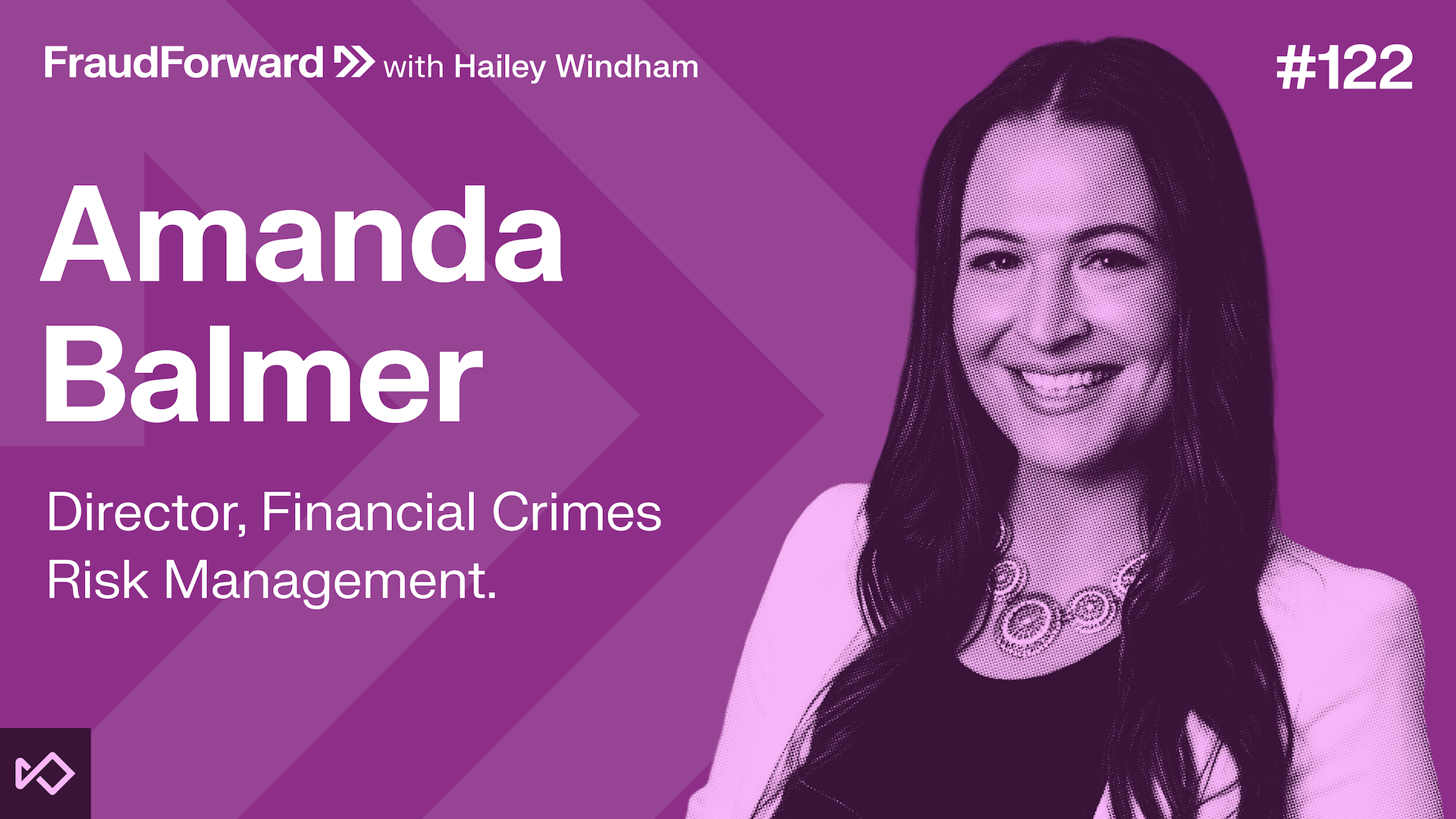
What’s up, fraud fighters? So we recently celebrated 100 episodes of Fraud Forward, which honestly still feels surreal to say out loud, you know? And the timing of this conversation for today actually feels kind of perfect because the industry is moving fast right now. On May 19, the White House released a presidential action titled Integrating Financial Technology Innovation Into Regulatory Frameworks. That’s a tongue twister. If you haven’t read it yet, the high-level focus is really around accelerating financial innovation in the United States. The order talks about modernizing regulatory frameworks, reducing friction, supporting fintech innovation, expanding access to digital financial infrastructure, encouraging AI development, and helping financial institutions adopt newer technologies faster. There’s also discussion around payment systems modernization, digital assets, and reevaluating how regulators approach emerging financial technology overall. Now that I’ve had a little more time to digest this, my first reaction was probably the same that a lot of fraud fighters had. Like, I understand the innovation conversation, but what happens operationally? Because anytime we start talking about faster adoption, reduced friction, real-time movement, AI acceleration, embedded finance, digital infrastructure modernization, fraud teams immediately start asking a very different set of questions. Questions like, what about authentication? What about synthetic identities? What about scam prevention? How about governance? What about examination expectations and operational readiness? What about consumer protection? Because innovation and fraud pressure tend to scale together. That’s just the reality. Which is why this conversation feels especially important right now, because we’re watching multiple things evolve simultaneously. Financial systems are modernizing rapidly. Payment ecosystems are accelerating. AI capabilities are expanding literally daily. Digital assets continue maturing. And at that same time, global scam infrastructure is becoming more organized, more industrialized, and frankly, more sophisticated than most people fully realize. Meanwhile, fraud teams are over here trying to stabilize reporting, staffing, governance, investigations, and operational maturity while the pavement underneath them keeps speeding up. And I want to be clear. Fraud fighters do not hate innovation. We just know that with every new convenience layer, that creates a new attack surface too. And sometimes I think those operational realities get left out of the bigger innovation conversation. So today I wanted to bring one of my favorite people in the world to reality check these conversations with me. And that’s Nyla Cortes, the Director of Risk and Compliance for Earthmover Credit Union. So Nyla, welcome back to Fraud Forward.
Hi, Hailey. Thank you so much for having me back. I always look forward to these conversations because they’re never really the easy version. I think that we tend to really deep dive. And this topic is exactly the kind that I think needs the really messy, honest treatment. I’ll also say up front that I’m coming into this kind of cautiously optimistic. I think there are real opportunities in what the administration is trying to do, and I think there are some real operational questions that the policy hasn’t fully quite answered yet. So I’m happy to sit in both of those kinds of places today.
I always love having you in these conversations because you don’t let me stay at surface level. You pull it down into the operational reality really fast. And I think that’s exactly what this topic needs. And I do want to say before we get into the weeds, I want listeners to know that this is not a political conversation. We’re not here to debate the executive action itself or whether it should or shouldn’t exist. What we’re here to do is talk about what it means for the people actually running fraud and compliance operations inside financial institutions right now. So let’s get into it. Okay, I want to start with gut reactions because I think first reactions are actually really telling, especially for people who spend every day thinking about risk. When you first read through this executive action, or at least the highlights, which I did see that they posted too, which was really cool, what stood out to you immediately? What made you lean in and think, okay, this is something we’ve needed? And then what made you pause and think, wait, we need to talk about this?
Yeah, I definitely had a split reaction. I would say what excited me was the acknowledgement that a lot of our regulatory framework was built for a brick-and-mortar environment. Right? That’s a fair observation. We’ve been operating under guidance that predates real-time payments being mainstream. So the idea of modernizing those frameworks to reflect the environment we’re actually in, that’s a good thing in theory. I also noticed that the order specifically calls out third-party risk management. That’s a conversation that’s been overdue for a refresh because the way we evaluate fintech partnerships now wasn’t really built for the velocity of relationships institutions are really entering into. So where I really paused was with how the language around streamlining and reducing barriers to entry can mean a few different things depending on who is actually interpreting it. It can mean cleaner pathways and clearer expectations, which I’m all for and I think a lot of people are for. Or it can mean fewer guardrails at the point of access, which is a completely different conversation. And right now, we just don’t know which version we’re actually going to get because the regulators haven’t responded yet. The dates I’m really watching for are the 90-day review window and the 180-day innovation deadline. So by mid-August, we should start seeing what each regulator’s assessment actually looks like. And that’s when this will get real for operations teams.
I think my reaction had that same split in it. There were things in here that genuinely excited me. The idea of modernizing regulatory frameworks. I mean, fraud teams have been navigating guidance that was written before real-time payments were a mainstream reality. So in theory, updated frameworks that reflect the actual environment we’re operating in, that’s a good thing. But then there’s that other side because I see the language too, like what you were saying, that reducing friction and accelerating adoption. My fraud brain automatically translates that to reducing friction means reducing controls or guardrails. And some of those guardrails exist for a reason. So when you’re reading through policy language like that, I’ve picked on you before, just because I can, that you’re the compliance nerd who actually likes to read these things. But when you’re reading through policy language like that from that compliance perspective, how do you parse what’s intentional versus what’s just not fully thought out yet operationally?
I think that you read it through the lens of who has to operationalize it. Right? So policy at the federal level is written to set direction. It’s not written to be a procedure, and that’s normal. The gap between direction and procedure is where compliance teams live every single day. So when I read language like reduce unnecessary barriers to entry, my job isn’t to assume the worst or assume the best. My job is to flag the operational questions that haven’t really been answered yet so we’re not the institution that unfortunately finds out the hard way. Right? And to your earlier point about fraud fighters not being anti-innovation, I want to underline that. We are not the department of no. But we have seen what happens when convenience scales faster than control. Every new access point is a new attack surface. That’s not pessimism. That’s purely pattern recognition. So when I lean into a policy like this, I’m leaning into it with operational questions, not political ones.
I think that’s the tension that fraud and compliance teams are going to be sitting with for a while as this gets interpreted and implemented. And I’m going to repeat something that I said earlier in this intro, and I said it last week, and you just said it again, but I feel like it’s one of those things that it’s okay to repeat it, and I might even get it tattooed on my forehead. Fraud fighters do not hate innovation. You even said it. We’re not the department of no. But we do know from experience that every new convenience layer creates that new attack surface. Every time you speed something up, you shrink the window to catch something before it’s gone. Every time you add a new access point, you create a new place for bad actors to probe. And again, you’re right. That is the pattern recognition, and that’s why these conversations matter. So I think one of the things that you and I do really well, kind of magically, is bringing that operational reality to the conversation. It’s one thing that Fraud Forward was built on, which was bringing those practical insights into the industry. So I want to talk about what this actually looks like on the ground, because the federal-level conversation has a particular cadence to it, right? It sounds like modernize, accelerate, adopt, innovate. But then you hand that to the financial institution, especially a community bank or credit union, and they’re looking at their actual operational reality, and the questions they’re asking are completely different. Who monitors it? Who owns it? Who examines it? Who reimburses it when something goes wrong? Who explains it to the board? And who gets blamed when it fails? Those are the real questions. So, Nyla, from where you sit in risk and compliance, when you look at what it would actually take to operationalize faster fintech adoption, what does that look like realistically for a midsize or smaller institution right now?
Yeah, that’s a good question. This is the part of the conversation that can get glossed over the most. When you’re at a community bank or a credit union, modernization isn’t really seen as a strategy slide. It’s a series of trade-offs. So every new capability has a cost stack behind it. The technology cost is actually the smallest piece of it. The bigger costs are the governance lift, the policy updates, procedure rewrites, the training, monitoring, reporting, and the staffing to support it ongoing. Right? And we’re absorbing all of that into existing teams that already are running lean. So when the federal conversation says to accelerate adoption, what that actually means at my level is one person doing the vendor risk assessment, another updating the BSA risk assessment, someone else updating the fraud monitoring rules, the BSA officer evaluating AML implications, and then the compliance team checking consumer protection. And then, you know, a board memo to wrap it all up in a pretty little bow that explains the residual risk. That’s just for one product launch. So the resource reality of that is it’s hard. And it’s not a complaint. It’s honestly just the math of it. And it means smaller institutions have to be really intentional about pacing because we can’t absorb five new initiatives at once without something breaking.
So true. I think the resource reality for smaller institutions is just so fundamentally different than that of the larger FIs. A top-tier bank has entire departments dedicated to AI governance, fintech partnerships, the compliance infrastructure, right? And they have budget, headcount, legal teams, where a community bank or credit union is potentially asking, like you said, one person to figure all of that out. Again, it’s not even a criticism. It’s just the reality that the resource environment they’re operating in is so different. So when we talk about modernization, the implementation gap between a large FI and a smaller one is truly significant. So for you, what does that gap look like from your experience? And where do smaller institutions tend to struggle the most when they’re trying to keep pace?
Yeah, no, the gap is real, and we should name it. A top-tier bank has entire teams dedicated just to AI governance, fintech partnerships, model risk management, third-party oversight, right? They have legal, data science, dedicated examination liaisons. Their compliance function alone is probably bigger than the entire risk department at most community institutions. So at a smaller FI, the same person is often wearing five different hats. If you know me, I’m always talking about us multi-hat wearers, right? So the BSA officer is also doing OFAC, also reviewing wires, also responding to subpoenas, writing board memos. The fraud manager is also the person that’s handling all the card disputes, ACH, Zelle, account takeover cases, check fraud, and somehow also building scam typologies for member education. So where I see smaller institutions struggle the most is in about, I would say, three different places. First would be visibility. This looks like fragmented tools, which mean fragmented data. We see card fraud in one system, ACH in another, Zelle in another, account takeover signals somewhere else. So stitching that into a clear picture of fraud exposure takes time. And most teams don’t really have the bandwidth to do it as often as they should. Second would be vendor and fintech oversight. So when you have a small vendor management function, you end up relying on what the vendor tells you about their own controls. And that’s not the same as independent assurance. And then third would probably be governance documentation. A lot of smaller institutions are doing the right work but haven’t really memorialized it in a way that holds up under examination. So the activity is happening. The documentation isn’t.
That even tracks with what I’m seeing in the benchmarking conversations that I’m having right now. It’s those visibility gaps, the staffing models, the fragmented tools environments that you mentioned. It is consistent. And so there is a call-out that I have directly to anyone who is at a smaller institution that’s feeling that pressure right now. You’re not behind because you’re doing something wrong. You’re behind because the environment is accelerating faster than the resources available to you to manage it. And that matters because the answer isn’t just move faster, right? The answer is understand your current state first because you cannot modernize safely if you don’t know where you actually are, which is something we are going to come back to in this conversation. But I also want to talk about the piece of this that I think is generating the most conversation right now, which is AI. In case you didn’t know that we were going to talk about AI on this episode, shocker. Really. So the executive action references innovation and AI repeatedly, right? Which makes sense because AI is not a theoretical or future conversation in fraud anymore. It’s a right now conversation. We have institutions that are using AI for fraud detection. We have fraud being perpetrated using AI. We have AI being embedded in customer-facing products that affect fraud exposure. So I want to talk about both sides of this because I think there’s a tendency in the industry right now to either be fully in the AI hype cycle, like AI is going to solve everything, or to be completely dismissive of it entirely. And neither one of those is useful. So Nyla, starting with the opportunity side of this, where do you see AI genuinely helping fraud and compliance operations when it’s implemented well?
I would say I’m cautiously optimistic on AI in fraud and compliance, and I want to really be specific about where the wins actually show up because the hype cycle can kind of blur this. So the clearest win, I would say, is reducing analyst burden on high-volume, low-complexity work. Things like dispute intake triage, initial transaction monitoring review, false positive reduction, summarizing case notes, drafting the first pass of narratives. That can be actually real-time savings, and it lets your investigators spend more time on the super complex cases that actually need human judgment. The other win is pattern detection at scale. So behavioral analytics, right? Anomaly detection across larger data sets, link analysis between accounts. Humans can’t process that kind of volume, but AI can. So when you pair AI pattern detection with human judgment on the back end, that’s where it can get powerful. But I want to be honest about the line that I see. AI augments. It doesn’t replace the human decision in fraud and compliance work. The institutions that treat AI as a labor replacement strategy instead of a capacity expansion strategy are the ones that I would be most curious where they are in a couple of years.
Getting a bumper sticker that says, AI augments, it doesn’t replace the human decision in fraud and compliance. I love it. I think that, first of all, you hit the nail on the head in all of those scenarios that you offered. That operational efficiency piece is real. Reducing manual review burden, faster investigations, better anomaly detection at scale. Yeah, we might can do it for the one-off case where we just so happen to have all the right platforms up and reports out, and we just so happen to catch it. But at scale, we need that assistance. And those are the legit wins, when AI is implemented thoughtfully. But the governance side of AI and financial services is still very much being figured out in real time. And I have a lot of questions that I think fraud and compliance teams need to be asking right now that not everyone is asking yet. Questions like, can you explain the decision? If an AI model flags a transaction or declines an account, can you articulate to an examiner why that happened in plain language? And then what happens when the model is wrong? Because AI scales decisions, which means if the model is making good decisions, you scale good outcomes. But if the model has a flaw, a bias, a blind spot, a gap in training data, you scale that too. Who approved the AI? Is there a governance framework in place? Who signed off on it? Who reviews it? Who updates it when the environment changes? Nyla, from a compliance standpoint, what do you think examiners are actually going to expect when AI is part of the decision chain, and how ready do you think most institutions are for that scrutiny right now?
I would say most institutions are not as ready as they think they are. And before you come for me, I will explain what I mean, okay? Examiners are going to want answers to, I would say, four different questions. Can you explain the decision in plain language? Can you show how the model was validated before it went into production? Can you demonstrate human oversight in that decision chain? And can you show how you’re monitoring for drift, bias, and false positives over time? A lot of institutions have adopted AI tools but haven’t built the governance framework around them. They have the tool. They don’t have the documentation. They have the detection. They don’t have a model risk management policy. And they have the output, but they don’t have a process for periodic revalidation. And here’s what I think makes AI different from other compliance areas, right? It scales decisions like we’ve been talking about. If the model is making good decisions, you scale good outcomes. If it has a flaw, a bias, a blind spot, you also scale that. So governance isn’t a nice-to-have. It’s what really will determine whether AI helps you or creates new exposure. So my honest take here is that institutions are going to need an AI governance policy, a defined model risk management process, documented human-in-the-loop controls, and a periodic validation cadence. If you have AI tools in production and you don’t already have those four things, that is where I would start.
I think that you made a really important point. A lot of the institutions right now are in this window where they’ve adopted quickly, but like you said, that governance documentation just hasn’t caught up yet. And that’s going to matter when regulators come in. And so the line I keep going back to is this: AI can absolutely scale good decisions, but it can also scale bad ones. I think we both said that. So the institutions that are going to navigate this well aren’t the ones who move fastest on AI adoption. They’re the ones who build the governance infrastructure to support it before something goes wrong because cleaning that up after the fact is a much harder conversation. And I will call out, I know that I’ve shared this with others in the industry, but Sardine did do an AI governance framework report that they wrote up. So I will put that into the show notes as well because it’s one that I know that I’ve had several friends reach out and go, hey, this really helped me write my policy.
Yup. It’s amazing [Ad Break (24:26): Finally, I’m so happy to share with you all that The Saturday Fraud Strategist is now a podcast. What? Yeah. On top of my weekly newsletter, you can now listen to and watch me talk about my, and hopefully your, favorite topic: fraud strategy. And from time to time, I’ll be hosting operators and founders to discuss where the industry is headed and what we fraud fighters should pay attention to. I must say, I’m super excited, and if I’m being honest, a bit nervous about all of this. I’ve been debating with myself whether to start a podcast for ages, but kept putting it off. But now this is the result, so I guess there’s no turning back. So if you want to join me for the ride, head over to Sardine’s website and subscribe now. Are you ready? Am I ready? We’ll find out next Saturday.]
So okay, we’re going to shift now to payments and fintech participation specifically, because this is where the attack surface conversation gets really concrete for fraud teams. Real-time payments are not new at this point, but the volume, the velocity, and the customer expectation around instant money movement has significantly shifted. Faster payments means faster fraud. I don’t care who you are, I believe that fully. Narrower recovery windows, which why would I say that for myself? Because I’m literally creating my own tongue twister. Narrower recovery windows. Less time to interrupt. And in some cases, no time at all. Right? Scammers know this. They are actively engineering fraud schemes around payment speed. So from a risk perspective, how are you thinking about the intersection of real-time payment expansion and fraud exposure right now?
Yeah, so real-time payments have changed the math on fraud response. Right? We used to have a recovery window. Now, in a lot of cases, the funds are gone before the member even realizes something happened. What that means operationally is that fraud prevention has to shift to the left, right? We always like that song, to the left, to the left. You can’t catch it at the back end anymore. You have to interrupt it at authorization, at authentication, or before the member even initiates the transfer. And that all is going to require behavioral signals, scam typology awareness, and the right friction at the right moment. And honestly, the scam landscape has to change too. Most of the Zelle account takeover cases that we see now don’t look like the fraud at the moment of authorization. The member authenticated. The device was recognized. The member initiated the transfer because they were manipulated into doing it, right? So traditional rule-based monitoring isn’t built for that. So our control environment does have to evolve toward intercepting authorized fraud, not just unauthorized fraud. And that’s a fundamentally different problem, and it’s one I think the industry is truly the least prepared for right now.
I will say that I did have another section for us whenever I was working on our outline where we were going to go into the unauthorized and authorized portion of it. And I was like, you know what? That’s a whole nother episode. I am not even going to, if we’re not going to touch that one. But I appreciate what you’ve called out because it needed to be said. But at the same time, that’s a whole nother episode.
I could talk on that for hours
Truly, truly. So instead of diving deeper into the unauthorized, authorized conversation and who is responsible for that financial loss, let’s instead talk about the fintech partnerships on top of all of that that you just mentioned, right? A lot of institutions are expanding their products through the embedded finance relationships. Fintechs plugging into their infrastructure. You’ve got sponsor bank relationships, third-party access. And every one of those relationships is a potential new entry point for fraud. So the third-party risk management conversation has to evolve alongside the fintech participation conversation. They can’t be separate. So where do you see institutions struggling most when it comes to third party and vendor oversight in this environment?
This is one of the parts of the executive order I’m watching most carefully because the order specifically flags that current third-party risk management requirements may favor incumbents. So whatever comes out of that review is going to reshape how we evaluate fintech partnerships. So where I see institutions struggling right now is first in the inventory itself. A lot of FIs don’t have a clean current inventory of every fintech relationship that touches their environment, especially the indirect ones or the API integrations or the subprocessors. Because you can’t really manage what you can’t see. Second, I would say, is the depth of due diligence. So there’s a difference between collecting a SOC 2 report and actually understanding the fintech’s fraud controls or their incident response process or their AML program. A lot of due diligence stops at the document collection stage. That’s not the same as evaluation. And third is ongoing monitoring. So the contract gets signed, the assessment gets filed, and then nobody is looking at it again for two years. That’s really not monitoring. That’s just a binder on a shelf where you completed your checklist. Right? And I think the honest reality is that a lot of institutions signed fintech and embedded financial agreements before their third-party risk frameworks were really mature enough to fully account for the fraud exposure that those relationships could introduce. So now we’re retrofitting risk management onto already-live partnerships. And that’s a much harder conversation than building it in from the beginning.
And that’s something that institutions need to be actively auditing right now. We don’t need to wait for an examiner to surface that. So, okay, I want to talk now about something that I think is becoming increasingly impossible to ignore. And that’s the fact that fraud and compliance are colliding in ways that they never used to. These departments used to be able to operate pretty independently, different functions, different reporting lines, different regulatory touch points. And that world is changing fast because the fraud we’re seeing now doesn’t respect those departmental boundaries. Scam typologies are crossing compliance thresholds. AML and fraud are converging. Consumer protection expectations are landing in both lanes simultaneously. And the institutions that are still operating with those hard silos between fraud and compliance are going to find themselves with gaps. Gaps in ownership. Gaps in coverage. Gaps in reporting. Which creates real exposure. Nyla, you sit in that intersection in a really direct way. How are you thinking about the convergence of fraud and compliance right now? And where do you think institutions are most behind in recognizing that these functions have to work together?
This is a conversation I’ve been having internally for a while, and I think a lot of institutions should be having this conversation. And so I’m glad that we’re having it out loud right now. Fraud and compliance used to be able to operate in parallel lanes, right? Fraud would handle the disputes side of things. Compliance handled BSA, OFAC, consumer protection. The lanes were clear. The data flowed differently. The reporting structures were separate. And that worked, right? When fraud was mostly transactional and compliance was mostly pragmatic. That world doesn’t exist anymore. Scam typologies have really just fully collapsed that boundary. A romance scam that ends in a wire transfer is a fraud case, a SAR-eligible event, a consumer protection issue, and even potentially a Reg E dispute all at the same time. Elder financial exploitation is the same. Pig butchering with a crypto off-ramp is the same. Authorized push payment fraud is the same. Every one of these touches fraud, BSA, and consumer protection simultaneously. So where institutions are most behind is in ownership. When fraud looks like a compliance issue and compliance looks like a fraud issue, who owns it? Who decides if a SAR gets filed? Who manages the member communication? Who decides if we’re liable for reimbursement? Who tracks the typology so we can prevent the next one? I can say that in the last year, a real focus at my institution has been moving away from the ownership conversation and directly toward collaboration between areas. When we hit a roadblock and everyone on the team is throwing up their hands and saying, I don’t own this, we stop. We evaluate how we got here, and we figure out how to fix it efficiently so the member gets the best experience. Because truly, at the end of the day, the member doesn’t care which department owns it, right? They care that we solved it. So always member experience at the forefront has really helped us in navigating and realigning to collaboration.
I want to ask on a personal level. I feel like you and I kind of have an advantage that others didn’t have. And I’ll say that because we worked together several years ago. You were compliance, BSA. I was fraud. And we instantly loved each other, and we’re best of friends, right? What’s not to love? And so it made it easier, in my opinion, for us to go, hey, why can’t we work together? Why can’t fraud and compliance actually try to solve these problems together? I mean, as I was writing up this outline, all I could think to was about the time that we created the corporate account takeover process. And we literally went to each department head and we were like, all right, what are you responsible for when this happens? Like, we’ve got our red folders in branches when there’s an active robbery situation. Here’s what we do whenever there’s corporate account takeover. And so do you think that because we had that friendship first that it made that bridge better? Or do you think that this is easy to replicate in other institutions?
I think the answer is yes to both for me, to be honest. Because I think that our relationship did make it easier, right? But I also think that it is easy because at the end of the day, both you and I went into that collaboration with the idea that this is easy, right? Collaboration can be easy. I think one of the biggest things that I’ve recognized from being at different institutions throughout my experience and my time is that collaboration is truly something that is top-down. It has to be pushed from the top down. And it doesn’t have a clear boundary of lines of just being fraud and compliance. I know this conversation is primarily fraud and compliance, right? But when we’re talking about fraud, fraud touches every area of the institution. It touches accounting in a different way. It touches member services a different way. It’s touching everywhere. And so how can we as an institution increase our collaboration and, instead of placing ownership, everyone has a seat at the table? Everyone should have a seat at the table. It’s just a matter of whose seat you’re sitting in and what you bring to the table individually. But there is no one person that should own it. It should be everyone’s ownership. We all own it. We all own the experience that the member receives. And so that’s my two cents about that.
I love that. I love that you didn’t just call out that we all own the fraud that happens. We are all responsible for if we see it, we need to make sure that we call it out, or if there’s unusual activity, we need to call it out. I loved whenever we collaborated on the fraud policy, even to have that kind of language in there. But then it’s also we own the member experience, the customer experience. And I think that that’s a vital point of what, especially for community banks and credit unions, that is literally who you are. That is why you operate. It is for that community feel. I deal with a local community institution that, man, I wish the online banking stuff was different. Okay. I want to be able to transfer payments very easily, and it’s just not there. And that’s okay because I want to be able to call and talk to an actual person that knows my name. Whenever I say, hey, I need to get this done, they know me. They can get it done. They can send an email. Dual control, whatever. But that’s something that I will deal with so that I can have that community feel. And so we can’t lose that piece of who we are in these community institutions. So I’m not going to derail us and talk about why we love community banks and credit unions. But I think that you are a great example of showing what it could look like and how it works. So, from your perspective, what does it look like when fraud and compliance are functioning well together? What does that structure look like inside an institution that’s doing it right? Because when you and I were together, right, we had a very short time frame to see the magic. And then, you know, you got a different opportunity. I got a different opportunity. And so the friendship stayed, but we were no longer at the same institution. But now you’ve been able to really do it at another organization. So I’d just like to know, what does that look like?
Yeah, no, this is one of my most favorite topics to talk about, truly. So if I go on a rant here, I’m very sorry for everyone listening. First thing, right, because a lot of people tend to think that collaboration means one thing, and they think meetings. More meetings. And it’s not. I promise you. That’s not it. We already all have overbooked calendars. More meetings is not the answer. We already know that. But what it actually looks like is shared infrastructure. So I actually have four things for us.
Only four. Only four. I know. I know. You’re so proud of me, right?
So first would have to be shared visibility. Fraud and BSA see the same case data. So when a Zelle account takeover comes in, the BSA officer is going to be looking up the typology, the dollar amount, and the underlying behavior at the same time that the fraud team sees it. Same data. Same view. Shared visibility across the board. None of this handoff business, right? Same time. Same visibility. Shared language is our second one. We have the same terminology for typologies, the same severity scales, the same case categories. Because if fraud calls something a scam-induced transfer and BSA is calling it a consumer-initiated wire abuse, you have two reports describing the same exact event, and nobody knows what’s actually happening. Same language. Third, defined escalation paths. Everyone knows when a case gets escalated, who it goes to, what triggers a SAR review, what triggers member outreach, what triggers a board notification. As you can say, I say the word trigger a lot. Know your triggers. What triggers what? And have a defined escalation path for that. Document it and practice it. Enforce the practice of it. And then the fourth one is joint ownership of typology evolution. When a new scam pattern emerges, fraud and compliance evaluate it together, not separately. Because the response usually involves both lanes anyway. Right? So as you can see, collaboration is at the forefront of our four items. Again, just to reiterate, we have shared visibility, shared language, defined escalation paths, and joint ownership of typology evolution. So the best version of this is when fraud and compliance share a periodic review. I would say quarterly works best, where you’re looking at trend data together, agreeing on what’s getting worse, and making joint recommendations to leadership. That’s what good looks like. And it’s even achievable at smaller institutions. It just has to be built with intention because your org chart cannot do it alone.
I love that framing. And again, I think it goes back to what we saw together and in creating that one thing. It’s creating those workflows, even partnering with continuous improvement to say, hey, can you make me a flow map? Because I don’t, I mean, we need help. We are not graphic designers, even though that’s not what it technically is, but it felt like it. Put me in Canva. Don’t put me on a blank whatever where you want me to draw the squares. No, I cannot do that. But it works, right? Because you have to have, obviously, your documented, like this is how we documented triggers. This is what we do when this happens. But also being able to see that, again, it’s those practical takeaways. So I want to encourage that if you don’t have the process mapped out in a visual aid, do that. It really does help, and it helps to articulate it to the C-suite executives that don’t understand all the necessary tiny pieces that are part of a process. But by you having it mapped out and they can see it visually, it makes more sense.
Yep, and it also helps your team too. The visual representation of what the decision path actually looks like helps your team, and it helps reinforce the behavior of what you’re trying to implement too.
I love that. So we’re going to continue on making this actionable because a lot of listeners are at community banks and credit unions, and maybe they’re not the ones writing the policy, but they’re the ones that have to operationalize it. So what should they actually be thinking about right now? I want to go through some questions, and I want your honest take on each one. The first is AI governance. In your opinion, do most institutions, especially the smaller ones, actually have a defined AI governance framework right now, or are they using AI tools and kind of hoping for the best?
Honestly, most smaller institutions don’t have a defined AI governance framework. They’re using AI tools that mostly come embedded in their fraud or their BSA platform, and the governance didn’t come with it. The tool got adopted. The policy, the model risk management process, the validation cadence, the human-in-the-loop documentation, those didn’t follow. And I do want to be fair here. It’s not that teams are being careless, right? It’s that the AI got built into the tools that they were already using. So it didn’t feel like an adoption decision. It felt like a software update. But from an examiner’s perspective, it’s not just a software update. It’s a decisioning system that needs a governance framework around it. So my advice is to ask your core vendors and your fraud platforms exactly where AI is in the decision chain. How was it validated? And how are you going to be notified when the model changes? Because you can’t govern what you can’t see.
Very true. Very true. Okay, so then the next piece is on third-party risk. Do most institutions have a clear picture of every vendor and fintech relationship that’s introducing fraud exposure into their environment, or are there blind spots?
Not as clear as they should be. The direct vendor list is usually solid, but where the blind spots live is the indirect exposure. So your fourth-party risk, your subprocessors, your API integrations, fintech partners that plug into a partner you already onboarded. The further you get from the contract, the less visibility you have. And that’s exactly where fraud exposure tends to hide. And obviously, to be transparent, this is hard. This is really hard, even when you have a mature program in place. So mapping every relationship that touches member data or movement of funds takes genuine, real effort. But if you can’t draw the map, and I know we’re not graphic designers, but if you can’t draw that map, you can’t manage the risk on it.
Makes sense. Okay, real-time fraud operations. If a scam is happening right now, does the average community bank or credit union have the staffing, the tools, and the escalation path to interrupt it, or are they still operating on batch-cycle thinking?
In a lot of cases, no. And it’s not because the teams aren’t capable. It’s because the operating model is, like you said, still built on batch-cycle thinking. Alerts get reviewed on a queue. Escalations go by email. The member service team isn’t connected to the fraud team in real time. So by the time we know, the money’s gone. Right? So closing that gap takes usually about three things. Real-time alerting, which we’re all talking about in the industry right now. A defined interruption protocol that everyone on the front line knows, not just the fraud team. And a fraud function structured to respond inside of the recovery window, not after it. That’s an investment. But the alternative is paying for the losses on the back end. And those numbers do add up fast, as we all know.
Yeah, too fast sometimes. Okay, this last question for this section, I channeled my inner Nyla.
Yeah, yeah. So are institutions measuring operational readiness, or are they just only measuring losses after the fact?
I would say mostly the latter. And this is the metric problem, in quotations, that I want every fraud leader to actually push on. Losses are what I like to call a lagging indicator, right? But by the time you’re reporting on losses, the damage is already done. The board is reacting. The member is upset. The regulator is asking questions. Operational readiness metrics are leading indicators, right? So they’re time to detect, time to interrupt, recovery rate, member outreach completion rate, typology coverage in your monitoring rules, percentage of staff trained on scam scripts in the last quarter. Those tell you whether you’re getting better before the losses show up. And if you’re only measuring losses, you don’t really have a fraud program. You have a fraud accounting function. I say that lightly.
I’m not saying it with love. I’m saying it. Listen here. I mean, if you only know you have a problem when losses show up on a report, then you are already behind. Here’s your sign. Operational readiness means you understand your fraud posture before that incident. You know your gaps. You know your vulnerabilities. You know those escalation paths, just like you were talking about. And I think this ties back to, again, benchmarking, because benchmarking tells you where you actually are and not where you think you are. So for an institution that’s listening right now and recognizing some of these gaps, where would you tell them to start? What’s the first thing?
Three steps. Ready? Step one: inventory your current state. What fraud typologies are you actually seeing? What’s your loss trend by channel? What’s your detection-to-interruption time? What AI tools are in production, and who actually governs them? What fintech relationships touch member data or movement of funds? You truly, truly, truly cannot modernize what you haven’t measured. That’s where I would start. Inventorying your current state. Then, going into step two, I would identify the top two or three gaps and prioritize them. Not all of them. We all know we have a lot of gaps, right? But your top two or three. Because most institutions, they will try to fix everything at once. But what ends up happening is not finishing anything. That’s too much. So pick the gaps that have your highest fraud exposure and work those first. Step three: build the fraud and compliance bridge. I feel like we are reiterating this through this entire episode, right? Building that bridge. Collaboration. Make sure you’re doing those joint quarterly reviews. We’re sharing typology tracking, and we have agreed-upon escalation paths. This is truly, truly a foundation that makes everything else stronger, because once fraud and compliance are aligned, every other initiative gets easier. You would be amazed. You would be amazed. But that’s the work, right? It’s not glamorous. It’s not the AI conversation that’s getting all the headlines, but it’s what actually is moving the needle inside institutions right now.
Bridge the gap. Bridge the gap.
It’s your conscience. Bridge the gap.
Wow, my conscience is so smart.
I didn’t know my conscience had all that going on.
Should listen to her more often.
I also want to say, though, all the things that you were just describing also go back to another point that you and I have made before as well, which is the fraud risk assessment. Right? Like, if you can do that, if you have one, use that as your starting point to say, hey, here are those gaps. So we need to prioritize. Here’s what’s missing. Here are our current vendors. Here are the functions. Blah, blah, blah. And so if you haven’t done that, and you haven’t done these three steps that Nyla said, this is your sign to do those things because it is such a practical starting point. It is one that is easy to do. It doesn’t require any additional monetary resources. It’s just you understanding, documenting, and making sure that you inventory again that current state. I love that you said that. And I think that’s what people need to hear, right? It’s not overhaul everything immediately. Stop it. Overhaul. Do this now. But it’s here’s the first conversation to have. Here’s the first question to ask. Because modernization is not a single event. It’s not going to happen overnight. Like you said, it’s a direction. And you can move in that direction intentionally, or you can get pulled by it reactively. The institutions that are going to navigate this environment well are the ones who are moving intentionally. So I think that we are at a good point. I think we’ve kind of circled this enough. But I want to ask if you have any closing thoughts. It’s time to bring this episode home.
I was truly just going to say, I think what I really want to talk about is what really gives me hope in this environment, right? Honestly, the people. The fraud fighters who are showing up every day doing this work inside resource-constrained environments and still pushing their institutions to be better. It makes my fraud heart happy, truly. It truly makes me the most hopeful. And I’m also hopeful about the conversations like this one that are happening more openly. Five years ago, we didn’t really talk about fraud the way we talk about it now. I mean, you and I can attest to that. Five years ago, we were working together. We didn’t talk about scam victims with empathy that we do now. Not me and you, but, you know, in general.
Out loud in the network, in the industry.
In the industry, nobody really talked about it, right? We didn’t have podcasts dedicated to this work, and now we do. The fact that we’re naming the hard things and sitting in the tension out loud is in itself progress. And I think the executive order conversation, just to kind of full circle this, despite my open questions about it currently, is creating space for fraud and compliance teams to be in the modernization conversation much earlier. That’s a win if institutions take advantage of it.
So true. Nyla, thank you again for agreeing to come on the podcast to dive deep into this conversation. I think our industry needs to hear more conversations like this. It’s not the version where we all agree that innovation is great and fraud is bad and everyone goes home feeling fine, right? It’s the version where we actually sit in the tension. You can cut the tension with a knife. Where we name those hard things like you mentioned and talk about what it’s really like inside the institutions that are trying to navigate this in real time. So thank you.
Yeah, of course. I’ll leave it right here for you. None of us know exactly what the next 12 months are going to look like. The regulators haven’t responded yet. The rules haven’t been written. The fintechs are moving, right? They’re all moving at light speed. So are the scams. They’re evolving like crazy. We don’t get to control any of that, though. But what we do get to control is whether our institution is ready. And to all the fraud fighters listening out there, the ones working late, holding the line on cases nobody really sees, making the hard call when the answer isn’t in the policy, what you do matters. Members don’t always know your name, but they feel it when you do this work well. So keep going. The industry truly needs you.
So true. So true. And then you had your parting thoughts. I’ll have mine. It’s my podcast.
My turn. The last thing I’ll say on this, at least for today, and I feel sure it’ll be another conversation soon. Innovation and reduced risk are not the same thing. They can coexist, but they don’t automatically come together. And the institutions that are going to get this right are the ones who refuse to treat modernization as a fraud team problem to solve after the fact. Bring fraud teams to the table early. I’m going to say that one more time. Bring fraud teams to the table early.
Bridge the gap. Bridge the gap.
Bridge the gap. Build governance infrastructure before you accelerate. Understand your current state before you try to move faster. And stop operating like fraud and compliance are two separate conversations because they are one now. The industry is changing fast. Fraud pressure is scaling alongside every single one of those changes. And the fraud fighters who are paying attention, who are asking the hard questions, who are building the operational maturity to back up that innovation, those are the people who are going to protect their institutions and their customers through this. So fraud fighters, stay vigilant, stay informed, and keep moving fraud forward. Thanks for listening to Fraud Forward. Remember, every conversation, every connection, and every insight moves our industry one step closer to stronger fraud defenses. If today’s episode sparked an idea, share it with your team or tag me on LinkedIn. I love hearing how you’re moving fraud forward in your own organization. Until next time, stay curious, stay resilient, and keep moving fraud forward.
Thanks for listening to Fraud Forward. Remember, every conversation, every connection, and every insight moves our industry one step closer to stronger fraud defenses. If today's episode sparked an idea, share it with your team or tag me on LinkedIn. I love hearing how you are moving fraud forward in your own organization. Until next time, stay curious, stay resilient, and keep moving fraud forward.