Você decidiu desenvolver internamente. Os modelos são capazes, sua equipe é forte e você tem um caso de uso claro. Ótimo.
Passei anos trabalhando com prevenção de fraude e, nos últimos, construindo e acompanhando outras equipes construírem sistemas internos de detecção de fraude com IA. Vi as mesmas cinco coisas repetidamente alongarem prazos e minarem a confiança nas soluções internas.
Nenhum deles é óbvio até você estar profundamente envolvido na construção. Todos eles são evitáveis se você souber onde procurar. Nenhum deles é resolvido com um prompt melhor.
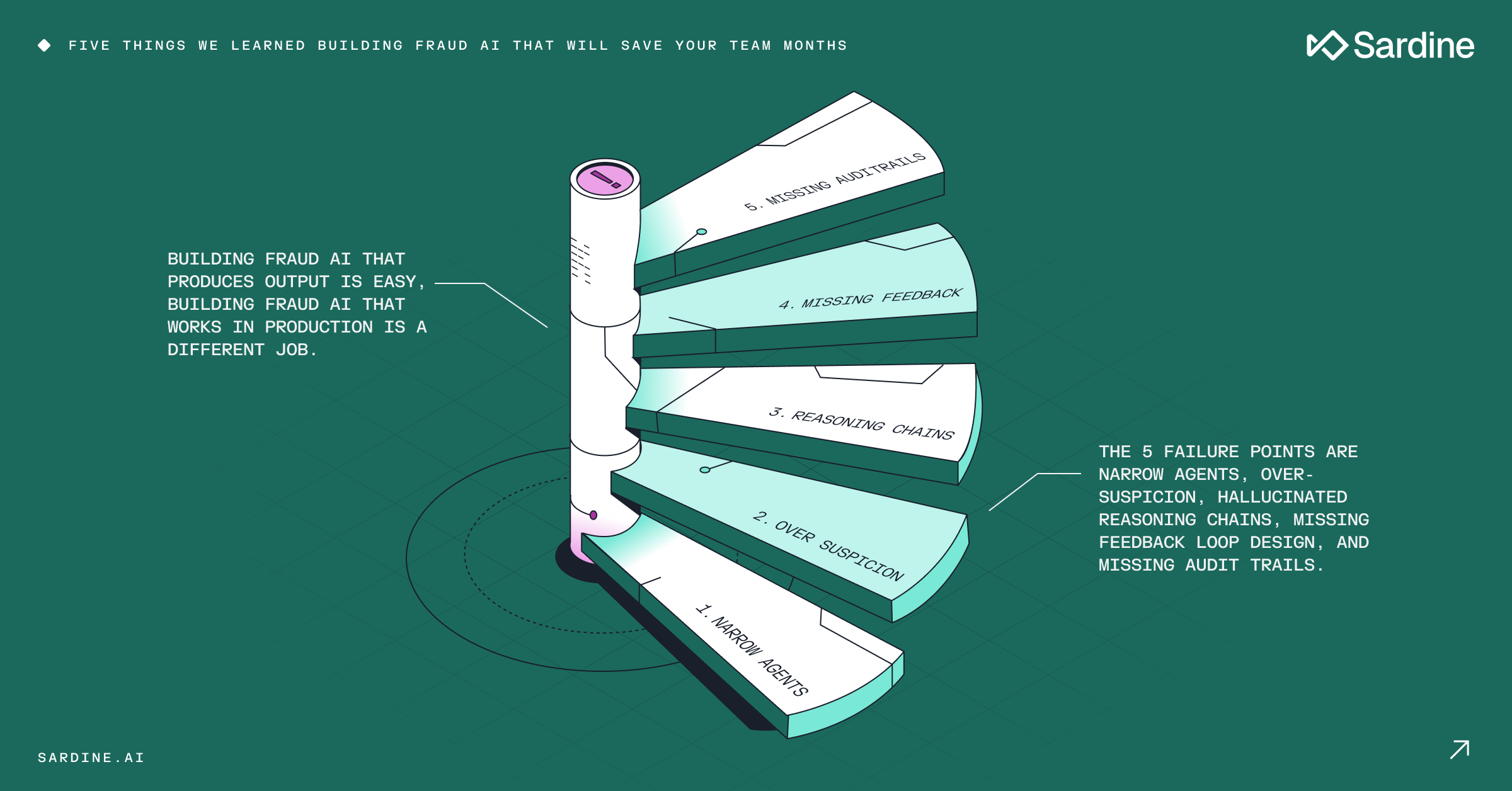
É o seguinte: criar uma IA de fraude que gere resultados é fácil, mas criar uma IA de fraude que funcione em produção é um trabalho completamente diferente. A diferença entre as duas não é o modelo, são estas cinco coisas.
Armadilha | O que dá errado | A correção |
Agentes amplos | Descalibrado em diferentes tipos de ataque | Agentes estreitos e especializados por tarefa |
Modelo excessivamente desconfiado | Sinaliza comportamento normal como fraude | Forçar uma etapa de explicação legítima |
Alucinações de raciocínio | Lógica confiante construída sobre inferências frágeis | Decompor em etapas atômicas e verificáveis |
Sem ciclo de feedback | O agente se desvia à medida que os padrões mudam | Definir a verdade de base e registrar o fluxo antes do primeiro dia |
Trilha de auditoria ausente | Decisões não podem ser reconstruídas ou governadas | Rastreios de decisão legíveis por humanos desde o início |
1. Agentes de IA especializados em detecção de fraude superam os generalistas
O instinto é criar um agente único e competente, dar a ele um contexto amplo e deixá-lo descobrir as coisas por conta própria. Temos muitos dados, pensa-se, então vamos alimentar o modelo com tudo. Na prática, esse é o caminho mais rápido para obter um agente medíocre em tudo.
Mas os tipos de ataques de fraude são heterogêneos demais para que um único agente dê conta. A fraude de identidade sintética tem um perfil de sinais diferente do de tomada de conta de contas, que não se parece em nada com abuso de promoções ou fraude em pagamentos.
Um agente criado para lidar com todos eles se otimiza para o sinal médio e acaba descalibrado para cada um em específico. E isso não se limita apenas aos casos de uso, mas também às habilidades: agentes que conseguem fazer muitas coisas se desviam do rumo com mais facilidade.
O que funciona é o oposto: agentes estreitos e especializados, cada um ajustado para um padrão de ataque ou uma tarefa de investigação específica. Menos impressionantes em uma demonstração, mas muito mais confiáveis em produção. Um agente que faz uma única coisa também é muito mais fácil de avaliar, depurar e aprimorar, porque quando ele erra você sabe exatamente onde procurar.
E é exatamente na demonstração que tudo dá errado. Um agente amplo parece mágico em uma apresentação de quinze minutos: você pergunta qualquer coisa, ele responde tudo. Agentes especializados e focados são a opção entediante que sobrevive ao ambiente de produção. Pense menos em um único investigador e mais em uma equipe de especialistas, cada um substituindo uma habilidade em vez de uma pessoa inteira, e cada um deixando um rastro claro que o próximo pode seguir.
2. Modelos de fraude excessivamente suspeitos precisam de detecção de fraude com contexto populacional
Os modelos são treinados para reconhecer padrões, e a detecção de fraude exige que eles identifiquem especificamente padrões suspeitos. Se você combinar isso sem uma contramedida, acaba com um sistema que sinaliza casos demais, porque não faz ideia de como é o comportamento normal.
Uma velocidade que é padrão para uma rampa de entrada em cripto parece alarmante para um modelo sem contexto populacional. Um dispositivo compartilhado que representa um domicílio ou um quiosque de empresa é interpretado como atividade coordenada.
Não é que o agente esteja alucinando, ele só está raciocinando a partir de um contexto populacional incompleto. O resultado é uma superescalada que volta diretamente para seus analistas, que agora precisam revisar o alerta e o raciocínio do agente sobre esse alerta.
Para resolver isso, você precisa obrigar seu agente a considerar falsos positivos. Antes que o agente chegue a qualquer conclusão de fraude, force-o a gerar a explicação não fraudulenta mais plausível para os mesmos sinais. Se a versão legítima for mais convincente, ele deve deixar isso claro.
Por padrão, LLMs tendem ao conspiratório: elas pulam direto para ataque de bots e redes de laranjas quando a resposta real é um show que esgotou os ingressos ou uma entidade de tesouraria movendo dinheiro entre subsidiárias. Você combate isso introduzindo uma etapa de validação na cadeia e otimizando-a para defender a hipótese legítima.
3. A alucinação do agente de fraude começa com a alucinação da IA na detecção de fraudes
Alucinações de IA de uso geral costumam ser óbvias. O modelo inventa uma citação, fabrica um nome, afirma um fato falso. Já as alucinações de um agente de fraude são mais sutis e difíceis de detectar, porque o agente constrói uma cadeia de raciocínio aparentemente segura a partir de sinais reais, mas os passos lógicos que os conectam não se sustentam.
Ele infere uma relação entre duas contas a partir de uma coocorrência que na verdade é apenas coincidência. Ele interpreta a velocidade como suspeita quando o padrão é normal para aquele segmento. Ele atribui um peso grande a um sinal de dispositivo porque se parece com um vetor de ataque conhecido, sem levar em conta quão comum esse sinal é na população.
A mitigação não é um modelo melhor, é a decomposição. Divida o raciocínio em etapas atômicas explícitas, cada uma produzindo um resultado intermediário verificável antes que a próxima seja executada.
1. Estabeleça a velocidade básica para este segmento de usuários.
2. Compare esta sessão com aquela linha de base.
3. Avalie se a variação ultrapassa o limite para este nível de risco.
Cada etapa é verificável e a cadeia se torna auditável, não apenas legível. E, quando algo dá errado, você pode apontar a etapa que falhou em vez de desconfiar de toda a conclusão.
4. Planeje seu ciclo de feedback de fraude antes de escrever seu primeiro prompt
A maioria das soluções internas trata o ciclo de feedback como um problema de segunda fase. É a única decisão que causa a maior dor lá na frente, então vou ser direto: projete-o primeiro.
Eis por que é tão fácil cair nessa armadilha: os rótulos de fraude chegam com atraso. Estornos, resoluções de disputas e investigações confirmadas levam semanas para aparecer. Por isso, a tentação é lançar o agente agora e só depois descobrir como ele vai aprender.
Mas sem um ciclo de feedback definido desde o primeiro dia, o seu agente se desvia.
Ele foi calibrado por meio de uma calibração de IA de fraude usando seus dados no momento da construção. Depois, seus padrões de fraude mudam, sua base de clientes se transforma e, sem um mecanismo para se atualizar com base em resultados reais, o agente se torna menos confiável com o tempo, não mais. Como a degradação é gradual, é fácil não perceber até que a confiança já tenha sido corroída.
Defina quatro coisas antes de lançar:
- O que é considerado verdade fundamental
- Quanto tempo você espera por isso
- Como as substituições do analista são registradas
- Como tudo isso retorna para o sistema
Isso não precisa ser automatizado no primeiro dia, mas é melhor que seja planejado desde o primeiro dia.
Há também um segundo motivo para resolver isso cedo: rotulagem agente. Fazer com que o agente marque eventos recentes como provável fraude ou provavelmente bons, sem esperar por um estorno, é o que permite que sua lógica de detecção aprenda na mesma velocidade em que seus atacantes se movem.
Mas um ciclo de feedback que você adiciona depois não pode, retroativamente, lhe dar os meses de rótulos recentes que você não capturou. As equipes que fazem isso direito tratam a atualidade dos rótulos como a base, não como um diferencial opcional.
5. Trilhas de auditoria não são um recurso, são uma exigência
Em um ambiente regulado, precisão não é suficiente. Cada decisão consequente em que o seu agente interfere (uma transação recusada, uma conta sinalizada, um caso escalonado) precisa ser reconstruível.Quais sinais ele usou? Quais fontes de dados? Qual foi o nível de confiança em cada etapa? Um auditor ou um responsável de compliance conseguiria acompanhar o raciocínio e aceitá-lo?
Mas isso não é apenas sobre conformidade. Um agente que lhe entrega uma conclusão narrativa sem expor sua cadeia de evidências é operacionalmente arriscado.
Uma trilha de auditoria é exatamente o que permite que humanos governem agentes de IA. Sem ela, validar o raciocínio, descartar alucinações e entender desvios se torna muito mais difícil. Portanto, assim como o restante da nossa stack, precisamos que a IA agente seja totalmente explicável e não uma caixa‑preta.
Crie trilhas de decisão legíveis por humanos desde o início, e não como uma detecção de fraude em IA de caixa-preta. Cada etapa deve gerar um resultado estruturado e rastreável.
O analista que estiver revisando o caso deve conseguir verificar rapidamente a coerência do raciocínio em 30 segundos, identificar um passo errado e corrigi-lo. E essa correção também é um dado; ela deve ser reintegrada ao sistema como parte do ciclo de feedback.
Nenhum desses desafios de colocar IA antifraude em produção é motivo para não construir
São os pontos específicos em que as construções internas travam, e cada um deles é solucionável com as decisões certas tomadas desde o início.
As equipes que colocam em produção uma IA de fraude que realmente funciona não são as que têm os melhores modelos. São aquelas que projetaram pensando em calibração, feedback e auditabilidade antes mesmo de escrever uma linha de lógica de agente.
Construa de forma focada. Faça o agente defender o caso legítimo. Decomponha o raciocínio. Projete primeiro o ciclo de feedback. Rastreie cada decisão. Acerte esses cinco pontos e o modelo praticamente se cuida sozinho.
Tenha uma visão completa da IA antifraude com aprendizado contínuo
Preparamos um whitepaper (você pode lê-lo aqui) sobre o panorama completo das operações de fraude agentic: por que essa mudança está chegando para todas as equipes de fraude, como o sistema deve ser, o número de pessoas e a combinação de habilidades necessárias, o modelo de governança para um aprendizado contínuo seguro e a sequência de implementação em 18 meses.
Perguntas frequentes sobre como criar IA de fraude em produção
Quais são as principais lições de produção de IA para fraude para equipes internas de IA de prevenção a fraudes?
As principais lições de produção de IA antifraude para equipes internas são: construir agentes especializados, calibrar para falsos positivos, decompor o raciocínio, desenhar o ciclo de feedback de fraude desde cedo e criar trilhas de auditoria desde o início. Colocar IA antifraude em produção é menos sobre escrever um prompt melhor e mais sobre tornar o sistema confiável, explicável e adaptável.
Por que agentes de IA estreitos para detecção de fraude funcionam melhor do que agentes amplos?
Agentes de IA estreita para detecção de fraude funcionam melhor porque os tipos de ataques de fraude se comportam de maneiras diferentes. Fraude de identidade sintética, tomada de conta de conta, abuso de promoções e fraude de pagamento apresentam padrões de sinais distintos. Um agente especializado pode ser ajustado, testado, depurado e aprimorado para uma única tarefa, em vez de se tornar mediano ao tentar cobrir fluxos de trabalho demais.
Por que modelos de fraude excessivamente rigorosos causam problemas?
Modelos de fraude excessivamente desconfiados criam problemas porque classificam comportamentos como arriscados sem considerar suficientemente o contexto da população. Velocidade normal, dispositivos compartilhados ou padrões de transação incomuns podem parecer suspeitos se o modelo não entender como é o comportamento legítimo para aquele segmento de clientes.
O que é detecção de fraude em contexto de população?
A detecção de fraude com contexto populacional significa avaliar um sinal em relação ao que é normal para aquele segmento de usuários, plataforma ou tipo de transação. Sem contexto populacional, a IA de fraude pode confundir comportamentos comuns com comportamentos suspeitos e gerar escalonamentos desnecessários para os analistas.
Como a alucinação de IA na detecção de fraudes se manifesta?
Alucinação de IA na detecção de fraude muitas vezes aparece como uma cadeia de raciocínio falha, e não como um fato inventado. Um analista de fraude pode usar sinais reais, mas conectá-los de forma incorreta, dar peso excessivo a um sinal fraco ou inferir uma relação entre contas que na verdade não existe.
Como as equipes podem reduzir a alucinação de agentes de fraude?
As equipes podem reduzir a alucinação de agentes de fraude dividindo o raciocínio em etapas menores e verificáveis. Cada etapa deve produzir um resultado intermediário, como uma linha de base, uma comparação ou uma verificação de limite, para que os analistas possam ver onde o raciocínio funciona e onde ele falha.
Por que o ciclo de feedback de fraude precisa ser projetado primeiro?
O ciclo de feedback de fraude precisa ser projetado primeiro porque os rótulos de fraude chegam com atraso. Estornos, disputas e investigações concluídas geralmente levam semanas para aparecer. Sem um ciclo de feedback desde o primeiro dia, o modelo pode se desalinhar à medida que os padrões de fraude e o comportamento dos clientes mudam.
Qual é o papel da calibração de IA antifraude em produção?
A calibração da IA de fraude ajuda a manter o agente alinhado com os resultados reais, os padrões atuais de fraude e o feedback dos analistas. Sem calibração, um agente pode se tornar menos confiável ao longo do tempo, especialmente à medida que os fraudadores se adaptam ou que o perfil da base de clientes muda.
Por que a governança de IA contra fraudes é importante?
A governança de IA em fraudes é importante porque as equipes de fraude precisam entender, revisar e defender as decisões que um agente ajuda a tomar. Uma boa governança de agentes de IA depende de trilhas de auditoria claras, possibilidade de substituição das decisões pelos analistas, ciclos de feedback e rastros de decisão legíveis por humanos que mostrem como o agente chegou a uma recomendação.
O que são rastros de decisão legíveis por humanos?
Rastros de decisão legíveis por humanos são explicações estruturadas sobre o que o agente analisou, quais sinais utilizou, como raciocinou e onde a confiança mudou. Eles ajudam analistas a validar rapidamente o trabalho do agente e tornam a IA de fraude mais fácil de auditar, governar e aprimorar.
Como funciona a IA de fraude com aprendizado contínuo?
A IA de fraude com aprendizado contínuo usa resultados recentes, correções de analistas, rótulos de fraude confirmada e sinais de atividade legítima para melhorar ao longo do tempo. O objetivo é ajudar o sistema a aprender com o comportamento atual em vez de esperar semanas ou meses por rótulos atrasados.
O que as equipes devem saber antes de desenvolver agentes internos de detecção de fraude com IA?
As equipes devem saber que criar agentes internos de detecção de fraude com IA não é apenas um problema de escolha de modelo. As partes difíceis são o escopo, a calibração, a qualidade do raciocínio, o desenho do fluxo de feedback e a auditabilidade. As equipes que têm sucesso geralmente projetam levando em conta as restrições de produção antes de começar a construir.