
AI in Fraud Prevention: Eliminating Busy Work Without Replacing People with Ben Graf


What is up fraud fighters, and welcome to Fraud Forward!
One of the biggest misconceptions I hear right now about AI in fraud prevention is that it’s about replacing people.
That’s not what I’m seeing inside real fraud teams.
What I’m seeing is the opposite.
Fraud teams are overwhelmed. Alerts are increasing. Scam complexity is increasing. Payment velocity is increasing. And analysts are buried under documentation, case reviews, manual research, and system switching.
So when we talk about AI in fraud prevention, we’re really talking about operational relief.
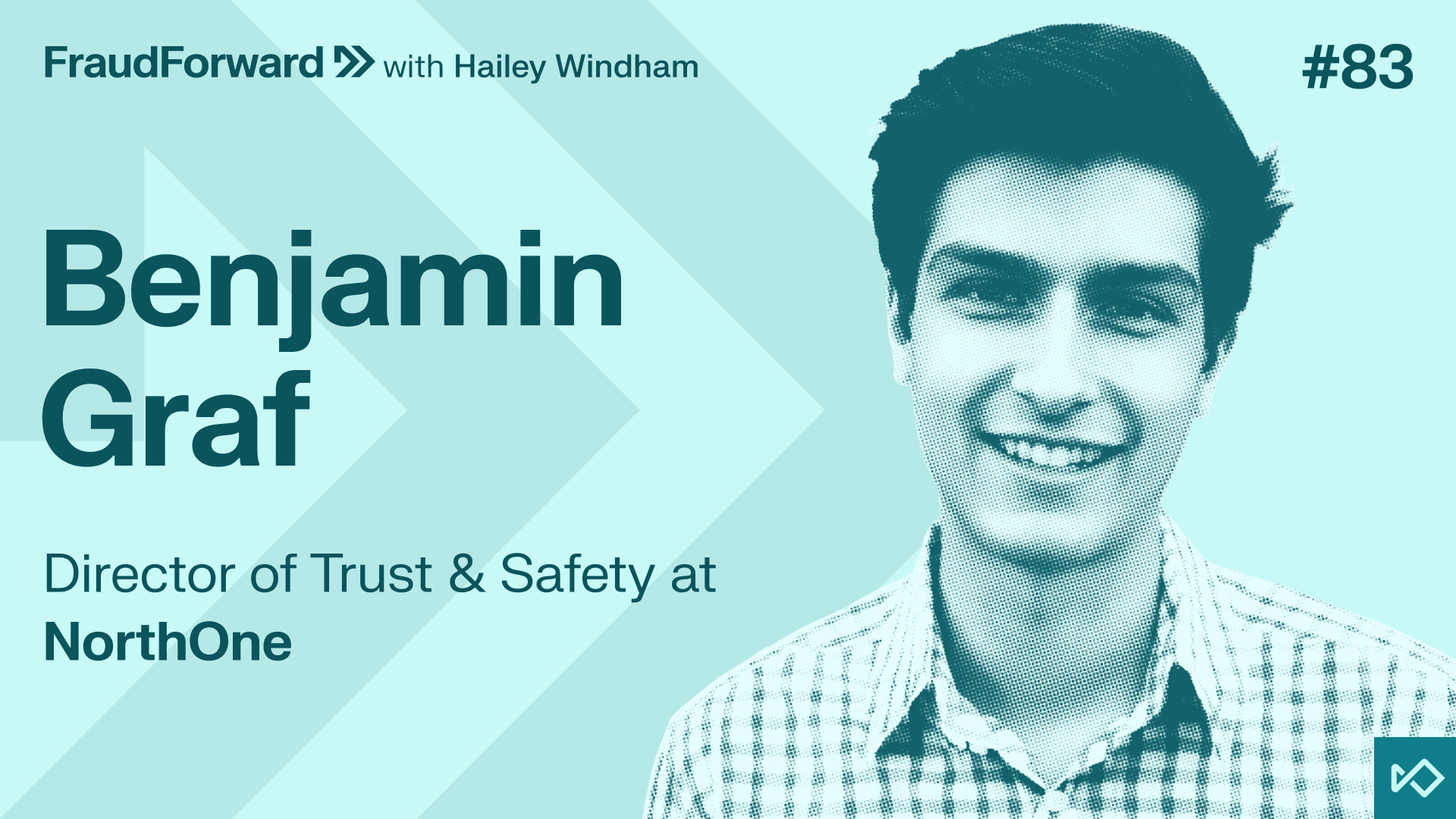
In this bonus episode, I sat down with Benjamin Graf, Director of Trust and Safety, to talk about what AI fraud automation actually looks like inside real fraud operations.
Not the conference hype.
The real use cases.
The tools fraud teams are using today to increase fraud analyst productivity, reduce fraud false positives, and improve fraud operations efficiency without weakening oversight.
The big takeaway from this conversation is simple.
AI works best when it removes repetitive work so analysts can focus on judgment, escalation, and strategy.
What you’ll hear in this episode
- Why AI in fraud prevention is amplifying fraud teams instead of replacing them
- Real examples of AI fraud automation improving fraud analyst productivity
- Where fraud investigation automation delivers immediate operational value
- How OCR in fraud prevention accelerates document review and identity verification
- Why fraud workflow automation is reducing operational friction for fraud teams
You should listen to this episode if
- You lead fraud prevention or fraud operations teams
- Your analysts are overwhelmed by manual review and documentation
- You are evaluating AI powered fraud tools or automation platforms
- You want to reduce fraud false positives and investigation backlogs
- You are exploring responsible AI adoption in trust and safety environments
If you liked this episode, be sure to subscribe and review the podcast on iTunes, Spotify, YouTube, or wherever you listen to podcasts.
Episode notes & key takeaways
Before we double click on the notes, I just want to say that my marketing team told me I need to structure these notes a certain way in order for people to find my podcast. The below is a bit of that 😀
AI in fraud prevention creates operational leverage
AI fraud automation works best when it targets repetitive operational tasks that slow fraud teams down.
Fraud analysts spend enormous time retrieving documents, reviewing notes, writing case summaries, and navigating disconnected systems. These tasks create friction that reduces the time available for higher value investigation.
AI in fraud prevention helps remove that friction.
Analysts can retrieve and summarize documentation quickly, structure case notes into usable intelligence, and extract relevant insights without spending hours digging through systems.
Fraud team enablement improves when analysts spend more time evaluating risk and less time managing workflow overhead.
OCR and document automation reduce investigation friction
Document heavy workflows are one of the biggest opportunities for fraud operations automation.
OCR in fraud prevention allows institutions to extract structured data from unstructured files such as income statements, identity documents, and merchant onboarding records.
AI for document verification accelerates identity validation, document review, and financial record analysis without eliminating analyst oversight.
Fraud investigation automation can summarize complex documentation, highlight inconsistencies, and organize relevant information into clearer decision contexts.
This dramatically improves operational fraud efficiency while maintaining human judgment.
Fraud analyst productivity is a strategic lever
Fraud analyst productivity directly influences investigation quality.
When analysts spend most of their day toggling between systems, waiting on data teams, or writing documentation, investigation depth suffers.
AI for fraud teams reduces these operational barriers.
Fraud data automation enables analysts to explore fraud patterns independently, draft queries, and analyze signals without relying entirely on engineering resources.
Reducing fraud false positives and administrative overhead allows analysts to focus on meaningful investigation rather than repetitive review.
Removing operational strain also improves morale and decision consistency.
Leadership framing determines AI adoption success
AI in fraud prevention rarely fails because of technology.
It fails because teams are unclear about how it should be used.
Fraud leaders must define approved AI fraud use cases, establish data governance standards, and create safe experimentation environments for fraud operations automation.
Successful organizations treat AI as infrastructure, not novelty.
Clear guardrails around PII handling, data classification, and vendor review allow teams to experiment responsibly while protecting sensitive information.
When leadership frames AI as fraud team enablement rather than workforce reduction, adoption accelerates.
Human centered AI strengthens trust and safety
Human centered AI fraud adoption ensures automation supports investigators instead of replacing them.
Fraud prevention innovation should prioritize removing repetitive tasks so analysts can focus on escalation decisions, contextual risk evaluation, and fraud strategy.
Responsible AI implementation in trust and safety environments also requires monitoring for output inaccuracies, maintaining escalation protocols, and periodically reviewing AI generated summaries.
AI in fraud prevention works best when it strengthens human judgment rather than bypassing it.
Fraud programs that implement automation thoughtfully improve both operational fraud efficiency and analyst retention.
.png)


Stay vigilant and stay informed
Get the latest episodes, events, and insights from Hailey as we move fraud forward.