

#12128 min
What’s up fraud fighters, and welcome to Fraud Forward!
Alright, let’s get into it, because a financial crime conference can either be a nice networking moment, or it can be real infrastructure for the people actually carrying fraud programs on their backs.
And right now, fraud teams are dealing with fraud team burnout, siloed risk functions, sustained scam volumes, and payments fraud risk accelerating across rails faster than most institutions can adapt. So if we’re going to spend time and budget on fraud industry events, I want it to be for something that actually sharpens fraud program strategy and supports fraud prevention professionals in the trenches.
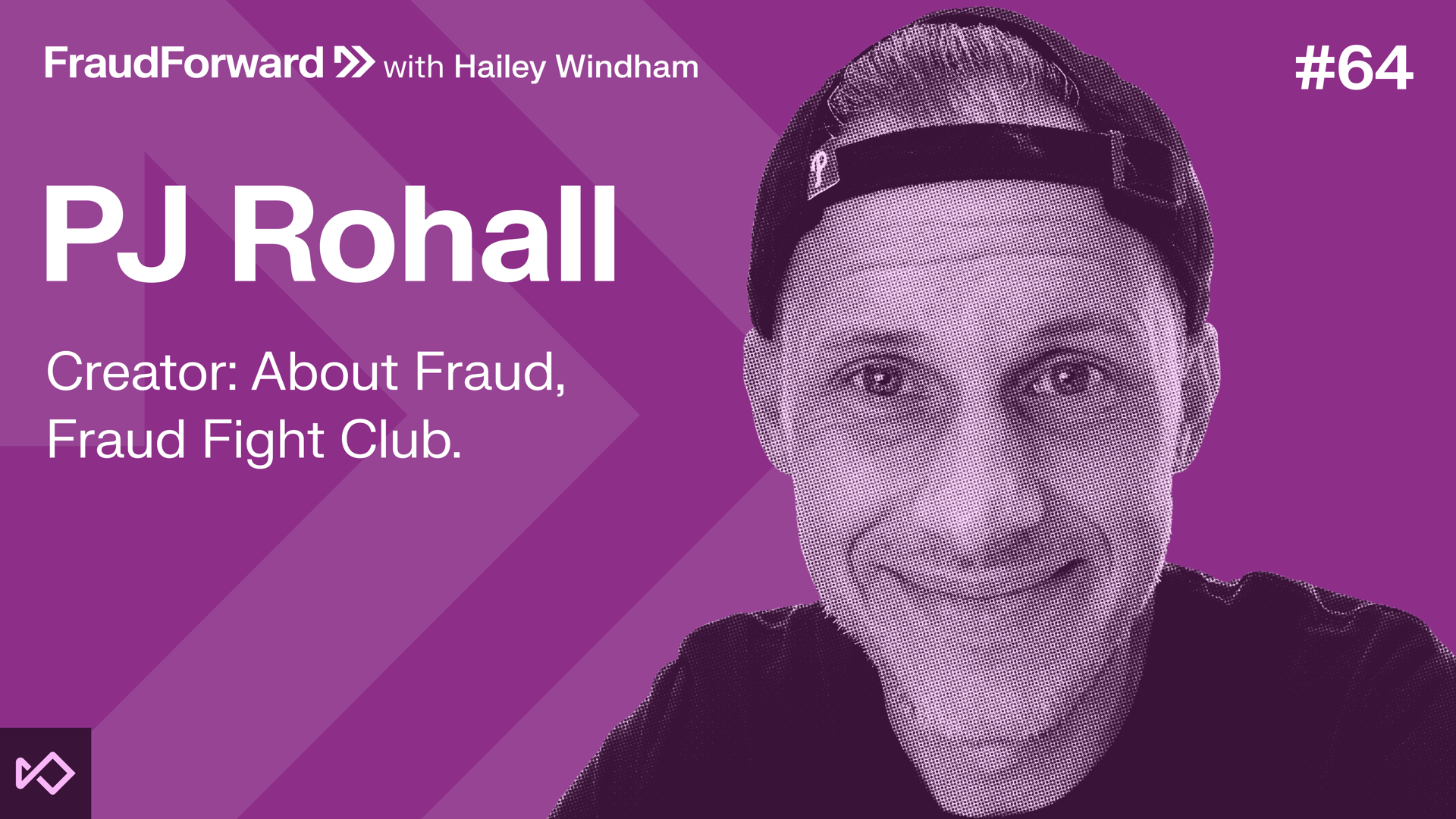
In this episode, I’m talking with PJ Rohall, co-founder of About Fraud and Fraud Fight Club, about the strategy behind designing a practitioner-led financial crime conference that prioritizes operational relevance, transparency, and fraud community building over formality.
Because when it’s done right, an anti fraud conference is not entertainment. It’s intelligence exchange. It’s fraud prevention networking that shortens the distance between what one team sees today and what another team gets hit with tomorrow.
Let’s reset the room for a moment. Fraud risk is expanding across payment channels, account takeover tactics, social engineering typologies, and synthetic identity strategies. At the same time, the workforce is stretched thin, and financial institution fraud risk is rising.
Here’s why conference strategy matters operationally:
Fraud prevention professionals should not have to feel like they are fighting alone in parallel universes while the same bank fraud trends and scam typologies repeat across the country.
If you liked this episode, be sure to subscribe and review Fraud Forward on Spotify, Apple Podcasts, YouTube, or wherever you listen. It really helps with getting the word out.
Traditional fraud industry events can struggle to balance formal programming with meaningful peer exchange.
This episode breaks down how Fraud Fight Club reimagined the financial crime conference format to create an environment that is:
Rather than prioritizing corporate polish or vendor visibility, the focus is real-world fraud experiences, open dialogue, and practical intelligence sharing.
And for financial institutions, that distinction matters. A well-designed financial crime conference can directly influence how teams respond to emerging threats because it reduces the time between detection and awareness.
Let me just assure you, the pace is not slowing.
Fraud is scaling across:
As these threats accelerate, institutions need:
A financial crime conference that enables transparency and cross-industry coordination becomes infrastructure, not entertainment.
PJ reflects on organizing Round Two of Fraud Fight Club, and this is where the human side hits.
Themes included:
Fraud teams are dealing with reimbursement disputes, regulatory scrutiny, and constant operational strain. Peer validation and shared learning are operationally stabilizing. 100 percent.
This episode surfaces trends that directly impact fraud program strategy:
And the discussion around scam prevention outreach is important because consumer education has to extend beyond institutional messaging. Communities need the language and the red flags in plain terms.
Financial institutions remain exposed in areas like:
A thoughtfully structured financial crime conference can help close these gaps by facilitating:
Here’s the leadership takeaway. A financial crime conference should not be measured by attendance volume or sponsor presence.
The real question is:
Does it materially improve institutional readiness?
Because without this kind of exchange:
Executive leaders should evaluate conference participation through an operational lens. Not brand visibility. Readiness, coordination, and sustainability.
The mission stays the same:
The future of banking fraud prevention depends on community.
The future of credit union fraud prevention depends on collaboration.
The future of fraud industry evolution depends on shared intelligence and values alignment.
We are leveling up.
And we are doing it together.
Stay vigilant, stay informed, and keep moving fraud forward.