
Human Trafficking and the Fraud Fighter’s Responsibility: A Conversation with Freddy Massimi


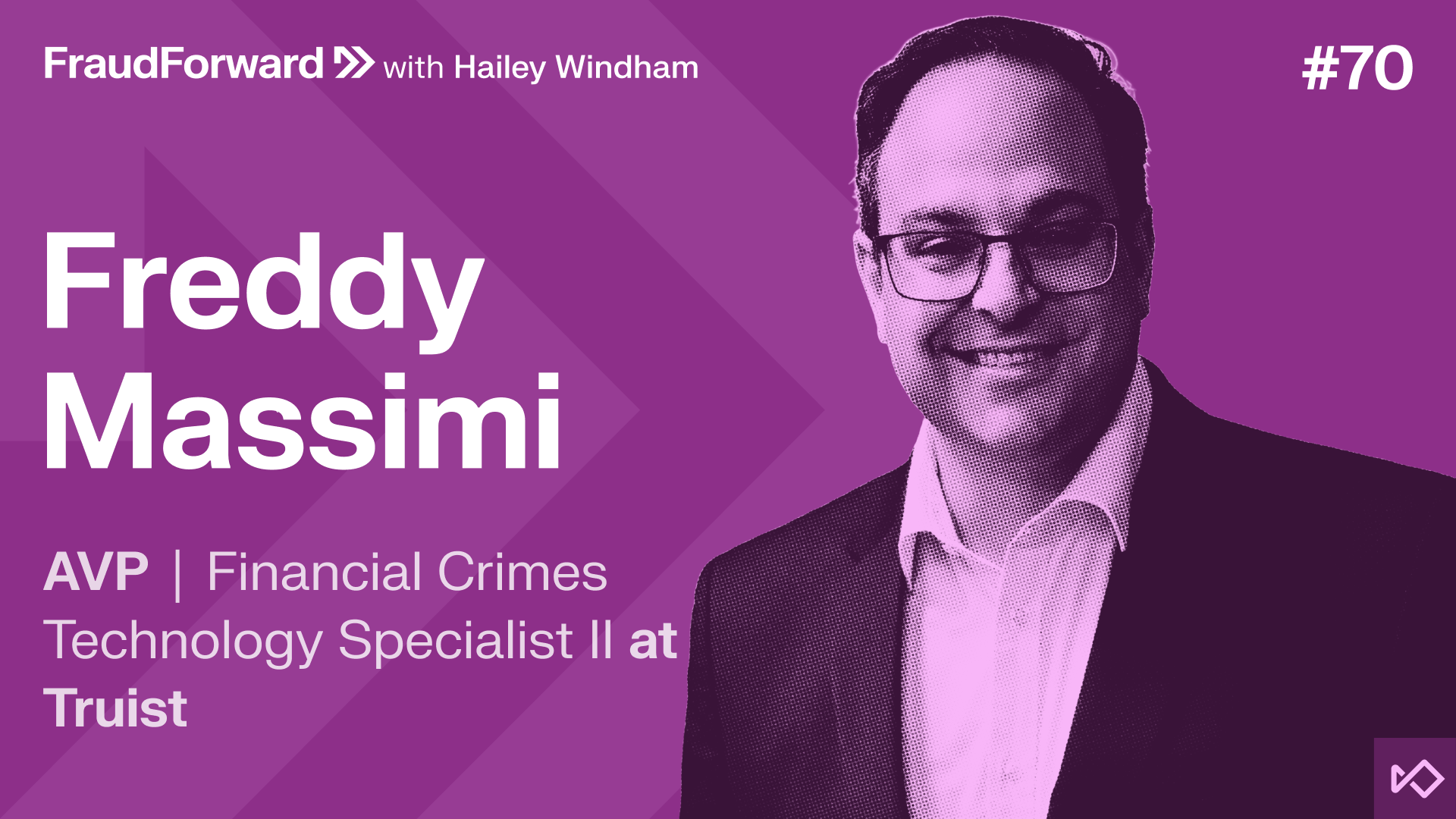
What is up fraud fighters, and welcome to Fraud Forward!
Today’s episode is one of the most important conversations we’ve had on this show.
Because we’re talking about something that sits right at the intersection of financial crime and human harm.
Human trafficking fraud detection.
Now let me say this clearly right up front.
Human trafficking is not just a social issue.
It is not just a law enforcement issue.
It is a financial crime.
And that means financial institutions are sitting at one of the earliest interception points where exploitation can be detected.
But here’s the challenge.
Human trafficking financial crime rarely announces itself.
It shows up as normal looking transactions.
Small payments.
Routine card activity.
And unless investigators understand the patterns behind those transactions, the signals can pass by unnoticed.
In this episode, I sat down with Freddy Massimi, an award winning fraud fighter and certified financial crimes investigator, to talk about how institutions can strengthen human trafficking fraud detection and recognize human exploitation financial signals hidden inside everyday transaction activity.
This is not a theoretical conversation.
It’s a frontline discussion about what fraud teams are actually seeing and what needs to change if we want to prevent harm.
What you’ll hear in this episode
- How human trafficking fraud patterns appear inside routine banking activity
- The role of fraud fighter responsibility in identifying human trafficking red flags
- Practical examples of hotel trafficking fraud indicators
- How cryptocurrency and trafficking risk intersect with traditional financial systems
- Why fraud and AML collaboration is essential for effective trafficking network detection
You should listen to this episode if
- You work in fraud prevention or AML monitoring
- You investigate financial crime and human trafficking cases
- Your institution is strengthening human trafficking detection in banking programs
- You want to understand human exploitation financial signals in transaction data
- You are responsible for human trafficking compliance risk within financial institutions
If you liked this episode, be sure to subscribe and review the podcast on iTunes, Spotify, YouTube, or wherever you listen. It helps more fraud fighters find these conversations.
Episode notes & key takeaways
Before we double click on the notes, I just want to say that my marketing team told me I need to structure these notes a certain way in order for people to find my podcast. The below is a bit of that 😀
Human trafficking fraud detection requires pattern thinking
Human trafficking fraud detection rarely begins with a single suspicious transaction.
Instead, investigators start to see patterns.
Behavioral signals.
Network connections.
Repeated activity across accounts and locations.
Human trafficking fraud patterns often emerge through shared infrastructure such as:
- Common phone numbers or email addresses across multiple accounts
- Shared IP addresses or devices
- Repeated travel and lodging transactions tied to common contact data
- Coordinated fund movement timing across multiple accounts
- Transaction activity inconsistent with known customer behavior
When investigators shift from isolated alerts to pattern recognition, trafficking network detection becomes far more effective.
Fraud fighter responsibility extends beyond chargebacks
One of the most important points Freddy raises in this conversation is something every fraud analyst should think about.
Fraud fighter responsibility goes beyond stopping losses.
Fraud teams are often the first to observe unusual behavior tied to human exploitation financial signals.
Investigators reviewing disputes, card activity, and abnormal transaction behavior may notice:
- Repeated payments tied to high risk industries
- Travel patterns inconsistent with stated employment
- Accounts that appear controlled by third parties
- Coordinated deposits or withdrawals across linked individuals
Recognizing these signals and escalating them early is critical.
When human trafficking red flags are dismissed as routine fraud activity, exploitation continues undetected.
Hotel and travel transactions are high risk indicators
Hotel trafficking fraud indicators often appear through structured patterns rather than one time anomalies.
Common signals may include:
- Frequent short duration hotel stays across multiple cities
- Bookings tied to shared contact information across multiple accounts
- High lodging spend without corresponding business or leisure travel patterns
- Transactions located near known trafficking corridors or event hubs
- Coordinated travel activity paired with transportation payments
These signals do not automatically confirm trafficking activity.
But when investigators analyze them in behavioral context, they may reveal trafficking prevention opportunities in banking environments.
Cryptocurrency and trafficking risk requires context
Cryptocurrency and trafficking risk often emerges when digital asset activity suddenly appears in accounts with no prior crypto history.
Indicators may include:
- Rapid conversion of cash deposits into digital assets
- Transfers to external wallets tied to high risk jurisdictions
- Coordinated crypto transactions across related accounts
- New exchange activity paired with travel or hotel transaction patterns
Crypto activity alone is not suspicious.
But behavioral shifts combined with other human trafficking red flags can indicate attempts to move funds outside traditional monitoring systems.
Fraud and AML collaboration strengthens detection
Let me just assure you of something.
Human trafficking fraud detection does not work when fraud and AML operate separately.
Fraud teams often identify the first anomaly.
AML human trafficking monitoring provides the broader investigative context, typology analysis, and SAR reporting aligned with FinCEN human trafficking advisory guidance.
When fraud and AML collaboration is strong:
- Alerts are enriched with behavioral context
- Escalations occur earlier
- SAR narratives become stronger
- Cross team fraud investigations improve detection outcomes
Breaking down internal silos is essential for disrupting trafficking networks.
Training and culture determine outcomes
Human trafficking detection in banking depends heavily on investigator awareness and institutional culture.
Effective programs invest in:
- Training on human trafficking financial crime typologies
- Case studies demonstrating trafficking network detection success
- Clear escalation pathways for human trafficking red flags
- Reinforcement that protecting people is as important as preventing loss
When teams understand the human impact behind financial crime and human trafficking, they are more likely to escalate ambiguous signals rather than dismiss them.
.png)


Stay vigilant and stay informed
Get the latest episodes, events, and insights from Hailey as we move fraud forward.