
Qual é a diferença entre um cliente fiel e um fraudador? No mundo do marketing promocional, a resposta muitas vezes é uma questão de escala.
Abuso de promoções é qualquer violação dos termos e condições de um comerciante relacionados a descontos, cupons, programas de indicação e incentivos de cadastro. Na maioria das vezes, ele se manifesta como “multi-contas”, quando um usuário explora uma oferta única várias vezes criando novos perfis.
De acordo com a Juniper Research, a fraude aumentará 162%, de US$ 10,4 bilhões em 2025 para US$ 27 bilhões até 2030, com o abuso de promoções apontado como um dos três principais fatores, ao lado do uso de identidades sintéticas e da fraude amigável.
Ao contrário da fraude tradicional com cartão de crédito, o abuso de promoções é uma forma de fraude de primeira parte. Em seu nível mais básico, esse comportamento é oportunista: um usuário comum pode simplesmente usar um e‑mail diferente ou o número de telefone do cônjuge para conseguir um segundo desconto de “primeira compra”. Embora não seja um comportamento exemplar, essa pessoa também não é exatamente uma mente criminosa.
Mas esse comportamento oportunista existe em um espectro e, na outra ponta desse espectro, há uma ameaça muito mais calculada: quadrilhas profissionais de fraude que transformaram o abuso de promoções em uma operação deliberada e em grande escala.
O abuso de promoções não é a mesma coisa que fraude em promoções. Fraude em promoções envolve identidades ou instrumentos de pagamento roubados. Isso é claramente criminoso. Já o abuso de promoções existe em uma zona cinzenta contratual, e é exatamente por isso que as quadrilhas o preferem.
O plano de ação também é diferente: o abuso de promoções responde à inteligência de infraestrutura, enquanto a fraude de promoções responde aos controles sobre os instrumentos de pagamento. A maioria das instituições precisa dos dois. Pare de tratá-los como se fossem a mesma coisa.
De cupons oportunistas a esquemas organizados de abuso de promoções
Embora o “couponing” oportunista seja um incômodo, o cenário mudou nos últimos anos. Quadrilhas profissionais de fraude perceberam que o abuso orquestrado de promoções gera resultados substanciais com um risco significativamente menor do que o furto tradicional.
Para um fraudador, as vantagens são duas:
- Menor investimento e maior retorno sobre o investimento (ROI): Executar operações com cartões de crédito roubados é caro e exige a obtenção de dados na dark web, como já discutimos em um artigo anterior. Explorar promoções muitas vezes não requer nada além de um grande volume de identidades falsas.
- Risco jurídico reduzidoEm muitas jurisdições, violar os termos e condições de um comerciante é uma questão contratual, e não um crime. Os fraudadores podem atuar abertamente, com menos receio de serem alvo de uma investigação criminal de alto nível.
Quando esses ataques são realizados em grande escala, eles drenam os orçamentos de marketing e distorcem os dados de aquisição de clientes, tornando quase impossível para o comerciante calcular o verdadeiro valor de suas campanhas.
Usuário oportunista | Quadrilha profissional de fraude | |
Escala | Individual | Centenas de milhares de contas |
Método | Email alternativo, número de telefone | IDs sintéticos, farms de dispositivos |
Detecção | Difícil (intenção incerta) | Detetável por meio de padrões de infraestrutura |
Três pilares de uma defesa resiliente contra o abuso de promoções
Detectar um único usuário oportunista é difícil porque sua intenção é difícil de discernir antes que ele aja. No entanto, esquemas de fraude orquestrados são definidos pela necessidade de escalar. Esse crescimento cria padrões que podem ser identificados e interrompidos com uma única ação estratégica.
Em vez de depender de identificadores de identidade facilmente substituíveis, como endereços de e‑mail, uma defesa resiliente concentra-se na infraestrutura subjacente do ataque por meio de três perspectivas específicas.
1. Inteligência aprofundada e biometria comportamental
A maioria dos lojistas tenta impedir o abuso de promoções bloqueando um e-mail específico ou um ID básico de dispositivo. O problema é que os fraudadores profissionais já sabem disso. Eles usam ferramentas para renovar as assinaturas dos dispositivos, limpar cookies e alternar endereços IP para parecerem usuários “novos”.
Para um comerciante, depender desses marcadores superficiais cria um ciclo de bloqueios reativos. Quando um e‑mail é sinalizado, o fraudador já passou para o próximo conjunto de credenciais. Para quebrar esse ciclo, os comerciantes precisam de uma impressão digital de dispositivo “aderente” e resiliente. Inteligência de Dispositivos e Biometria Comportamental (DIBB) analisam milhares de sinais que são muito mais difíceis de falsificar do que um simples ID.
Essa inteligência permite que os comerciantes identifiquem dois sinais de alerta críticos:
- Comportamento de redefinição: Identificar quando um dispositivo está tentando mascarar sua verdadeira identidade por meio de atualizações frequentes ou alterações parciais de ativos.
- Fazendas de dispositivos: Detectar quando a assinatura de um dispositivo corresponde ao padrão conhecido de uma fazenda usada para automatizar milhares de criações de contas.
Quando você consegue identificar tanto o “dedo” quanto a “impressão”, pode bloquear campanhas inteiras antes mesmo de elas começarem a rodar.
2. Detecção de ID sintético: identificando o cluster, não a conta
Em um ataque em larga escala de abuso de promoções, fraudadores raramente usam identidades roubadas de pessoas reais. Dados roubados são um custo desnecessário quando uma identidade sintética pode cumprir o mesmo papel. Isso também ajuda a manter um perfil de risco mais baixo, já que o roubo de identidade é um crime grave, enquanto a criação de identidades sintéticas muitas vezes se encontra em uma zona cinzenta legal.
É aqui que a detecção de IDs sintéticos se torna um filtro crucial. Ao analisar os recursos usados em um cadastro, os comerciantes podem identificar as características de um esquema profissional:
- Anomalias nos padrões de e-mail: Criminosos frequentemente usam scripts para gerar endereços de e-mail. Isso resulta em padrões previsíveis, como “firstname.lastname.digits@gmail.com” ou em um súbito aumento de cadastros vindos de domínios de nicho com baixa reputação.
- Reciclagem de identidade: Detectar quando o mesmo endereço físico ou número de telefone está vinculado a dezenas de diferentes “usuários” em uma rede.
- Semelhança de ativos: Campanhas orquestradas costumam usar um conjunto de números de telefone ou endereços semelhantes que seguem uma lógica sequencial específica.
Conectar esses artefatos relacionados em tempo real é fundamental para levar a defesa além de um jogo de “gato e rato” com contas individuais. Ao identificar o cluster sintético como uma infraestrutura unificada, um comerciante pode invalidar um código promocional em toda a rede ou acionar uma verificação de alta fricção para qualquer identidade que compartilhe essas características.
3. Inteligência de fraude em consórcio: transformando listas de bloqueio isoladas em um mapa de fraude compartilhado
A maioria dos lojistas combate o abuso de promoções de forma isolada. Eles veem um e-mail suspeito, sinalizam e bloqueiam. Infelizmente, essa é uma visão limitada às suas próprias quatro paredes. Os fraudadores profissionais sabem disso também. Eles alternam entre novas contas em dezenas de plataformas, espalhando o rastro de uma única campanha por lojistas, meios de pagamento e instituições financeiras que nunca se comunicam entre si.
O resultado é um problema de coordenação: quando um comerciante consegue pegar um fraudador, esse mesmo agente já resgatou promoções em três concorrentes. Nenhum comerciante, sozinho, consegue enxergar o quadro completo.
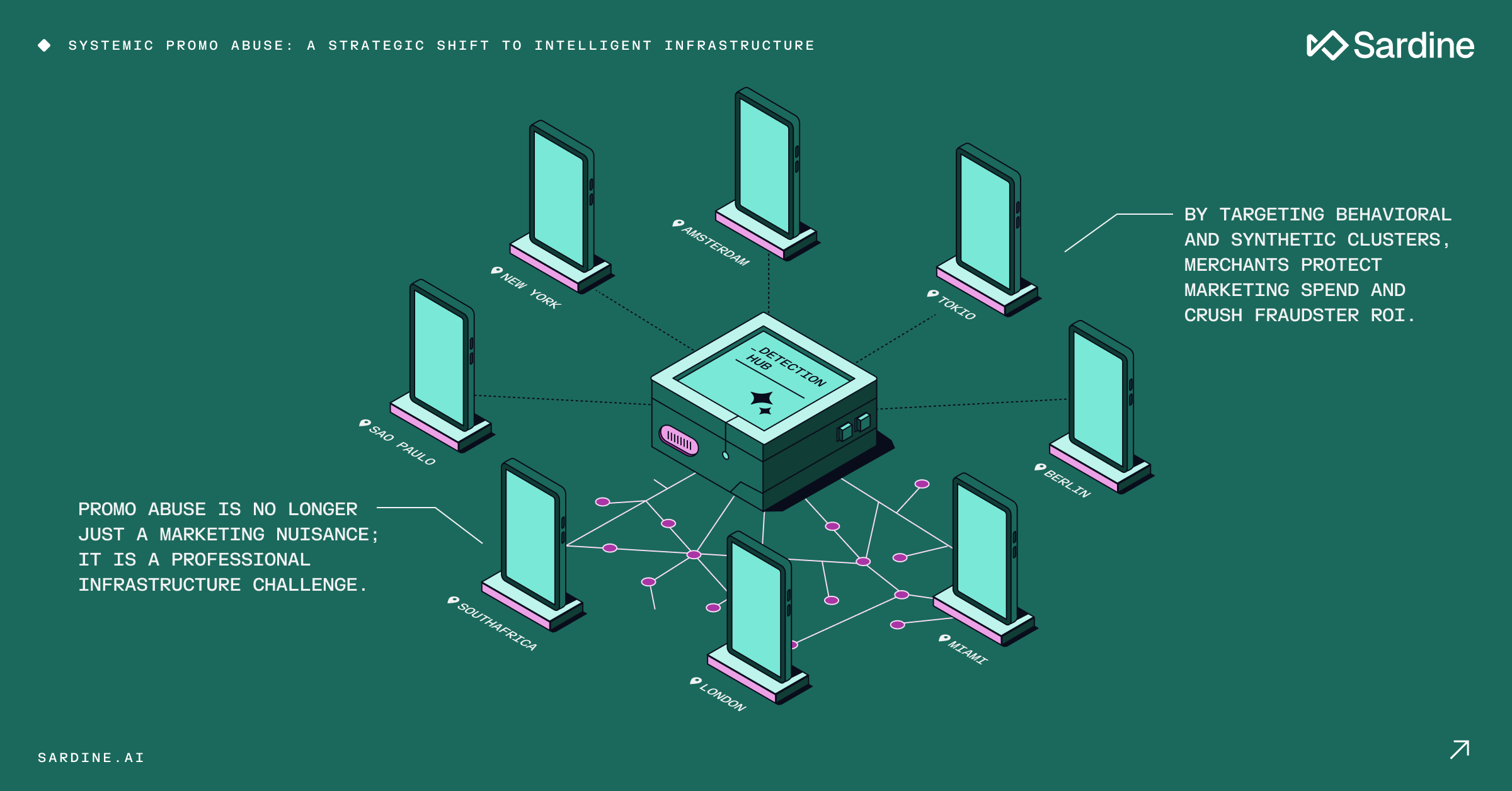
Inteligência de consórcio muda a equação. Em vez de cada instituição construir sua própria lista de bloqueio isolada, uma rede de inteligência compartilhada que abrange bancos, fintechs, marketplaces e processadores de pagamento permite que sinais de risco em tempo real sobre dispositivos, contas e padrões de comportamento se propaguem por todo o ecossistema. Quando um membro sinaliza um dispositivo ou identidade por fraude, esse sinal fica imediatamente disponível para todos os outros membros.
Essa visibilidade entre instituições transforma pontos de dados isolados em um mapa de fraude conectado, revelando dois padrões que são invisíveis para comerciantes que atuam sozinhos:
- Infratores recorrentes em várias plataformas: Identificar usuários que já foram sinalizados por abuso de promoções em outras instituições da rede, mesmo quando parecem totalmente novos para você.
- Redes de fraude coordenadas: Detectar quando várias contas compartilham sinais subjacentes de dispositivo, comportamento ou identidade que as vinculam à mesma campanha antes que uma única promoção seja resgatada.
Quando os comerciantes compartilham inteligência em vez de guardá-la para si, os fraudadores perdem sua maior vantagem: a capacidade de desaparecer entre instituições. Na Sardine, é isso que o consórcio Sonar oferece. Bancos membros, fintechs, marketplaces e processadores de pagamento compartilham, em tempo real, sinais de risco em nível de entidade sobre dispositivos, identidades e padrões de comportamento, em conformidade com a GLBA e a 314(b). Quando um esquema de fraude solicita um bônus de boas-vindas em um comerciante, o rastro de poeira já aparece no painel de todos os outros membros antes que a segunda bonificação seja resgatada. Quebre a cadeia antes que o dinheiro desapareça.
Seis controles contra abuso de promoções que sua equipe pode implementar agora
Embora os três pilares de que falamos acima sejam de arquitetura, estes seis são aqueles que a sua equipe de fraude pode implementar agora. Certifique-se de combiná-los em camadas; nenhum deles funciona sozinho.
- Impressão digital de dispositivo persistente.O mesmo dispositivo físico por trás de 47 IDs de dispositivo rotativos é um único fraudador, não 47 novos clientes. Identifique-o antes que a segunda conta seja aprovada.
- Análise de IDs sintéticos e de conexões.A análise de grafos de rede revela agrupamentos que compartilham endereços, padrões de telefone, lógica sequencial de e‑mails ou instrumentos de pagamento. Ataque o agrupamento, não a conta.
- Compartilhamento de sinais em consórcio.Se um esquema de fraude já atingiu dois dos seus concorrentes, você quer saber disso antes que atinja você. O consórcio Sonar da Sardine faz exatamente isso em conformidade com a GLBA e a 314(b).
- KYC por nível de risco e autenticação reforçada.Verificação de identidade progressiva, 3DS e SCA, mas apenas para a fatia de tráfego de alto risco. Clientes reais não sentem qualquer nova fricção. Quadrilhas de fraude devem bater em uma parede.
- Disciplina no design de códigos promocionais. BRAND10 e NEWUSER20 são um convite aberto. Limites rígidos de resgate, controles por IP e por dispositivo, e nenhum pagamento ao indicador até que o indicado conclua uma ação real. Nada disso exige nova tecnologia, apenas padrões melhores.
- Avaliação de afiliados e influenciadores. Faça KYC empresarial (KYB) dos parceiros que podem amplificar um código. Observe picos de atribuição para identificar lavagem de códigos por meio de tráfego pago. Se um pequeno afiliado de repente passar a responder por 30% das ativações, isso é um sinal claro.
Encerrar a campanha sem afastar o cliente
O objetivo de uma estratégia robusta de prevenção a abusos de promoções é tornar o ataque financeiramente insustentável. Para um fraudador profissional, tempo e ativos de identidade são os principais custos de fazer negócios. Ao aumentar a fricção necessária para criar uma conta limpa, você efetivamente destrói o retorno sobre o investimento deles.
Quando você foca na infraestrutura subjacente do ataque, especificamente no comportamento do dispositivo e em marcadores de identidade sintética, você isola quadrilhas profissionais sem introduzir fricção para a sua base real de usuários. Essa distinção técnica garante que as medidas de defesa sejam acionadas por padrões orquestrados, e não pelo comportamento individual dos clientes.
Ao neutralizar a escala do ataque no nível da infraestrutura, os comerciantes protegem seus gastos com marketing e mantêm a integridade de seus dados de aquisição.
Perguntas frequentes (FAQ)
Como vocês detectam abuso de promoções?
Em vez de olhar para a identidade, foque na infraestrutura. Impressões digitais persistentes de dispositivos identificam o mesmo aparelho trocando e‑mails e IPs para parecer novo. A detecção de IDs sintéticos conecta clusters que compartilham endereços, padrões de telefone ou lógica sequencial de e‑mails. Sinais de consórcio revelam usuários já sinalizados em outros estabelecimentos. Qualquer uma dessas camadas pode ser contornada isoladamente. As três juntas quebram a economia unitária da quadrilha.
Promo abuse é o mesmo que fraude de primeira parte?
O abuso de promoções é uma forma de fraude de primeira parte com uma estrutura de pagamento diferente. O operador usa o próprio nome ou um nome inventado, não um nome roubado. Isso o coloca em uma zona cinzenta contratual na maioria das jurisdições, e é exatamente por isso que quadrilhas de fraude preferem esse método. Menor risco jurídico, dinheiro comparável.
O que é uma fazenda de dispositivos?
Uma fazenda de dispositivos é uma fábrica de fraudes. Centenas de celulares ou dispositivos virtuais, muitas vezes operados por uma única pessoa atrás de um laptop rodando scripts, gerando milhares de criações de contas e resgates de promoções em um único dia. Se o volume de cadastros aumenta 400% em uma terça-feira e sua curva de retenção continua plana, é porque uma delas está atuando. A inteligência de dispositivos detecta isso mesmo quando e-mails, telefones e IPs estão todos sendo rotacionados.
Como o consórcio Sonar da Sardine ajuda especificamente no combate ao abuso de promoções?
O Sonar permite que você faça a verificação antes de se comprometer. As instituições participantes solicitam uma pontuação de risco em nível de entidade para um e-mail, telefone ou transação antes de autorizarem um bônus de cadastro, resgate de cupom ou pagamento de indicação. A pontuação reúne dados de dispositivo, comportamento e histórico de abuso em toda a rede. Um esquema que atingiu seu concorrente na semana passada aparece agora no seu painel. Opera sob a GLBA para fraude e a Seção 314(b) para AML.