




Nuevas reglas de gestión de riesgo de Nacha: una guía práctica para instituciones

Los estafadores explotan las brechas entre tus operaciones de ACH y los equipos de fraude. Aunque estos departamentos abordan amenazas superpuestas, rara vez comparten herramientas, datos o estrategias de detección, creando puntos ciegos perfectos para que los estafadores los exploten. Las nuevas reglas de gestión de riesgo de Nacha están diseñadas para ayudar a cerrar esa brecha, pero la implementación y la coordinación son clave.
En este webinar, hablaremos de:
- El alarmante aumento de las estafas y las tipologías emergentes en los rieles de pago
- Un desglose detallado de las nuevas reglas de Nacha y sus requisitos de cumplimiento
- Estrategias de colaboración entre las operaciones de ACH y los equipos de fraude
- Técnicas para establecer líneas base de comportamiento para identificar actividad sospechosa
- Cómo implementar la verificación previa a la transacción para detectar estafas antes de que se mueva el dinero
- Estudios de caso de implementación real y lecciones aprendidas
Con una discusión atractiva junto a:
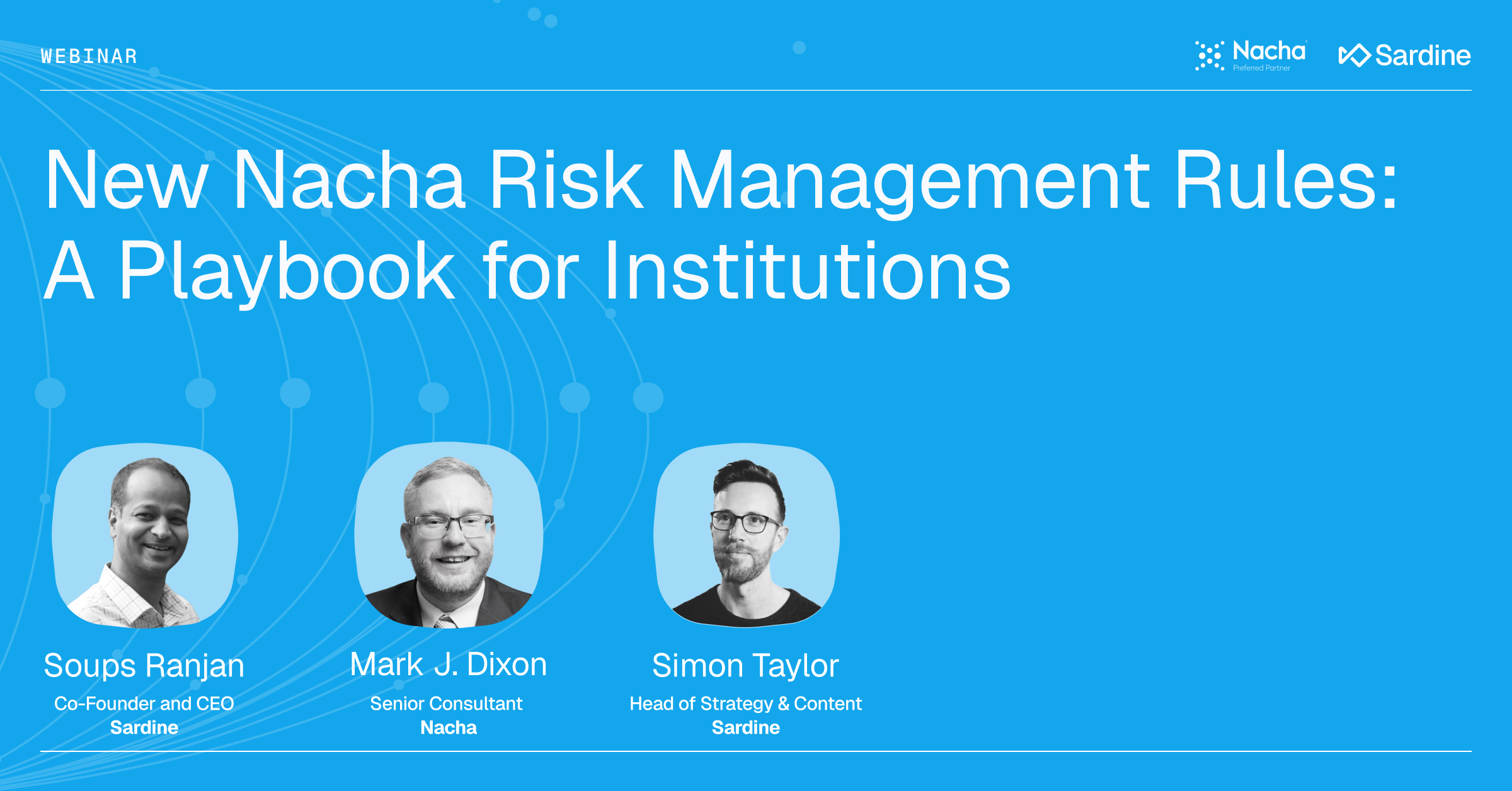
- Soups Ranjan, Cofundador y CEO de Sardine, con base en su amplia experiencia construyendo sistemas de prevención de fraude en Sardine, Coinbase y Revolut.
- Mark J. Dixon, Consultor Senior en Nacha, aportando experiencia en ACH, gestión de riesgo, tecnología y pagos.
- Simon Taylor, Jefe de Contenido y Estrategia en Sardine, guiando la conversación con perspectivas de su extenso trabajo en fraude, estafas y en todo el panorama de las instituciones financieras.
Acreditación: los miembros de Nacha pueden recibir 1.2 horas de crédito de educación continua AAP o APRP por asistir
Únete a Nacha y a los expertos en prevención de fraude de Sardine y obtén estrategias reales para ayudarte a cumplir con las reglas y detener las estafas antes de que el dinero se mueva.
By submitting this form, you agree that Sardine may contact you about our products and services. For more information, review our privacy policy.