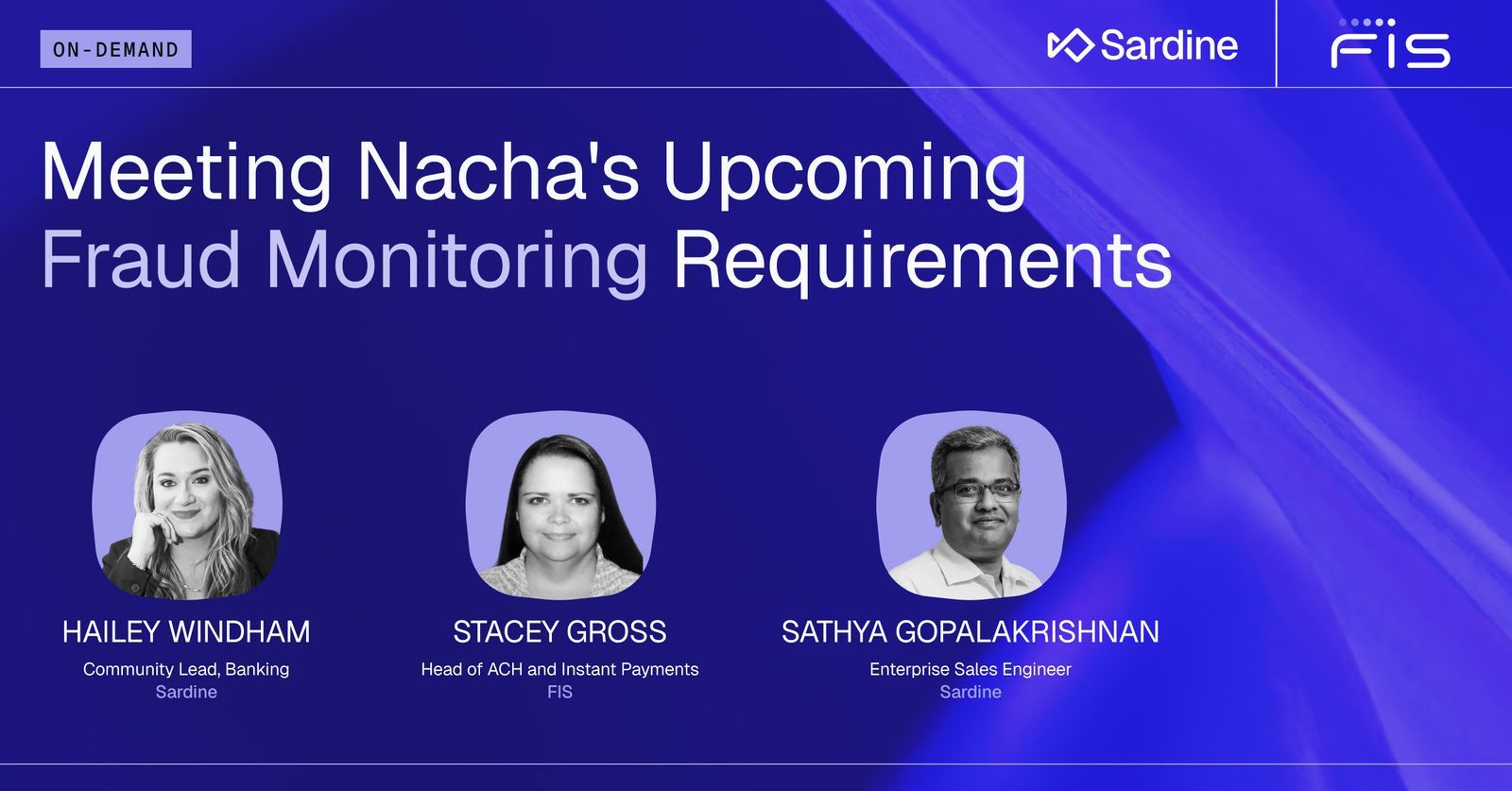
Meeting Nacha's 2026 Fraud Monitoring Requirements
Meet the team
The Nacha fraud monitoring updates are fast approaching, and most banks are hearing very different messages about what they mean.
Some are being told they’re already covered and don’t need to change anything. Others are hearing warnings about major gaps, heightened liability, or the need for entirely new controls.
In between, many fraud, payments, and compliance teams are left trying to translate broad guidance into something they can actually execute and explain.
In this webinar, we'll:
- Break down what is and isn't required
- Walk through real ACH fraud and scam scenarios
- Clarify how ATOs and scams factor into the requirements
- Outline what actually needs to be in place by the deadlines
- Discuss key takeaways and potential impacts
The goal is not to add fear or complacency, but to help teams leave with a clear, defensible approach they can execute on in time for the upcoming deadlines.
Tagged topics
Fraud
Compliance
Watch On-Demand
By submitting this form, you agree that Sardine may contact you about our products and services. For more information, review our privacy policy.
Related events

Trust at Velocity: How Consortium Signals Cut Losses & Friction
Trust is everything in banking. But instant payments, and the weaponization of AI, have pushed fraud past the limits of siloed controls. This session explores how cloud-based, cross‑industry consortiums enable institutions to collaborate in real time across the ecosystem, sharing privacy‑safe signals to spot scams and synthetic identities before money moves, without adding friction for customers.
Webinar

2026 Fraud & AML Trends
Most fraud headlines focus on the latest tactics. But the real shift is deeper: fraud and financial crime have changed. They no longer occur as isolated attacks. Instead, they operate as continuous, coordinated systems spanning identity, payments, scams, and money movement — and often appear legitimate at the moment they occur. Rather than speculating about future threats, we’ll examine what actually changed in fraud and AML operations in 2025 and what leaders should prioritize, fund, and operationalize in 2026.
Webinar
Suscríbase para recibir actualizaciones por correo electrónico
Lo mantendremos informado sobre nuestros mejores consejos para la prevención del fraude y el cumplimiento.