
Esta es la segunda publicación de nuestra serie de Operaciones contra el Fraude 2026, en la que exploramos las prácticas que ayudan a los equipos de fraude a operar con mayor precisión, confianza y rapidez. Si te perdiste la primera publicación, ponte al día aquí y descubre 5 formas creativas en que los equipos de fraude pueden usar la IA ahora mismo.
Lanzar nuevas reglas de prevención de fraude puede ser un arma de doble filo.
Cualquier especialista en fraude que haya implementado una nueva regla conoce esa sensación: esperar a que aparezcan los primeros aciertos en la pantalla, mientras teme la posibilidad de que un pequeño error pueda hundir el rendimiento del negocio.
Por mucho que necesitemos reglas antifraude para combatir el fraude, la dura realidad es que cualquier cambio en el sistema (grande o pequeño) representa una oportunidad para introducir un error.
Cada líder de fraude que conozco, incluyéndome a mí, tiene su propio repertorio de historias de terror que contar. Pero no tiene por qué ser así. Con un proceso de validación adecuado, tu equipo puede reducir el riesgo al implementar nuevas reglas.
Aquí te explico cómo crear un proceso seguro y confiable para la implementación de reglas antifraude que tu equipo pueda aplicar con confianza.
Cómo estructurar el proceso de lanzamiento de tus reglas contra el fraude
Un proceso de publicación de reglas contra el fraude está diseñado para garantizar que las nuevas reglas alcancen a la población adecuada cuando entren en vigor.
Ya sea que busques marcar comportamientos sospechosos para su revisión o bloquear directamente estos eventos, el objetivo es la precisión. Cuando una regla se publica de forma incorrecta, puedes encontrarte con dos problemas:
- La regla no logra detectar a la población maliciosa y genera falsos positivos
- La regla afecta a un número desproporcionado de usuarios legítimos
Si bien lo primero puede ser difícil de identificar, lo segundo conlleva un riesgo operativo y para el cliente mucho mayor. En las operaciones de fraude del mundo real, los mayores puntos de dolor suelen ser los falsos positivos, los usuarios legítimos bloqueados, la interrupción del negocio y la carga de revisión manual que sigue a una mala publicación.Un proceso bien diseñado para la publicación de reglas puede prácticamente eliminar por completo ambos escenarios.
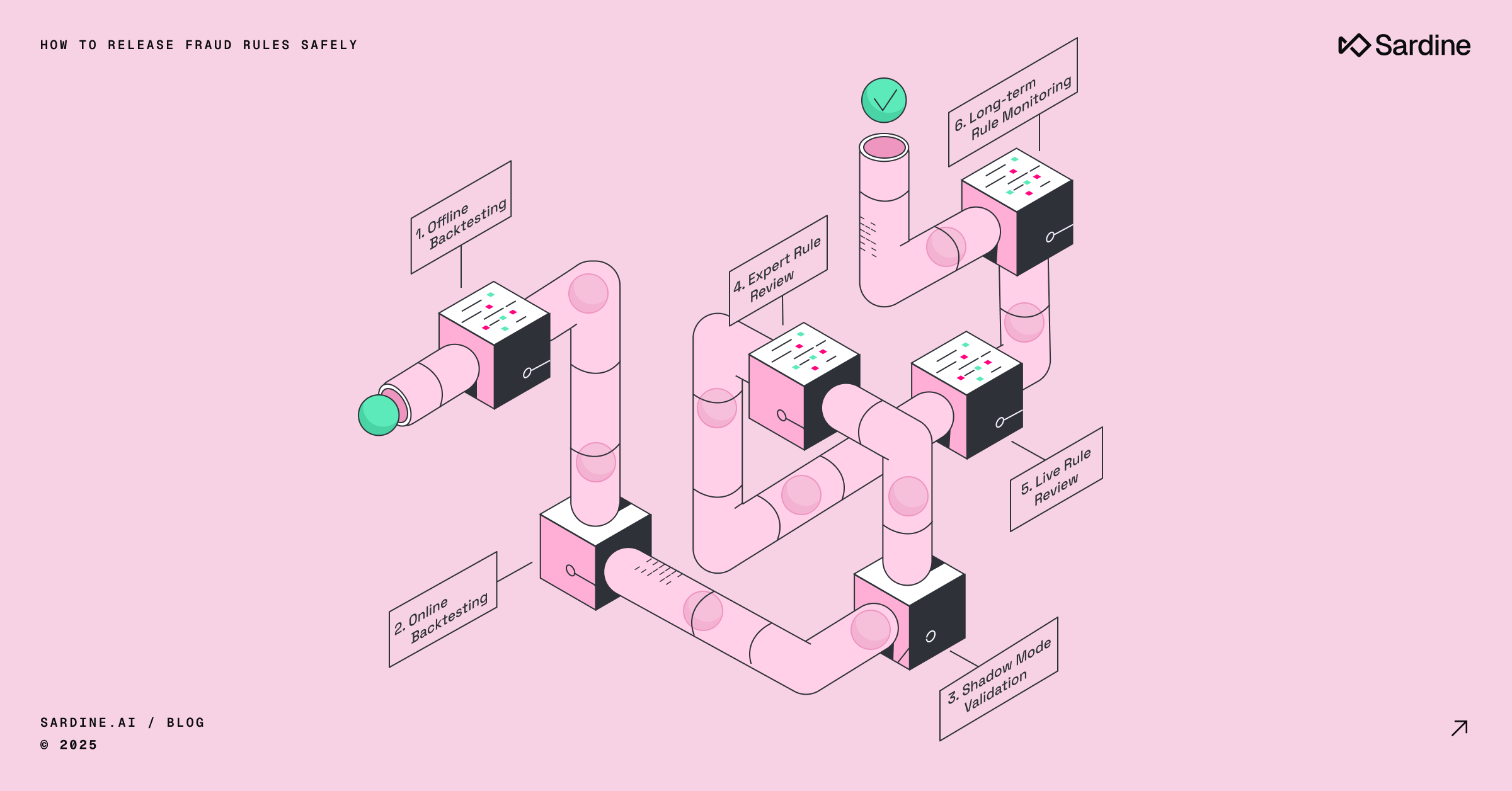
En mi experiencia, la forma más segura de implementar reglas antifraude es tratar la publicación como un proceso, no como un evento. Recomiendo un proceso de seis pasos, descrito en la tabla a continuación.
Paso | Backtest sin conexión | Backtest en línea | Revisión de experto | Validación en tiempo real | Revisión en vivo | Monitoreo a largo plazo |
Qué | Establecer el rendimiento de referencia | Descartar errores técnicos | Mantener el principio de cuatro ojos | Confirmar que las coincidencias de reglas estén dentro de la predicción | Confirmar que la precisión está dentro de la predicción | Configurar la supervisión a largo plazo |
Dónde | Almacén de datos | Motor de reglas | Motor de reglas | Motor de reglas | Gestión de casos | Motor de reglas |
Cómo | Simular con datos históricos | Validar que la sintaxis de la regla coincida con el borrador de SQL | Revisar la configuración de reglas | Supervisión en “modo sombra” | Revisar los impactos del “modo sombra” | Definir umbrales de red de seguridad |
Modo sombra | Puesta en marcha |
Paso 1: backtesting offline para la detección de fraude
Una nueva regla comienza con un pequeño proyecto de investigación, en el que el especialista en fraude itera sobre el patrón que desea capturar utilizando datos históricos. Este trabajo suele realizarse en tu propio almacén de datos de nivel de calidad aceptable (AQL), donde el objetivo es medir cómo habría funcionado la regla frente a los indicadores clave si hubiera estado activa en el pasado. En cada iteración, el analista mejora el rendimiento general de su lógica hasta quedar satisfecho con él.
Naturalmente, esto plantea la cuestión de qué significa “estar satisfecho” en este contexto. Lo último que quieres es una situación en la que cada miembro del equipo tenga su propio estándar de calidad. Por ese motivo, es fundamental que los equipos de fraude cuenten con una política predefinida que establezca qué criterios de éxito deben cumplir las nuevas reglas para considerarse “aptas para producción”.
Estos criterios de éxito, expresados como umbrales de métricas, varían no solo entre organizaciones, sino también según el objetivo de la regla.
Una regla que bloquea eventos automáticamente debe ser más precisa que una regla que marca casos para revisión manual.
Una regla que anule bloqueos para evitar falsos positivos se optimizaría en función de métricas diferentes a las de una regla de reducción de fraude “normal”.
Independientemente del objetivo, los criterios de éxito deben respaldar una visión holística del impacto de la regla.
Se recomienda que los equipos no evalúen la precisión frente al fraude de forma aislada. También deben tener en cuenta los falsos positivos, la fricción para el cliente y si la regla mejora el rendimiento general del negocio una vez que esté en producción.
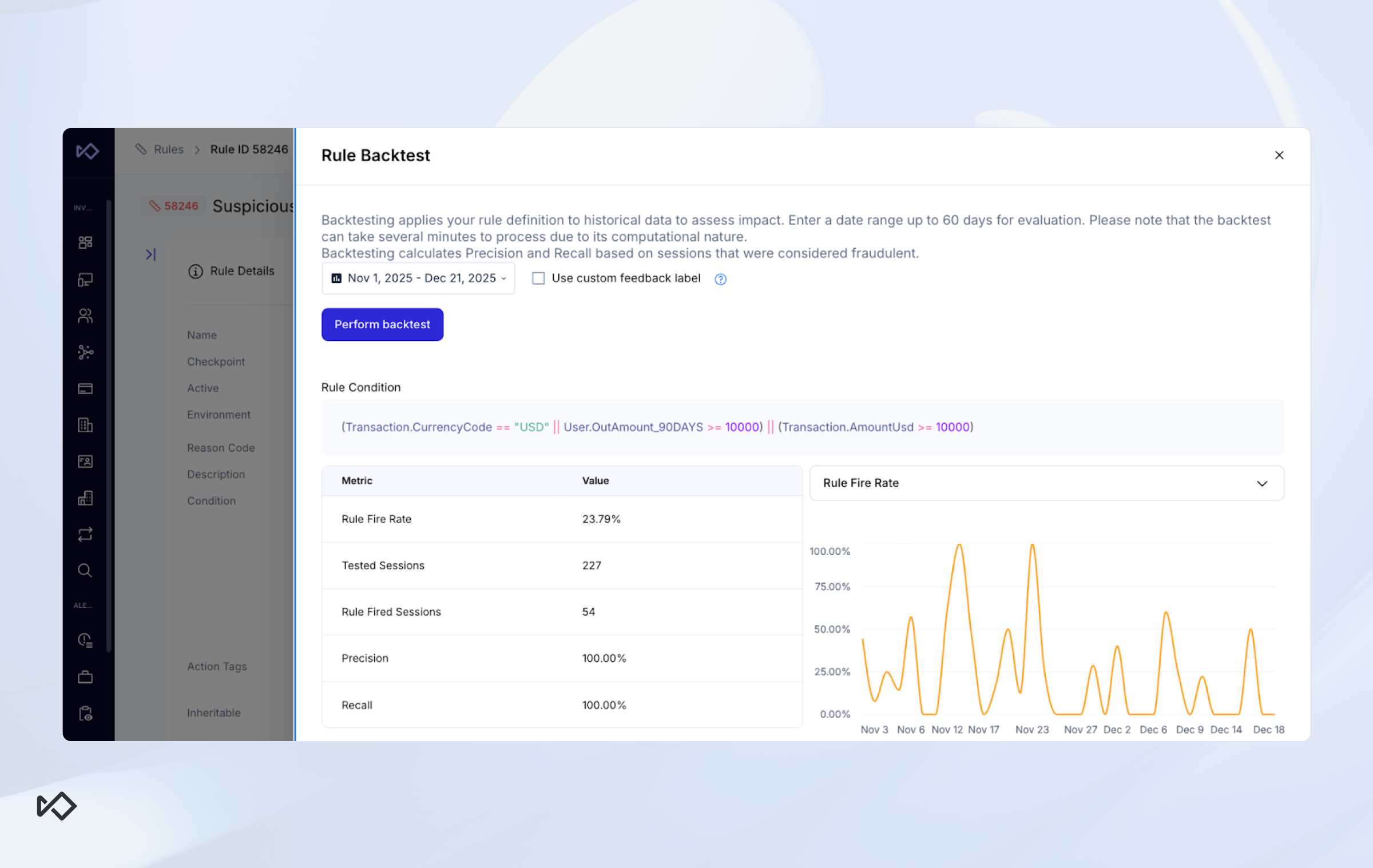
Paso 2 - Backtesting en línea
Una vez que el especialista en fraude está satisfecho con su lógica SQL, ahora necesita “traducir” su sintaxis dentro de los límites de su motor de reglas. A veces es un ejercicio sencillo (es decir, amount > $100 AND risk_score > 80), pero en otras ocasiones puede volverse bastante complicado.
Un desafío común es que las funciones disponibles en el motor de reglas a menudo requieren una lógica regex incómoda o poco elegante para replicarse en el almacén de datos local.
Otro desafío es que funciones como los contadores de velocidad son difíciles de reproducir, especialmente en un momento específico, con SQL.
Independientemente del motivo, el simple hecho de que estés trasladando código de un sistema a otro es una vulnerabilidad importante. Para validar que la regla se comporte como esperas, igual que lo hacía la consulta SQL, también querrás hacer un backtest de la regla dentro del propio motor de reglas. Idealmente, la ejecutarías sobre la misma población y el mismo periodo de tiempo que usaste en tu backtest con SQL. Luego, todo lo que necesitas hacer es comparar las listas de eventos etiquetados y asegurarte de que sean iguales en ambas versiones.
Paso 3 - Revisión de expertos
La implementación del principio de las “cuatro miradas” para los cambios en el sistema puede que ya sea un requisito formal en tu organización. Incluso si no lo es, se recomienda encarecidamente introducir este punto de control: las reglas antifraude pueden causar estragos en los sistemas de producción y, en la mayoría de los casos, los fallos se deben a simples errores humanos.
Como última medida de seguridad antes de salir a producción, asegúrate de que un especialista con experiencia revise y apruebe la nueva regla. Si tu equipo tiene niveles de experiencia similares, una revisión por pares estructurada aún puede reducir significativamente el riesgo de errores.
La función del revisor es asegurarse de que se respeten las mejores prácticas, incluyendo:
- Las pruebas retrospectivas muestran un buen rendimiento
- La documentación coincide con la sintaxis
- La regla está correctamente etiquetada y configurada en «modo sombra»
Un revisor también puede verificar la regla fuera de los límites del conjunto de datos, por ejemplo: ¿se tuvieron en cuenta las temporadas altas? ¿Excluimos una nueva línea de productos que no estaba en el conjunto de datos?
Una vez que la revisión haya concluido con éxito, el revisor puede activar la regla y ponerla en el entorno de producción en vivo.
Paso 4: Validación en vivo en modo sombra
Como se mencionó en el paso anterior, lo ideal es que las nuevas reglas se publiquen en «modo sombra», donde etiquetan los eventos sobre los que habrían actuado sin aplicar realmente ninguna acción. Esto permite supervisar el rendimiento y confirmar que la regla se comporta como se espera, sin asumir riesgos innecesarios.
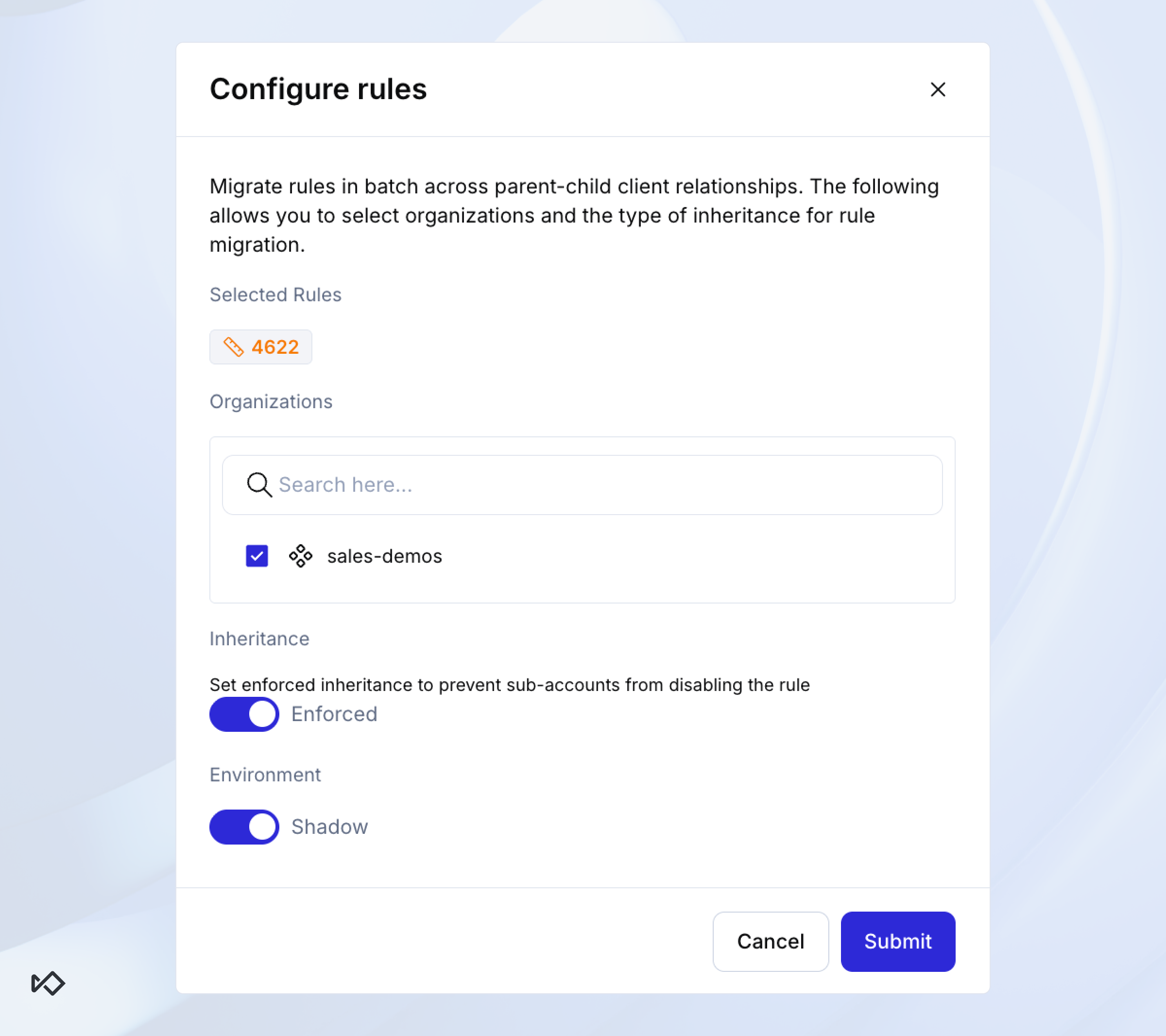
El objetivo de este paso es descartar el peor escenario descrito anteriormente: una regla que afecte de forma no intencionada a tantos usuarios legítimos que desencadene de inmediato un incidente a nivel de todo el negocio. Esto ocurre con más frecuencia de lo que podrías pensar, a veces por algo tan simple como cambiar “score > 90” por “score < 90”, lo que puede bloquear de repente el 80% del tráfico.
Supervisar el volumen de eventos que una regla alcanzaría mientras está en modo sombra te permite detectar de forma segura estos problemas a tiempo, antes de que escalen hasta bloquear a usuarios legítimos, generar escaladas al soporte o provocar una interrupción más amplia del negocio. Como regla general, las reglas nuevas deberían permanecer en modo sombra al menos una semana para confirmar que el comportamiento en vivo se alinea con el rendimiento histórico que justificó publicar la regla en primer lugar.
En caso de que hayas omitido el “modo sombra” por urgencia (o por falta de ella), igualmente deberías llevar a cabo este paso mientras supervisas los resultados en tiempo real. Vigila muy de cerca la regla durante las primeras 24 horas, especialmente durante la primera hora, para descartar fallos catastróficos.
Paso 5 - Revisión en vivo en producción
En este paso, tu objetivo es evitar otro escenario indeseado: la regla no logra detectar el patrón de fraude para el que la diseñaste y se limita principalmente a bloquear falsos positivos. Sin embargo, esto es más difícil de conseguir de lo que parece.
Si se bloquea un evento, ¿cómo sabes que realmente era fraudulento? Sin contracargos ni quejas de clientes, no hay una forma directa de medir el fraude bloqueado o los falsos positivos en tus paneles. Por lo que sabes, la regla podría estar bloqueando el volumen esperado de eventos, pero también podrían ser falsos positivos.
La mejor manera de obtener una validación “rápida y sencilla” es revisar manualmente una muestra de los impactos de la regla y comparar los resultados con tus backtests. Si esperas que una parte importante de la población sea fraude, no necesitas revisar demasiados casos. Por lo general, entre 50 y 100 casos etiquetados manualmente ofrecen una buena indicación de si la regla está funcionando como se espera. Este tipo de muestreo también ayuda a los equipos a decidir si una regla realmente está mejorando el desempeño contra el fraude o solo está trasladando más trabajo a la revisión manual.
Ten en cuenta que si esta revisión se utiliza únicamente para un etiquetado temporal y no para la aplicación de medidas, la precisión a nivel de caso es menos crítica. Lo que más importa es obtener una visión de alto nivel de las métricas, por lo demás ocultas, que estás tratando de descubrir.
Una vez que hayas completado correctamente este paso, podrás concluir con seguridad que tu regla es segura y está lista para estar completamente activa. Es hora de desactivar el “modo sombra”.
Paso 6: supervisión a largo plazo
Saber que tu regla se comporta como esperas en el momento de su lanzamiento es una excelente noticia, pero eso no significa que vaya a seguir así para siempre. Todo experto en fraude sabe que las reglas, como la fruta, empiezan a pudrirse en cuanto las pones en producción.
Con el tiempo, los estafadores evolucionarán y cambiarán sus patrones, surgirán nuevos patrones de falsos positivos y el rendimiento de tu regla se deteriorará.
La pieza final consiste en configurar alertas de reglas para avisarte cuando esto empiece a suceder.
Considera estos dos casos de alerta:
- El problema: La regla se descontrola y empieza a bloquear a grandes sectores de tu población.
- La solución: Implementa alertas que supervisen los aciertos de la regla y se activen cuando se alcance un umbral predefinido. Para evitar demasiados falsos positivos, establece los umbrales de forma generosa.
- El problema: La precisión de la regla se está deteriorando lentamente y es más compleja de supervisar mediante alertas.
- La solución: La forma más precisa de medir la tasa de falsos positivos de una regla en producción es mediante un grupo de control que anule el bloqueo para una pequeña población aleatoria. Ten en cuenta que es poco probable que este enfoque sea eficaz para la mayoría de las reglas, especialmente aquellas que no están diseñadas para rechazar grandes volúmenes de eventos cada día.
Si bien existen diferentes maneras de obtener una aproximación de la precisión de forma automatizada, la mayoría de los equipos las consideraría demasiado complejas de implementar. Por ese motivo, lo mejor es comenzar con una revisión periódica de las reglas en producción cada seis a doce meses.
¡Enhorabuena! Una vez que tengas configuradas tus alertas, podrás considerar tu regla completamente lanzada.
Evalúate: ¿Qué tan seguro es tu proceso de implementación de reglas contra el fraude?
Como señalamos, el proceso anterior representa el conjunto completo de mejores prácticas. La buena noticia es que los equipos no necesitan perfeccionar todas las etapas a la vez. Un despliegue práctico suele comenzar con un mejor backtesting, una revisión de expertos más sólida y una validación más segura en modo sombra, para luego evolucionar hacia un flujo de trabajo más completo de lanzamiento y monitoreo. En la práctica, es posible que tu equipo no cumpla con muchas de las partes y que la tarea de implementar el proceso completo parezca abrumadora. No pasa nada, no es un juego de suma cero.
Estos son los hitos que quieres ir alcanzando poco a poco mientras avanzas en el proceso:
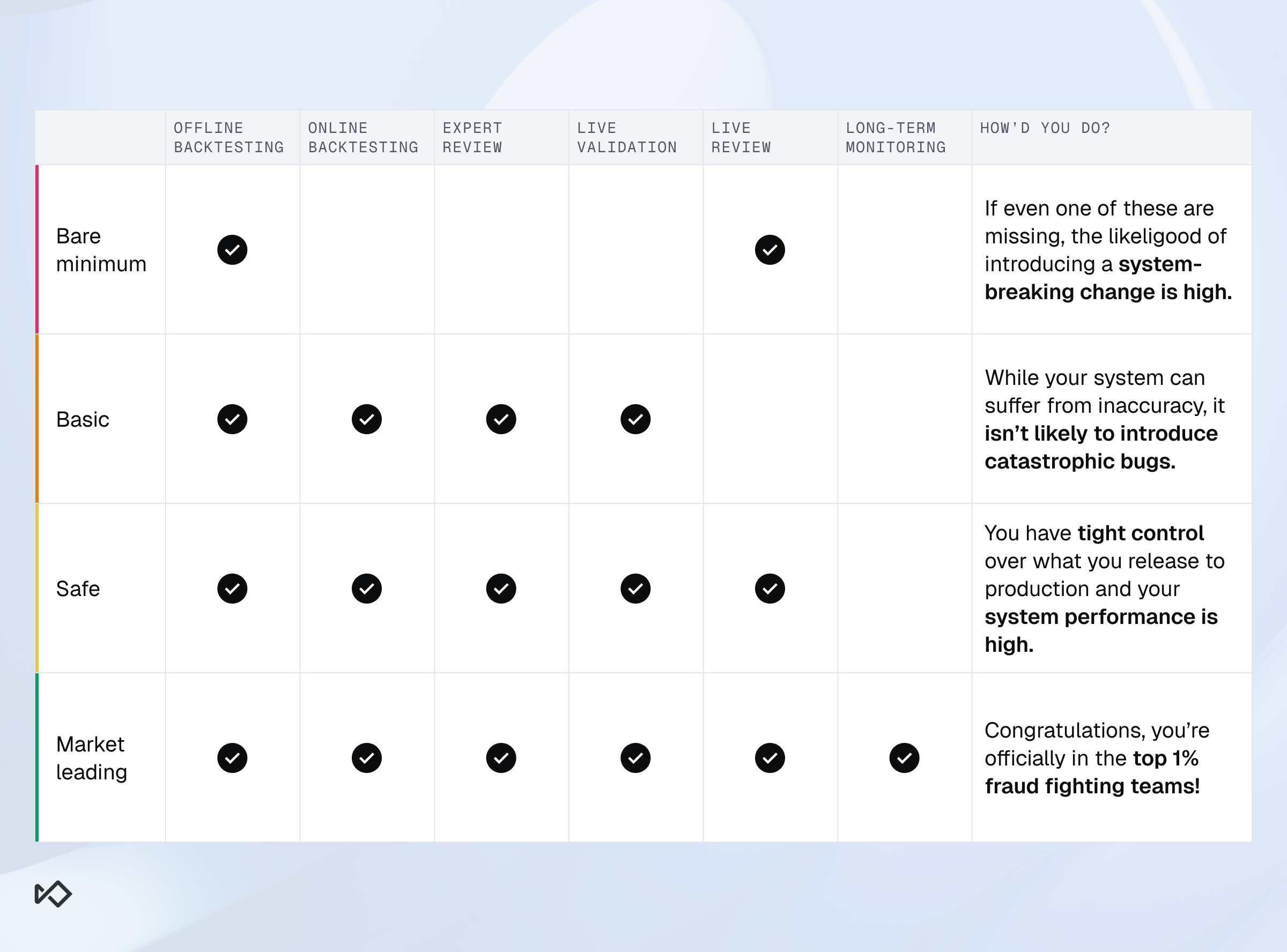
Publicar reglas contra el fraude no tiene por qué ser un salto de fe. Con un proceso estructurado de validación y monitoreo, los equipos pueden lanzar más rápido, reducir el riesgo y mantener un alto rendimiento del sistema, incluso a medida que el fraude sigue evolucionando.
Las reglas son solo una capa dentro del panorama general. Para saber hasta dónde dejan de escalar y los flujos de trabajo toman el relevo, consulta reglas contra el fraude vs. flujos de trabajo.
Preguntas frecuentes
¿Qué criterios de éxito deberíamos usar para evaluar una regla?
Una nueva regla contra el fraude debe reflejar el entendimiento previo y acordado sobre el equilibrio que la empresa está dispuesta a aceptar entre detener el fraude y generar nuevos falsos positivos. Sea cuales sean las métricas que utilices, asegúrate de que reflejen esta tensión. Una buena regla general es usar el rendimiento global de tu sistema antifraude como la referencia que una nueva regla debe superar antes de ser implementada. Por ejemplo, si la suma de todas tus reglas y modelos se traduce en un 80% de precisión y un 2% de recall, ambas métricas deberían mejorar para aprobar una nueva regla. De este modo, te aseguras de que tus reglas tengan un impacto global positivo.
¿Qué es una “regla de red de seguridad” y por qué deberían usarla los equipos de fraude?
Las reglas de red de seguridad no están diseñadas para detener los patrones de fraude cotidianos, sino para protegerte contra escenarios catastróficos y de peor caso que podrían poner en peligro el negocio. Estas reglas suelen usar contadores de velocidad con umbrales muy altos o límites amplios para detectar ráfagas masivas e improbables de fraude que tus reglas habituales podrían pasar por alto. Están pensadas para activarse rara vez, si es que lo hacen, pero cuando se activan, evitan pérdidas extremas y le dan a tu equipo tiempo para reaccionar sin entrar en crisis. Contar con ellas puede reducir el estrés en torno a eventos de fraude poco frecuentes pero de alto impacto y garantizar que estés preparado para picos excepcionales de riesgo.
¿Deberían las reglas contra el fraude diseñarse alguna vez para limitar la exposición en lugar de bloquear por completo las amenazas?
Sí, limitar la exposición (por ejemplo, poniendo tope al tamaño de las transacciones o restringiendo la apertura de nuevas cuentas) puede ser una herramienta estratégica, no solo un control de último recurso. Los límites no detienen el fraude por completo, pero obligan a los estafadores a escalar sus operaciones para alcanzar sus objetivos económicos. Cada intento adicional genera más señales y patrones que puedes detectar, convirtiendo los límites en mecanismos de detección y no solo en topes de pérdida.
¿Por qué una regla puede parecer “buena” en las pruebas pero aun así hundir el rendimiento en vivo?
Una regla puede parecer efectiva de forma aislada, mostrar una alta precisión sobre el papel o tener sólidos indicadores históricos en backtests, y aun así funcionar mal en producción porque las métricas de evaluación por sí solas no capturan el impacto en el mundo real. Los equipos suelen apoyarse en términos como recall o tasa de falsos positivos, pero estos no miden el beneficio incremental, como cuánto fraude adicional detecta la regla por encima y más allá del sistema existente o si introduce costos ocultos para el negocio. La mejor manera de validar el rendimiento de una regla es observar la precisión en contexto, el impacto incremental en el sistema en su conjunto y las métricas de negocio reales (por ejemplo, valor ahorrado frente a conversiones interrumpidas). Esta visión sistémica te ayuda a detectar cuándo reglas que “se ven muy bien” sobre el papel en realidad añaden ruido o degradan las operaciones en la práctica.
¿Por qué no es suficiente el backtesting sin conexión?
Las pruebas retrospectivas sin conexión muestran cómo habría funcionado una regla utilizando datos históricos, pero no confirman cómo se comporta en tu sistema en producción. Las pruebas retrospectivas en línea y el modo sombra son necesarios para que la regla funcione según lo previsto cuando se implemente.