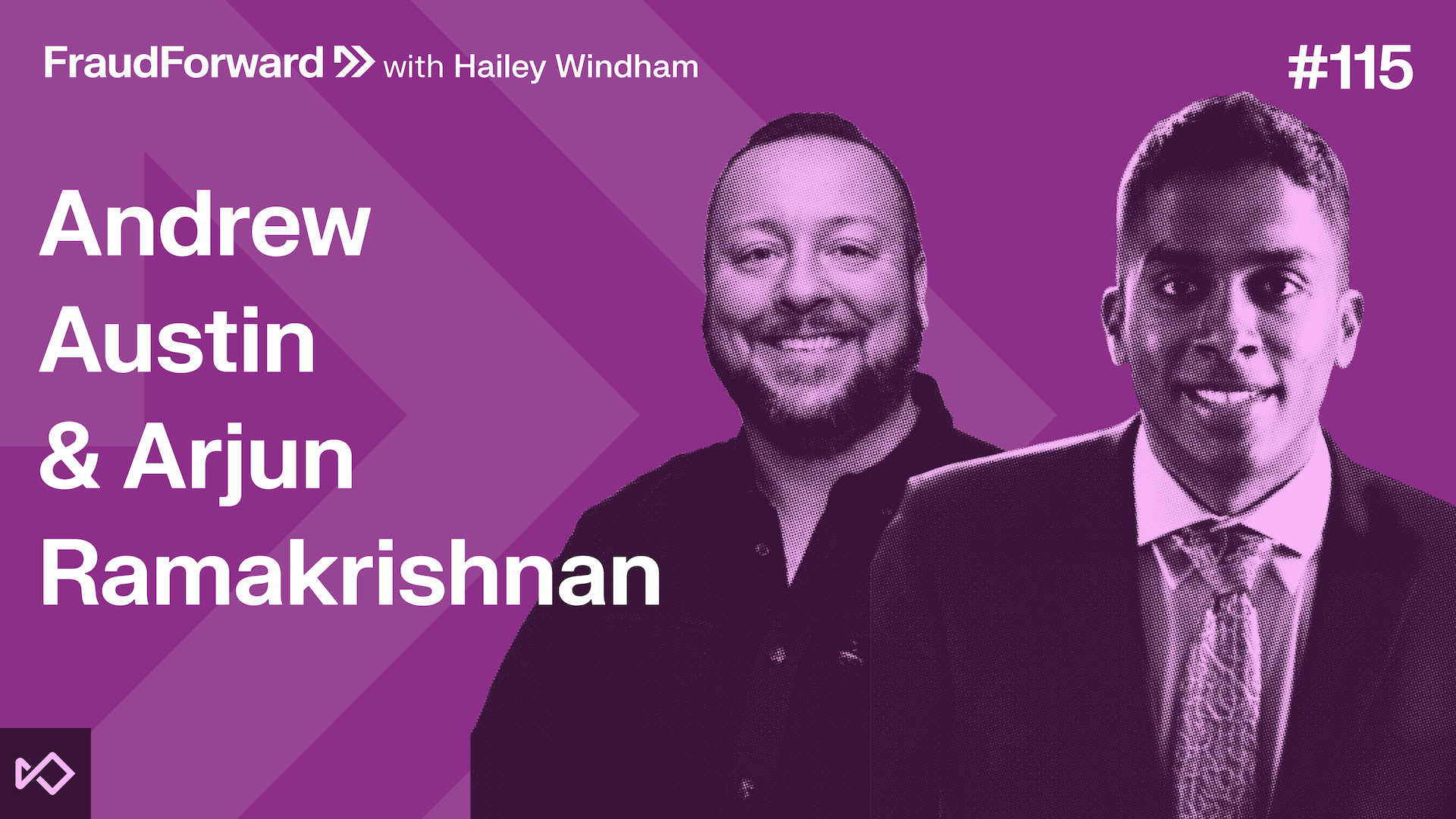
What is up, fraud fighters? Welcome back to Fraud Forward. Today’s episode is another different one, because this is one that was recorded live from Safeguard’s AI Deep Dive Retreat at The Broadmoor in Colorado Springs. And this event stood out. It really did. Not because it was packed with buzzwords or overproduced AI hype, but because it brought together the most diverse group of fraud leaders, payment experts, financial institutions, fintechs, marketplaces, and operators that I’ve ever seen at a single conference, but who are all trying to answer the same question. And that is, what happens to fraud prevention when artificial intelligence changes everything? Throughout this episode, you’re going to hear short conversations that I recorded throughout the conference with some incredibly smart leaders, again, across banking, fraud operations, identity, payments, and risk. And what I loved most about these weren’t those theoretical conversations. These were practical discussions about synthetic identities, scams, AI agents, governance, operational pressure, investigator workflows, and the very real challenge of keeping humans at the center while fraud accelerates around us. One theme that came up over and over again is that AI is absolutely changing fraud, but that doesn’t mean it’s replacing people. No, but instead, what you’ll hear is that it’s actually helping fraud fighters scale, adapt, and make better decisions faster.
So today I want to take you inside those conversations that were happening in the hallways, the breakout rooms, and networking sessions at Safeguard. And first up is Angela Diaz. I sat with her to talk about the industrialized scale of fraud and why governance can’t be treated as an afterthought anymore. So here’s what she had to say. What is the biggest AI-driven fraud risk that financial institutions should be paying attention to right now?
The scale. The scale, and the ability for if the fraudsters get it right, because we know it’s about them getting it right, figuring out that path, if they get it right at the scale that AI can provide for them, it will be just a massive hit of fraud, and our ability to react to that quickly and catch up is going to be challenging. So for me, and that’s kind of a broad answer, but that’s my concern, more at scale.
Yeah. No. Well, you know, Erin West has said it best when it comes to the industrialized scale that these scams are targeting, you know, our customers, our members. And so being able to truly find a way to combat that effectively, that’s going to be our challenge. Yeah.
They are running like large corporations. Yes, they are running like large corporations now. I’ve been talking about it a lot on some panels I’ve been on. It’s intense, and it’s going to keep getting worse.
So yeah. Okay. So would you say, or in your opinion, is AI giving the advantage to the fraudsters or the fraud fighters?
Both. Yeah, both. And I think that the biggest opportunity is for us to accept that and be aware of exactly how they’re using it and what they’re doing, but be very, very focused on how we can use it to our advantage to get better at some of the things that we maybe have had challenges with, and get ourselves in real time up to scale, and something that we can continue to adapt, tweak, enhance very, very quickly. We need to focus on everywhere that we can use it in a controlled environment, of course. Add that supervisory agent layer, please, for your risk manager. But absolutely, I think that it is both, and I think it’s okay to acknowledge that. But I think our focus needs to really be on, okay, we need to know enough about what they’re doing, but let’s buckle down, let’s hustle, let’s get to work on building what we need to build.
Yeah. So I didn’t pre-plan this question with you, but it’s just one that’s come to the top of mind. What advice would you give to a fraud professional that is looking to implement some type of AI that needs to bridge that conversation with their risk leader? What would you say should their first step be if they want to talk to their risk partner?
The first step is always, and this is kind of a callback to our episode together, you should already have a high-level process flow, and you should have some controls in place that are applicable to your current environment. Be able to say to your risk manager, this is what I’m thinking about, how I would like to use AI within my processes. This is my rationale behind why I think that it would be a good fit. This is how I think it might change my risk, and I would like to control for it and get their support. Now, if you are in a place where you want to introduce it into your environment, but you have no idea how it would change your risk or how to control for it, that’s okay too. That’s what we’re there for. So simply approach them with, I want to use it. I think there’s a benefit. This is how I’d like to use it. Can you please help me with now how to understand what risks I need to be paying attention to, and either what new controls I need to put in place, or how are my regular controls applicable to that? What can I enhance there as well? That should always happen in parallel to each other. A theme that I’m picking up from a lot of the conferences is implementing AI, and then next year we should expect to talk about governance controls and risk. No, that’s something I’ve been trying to change in the industry for years. We always should be working in parallel with each other. If you are changing a process, if you are introducing a process, if you are implementing a new solution, if you’re changing your technology or your data, you need to be assessing the risk at that point, and in parallel, changing what you need to change as part of your change management process. You do not want to clean it up later, especially in an area like fraud.
Yeah, no, I appreciate that perspective. And just for anyone listening, that’s episode 97. I was checking on my phone to make sure. So check out that episode where Angela and I really dive deeper into that particular topic. You also teed up the next question, I think, perfectly. But how can credit unions and banks realistically use AI without overcomplicating things?
Start with baby steps. Start with it maybe not in your live production environment. Something I always recommend, and probably a lot of people that are further along in AI might kind of shrug their shoulders at it, but again, baby steps. Baby steps is data. I use Microsoft Copilot all the time to help me with analyzing raw data, where I might not have the data fields I want, but I want to know trends and checks within the data, and it’s a lot of line items. And I’m not a data scientist, data analyst, not a data scientist. Another good option, especially for assessments, is if you’re trying to do a risk assessment, you can give Copilot a couple of simple prompts that help you walk through a risk assessment by feeding into it some procedures and standards you’re trying to be compliant with, some process maps, and it’ll do a risk assessment for you if you give it the right prompts. It’s very easy to treat yourself, and I promise I don’t work for Microsoft Copilot. That’s just what all the banks are, because we are, you know, that’s one of our easiest wins for us to use, right?
Love that. Okay. Last question, then I’ll let you get back to it, because I know that we’ve got some pretty cool breakthrough roundtables and individual conversations going on right now. What’s one misconception people have about AI and fraud prevention?
That it will harm us, that we will not be able to control for it. That is not true, and we can’t shy away from it because of that fear. Fraud as an industry is one that is constantly changing. We are constantly evolving. We have dealt with technology changes, the way that scams happen. The internet itself changed what fraud looks like, right? It’s not just transaction monitoring. Digital banking changed the way fraud looks. So this is just another instance where the industry is facing a change, a forced evolution. We should be good at that. That is what we need to do. It keeps us on our toes. If you’re not in a position to be able to be open to, okay, what is next? What do I need to do? How do I elevate myself? How do I tackle this change? If you’re not willing to do that work, if you’re not willing to keep up, then you’re going to struggle.
So Angela brought up something incredibly important there, and that’s this idea that AI implementation and governance has to happen together. But another major theme throughout the conference was collaboration, because no institution is solving this alone. So next I spoke with Melinda Szabo from the operational reality many financial institutions are facing right now, especially as scams become more sophisticated and emotionally manipulative. When you think about Safeguard, or why you wanted to come to Safeguard, what is it that actually drove you to come?
I believe my biggest goal here is to get ahead of all these scammers and fraudsters, which obviously I think is a never-ending fight. And I learned this yesterday from one of the sessions, how AI is so sophisticated these days, and what they can do with it. But at the same time, I think gathering industry insight, building connections, and making sure that collaboration is happening. Yes, and it’s a must right now, not just a have-to, I guess. We have to. I think this whole conference brings a lot of people together, and I love it.
I agree. There’s been a really great mix, I think, of e-commerce, banks, credit unions, solution providers, and it hasn’t felt real salesy, at least from, well, they’re not trying to sell me anything. But have you felt the same way? Has it been a little too pushy, or has it really just felt more collaborative?
I didn’t find it pushy at all. I actually enjoyed these 15-minute meetings. It seems a little daunting, but at the same time, I think it’s very, very useful. And 15 minutes is more than enough to get that insight from the other person. I did not get any feeling of being pushy. It felt more collaborative. I had very, very good sessions, very good meetings, like we did yesterday. I think we had a really, really good meeting. I agree. So no, I’m looking forward to the second day.
I am too. I am too. I believe you said you had eight meetings here.
I believe so. Eight or six, something like that.
And I know that Jen Lamont does too, so it does feel kind of daunting. I think that the only thing I would probably want is maybe just a little extra buffer in between our meetings, because I’m trying to write down those last-minute notes, you know, and then move over. And then I feel like I’m starting the next one going, “Oh, sorry, let me finish this one little note, and then we can start our meeting.” Okay. So I love that what you wanted, obviously, from Safeguard was to try to get a better understanding of where you are and where you can go from here. Is there any one particular insight, not like a solution, but is there anything that you’ve taken away so far, like from day one, or anything you’re hoping to grab from day two?
Absolutely. What I realized, and this thing has been in my mind for a few months, is that I believe the collaboration between financial institutions should be closer. That’s the only way to stop this. I had a conversation yesterday with somebody that we talked about, that we don’t reach, I think, the target audience of these scammers as much as we want to, and maybe media would be a very, very helpful tool. And also, again, as I mentioned, collaboration between the financial institutions. Because how do you stop the money if I have to send a letter? That’s not going to be helpful when you have to stop a wire immediately. So I don’t know if there is any way to get the banks more involved, build something that we can have better collaboration here, because at the end of the day, I mean, the scammer is winning. And we learned from the session yesterday that, you know, an entire generation’s money is gone from the U.S.
Yes. When she said that, it’s been a little over a year since I’ve heard Erin speak in person, and every time she makes that statement that a generation’s worth of wealth has left this country, it really puts it into perspective that if we don’t do something now, how much worse can it actually get? And I look at this room full of 600 people, and I go, we are really trying to make that difference. But it’s so hard whenever we’ve got the rules and regulations that we have to follow, where the scammers don’t.
So what’s the biggest AI-driven fraud risk that financial institutions should be paying attention to right now?
I still do believe that it’s the scams, the investment and romance scams. It’s very, very scary what they can do with AI, and how much you cannot even differentiate these days between if it’s an AI or a non-AI video that you see, and people believe it. So I believe that will be the major focus. And again, that’s my question to you, Hailey. How would you get media to help us?
Yeah, I know that a part of it is having to, at least in my mind, you have to have people that you know. I remember I have a local news anchor who I went to middle school with. I reached out to her and I said, “Hey, can we talk about this?” And I had a five-minute segment on her news show, and I’ll forever be grateful for that. But how else do we do it? I know that scams and fraud, there’s like two ways that I think that media portrays it. One is, you know, the stupid victim. “Oh my God, they fell for this.” The other is that it’s like the sex sells, right? They try to tell the sexy part of the story. And I’ll never forget when CBS ran their special, I believe maybe even sometime last year, later last year, I was so mad. I was like, what kind of journalistic integrity? I get not giving away your source, but you’re going to walk into one of these scam places and let them have their 15 minutes of fame instead of helping the victim? Oh God, I still get mad about it. So I think there’s a way to do it. I think that media right now is not getting it right, but I absolutely agree with you. We have to get this information in front of people.
Yes. And I think that would reach the target audience, because you know it can be people who are sitting at their home, 60, 70 years old, watching local news, local TV, maybe not even in English.
Yeah, yeah. Completely agree. So would you say, is AI giving the advantage to fraudsters or to the fraud fighters?
I think both. But again, you can’t fight AI without AI. Yeah, you have to have the same weapon, right? You can’t fight a gun with a sword.
Yes, you can try, but the only way you’ll win is maybe if the gun doesn’t have any bullets.
Exactly. So no, I believe it gives more advantage to fraudsters at the first place, because they have the capacity, and you know, the time and the energy and the money at this point, right, to build and think the ways to mistreat people. I think the other problem we are facing is the resources. Yes, the money and the time. Yeah, 100%.
Okay. I know that you mentioned that, and I’ve talked to other credit unions and banks that they are willing to look at AI and see how they can use it, but maybe they haven’t quite adopted it yet. But I’d love your opinion. How do you think credit unions and banks realistically can use AI without overcomplicating things? Is there a particular scenario in which AI could actually really help that you’ve seen?
I think there are a lot of solutions here. I think what kind of happens is because this is new, and we are a highly regulated industry, it’s hard to adapt. And I think everybody is worried about not being compliant. There are also certain tools out there, like we use BioCatch, that is AI-driven, so it’s an agentic AI-driven solution that looks at behavior, and I think that will be a very, very good first step for the adoption. But again, you can see solutions here that are bridging the gaps and collecting data for you to be able to make your decisions in the right way. So I think that would be a second step, definitely. 100%.
Okay. Last one. What do you think is one misconception people have about AI and fraud prevention?
I believe a lot of people have a misconception about AI, what it can or cannot do, that it can just act by itself. It’s not like in The Terminator, like then they will come and be alive and, you know, will kill entire humanity. It’s basically a learning pattern. It learns whatever you feed into it. It’s not going to think. It’s not going to create something. It’s not innovative like the human mind. I think that’s what it is, and that’s something to be concerned about.
Yeah. Just a last parting thought. I had one time someone asked me when we were talking specifically about fraud and AI, and I said, you know, the one thing that AI doesn’t have that the fraud fighters have is a gut. You have that gut instinct that tells you something’s off, and it can just be random. I can see the same alert for two different members or customers, and I look at it and I go, this one just doesn’t feel right. It can match another one, but there’s just this gut feeling that we fraud fighters have embedded within us that I feel AI will never have. But at the same time, I use these LLMs, and sometimes they’re my biggest hype woman. I’ll say, what do you think about this idea or this concept? And it responds back, and it’s like, oh girl, this is so you. And I’m like, okay, are you my friend? What is this? I feel like I’m becoming friends with my AI.
I think you’re absolutely right. I think it leverages your research. So it brings you the data, and you are still the one, the human has to make fraud or not fraud. And yes, we have the gut, and it’s not innovative. It’s not a human, and it doesn’t feel, or it doesn’t have feelings and emotions that we have.
Kind of like whenever the kids yell back at Alexa, and she’s like, okay, well, I don’t understand what you’re saying, but have a nice day or something. And it’s like, okay, I tell my kids, like, tell Alexa sorry.
No, I think it needs to be used as an additional tool, and it helps with our research. It pulls the data, but you have to have good data first. I think that’s what it starts with.
So one thing Melinda touched on that kept surfacing throughout Safeguard was the sheer scale of financial harm happening throughout scams and identity abuse. And when you start talking about AI-enabled identity fraud, the conversation quickly shifts toward synthetic identities. So next up is a conversation with Nyla Cortes, who I just had on the podcast also, who shared why synthetic identity fraud may be one of the biggest challenges financial institutions face over the next several years.
I really think that it’s synthetic identities. It’s a really, really huge fraud risk right now, and it’s also very scary and very hard for financial institutions to really tell. Plus, we also really don’t have the tools to help us really identify it. Tools are being created, tools are coming out, but I feel that right now it’s so fresh and so new that only really the big banks are getting into that, where us smaller guys, it’s really, really hard for us.
I think too it’s hard to get a good pulse read on where synthetics are right now, because so much of it is hidden in credit loss, right? So completely agree. Okay, so in your opinion, is AI giving the advantage to fraudsters or the fraud fighters?
That’s really hard. I would say if you ask me right now, it’s the fraudsters.
You ask me in probably two years, I’ll say the fraud fighters. I feel like sometimes fraud fighters, we can be kind of behind the curve, unfortunately. But we can only respond to what fraudsters are doing at the end of the day.
So I think, too, it has a lot to do with the regulations around what we can use, how much PII we can share or not share, and then in what ways we are allowed to utilize the AI. Whereas the fraudsters truly have this open-door plan. If it’s there we will use it. If it works, great. If it doesn’t, we’ll pivot. And there’s no harm, no foul for them, right?
But for us, unfortunately, we are kind of bound by those rules and regs.
Okay. So how can credit unions and banks realistically use AI without overcomplicating things?
I think that’s the real question. I think that’s something that banks and credit unions are really trying to figure out right now. Where’s the balance? Where’s the balance between what we actually utilize or integrate as AI and what we keep as a human-driven process? It’s a precarious balance, I think.
I love that you said human-driven process. I think that’s one thing that no matter how advanced we get, no matter how much AI we’re allowed to use, there’s always going to be that gut reaction that a fraud fighter has that AI won’t have. Although I was mentioning earlier in another interview that AI is getting pretty good because mine knows me pretty well. It’s like my hype woman sometimes. I’ve never typed into Google and said, “Hey, what do you think about this?” and it goes, “That is perfect for you.”
Last question. What’s one misconception people have about AI and fraud prevention?
That it’s going to replace humans. I think that’s the biggest thing. I think that, like you just said, you can’t replace the gut feelings, the reactions, the literally human bias. I know we talk about human bias in the negative a lot, but I think in some regards, human bias is important. And I think what a lot of people misunderstand or choose not to think about is that AI learns from humans. And so if a human doesn’t teach it, it doesn’t know. It can’t develop the knowledge itself. So AI may catch up to us, but it’s always going to be one step behind.
I like that. We didn’t even practice that. I love that. Okay. Any parting thoughts? Any for those that maybe are having FOMO from missing Safeguard this year? What would you say?
Oh, come next year. Truly, this has been such a wonderful experience. Getting to meet people in this type of environment has really, I think, changed the game for conferences. And I think we’re going to actually probably see this more as we go forward in the future after other event organizers really see how successful this was. But I also think that something that this conference really did well is that it didn’t solely focus on the business side. It really focused on the personal connection side, which I think is really what the fraud industry needed. We go to a lot of conferences, a lot of amazing conferences, but when you leave the conference, it can really feel like you were just talking about it and not being about it. And being here and meeting with people one on one, getting to know new people, really being forced to expand your network and meet people and talk about what’s really going on has really successfully driven the knowledge gaps. The overall sense of we are all working on the same thing, and we’re all working toward the same goal. And there are so many other things out there that you just truly don’t know about until you talk to the people and you’re forced to. Truly.
So Nyla made an important point there. Fraudsters currently have fewer constraints than financial institutions do. But that doesn’t mean that fraud teams are standing still. In fact, one of the more encouraging conversations throughout Safeguard was around how AI can actually help fraud teams scale faster than ever before. [Ad Break (26:44): Finally, I’m so happy to share with you all that The Saturday Fraud Strategist is now a podcast. What? Yeah. On top of my weekly newsletter, you can now listen to and watch me talk about my, and hopefully your, favorite topic: fraud strategy. And from time to time, I’ll be hosting operators and founders to discuss where the industry is headed and what we fraud fighters should pay attention to. I must say, I’m super excited, and if I’m being honest, a bit nervous about all of this. I’ve been debating with myself whether to start a podcast for ages, but kept putting it off. But now this is the result, so I guess there’s no turning back. So if you want to join me for the ride, head over to Sardine’s website and subscribe now. Are you ready? Am I ready? We’ll find out next Saturday.]
So next I spoke with Cady Frankel to talk about how AI can help analysts identify patterns, trends, and connections humans simply can’t process at scale anymore.
AI can increase the volume in which fraudsters can attack, because basically what you’re doing is you’re removing a lot of the manual and administrative labor that a coordinated and organized fraud program has to go through, right? Whether it’s an individual or group, and you’re taking away all of those complications, and you’re reducing it so much that the volume in which an institution or a fintech or a payment processor can get hit at is going to increase, if it hasn’t already increased, you know, tenfold with AI.
It’s making us, it’s hitting us at scale.
Yes, absolutely. And I think that a lot of institutions are prepared for it to some degree, and a lot are going to be playing catch-up very quickly.
Yeah. And so it’s one of those that it’s no longer an if, it’s a matter of when, and making sure that you’ve done your due diligence to ensure that you partner with the right people. Yes, because otherwise you really will just be a sitting duck.
Yes, and can you scale quickly too, right? And I think that’s what AI enables us to do in return when we use it, is we can scale just as much as they can, because it’s super easy to add on more agents, and it’s not very easy to add in more fraud operations analysts on a moment’s notice.
100%. And it leads up perfectly to my next question. Would you say that AI is giving the advantage to fraudsters or the fraud fighters?
Oh, that is a good question. I think at the moment, as with any kind of financial crime tool or exploitation that comes about, the winning hand is always going to be with the fraudsters at the beginning, because we have to catch up with what they’re doing. I think that this is probably one of the times that we are going to be closer to being in lockstep than other types of financial crimes that have historically happened over the last decades, whether in money laundering or fraud. It takes us a lot longer to catch on, but AI also enables us to catch on quicker and to get up to speed faster with how we’re combating it. So I think for the first time in a while, we have access to very similar tools, and so we’re going to have a better response.
Yes. Someone said earlier, whoever uses the AI first. How can credit unions and banks realistically use AI without overcomplicating things?
I think the easiest win to get started with is using it to make connections and to see the patterns better, faster, stronger, in a way that a human can look at something and it takes a lot of cognitive effort to come to a conclusion, which is absolutely right and sound. AI, you can dump a lot of the information into it, and it can say, hey, I’ve noticed a trend you might want to see, right? And that can help point out a fraud ring originating from an individual or some connection, whether it’s with external banks or things like that. So I think even if banks haven’t moved to an agentic model, they can still use it to process data and come to conclusions that they can then send to humans much faster.
I love that. And I love that truly, whenever you think about that manual process, if you’ve got five sets of data to look at, you’re going to take that meticulous time as a true fraud fighter would.
And you have to gather them from different systems, and it’s a lot of manual effort, which is absolutely worth it to come to good conclusions. But if we can get that information in one place and have a quick take on it much faster, point you to the things that maybe have the most bang for your buck as far as reviewing time, that’s going to save, that’s going to empower your analyst to come to decisions quicker, and maybe file SARs, exit customers, take actions against accounts a lot quicker.
Yeah, I even had someone say earlier that it would help spot something that maybe the analyst has never come across before, because it’s learning from all of us, right? And so if the more we teach it, the humans teach it, then those newbie fraud fighters, or level one that are moving up to level two, it’s going to help empower them with knowledge that they didn’t know. And then they can take it from there and research it, and pick up that new trick.
Right. Anybody who’s ever been an analyst before knows that there are always several senior team members on your team that have seen everything back from the 80s to now, and they are phenomenal resources, and they know things that you have never heard, because there is a fraud scheme that might come back that was used, like I said, maybe in the 80s, and it’s got a new face now, and you certainly weren’t around in the 80s to see it. Yes, but Bob was there.
For sure. I love that you say that. The knowledge gap is the one thing that scares me, between that wealth of information from the hands-on processing versus everything being so automated. But I think that’s also one of the things that kind of encourages me about this industry, is that we’re not kicking anybody out. We’re instead saying, please teach us. Please help teach these models, because we need that information from you.
Absolutely. Could not agree more.
Appreciate it. Last question, and then I’ll let you go. What’s one misconception people have about AI and fraud prevention?
That’s a good one. That’s going to stop me for a second. A misconception people have about AI being implemented into fraud. I think that it’s going to, the misconception that people might have is that it’s going to reduce or eliminate people within the fraud cycle. And I think ultimately, not only are people going to have a conservative approach and always have a human in the loop, but ultimately the people who are going to make the most sound decisions are going to be your people with experience. You know, we’ve all been there before, right? Where you go to maybe consider filing a SAR, and ultimately you’re better, you are able to find information, or to have that gut check that says this may be risky, but it’s not necessarily suspicious or not necessarily exit-worthy. And maybe AI may come to a different decision because it’s going by the letter of the law of your policies and procedures, where people are still able to see some of the gray area that may move it in either direction. So I think people are not going to be eliminated or reduced from it because that gray area is always, always going to exist.
I agree. I also think it’s important to call out the cultural differences, right? Whenever we use AI, it’s completely unbiased. Here’s what we say in the policy, the procedures. This is what we should be looking at. But depending on what region you’re in, or how you grew up, something’s going to feel a little bit more suspicious. That’s going to have that gut check you’re talking about.
Absolutely. Yes. People from different income levels, right, might spend differently, and you bring your own personal biases into things. So something might initially look suspicious to you that somebody’s blowing half million dollars on a home remodel, and somebody else is like, “Oh no, honey, that’s Boca Raton. That’s totally fine there.” Completely. Yeah.
I really appreciated Cady’s emphasis on preserving human judgment, because despite all the excitement around AI, nearly every leader I spoke with agreed on one thing. The goal is not replacing investigators. It’s reducing noise and helping them focus on higher quality work. Amanda Balmer had some fantastic practical examples of what that actually looks like inside fraud operations today.
What is the biggest AI driven fraud risk that financial institutions should be paying attention to right now?
So I’ve listened to some of your other interviews, and I definitely agree with synthetic IDs, basically stealing identities as well, true identity theft, and being able to create fake IDs and documents to support perpetrating identity theft and synthetic identity theft. However, I think one of the big things that Erin West highlighted in her presentation was the AI-driven manipulation that is going on from the fraudsters. We can deal with trying to stop these people that are coming into our credit union trying to steal money from us. But when you actually have these fraudsters using AI to support their claims that they are someone who they actually aren’t, it’s so hard. They are able to better psychologically manipulate their victim, and they get them so ingrained. This sounds horrible.
I totally agree. And there was one thing that Erin highlighted in her session that I feel is really important to share, is that with the use of AI, how they’re pulling these images off of Google and then making it look like they’re there. Or, even I remember being a part of a victim call with Erin for Operation Shamrock, and the guy was like, no, no, no, I know she was real because I myself looked on Google and saw these flowers were on this table, and this was a real thing. And we were like, no, that’s not true. So seeing how they can manipulate these images, it’s not even just the emotional manipulation of having a conversation with someone for six, eight months, a year, or two years, depending on how deep the scam goes back. But it’s also the visual. I mean, you don’t think that the average person, right, because you’re just talking to an average person, you don’t know. And then they’re able to manipulate these images and make their claims just seem so true.
I remember when I started out in fraud investigations, we would ask individuals, did you actually FaceTime them? Right now you can’t just rely on did you FaceTime them, did you see a video of that? No. They can manipulate those images. They can fabricate those videos. And it adds to the psychological manipulation that gets that victim so ingrained in that fraud that it is so much harder to get them out.
Yes, 100%. So would you say that AI right now is giving the advantage to the fraudsters or the fraud fighters?
I will say fraudsters, with the caveat that we are fighting. And conferences like this are bringing together those people that can actually make a difference in using AI the right way to help fight fraud and to help us become better than the fraudsters. So I am hopeful that we will be able to use AI better than the fraudsters one day.
Yeah, for sure. I think AI is scary but hopeful. That just kind of seems to be the same with everyone that I talk to. Okay, how do you think that credit unions and banks realistically can use AI without overcomplicating things?
Yeah, some of the sessions I’ve attended have done a really great job of highlighting this. You’re not replacing that actual individual. You can’t replace that Spidey sense, they call it, and you can’t replace that actual decision making because there are so many different factors. There’s a human factor that you need to take into consideration when you’re making decisions. However, I think a lot of the speakers have highlighted that we can use AI to help and empower our team members that are fighting fraud. It can gather data from different places, and it doesn’t take them an hour to go look for all of this data. It can make recommendations, and it can actually even be trained to say, hey, this is pretty similar to X, Y, and Z scam. If your fraud fighter has not come across that scam before, they can use that as a guidepost to look up, hey, what is this fraud, and then make their decision better. So I think it really is just empowering us to make better decisions.
I love that too, in the sense of imagine if you’ve got a new level one analyst who’s fresh off the teller line or fresh off the call center, who you know has a passion for fraud and wants to be in it. And now you hired them and they’re great. They’ve got a great instinct, but they don’t know that type of scam yet or something. So then whenever you have something that can prompt it, and I even think, like in an investigation, I know Frank McKenna mentioned this before in a session, maybe not here, but somewhere else, where he said, you know, we can upload the case information into whatever system and then it can say, well, hey, did you consider this? And then you go down another linking chart or analysis or something, and it wasn’t something that you thought about before, but it’s helping to prompt so that we don’t miss things. Human error happens, right? But AI can help us with that.
Absolutely, I totally agree.
Love that. Okay. And then last one. What’s one misconception people have about AI and fraud prevention?
Definitely that AI is going to take their job. Yeah, there is no way that AI is going to take your job. It is just going to make you be a better fraud fighter at the end of the day. That is it. It’s not going to take your job. It is going to help you.
One area where these conversations started getting especially interesting was around identity, authentication, and AI agents. Not just humans using AI, but AI acting on behalf of humans. And that introduces an entirely new set of operational and governance questions. So next I spoke with Sinduri about identity verification, AI-driven workflows, and why institutions need to think carefully about balancing innovation with risk management.
I would say more around identity. So that would be the biggest challenge, because a lot of us are traditionally doing regular verifications and authentications. So I believe that’s where we need to be looking for how to identify a person, improve on techniques that we currently are using. So I’m sure with AI that’s also helping us to do it better. So I would say identity.
I love that. And you teed up the next question perfectly. And it is, is AI giving the advantage to the fraudsters or the fraud fighters?
I would say both. It’s just who is using it first. It’s definitely giving advantage to fraudsters. Before, it was not a thing everybody knew how to hack or, you know, because a lot of things are tied up with technology, they need to know how to code or do things. But now it’s becoming so easy, right? So that’s the advantage. But for us, being in the fraud strategy and team to prevent the fraud, we need to also catch up the pace. But the real challenge is how soon we do it, especially because for fraudsters, they don’t have any regulations, compliance. We do. We have compliance, governance, risk. We need to evaluate all that. But that’s where I’m looking forward to see how fast we can do those things, align with our regulations, and have some good governance also, because without understanding the risk, even just implementing AI is not a great strategy. So we need to evaluate, but we need to be in a fast-paced environment.
I completely agree, and love that you said that. Okay. How can credit unions and banks realistically use AI without overcomplicating things?
I would say it should be a step-by-step process. So first is how we can improve our productivity and efficiency using AI. So it’s definitely not a replacement. It’s more like, okay, I’m thinking in my team, if I use the AI agent, how much productivity and efficiency I can improve, so that we can focus on other things. And that’s where also catching up fast is what is determined. Not just building the whole ecosystem with AI, but slowly. Okay, this is where I spend a lot of my time. I’ll use AI agents to do it, and I’ll focus on other things, so that way we can catch up the pace that we were talking about also. So I would look at it from that aspect.
That way too, we’re not stuck in the mundane tasks. I remember advocating for my fraud team back in the day when optimizing our alerts, right? False positive ratios are so high that I can remember sitting in the seat going, “Oh my God, not again.” And so that is what leads to more human error, right? Because it’s like being bored in the task. Whereas if we could get rid of some of those, or have like a level one agentic AI process those for us, and then just elevate the other ones, I think it makes not only the efficiency happen, but then it makes the productivity and the value of what they actually produce within these alerts and in these cases, it makes our team so much better.
That’s true. This is where I go tie back to the data, because when an analyst or investigator has to evaluate a fraud case or detect the fraud, they need to look at loads of data points. With agents, if we can gather all that, show it to them, say these are the risk factors why this particular alert has triggered, and then they can make a decision, less manual errors and faster productivity.
That’s just my first use case.
So we don’t have to go into all these other systems and pull data. It can all be right here in one spot. I love it.
Also tell them exactly what the risk is to look for.
This is a tricky question. I mean, this is more about how do you identify a human doing things or an agent doing these things, because you are on the other side of looking at transactions coming through, payments happening, and all of that. But from a consumer perspective, they want to use AI, and they’re like, okay, now I can just tell my agent, go book my tickets. And for me, everybody is like, now, how do I identify that? Is it a human or an agent? That’s where everybody is more worried about it. I think that’s where we can use AI as well to identify that. So I’m sure there are things which need to be evolved around that area. I don’t know if everybody is at that point to identify the agents better, and if it is linked to this person, et cetera. But I’m sure that would be a thing, like we need to adapt. It’s not going to change. Everybody is going to use AI agents to do their purchases, but we should also know how to identify those things. But that shouldn’t be the biggest challenge, I would say.
Yes, yes, I agree. The agentic commerce is one of those that it’s pretty interesting, but at the same time I’m on the hunt for a bargain always, and I don’t think I could ever trust the AI agent to actually shop the way I would shop, you know. So that’s one of my hesitancies, but I know that others don’t really have that.
I mean, that’s where some of them are so hesitant, knowing about AI and all what it does. But not people who don’t know much about it. Oh, I can use this as a convenience, right?
Yeah, one use case I was talking about with someone yesterday was the one way I would see that I would definitely use agentic commerce is if it connected with my refrigerator and told me when my milk was running low or when it was about to expire, and it could order me more. Or like the laundry detergent, because we’re always running out of that too. That’d be great to have it on auto, so it knows, all right, you’re running low, we’re going to go ahead and order some, and have it set to the approved brand and a potential threshold for dollar amount to spend.
By this point in the conference, one thing became very clear. AI isn’t some future-state conversation anymore. It’s already here. The real question now is how financial institutions operationalize it responsibly while fraud threats continue evolving in real time. And to close things out, I sat with the one and only Steve Lenderman to talk about what comes next, including AI agents, know-your-agent frameworks, and why fraud fighters may finally be starting to regain some ground.
Yeah, everybody’s talking about agentic AI. We talked about KYC, KYB, and it’s KYA, know your agent. We really need to understand who’s authorized those transactions, who’s doing the searches. And I’ve been looking at it from a little deeper perspective around synthetic identity, which is something I play in, right? Now we can start building agents to actually start giving life to synthetic identities. So in the future, look for that coming up.
Yeah, for sure. Would you say AI is giving the advantage to fraudsters or fraud fighters right now?
I think the pendulum is swinging back to the fraud fighters, because I think AI is becoming more adaptable, and governance and regulations are enabling us to do more with AI than we had been in the past. So I think we’re closing the gap on the bad guys, but the pendulum is certainly swinging our way for a change.
Great. Okay. In your opinion, how can credit unions and banks realistically use AI without overcomplicating things?
Yeah, so first I always warn, don’t use it just to say you’re using it. Make sure you understand you have a use case and stay within that use case. A lot of organizations, particularly, think they can solve all their problems, and they could get scope creep, and then they can’t solve any problems. So understand where you’re going to use it. It could be something as simple as just gathering information, something as in writing reports, creating documents, prioritizing queues. Those things I think are really important, that you focus in on that, and don’t try to boil the ocean with AI, right? Because a lot of organizations say they’re using AI, and they’re really not. It’s just that kind of a verbiage right now.
Okay. Last one. What’s one misconception people have about AI in fraud prevention?
That it’s going to solve all your problems, for sure. Another big misconception is it’s going to take your job. Matter of fact, we’re using it at iSolve on a daily basis, and it’s creating actually more good work for us. So it’s creating opportunity for more investigators, analysts, et cetera, right? And so that I think is a misconception, that it’s going to eliminate your job. It just makes you more efficient. It actually makes the investigator analyst able to work quality work, not some of the noise that we’ve been getting in the reports.
They can actually dive into the stuff they like doing,
Okay, so that’s a wrap on the interviews from Safeguard. I want to first give a huge shout out and kudos to Mitul Parmar and Brian Davis and the entire team from Safeguard for an absolutely amazing event. I honestly was blown away. The Broadmoor was absolutely beautiful. Breathtaking sights. Obviously, I was able to spend a lot of time with some people who mean a lot to me in the industry. I was able to meet some new people, and it was just an incredible experience. I also want to shout out Sardine for having the most epic reception, dinner, whatever, to welcome everyone. It was so wonderful because it was purposeful, right? It was not, how can we sell you something? It was just, hey, let’s talk. What’s going on in your world? And we absolutely loved it. I loved being there. I loved seeing the Sardine logo there. Obviously, it’s like embedded in me now. But yeah, it was just a great experience, a great event, and just want to of course give credit where credit’s due. They did such an amazing job. And then a huge thank you to everyone who took the time to sit down with me during Safeguard. And another shout out to Nyla, who didn’t mind rallying a few to come and have a conversation with me. Her and Angela both, they went out and grabbed a few people, so I was very grateful for that. What stood out most from these conversations though, it wasn’t fear. It was realism. Fraud fighters understand the risk. We know synthetic identities are evolving. We know scams are scaling. We know AI lowers the barrier for attackers. But we also know this industry is adapting incredibly fast. And maybe most importantly, we’re finally seeing more honest conversations around governance, operational pressure, investigator enablement, and responsible implementation. And that matters. Because the future of fraud prevention isn’t going to be built by technology alone. It’s going to be built by the people willing to collaborate, challenge assumptions, and evolve alongside it. Thank you so much for listening to Fraud Forward. And again, I’m so grateful for this community, for this industry, and for those of you that are willing to come on and share your insights. It’s so important in this industry that we share, that we collaborate. So again, I just thank you so much. Stay vigilant, stay informed, and keep moving fraud forward.
Thanks for listening to Fraud Forward. Remember, every conversation, every connection, and every insight moves our industry one step closer to stronger fraud defenses. If today’s episode sparked an idea, share it with your team, or tag me on LinkedIn. I love hearing how you’re moving fraud forward in your own organization. Until next time, stay curious, stay resilient, and keep moving fraud forward.