Sardine named a Leader in The Forrester Wave™: Financial Crime Management Solutions, Q3 2026

Learn More
FRAUDFORWARD
#101

Fraude como infraestructura

14 min

¡Qué tal, luchadores contra el fraude, y bienvenidos de nuevo a Fraud Forward!

Quiero tomarme un momento para hablar de algo más grande que una sola tendencia de estafas, un solo titular sobre criptomonedas o un solo tipo de fraude. Estamos hablando del fraude como infraestructura.

Porque lo que estamos viendo ahora mismo no son actividades aisladas. Las redes de fraude organizadas están operando como sistemas coordinados, conectando estafas de pig butchering, estafas de ingeniería social, cuentas mula, lavado de dinero con criptomonedas, brechas en materia de fraude y cumplimiento AML, y preocupaciones de seguridad nacional y de delitos financieros.

Y miren, esto importa porque detrás de cada caso hay una persona real. La jubilación de alguien. La confianza de alguien. La estabilidad financiera de alguien. Alguien que fue manipulado por una red criminal mucho antes de que el dinero siquiera se moviera.

Lo que escucharás en este episodio:

  • Por qué el fraude como infraestructura cambia la forma en que debemos pensar sobre los delitos financieros
  • Cómo las redes de fraude organizadas utilizan infraestructura de estafas, cuentas mula y lavado de dinero con criptomonedas
  • Por qué las estafas de pig butchering y las estafas de ingeniería social no son casos aislados y simples
  • Dónde las instituciones financieras están avanzando en la prevención del fraude y de las estafas
  • Por qué las investigaciones de fraude necesitan una colaboración más sólida entre fraude, AML, ciberdelito y las fuerzas del orden
  • Cómo las alianzas público-privadas pueden ayudar a cerrar las brechas que los delincuentes están explotando
  • Qué pueden llevar los combatientes del fraude a sus equipos a medida que el fraude organizado se vuelve más interconectado

Quién debería escuchar:

  • Líderes de instituciones financieras y profesionales de la lucha contra el fraude
  • Equipos de riesgo, cumplimiento, fraude y AML, y ciberseguridad
  • Oficiales BSA e investigadores de fraude
  • Reguladores y asesores de políticas
  • Líderes de asociaciones público-privadas
  • Profesionales de apoyo y defensa de las víctimas
  • Cualquier persona que intente comprender cómo el fraude organizado afecta a las personas reales

El fraude no existe en compartimentos estancos, y nuestras soluciones tampoco deberían hacerlo.

Notas del episodio

El fraude como infraestructura significa que las redes de fraude organizadas se están volviendo más conectadas, industrializadas, adaptables y globales.

Estamos viendo una infraestructura de delitos financieros que abarca complejos de estafas, estafas de pig butchering, cuentas mula, lavado de dinero con criptomonedas, estafas de ingeniería social y redes de blanqueo transfronterizas.

Permítame asegurarle que esto no es actividad fraudulenta aleatoria. Esto es un crimen coordinado.

Hay avances.

Las audiencias públicas, las investigaciones de fraude, la inteligencia basada en blockchain, las conversaciones sobre denuncias de fraude y las alianzas público-privadas están ayudando a dar visibilidad al fraude organizado y al fraude en instituciones financieras.

Eso importa. La concienciación importa. El intercambio de información importa. La colaboración importa.

La concienciación por sí sola no es suficiente.

Las víctimas suelen denunciar el mismo delito en sistemas fragmentados, mientras que los delincuentes operan como empresas coordinadas.

Las instituciones financieras suelen ver la etapa final de la estafa, no la primera. Para cuando se produce el movimiento del dinero, el acoso, la coerción, el aislamiento y la manipulación psicológica pueden llevar ya meses en curso.

La prevención de estafas no puede depender solo de alertas, guiones en sucursales o de que un único equipo intente resolver por sí solo un problema de delincuencia organizada a nivel mundial.

Las víctimas no simplemente “caen en algo”.

Están siendo manipuladas por redes de fraude organizadas que utilizan guiones, presión emocional, generación de confianza y estafas de ingeniería social diseñadas para debilitar sus defensas con el tiempo.

Siento mucho que te haya pasado esto. No es tu culpa.

Eso debería ser la base de cómo respondemos.

La empatía no es opcional.

A los especialistas en la lucha contra el fraude se les pide que equilibren la autonomía del cliente, la prevención del fraude, la gestión del riesgo de fraude, la presión por los reembolsos, las preocupaciones sobre el abuso a personas mayores, las limitaciones operativas y las expectativas regulatorias.

Eso es mucho.

Si vamos a hablar de seguridad nacional y delitos financieros, de lavado de dinero con criptomonedas, cuentas mula y fraude organizado, también tenemos que hablar de responsabilidad. No de culpa. De responsabilidad.

¿Cómo construimos sistemas que protejan a las personas antes? ¿Cómo compartimos la información de inteligencia más rápido? ¿Cómo ayudamos a los equipos de primera línea a crear esa pausa antes de que el dinero salga?

El camino a seguir es la colaboración.

Necesitamos una mayor alineación entre la lucha contra el fraude y el cumplimiento de las normas AML, una mejor infraestructura de reporte, investigaciones de fraude más conectadas, alianzas público-privadas más sólidas y un mayor intercambio de información entre instituciones.

Una marea creciente levanta todos los barcos. Y si las redes de fraude organizado actúan juntas, entonces quienes combaten el fraude también tienen que unirse en la lucha.

Conclusiones clave
  • El fraude como infraestructura está cambiando la forma en que entendemos la delincuencia financiera moderna.
  • Las redes de fraude organizadas son coordinadas, adaptables y globales.
  • Las estafas de tipo pig butchering y las estafas de ingeniería social se basan en la manipulación emocional mucho antes de que el dinero empiece a moverse.
  • El lavado de dinero con criptomonedas, las cuentas mula y la infraestructura de delitos financieros están cada vez más interconectados.
  • Las instituciones financieras suelen ver solo la transacción final, no todo el recorrido de la estafa.
  • La prevención del fraude y de las estafas requiere una colaboración más sólida entre los equipos de fraude y de cumplimiento AML.
  • Las alianzas público-privadas y el intercambio de información son esenciales para desarticular el fraude organizado.

Este episodio trata de ver el fraude como una infraestructura, no como hechos aislados.

Cuando las estafas, el lavado de dinero con criptomonedas, las cuentas mula, las redes de fraude organizado y la seguridad nacional y los delitos financieros empiezan a superponerse, nuestros modelos de respuesta también tienen que evolucionar.

No podemos seguir pidiéndoles a quienes combaten el fraude que resuelvan delitos globales coordinados con herramientas desconectadas y flujos de trabajo aislados. Necesitamos colaboración. Necesitamos empatía. Necesitamos inteligencia compartida. Y necesitamos proteger a las personas detrás de cada caso.

Mantente alerta, mantente informado y sigue impulsando la lucha contra el fraude.
Episode transcript
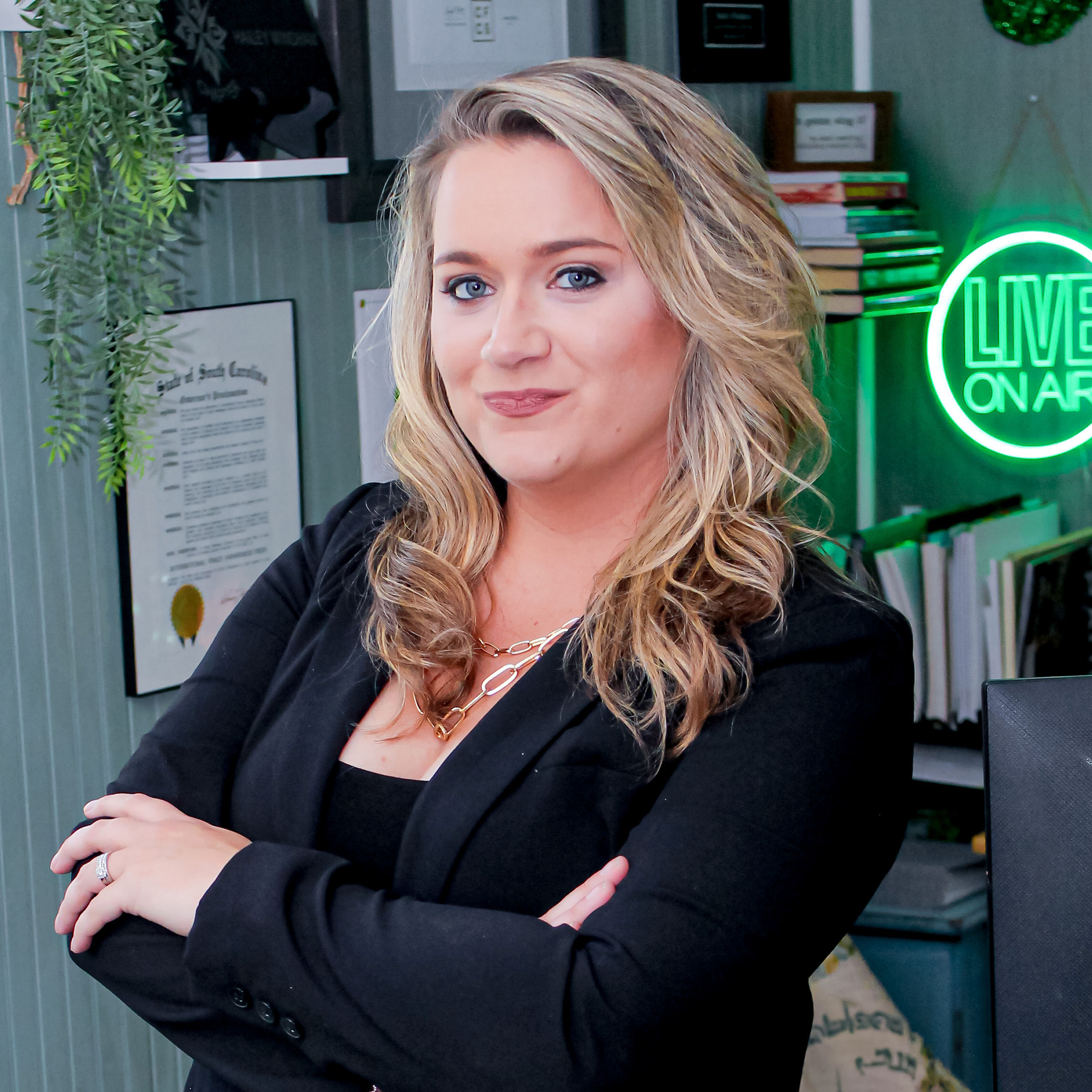
A blonde woman in a black blazer smiles slightly against a purple background.
Hailey Windham
00:05
What’s up, Fraud Fighters? Before we jump into today’s episode, I want to say thank you. Last week, we hit 100 episodes of Fraud Forward with our first live town hall episode, and I’m still processing just how incredible that moment was. You know, it was a live conversation with some of the smartest voices in the industry. We had real dialogue, real questions, real collaboration. Two years ago, when I launched this podcast, I never could have imagined we’d be here. But what stood out most, at least to me, wasn’t the milestone itself. It was the reminder that this community is growing because fraud fighters genuinely care about protecting people and helping each other get better. So whether you’ve listened since episode one or you just found the show recently, thank you. But you have been warned, okay? Because we’re just getting started. The conversations we need to have in this industry are getting bigger. The threats are getting more connected. And fraud fighters need spaces where we can talk honestly about what’s happening, what’s actually happening. Which brings me to today’s episode.
A blonde woman in a black blazer smiles slightly against a purple background.
Hailey Windham
01:27
Instead of focusing on one isolated fraud trend, I want to zoom out and talk about something bigger: a pattern, a shift, a reality that I think fraud fighters across banking, fintech, crypto, compliance, investigations, and law enforcement are all feeling right now. And that reality is this: fraud is no longer behaving like isolated crime. It’s behaving like infrastructure. Connected. Coordinated. Industrialized. Adaptive. And honestly, this past week’s news cycle reinforced that in a major way. So today, I want to walk through a few headlines that caught my attention and talk about what they actually mean for fraud fighters on the ground, because these stories sound separate on the surface, but they’re not. Okay, so last week, the House Select Committee on the Strategic Competition between the United States and China convened a hearing everyone in our industry should watch.
A blonde woman in a black blazer smiles slightly against a purple background.
Hailey Windham
02:26
The hearing was titled Crime, Corruption, and Power: The Rise of CCP-Linked Scam Networks Targeting Americans. And that discussion, like hearing that discussion happen at that level, that’s a big deal. For years, fraud fighters have been trying to explain that what we’re seeing with pig butchering scams, crypto investment scams, social engineering schemes, and organized laundering networks is not random fraud activity. It is coordinated infrastructure. And if you’ve worked scam cases firsthand, you already know this. They aren’t isolated scammers sitting in basements somewhere. These are organized ecosystems operating at scale. Training, scripts, compounds, technology, money laundering networks, mule recruitment, psychological manipulation, all operating like an enterprise. And I really appreciated commentary from people like Matt Hogan and Gary Warner, who helped frame why this hearing mattered beyond just the headlines. Because fraud fighters have known for a long time that these networks are adaptive, coordinated, and global. So I do have a little bit of a personal connection here. And I’ll say that this hearing was one that really did hit on that personal level, because during my time helping lead the banking team for Operation Shamrock, I sat in victim meetings that I will never forget. People who lost their retirement savings. People manipulated for months, even years. People isolated emotionally before the money ever moved. And I think one of the biggest misconceptions about scams is that people still frame victims as simply falling for something. That framing misses the sophistication entirely. These are coordinated psychological operations. The manipulation starts long before the transaction is even considered. Long before the wire, long before the crypto purchase, long before the member walks into a branch requesting cash. And the scammers are extraordinarily skilled at what they do. That’s what makes this so dangerous. One of the posts I saw afterward came from Erin West, who absolutely crushed it during her testimony. But she said something I absolutely agree with. We are long overdue for a better reporting system in the United States because right now, victims are often reporting the same crime to local police, IC3, their financial institution, maybe the FBI, maybe Homeland Security, maybe the Secret Service, maybe crypto exchanges.
A blonde woman in a black blazer smiles slightly against a purple background.
Hailey Windham
04:52
And many of those systems still don’t effectively connect in real time. Meanwhile, the scammers operate like a coordinated business. They share infrastructure. They share laundering paths. They share scripts. They share technology. They iterate constantly. But the defenders, we still largely respond through fragmented workflows, and that gap matters. Now, I want to say something directly to banks and credit unions listening. Financial institutions are often seeing the last stage of the scam, not the first. By the time the money movement happens, the grooming already occurred. The trust was already built. The manipulation already happened. The coercion already happened. And this creates one of the hardest tensions in banking right now because institutions are trying to balance customer autonomy, fraud prevention, regulatory expectations, reimbursement pressure, elder abuse concerns, and operational realities. And all the while, frontline employees are trying to make those judgment calls in real time against highly manipulated victims. I’ve said it before. It’s like you have 10 minutes, maybe, to convince them that the conversation and the trust that’s been built over the last six months or two years is all fake. Don’t send that wire, please. Here’s why you’re following the patterns of a scam. But meanwhile, they’re like, no, I’ve talked to this person literally every day for the last six months. They wouldn’t do this to me. You’re just my bank. What do you know? You don’t know me the way that this person knows me. So honestly, I think that sometimes it feels like fraud teams are being asked to solve a global organized crime problem with branch scripts and alert queues. That doesn’t mean institutions shouldn’t improve. They absolutely should. But we also need to acknowledge that the scale is mismatched here. [Ad Break (6:52): Finally, I’m so happy to share with you all that The Saturday Fraud Strategist is now a podcast. What? Yeah. On top of my weekly newsletter, you can now listen to and watch me talk about my, and hopefully your, favorite topic: fraud strategy. And from time to time, I’ll be hosting operators and founders to discuss where the industry is headed and what we fraud fighters should pay attention to. I must say, I’m super excited, and if I’m being honest, a bit nervous about all of this. I’ve been debating with myself whether to start a podcast for ages, but kept putting it off. But now this is the result, so I guess there’s no turning back. So if you want to join me for the ride, head over to Sardine’s website and subscribe now. Are you ready? Am I ready? We’ll find out next Saturday.]
A blonde woman in a black blazer smiles slightly against a purple background.
Hailey Windham
07:51
Okay, the second thing, another story that caught my attention this week, connects directly to this broader conversation around organized fraud infrastructure. TRM Labs recently shared testimony from Ari Redbord, who was featured on Fraud Forward as well. But he went before the House Committee on Financial Services, Subcommittee on National Security. And this one mattered far beyond crypto because one of the biggest mistakes people still make is thinking that crypto-enabled crime is somehow separate from traditional fraud. It’s not. Increasingly, crypto is becoming part of the laundering architecture behind scams, sanctions evasion, organized crime, trafficking, and nation-state financial activity. And one thing I appreciate about Ari’s perspective is that he consistently focuses on collaboration instead of fear-mongering. Because if we’re honest, financial institutions are exhausted by headlines that basically just scream everything is terrible and good luck. That’s not helpful. But what is helpful is understanding where money moves, how criminal ecosystems operate, where visibility gaps exist, and how public-private partnerships can actually disrupt activity. And that’s really where this testimony focused. If the first hearing exposed the industrialization of scam compounds, this testimony highlighted another reality. Financial crime, cybercrime, national security, and digital assets are no longer separate conversations. They’re converging. And fraud teams are increasingly sitting right in the middle of that convergence, whether they realize it or not. Because the same scam that starts with social engineering may end in stablecoins, layered wallets, OTC brokers, mule accounts, international laundering networks, and cash-out infrastructure spanning multiple jurisdictions. And one thing Ari has discussed publicly before that always sticks with me is this idea that blockchain can actually provide visibility traditional financial systems sometimes cannot. Now, that does not mean crypto is always safe, right? And it definitely doesn’t mean fraud risk disappears. But it does mean investigators now have intelligence tools capable of tracing illicit activity in ways that weren’t always possible before. And I think that nuance sometimes gets lost in public conversations. Now, for banks and credit unions listening, this matters even if your institution never directly touches crypto, because your customers do.
A blonde woman in a black blazer smiles slightly against a purple background.
Hailey Windham
10:26
Your scam victims do. Your mule accounts do. Your investigations do. And increasingly, fraud investigators need at least a foundational understanding of digital asset movement and laundering typologies. Not because every institution needs to become a blockchain analytics company, but because fraud ecosystems no longer stop at the edge of the core banking system. Okay, and then there is another development I want to briefly touch on today, but I’m not going to go in too deep because next week I’m actually doing a much deeper, bigger conversation with, or about this, with one of my favorite people in the industry. You know her, or you’ve seen her before on episodes, but Nyla Cortez. So the White House recently released a presidential action titled Integrating Financial Technology Innovation Into Regulatory Frameworks. And if you work in fraud, compliance, fintech payments, or banking leadership, this is one you’re going to want to pay attention to. Now, I’ll be honest. I’m still digesting parts of it myself because anytime you start talking about innovation acceleration, fintech modernization, AI, digital infrastructure, reducing friction, faster adoption, fraud fighters immediately start asking a different set of questions. Okay, yeah, but what about authentication, synthetic identity, scam prevention, governance, operational readiness, examination expectations, consumer protection? Because innovation and fraud pressure tend to scale together. That’s just reality. And honestly, this ties directly back to everything we’ve talked about in this episode already. We are watching financial institutions modernize rapidly, payment ecosystems accelerate, AI capabilities expand, digital assets mature, and global scam infrastructure industrialize all at the same time. And sometimes it feels like fraud teams are sprinting on moving pavement, trying to keep up. Fraud fighters don’t hate innovation. We just know every new convenience layer creates a new attack surface too. So next week, Nyla and I are going to spend some time unpacking what this could mean operationally, where fraud and compliance teams may feel that tension, where modernization could genuinely help, and where institutions need to be careful not to confuse innovation with reduced risk.
A blonde woman in a black blazer smiles slightly against a purple background.
Hailey Windham
12:50
Because those things are not the same, right? And if you know Nyla, you already know that this conversation is going to be candid, practical, and probably include at least one moment where we both stop and say, okay, but how could this actually work in a real financial institution? So stay tuned for that. Okay, the biggest theme emerging across all of these stories is this: fraud isn’t staying in its neat little category anymore. Scams, cybercrime, payments, crypto, national security, human trafficking, organized crime, AI. These systems are overlapping more every day. And our response models still haven’t fully caught up. And I’ve said this before on this podcast, and I’ll keep saying it. Fraud behaves like a continuous coordinated system. And if that’s true, then fraud prevention can’t operate in silos anymore either. Not between banks. Not between fintechs. Not between law enforcement. Not between fraud and AML. Not between cyber and payments. Because the people committing these crimes are coordinated. And we have to be too, fraud fighters. Keep pushing. Keep collaborating. Keep educating. Keep disrupting. Fraud evolves. So do we. Keep moving fraud forward. Thanks for listening to Fraud Forward. Remember, every conversation, every connection, and every insight moves our industry one step closer to stronger fraud defenses. If today’s episode sparked an idea, share it with your team or tag me on LinkedIn. I love hearing how you’re moving fraud forward in your own organization. Until next time, stay curious, stay resilient, and keep moving fraud forward.
A blonde woman in a black blazer smiles slightly against a purple background.
Hailey Windham
14:10
Thanks for listening to Fraud Forward. Remember, every conversation, every connection, and every insight moves our industry one step closer to stronger fraud defenses. If today's episode sparked an idea, share it with your team or tag me on LinkedIn. I love hearing how you are moving fraud forward in your own organization. Until next time, stay curious, stay resilient, and keep moving fraud forward.