
What’s up fraud fighters, and welcome to Fraud Forward!
Okay, I am going to come in a little hot today, because authorized payment scams are putting banks in a ridiculous position. We are expected to stop scams that start outside our walls, we are expected to reimburse losses we did not initiate, and we are expected to do it while operating inside regulatory guidance gaps that leave teams second-guessing what they are allowed to share, who they are allowed to warn, and how aggressively they can intervene. That is the reality, and it is why this episode matters.
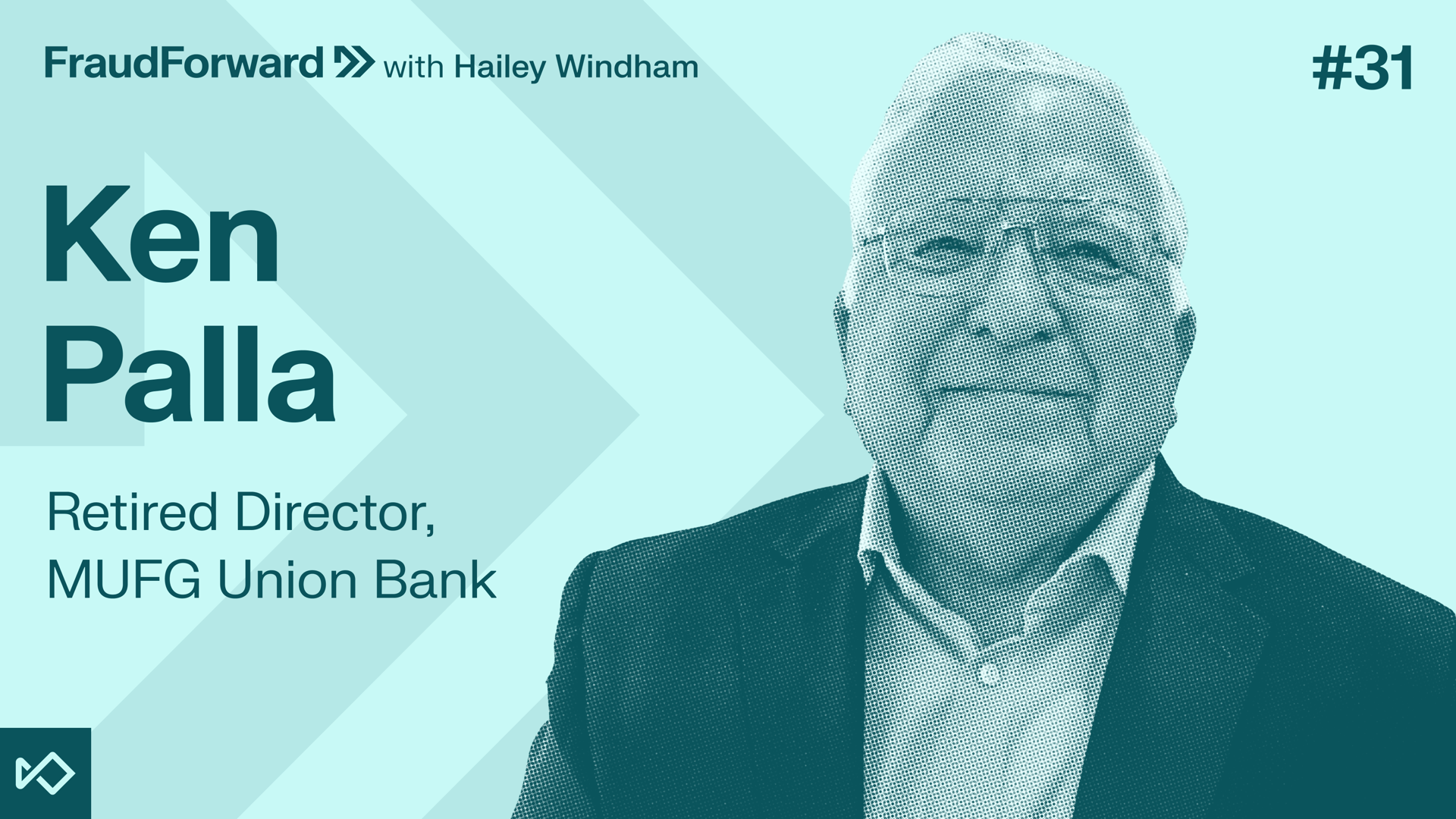
In this conversation, I am sitting down with Ken Palla, and we are talking about his open letter and what I would call a very practical ask, U.S. scam regulatory reform that actually matches the threat environment. Because APP fraud regulation and consumer-authorized wire fraud are not “edge cases” anymore. authorized payment scams are mainstream, and if we keep using legacy categories like they were built for this, we are going to keep losing.
Let’s reset the room for a moment. The core tension is this:
- The customer authorizes the payment because they believe the scam story
- Authentication succeeds because the customer is the one initiating
- The transaction looks procedurally valid
- The intent is manipulated through social engineering
So the institution is staring at a “valid” payment that is actually harm in motion. That is why scam reimbursement pressure keeps rising, and it is why financial institution liability exposure is becoming a board-level issue.
Now, here is the lever Ken is pushing, Section 314B data sharing.
I want to double click on this because it is one of the most obvious fixes that we are not fully using. Section 314B data sharing and AML safe harbor provisions were built to encourage voluntary information sharing around suspicious activity, but in practice, a lot of institutions are cautious, especially when the topic is authorized payment scams. Teams worry about what is permitted. They worry about liability. They worry about whether a conversation about a beneficiary account crosses a line. And that uncertainty is exactly what criminals exploit.
Ken’s argument is straightforward. Clarify it. Expand it. Make it easier for bank-to-bank information sharing to happen fast and confidently when we see mule account identification signals, beneficiary account risk signals, and repeat scam patterns. Because interbank fraud intelligence is how we stop the same scammer account from collecting payments across five institutions before anyone connects the dots.
This is also where I love the comparison we talk about in the episode, FFIEC online security guidance. That guidance helped drive industry-wide cybersecurity improvements because it gave institutions a clearer standard. I want that same kind of clarity for authorized payment scams, clearer fraud governance standards, clearer bank fraud escalation protocols, and a scam control framework that institutions can actually operationalize.
And fraud fighters, I am not saying banks are passive in this. We are not. We are actively trying to protect customers. We are building controls. We are training frontline teams. We are pushing real-time scam alerts. But the ecosystem is moving faster than the guidance, and that gap creates inconsistency across institutions, which creates openings for scammers.
We also talk about cross-sector scam coordination, because banks often see the final step, the payment. Telecom and digital platforms often see earlier steps, the grooming, the impersonation, the coercion. If fraud intelligence collaboration is only within banking, we will always be late to the party. We need bank compliance reform and cross-sector alignment that moves risk intelligence earlier in the victim journey.
If you lead fraud, BSA, compliance, or enterprise risk, this episode is a blueprint for why data sharing reform matters and what “good” could look like.
What you’ll hear in this episode:
- Why authorized payment scams create regulatory and operational tension inside banks
- What Ken is asking for in U.S. scam regulatory reform and APP fraud regulation clarity
- How Section 314B data sharing and AML safe harbor provisions can enable faster response
- Why bank-to-bank information sharing improves mule account identification and repeat pattern detection
- What beneficiary account risk signals look like in practice and why they matter
- Lessons from FFIEC online security guidance and how similar clarity could accelerate change
- How interbank fraud intelligence and fraud intelligence collaboration support stronger scam disruption
- Why cross-sector scam coordination is necessary when scams start outside the bank
You should listen to this episode if you:
- Own fraud, BSA, AML, or compliance programs and are dealing with authorized payment scams daily
- Are navigating regulatory guidance gaps and want clearer escalation and intervention authority
- Are reviewing Section 314B data sharing policies and want stronger bank-to-bank information sharing
- Need a scam control framework and fraud governance standards that hold up under scrutiny
- Are managing scam reimbursement pressure and financial institution liability exposure concerns
- Want stronger real-time scam alerts and consistent bank fraud escalation protocols across teams
If you liked this episode, be sure to subscribe and review the podcast on iTunes, Spotify, YouTube, or wherever you listen to podcasts. It really helps with getting the word out.
Episode notes & key takeaways
Authorized payment scams challenge traditional frameworks
Let me just assure you, authorized payment scams do not fit neatly into legacy fraud categories.
The customer initiates the payment. Authentication passes. The transaction looks valid. But the customer’s intent has been hijacked through manipulation. That is why consumer-authorized wire fraud keeps growing and why legacy “unauthorized fraud” frameworks are not enough.
This creates real friction:
- Regulatory guidance gaps leave institutions unsure how far they can go
- Scam reimbursement pressure rises without consistent standards
- Financial institution liability exposure becomes a constant debate
- Teams hesitate when speed is the difference between loss and prevention
Ken’s point is that clarity matters. When definitions and expectations are aligned, institutions can act faster and with more consistency.
314B data sharing as a practical lever
Now let’s get into the fix that could move the needle.
Section 314B data sharing was designed to encourage voluntary sharing related to suspicious activity, but many institutions still use it cautiously in the context of authorized payment scams.
Expanded guidance could unlock:
- Faster interbank fraud intelligence sharing about scam typologies
- More confident bank-to-bank information sharing about beneficiary account risk signals
- Better mule account identification across institutions
- Stronger fraud intelligence collaboration that interrupts repeat losses
And I want to be clear. This is not about broad exposure of customer information. It is about targeted, compliant sharing of risk indicators so the same scammer does not hit five banks in a row.
Regulatory direction can accelerate progress
Here is why the FFIEC online security guidance comparison matters.
When regulators provide clear expectations, institutions tend to operationalize them. They build controls. They build playbooks. Over time, those controls become standard practice.
authorized payment scams are at the same kind of inflection point. Clearer guidance could accelerate:
- Scam control framework adoption
- Bank fraud escalation protocols that are consistent and fast
- Fraud governance standards that reduce ambiguity
- Bank compliance reform that strengthens prevention without guesswork
Regulatory clarity does not slow progress. It speeds it up by removing uncertainty.
Collaboration Beyond Banking
Fraud fighters, banks often see the final step, the payment.
But scams start earlier. They start on social platforms. They start on phones. They start in marketplaces. That is why cross-sector scam coordination matters.
When risk intelligence moves faster across sectors:
- Intervention can happen earlier in the scam lifecycle
- Customers are protected before the payment even happens
- Institutions reduce repeat losses and improve outcomes
- The entire ecosystem becomes harder for scammers to exploit
Cross-sector scam coordination does not dilute responsibility. It distributes awareness, and awareness is what disrupts scams earlier.
The evolution of Banking on Fraudology
The mission stays the same:
- Elevate fraud prevention education.
- Strengthen banking community leadership.
- Support real operators inside community banks and credit unions.
- Build durable fraud community building frameworks.
- Advance fraud prevention thought leadership that is grounded, not hyped.
The future of banking fraud prevention depends on community.
The future of credit union fraud prevention depends on collaboration.
The future of fraud industry evolution depends on shared intelligence and values alignment.
We are leveling up.
And we are doing it together.
Stay vigilant, stay informed, and keep moving fraud forward.