
What’s up fraud fighters, and welcome to Fraud Forward!
Alright, fraud fighters, I want you to picture the exact moment this episode is about. You are in a branch or on a call, and everything in your body is telling you something is wrong, but on paper the transaction is “authorized.” The customer is pushing to send it. The story feels shaky. There is pressure. There might be a third person hovering. And your team is trying to do the right thing without making the customer feel attacked.
That is financial exploitation. And it is rarely loud.
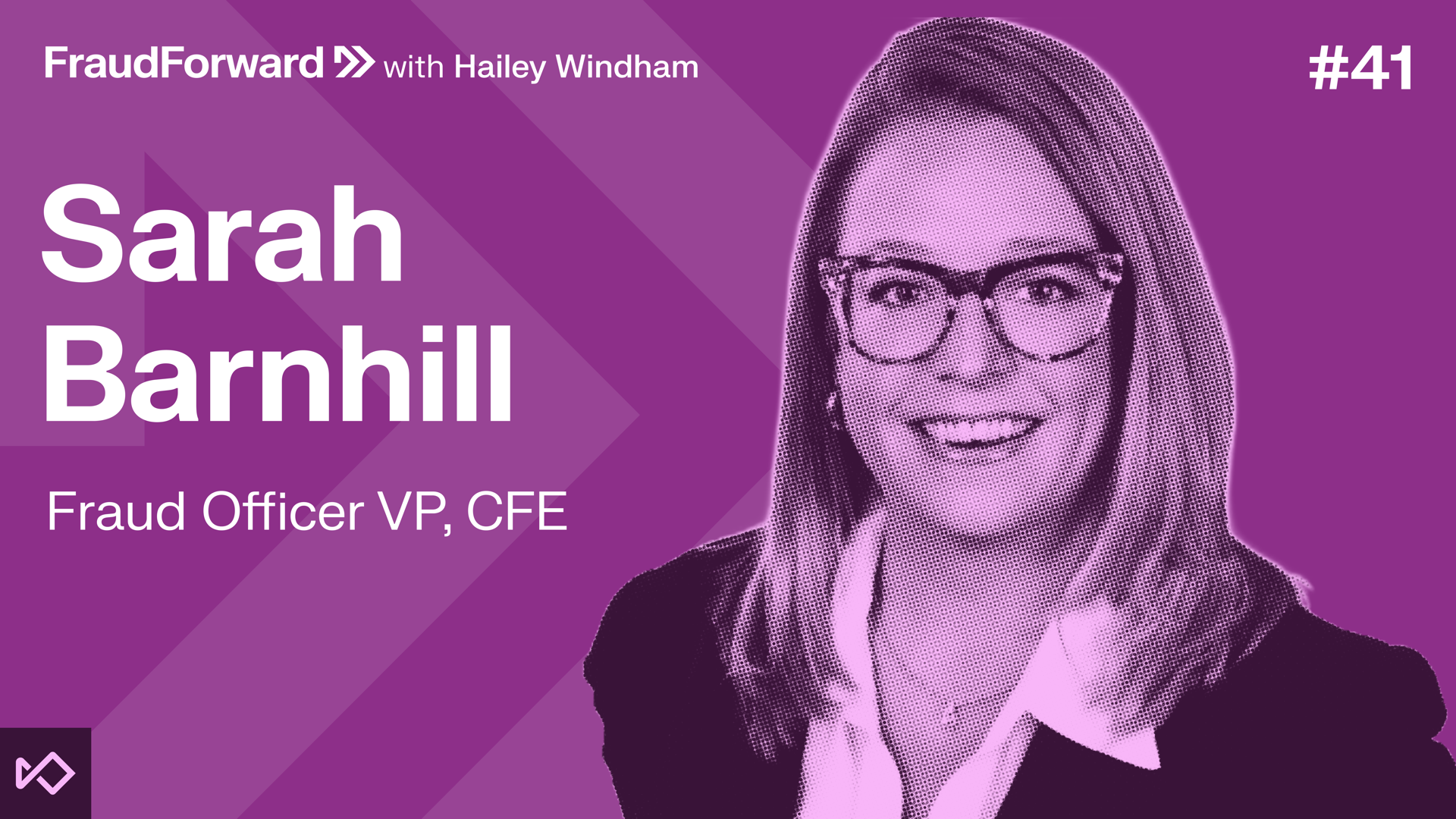
Today I am sitting down with Sarah Barnhill from Western Bank, and I love this conversation because it is not fluffy. It is operational. It is “what do we do when this is happening in front of us.” Because financial exploitation often hides inside authorized scam transactions and elder financial abuse patterns where coaching and control are the real weapon.
Let’s reset the room for a moment. The reason this is so hard is that financial exploitation is a human risk disguised as normal activity. Customers are coached. They are pressured. They are isolated. And sometimes they are defending the transaction because they are scared, confused, or emotionally hooked. That means your best detection layer is often not a model. It is frontline judgement paired with a clear playbook.
Sarah and I talk about fraud red flags in banking that show up as behavioral red flags and third-party coercion indicators, not just dollar thresholds. Things like:
- A customer who suddenly will not make eye contact or looks like they are reading a script
- Someone else answering questions or “helping” too aggressively
- Unusual urgency, secrecy, or agitation
- A story that keeps shifting when you ask basic clarifying questions
And here is where institutions either win or lose. If you do not have frontline fraud training and clear escalation procedures in branches, your team will hesitate. Not because they do not care, but because they do not feel supported. That is how losses slip out the door.
I want to double click on the interruption moment. Slowing down a wire or ACH transfer, asking clean questions, and bringing in a supervisor early is not “being difficult.” It is loss prevention in community banks. It is vulnerable customer protection. And it is often the only window you have before wire and ACH recovery steps become a scramble.
We also talk about what to do after you suspect exploitation. account security after fraud matters immediately. Reset credentials. Review profile changes. Tighten permissions. Look for linked accounts. Watch for repeat attempts. Because criminals do not try once and give up.
And fraud fighters, I am going to say this clearly. Customer dignity in investigations is not optional. If your tone is blaming, you will increase resistance. You will deepen shame. You will trigger victim silence. Empathy is a control. It improves disclosure. It improves case quality. It improves outcomes.
We also touch on the “after” work, identity theft reporting process steps when appropriate, fraud case documentation standards that hold up, law enforcement coordination when the case requires it, and Regulation E disputes where they apply. The point is not to overcomplicate. The point is to have a repeatable internal fraud escalation workflow that removes uncertainty and protects people.
If you are a fraud, risk, or BSA leader, or if you support branches and contact centers dealing with these cases weekly, this episode is your practical roadmap.
What you’ll hear in this episode:
- How financial exploitation shows up as authorized activity and why it is hard to stop
- How elder financial abuse and authorized scam transactions intersect with coaching and pressure
- The fraud red flags in banking that are often behavioral red flags, not just transaction anomalies
- What third-party coercion indicators look like in branch and call center settings
- How frontline fraud training and call center fraud detection practices improve intervention
- How escalation procedures in branches and an internal fraud escalation workflow reduce hesitation
- Immediate account security after fraud actions that prevent repeat attempts
- What wire and ACH recovery steps, law enforcement coordination, and Regulation E disputes can look like in real cases
- Why customer dignity in investigations improves disclosure and strengthens scam victim response protocols
- How fraud case documentation standards and fraud culture and governance support defensible, consistent response
You should listen to this episode if you:
- Oversee vulnerable customer protection and want clearer response playbooks for financial exploitation
- Are seeing more elder financial abuse cases and need stronger frontline intervention
- Want better scam victim response protocols and more consistent escalation procedures in branches
- Support call center fraud detection and need a stronger internal fraud escalation workflow
- Want faster containment and clearer account security after fraud steps
- Need stronger fraud case documentation standards for defensibility and follow-through
- Are improving fraud culture and governance and want empathy to be operational, not performative
If you liked this episode, be sure to subscribe and review the podcast on iTunes, Spotify, YouTube, or wherever you listen to podcasts. It really helps with getting the word out.
Episode notes & key takeaways
The operational reality of financial exploitation
Let me just assure you, financial exploitation often bypasses automated alerts because the activity looks legitimate.
authorized scam transactions can show up after:
- New online banking enrollment
- Profile updates or new contact details
- The addition of new account users
- Changes in device or access patterns
Exposure points often include large wires, rapid savings depletion, and unusual third-party presence. The most important fraud red flags in banking are often behavioral red flags that only humans can see, especially when third-party coercion indicators are present.
That is why frontline fraud training matters. Observation plus inquiry is your first line of defense.
Where institutions are most vulnerable
This is where I see programs wobble.
Frontline staff hesitate to question customers directly. Documentation varies between branches. Recovery gets delayed once funds leave. And the emotional dynamics make everything harder.
What reduces vulnerability:
- A clear internal fraud escalation workflow so staff are not improvising
- Defined escalation procedures in branches so supervisors are involved early
- Consistent call center fraud detection practices so signals are not missed
- Fraud case documentation standards that capture the story, not just the amount
Consistency improves customer outcomes and regulatory defensibility.
Practical containment steps
Speed matters once financial exploitation is suspected.
Immediate containment actions should include:
- account security after fraud steps like resetting digital credentials
- Reviewing recent profile changes and access permissions
- Tightening transaction permissions where appropriate
- Reviewing linked external accounts and recurring transfers
- Monitoring for repeat attempts and follow-on pressure
wire and ACH recovery steps should start as early as possible if funds have moved, and law enforcement coordination may be needed depending on severity and risk.
Regulation E disputes and identity theft reporting process steps may also apply, but the foundation is always the same, contain, document, escalate.
Empathy strengthens investigations
Fraud fighters, customer dignity in investigations is central to success.
When victims feel heard instead of blamed:
- Disclosure improves
- Cooperation increases
- Case details become clearer
- Repeat harm becomes easier to prevent
Scam victim response protocols should prioritize patience, clarity, and respect. Empathy is a practical strategy that strengthens vulnerable customer protection and improves outcomes.
Financial exploitation is not solely a fraud typology. It is a human risk. Institutions that align fraud culture and governance with structured escalation and practical containment protect both customers and the balance sheet.
The evolution of Banking on Fraudology
The mission stays the same:
- Elevate fraud prevention education.
- Strengthen banking community leadership.
- Support real operators inside community banks and credit unions.
- Build durable fraud community building frameworks.
- Advance fraud prevention thought leadership that is grounded, not hyped.
The future of banking fraud prevention depends on community.
The future of credit union fraud prevention depends on collaboration.
The future of fraud industry evolution depends on shared intelligence and values alignment.
We are leveling up.
And we are doing it together.
Stay vigilant, stay informed, and keep moving fraud forward.