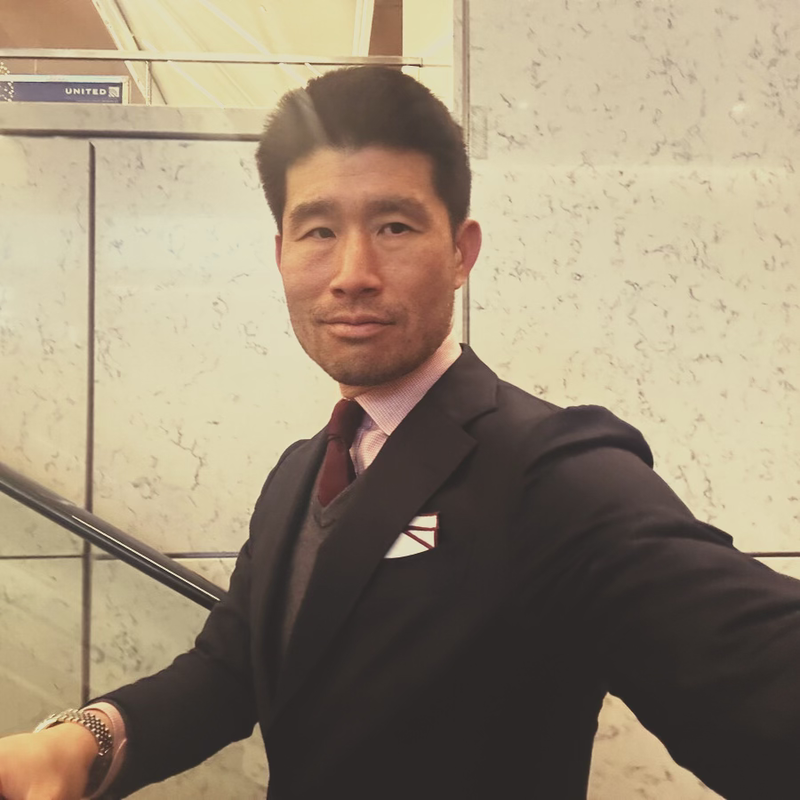
What is up, fraud fighters? Welcome back to Fraud Forward. Most fraud teams immediately think FBI, Secret Service, Homeland Security, or local law enforcement when fraud escalates. But many overlook one of the most powerful investigative partners in financial crime, and that’s the United States Postal Inspection Service. And if you work fraud at a bank, credit union, fintech, or payments company, you should probably have a postal inspector on speed dial. And we are going to talk about why today. So today’s guest is Eric Shen, Inspector in Charge of the Criminal Investigations Group for the United States Postal Inspection Service. Eric oversees investigative and preventive initiatives involving financial fraud, mail theft, money laundering, violent crime, election crimes, child exploitation, and more. I actually got to meet Eric about a year ago at the IAFCI International Conference in Oklahoma City, and one of the things that immediately stood out to me was how collaborative and approachable he was. Eric is someone who deeply understands that modern fraud investigations require relationships, and I am so glad to introduce you all to him today. Eric, welcome to the show.
Thank you for having me, Hailey. I really appreciate it. It’s actually quite an honor to be on your show, so I really appreciate being on.
Oh, I am thrilled to have you on. It’s one of those conversations that I have been wanting to have, like I said, for a year, but now we’re finally making it a reality. So we’ll just dive right in, of course. For people who are unfamiliar with the Postal Inspection Service, what exactly is the USPIS?
So, U.S. Postal Inspection Service, we actually are the oldest law enforcement agency. Don’t let the other agencies tell you otherwise. We’ve been around for 250 years, and it’ll be 251 years in August. So we work anything basically that touches the mail. All those crimes and programs you mentioned, we investigate narcotics as well, hazmat, anything and everything that touches the mail. Obviously, financial crimes throughout history have gone through the mail. Even now with technology, cyber, internet, there’s still a mail component. That’s why we’re so heavily involved with the financial institutions as far as working these types of financial crime cases and really bringing justice to a lot of these scammers and bringing some money back to our victims.
I love that. And I’ll tell you, I know that we’re going to get deeper into it as we talk, but I will never forget the first time I had an interaction with the Postal Inspection Service. I was like, why are we meeting? Why is the Midlands Fraud Group meeting at the post office? What are we going to do here? I mean, I guess if we need the space. And it was during COVID time, so we were in the basement of the postal building, and I was like, what? This is the craziest thing I’ve ever done in my life. I hope this is not where I get murdered. But we had so many great conversations. To see the financial crimes that the Postal Inspection Service is very adamant about helping with, and hey, if you’ve got anything, let us in on it. We’ll take over. We’ll help. We’ll help get you the resources or whatever needed. And they just go. So I’ve been very pleased with mine. Shout out Mike Rogers from South Carolina. But I think it’s great, and I know that it’s one that you probably didn’t even think that you were going to be involved with. So I’d love to ask, what originally drew you to law enforcement?
It’s kind of funny. Growing up, especially for me, I immigrated to this country when I was really young. Growing up in the American dream, we came with nothing. Growing up, my parents working so hard, putting me through school. Really, in my culture, you’re either a lawyer, engineer, or doctor. So me going to law enforcement, definitely a little bit different, but I felt like it was something that I would just gravitate towards when I took a class in college. And then, when I wanted to be a federal agent, I started doing some research, talked to a lot of different folks. I did an internship at Interpol, and even other agencies said, “Hey, have you ever heard about the Postal Inspection Service?” I’m like, “I don’t want to inspect mail.” So they said, “No, go talk to one.” And then they kind of told me all the different things that they do and the different types of crime you can investigate. And not having to leave to go to another agency, no knock on other agencies, but just the wide variety of work that you’re able to do. And then the big thing that I’ve noticed is the autonomy that you have as an investigator. You can really do a lot of different things and try a lot of different things, obviously within the law, but still you’re able to really utilize a lot of different techniques. So that kind of drew me to the agency, drew me to want to be a federal agent. As far as my family, we lived the American dream as far as working hard and being rewarded for that. And it is kind of my little way of giving back to the American dream, basically.
Well, we are here for it. And thank you so much, obviously, because we fraud fighters benefit from the work that you and your team and the agency does. So I’m hearing all the things that initially attracted you to the agency. Obviously, there are some really cool aspects of the things that you do. But were there any early fraud investigations that you can share that made you go, oh yeah, this is exactly what I want to do?
Yeah. So I started in LA. I was on an ID theft task force that was spearheaded by our agency. I got to work really exciting cases, and I think being able to work these large-scale cases, especially one that I worked, it was involved with Asian gangs and involving some violence to it. That wow, it’s not just financial victims. There are actual victims being hurt because they make money utilizing ID theft, mail theft, check fraud, and then they buy weapons and drugs and get into it in the community. So when I was able to indict, I would say, eight of them, it was a pretty violent gang in LA, it felt real rewarding that they got some really heavy sentencing and we were able to put them away for a while. And it really showed financial crimes are not just the monetary portion. There is some violence to it. I think that really opened my eyes of, wow, this is really making a difference in not just making a victim whole again as far as financially, but also protecting some of the citizens that are living in the community where a lot of this violence is going on.
One hundred percent. Which I always say that fraud is not a victimless crime anyway, because it is so detrimental to the outcome of what happens after fraud. So you’ve worked everything from workers’ compensation fraud to identity theft and mail theft, and even workplace violence. How did those early experiences shape the investigator that you’ve become?
I think the biggest thing I really learned is you can’t do it by yourself, not within the agency and then also externally. You need those external partners. You need those relationships, whether it’s with the local police, whether it’s with the local bank, and even other federal agencies. You need those relationships to get the job done. That was a big lesson that was kind of instilled in me from the very beginning, working different types of crimes. And it has really shaped me to kind of where I am now, what I do now, and what I really preach to a lot of the inspectors now that are going up in their careers, working cases. You know, I don’t work cases anymore. I tell everyone I shake hands and kiss babies. I go to conferences, and I do meetings all day.
Yeah, I love that. And I kind of feel like that’s sort of where I am in my career now, which is fun. We get to talk about the things, and we get to really, at least for me, take the perspective of that practitioner and try to understand truly what’s going on, and then try to provide some feedback. Plus, getting to, like you said, collaborate and meet with others that we can say, “Hey, what do you think about this? What can we take away from that?” And then pour that back into the industry. So I absolutely love that thought process. And then, of course, because I work in fintech now, I’m going to ask, did you ever imagine that when you started, fraud would become this technologically sophisticated?
It’s kind of hard to answer because I do try to think of that, even when I was working a lot of the cases traditionally where a lot of stuff is going through the mail. We always saw some of it, and just some of the investigations I worked, some of those fraudsters were so highly evolved. They were like, usually they’re two steps ahead of us. Some of them were like four or five steps ahead. So I did see a little bit of it. I don’t think I ever saw the reach of it, and I never thought social media would play such a big part. And I feel like social media has really just expanded it, and the reach of fraud has really spread a lot easier and faster. I don’t think I ever saw that portion of it. I started seeing a lot of the phishing and the smishing and all that stuff, early onsets of cell phones and more email access and things like that. But the social media portion, I really did not expect it to blow up as it has now, where information is being shared. Some kind of scheme that was done on the West Coast that we’ve seen traditionally, now we’re seeing on the East Coast, and it’s all through social media.
Yeah. I hate to sound cliche, I’m going to say it. Social media is the devil. It’s like, come on. I love it and I hate it. LinkedIn has helped me so much. I love staying connected to my family with Facebook and whatnot. But at the same time, it is enabling so much financial crime and just crime in general. It just makes me angry.
I call it the bane of my existence, so I feel your pain.
Wonderful, wonderful. Well, obviously, we have to stick together. Misery loves company, so we find our friends and we stick together. So I want to get back to the root of what we are hoping to accomplish with this episode. And it is why fraud teams overlook the Postal Inspection Service. I think that you touched on this. A lot of people, when they hear Postal Inspection Service, immediately think stolen packages or mail theft or anthrax. But your agency touches some incredibly sophisticated financial crime investigations. What would you say are the biggest misconceptions people have about the Postal Inspection Service?
I think you kind of said it right there, Hailey. I think a lot of people just don’t know about our agency. We are a fairly small agency compared to the other ones. We used to be called a silent service, where we did not like to be publicized, and we did not want to show all the great work we have been doing and have done and are still going to do. But I would say about 20 years ago, we started slowly getting into the front of the work as far as publicizing it, press releases, press conferences, and what we do. So we’re kind of behind the game a little bit of people knowing who and what we do. Within the industry, I think we’re pretty well known as far as federal law enforcement, even some local law enforcement. But we’re slowly getting there, and I think that was part of the reason why some people don’t know to call a postal inspector. But we’re starting to get more traction now. I mean, that’s part of the reason why we’ve met, right? And you finding out more about our agency and wanting to work with us, and likewise. And that’s why we’re joining a lot of different types of organizations and associations like IAFCI. We attend ACFE, ACAMS, all the different types of conferences. So trying to get our word out there more and more now is definitely beneficial because we do bring a lot to the game, and we do bring a lot of expertise and resources that you may not necessarily see or that certain angle we can attack the fraud problem.
I think one of my favorites that I ever heard whenever I was participating in the Midlands Fraud Group was, we didn’t think we could call the Postal Inspection to work a financial crime. And they said, okay, well, why didn’t you think so? Well, they applied online, and everything was done through the computer. And they’re like, yeah, and did you send a welcome letter in the mail? Did you send a card in the mail? Did you whatever? Because now that some aspect of this crime has gone through that service, now you guys are able to jump in.
Absolutely, yeah. And that’s the mindset we’re trying to really educate the public to, and our partners in law enforcement, to think about something that may have gone through the mail. Even if, let’s say, the scam was an email scam or some kind of phishing scam, money might have been sent through the mail. That’s money laundering. That’s something we can work and utilize. So there are a lot of different techniques and ideas we can really utilize when it comes to investigations. Obviously, we can’t work things that don’t have any mail nexus, but a lot of things still to this day have a lot of mail nexus that we can then partner up and really work with, whether it’s the financial industry or local or federal law enforcement.
I love that. I have like a two-part question. It’s kind of building off of what you just said, which is, how connected are modern fraud ecosystems to mail theft or the postal infrastructure? And then the other piece to that is, are fraud teams just underestimating how organized mail theft rings are?
Yeah. So they are quite connected, as we talked about a little bit, as far as the mail being utilized or stolen to initiate that check fraud. So there are a lot of different aspects, bank fraud, ID theft, credit cards or checks being sent through the mail. It still happens. That’s how we still sometimes get our credit cards, and people still use checks, especially businesses, treasury checks. That’s another thing too. So there’s always that connection of the mail that we utilize. And when it comes to working financial crimes, even certain types of elder fraud scams are still being used as far as the mail is concerned. Even if there’s crypto involved, there are crypto wallets that are being mailed for a lot of those schemes too. So there’s that tie there when it comes to financial crimes. That’s what we’re seeing a lot now, especially on Telegram. We kind of call these networks, so to speak, that they have built when it comes to check fraud. And they will get the checks either through the mail, as far as stealing it, or even robbing our carriers. That was happening quite a bit, I would say three or four years ago, and we’ve implemented a lot of strategies that have drastically reduced that. But yeah, the part of that is really just as far as check fraud is concerned, a lot of it does come through the mail, and it’s definitely an issue we tackle because they are more organized. I would say in the past, especially when I was working mail theft, ID theft in LA, it was more of a West Coast problem, and it was more driven and related to narcotics actually. Meth users were, you know, up all night. They go and steal mail. They alter checks, and then they cash the checks to get their next fix. So that was the early onset of mail theft, check fraud. Now it’s really evolved because, again, social media, word got out how easy it is to do it sometimes and how much money they can make. So now we’re seeing more and more violent criminals that normally would sell drugs or do other types of means to make money utilize check fraud as a way to make money. They post how much money they make on Instagram, tell you to come on their Telegram channel, and that’s the network that I’m talking about that we go after and we really try to dismantle. Because we don’t want to just go after the person stealing the mail. We don’t want to go after the person that’s cashing the check because they may not be the head person. We’re now seeing people really on the top directing, and it’s like a tentacle of people that work for them to do all those things while he or she is facilitating those. So we try to go after that entire network and take that infrastructure down.
Yeah, we want the puppeteer, not the puppets. We want that grand maestro. We want to take him down. So I love that you’ve mentioned how check fraud has evolved. Are there any other financial crimes that you’re seeing increasing right now?
Unfortunately, yeah. I think all kinds of financial crimes. I’m sure we’re going to talk a little about AI, right? There’s the scale of it all when it comes to scams and frauds. There are so many different ways that we’re really being attacked as a nation, as a world. Everything’s very transnational now. So we obviously see a lot of imposter scams. You probably have gotten a text about paying your toll road.
Or you’ve gotten a text that you haven’t paid for your package and I’m holding it. Those types of things are really just common. I get them on a daily basis. You get phone calls. So you’re really being attacked at different angles, and it’s unfortunate. So we see all kinds of financial crimes when it comes to different types of scams. You name it, it’s kind of happening.
One hundred percent. I agree. And I think that the point that I really wanted to bring home here is that people think fraud is fully digital now, but that physical infrastructure still matters. And again, just so grateful for what your agency does and how they cooperate. [USPIS PSA (17:48): What you are seeing on the screen are actual mail thieves breaking into mailboxes and stealing mail. What are they looking for in the mail? Checks, personal identifying information, sensitive financial information, and credit cards. Any of these can lead to your identity being stolen. Postal inspectors aggressively investigate these thefts and robberies of mail carriers. We made over 1,600 arrests last year for mail theft and robberies. We are also improving security measures on collection boxes and installing more electronic locks. We’re making it harder to break in. You can help too. The Postal Inspection Service may pay a reward of up to $100,000 for information leading to the arrest of mail thieves, and up to $150,000 for the arrest of those who assault our mail carriers. Help us put an end to mail theft. Report thefts to USPIS.gov/report or call 1-877-876-2455. We want you to get your mail every time, on time, and not tampered with. Safe deliveries for all.]
But here’s the other part. I think that I know that you guys just released a really cool ad, but we want to talk about building better industry partnerships. So what separates a useful fraud referral from a weak one?
I think the more information you can give us from the early onset, the better. I can’t remember the saying, but someone used to always say, if you don’t have video, then I’m not going to be able to work it. That’s kind of true. But I think the main thing really is a great referral is as much info as you can get us. And I get it, sometimes you just can’t. That’s why you’re coming to law enforcement to gain some help. But I think it’s that constant communication. So it’s not just a, hey, here’s a referral, Hailey. Call me when you get something. A lot of times, it’s more of that. I’ve had a lot of success with great bank investigators I’ve worked with. “Eric, here’s a referral. This is what’s going on. Keep me in the loop. If there’s anything else you need, let me know. And also, I’ve already reached out to other banks. They’re having the same issues. So if you reach out to them, call Hailey up and she’ll help you out.” So those are the types of things where it’s more collaborative. It’s not just a quick referral and be done with it. Those are the cases. Now, that’s not 100% where we’re going to be able to do something with it because we obviously have to prioritize our caseload and also certain losses, thresholds that would hit the U.S. Attorney’s Office or local prosecutor. Those all play a factor. But as far as a really good referral, it’s the consistent communication and collaboration, as opposed to here’s this, this is all I’ve got, and go forth.
I love that. I’m writing it down. Consistent communication, I think, is so key and vital in any investigation, truly. I remember being able to work with even local law enforcement, and just the frustration they had originally whenever I would call as a new investigator. They’re like, okay, great, well, we’ll get to you when we can. And I was like, well, how do I get to the front of the line? How do I make you see the urgency that I feel with my case? And they’re like, well, don’t make me work for it. There’s murders on the street that I have to also work on top of your financial crime. So if we could work together and you can share this information with me, that’s what I need. And so I took that to heart, and every time something would happen, we had seven to 10 days on some of our cameras. That’s the most it would keep of footage. So I’d go in and I’d get it immediately downloaded. And although I didn’t have a subpoena or search warrant yet, I saved that evidence so that I could have it whenever it was needed. So definitely think that consistency and also just trying to get as much information as you can before involving law enforcement, so that you can package it up and actually hand it over, versus having to be constantly on the phone. Hey, do you have this? Do you have that? Do you have this? Do you have that? Build your case first.
Yeah, and it goes both ways, really. I can’t just say everything needs to be tied up in a bow and gift wrapped to me as a law enforcement officer. We need to communicate with you too. Like the things you said, this is what I need, this is what I have, but also give you an update. Like, hey, I haven’t been able to get to it, but I will get to it. Or, you know what, this is actually tied to something else I’m working. I’ll keep you posted on what’s going on. Obviously, I can’t give you the nitty gritty details, but I will tell you it’s going somewhere. Then what I usually do is if I’m about to conduct a search warrant or arrest warrant, I will tell them, hey, there are enforcement actions coming soon. Can’t tell you when and where and how, but when it does happen, I will let you all know. So that’s something where I really encourage my inspectors, and I think that’s part of the reason why we are pretty successful in a lot of financial crime cases. We really want to partner with our financial crime investigators. They’re not working for me. We work together. And that’s something I really preach, to show that mutual respect for each other because they’re working very hard to try to put stuff together for you. You need to reciprocate a little bit and just give them as much info as you’re allowed to. And then just be honest. I think a lot of times you just have to be honest. Like, either you’re not able to get to it, or you just can’t get to it. Be honest with them about it. Don’t string them along. And that’s something that I really encourage a lot of law enforcement officers to do.
One hundred and ten percent. Don’t string me along, but keep it honest. Tell me what’s going on. I mean, I’m fine. I’m a big girl. I can handle it, but I need you to be honest with me so that I don’t have unrealistic expectations. Is there anything in particular that maybe slows an investigation down the most?
Wow, there’s so many. I think one of the things, if you go through the subpoena process, sometimes that takes a long time depending on certain banks. It’s a necessary evil because you do get good relevant information, but it definitely slows it down a little bit when you have to get a subpoena. I think what is helpful again, if you have a great relationship with a bank investigator or financial crimes investigator, they will tell me, “Eric, you’re on the right track. I’m going to need a subpoena to give you what, but it’s worth it.” So then I’m going to go immediately grab one from the U.S. Attorney’s Office and serve it. That’s been helpful. But that’s definitely the part that slows things down. And the other stuff that slows it down is just the judicial process, like working with the U.S. Attorney’s Office. You’ve got to make sure that they have the bandwidth to take it because they have priorities as well, depending on which part of the country they’re in. And you have to understand those things and be able to then navigate whether it’s through the federal side or the state or local side. So those things kind of slow it down a little bit, but it’s a necessary evil to do those things to make sure you’re maximizing your time for the people you’re working with, and going after the right people. And that’s why we always encourage, go after the head person. Because we’re such a small agency, you have to target the top guys, the middle to the top guys. You can always get the bottom as well, but really focus on the larger-scale stuff.
I was just on a webinar, and I think the phrase that you may now like as well was strategic patience. I’d never heard that before, and I was like, oh, that is tattoo worthy. Whenever you think about it, you’re absolutely right. There’s a process, there’s a plan. The plan was created for a particular reason. The reason why we’re going after the big fish is XYZ. So we’ve got to trust the process and just keep moving forward, even though sometimes this job can be very deflating. I’d love to ask, how important relationship building is before major fraud events matter? I know that you and I, in particular, are part of a really, really cool organization, the IAFCI, so of course, we’ll give a shout out there. But I’d love to know your thoughts on the relationship building aspect before major fraud happens.
It’s key in everything. It’s not just fraud. It’s just in law enforcement in general. Any kind of critical incident that occurs, it should not be the first time I call PD. It should not be the first time I call someone and say, hey, I need help. It should be someone where they actually reach out to you, like, “I just saw this on the news. Anything you need, you let us know.” Because we are involved in a lot of critical incidents. Like I mentioned, robberies, murders, shootings of our postal employees. We rely on our local partners because they can respond faster, but it should not be the first time that they have interacted with us. So it is key. It’s huge, and something that you kind of build. We go after networks of scammers, right? We have to create our own network. And that’s kind of the way I really model it. When you meet new people, whether it’s financial institutions, whether it’s law enforcement, fintech, you really have to start creating that network. But you have to be responsive. Again, if I give a card and they give me a card, I’ll email them like, “Hey, it was nice meeting you. If you need anything, let me know,” and vice versa. This way, you have that network. And something that has really helped me in the success of the cases I’ve had, I had a network of investigators at different financial industries, different banks. So even if I get a referral from one bank, I will then send the information out to the other banks, like, hey, has this phone number or IP address or this suspect popped up in your database? And I’ll immediately get a response within a week. Yes or no. Yes, here’s some information. And that, again, you build a network and you build a case, kind of like these bad guys building their network of check fraud or bank fraud, or whatever fraud they’re doing. Really, we have to do the same to battle that. So creating relationships is absolutely key. It is, I would say, the number one thing you do. It’s something that we really do as an agency. That’s why we’re going to IAFCI. When we go, it’s a training conference. So when we have inspectors that come, I tell all of them, I expect you to make relationships. This is the time. Don’t call Hailey for the first time and not have already met her. I hope you have already met her and then say, “Hey, Hailey, how are you doing? Remember, we met at such and such. This is what I’m looking at. Can you help me?” That’s how you get these bad guys. That’s how you take these networks down. You have to build that relationship.
I always had a rule whenever I took a newbie fraud fighter or investigator or anyone from my team with me to a conference. I’d say, don’t sit at my table. And they’d go, “But why? I don’t know anybody.” And I’m like, exactly. You don’t know anybody. Go meet them. Don’t rely on me to introduce you because you’ve got to get out there. You’ve got to meet people. Otherwise, the connection is always going to be me and not the organization, or not the network that you’re trying to build. And you don’t want a disingenuous partnership built. You want one that’s actually a relationship between you and another fraud fighter and someone that you met with and collaborated with at a conference. I mean, going and sitting down, you think I’m an extrovert, and I have a touch of it sometimes. But when I go to conferences, especially some that I don’t know anybody there, I always have that one hesitant moment where I go, okay, just do it. Just suck it up and go. And I’ll find a table that’s got an empty spot and it’s a full table, and I’ll say, “Hi, can I have a seat?” And they say yep. And then we discuss where we’re from, what we do, and then it’s a great conversation. From there, those are people that I still communicate with today.
I mean, that’s how we met, right? We had never met before or talked to each other or anything like that. We just kind of met at IAFCI in Oklahoma City. It’s funny because it’s kind of like a sixth grade dance, right? You’re kind of in the corner, and someone has to initiate. And I tell my inspectors the same thing, because they do the same thing. They all sit at the same table, and I’m guilty of that sometimes too. But I really just encourage them, like, when you network, when you sit by someone coincidentally, introduce yourself. When we send our mass email out to the attendees, bring your business cards. You better be using it. And that’s kind of the key thing.
I love it. I love those connections that we make. I almost wish though, because part of the introvert in me and the one that I’ll help advocate for is, give us assigned seats with random people that we don’t know, so that we don’t have to sit. Because otherwise it’s like, oh, I’m going to sit with my team. And then you feel kind of awkward if you try to sit with someone new. So maybe a conference will take that and give us some assigned seating, at least day one. Let us meet new people.
That’s a good idea. I’m going to take that back. I’ll talk to the team about it.
There you go. Everybody’s going to all of a sudden, there’s going to be a Hailey hate club, and it’s going to be, Hailey made us have assigned seats.
I’ll just say if you have a problem with it, go to the booth, the Sardine booth, and talk to Hailey. But I’m going to be right next to you, so good. I’ve got your back.
Good, good. Thank you. Thank you. I appreciate that. There was also something else that you mentioned a second ago that I’d love to just double click on. It’s the fact that there are sometimes multiple institutions that may unknowingly be investigating the same actors. How does that kind of work itself out with you guys? I think you kind of are at a better position where you can send out your email and say, hey, does anybody have this social logged in? Are there times that whenever you send those out, multiples respond, and then it’s like, oh, now you’ve taken the weight off of them, and now you’re the shining knight?
Yeah, I think that happens a lot because, I’m sure working as a financial investigator during these times where there’s so much fraud going on, it’s hard to track everything. So you may not necessarily have that network. But that’s why, if you’re part of IAFCI, you can send that network of 8,000-plus investigators and law enforcement agents and then be able to be like, oh, thank goodness I’m not the only one looking at it. But if you’re a law enforcement officer and you’re getting a referral and it’s just a single referral, that’s what you need to do is reach out to the other banks. Or you, as a member of IAFCI, reach out to IAFCI and just send a mass email out, and you will get responses on that. And it really is tough because sometimes we are kind of in silos just because there’s so much going on, so many referrals and complaints coming in, that you’re just trying to stay above water. You’re trying to put fires out, but you have to sometimes take a step back and try and get that messaging out because that helps you. That helps you put the fires out a little bit. It helps you connect the dots. So again, building the network, leveraging the network like IAFCI, like just creating your own network as far as going to these events and meeting people, has always been very helpful.
And it’ll help you too if maybe you’ve been turned away by a federal agency that said, hey, your case doesn’t have enough dollar loss. I can’t take it. Well, okay, reach out, and you realize five other institutions that are local to you have the same suspect list, and they’re out umpteen thousands of dollars. And now together you guys will have the opportunity to have an investigator come in. So just wanted to point that out. In the beginning, you made mention of something that we obviously are going to talk about on every episode, at least right now. We’re talking about the future of financial crime and, of course, the aspects of AI. What concerns you most about where fraud is headed?
I think just the leveraging of technology. For me to use AI or any type of technology, I have to follow certain guidelines and laws and rules. Bad guys don’t. They can just pick it up and go. So they’re always a step ahead of us when they want to leverage AI. That’s really concerning to me in that I’m trying my best, and I know a lot of agencies are too, using AI to leverage our skill sets and leverage the power of it to be able to then combat fraud. But we have to go through a lot of regulations and rules, which I think is good to do that. But if I’m a scammer or a bad guy, I don’t care about those rules. I don’t need to. So I’m going to be able to start well ahead of you already. And so that’s definitely concerning because now I can do it at scale when I want to scam the entire world, frankly. So that’s kind of something that we’re seeing a lot now, and it’s definitely concerning. But again, we network. We work with other partners. We find the latest tools and technologies. We’ve been testing a ton of different types of tools and technologies to combat that, to get ahead of that.
I love that. Are there any in particular that, and you don’t have to say the name of the product or the technology, but just explain what it does. Is there anything that’s changing or helping that investigative landscape when it comes to AI technology?
Yeah, so I can’t tell you the specifics, but a lot of it is agentic AI. I think I talked about this before in the past, in other meetings and conferences, of me being able to train AI, whatever that tool is, to be a super agent or a super analyst who doesn’t sleep and is always on, who can monitor things for me. That is really helpful. But just like if I’m training an inspector, I’m the supervisor. I still need to check the work and make sure it’s going down the right path, and it’s doing the right things. So that’s something that we’re really looking at. Another part of it too is getting in front of it as far as preventive. So being able to take down certain websites, being able to block certain things from even reaching a victim, that’s something we’re looking at as well. So a lot of different tools and ideas that I think, I think the technology there is so endless as far as what you can leverage and what you can do. And to really, I tell everyone, you’re fighting fire with fire, and that’s kind of how we’re going to be able to battle that and overcome that.
I love that so much. And I love the main point that you brought in is that we’re not replacing, and that it’s important to keep the human in the loop, and that we are making sure that we’re monitoring it, right? And it is doing what we said it was supposed to. It is following the guidelines. And it’s not something that we have to do 24/7, but it is something that we just need to stay on top of. But it helps so much.
It does. It’s a force multiplier.
Yeah. Imagine having multiple Haileys. I mean, how cool would that be, right?
There would be no more fraud. Are you kidding me?
Yeah, that’s exactly it. Okay, so I think clearly we just answered it, that I’m the answer. But what gives you optimism right now in this fight with fraud?
I really think, I know it sounds cheesy, but it’s people like you and people that I get to work with on a daily basis that have a passion for it, that want to do it for the right reasons. Those are the things that kind of give me hope. There are people that care. There really are. They want to do the right thing, and they want to help people. That’s why I said if we had more Haileys, I think we’d be in a better place. And I think once everyone is kind of on the same sheet of music and working together, I really think that’s going to be helpful, and that gives me a lot of hope. I’ve seen it. I’ve seen the collaboration. That’s kind of a word that I use all the time in my agency. And I’ve seen the success of it. I see like-minded individuals that have the same mission and want to do right for the American public, actually for the world, frankly, because it’s so transnational now. You want to be able to leverage that, and that gives me a lot of hope.
For sure. I’m right there with you. There are so many people that I’ve met, whether it’s through IAFCI or just in my normal networking at conferences, that we all have a passion for this. And as long as we can all stay together, keep filling each other’s cups and stop letting the horribleness of whatever this career is that we’ve chosen, that can really sometimes tear us down. But as long as we are still there rallying together and collaborating, this works, and we can make a difference.
It does. Absolutely. I agree 100%.
I love that. So I’m giving you a couple of rapid-fire questions before I let you go. Obviously, I want to ask, what is the most misunderstood fraud trend?
I’m selling my agency, right? Things that go through the mail. There’s a lot of fraud that goes through the mail. There are still mass mailings, believe it or not. These fraudsters attack you at every angle, and that includes the mail too.
I totally agree. Okay, what’s one skill every investigator needs?
Love it. Love it. Best advice you ever received in law enforcement?
Boy, I’m going to go back to my favorite word, collaboration.
Yeah, it’s important to have it, or else we’re just in this alone. Don’t put yourself in a silo. And I think we’ve already answered what keeps you motivated. So my final question for you, not rapid fire, but if someone listening wants to better engage with the Postal Inspection Service or build stronger relationships with law enforcement partners, where should they start?
There are a multitude of places. If you want to hang out with a postal inspector, go to IAFCI.org, and we’ll be at the Nashville conference that comes up in August, the week of the 24th. And if you want to learn more about the Postal Inspection Service, USPIS.gov will tell you everything and anything that we do as far as investigations, prevention, and it has a lot of wealth of knowledge too for prevention, for victims of all kinds of crimes. So I highly recommend you going there.
I think that’s great, Eric. And I’m so glad that you were able to join me today and to talk through a little bit about what your agency is doing. Thanks for joining. Obviously, the show has been a long time coming, and the work that you and your teams do every day. I genuinely think that this episode is going to open up a lot of eyes for fraud fighters across banking and fintech, because the reality is fraud today requires collaboration. And some of the strongest investigative partners available are the ones many organizations still aren’t talking to enough. So again, thank you so much for coming on the show.
Thanks for having me. I appreciate it.
Of course. And for all you fraud fighters out there, stay vigilant, stay informed, and keep moving fraud forward. Thanks for listening to Fraud Forward. Remember, every conversation, every connection, and every insight moves our industry one step closer to stronger fraud defenses. If today’s episode sparked an idea, share it with your team or tag me on LinkedIn. I love hearing how you’re moving fraud forward in your own organization. Until next time, stay curious, stay resilient, and keep moving fraud forward.
Thanks for listening to Fraud Forward. Remember, every conversation, every connection, and every insight moves our industry one step closer to stronger fraud defenses. If today’s episode sparked an idea, share it with your team, or tag me on LinkedIn. I love hearing how you’re moving fraud forward in your own organization. Until next time, stay curious, stay resilient, and keep moving fraud forward.