


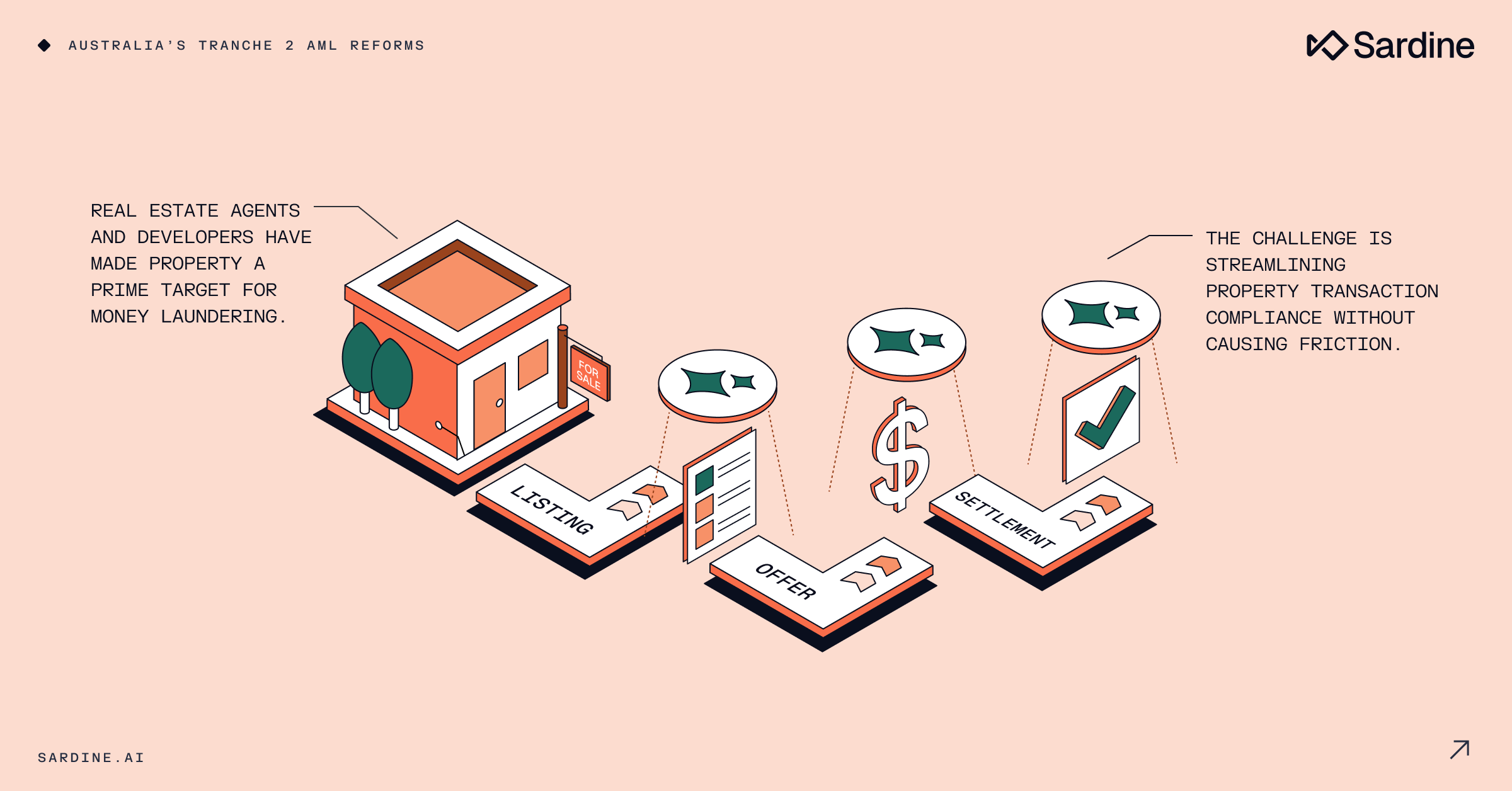
Reformas AML del Tramo 2 en Australia: Lo que las empresas inmobiliarias deben saber
Australia ha cerrado una laguna legal que los investigadores de delitos financieros han señalado durante años. A partir del 1 de julio de 2026, los agentes inmobiliarios, agentes de compradores, corredores y promotores inmobiliarios que traten directamente con los compradores serán clasificados como sujetos obligados en materia de AML/CTF en virtud de la Ley contra el Blanqueo de Capitales y la Financiación del Terrorismo. La inscripción en AUSTRAC se abre el 31 de marzo de 2026 y finaliza el 28 de abril de 2026.
Para un sector que en gran medida ha operado al margen del marco de prevención de lavado de dinero de Australia, esto representa un cambio fundamental, no una simple actualización menor.
En esta publicación, analizamos en detalle qué exigen las reformas, dónde se encuentran los verdaderos puntos de presión en materia de cumplimiento y qué deben hacer las empresas inmobiliarias para prepararse.
Qué cambió y por qué es importante
En noviembre de 2024, el Parlamento aprobó la Ley de Enmienda contra el Lavado de Dinero y la Financiación del Terrorismo de 2024, ampliando el régimen ALD/CFT a un conjunto de profesiones de alto riesgo consideradas «guardianes», incluidas por primera vez las agencias inmobiliarias y los desarrolladores de propiedades. A esta legislación se la suele llamar «Tramo 2» porque incorpora estos sectores a un marco que se aplica a bancos e instituciones financieras desde 2006.
La magnitud de esta ampliación es considerable: cuando las disposiciones entren en vigor el 1 de julio de 2026, aproximadamente 70.000 empresas adicionales quedarán sujetas a la Ley AML/CTF, elevando el número total de entidades obligadas a alrededor de 90.000.
Entonces, ¿por qué se apuntó al sector inmobiliario? La propiedad ha sido durante mucho tiempo un vehículo preferido para el lavado de dinero a nivel mundial. Las compras en efectivo, las estructuras de propiedad complejas, los compradores extranjeros y las transacciones en capas facilitan la introducción de fondos ilícitos y el encubrimiento de su origen. Australia, al igual que el Reino Unido y Nueva Zelanda antes que ella, ahora está colocando a agentes y desarrolladores en la primera línea de defensa contra los delitos financieros.
AUSTRAC ha dejado claro que esto no es un mero trámite burocrático. El regulador espera que todas las empresas inmobiliarias, desde boutiques independientes hasta cadenas nacionales, implementen un programa auténtico de prevención de lavado de dinero y financiamiento del terrorismo basado en el riesgo.
Quién está incluido en el alcance
Las reformas se aplican a empresas inmobiliarias que prestan servicios inmobiliarios designados. Esto abarca:
- Agentes y corredores de bienes raíces
- Agentes de compradores
- Promotores inmobiliarios que venden directamente a los compradores
- Modelos en línea o de tipo mercado que van más allá de la publicidad pasiva, por ejemplo, plataformas que intermedian ofertas, facilitan subastas, mantienen depósitos o gestionan contratos
El enfoque basado en servicios es importante. Si tu plataforma o negocio participa activamente en facilitar la transacción, es probable que esté dentro del alcance sin importar cómo te definas.
Lo que exigen las nuevas obligaciones
Las empresas inmobiliarias clasificadas como entidades obligadas deberán desarrollar un marco completo de cumplimiento de AML/CTF. Los requisitos fundamentales incluyen:
Registro en AUSTRAC antes de prestar servicios designados, con el período de inscripción que comienza el 31 de marzo de 2026 y finaliza el 28 de abril de 2026.
Un programa de AML/CTF documentado que abarque la evaluación del riesgo de ML/TF, la gobernanza interna, los controles, la capacitación del personal y una revisión independiente en un ciclo regular.
Debida diligencia del cliente (CDD), como la identificación y verificación de las personas, la comprensión de la titularidad real y la evaluación del origen de los fondos o del patrimonio en las operaciones de mayor riesgo.
Supervisión continua, que incluye la calificación del riesgo de los clientes, la aplicación de una debida diligencia reforzada en los casos de mayor riesgo (como PEP, estructuras de propiedad complejas o compradores extranjeros) y el mantenimiento de esa visión actualizada a lo largo de relaciones más prolongadas.
Presentación de informes de asuntos sospechosos (SMR), lo que incluye la presentación de reportes ante AUSTRAC cuando las señales de alerta no puedan explicarse razonablemente.
Conservación de registros, como mantener la documentación sobre DDC, decisiones de riesgo, transacciones y resultados de los reportes durante los períodos mínimos establecidos.
El kit inicial del programa de bienes raíces de AUSTRAC hace concreto el estándar esperado: formularios iniciales de DDC, flujos de trabajo de evaluación de riesgos, procedimientos de escalamiento a un responsable de cumplimiento de LA/FT y fundamentos documentados de sospecha antes de presentar cualquier RSM.
Dónde recae realmente la presión de cumplimiento
Leer los requisitos normativos al pie de la letra puede hacer que el AML/CTF parezca simplemente un proyecto de documentación. En la práctica, la parte más difícil es operativizarlo a lo largo de todo el ciclo de vida de la transacción y hacerlo sin generar fricciones innecesarias para agentes y compradores.
Algunas áreas donde la brecha entre la política y la ejecución suele ser mayor:
Momento de la DDC.La guía de AUSTRAC vincula la DDC a momentos específicos de la operación, normalmente antes o poco después del intercambio de contratos y, en cualquier caso, antes del cierre. En las operaciones de alto riesgo, la verificación debe realizarse antes. Hacer esto bien implica incorporar disparadores de DDC en los flujos de trabajo existentes, en lugar de añadir comprobaciones al final.
Titularidad real. Identificar quién controla en última instancia o se beneficia de una compra, especialmente a través de fideicomisos, sociedades o estructuras extraterritoriales, requiere mucho más que comprobar un pasaporte. Los agentes y promotores necesitan procesos para recopilar, verificar y documentar la información sobre los beneficiarios finales (UBO) de una forma que realmente resista el escrutinio.
Verificación del origen de los fondos. Para operaciones de gran volumen, pagos íntegramente en efectivo o compras que involucren remitentes extranjeros, los agentes deben entender de dónde proviene el dinero y si la explicación tiene sentido dado el perfil del cliente. Aquí es donde entra en juego la debida diligencia reforzada, y donde muchas agencias actualmente no tienen ninguna capacidad.
Juicio sobre asuntos sospechosos. Un ROS no es solo un formulario: requiere una decisión de cumplimiento normativo. Los agentes necesitan vías claras de escalamiento y una justificación documentada para que, cuando algo parezca incorrecto, exista un proceso coherente para gestionarlo.
Escalar en toda la industria. Muchas agencias australianas tienen hoy poca o ninguna infraestructura de AML. Construir un programa conforme desde cero, incluyendo tecnología, procesos, capacitación y gobernanza, lleva meses. Las empresas que tratan julio de 2026 como la fecha de inicio en lugar de la fecha límite están asumiendo un riesgo significativo.
Cómo prepararse
AUSTRAC y los asesores del sector son claros: empiece ahora.
La secuencia práctica para la mayoría de las empresas inmobiliarias es la siguiente:
- Realice una evaluación del riesgo de blanqueo de capitales y financiación del terrorismo para su empresa, abarcando los tipos de clientes, los importes de las operaciones, la exposición geográfica y los canales de prestación de servicios.
- Diseña tu programa de PLA/FT en función de esa evaluación de riesgos, con políticas documentadas, un responsable de cumplimiento y un plan de formación.
- Integra la DDC y el monitoreo continuo en tu flujo de operaciones, incluyendo dónde y cuándo se captura, verifica y califica el riesgo de la identidad del cliente.
- Identifica las carencias de tu tecnología y los procesos manuales en los que confías hoy y que no escalarán o no cumplirán con una revisión de AUSTRAC.
- Inscríbete en AUSTRAC a partir del 31 de marzo de 2026 y asegúrate de estar plenamente operativo para el 1 de julio de 2026.
Para las plataformas y los mercados, esto también implica analizar en qué punto del espectro se sitúa tu producto entre la publicidad pasiva y la facilitación activa, porque esa línea determina si tienes obligaciones de reporte y cómo se concretan.
Cómo puede ayudar Sardine
Si eres una empresa inmobiliaria, una plataforma de propiedades o una compañía de tecnología inmobiliaria que está trabajando en la preparación para la Fase 2, la plataforma de cumplimiento AML de Sardine está diseñada precisamente para este tipo de desafío operativo.
Ayudamos a los equipos de cumplimiento a automatizar el trabajo repetitivo y de gran volumen que generan los programas de AML y a mantenerlo totalmente auditable de principio a fin.
Cribado de sanciones, PEP y medios adversos. Nuestros agentes de IA analizan automáticamente a los clientes frente a listas de vigilancia globales, detectan coincidencias de nombres, incluidas coincidencias parciales y transliteraciones, y resuelven los falsos positivos evidentes, de modo que tu equipo pueda centrarse en los casos realmente dudosos en lugar de trabajar una cola de alertas de bajo riesgo.
Incorporación de KYC y KYB. Automatizamos la verificación de identidad, la investigación de beneficiarios finales y la debida diligencia empresarial en registros, archivos y fuentes web. Esto se traduce en menos trabajo manual de OSINT y una cobertura de EDD más sólida, especialmente para estructuras complejas como fideicomisos y entidades extraterritoriales.
Supervisión y triaje de transacciones. Nuestros agentes analizan los patrones de transacción y señalan comportamientos compatibles con el blanqueo de bienes, incluidos orígenes inusuales de fondos, pagadores terceros y patrones de reventa rápida, y derivan los casos de alto riesgo a su equipo de cumplimiento con resúmenes estructurados en lugar de alertas en bruto.
Generación de narrativas para ROS. Cuando sea necesario presentar un asunto sospechoso, nuestros agentes de IA generan narrativas listas para el examinador, vinculadas a las pruebas de respaldo del caso, lo que reduce la carga manual de los oficiales de cumplimiento y mejora la coherencia en todo su equipo.
Documentación lista para auditorías en cada etapa. Cada decisión de revisión, calificación de riesgo, escalamiento y presentación de SMR se registra con un historial defendible, de modo que, cuando AUSTRAC revise su programa, pueda mostrar exactamente cómo se aplicaron los controles.
Las empresas inmobiliarias que están iniciando hoy sus programas de prevención de lavado de dinero no necesitan construir todo esto desde cero. Las firmas que se adelanten, con la tecnología adecuada detrás, estarán en posición de tratar julio de 2026 como un no-evento, en lugar de una fecha límite a la que lleguen corriendo a última hora.