
#12128 min
¡Qué tal, luchadores contra el fraude! Bienvenidos a Fraud Forward.
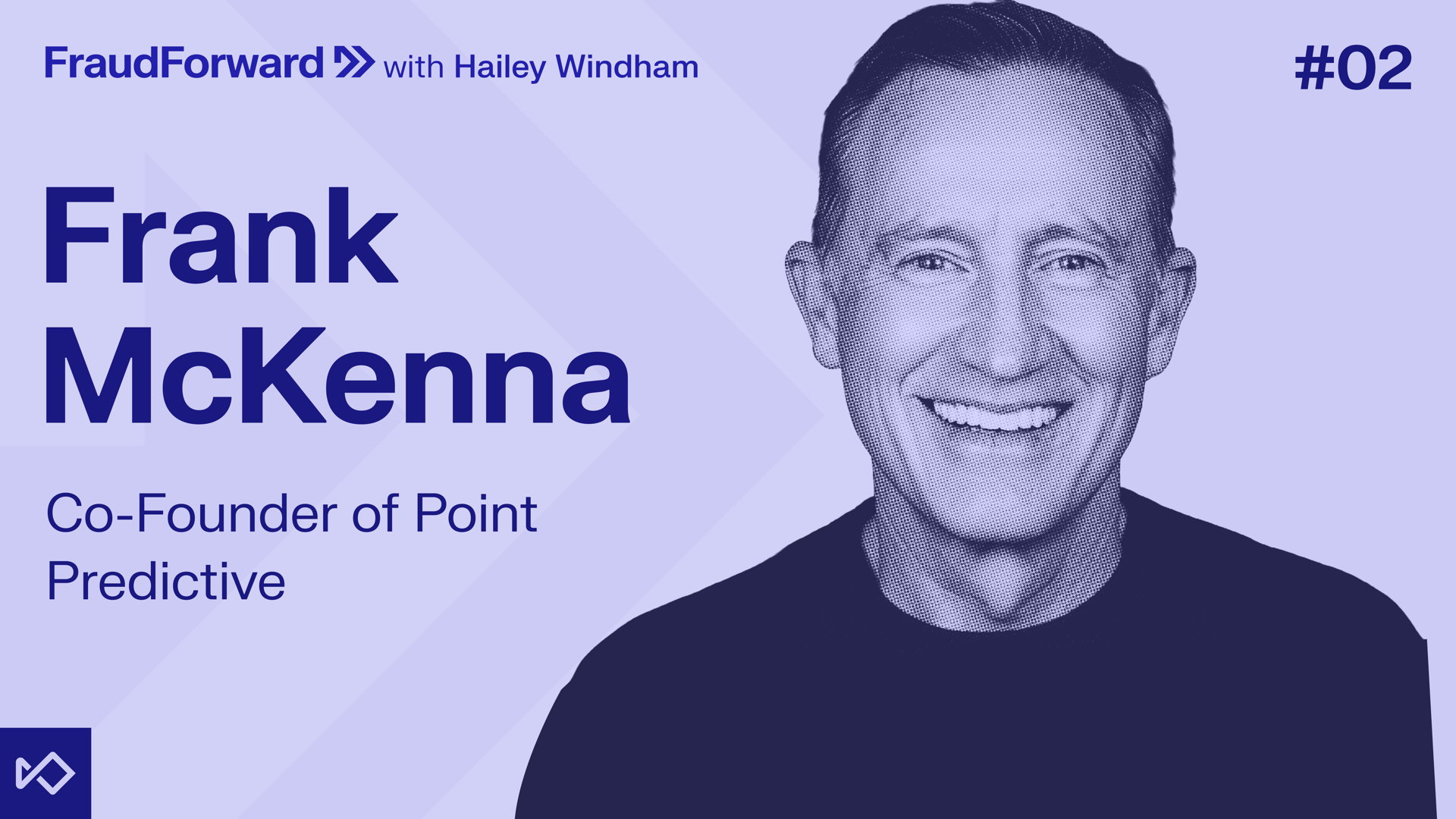
En este episodio, me siento con Frank McKenna para analizar un problema estructural que demasiadas instituciones ignoran hasta que les causa daño. El ciclo de vida del cliente no es solo la incorporación y la monitorización de transacciones. Es responsabilidad empresarial de principio a fin.
Frank comparte lecciones de cómo descubrió la exposición al fraude de bancos de inversión vinculada a la investigación del colapso hipotecario, y hablamos de cómo a menudo surgen luchadores solitarios contra el fraude cuando la responsabilidad empresarial frente al fraude está fragmentada.
La exposición al fraude rara vez se debe a una sola alerta pasada por alto. Se trata de brechas sistémicas en la claridad sobre la propiedad del riesgo, la asignación de recursos para combatir el fraude y la colaboración antifraude entre distintas funciones.
Cuando el aislamiento del equipo de fraude se normaliza, el agotamiento de los analistas de fraude le sigue. Los desafíos de escalamiento de fraude se multiplican. Y la exposición a fraudes a gran escala se vuelve más probable.
El riesgo a lo largo del ciclo de vida del cliente debe integrarse en una sólida estructura de gobernanza del fraude. Debe reforzar la responsabilidad de las instituciones financieras en todo el proceso de incorporación, monitoreo, gestión de disputas y alineación de los incentivos de los empleados con el riesgo.
Este episodio trata sobre cómo construir una supervisión operativa del fraude que respalde la sostenibilidad del programa de fraude y proteja la confianza de los clientes a lo largo de todo el ciclo de vida del cliente.
Si te gustó este episodio, asegúrate de suscribirte y dejar una reseña del pódcast en iTunes, Spotify, YouTube o en cualquier plataforma donde escuches pódcasts. Realmente ayuda a correr la voz.
Antes de profundizar en las notas, quiero dejar algo muy claro.
El aislamiento del equipo de fraude no es un problema de personas.
Es un problema de estructura.
El riesgo en el ciclo de vida del cliente se desarrolla cuando:
Puedes tener operadores sólidos en cada silo y aun así generar vulnerabilidades a nivel empresarial.
Así es como nacen los luchadores solitarios contra el fraude.
Un analista detecta el patrón. Un equipo siente la presión. Un líder impulsa la acción sin el respaldo de toda la organización.
Con el tiempo, ese aislamiento alimenta el agotamiento de los analistas de fraude y debilita la sostenibilidad del programa de fraude.
Permíteme asegurarte: ningún equipo de fraude debería cargar solo con el riesgo sistémico.
Una sólida supervisión operativa del fraude incorpora visibilidad a lo largo de todo el ciclo de vida entre los distintos departamentos, para que las señales no se pierdan en las bandejas de entrada.
Eso significa:
Cuando el ciclo de vida del cliente se unifica bajo la responsabilidad empresarial sobre el fraude, la detección se fortalece y la respuesta se acelera.
La investigación sobre el colapso hipotecario reveló algo que sigue siendo importante hoy en día.
Cuando los incentivos de ingresos prevalecen sobre las señales de riesgo, la exposición se acumula silenciosamente.
La exposición de los bancos de inversión al fraude durante ese período no fue aleatoria. Reflejaba:
La responsabilidad empresarial frente al fraude requiere más que paneles de control.
Requiere:
Cuando se formaliza la estructura de gobernanza del fraude, la responsabilidad pasa de las hazañas individuales a una defensa coordinada.
Eso es liderazgo en la lucha contra los delitos financieros en acción.
La sostenibilidad de un programa de fraude depende de su estructura.
El agotamiento de los analistas de fraude suele ser una señal de que:
Dios mío, no podemos seguir pidiéndoles a los analistas que escalen las cosas en el vacío.
Las decisiones sobre fraude basadas en datos deben compartirse entre las áreas de riesgo, operaciones, cumplimiento y las distintas líneas de negocio.
Paneles compartidos.
Informes unificados del ciclo de vida.
Colaboración antifraude interfuncional.
Así es como reducimos el aislamiento del equipo de fraude y fortalecemos la protección de la confianza de los clientes a gran escala.
Cuando la responsabilidad se integra en todo el ciclo de vida del cliente, las instituciones refuerzan:
Y ese es el objetivo.
El ciclo de vida del cliente no es un recorrido lineal. Es un ecosistema de riesgos interconectados.
Cuando la gobernanza está fragmentada, los luchadores solitarios contra el fraude cargan con una responsabilidad desproporcionada y la exposición a fraudes a gran escala se vuelve más probable.
Cuando la responsabilidad por el fraude empresarial se estructura de forma intencional, los incentivos se alinean, la claridad sobre la titularidad del riesgo mejora y la sostenibilidad del programa de fraude se fortalece.
Así es como construimos una supervisión operativa del fraude duradera.
Así es como apoyamos a nuestros equipos de fraude.
Y así es como protegemos a los clientes de la manera correcta.