#12128 min
¡Qué tal, luchadores contra el fraude, y bienvenidos a Fraud Forward!
Bien, necesito hablar de algo que creo que se malinterpreta en muchas instituciones y que, sinceramente, genera fricción innecesaria. La función de auditoría interna no es solo el equipo que aparece después del desastre y te entrega un informe lleno de hallazgos. Esa es la historia antigua. La nueva realidad es esta: la auditoría interna puede ser uno de los motores más potentes de la gobernanza del riesgo de fraude si permitimos que auditoría se involucre desde el principio, con los límites adecuados.
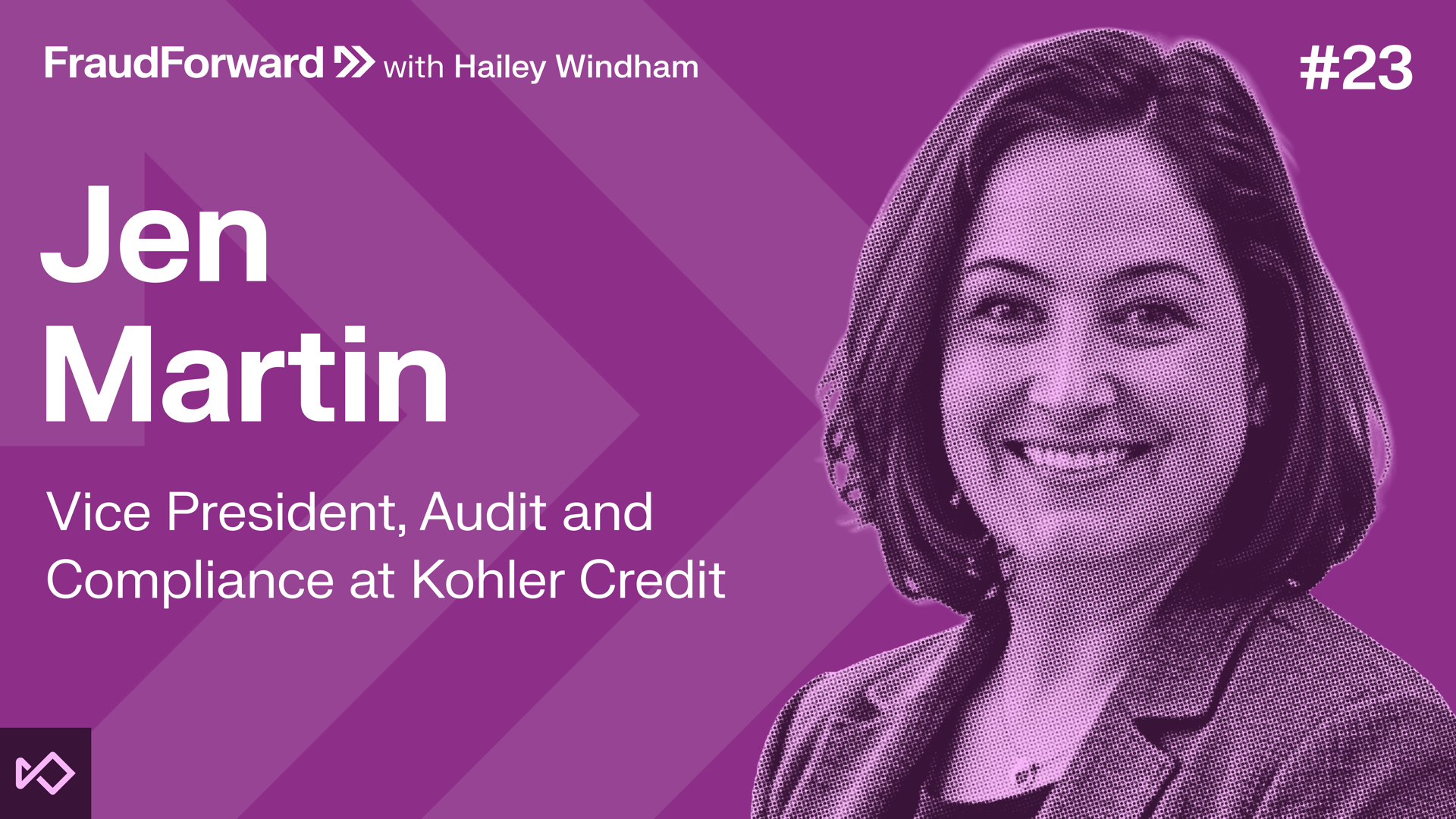
En este episodio, me siento a conversar con Christine Murray, vicepresidenta de Auditoría y Cumplimiento en Kohler Credit Union, y me encantó esta conversación porque Christine vive en el mundo real. No está hablando de teoría. Está hablando de lo que realmente sucede cuando los equipos de producto se mueven rápido, los canales cambian y los equipos de riesgo se incorporan tarde. Y te digo ahora mismo: mitigar el riesgo antes del lanzamiento es más barato, más limpio y más considerado con tus equipos de primera línea que “arreglarlo después de que llegue la ola de fraude”.
Tomemos un momento para replantear la situación. Cada vez que una institución lanza algo nuevo sin una revisión de riesgos para el lanzamiento del producto, básicamente les estamos entregando a los delincuentes una nueva superficie para poner a prueba. Y luego nos sorprendemos cuando los controles no encajan. Quiero que auditoría esté en la sala desde antes, no para frenar las cosas por deporte, sino para asegurarnos de que no estamos construyendo brillantes experiencias nuevas para los socios sobre brechas que se podrían haber evitado.
Aquí es donde surge la tensión, y Christine lo expresa a la perfección. La función de auditoría interna puede convertirse en asesora en la prevención del fraude, pero la independencia y la objetividad de la auditoría no pueden sacrificarse. No quiero que la auditoría se convierta en un mero trámite, ni tampoco en un equipo de producto en la sombra. Quiero que la auditoría interna sea un socio estratégico, con una gobernanza clara, límites bien definidos y la credibilidad que proviene de una independencia ejercida con disciplina.
También abordamos el lado humano, porque estoy obsesionada con esto. Desarrollar una cultura de cumplimiento no es un PDF de políticas. Es el comportamiento cotidiano de las personas. Las prácticas de participación en las auditorías de sucursales son importantes porque las sucursales y los centros de contacto son donde el riesgo se vuelve real. Cuando los equipos de auditoría pueden explicar la intención detrás de las regulaciones, reforzar los controles preventivos de cumplimiento y apoyar la cultura ética de la organización, toda la institución se fortalece.
Y también hablamos de una colaboración que realmente funciona: colaboración entre los equipos de auditoría y fraude, alineación entre BSA y auditoría, revisión de cumplimiento transversal entre áreas e incluso colaboración con auditores externos cuando tiene sentido. El objetivo es una gobernanza de la institución financiera que respalde la supervisión del riesgo empresarial sin convertirlo todo en una “cacería de errores”.
Si trabajas en una cooperativa de crédito, un banco comunitario, una fintech, o en cualquier lugar donde haya cambios de producto y exposición al fraude, este episodio es mi desafío para ti. Deja de tratar a auditoría como si fuera el jefe final. Involúcralos desde el principio, establece los límites adecuados y permite que la función de auditoría interna te ayude a prevenir problemas en lugar de solo documentarlos.
Si te gustó este episodio, asegúrate de suscribirte y dejar una reseña del pódcast en iTunes, Spotify, YouTube o en cualquier plataforma donde escuches pódcasts. Realmente ayuda a que más gente lo conozca.
Permíteme asegurarte que la función de auditoría interna no está anclada en el pasado, a menos que nosotros la mantengamos allí.
Cuando veo equipos de auditoría integrados de la manera correcta, están realizando labores de asesoría en prevención de fraudes que realmente evitan problemas para todos los que vienen después. No haciéndose dueños de los controles, sino detectando los puntos débiles a tiempo y planteando las preguntas adecuadas a los niveles superiores.
Esto es lo que cambia cuando la auditoría forma parte de la mitigación de riesgos antes del lanzamiento:
Y me encanta que Christine lo señale. La participación temprana reduce los costos de remediación y protege la reputación de la institución, pero también protege al personal de primera línea de verse abrumado por un volumen prevenible.
Ahora quiero hacer doble clic en la línea divisoria, porque es aquí donde la gente se pone nerviosa, y con razón.
La independencia y la objetividad de la auditoría son la base. Si la auditoría se integra demasiado sin salvaguardas, se pierde la credibilidad que la hace poderosa. Así que la respuesta no es “mantener a la auditoría al margen”. La respuesta es “definir el alcance del trabajo”.
Lo que quiero que las instituciones aclaren:
La alineación entre BSA y auditoría también es fundamental aquí. Cuando la auditoría comprende las realidades de BSA y BSA comprende las expectativas de la auditoría, la gobernanza del riesgo de fraude se vuelve más clara y más defendible.
La independencia no impide la colaboración, la clarifica.
Esta es la parte que me importa profundamente. Desarrollar una cultura de cumplimiento es la diferencia entre controles que funcionan y controles que solo existen sobre el papel.
Las prácticas de participación en auditorías de sucursales crean oportunidades reales para fomentar la rendición de cuentas sin miedo. Cuando los equipos de auditoría explican la intención detrás de las regulaciones y cuando invierten en iniciativas de educación en auditoría, la institución pasa de ver el cumplimiento como un castigo a verlo como una protección.
Esto es lo que he visto mejorar cuando se prioriza la cultura:
La función de auditoría interna es más eficaz cuando equilibra su papel como socio estratégico con una independencia rigurosa. Ese equilibrio es la forma de fortalecer el gobierno corporativo de las instituciones financieras
La misión sigue siendo la misma:
El futuro de la prevención del fraude bancario depende de la comunidad.
El futuro de la prevención del fraude en las cooperativas de crédito depende de la colaboración.
El futuro de la evolución de la industria del fraude depende de la inteligencia compartida y de la alineación de valores.
Estamos subiendo de nivel.
Y lo estamos haciendo juntos.
Mantente alerta, mantente informado y sigue impulsando la lucha contra el fraude.