#12128 min
¡Qué tal, luchadores contra el fraude, y bienvenidos a Fraud Forward!
Fraud Forward funciona gracias a Sardine.
Muy bien, hablemos de algo que es más grande que cualquier institución y, sinceramente, más grande que cualquier equipo de fraude. A Estados Unidos no le falta experiencia en la prevención del fraude. Le falta una estructura nacional unificada que se mueva a la velocidad del crimen moderno.
Las organizaciones criminales se coordinan a nivel global en tiempo real. Los marcos de coordinación interna siguen fragmentados. Y ese desajuste estructural es la razón por la que una Estrategia Nacional Integral de Prevención del Fraude sigue siendo una tarea pendiente.
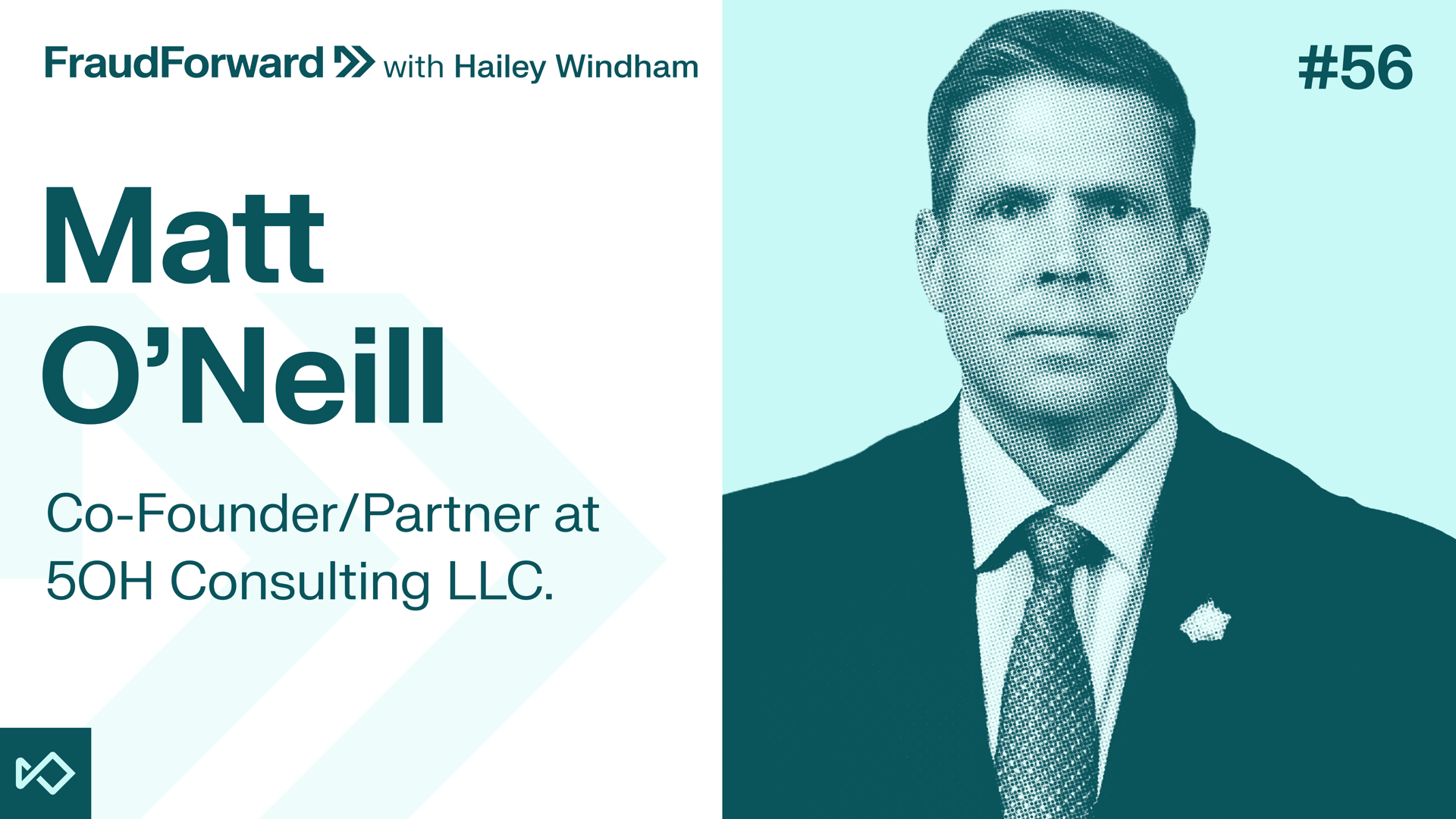
En este episodio hablo con Matt O’Neill, ex director general de Operaciones Globales de Investigación Cibernética del Servicio Secreto de los Estados Unidos. Tiene décadas de experiencia en liderazgo de investigaciones multinacionales y explica con detalle por qué la reforma de la prevención del fraude en EE. UU. tiene que ir más allá de simples actualizaciones incrementales. Necesitamos alineación, rendición de cuentas e inteligencia de fraude en tiempo real que realmente pueda seguir el ritmo del crimen transnacional.
Tomémonos un momento para replantear la situación. El fraude no se está quedando dentro de las paredes de las instituciones financieras.
Las redes de fraude operan en:
Y si nuestra respuesta está fragmentada, los esquemas de fraude se expanden más rápido de lo que podemos coordinarnos.
Esto es lo que este episodio deja claro sobre los silos de datos de fraude y por qué son importantes:
Una verdadera Estrategia Nacional de Prevención del Fraude debe ajustarse a la realidad operativa del fraude organizado.
Si te gustó este episodio, suscríbete a Fraud Forward en Spotify, Apple Podcasts, YouTube o en tu plataforma preferida para profundizar en temas de fraude y riesgo institucional.
Una Estrategia Nacional de Prevención del Fraude debe abordar la descoordinación entre la actuación de los delincuentes y la respuesta institucional.
Las redes transnacionales de fraude organizado operan con:
En cambio, la respuesta al fraude en Estados Unidos está distribuida entre agencias, organismos reguladores e instituciones con mandatos y niveles de financiación diversos. Esa fragmentación mantiene vivos los silos de datos sobre fraude en todos los sectores, y los delincuentes se aprovechan de ese desfase temporal.
Marcos como el intercambio de información 314A y la colaboración 314B crearon vías legales esenciales para la comunicación. Fueron algo muy importante.
Pero fueron diseñados para el intercambio periódico, no para una inteligencia de fraude continua y en tiempo real.
Qué ocurre cuando se retrasa la coordinación:
La reforma de la prevención del fraude en Estados Unidos debe modernizar cómo se mueve la información y la rapidez con la que se vuelve accionable entre los socios públicos y privados.
Permíteme asegurarte que, en muchos fraudes, el punto de partida no es la banca. Está fuera del banco.
El fraude facilitado por las telecomunicaciones y las estafas a través de las redes sociales complican la rendición de cuentas porque los canales que las posibilitan se encuentran en mundos regulatorios y operativos distintos.
Una respuesta contra el fraude a nivel intersectorial debe incluir:
Las alianzas público-privadas contra el fraude no pueden limitarse solo al sector bancario si queremos una disrupción significativa. Sin una rendición de cuentas claramente definida en todos los sectores habilitadores, la aplicación de la ley seguirá siendo reactiva.
Los modelos globales de prevención del fraude demuestran que las estructuras centralizadas pueden generar interrupciones más rápidas y una orientación normativa más clara.
Varios países han avanzado hacia:
Estos modelos tratan las estafas como una amenaza a la seguridad nacional, no solo como delitos financieros aislados. La coordinación de la lucha contra el fraude por parte de las fuerzas del orden mejora cuando la financiación, la autoridad y los sistemas de inteligencia se alinean bajo un mandato nacional coherente.
Aquí es donde el concepto de un centro nacional contra las estafas se convierte en un tema de debate real, y no en una simple palabra de moda.
Las implicaciones de liderazgo se extienden directamente a los equipos de la empresa.
Las estrategias de respuesta al fraude a nivel empresarial deben incorporar las realidades de la coordinación externa, porque la velocidad de su institución se ve afectada por la velocidad del ecosistema.
Las medidas prácticas incluyen:
Una estrategia nacional creíble de prevención del fraude requiere la alineación entre la reforma de las políticas de delitos financieros y la ejecución operativa. De lo contrario, seguimos atrapados en silos de datos de fraude mientras los delincuentes permanecen coordinados.
La misión sigue siendo la misma:
El futuro de la prevención del fraude bancario depende de la comunidad.
El futuro de la prevención del fraude en las cooperativas de crédito depende de la colaboración.
El futuro de la evolución de la industria del fraude depende de la inteligencia compartida y de la alineación de valores.
Estamos subiendo de nivel.
Y lo estamos haciendo juntos.
Mantente alerta, mantente informado y sigue impulsando la lucha contra el fraude.