#12128 min
¡Qué tal, luchadores contra el fraude, y bienvenidos a Fraud Forward!
Muy bien, necesito que estés conmigo en esta, porque el fraude de romance en línea es una de las cosas emocionalmente más complejas con las que lidiamos, y también es una de las pérdidas por fraude más persistentes y menos denunciadas que existen. Y la parte que me dan ganas de volcar la mesa es que las víctimas suelen estar aisladas mucho antes de que el dinero siquiera se mueva. Así que, para cuando ocurre el pago, ya no estamos deteniendo una estafa, estamos tratando de deshacer un control psicológico con forma de relación.
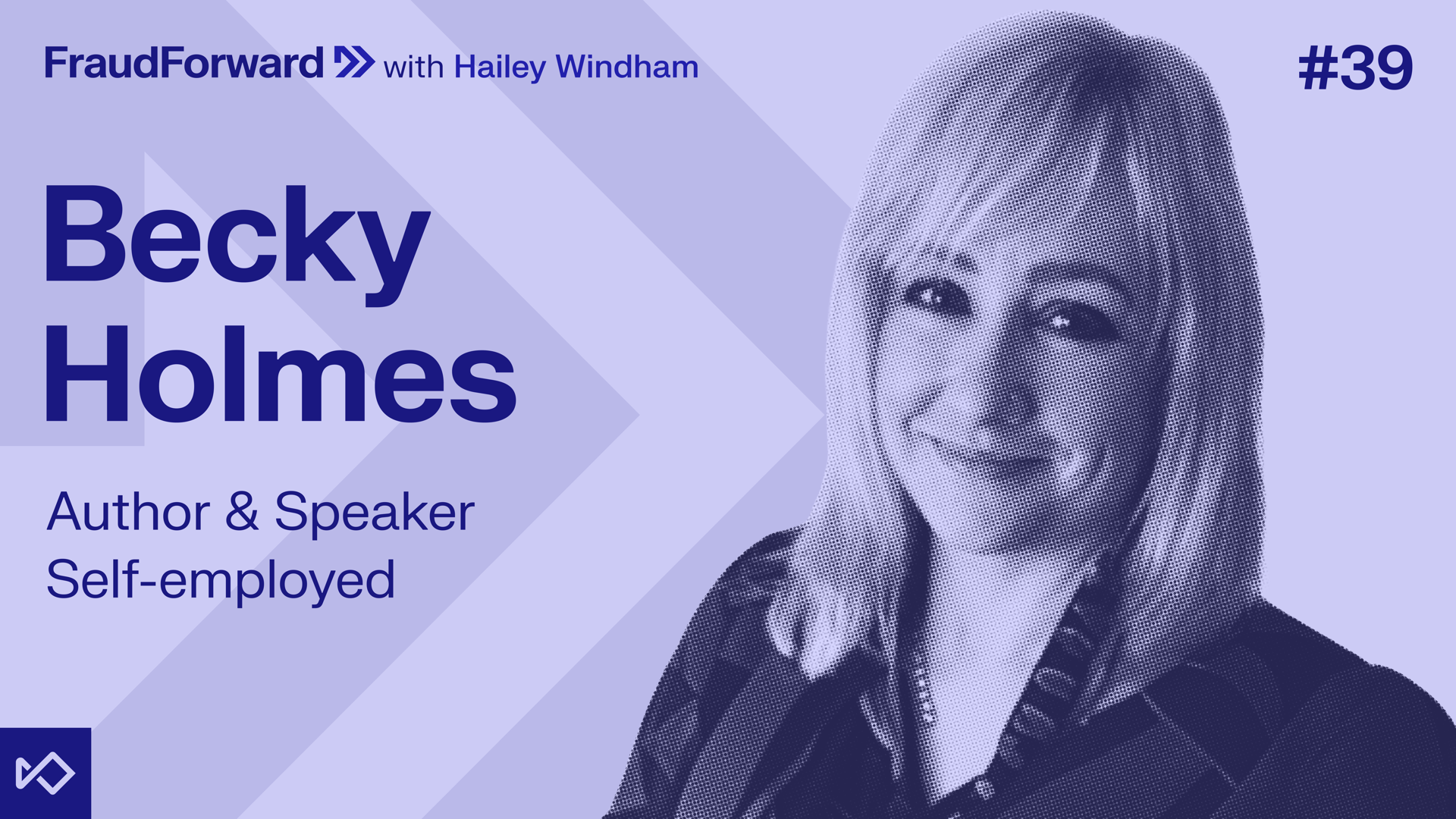
Hoy estoy hablando con la autora Becky Holmes, y sí, solo el título de su libro, Keanu Reeves no está enamorado de ti, te deja claro lo directa y brillante que es sobre este tema. Becky ha pasado mucho tiempo interactuando directamente con estafadores, y aporta una perspectiva que es a partes iguales divertida, desgarradora y dolorosamente instructiva.
Tomemos un momento para recomponer el ambiente. La estafa no es “envía dinero”.
La estafa radica en la psicología de las estafas románticas.
Es atención, afirmación y control gradual. Es ingeniería social fraudulenta envuelta en intimidad. Son estafas de manipulación emocional que se sienten como amor. El estafador construye confianza, normaliza el secreto, crea urgencia y luego gira hacia una necesidad económica. Por eso las estafas en citas en línea no son aleatorias. Están estructuradas. Son intencionales. Son esquemas de fraude repetibles basados en la confianza.
Y luchadores contra el fraude, voy a decir eso que tenemos que dejar de decir: “¿Cómo pudieron caer en eso?”. Esa frase es estigmatización de las víctimas de fraude y forma parte del daño. Porque el fraude romántico en línea prospera en el silencio, y la vergüenza es el motor de ese silencio. Cuando las víctimas esperan ser juzgadas, se esconden. Cuando se esconden, perdemos tiempo. Cuando perdemos tiempo, las pérdidas se agravan y se repiten.
Becky y yo hablamos sobre el aislamiento de las víctimas de fraude y cómo los estafadores lo diseñan activamente. Desalientan a las víctimas de hablar con su familia. Hacen que la relación se sienta exclusiva. Presentan cualquier preocupación externa como celos o un malentendido. Y una vez que ese aislamiento está establecido, el fraude de pago autorizado se vuelve más fácil de detonar, porque la víctima actúa bajo control emocional mientras cree que está protegiendo la relación.
Desde el lado del banco, esto genera brechas en la respuesta frente al fraude bancario porque la transacción parece “autorizada”. Y desde el lado de las fuerzas del orden, las víctimas pueden encontrarse con respuestas fragmentadas o excesivamente procedimentales que se sienten despectivas, lo que refuerza las barreras para denunciar el fraude. Detesto eso, porque una respuesta al fraude centrada en la víctima no es una opción “agradable” aquí, es una estrategia práctica de prevención.
Quiero profundizar en algo importante. La prevención no es solo tecnología de detección. Es concienciación del consumidor sobre el fraude, educación sobre las señales de alerta de las estafas y una cultura que no avergüence a las víctimas. Las familias, las comunidades y las instituciones necesitan un lenguaje que haga más seguro revelar lo ocurrido. Porque la revelación temprana es la única manera de lograr una intervención más temprana en muchos escenarios de fraude de pagos autorizados.
Este episodio ofrece una visión sólida y realista sobre la concienciación frente a la explotación financiera y lo que realmente se necesita para abordar el fraude romántico en línea, no solo deteniendo pagos, sino cambiando cómo hablamos, cómo respondemos y cómo brindamos apoyo.
Si te gustó este episodio, asegúrate de suscribirte y dejar una reseña del pódcast en iTunes, Spotify, YouTube o en cualquier plataforma donde escuches pódcasts. Realmente ayuda a que más gente lo conozca.
Permíteme asegurarte que las estafas de romance en línea funcionan porque primero generan una inversión emocional.
la psicología de las estafas románticas se basa en:
Por eso los fraudes basados en la confianza se sienten “reales” para la víctima. Las estafas de manipulación emocional no son accidentales; están diseñadas.
Una vez que el dinero empieza a moverse, la vergüenza y el costo hundido pueden reforzar el compromiso. Así es como las estafas de citas en línea se convierten en un daño prolongado.
Luchadores contra el fraude, el aislamiento de las víctimas de fraude se ve reforzado por el estigma que sufren.
Las víctimas temen ser juzgadas. Temen que no les crean. Temen que les digan que fueron estúpidas. Ese miedo se convierte en una barrera para denunciar el fraude y provoca que muchas pérdidas por fraude no se reporten.
Lo que lo empeora es cuando las respuestas institucionales se sienten despectivas o meramente procedimentales. Por eso es tan importante una respuesta al fraude centrada en la víctima. La empatía no es blandura, es una palanca que mejora la revelación de los hechos.
Cuando los equipos de respuesta al fraude de los bancos y de las fuerzas del orden reconocen la dimensión emocional, la confianza mejora y la prevención también mejora.
Las pérdidas por fraude no declaradas son una parte enorme de esta historia.
Muchas víctimas nunca lo denuncian. Muchas pérdidas quedan ocultas dentro de fraudes de pago autorizados que parecen legítimos en los datos de transacciones. Eso complica las métricas de detección y el momento de las intervenciones, y crea puntos ciegos.
La concienciación sobre el fraude al consumidor debe abordar conjuntamente la educación y el estigma. La educación sobre las señales de alerta de estafas debe enseñar los indicios de advertencia y, al mismo tiempo, enseñar un lenguaje seguro para la divulgación.
Reconocer el fraude romántico en línea como un fraude de ingeniería social organizado cambia la narrativa. Traslada la culpa de la víctima al delincuente.
Las brechas en la respuesta al fraude bancario suelen aparecer porque el fraude en pagos autorizados limita la autoridad para intervenir de inmediato, pero las instituciones siguen siendo una capa de protección fundamental.
Qué ayuda:
El fraude romántico en línea no es solo una tragedia personal. Es un desafío sistémico que requiere una concienciación coordinada y una respuesta estructurada.
La misión sigue siendo la misma:
El futuro de la prevención del fraude bancario depende de la comunidad.
El futuro de la prevención del fraude en las cooperativas de crédito depende de la colaboración.
El futuro de la evolución de la industria del fraude depende de la inteligencia compartida y de la alineación de valores.
Estamos subiendo de nivel.
Y lo estamos haciendo juntos.
Mantente alerta, mantente informado y sigue impulsando la lucha contra el fraude.