

#12128 min
¡Qué tal, luchadores contra el fraude, y bienvenidos a Fraud Forward!
Muy bien, estoy sonriendo un poco mientras digo esto porque este episodio es para todas las personas que alguna vez se han quedado mirando una cola de pendientes y han pensado: “Así que solo vamos a descubrir las pérdidas después de que ocurran, perfecto, perfecto.” La detección de fraude en tiempo real es la diferencia entre hacer comentarios después del partido y realmente interceptar el daño mientras está en marcha. Y sí, es un lío. Sí, es difícil. Y sí, definitivamente vale la pena.
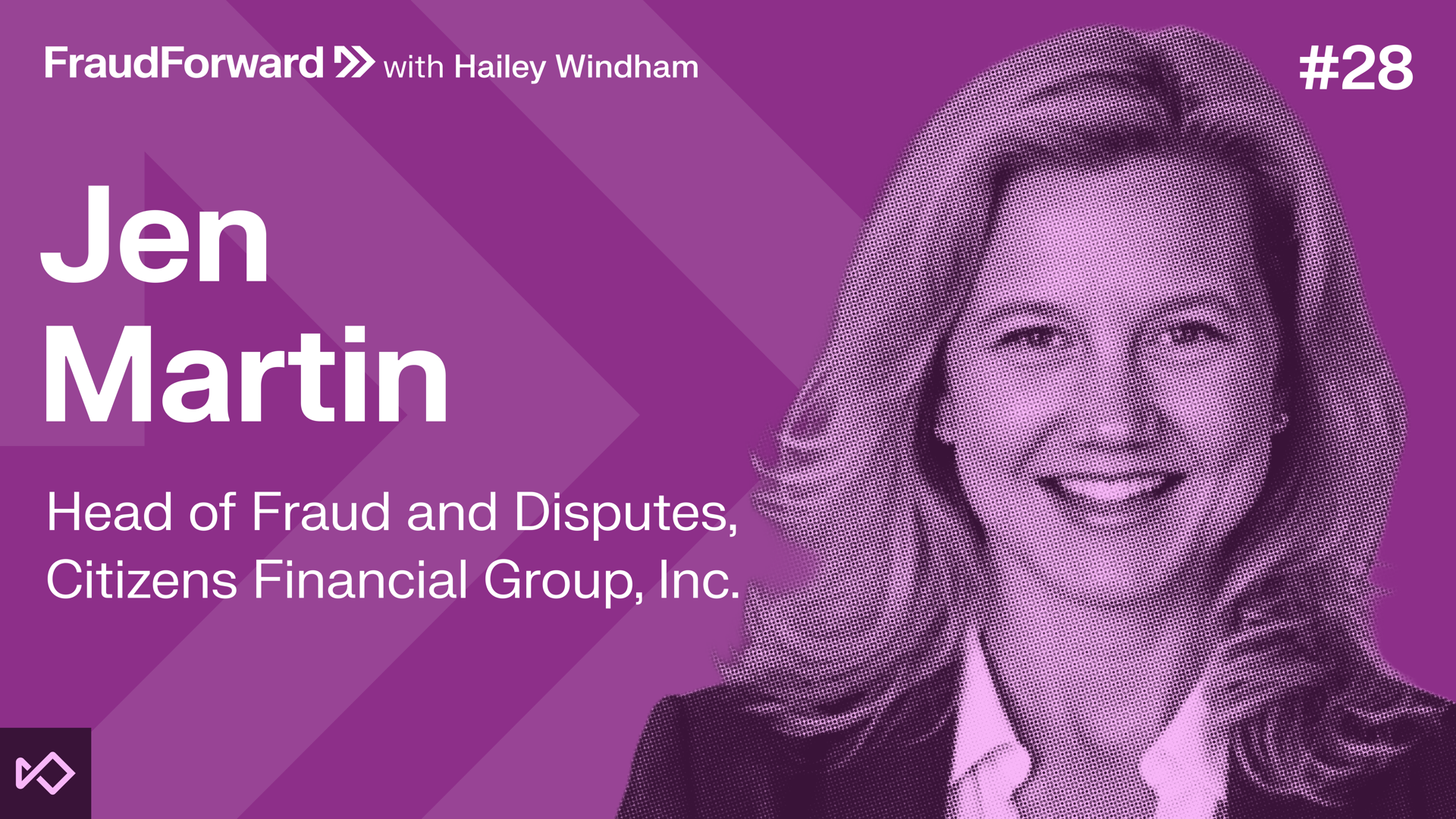
En este episodio, me siento a conversar con Jen Martin, y me encanta esta conversación porque Jen es ingeniosa en el mejor sentido. Tiene más de 15 años de experiencia en banca, además de una formación en justicia penal y estadística que le permite conectar los puntos entre el comportamiento humano y el comportamiento de las transacciones. Cuando habla de una estrategia de analítica de fraude bancario, no está diciendo “compra una herramienta y reza”. Está hablando de construir algo sostenible que tus equipos puedan operar sin quemarse.
Tomemos un momento para volver a encuadrar la situación. La detección de fraude en tiempo real no es solo un modelo; es un sistema operativo. Puedes tener los modelos de puntuación de riesgo de fraude más sofisticados y aun así perder dinero si la escalación de fraude en primera línea es lenta, tus flujos de trabajo no están claros o tu organización no puede decidir quién es responsable de qué cuando se dispara la alerta.
Jen y yo profundizamos en la supervisión avanzada de transacciones y en la analítica de fraude basada en el comportamiento, porque ahí es donde la señal se vuelve más nítida y la intervención más rápida. Pero también hablamos de la realidad: los desafíos de la implementación de modelos son reales. Los desafíos de la implementación de modelos son el lugar donde las buenas ideas van a morir cuando no tienes gobernanza, disciplina de pruebas y un plan para lo que ocurre cuando el modelo se equivoca.
Y con los combatientes del fraude, hablamos de qué es lo que está impulsando esta urgencia. El resurgimiento del fraude con cheques es real. Las tendencias de fraude posteriores a la pandemia son reales. Las tácticas de estafa son más complejas, la ingeniería social es más manipuladora y la presión sobre las operaciones de fraude de los bancos no está disminuyendo. Así que, cuando la gente me pregunta: “¿Por qué necesitamos modernizar la analítica de fraude?”, mi respuesta es: porque ya estás pagando por las pérdidas, estás pagando por la revisión manual y estás pagando con el agotamiento del personal.
También dedicamos tiempo real a la reducción de falsos positivos, porque no quiero que tu programa se convierta en un desastre para la experiencia del cliente. La experiencia del cliente y los controles antifraude tienen que ajustarse en conjunto, o bien pierdes dinero o pierdes confianza. Ese ajuste no es magia. Son prácticas de ajuste de modelos de fraude, es detección de anomalías en transacciones que mejora con el tiempo, y es una prevención del fraude basada en datos y arraigada en la realidad operativa.
Por último, hablamos del lado humano. La retención del personal en los equipos de fraude es importante. Si el volumen de alertas es interminable y tus procesos son un caos, la gente se va. Si tus procesos son claros y tu trabajo se siente efectivo, la gente se queda. La colaboración antifraude entre funciones es tanto una estrategia de retención como una estrategia de detección.
Si estás intentando desarrollar la capacidad de adaptación al riesgo de una institución financiera en un mundo que no va a desacelerar, este episodio es tu guía para volverte más rápido, más inteligente y mejor coordinado.
Si te gustó este episodio, asegúrate de suscribirte y dejar una reseña del pódcast en iTunes, Spotify, YouTube o en cualquier plataforma donde escuches pódcasts. Realmente ayuda a que más gente lo conozca.
Permíteme asegurarte que la supervisión avanzada de transacciones no sirve de nada si las personas y los flujos de trabajo no están alineados.
La detección de fraude en tiempo real solo funciona cuando existen flujos de trabajo de respuesta rápida al fraude y las personas saben exactamente qué hacer cuando se activa la alerta.
Esto es lo que quiero que incluya la alineación operativa:
Así es como la prevención de fraude basada en datos se convierte en acciones reales, no solo en paneles.
Ahora hablemos de lo que está configurando el entorno de amenazas.
El resurgimiento del fraude con cheques no es un momento de nostalgia, es un tipo de fraude moderno que está afectando a las operaciones actuales. Las tendencias de fraude posteriores a la pandemia también implican que las tácticas de estafa evolucionan más rápido de lo que las reglas estáticas pueden seguir.
Aquí es donde el análisis de fraude basado en el comportamiento cobra importancia, porque ayuda a perfeccionar la detección de anomalías en las transacciones al observar los patrones, no solo los importes.
Para mantenerse al día, los equipos necesitan:
Si tus modelos se configuran y se olvidan, se quedarán obsoletos.
Luchadores contra el fraude, lo repetiré: la experiencia del cliente y los controles antifraude deben calibrarse en conjunto.
Si tus modelos de puntuación de riesgo de fraude generan demasiada fricción, los clientes salen perjudicados. Si los relajas demasiado, aumentan las pérdidas. La reducción de falsos positivos es donde los programas maduros se diferencian.
Qué ayuda:
Puedes proteger a las personas sin castigarlas.
Esta es la parte que la gente ignora hasta que comienzan las renuncias.
La presión sobre las operaciones de fraude bancario es real, y la retención de personal en los equipos de fraude no va a mejorar si el día a día se siente caótico. La forma más rápida de quemar a la gente valiosa es con alertas interminables y sin claridad.
Los programas sostenibles invierten en:
La detección de fraude en tiempo real no se trata solo de velocidad. Se trata de una gobernanza disciplinada, una implementación cuidadosa y una respuesta coordinada en toda la empresa.
La misión sigue siendo la misma:
El futuro de la prevención del fraude bancario depende de la comunidad.
El futuro de la prevención del fraude en las cooperativas de crédito depende de la colaboración.
El futuro de la evolución de la industria del fraude depende de la inteligencia compartida y de la alineación de valores.
Estamos subiendo de nivel.
Y lo estamos haciendo juntos.
Mantente alerta, mantente informado y sigue impulsando la lucha contra el fraude.