#12128 min
¡Qué tal, luchadores contra el fraude, y bienvenidos a Fraud Forward!
Muy bien, vamos a ello, porque el fraude de ingeniería social sigue teniendo éxito por una razón muy sencilla: ataca a las personas antes que a los sistemas. Y si alguna vez te has quedado mirando un caso pensando: “¿Cómo pudo pasar por encima de todo?”, te aseguro que no eres el único.
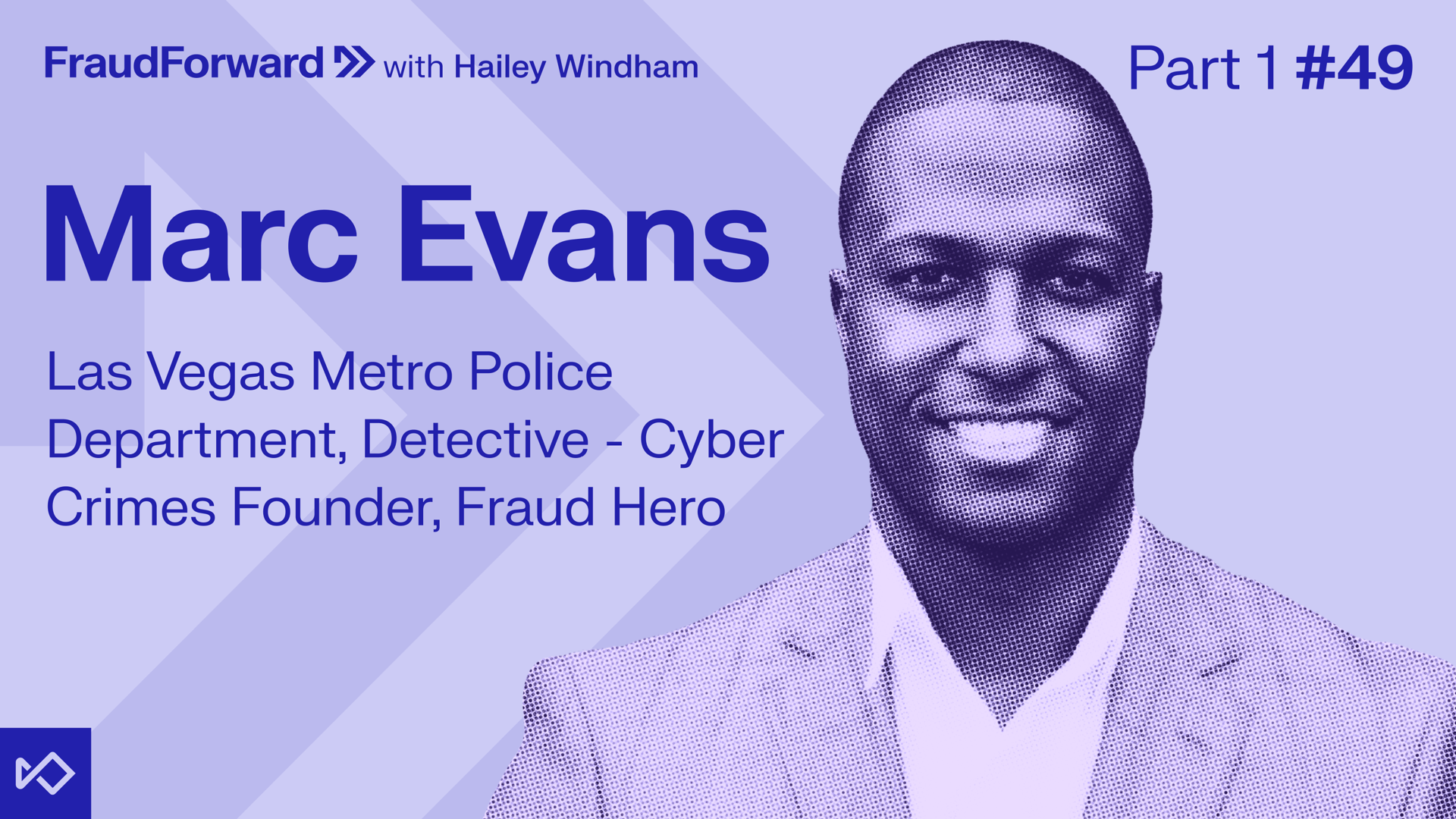
En este episodio, hablo con el examinador e investigador de fraudes Marc Evans sobre las tácticas de manipulación en la banca que siguen apareciendo en estafas románticas, el resurgimiento del fraude con cheques, esquemas de toma de control de cuentas y ataques de credential stuffing. Marc ha trabajado en más de 500 casos de robo de identidad e investigaciones de fraude, y lo deja muy claro: los delincuentes primero construyen confianza y después mueven el dinero.
La tecnología cumple una función, claro, pero la persuasión es la que hace la mayor parte del trabajo. La psicología de los estafadores es una de las herramientas más poderosas en el delito financiero moderno, y por eso este tipo de cosas sigue colándose por grietas que ni siquiera son técnicas.
Tomemos un momento para recomponer la situación. El fraude de ingeniería social se oculta dentro de las interacciones bancarias cotidianas, y eso es lo que lo hace tan peligroso.
Puede presentarse como:
Y si estás a cargo de la supervisión del fraude bancario o de la gestión del riesgo de fraude en una cooperativa de crédito, conoces bien la tensión: los sistemas no siempre fallan, las personas son persuadidas. Por eso los indicadores de fraude basado en el comportamiento son tan importantes como las alertas y las reglas.
Si te gustó este episodio, asegúrate de suscribirte y dejar una reseña del pódcast en iTunes, Spotify, YouTube o en cualquier plataforma donde escuches pódcasts. Realmente ayuda a correr la voz.
El fraude de ingeniería social se basa en la explotación de la confianza. Los delincuentes crean sensación de urgencia, aíslan a las víctimas y normalizan el secreto antes de que el dinero llegue a moverse.
Y por eso estos casos pueden resultar tan exasperantes. En muchas situaciones, no fallan los sistemas, sino que las personas son persuadidas. Comprender los indicadores de fraude conductual es esencial para una detección más temprana, porque esas señales suelen aparecer antes de que la transacción parezca sospechosa.
Este episodio analiza patrones de estafas financieras que parecen diferentes pero comparten tácticas comunes. El envoltorio cambia, pero el modus operandi sigue siendo el mismo.
Desglosamos:
Cada esquema comienza con la persuasión y termina escalando en una pérdida financiera. La psicología del estafador es el hilo que lo une todo.
A lo largo de cientos de casos, surgen patrones consistentes y, una vez que capacitas a los equipos para reconocerlos, mejora el tiempo de respuesta.
Los patrones recurrentes incluyen:
Estas conclusiones de las investigaciones de fraude refuerzan una dura verdad: el reconocimiento temprano del comportamiento es tan importante como las alertas técnicas.
Los bancos y las cooperativas de crédito enfrentan fricciones operativas cuando:
Combinar la concienciación de los consumidores sobre estafas con una supervisión más sólida del fraude bancario mejora los tiempos de respuesta. Ahí es donde la prevención empieza a hacerse realidad.
Prevenir el fraude de ingeniería social requiere un enfoque por capas y exige que toda la organización esté concienciada sobre el fraude en todos los equipos, no solo el de fraude.
Un enfoque fundamentado incluye:
El fraude de ingeniería social se oculta a simple vista. Las instituciones que reconocen los patrones de comportamiento a tiempo reducen las pérdidas y fortalecen la confianza de sus clientes.
La misión sigue siendo la misma:
El futuro de la prevención del fraude bancario depende de la comunidad.
El futuro de la prevención del fraude en las cooperativas de crédito depende de la colaboración.
El futuro de la evolución de la industria del fraude depende de la inteligencia compartida y de la alineación de valores.
Estamos subiendo de nivel.
Y lo estamos haciendo juntos.
Mantente alerta, mantente informado y sigue impulsando la lucha contra el fraude.