Sardine named a Leader in The Forrester Wave™: Financial Crime Management Solutions, Q3 2026

Learn More
The Saturday Fraud Strategist

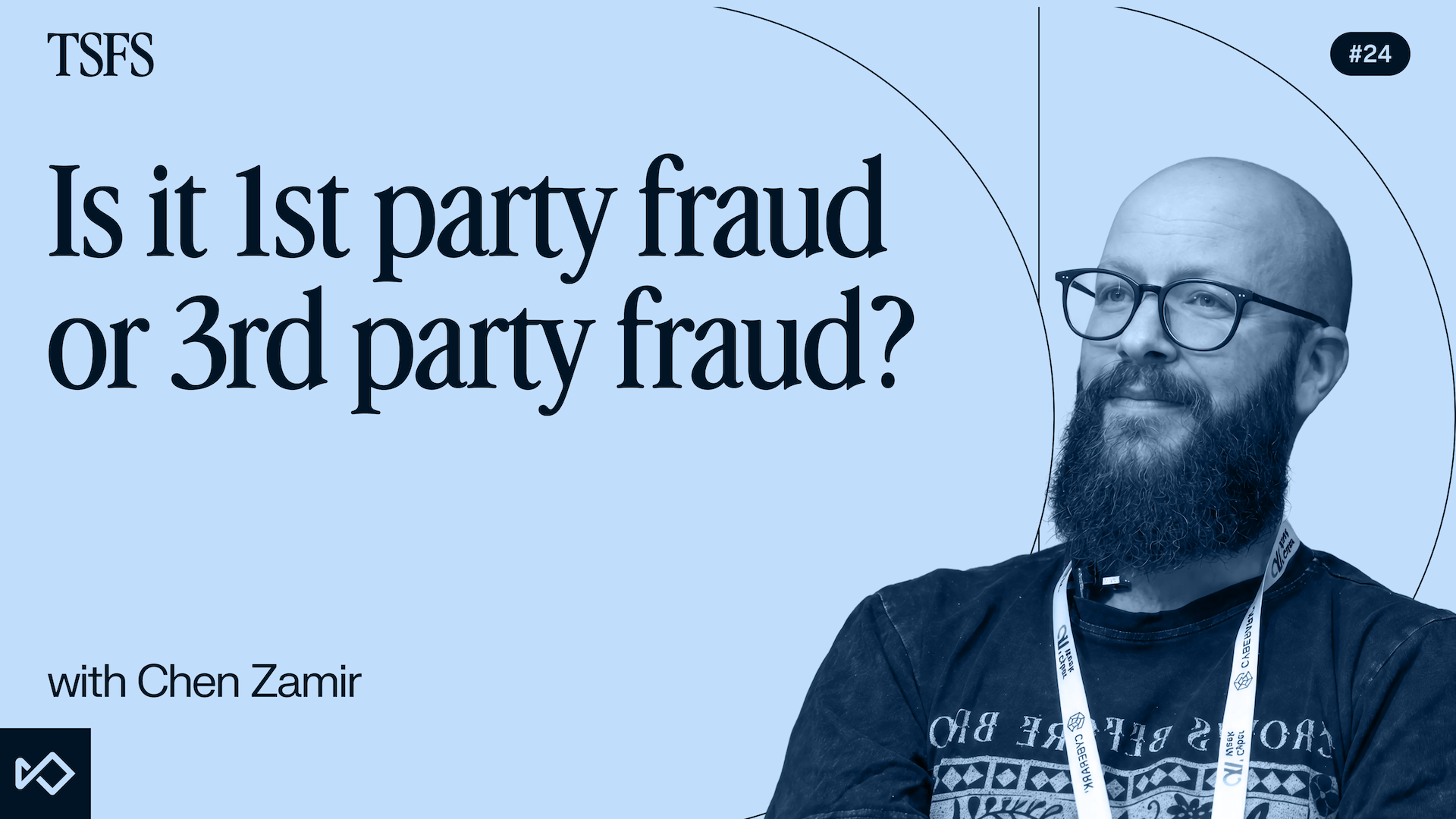
¿Es fraude de primera parte o fraude de terceros?

6 min

Cuando sufres un ataque de fraude, la segunda pregunta debería ser: ¿a qué tipo de fraude me enfrento realmente? La diferencia entre el fraude de primera parte y el fraude de terceros no es solo una distinción técnica. Cambia radicalmente la forma de responder y las herramientas que se utilizan. No deja de sorprenderme cuántos equipos son incapaces de distinguirlos o creen que la diferencia no importa.

Este episodio trata sobre cómo solucionar eso.

Lo que escucharás en este episodio:

  • Las definiciones fundamentales del fraude de primera parte y del fraude de terceros
  • Las señales específicas que permiten distinguir ambos tipos en la práctica
  • Dos ejemplos reales y costosos de equipos que implementaron las herramientas equivocadas
  • Por qué el fraude de terceros puede ser más fácil de detectar de lo que la mayoría supone y por qué el fraude de primera parte puede ser más difícil
  • El conjunto específico de herramientas que requiere cada tipo de fraude
  • Por qué la mayoría de las herramientas de prevención del fraude se diseñaron por defecto para combatir el fraude cometido por terceros

Deberías escuchar este episodio si:

  • Estás intentando diagnosticar un aumento en la tasa de fraude y no sabes con certeza si te enfrentas a un fraude de primera parte o de terceros
  • Han invertido en herramientas antifraude de verificación de identidad KYC o de identificación de dispositivos sin obtener los resultados esperados
  • Son responsables de detectar la apropiación de cuentas y quieren tener más claro qué señales son realmente importantes
  • Necesitan justificar internamente el retorno de la inversión en prevención del fraude, eligiendo la herramienta adecuada para cada tipo de fraude
  • Se enfrentan a casos de detección de mulas de dinero o fraude por colusión que no encajan claramente en ninguna de las dos categorías
Notas del episodio y conclusiones clave

La diferencia fundamental entre el fraude de primera parte y el fraude de terceros

El fraude de terceros implica que alguien ha robado un medio de pago o una identidad, ha creado desde cero una identidad sintética y se hace pasar por otra persona. El fraude de primera parte implica que un cliente real, utilizando su verdadera identidad, sencillamente no tiene intención de cumplir lo acordado, ya sea mediante fraude por contracargos, fraude en devoluciones o abuso de promociones. Sobre el papel parece sencillo, pero en la práctica los límites se difuminan rápidamente. Confundir ambos tipos de fraude es uno de los errores más costosos que puede cometer un equipo antifraude.

Qué buscar

El fraude de primera parte suele manifestarse en casos sin conexiones entre dispositivos o redes IP. Se producen contracargos tempranos durante la primera semana tras una transacción, no aparecen señales de fraude habituales, como discrepancias geográficas, y existe un historial consolidado de la cuenta sin ningún indicador de detección de apropiación de cuentas. El fraude de terceros presenta características casi opuestas. Se observan fuertes conexiones compartidas entre dispositivos y redes IP, datos de identidad sospechosamente impecables pero recién creados, patrones anómalos, como convenciones de correo electrónico casi idénticas entre personas supuestamente distintas, y discrepancias geográficas acompañadas de tasas de rechazo del emisor inusualmente altas.

Dos ejemplos costosos

Una fintech se enfrentaba a un caso claro de fraude de primera parte. En respuesta, invirtió considerablemente en reforzar la verificación de identidad KYC, la autenticación multifactor y la identificación de dispositivos. Sin embargo, su tasa de fraude siguió aumentando. Estas herramientas verifican la identidad, algo que los defraudadores de primera parte ya poseen. En el extremo opuesto, una plataforma SaaS se enfrentaba a un caso clásico de fraude de terceros. Centró sus esfuerzos en analizar el historial de transacciones, evaluar el riesgo crediticio y aplicar reglas basadas en la antigüedad de las cuentas, sin percatarse de que, durante todo ese tiempo, el 80 % del fraude procedía de tan solo tres redes IP.

El más fácil de detectar

El comportamiento fraudulento basado en una identidad robada o sintética difiere claramente del de un titular legítimo, lo que genera patrones que pueden detectarse con gran precisión. El fraude de primera parte es más difícil de detectar porque el comportamiento de la persona parece completamente normal hasta el momento en que decide no pagar y, a veces, esa decisión no se toma hasta después de que el pago ya se haya procesado. Esto hace que sea casi imposible detectarlo en el momento de la transacción. No todos los casos encajan claramente en una sola categoría. La detección de mulas de dinero y el fraude por colusión son los ejemplos más claros en los que el fraude de primera y de tercera parte se solapan y resultan realmente difíciles de distinguir.

El conjunto de herramientas adecuado

El sector de la prevención del fraude se desarrolló principalmente en torno a la detección del fraude de terceros. Esa es una de las principales razones por las que tantos equipos tienen dificultades la primera vez que se enfrentan a un problema grave de fraude de primera parte. Puede que estén recurriendo a herramientas diseñadas para resolver un problema completamente distinto. La mayoría de las empresas se enfrentan a ambos tipos de fraude al mismo tiempo. Los equipos que tienen éxito desarrollan estrategias específicas para cada uno, en lugar de confiar en que un único conjunto de herramientas lo abarque todo.

Conclusión final

El error más costoso que veo cometer a los equipos antifraude no es elegir una mala herramienta, sino elegir la herramienta adecuada para el problema equivocado. La diferencia entre el fraude de primera parte y el fraude de terceros no es una distinción académica, sino la primera cuestión de diagnóstico que debería determinar todo lo que viene después: qué señales buscar, qué herramientas implementar y, en última instancia, si la inversión en prevención del fraude realmente da resultados. La mayoría de las empresas se enfrentan a ambos tipos de fraude al mismo tiempo, por lo que la verdadera habilidad no consiste en elegir un único enfoque, sino en saber cuál aplicar y cuándo.

Recursos y enlaces

¿Aún no quieres dejar de hablar de mi tema favorito, y espero que también del tuyo? Suscríbete al boletín The Saturday Fraud Strategist.

Conecta con Chen Zamir | LinkedIn
Autor de The Saturday Fraud Strategist
Ayudo a las fintech a desarrollar defensas antifraude más inteligentes
Coautor de «The Fraud Fighter’s AI Playbook»

Episode transcript
Chen Zamir
Chen Zamir
00:06
When you get hit by a fraud attack, your first question should be, how bad is it? But the second question should be, what kind of fraud am I dealing with? The difference between first party fraud and third party fraud isn't just technical. It fundamentally changes how you respond, what tools you deploy, and ultimately how successful you'll be at stopping it. Yet, I'm constantly amazed by how many teams can't tell the difference or worse, don't think it matters. So, today I'm going to break down how to identify which type of fraud you're facing and why getting it right is so critical to your business.
Chen Zamir
Chen Zamir
00:44
Let's start with the basics. Third party fraud happens when someone steals payment methods or identities or creates completely new but fake synthetic identities with the intention to defraud your business. The fraudster pretends to be someone else entirely. First party fraud happens when real customers use their real identities but have no intention of honoring their commitments. They are who they say they are but their intentions are fraudulent. Whether they commit chargeback fraud, returns fraud, promo abuse, or any other form of policy abuse. Sounds simple on paper, right? The problem is that in the real world, the lines get blurry fast.
Chen Zamir
Chen Zamir
01:26
After years of working with fraud teams across dozens of fintechs, I've noticed distinct patterns that separate these fraud types. So, let's talk about what you should be looking for. Starting with firstparty fraud, fraud cases that are notably not connected by online assets, device IDs or IP networks. Early chargeback maturation, especially in the first week after transactions. Absence of traditional fraud signals like geo mismatches or bad links. Higher transaction velocity is also often the only suspicious signal and established account history with no ATO indicators. Now, to be clear, I don't mean that you need to see all of these signals in the same account to say it's first party fraud. These are just examples for what to look for when tagging the loss events. Now, let's compare it to third party fraud. Here, you want to look for strong connections between fraud cases like shared devices or IP networks, abnormal shared behavioral patterns, for example, identical email conventions across supposedly different people. So John Smith777@gmail.com, jane smith777@gmail.com and so on. Suspiciously new yet clean identity assets like emails and phone numbers. Geographic mismatches like a new foreign country IP addressing your US service and unusually high issuer decline rates. So it's pretty clear that the difference is stark once you know what to look for. Yet, I regularly encounter teams using the wrong detection methods for the fraud type they're actually facing. And by the way, just to get it out of the way, and as I mentioned a minute ago, in some fraud technologies, the lines get blurry. This is often the case with money mules, money laundering, and collusion fraud. So, unfortunately, it's not so easy sometimes to tell the difference.
Chen Zamir
Chen Zamir
03:20
Here's what I keep seeing in the industry. Companies implementing the wrong solutions because they haven't properly identified what they're up against. And it happens so frequently that I'm starting to think it's the rule, not the exception. And it cost these companies millions. Why? Because fraud tools, like all tools, are built to solve specific problems. Use them on the wrong problem and you're essentially throwing money away. Let me give you some real examples I've encountered. A fintech dealing with obvious first party fraud, early chargebacks in established accounts decided to invest heavily in advanced KYC verification, multifactor authentication, and device fingerprinting upgrades. Unsurprisingly, their fraud rates kept climbing because these tools verify identity, something first party fraudsters already have legitimately. Then there's the opposite scenario, a SAS platform hit by classic third party fraud. Connected devices, new email accounts focused on transaction history analysis, credit risk scoring, and account tenure rules. Meanwhile, they completely missed that 80% of their fraud was coming from the same three IP networks. There's also a critical insight here that is worth highlighting. Third party fraud is actually easier to fight effectively. Why? Because fraudulent behavior patterns are distinctly different from legitimate user behavior. When someone is using a stolen identity, they behave differently than the real account owner would. These differences create detectable patterns that separate good users from fraudsters with high accuracy. First party fraud, however, is trickier because the user's behavior often appears perfectly normal until the moment they decide not to pay. And sometimes that decision is made after the payment was made, which makes it nearly impossible to detect at the time of payment. So, what do you do?
Chen Zamir
Chen Zamir
05:18
As you can learn from the examples I just shared, how you prepare and react to these two different threats is unsurprisingly different as well. Here are the hallmarks of good fraud prevention for each fraud type. And you want to make sure that you can tick most boxes. Let's start with uh third party fraud. You want to look at KYC, identity and document verification, device fingerprinting and IP intelligence, velocity counters and network analysis, behavioral biometrics, identity intelligence like email, phone, etc. Two factor authentication or multifactor authentication. For firstparty fraud, you want to look at consortium data, dynamic returns and refunds policy, chargeback dispute management, and device fingerprinting, which is mainly relevant for account sharing and promo use. See, what works for one fraud type likely won't work for the other. And that's why it's so critical to know what you're actually facing.
Chen Zamir
Chen Zamir
06:21
When you look at its roots, you realize that the fraud prevention industry was built primarily around third-party fraud detection. That's why so many teams struggle when facing first party fraud. They're using tools designed for a completely different problem. So before investing in another solution, make sure you've correctly identified what you're up against. And the telltale signs are there if you know what to look for. But here's the thing, most businesses face both types simultaneously. And the most successful fraud teams deploy targeted approaches for each rather than trying to find a one-size fits-all solution because it's simply doesn't work. Anyway, that's all for today and I'll see you next Saturday.