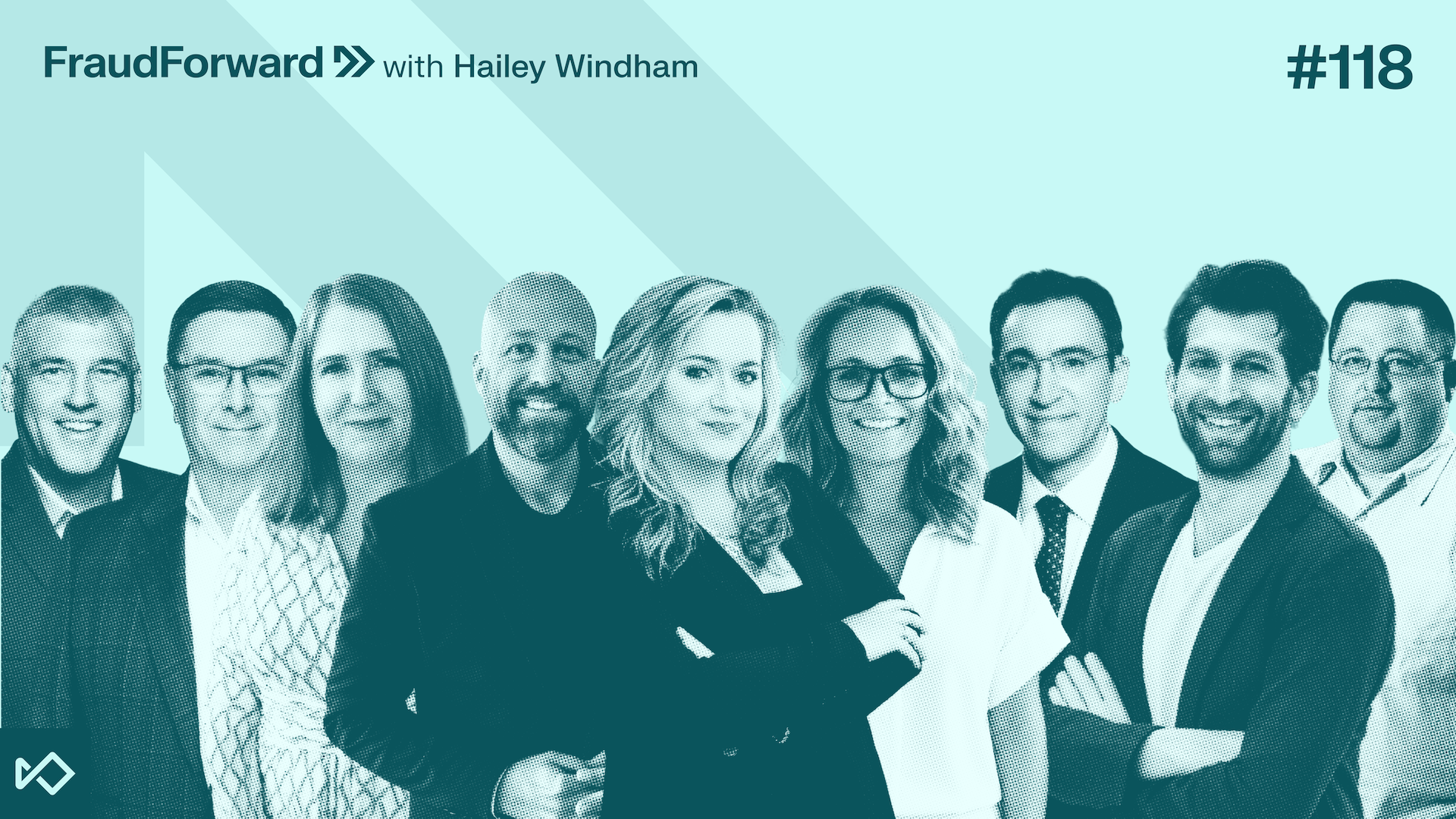
So, I'm here not only with Steve Lendermen, the man, the myth, the legend, right? But the incoming international president of IAFCI. Steve, thank you so much for joining us.
Oh, thanks for having me. Yeah, we did a thing last night where we were sworn in as officers for our term starting uh January 1 of 2027.
Uh feels like it's so far away, but it'll be here faster than we know it. And uh our new election board members are already starting to work together. Looking forward to the transition uh with the existing board. So uh it's been fun.
Scott Anchin, thank you so much for joining me on the podcast today. Um I really appreciate you joining me.
Absolutely. It's good to be here.
It's been a while since you've been on the podcast.
I'm glad to have, eight days. It might be 14 by the time this episode releases. So hey, um you have been blessed. Um, I have been blessed honestly.
I am here with one of my absolute favorite fraud fighters, Jeff Taylor. Um, Jeff, thank you so much for joining me on the podcast today.
Absolutely. Thank you, Hailey.
Heather, thank you so much for joining me on Fraud Forward.
Thank you so much for joining me on Fraud Forward.
All right, Chris, thank you so much for joining me on Fraud Forward.
Well, thank you for having me.
I am so excited to get to talk to you. You are one of those people that I feel like you're this this constant for us all. It's like, thank God that we have Chris.
All right, Alec. So, thank you so much for joining me on Fraud Forward.
Thanks so much for having me,
Monica. Thank you so much for joining me on Fraud Forward.
Yeah, no problem. Thanks for having me.
Of course. So, I'd love it if you could introduce yourself to the audience, just who you are and and what it is that you do.
Sure. Um, so I'm Monica White. I am from Florida, Gainesville, Florida. Go Gators. Um, I uh am a fraud manager, collections manager at Florida Credit Union. So, um, we have fraud under the umbrella of collections, which is pretty unique. Um, the fraud is where the passion is, though.
Yeah. Yeah. I, um, remember meeting you, um, at the Florida crypto conference, and we spoke about that, uh, exact thing. Where, um, I had never seen, uh, fraud being under collections. But, it makes so much sense uh, to where, you know, you kind of already have those connections and know where to look for things for those uh, kind of asset recovery almost.
Um but so excited to finally have you on the podcast. We'll definitely bring you back on for a longer form um episode. Obviously, we're here at the IAFCI Nashville um international conference. And what do you think of the conference so far?
I love it. Um they're doing a really good job keeping us entertained uh with subjects that are like very good. Um I love how this organization has evolved over the years. So, it's almost a problem how many good classes they have because you can't go to all of them.
I have heard that multiple times. Where it's like if I could just duplicate myself so I can attend all of them. Um, I was even talking with uh Kathy Stokes with AARP and she was like, "Hailey, I just I I want to go to all of them. I I love it." So there is the it's like they really tried so hard this year to make sure that no matter what, we were leaving more informed than ever before. So that we can actually do something when we get back to our you know respected jobs.
Yeah. Agreed. And they're they're doing a lot more uh networking events too which is really nice. Because we all know that's where the real ma magic happens, right?
100%. Yeah. Yeah. Okay. So when you uh think about fraud for 2026 if you had one word to describe it what would you what would you use?
Maybe. Um, not one word, but fraud as a service now, right? It's a whole economy. Um, it's really scary, but it's exciting. It's a little bit of job security.
Yes. Um, I I think the one thing that I like about it, beyond just the job security, is that it's it's never the same thing every day. Every day there's a new challenge, a new concept, a new trend like you said, where truly we have to stay on our P's and Q's, right? If we don't, then we've really put ourselves at a, in a vulnerable state.
Yeah, we're already behind the ball. Um, and the fact that we have so many things in place that don't allow us to communicate as financial institutions, um, there's a lot of privacy laws um that are hard to navigate and the fraudsters don't have those roadblocks.
Yeah. Yeah. They they unfortunately don't have to follow the rules and regulations like we do.
They just get to pivot on a dime.
So unfair. Um so is there any particular trend that you're seeing um increasing more this year than than you have in the past?
Oof, um. Right now one thing we're struggling with um I'll speak to it a little bit on the collection side but it's fraud. Um is a lot of these dealerships are doing really dirty work. Um and there's no regulations uh there's nobody you know knocking on their door to tell them that they're doing wrong. Um, law enforcement sees it as a civil matter. Um, but there's so much criminal activity happening in these dealerships. Maybe the dealerships don't even exist. Yeah, we're dealing with that a lot. Um, we're dealing with a lot of uh like lean stripping uh for vehicles that never existed that we financed, gave them money out to, and now we're looking for the car and it's never it they just used the VIN number, right? So, um we're having a lot of issues with just legitimate businesses doing shady things.
Yeah, that's so unfortunate. It's like we already have to struggle with the fake businesses that are popping up. And now to know that there's a legitimate one that's just taking advantage. It's just uh
Yeah. And it is fraud. And and and people don't look at it like that because we're the big bank, and we we have the money, and we can eat the loss, and um and it's just not it's not fair, which is a weird thing to say. Um
I just want to stomp my feet and.
Yeah. Yeah. We've got the boots to do it.
Yeah. That's right. That's right.
Um, I think, you know, the the fraud being under collections is nice because all of these charge offs are not just bad loans. They weren't just bad decisions. Um, there's a lot of people that are lying on their applications or um, presenting false information, synthetic identities. And so, I think a lot of institutions are missing out on fraud and collections being, if they're not going to be under the same manager or the same umbrella, that's fine. But there needs to be that connection, that relationship that happens. And I think that's a huge disconnect in financial institutions.
Yeah. So true. I I love that perspective. It's one that I uh hadn't considered before, but one that I definitely want to bring you back on to to kind of dive into a bit further for the audience because I know they're going to find it intriguing as well. Um but for the sake of this podcast, because I know that there's probably another uh session that's going to let out soon and they're going to walk in front of this camera. Because there's no wherewithal when we come out of a out of a session. Um, if there's anything uh any advice you would give to uh an investigator or someone at a a bank that's watching now, what what would that be?
My advice would be to get outside of your comfort zone. Um, talk to people you wouldn't normally talk to. You you have no idea what type of conversation might happen and where that conversation might lead you to solve a case. I actually have a buddy, I'll make it quick, was in a presentation yesterday morning. Um, at the end of the presentation, they put the uh suspect up on the the screen and my buddy, a detective goes, "That's my guy." He was looking for the guy they were able to solve a case with just from being in a class. So, this is outside of his comfort zone. He's not the kind of person who's going to sit in this chair, um or just go mingle with strangers. But, um he you know, you have to do that if you want to get things done.
So, true. The networking aspect is something that is so um under underappreciated I guess especially in the executive uh level. They they don't realize how much it does for the fraud team. It may be different for the C suite when they go to conference and they network. Maybe they're not benefiting the way that we are. But as investigators, fraud fighters, we we truly need this networking in order to be effective.
Yeah. I mean, so much is proprietary, right? So that's why they're probably not wanting to do the networking. But with us, we have to share. And it's not proprietary. We we're going to do this together.
No one wants to be number one in fraud .
Yeah. I mean, and if the fun thing about this though is if they're doing if you have a company, an agency, a credit union that's doing really well in this space, they also want you to do really well in this space.
Yes, it's so so true. So, thank you so much for joining me today again. I'm going to definitely have you back on and just really appreciate your time.
Yeah, anytime, Hailey. Thank you for having me.
So, we're doing the fraud fighter soundcheck uh session right now, which is I want to ask you, what fraud trend has your attention right now?
It's still business email compromise.
I mean I see that every day. Uh we're seeing some introduction additional introduction of account takeover. But you know I work on the commercial side. So it's mostly businesses that I'm working with but it's still it's so easily to be prevented and if on the business email compromise side it's just one of those things that if you ask a few simple questions and you stop and as we say stop call and confirm. If you'll pick up the phone and call the requester at a number that you know and confirm the request is legitimate, you can literally stop business email compromise. But we're just reluctant to do that for some reason.
And that's such a powerful tool that you guys have the stop uh confirm.
Stop, call, and confirm. I love
I love it. I love it. So, it's one thing that like you're in that's what your organization is doing right now to help prevent this and and you're seeing some some benefits in this, right?
Absolutely. So I I travel across our footprint. Uh talking to clients uh at length. Helping them to understand ways that they can uh put controls in place on their side of the payment transactions to try to help prevent some of these things from occurring. And and we do see positive results from it. From clients who tell us we put the control in place. We are holding our people accountable for stop calling and confirming and it's working. We have stopped transactions. We know that we have saved ourselves some money and we feel more comfortable now working online and creating ACH and wire transactions because we know we're confirming those with those legitimate sources.
That is such a it's such a positive thing that can be done that you don't even have to have additional monetary resources to implement something like that. And it's it's simple, but it's something that truly makes the world of difference.
Yep. And I think I've said this on a podcast before with you, but I always say, Hailey, it's a five minute phone call.
And it is a whole lot easier to explain why I'm calling to verify and confirm this transaction than it is to go back and explain a half a million dollar loss.
It's so true. Love that. So, if you had one word to describe fraud in 2026, what word would it be?
Oh gosh. Uh I think complex.
I think it's getting more and more complex. Um, we're seeing fraudsters who are leveraging artificial intelligence. They're leveraging the large language models to create uh really succinct emails that are uh they're able to penetrate vendors email platforms through social engineering. And and so a lot of these emails look like they're coming from the legitimate vendor. They've got the legitimate vendor's URL on the back end of the email address, but they've spoofed that email address somehow. They've created a a new user or something to make it look more and more legitimate and and they're just getting better at what they do. And so for us, it requires for us and our for our clients requires more vigilance, more patience really to think about, does this really sound right? You know, is this why would my company or why would my vendor be doing business with a financial institution that's headquartered across the country? And and thinking through those things. Something as simple as Googling the, I shouldn't say Google. Can you cut that out?
Using your search engine to search the routing and transit and account number. And so if you look at that routing and transit and account number and it's a a financial institution that's located overseas or located in a different part of the country,
Does that really make sense that a vendor domiciled in the southeast, as an example, or in the state of Tennessee, would bank with someone in California?
Probably not. And so it would make you pause and think through that transaction before you actually submit that payment.
Yep. I was having a conversation with someone earlier and we were talking about deep fakes um and you know how do we really protect ourselves and one of the things I was saying especially for you know when we think about even us as fraud fighters like how do we make sure we're not going to fall victim to you know a scam or things like that and one of the things I said is you know trying not to be too distracted, we're so busy.
And and yes we are embracing AI and we're it's making us more efficient but it's also giving us more work.
And so I you know I myself was uh you know I almost clicked on a link but it was because I thought it was something from the school. I was just trying to do it quickly you know for for my kids. And then I was like oh wait hold up that's not what I'm supposed to do. But I it could have been you know a problem for me because I I was so distracted and just trying to get through something quickly.
I'm so glad my voice was in your head somewhere to say stop and and pause just a moment before you do that. You know it it's happened to me. I I've gotten invitations um that were I thought maybe an invitation to a friend's birthday party.
And it came from his wife and I thought, well, I could ask him, but now I'm afraid it was a surprise for him.
So, uh fortunately I checked with her at church and she said, "Nope, it was a scam." They got into my email and and distributed that invitation to to everybody that was in my email address or address book.
Yeah. Okay, final question. Uh, again, here at the conference, is there any advice or um any words of wisdom you'd give to a fraud fighter who maybe hasn't uh been able to join the IAFCI or be a part of uh this conference or just in general? What uh advice would you give to a fraud fighter?
I think you've got to get involved.
Um I I would take advantage of these sessions here. If you're here at this conference, listen.
Take good notes. Do things that will help you improve. It's about being yourself, educating yourself, and learning more about all the different things that these experts have to say to you and and tell you about. And then go to other conferences, go to these situations, listen to Hailey's podcast. I mean, the the folks that you have on the podcast are are industry veterans and they know what they know what to do. They know how to do it and they know how to communicate the different ways to to investigate. And so I just think you've got to take advantage of these situations and make sure that you are learning.
So true. Jeff, thank you so much for joining me today.
Love you. You're so great. Appreciate you so much.
I would love it if you could just tell the audience a little bit about yourself and what it is that you do.
Yeah. So, I'm Alec Glassman. I'm the founder and CEO of SilverShield. We're an anti-scam platform. So, we help empower people to protect themselves from scams and fraud. And then we help the institutions serving folks better help them as well understand what's going on with their member or client base.
I love that. I'd love it if you could tell them a little bit more about the the story for how you were building it and what what you did to really get the true insights. Um because I thought that was just so interesting.
Yeah. So when we started um we wanted to make sure that we could be really really effective for older adults because obviously scams are a huge issue for older adults. And so I actually lived for 2 months in a retirement community in Florida and then for 2 weeks in a senior living community like independent and assisted living in rural Ohio to spend time with the people that we were trying to really help.
And it was interesting because basically everything that I thought about this problem and how to address it, I very very quickly learned was completely wrong and backwards. And it's really informed how we've been able to build such an awesome product now uh going forward.
I think that it is such a differentiator between you and a lot of uh companies I've talked to before. You truly immersed yourself into understanding the problems of a generation that we don't necessarily understand. Um, and because they grew up a lot differently than we did. And so being able to truly like just surround yourself with them, understand, you know, why it is they even accept calls or respond to things the way they do, I I think is commendable. But honestly, it just is another thing that kind of puts that little validation check mark whenever, you know, we're talking to you. Um, anyways, I I'm so thankful that you agreed to come on the podcast. Obviously, we're here at the IAFCI International Conference in Nashville. What are your thoughts so far?
It it's been amazing. Um, I think that I totally underestimated the breadth of people that would be here. Um, man, I've been hanging out with investigators from credit unions and banks, but I was with people who help with HH uh with uh HHS, and I was with people who were in Secret Service, and I was with people who were federal investigators, people who were city and state investigators. Um, so it's really been wild to get all these different perspectives and actually super cool because I don't think people realize on the outside how much folks in this world work with each other to help people.
Uh, and that is so um it's it's motivating. Um, it's it's a tough subject fraud. Um, but it's hard to leave here without some serious optimism seeing these different groups work together so effectively.
Yeah, I I totally agree. I think the first time I ever experienced IAFCI, I was like, "Wait a minute, that's the cop I've been trying to get a hold of forever." And then we finally get in touch and then it's like, "Oh, now we're best buds. We communicate openly about what investigations need, you know, help on from either side." And then it's like, "Hey," he calls me and he goes, "Hey, do you have know somebody at another bank or credit union?" And it's like, yeah. And then the same thing happens and he connects me with another county that I need.
Well, well, everyone has the same goal, right?
Everyone wants to help people protect themselves and help get the bad guys. Um and I think again it's hard from the outside to see it as collaboration happens, but I think groups like IAFCI make it possible.
And then what's cool is what you're talking about, which is like you meet someone here and that carries forward and compounds going forward and and that's how you make real change.
Yeah. So true. So I'd love it if you could describe uh fraud using one word. What would that be?
Oh, that's a great one. I think it's uh constantly evolving, right? Where if we don't try our best to keep up um we're we never will. Um also making sure that we understand truly uh the different vectors of where it's attacking us from. And then also the victim uh perspective, where are we um making sure that we consider how one person would respond versus another? And it's just a great um a great word that you've used at, you know, evolving. So again, we are here at the IAFCI. I can't thank you enough for for joining me. Is there any um advice or thoughts that you would give to investigators or bankers listening today?
I think that the key to all of this is empathy.
I think that the more empathetic that you can be in your approach when you're talking to victims and helping victims is how you can connect with people to make a really big difference and ultimately effectively fight fraud.
I love that so much. Alec, thank you again so much for joining me. We've got a class that's letting out, so a few people Yeah, this is walking and talking real real life.
We we you weren't messing around. We are at the IAFCI conference. So, you know, we're really smack in the middle of it here.
Yeah. Right there. Right there. So, thank you again so much. Glad to have you on.
So, we are here at the IFCI international uh conference in Nashville. Love to know what your thoughts are on the conference.
Oh my gosh, the content of this conference has been absolutely incredible. The only hard part is the fact that you can't choose one thing. So you're missing out on something that you're really interested in because you've you've had to make a choice
Or you're doing a podcast.
Or you're doing a podcast. And then you know then trying to keep up with work while we're here, And the balance of conferences in general are um somewhat of a challenge sometimes but uh it's it's worth it.
Yeah. Yeah. So um I would uh love to know also you are a new member of IAFCI.
Okay. You've been in banking for how long?
And you're just now finding the IAFCI. But we're not going to shame you or joke for that, but I will say what makes this one special compared to other associations do you think?
That is a wonderful question and something actually I was having a conversation with a law enforcement officer this morning. Um we were kind of talking about the difference between the different associations that we're a part of. Um not to not to downgrade any other conference or anything like that, but this one just feels different. I think the the mix of individuals here, it's really a split between law enforcement and the banking sector. And that collaboration is so powerful in so many of the investigations that we do. We need friends in this industry.
So, I think that's what makes it a little bit different is the the networking. It's not big enough to um to get lost. It's small enough to where you can still connect with people. I mean, I guess I mean there's like a thousand people here. So, I mean it is a really huge conference, but I feel like the way that it's set up is is perfect for networking.
So true. So true. So, is there any particular trend um that you're seeing maybe spike in 2026 when it comes to fraud?
You know, now that my role has changed, I'm no longer in the practitioner role. My my answer would have probably been different four or five months ago. I probably would have focused more on scams and exploitation and things like that. Um I am now in a role where I'm in the tech world, fighting fraud from a from a different seat. So, what I'm seeing in that industry though, and it's specific to um like the auto lending space, is a lot of bust out fraud, first-party fraud, um income misrepresentation. I would say probably income misrepresentation is one of the things we're seeing the most of.
Yeah. Yeah. Is there anything that, uh you're seeing organizations do to, you know, prevent or mitigate some of these things?
Uh well, I can speak to what my organization is doing and um that is really leaning on consortium data.
And not not relying on credit reports as much anymore and relying on application data to detect those those anomalies.
Okay. I love that. Um so clearly uh we're going to have a session that releases soon and then there will be people walking through. So I won't keep you uh too much longer, but I'd love to know if you had um you know I've actually asked you this question back in May, so it'll be great to um see how your uh answer changed.
The fact that you remember a question you asked me in May says a lot about you. Because I wouldn't remember.
Well, it it was at another conference, but uh let's see. So, if you had one word to describe fraud in 2026, what would it be?
I don't remember what I said in it. I do remember you asking me the question. One word to describe fraud. Um, explosive. Yeah.
Um, and I think I I think we're we're not going to see that end anytime soon. And I think we I'm I'm excited though. The things that are like top of my mind right now are just collaboration, information, sharing, consortium data. It all leads back to us working together.
Sharing information, leaning on uh leaning on those things to to fight a battle that is is very uphill.
Yeah. I love that. Well, Jen, thank you so much again for joining me. I promised it wouldn't be more than 5 minutes, so I'm going to let you get back to the conference. Um, but thank you again for joining me on Fraud Forward live in person in Nashville.
The answer is always yes.
So, we are obviously here at the IAFCI and I'd love to first ask what do you think of the conference?
Uh, it's great that it's my first time here. And it's a little uh broader coverage than what I usually learn or talk about. So, it's been very interesting to me.
I have always loved that about the IAFCI. It's a perfect blend, I think, of all things law enforcement, investigations, banking, um, industry, associations, kind of all coming together, just showing that that collaborative effort really does make a difference.
Yeah. It's Yep. And great to talk to everybody.
Yeah. Yeah. Okay. So, you were telling me a little bit about um your your scam defense skills. I'd love it if you could tell tell the audience a little bit about that.
Sure. So, my company is called Scam Ready Family. And I started this uh, I was inspired because my dad was the victim of quite a significant scam. Uh almost $200,000 in uh very typical I guess you know started with some scareware with a popup on his computer. I've heard this many times. Uh I actually ended up getting that all that money back for him. Um because I found out about it very quickly. Had some good coincidences and also because I uh busted my butt for intensely for several days in a row, but that's another story.
So, my background is more in change management. Uh and I also interested in behavior change. So, I know a uh a lot of people in the scam education realm uh come a lot from finance or law enforcement. And I think uh I bring a different perspective on how one might view the scam problem at least from the perspective of a regular person. So when I was looking for more materials for my dad, I was not finding the kind of education that I wanted for him and for myself because I was also learning about it. So one of the biggest I think principles and I see this as a change management problem. Of course you come from where you come from and you see it how you see it. Uh so I see the change is we uh went from a world where we could operate more or less normally in a digital world to one where we cannot. And we're bombarded constantly by scams and you know other frauds. And just you know it that takes some actual behavior change just on the part of regular people, right? So um in behavior change or change management there's no situation I challenge you to think of a situation where you uh could just tell someone about something and expect them to change or understand what you're talking about. So, some examples, uh you tell people that exercise is good for them. Do they exercise? No. You tell medical professionals to wash their hands. Do they always even do that? No. That's a big change management problem. Uh if you want someone to learn how to swim, do you give them a lecture and uh you know 10 points on how to swim or do you give them swim lessons, right? That's how you learn how to swim. So my uh so what I have done uh with actually we talk about the benefits of AI it was the development of AI visual technology that allowed me to start doing the kind of videos and education that I want to do. So if you take a look scamreadyfamily.com uh they're all free. You can just click on them immediately. Uh I use AI to create actual simulations of scams in progress. But in a you know narrated way and pointing out the psychological attacks uh what's going on when someone's trying to scam you. So it's not always specific to the scam although the simulations show you what's Happening. But um it you know it's highlighting the psychological attack that's happening. And so my hope with those is one, whenever you see something, you remember it better. And then whenever I I haven't gotten too far in the videos, but in my in-person talks, I'm always looking to address a behavior, a behavior change that will help you with scams. So in my main talk, um, we actually practice how you get off the phone. I hear a lot like, "Oh, you should have a script to get off the phone." Well, we actually practice it and you know in a in a calm situation so that when you're under that stress, you actually remember what to do. So, uh please take a look. I know I just told you about it and maybe and of course your audience too cuz I'm getting the word out, but please take a look. Like,
For sure. So, I'll say um that there's a third option with learning how to swim and it's the one my parents took and that's where they just threw me in the water, which I feel is how we we operate as uh fraud fighters where we truly are just kind of thrown in there, right? Um so, knowing that there is a resource like this one that we can direct people to that can kind of immerse them into uh this this training or or kind of like this this realm with the videos of like being able to see the scenario play out. Um, I I think that's a phenomenal resource and I thank you so much for for sharing that with us. I I have another fraud question for you.
If you um would, could describe fraud or scams in 2026 with one word, what would it be?
Yeah. Yeah. I I I think it's so true. Uh literally we we try and we struggle uh with just making sure that people are so trusting um in this world, but unfortunately the the fakers, the bad actors, they're getting really good.
Yeah. And just learning, you know, one of my other um things I focus on is, you know, how do you find a source that you do trust. With is, which is so challenging now. That's another behavior that needs to be learned, right? Or because uh one of my friends who I make, you know, watch all my stuff uh and talked to her a lot about it. What she said, well, what was really um what she really learned, not just what the scams look like, is how much things have changed and how quickly. Because all of the signals you may have known before and thought you could rely on there, a lot of them are gone now. And so, what are the new things and how do I actually know what I'm trusting or not trusting? Things like that. Yeah.
Well, thank you again so much for joining me. I I so appreciate learning more about Scam Ready Family and we'll definitely be checking it out. We will include it in the uh show notes and if okay, I'll add it to my Fraud Fighter resources page.
That would be amazing. No, it's so great to meet you. I'm a I'm a big listener and uh so this is a delight for me to be with you.
We're here at the IAFCI International Conference in Nashville. Uh what do you think of it so far?
Oh, it's fantastic. I mean, I've been coming to these things for a lot longer than I'd like to say out loud.
It shows your age when you do that.
Yeah. Exactly. Right. And if the gray hair is not a giveaway, then then it goes back a while. But, uh, I've been wanting to come to Nashville for many years, but it's been outstanding. It's you see the same group of people, you see those same friends that you made. Um, getting to follow their careers. It is outstanding.
I agree. I I love the the collaboration. But apart from that, it's this is the the one place that I'm like, these are my people, man.
Like everywhere I turn around, I I see different county, I see government agencies, I see bankers, I see credit unions, and I'm like, ah, I love you guys.
Oh, absolutely. You know, that's it. We have all walks of life, right?
Yeah. Scott You know, whatever whatever money or fraud can be committed, you got them here. And the best part is just seeing that collaboration between law enforcement and private sector. I think sometimes there's this like adversarial notion of us versus them. Um, and this kind of breaks down that wall and it's just like it's important. It's like who you know, who you talk to, right? Phone a friend.
Right. So Scott, what is it that you do? Uh, just for perspective.
Absolutely. So I work for Point Predictive and I'm a strategy consultant there. So, um I guess it was maybe uh just pre predestined that I would go work for Frank McKenna because I have known that man forever as well. Um so really just helping our clients solve their fraud problems with our products.
Yeah. So with those conversations that you're seeing, uh what's what's like a a trending, you know, fraud thing that's happening right now?
Well, one that's always near and dear to my heart are like fraud bust out rings.
You know, I think that's become a real hot topic. We've put out quite a bit of writings on those on some of the work I've done on them. But uh they're just, you know, perpetual, never ending. They grow and it's kind of like whack-a-mole, too.
You know, sure, law enforcement is doing what they can, but fraudsters are always adapting. So, by the time they start cracking down, that ring's already shifted and pivoted to a new county, a new city. Um, and I think this is too where you can see this pattern. We're watching the pattern. it kind of started in those known areas and uh California and Florida. It's starting to move in the middle it's starting to move up. So yeah you know and those are challenging because how you know trying to get a bust out can be difficult
So a lot of times it's too late by the time you find out
Yeah is there anything that institutions are doing now that that kind of helps with this problem with bust outs.
Absolutely. Well besides the products that we can offer. Um that notwithstanding, I think um seeing a growth both in participation in industry groups like the auto finance coalition. Shout out to y'all there.
Um is that collaboration. Um and I think just communicating more about it. Like helping your organization understand what it is, what it looks like. So I think just right off the bat, like once you fence that in and acknowledge it's happening, what it looks like, now you can start saying, "Hey, what do we want to do about it?"
Yeah, I love that. And I love that you mentioned the industry working group for for the audience that's listening. These this is one of the ones that is part of the IAFCI. So I can see the the banner right there that tells me a list of all of them. So I'm going to read this now for you guys. But it's um the industry working groups. They've got the auto finance coalition which is what you just mentioned, bank fraud, BSA AML and anti-money laundering. uh bust out synthetic identities, cyber fraud, cryptocurrency, human trafficking, mortgage fraud task force, organized retail crime, scams and financial exploitation, and skimming and payment terminal attack. So I I agree these these working groups are like in comparison, so grateful that we have these. This is another way that if you're looking to get involved, again uh yeah I just had Steve Lindman on, and we talked about just the um you know the cost of being a member of IAFCI. And how you know it it's always been made a goal to keep it affordable for just the even the new investigator that comes on. And those industry groups right there just kind of prove that that it's worth the money.
You are not alone. If you are your sole fraud person at your organization, come to us. You're not alone, you know, and you can I have learned. I am so grateful to for the mentors, Steve Lenderman.
Shout out to you too, my friend, because I can't I mean I I cut my teeth working with him and some of the old greats that have gone on to retirement. So, you know, you you know, and we love sharing that. I think that's what all of us have this like almost like inherent need to share our experiences where we our trials and tribulations. So,
Yeah, love that. Okay. Uh final question for you and I'll let you go. I know we've got busy schedules today. It's the last day of IAFCI. Um if you had one word to describe fraud for 2026, what would it be?
Oh, I need to get my Googler out for that.
I know. Uh so there you go.
Is that a wordle or something? A word of the day.
I it might I don't know but let's make it the word of the day. So everyone please use pernicious.
Find some way to use that today.
Yeah. I I think that's it. It's uh just > it's not that the frauds are necessarily unique or different or leveraging. It was just more of it.
There's just more of it than I've ever seen. To the point where it can be almost overwhelming. And but and that's just proof in the pudding that now is not the time to take your foot off the gas. If you're in fraud prevention, fraud operations, push harder, push your organizations, you need the resources. Um it's cheaper to spend a little money and stop all that fraud up front than have to deal with it on the back end.
Yeah. So true. So true. Well, Scott, thank you again so much for joining me. I know I kind of just grabbed you while you were walking past, but I appreciate you joining me today. Scott E 36:39 Oh, absolutely. A pleasure. Hailey,
Can you uh just for the audience um again your name and uh where you work, what it is that you do? Scott A 36:46 Sure. Absolutely. So, my name is Scott Anchin. Uh I'm senior vice president strategic initiatives and policy at the Independent Community Bankers of America. And so, that's a really broad title.
Uh but as we think about strategic initiatives, I think one of the chief strategic initiatives we have right now is helping community bankers to fight fraud and scams. Because fraud and scams, of course, not only do they hit the bottom line, but they affect community banks exactly in the place where they have their strongest advantage, which is those community relationships. So, fraud and scams affect those relationships.
Let me tell you, you are preaching to the choir. I fully believe that it's, you know, I think that the mission is so much different in in community banks where truly you're here and you were created for this one community who was like, "Hey, we kind of need financial services here." And I remember, you know, that's where I started my banking career was um actually at a community bank. I'm still a proud customer there and check in from time to time. Um, and just knowing the the connection that they have within the community and what work they do do to prevent fraud or at least try uh with the resources they have available and what they know about. Um, it's it's unmatched.
Yeah, absolutely. And I think they take that role very very seriously. It's very core to what they do. Uh, and it's great because they have opportunities, I think, to help customers uh when they may or are affected by fraud and scams that other institutions probably don't have. And so it's really gratifying to see that in action.
So true. So true. So in your role now um uh you know speaking with uh community banks, credit unions are thinking about strategy. Is there any uh you know fraud trend or or scam that's really become more prevalent in community banks?
Yeah. I think what's amazing is that we continue to see and this won't be news to your listeners but we continue to see check fraud uh as a significant problem. And we know that as the volumes of checks go down that are being used, the amount of each check is going up. And so of course fraudsters know that.
Uh and they go where the money is. So we continue to see check fraud uh really really be a significant concern. But along with that, which of course is a more legacy system, we're also seeing the rise of new more sophisticated uh fraud and scams just the same as larger institutions are seeing. So a lot of AI targeting and things like that. I think for a long time community banks were largely immune from those things.
Uh because uh fraudsters and scammers would target the larger institutions. Uh but now they have the ability to target some of the smaller ones. So we see small community banks and mid-size community banks, large community banks affected by the exact same fraud and scams that everybody else is uh affected by.
Yeah. So true. Um I recently did a podcast episode with uh Linker Finance and they were talking about um you know just their approach to community banking and trying to help bring on like digital onboarding which is something that most community banks uh you know rightfully so are a little uh you know timid about. Because it does open so much so many opportunities and vulnerabilities um in their current processes to allow fraud in. Where they're not meaning to but when they're just trying to offer you know an additional convenient service. Um, are you also seeing, you know, that?
I think one of the great things that community banks do is when they open an account or they onboard someone to a new service, it's a very hands-on approach and so they really know the customer, they know their needs. Uh and that helps them to recognize situations where uh opening an account or something like that may be fraudulent. But what I do see uh is that community banks have taken a really intentional look at the technologies and services that are available right now. Yes. And they're adopting them in a very measured and strategic way, which I like.
Uh I think part of thinking carefully about your fraud and uh scams posture is thinking holistically and strategically. So I do see adoption of these technologies in a sensible way.
Yeah, I love that so much. Um, again, as we are here at the IAFCI International Conference in Nashville, I'd love to know what your thoughts are on the IAFCI in general and then of course this conference.
Yeah, absolutely. So, a great organization. I mean, I think the the geological or the breath and scope is is such an advantage.
And and I love that that really parallels what we see at ICBA with our members, who are spread out across the country. And that brings a lot of opportunity to talk about ways that the fraud and scam frauds and scams that they're seeing are the same and ways that they differ across uh geographic areas. So, so I think that's great. Uh I think that the focus of law enforcement now on investigating and prosecuting fraud and scams is a really positive thing. Uh and one of the things that we've done at ICBA is, we've worked really hard to help community banks to build those partnerships with law enforcement.
And so we recently uh introduced a guide that we authored uh in collaboration with IAFCI which is our partnership framework for mutual success.
Uh which community bankers and law enforcement uh individuals can download from our ICBA.org website. Uh and so this is a great opportunity to share uh the benefits of those partnerships, how those partnerships can work. Uh so really really happy to be here.
I love that and so glad that you're here too. Um obviously I reached out to you and I was like can we please chat in person, happy to meet you. Um last final question just so I can uh let you get back to the conference and because I'm pretty sure one's going to let out soon and then no one's going to see the camera and they won't be able to see us. Um, if you had one word to describe fraud for 2026, what would it be?
Which actually wasn't my word, but that could be. I was just saying interesting to the question, but it, you know, it really is interesting because there's such, I think, a tension between an increase we see in now speed of transactions from instant payments, uh, from stable coins, things like that, uh, versus some of the fraud concerns that those bring. And that to me is an interesting tension because for a long time uh speedy payments were held up as being a significant advantage but I think we now see some of the cons.
But those you know relative to fraud and scams but those examples those advantages still exist. And so I think we have an interesting tension that folks are wrestling with right now and that will continue to be a challenge in 2026.
I love that. I love that so much. Um, sorry that I took your first word interesting and thought that was your word. Did you have another word you wanted to use?
No, that really worked out well because I had to come up with another word.
Oh, good. Wonderful. Well, I think uh you are exactly right. It's either it's very interesting always. Um, and the other thing is that it is always evolving. So, we have to stay curious, right? And we have to keep uh pushing forward, keep trying to learn from others. And so, that's one of the great reasons I was really happy to have you on to learn from your insights and just really appreciate you joining me today.
Yeah, absolutely. And you know what? Although you were closing, I actually did think of a second word. And I think it's policy progress. Two words, but maybe we can hyphenate those.
We can hyphenate it. Yeah.
Yeah. Because one of the things we're seeing is a lot of attention from regulators and members of Congress on doing what they can do from a legislative and regulatory perspective to stem the tide to the extent that they're able. And I think that that marks a significant shift uh relative to what we've seen in the past. So that's another thing I think on the horizon to look forward to which is really positive.
I love that so much. Thank you again so much for joining me.
Yeah, absolutely. Great to be here.
All right. So I'd love it if you could describe, you know, uh obviously well introduce yourself, you know, who you are and what it is that you do for the organization.
My name is Chris Gergni. I'm the new as of six months ago last week executive director. Um I come from almost 29 years in nonprofit management, event management. Um anything to do with with events and nonprofits and membership organizations. That's what I've done pretty much my entire career.
Wow. And and so that's what you're doing now for us with the IAFCI.
Correct. I I've run the office. I handle the the policies that the board sets forth and enact them and make sure everything gets done. Um I oversee our staff and our wonderful wonderful staff. I've got five amazing, highly talented ladies working for me that just make me look real good.
You know, I've had to interact with two or I got the pleasure of interacting with two of those ladies this week and I tell you, they do make you look good.
They make anybody look good. They're so dedicated,
Phenomenal people. I just truly loved watching them. And you know, there was a time that I um as a vendor, you know, we had a name badge that there was something wrong with it. And I walked in, I said, "Hey, can I get this?" And she was like, "Yeah, right now." And it I mean it was instant. So I very grateful for for your your team and and for all that you do for all of us. I know that you're you're one of the ones that you know when we send that email it's it's Chris who's going to help uh respond. So I appreciate you
100%. We're we're a membership organization first and if we don't have you all as members, we don't exist.
So our first and last focus is always on the members.
Love that. So um you know you've said you've you know had your career working with nonprofits. I' I'd love to know why the IAFCI?
As I told the board when they were interviewing and hiring me and I've told others, I'm not mercenary. I have to find something I can truly believe in. I have to have something I can put my energy into. Um and and for me, law enforcement, fraud, and crime prevention are a natural fit.
I've got three degrees in political science. Um that has always led me and a lot of family are in law enforcement and banking and everything that we as a group do and my my son last night at dinner said, "You know, Dad, this has been the best fit for you so far. It's totally up your alley. I don't see as soon as you told me about I know it was you."
I love that so much and and it's evident. You know, you can tell when someone's not passionate about what they do.
Um and and it's clear that I I'm glad you're here. I'll I'll just leave it at that. That's wonderful. So, um this will technically be your first IAFCI conference uh on our uh as our executive director, but what do you think of the conference here in Nashville?
It's been excellent. Um things have considering all the major changes in the association in our in our new um community system, through higher logic and everything else, a new committee structure for this. We've really, most of you never see any of the problems in the background, other than maybe a name tag like you said that needed replaced. The things that did crop up we dealt with immediately. We got them deal done and behind us. We know they happened. It eats at me because I'm a bit of a perfectionist on that and always irritated if I miss something. But you never catch it all. And so the first couple days you're the duck. It look may look calm on the surface but you're kicking it for all you got below the water line. So,
Well, I tell you, I I've heard nothing but positive things uh from all of the attendees that I've spoken to. I know that I myself have also been very impressed. I was also very grateful to be able to come into the podcast lounge. Um so, I believe it was going to be four of us, but I think it turned into two of us, which works out just fine uh as well. Um it's been very busy. Lots of great conversations, lots of people just truly wanting to to give back and to share.
This this organization is built off you know every organization you join it because you care but it goes deeper here and from what I'm seeing because it gets very personal. Whether it's the banking whether it's the the private sector or law enforcement because you see the impact day to day on you know granny or on a young couple or a single mom or or an elderly gentleman that's been defrauded have been lied to been mistreated abused. You know, the stories. You get the warm feelings from it, and that's a big part of the reward.
For everyone in this organization and that's not going to go away anytime soon from what I can tell.
Yeah. I I don't think so either. I think um you know I'm I'm so grateful for for all that um you know Mark and Mike have given to this organization over the last several years. Um and and now you know we've got new leadership coming in which is exciting also. Um I I just think that you know there there there's only up from here. This this is just a you know we're on to the next path.
We we are taking it to the next level.
We're going to keep incorporating. We just today, literally today, launched our ICIC cryptocurrency certification. The first nine, eight or nine people received their certifications today during a in a small ceremony during the presentation. Um that's going to be going that's that's an absolutely earthshattering new change for the association. We just signed for the SAPTA certification agreement two days ago. We got more things in the works. We've got a lot more membership programs. We're focusing on education. We're definitely focusing on marketing because sometimes we're the best kept secret in the in the universe.
I agree. I agree. Once I found you guys, I was like, "Wait a minute. Why don't more people know? Why aren't banks uh utilizing that buy one get one and helping law enforcement and then making ways for them to be, you know, more friendlier?"
Yeah. So, um, again, Chris, I I know that you've got to get back. You're a busy man. I appreciate you taking the time to to come on Fraud Forward with me and just talk about this great organization.
I'm honored to be asked to do so. Thank you so much.
Absolutely. I've been able to see some of the interactions this week. Uh, I tell you what, uh, the conference is great, but the IAFCI, man, they know how to throw a party.
Well, you know, I think Nashville helps a little bit. Um, you can definitely tell uh Broadway has some victims from last night, but uh, that's what we want. We want people networking, doing things, uh, you know, building those relationships that last forever, right? Those relationships build those connections and, uh, you know, when someone needs help or something. Um, you know, that's what we're most proud of is our directory, our membership who really does goes the extra mile.
Yeah. Yeah. So, I'd love to ask I've been asking, uh, throughout the week, you know, what's what's one of those favorite things about the IAFCI? Like why why do you feel so passionately about it to to literally now dedicate so much of your time?
Yeah. Yeah. Yeah. Exactly. Yeah. I've been a member for 21 years now. Uh and so eight of those as a chapter president with Delaware Valley and then now this new journey as the international president. Um and so really draws me again is back to the the directory, the network, the relationships. Um you know I was brought in the association by somebody else, right? Um and my goal was to continue that tradition essentially of bringing new members in exposing IAFCI, right? We we all know we have to keep the next generation of fraud fighters going. Um and the association does that. Uh what we're really proud of as well is that we are a nonprofit, right? Uh and nothing against other associations, right? But we are the only nonprofit association here. So our mission is just a little different um than others. And we try to keep our our pricing at a great point, making accessible for you know um you know a brand new law enforcement officer or you know uh the head of the US Postal Inspection Service, right? We have every we have that kind of range here, right? So it's a it's it's for everybody and anybody.
Um, I was even uh privileged to talk to someone the other day and I'm hoping to have them on the podcast uh today before we close out, but where they literally used the the connections from an international and uh it was someone in South Carolina who found NYPD and they were able to do a welfare check on someone and then it was, you know, realizing now how much money has been taken from this person. And just the joy that that member from the Carolinas was expressing to me of like how how else would I have gotten someone at NYPD to literally pick up the phone and within 3 hours do a welfare check for me.
Yeah, that's one of the things you call or an email, hey, I'm with IAFCI and uh you know, a lot of those those boundaries that tend to go down. Uh you know, we're not going to obviously um you know, violate any privacy laws, etc. But um there is a what I call professional courtesy, right? There's professional courtesy for those people to do things and and it's not just like financial crimes, right? There's the welfare of human being that is, you know, important. Uh, and so it's it's something that goes beyond just the association.
Yeah. Um, I've never been a part of a brotherhood, but I I feel like this is what that feels like.
I say it's a personhood at this point, right? Yeah. Yeah. Yeah. For sure. But it it is that members here um you know, like any association, there is some turnover, right? But we we see once members get past year three of membership, they tend to stay for 10 to 15 years, right? And so that's something that's really unique um once they figure that out. So.
Yeah. Um so is there anything in particular that you are really excited about um when you take office January 1?
Yeah. Um clearly you know Mark's done a great job the last four years as president, right? And so uh one of my backgrounds and things I really like to work with is technology, right? And so of course we're going to use those two letters AI is that yeah have to weave it in somewhere, right? And so um we all want to work smarter and work harder, right? As a nonprofit, we have an obligation um for to manage our finances and um you know, we just can't go hire 20 people on the staff, right? We have to be very manageable about our finance and so we can work smarter with some of these tools that are to help us out. And so, one thing I'm really looking forward to do is, you know, see how we can use AI to help us become more efficient in the office, more effective in the office.
Uh as well, and just to growing the membership, right? We have about 8,000 current members in the association. I would love to say by end of my term uh first two-year term hopefully we'll be at the 10,000 mark. That's that's one of my accomplish.
Same. Uh we we'll we'll work on this together. I think um I I've had the privilege this week to uh be a part of even the international board meeting and to see the the collaboration and honestly just the the willingness to help. Um it it's unlike anything I've ever experienced. And it's you know we've got presidents that are uh chapter presidents that are bankers. We've got some that are law enforcement and it's just a a breath of fresh air almost to to be surrounded by people who actually care and just want to give back.
Yeah. It's not just we're a mix of public and private. That's it. Public and private big and small. It extends beyond traditional banking. It's we have government members. We have credit unions, fintex, cryptos, insurance, auto, right? It's all here. So that's one of the things that really makes us special as well.
Yeah. So true. Okay. So I I asked everyone and I'll ask you if you had one word to describe fraud in 2026, what would it be?
Um ongoing increasing uh job security.
Steve, I said one. I said one word.
Well, it's hard. It's hard. Um yeah, I think I'll use the word um beyond those. Um and not to terrifying. It's terrifying where it's going right now.
Yeah, 100%. Okay. Well, Steve, I know you have a very busy schedule. Um, I can't wait to see, you know, what the future of IAFCI looks like with you at the helm and I just appreciate everything you do and thanks again for joining me on Fraud Forward.
Absolutely. Thanks for being here.
Thanks for listening to Fraud Forward. Remember, every conversation, every connection, and every insight moves our industry one step closer to stronger fraud defenses. If today's episode sparked an idea, share it with your team or tag me on LinkedIn. I love hearing how you're moving fraud forward in your own organization. Until next time, stay curious, stay resilient, keep moving fraud forward.