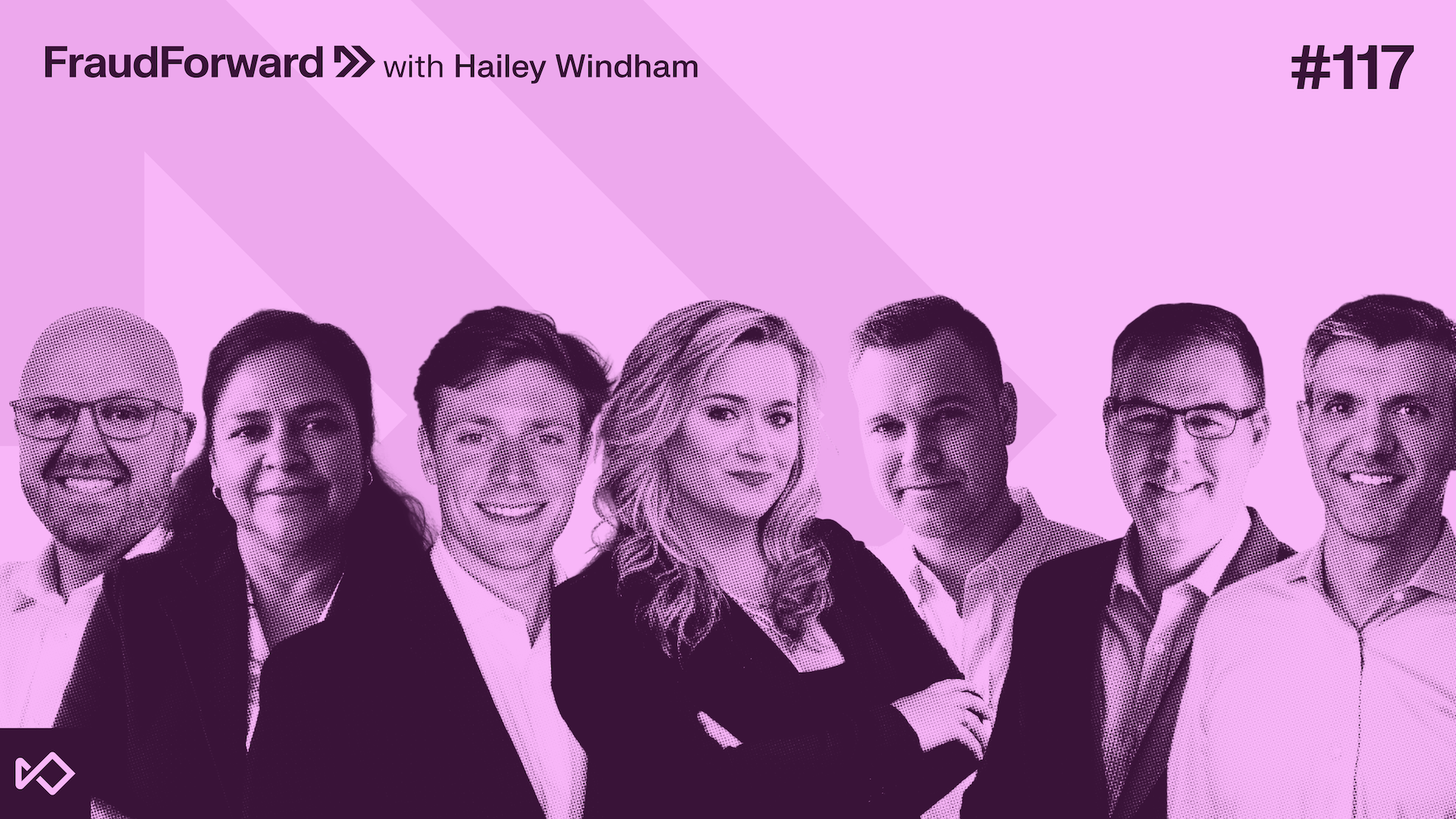
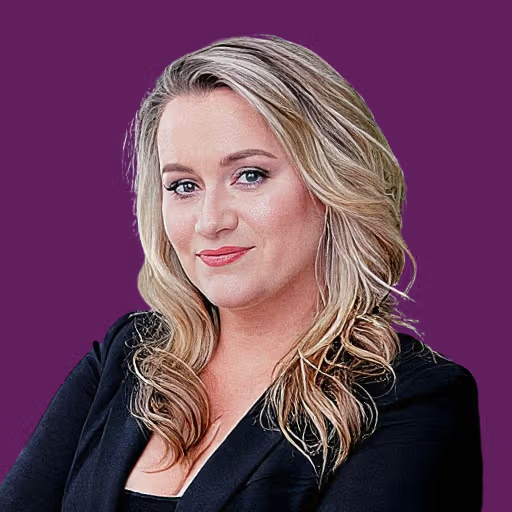
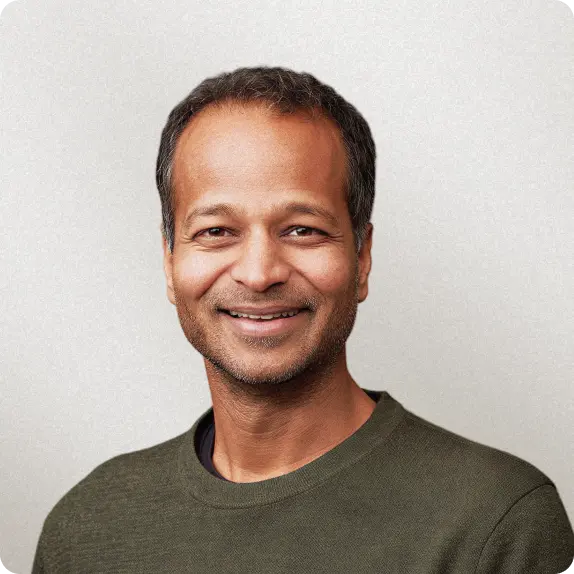
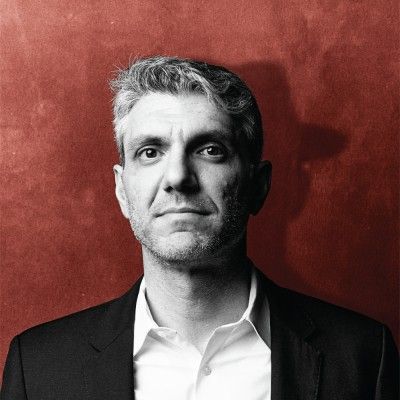
Soups, thank you so much for joining me on Fraud Forward today.
It's exciting to be here. I can't believe this is the first time I'm coming to your show.
I know. I know. I was thinking, when in the world am I going to get Soups? And it took Nashville. And I so I'm so glad to have you on.
Andrew, thank you so much for joining me on Fraud Forward.
Absolutely. So, we are here today in IAFCI Nashville. I've got the cowboy hat and everything. Um, tell me uh first before we dive into it, uh, what are your thoughts so far on the conference this year?
Great conference. Um, I like the vibes.
Fraud fighters, combating the problems, talking about the problems, real issues, real use case examples. Can never go wrong with it.
I am joined by Alexandra Valencia. Thank you so much for joining me on the podcast.
Yeah. So we are doing a uh fraud fighter soundcheck today. So that just means I'm gonna ask a couple of quick questions and then we'll we'll go about our conference. Because obviously there's a lot happening right now.
Devin, thank you so much for joining me on Fraud Forward.
Yeah, thank you. I appreciate it.
Yeah, I would love it uh before we dive in if you could, you know, give us a brief intro, you know, uh where you work, what you do.
Of course. I uh work in business development. At a company called Memcyco. Um we work in account takeover scams in a little bit more of a proactive manner.
I'm here with Matt Dotts. Matt, I'm so glad you agreed to join me on the podcast.
Yeah, sure. Thanks for having me.
David, thank you so much for joining me on Fraud Forward Live here in Nashville.
Thank you so much for having me.
Of course. Always. Uh, love to have you on. Uh, you always bring such great insights and uh, anyways, I I just love having a conversation with you. So,
Kevin, thank you so much for joining me on Fraud Forward today.
Thank you, Hailey. You look wonderful. Um, you are definitely in your Dolly era down here in Nashville.
I am. Oh, it's so sad that to to have her pass. And my grand daddy, actually sent him a picture of me the other day. Him and my uh nana, and uh my grand daddy responded, "You look just like Dolly." And it was the day she died. And it was the next message in the thread was Dolly Parton died. And I was like, "Oh no."
And we just lost Tim Curry, another phenomenal actor. What a morose way to open the show.
Thank you so much for that. I really appreciate you doing that. Yeah. bring
Yeah, that's right. That's right. We can only go up from here. So, clearly we are at the IAFCI in Nashville. What are your thoughts so far?
Wonderful conference. Um I love the venue obviously the Grand Hyatt. Uh so many great topics here being discussed. Very germane to anybody that that works in this space. And um I've only been here for about a day and a half, but I I've learned a lot in the time frame I've been here. So
So true. So true. Now, is there anything in particular that you love specifically about the IAFCI, the organization um over maybe any others? And I I don't mean to compare the others, but just what's so great about the IAFCI?
It's such a uh a conglomerate of likeminded individuals on both the law enforcement side and the private sector side, the banking side. And it's very important to have that homeostasis of everyone working together. And I believe that's what this conference is about. That's the trajectory that we want. The, you know, the common enemy is fraud and scammers and things of that nature and there's no shortage of it. But there appears to be a uh a lopsided uh match here. Because obviously fraud is winning. And um you know it's it's important that we catch up to the trends. We are firstly aware of the trends in order to properly address them. And that's what this conference really uh hones in on.
Yeah. Yeah. And Kevin, what is it that you do?
So I am a cyber crime investigator per se, uh working in the law enforcement side. Um I've been recognized as a subject matter expert in this space. Uh particularly with an expertise in darknet related investigations. And obviously by proxy to that it's crypto, right? Like I feel you can't talk about the dark web if you're not talking about crypto. Because you know they're not they're not paying with they're not paying with your standard instruments of payment on there.
Yeah. So uh really that is how I have uh progressed my career. Um and at this conference specifically I'm talking about a platform that many have heard about uh called Telegram. And uh you know it's it's definitely a different trajectory for my presentation than than people in this space are used To. Because I've had so many presentations I've sat in on where everyone says Telegram is bad. And I say no it's actually good, and and let's actually understand it.
Yeah. So I appreciate that and I love to know that that's the kind of perspective that that we're looking at today. And the reason why I wanted to to kind of give the audience a little bit of um your background is because then my next question is going to matter. Um so as far as fraud trends um now what do you see as one that's really picking up um in 2026? Maybe compared to others, or is it just a an accumulation of what we've seen in years prior?
So, I think it is the same old song and dance, but just an updated tune. If that makes sense. Um, you know, the the way that these actors are able to socially engineer, the way that these actors are able to get you on the phone. To obviously uh defraud you in some way, shape, or form or communicate with you online. Um, their tactics have evolved. Um the uh understanding that listen this isn't a singular actor anymore. Like we want to think it's that hooded hacker in the lead bunker in Latvia and Estonia stealing our credit cards. When in reality it's these transnational criminal organizations that are thriving. Making billions of dollars. And um you know for them this is just business. And I I think when when we understand from a perspective of what what Paul and Aaron presented on, you know such a wonderful presentation of actually being there. Boots on the ground in Nigeria, to to actually talk to these actors who were willing to say, "Yeah, come and get us." Right? Like, and that's their that's their idea, like, "Come and get us." And for so long, we have just simply written off credit card fraud, um, cryptocurrency fraud. We've written off these things as nuisances. We haven't viewed them with the perspective that was necessary to to fully address how big this is. And I think obviously now in 2026, going into 2027, which is crazy, right? like 3 months we'll be in 2027. Uh or less than that. Oh no, four four months, 5 months. Um you know, AI is on everybody's lips. And again I I think this such a loaded term because you have that one perspective where everything is Skynet and it's going to take over the world. And then you have this other perspective where it's like listen you guys really don't understand what AI is, and how AI really works. And what these actors are able to do is they're able to manipulate chat bots to use uh clone voices and things of that nature to get people on the phone. They're able to use uh agentic AI to make it seem like you're in a FaceTime call with somebody when you do it. So, of course, their techniques are adapting and staying up to speed with current technologies, but at the end of the day, it's the same old same old thing, right? Getting somebody on the phone, hey, your bank account's been compromised, right? Uh give us your social security number so we know it's who you are. Oh, yes, of course. And that's how it all starts. So I think the more things change, the more they stay the same as much as a uh empty platitude that that is. Um but yes, this conference so far has addressed a lot of these emerging and withstanding issues. And uh for anyone who's ever been on the fence about coming here, you really need to get here. Because it's, there's nothing like it uh in this space. And in the United States, I would say.
Yeah, it's so true. Well, internationally, you know, we are an international conference. Um, so if I had to sum that up with a Nashville theme, I'd say that you're saying that we used to be um, you know, our acoustic guitar sitting on a stool in some little podunk bar. And now we've got the whole studio, all the bells and whistles, all the buttons. Where it's like, yeah, it's the same tools. But now they've been able to uh, really enhance their craft and and do it at scale.
Uh, and and really hit us uh, where it hurts, so to speak.
It's it's the uh the the techno remix of the boot scoot boogie, right? Like that's really what it comes down to. Um but I just think for people to truly understand the problem, you have to see the problem in real time, right? You have to talk to victims. People here who have been through the victim advocacy of raising awareness. To how a lot of victims of financial fraud and scams often they are unheard. Or it's not pursued to the fullest extent that it should. Right? And I've always made the analogy, somebody goes into a bank and takes out half a million dollars. That person's photo is going to be on every news channel. Everybody's looking for that person. Somebody deceives an elderly individual out of a $500,000 uh loan or something like that. And especially with an access to crypto.
Silence. Crickets, and and that's that's really the crux of the problem.
So true. So true. Well, um again, we're we're here. We're talking about fraud. We're talking about fraud trends and and you've done a great job of uh really explaining kind of what what you're seeing. Um I completely agree even, you know, from the the banking side of things. Uh, so I have one final question for you. If you had one word to describe fraud for 2026, what would it be? To quote our former President George W. Bush, strategery. Um because it is true the the strategies that these actors are using are as much as they incorporate a lot of sophisticated elements, they are just the same tried and true scams we've been dealing with since the 80s and '90s. And the more things again change, the more they stay the same. And I think that when we start to fully address even credit card fraud, which for many is is viewed as just the cost of doing business, when we start to actually address these issues, with what they deserve. And it's not just law enforcement, it is our private sector partners. It is the banking is everyone has to be in unison about this. Um you know that that charge that got reversed because somebody bought a ticket. Personally, I know this because this was a case I investigated. Somebody bought a ticket on the now defunct RIP Spirit Airlines.
For an individual using somebody else's credit card. But it turned out the ticket that they were buying was for a woman that was part of a human trafficking network. Right. But to the initial chargeback, they weren't investigating it any further. It was coming to understand that wait a minute there's a there's something going on here. And then came to find out oh wait there's multiple reservations across the country with stolen credit cards for these individuals that were being flown specific places for um for sex work.
So, thinking about it outside the box like that, um, honestly, if it wasn't from a law enforcement standpoint to see the correlation of those bookings and those stolen credit cards. I'm not naming names here, but the credit card company, which was a credit card company, very big credit card company, just wrote it off. Like, look, it's a $100 charge. Like, what are we going to do? Well, you know, we're not we're not, we're we're a multi-billion dollar business, and credit card fraud happens all the time. We cancel the card, we send them a new card, right? But it's just something to think about. So, uh I I feel, you know, this is something that is a very big problem and big problems require big solutions.
So true. So true. Well, Kevin, thank you again so much for joining me on Fraud Forward. I appreciate you uh taking time out of your your morning this morning to join me. And yeah, I can't wait to have you back for another conversation.
Anytime Hailey, thank you.
So Andrew, tell me a little bit about yourself. What what is it that you do?
Yeah, so Hailey, I work for Dun and Bradstreet. So we are a commercial data provider. Um more specifically, I'm vice president of of our North America region as well as our um for some of our data management activities. So the ingestion, curation, creation of the DUNS number right in in in North America as well as our research function. Um, but more importantly as it relates to this conference, our head of fraud, right? So I I oversee the the data that our customers consume, making sure that they consume it, they can trust it, it's accurate, and they can make decisions off of it.
I love that so much. So tell me a little bit more about your session. I'm hearing it's about B2B.
Yeah. So, um, I've been with D&B for coming up on 11 years, so I'm well versed in in the B2B world. Um what the problem that I'm seeing in the B2B world is not many people define it, classify it, know it, and are getting behind it the way that we are getting behind consumer fraud.
Right. We spent decades, more than decades talking about consumer fraud. You turn on the nightly news, I always joke when Lester Holt was on the nightly news, um that's all he would talk about, right? Is identity, victims of identity theft, scams, nothing against it. All great content, but so are businesses.
Businesses are who employ us. More fraud that you see, it's going to impact their bottom line.
Which then impacts people's jobs. So, in this session, I'll be walking through people um what is business fraud? What does it look like? What's in the news? Um what are some use case examples that we at Dun and Bradstreet have seen? Um but then walking them through a framework of what to look for when investigating a business. Not just the business themselves, but the the network and everything that's connected to them.
Yeah. So true. So, if you had a word to describe uh fraud for 2026, what do you think it would be?
A word to describe. So, are we talking about fraud in general or B2B fraud?
I think it's surprising. Um, you know, obviously to be a business you have to be registered.
We know that that's a massive gap and it's a huge risk. You get the ruling like you did last week from finCEN, right? All that data is being deleted. That then moves the needle. Who is now going to be responsible for identifying those owners and holding that and maintaining that. Um, coupled with them having lack of resources, being able to verify, should I say lack thereof. Um, and then the downstream impacts of that. Coupled with the AI and the explosion of how fraud service can now scale with AI.
You can create a synthetic entity pretty quick and it's very cheap.
Very cheap. It it's crazy the the digital aspect of of our fraud fighting now. You know, we we've got AI. We can we can use it to help make us more efficient, but at the same time, the fraudsters are operating with the same AI tools. And unfortunately, they don't have the the same guardrails and rules and regulations that we do.
None. Absolutely. It's just, hey, let's try this and if it works, yay. If it doesn't, and then if it works, let's tell all our friends it works. And it's like, stop.
And and that's the thing that we're seeing. It's like a rinse and repeat, right? So we we even studied all of our all the failures. So all of our identity failures and just seeing how many how connective it is.
Roughly all of our identity failures over the last three or four years have created about a thousand networks.
Just shows you how like how orchestrated this whole thing is. And how easy it is to create an entity and then transact as one. So it's it's pretty cool stuff.
Yeah. Very cool. Uh so a final thought if there's any advice that you have for anyone um listening to the podcast. Uh either on B2B fraud or just on how to do better in the industry.
Yeah, I think it's it comes down to the basic, right? I I I'm obviously I'm a I'm a data person, right? So you got to know your data. Your data there there there's a quote actually in in my slide, if you torture your data, it will confess to everything. Um and I fully believe that especially in the fraud world. Um it will reveal the the goods, the bads, and the uglies. Um, but it'll also reveal where your gaps exist and how to implement uh controls to to help you know squash those a little bit. So that's what I would say.
I love that. Thank you so much for joining me today.
So the first question I want to ask is what fraud trend has your attention right now?
So I work at a bank, and uh what we see is a lot of money going in. Well, this is traditional wire transfer. Like you would think that this doesn't happen but it still does. Right. You can see that the money goes from the US into uh Southeast Asia, and then once it hit this accounts, it just disperses like crazy.
And this is just traditional banking.
Yeah. Traditional banking. I I think that those traditional money rails are still probably some of our most vulnerable because we had to shift our focus to AI so much that now those are one of those things that's just kind of being left in the dust.
Exactly. I think uh that's what we see a lot. Um going, which it was a little strange for me. Just because going from the US to Southeast Asia is not as unusual, but
You know you always want to find out what is. I mean there is legit business going on in Indonesia, or you know any other where. Malaysia, there's a lot of industries. Like clothing, and wood, and you know there not, normal.
Right right. Is there anything that your organization has done to change, to combat this, you know, traditional banking fraud that's still happening. So, right now, I think the only thing they did, so like I work for a state-owned bank in Indonesia. And Indonesia has very strict uh privacy laws.
Yes. They can't just share with even with us. Like we're in New York branch. So, they don't even share with us. So, you have to be very careful how. But they have once we flag a few transactions, they freeze the accounts.
But then they went a couple days later and open a new account.
Right, yeah, it's unfortunate sometimes. Um, what is one thing you want another fraud fighter watching this to take back to their institution?
Well, I think um I think there's a lot of hype with like payments. And there's a lot of hype with uh um crypto and stable coins. And I feel like traditional banking is still just as vulnerable as everything else. So don't think that because you have all these hype that we forget that there's still banking and there's still a lot of stuff going on in banks.
Um and I do correspondent banking. I'm not even in retail banking. So imagine us, that we process like not maybe as many payments as other banks,
And we see things like that. I can't even imagine what a retail bank is watching right now.
You know, and I think uh we just need to pay more attention now. It doesn't really have to do with like how much money it is. It could be a lot. It could be a little bit. It could it just you never know. You really have to keep that, you know, the the the your mind open that anything could happen. And if you go in there and you start looking, I bet you you can find something.
So true. What's one word you would use to describe fraud for 2026?
I think I would say like, I I, crazy.
Crazy. I think is this this whole thing is very crazy, and I think that we really need to pay attention, and I think people are not paying attention. They're not reading. They're not really looking. Um you know we just want to clock in 9 to5 and that's it. And if we really want to make a significant change in fraud, we really need to start paying attention because this is becoming too crazy.
So true. So true. So we are obviously at the IAFCI um at the international conference here in Nashville. I would love to know what are your thoughts.
I think this is amazing. The first time I went to one was last year, uh, Sunny, which was the Florida chapter. And that's where I heard Carlos and, you know, and Lauren. And learned about Kodex and all these things. And when I heard that investigation
Yeah. and a year later, we're like not really moving that much forward. It's scary.
This is, I think this is it helps you uh learn a lot.
So true. So true. We love being a part of the IAFCI. So, thank you so much for joining me today. It really, uh I love having the different perspectives on. And and you bring such a a great energy here to this conference as well. So, thank you so much.
We're going to do part of the the Nashville fraud set list uh for this um this session type. Um so, again, this is talking about what's hot, what's working, um and ultimately what's not. So, uh the hit is, you know, what is actually working in fraud prevention right now, do you think?
So, what I've seen is a lot of institutions are taking layered tech stacks or fraud stacks and they're working. Um, there's no silver bullet in the fight against fraud. So, having layered stacks um is a huge plus. But the thing with the stacks is how they correlate with each other. Um, one signal being weaker. Um can be, you know, confirmed or denied by another signal, with another vendor or layer of that stack. And that just helps that, you know, bridge that visibility. And make sure people are more targeted and doing the best they can in in the fight. So, that's what I've seen.
Yeah. No, I love that perspective. It it it brings a lot, um and obviously makes us truly think through um what more we can do, how we can better utilize our tools, things like that. Um so, uh the the overplayed song. You, what is the fraud industry talking about way too much without actually solving?
So, you might have heard this a lot on the set list, but I wanted to say AI. Um, everyone's talking about AI right now. Um, everyone's layering it on top of machine learning. But what I've seen is that that just leads to um more babysitting if if I say, you know, you have to wash the stack. It it comes from the data you feed. Um, and you have to retrain it and the models will quietly lose effectiveness over time.
And another thing is, you know, we're not the only people taking advantage of AI. The fraudsters are too. So they can, you know, send out massive campaigns using it. Anyone can become a bad actor. Um, get a fishing kit and just send it out. So it's really made our playing field a little bit more effective, but it doesn't compare to what the bad guys are doing. How they're using it.
No, literally. And they don't have the the rules or regulations that we have. So we we struggle with that.
Yeah. Um so my uh final question as a part of the set list is um you know what fraud issue isn't getting nearly enough attention do you think?
I would say um the visibility beyond um the login page. So a lot of the tech stack I was talking about. All those controls land on the login page and inside the application. But we know and from the stories I've heard here, the scam start with a phone call, spoof page, um all that fun stuff they'll do. So that's where it's it starts. So, if you can start seeing outside of your environment and illuminating that blind spot from where the scam actually originates and you can be more targeted um knowing exactly, you know, who is interacting with the scam um and disrupting it before it actually hits that login page.
Yeah, that that's actually an interesting perspective. I I love hearing that and definitely agree. I think that if we could uh you know not only just look at the the login page what's happening making sure that like it's the true know your customer as well what happens afterwards. What are they doing? Is it normal click pattern? Is it something that they normally do this time of the month, or or even this time of year? You know sometimes tax season will will change a person's behavior. Obviously. Um I can remember being younger that was probably the one time a year that I would log in 15 times a day trying to see if that deposited yet. Um
I'm in that boat right. Yeah.
Um, so yeah. There there are times. But if we could actually truly know the customer, understand the behavior of of the device and what they're doing, um, it it really would put us in a in a better better place. At least in the fight.
Yeah, it's a proactive, you know, detection and disruption. You know, if you're able to stop it and see that, you know, a little old lady's on the phone. Or download a remote access tool. Um, feed those signals to, you know, the bank or credit union and let them take those proactive measures. You're going to save a lot of money and and some stories I've heard here. Someone's life. You know, it's a lot of money. Um, there's a lot of sad things that happen in account takeover fraud. So, if you can just get ahead of it. And have that starting line be outside the environment rather than the front door, you're going to help a lot of people out.
So true. So true. So if fraud leaders um you know leave Nashville remembering one thing from from your set list, what what should it be?
So, I had to think a little hard about this one. But I would say I think we should stop measuring success um by what we detect. And start measuring it by um what we can prevent before it ever happens. So, if that, you know, starting line is a little bit more forward, you're not just detecting it, but you're stopping it. So I think the tools that we have now are very valuable. But if we just shift that visibility a little bit more left and can really make a difference of stopping it before it happens. I think that's where the narrative needs to go. I've heard a lot of people talk about, you know, shifting visibility left and getting ahead of these threats. And I think that's that's where we need to move to, you know, have a bigger fight in this fight.
Yeah. No, I completely agree. So obviously we're here at the IAFCI as well. So I must ask, what do you think about the conference?
Oh, this conference is amazing. So I'd like to give a shout out to Heather in the Connecticut chapter. Um I went to that event. And I've been to three since, this I heard was the golden child. So I had to be here and it's been nothing but amazing. Um set up very well. I've heard a lot of good stories. I am young in my career so I've gotten to, you know, learn a lot about this space. And every time I come here I meet someone new. Um learn something new and I I make a lot of friends, too. So, it's great. I have nothing bad to say about it. It's been nothing short of amazing. It's been absolutely blown my expectations out of the water every single time.
So, so true. Well, I can't thank you enough for joining me on Fraud Forward. Obviously, it's the last day of the chapter, or the last day of the conference. Um so, we are uh trying to, you know, there's a lot of hustle and bustle trying to make sure we get to those last sessions and whatnot. So, I definitely appreciate you taking the time to come and talk with me today.
Yeah, thank you. I appreciate it.
So, um, again, we were you were just featured uh on The Monday Fraud Fix uh for your newsletter, Threats, um, Without Borders. I'd love if you would tell the audience a little bit more about it.
Yeah, sure. So, it's uh it started uh during COVID. Um, I was in law enforcement and uh kind of losing my mind and I just started to write uh because we we couldn't do training. Uh you know, we were all locked in and there was no training and there was very little socializing. So, I just started to write a Substack newsletter about like my financial crime investigations and cyber that I was working on. And uh I just never stopped. I've retired from law enforcement. I now work cyber security for a bank and I still write the newsletter.
So, and it just keeps growing and I'm so humbled by it. I it just blows my mind that people want to read something that I I write. I never take it for granted and it's just uh you know such a a humbling experience. So I I always say like uh it's free. There's no ads, no product placements. I never accept. People always were like, "Hey, will you do an ad for me?" I'm like, "Nope, I don't." It's it's free 100% and uh I still benefit most from it every week. So
I love that so much. Um, again, you just celebrated 300. Matt >> Yeah. 300 straight weeks. 300 weeks.
I I love that so much. The commitment itself, the consistency, it all it just shows, you know, your level of commitment to the industry obviously. And even if it is for selfish reasons in the beginning, right? Uh for a way to to train and to or uh you know collect that information and give it back to the industry. It's now just become something that from what I'm understanding is is one that's very well read. People come up to you know read it every every week. And now I'm a subscriber of it. So I'm I'm grateful for it.
Yeah, it's well, thank you for subscribing. Uh it's
I got my email. It says you're on the list.
Yeah. Uh it came out this morning. Uh comes out every Tuesday morning. And uh it's it's funny when I come to conferences like this because I'll introduce myself and people read it but they've never met me. So I'll introduce myself and I'm like hey I'm Matt Dodson. They'll say are you you write the newsletter? And I'm like yeah. And then they kind of give me this look like, oh. Like they expected, like I'm like what like yeah this is me, right? You thought I
Yeah. Right. uh like my like because there was some persona behind it. And then it's, I always feel like I disappoint them when they actually see me, you know.
Were you expecting Bon Jovi? That's not who you got.
Yeah. So, I'm like, "Yeah, yeah, that's I'm I'm the newsletter guy."
Yeah. Well, well, I definitely appreciate it. Um uh unfortunately, I haven't read all three new 300 newsletters, but I I'm going to get started and catch back up. Um so lucky to have you here, too, at the IAFCI. Uh we kind of just walked randomly uh and saw each other. Um, and now you're on the podcast. I'd love to know what you think about the IAFCI. We're we're here at this conference. This is a great conference. It's in Nashville. I know it's bigger than what they originally anticipated. What are your thoughts?
Yeah. Uh, I've been a member for year, like Steve Lenderman and I go way back, right? We we started talking together or doing talks together on the circuit um, years ago. And uh the first time I ever spoke publicly was an IAFCI local event and it's propelled me. I I advertise in every way I go. I'm like it's propelled me so much. Uh you know I just spoke here this morning just an hour ago here. My room was packed. Uh I I never again take that for granted, and my ability to speak publicly, and to educate.
All comes from the IAFCI. Like I I started doing uh at the at the um chapter level and it's just gone from there. And I'm constantly trying to get like young people like, "Hey, get a talk together."
Go do a talk at your local chapter. Join your local chapter and it'll just take you so far. And uh yeah, so I'm I'm a big uh proponent of of the organization. I haven't always agreed with the organization. Uh those who read my newsletter know that sometimes I've been critical of the organization. Uh and leadership, but the organization itself and what it does for financial crime investigators uh is is unparalleled.
I I completely agree. When I was first introduced to the IAFCI, I was like, "Wait a minute. I can get in a room with law enforcement?" I I can actually talk to the investigators that are in my local area and I can say, "Hey, I've got some cases and I just didn't know who I could call." And then from those uh came more collaborative um investigations. Where truly we were working together. And then it was, hey, you know, we're not quite meeting that dollar threshold. Do you know any other FIs that we could bring in that maybe are experiencing the same thing? And from there we were able to build these really great cases. Um and it all started at the IAFCI where I was able to see true collaboration um you know in effect.
Yeah, the networking is so important. Like that's the best thing and I I always say like if you don't care about anything else, just come and meet people and talk to people. So that you have a resource to call, that you have somebody. Like that's how you get stuff done.
Like not like calling, you know, take a bank. Like you don't call the local branch and say, "Hey, like can I talk to." No, you you need, you'll you'll you'll go through uh you know, phone menu nightmares to try to figure that out. Like you need to have a contact ahead of time. And and this is where you build it.
So true. So true. Well, I can't thank you enough for for joining me uh today on the podcast. I know it was a a quick grab, but I really appreciate it. And uh we'll encourage everyone to subscribe to your newsletter. Um again, it was just featured on Monday Fraud Fix, but Matt, this was such a pleasure.
Yeah, thank you so much for having me.
So, we are obviously here in Nashville at the IAFCI. Is there uh, what do you think of the conference so far?
I think it's a great event. I mean, bringing together so many practitioners.
To learn about fraud, understand uh you know recent trends, what we are seeing there, talking about what they are seeing out there. Uh I think I think it's extremely valuable for our community to continue and continue and continue to do these kind of meetings and uh fight the good fight.
Yeah. Yeah. So is there um anything in particular that you uh really like about the IAFCI in comparison to other associations?
I think it's the fact that it's so informable and that everyone is so uh enriched, so to speak. I mean, you see everyone down the hall and
I mean, you can walk right up to David and give him a hug. Davidn33:36 Well, that's you.
Okay, good. But now I feel special.
Uh, but yeah, I mean, the fact that everyone everyone is around here, I mean, you get to have these informal conversations on the hallway and take people to drinks, right? I mean uh uh this this city is amazing as itself uh because you know so many interesting venues you can go and party in.
Um and you know as fraud fighters we like to party. So
Yeah look we have to get our kick somehow. You know we we struggle all year long in you know our dark little corners of fraud fighting. And so when we get a couple of minutes to cut loose we we just got to. Yeah. We got to you know. If we don't we'll just bust.
That's right. That's right.
Uh, so I think I had enough fun for um everyone uh last night. And you know today today's a new day but that's all all good. Um I I'd love to know more um you know I've been talking about fraud trends and uh things with everybody that's come on. Is there any particular trend that you're seeing uh rise in 2026 when it comes to fraud?
It's a great question. Yeah, there are a couple of really interesting trends we're seeing developing. Uh the first one I actually posted on this uh on LinkedIn a couple of minutes ago before I came here. Business email compromise. Yeah. Uh it's just going insane, right? I mean, we we all knew business email compromise uh is is is going on, right, for quite a while. But uh I can I just looked at finCEN data for the last uh 6 months. Um and we're seeing a dramatic increase in the volume of business uh cyber events against financial institutions, customers. Which you know, business email compromises are part of it, right? Uh in July of 2026, finCEN reported the highest number of those events in the history of of finCEN.
So, so this is definitely something to uh take a look at. I think that one of the reason why we're seeing this dramatic increase is the uh availability of markets out there, online markets, which supports the sales of tools which allow you access to um inboxes, business inboxes. Uh and also the fact that those uh online markets allow you access to some of those inboxes. So, you know, you can buy the tools, but you can also buy the access to those companies inboxes. And then, you know, it's it's mind boggling to see what we're seeing on those markets. You actually see the inboxes, you see how methodic this is. I mean, you see the fraudsters going through the inbox, learning like what's going on, trying to figure out how to put together exactly the invoices. And then send it to uh the the victim. but then funnel the money to bank accounts that the criminals created. That's just mind boggling to say that. So that's that's one of the emerging trends. I think abandoned identities.
Um you know the last 6 months or so I've been talking a lot about abandoned identities. Abandoned identities that the way I sort of define them are identities of individuals who do not necessarily monitor the the health status of their identities. So you can think about babies, you can think about deceased individuals, you can think about former legal immigrants here in the United States. Folks who do not really pay attention to uh uh their their credit score uh the the financial status of their uh identity. Uh we see a dramatic shift to folks using like criminals using those identities to try and on board with banks, create businesses, take loans um all over the country. So uh these are the two major trends that I think folks should definitely pay attention to. This is you know this is the most recent one but account takeover is is is really high right now. Again uh we we're seeing a slight decrease in finCEN but a a lot going on around account takeover and uh credit and debit card fraud. These are these are the major fraud that turns. I know it's a long it's a long answer.
No I I appreciate the long answer. It it gives us something to think about. Definitely me. Um, you know, I think about the the content and obviously what is important to fraud fighters. So, being able to hear the different perspectives has been, you know, a treasure trove for me. Um, and also will be for the audience because we'll be able to, you know, bring back these insights. So, I appreciate your long form answer. Anytime David talks, I'm just going to swoon and listen anyway. Um, okay. Uh, I'll I'll be quick. Last question. Um, if you had one word to describe fraud in 2026, what would it be?
Um you know to describe fraud in 2026. Uh well fraudsters are definitely using AI and Gen AI more and more.
So um maybe we can describe it as um agentic AI fuel fraud. I don't know.
Yeah. Hey. Yeah. It it it's crazy. Um it the fraudsters are uh using the same tools but they don't have the same rules.
No. I mean it's it's mind-blowing to see the automation at this point. Um the tools, how sophisticated folks became in the context of bypassing a lot of the KYC
uh tools out there um and how they continue to work this ecosystem with some of the automatic tool. Like the agentic models that, so uh yeah. Unfortunately more and more to come from the fraudster side.
Unfortunately. but I mean that means we'll get to see each other more.
More more conferences and more content. So, David, again, thank you so much for joining me on Fraud Forward and for being here live in Nashville.
Thank you so much for having me.
I attended your session this morning. It was remarkable as always. I think the probably the um most exciting thing that I saw was really how the agents were kind of responding and making it where the investigations were being done that you don't have to worry at night, right? You don't have to worry about calling in your fraud team or calling in your customers' fraud team. I'd love it if you could expand a little bit on that and what we're seeing.
Yeah, 100%. So, uh what we're observing is that with AI there's a massive uh scale up in the uh the magnitude of attacks, right? So, previously if you wanted to buy you know stolen credit cards or stolen identities on a dark market you you were doing it manually. And now fraudsters are using AI to do it. So when they use AI to do it, they have access to like you know millions of stolen identities. And then they go and next apply it at fintechs, right? Or banks to do online account opening.
And it's not it's not like you know you you would see like hundreds of uh stolen or fake or synthetic identities per day. Now we we saw one uh very large financial institution client of ours, which saw a massive 250,000 account sign up in the matter of a couple of days.
So to deal with such massively scaled up AI generated attacks, you cannot rely on your traditional tools, you also need AI generative, generative AI based tools which help you fight back, right? And that is what we we we built at Sardine. So we have a variety of AI agents uh which specialize in uh very specific uh use cases. But then you chain them together.
Right. So for example, we have an anomaly detection agent which looks at you know new anomalies coming up. And then it hands it over to a data analyst agent which writes SQL queries, and on its own autonomously one SQL query after the other to figure out what's happening what's the attack pattern what's the typology. And then hands it over to rule assistant agent which comes back and suggests a new rule you should deploy. Um and then you know uh you could go through all of this like anomaly, agent, to data analyst agent, into a rule recommend agent, and outspits a new rule which you could actually deploy into shadow mode.
And then a human actually decides whether to push it into production. And then our whole thesis is we don't want when these massively scalable attacks happen, we don't want to wake up our fraud teams. Either Sardine fraud teams or customers fraud teams. You should be able to, you know, handle all of it end to end autonomously. But
I think that is such an incredible approach. One of the things that um I love about Sardine is the the one promise that was made to be when I came on and it was do you want to help at scale? And that's what I'm seeing continuously. It's that not only, you know, are we pushing out this content to try to help, which, you know, is is my bread and butter, what I'm on. But how you're able to, with our technology, show that we can scale your fraud program. So that you can add on more products that maybe you didn't consider before. Uh, you know, some of the partnerships that we have that allow for community banks to even be able to now allow for digital onboarding that they couldn't have even considered before. But now with the partnership of Sardine, they they are able to do that without increasing fraud numbers. And I I think it's just incredible.
Mhm. Yeah. No, absolutely. Um and uh one of the most important things to keep in mind when uh brick and mortar banks, they move from, you know, uh in-person account opening to like digital account opening is fraud, right? Because uh um when it's a brick and mortar bank, you're seeing the person face to face. Of course, they there are lots of tricks via which they can still fool you, right? they can bring a stolen um they can bring a nice looking driver license which is still fake. You have all of that fraud still there. But when it's digital account opening then uh you know it's far easier for them to get away with. However it's solutions like Sardine provides, you provide ID verification like driver license, ID card, passport, plus a video selfie. Plus we detect deep fakes as well to see if any of those deep fakes are you know essentially injection attacks. Are you injecting a deep fake into the webcam?
Yeah, it it's so incredible to see. I I I've told my friends every day at Sardine, I learn something new. We've got the smartest innovating innovating team on on the planet, I believe. Um so, I'd love to ask, you know, one final question before we get going. I know some classes are about to let out. Um if there's any advice you would give to any fraud fighter or investigator listening now, uh in order to, you know, do their job more effectively, what what would you suggest?
Yeah. Um couple of uh pieces of advice, right? So fraud is a constantly evolving world. So uh stay in touch with the colleagues, learn from each other, um build a community, become a part of a community. Uh for example, at Sardine, we organizing various uh events under the name of SardineCon. We bringing like these SardineCon themed dinners. The idea is really to just build a community. You know, we're not going to pitch you anything about Sardine uh at these dinners. It's really all about bringing fraud fighters in different cities in the US together.
So, uh come subscribe to our marketing channels to get an invite to one of those dinners. And then I would say then the second thing is uh in the world of fraud. The most important thing is um every fraudster leaves a tell.
Uh they always slip up. They always make some tiny mistakes somewhere even if they are the most sophisticated fraudster. So the second piece of advice I have is if you can, then always uh store all of the data that you can. And you know with one day when there's a fraud attack that happens you can go back and find it.
Right. And by that I mean like store all of the telemetry, right? With tools like Sardine we give you all the telemetry for like um phone or your orientation of the phone or like typing speed, typing cadence, IP address, related data, or device fingerprint related data, store all of it. And then later when a fraud happens you can come back and find what was that tell.
Yes. Yes. Well thank you so much for joining me. This was our quick little 5 minute interview, but really appreciate your time today. And uh thanks for joining uh us at the IAFCI National Conference.
Absolutely. It's a real pleasure to be on the show, Hailey. Thank you.
Thanks for listening to Fraud Forward. Remember, every conversation, every connection, and every insight moves our industry one step closer to stronger fraud defenses. If today's episode sparked an idea, share it with your team or tag me on LinkedIn. I love hearing how you're moving fraud forward in your own organization. Until next time, stay curious, stay resilient, keep moving fraud forward.