
今では、詐欺は真空状態で起こるものではないことを、私たちは皆理解しています。むしろ、不正行為者は、さまざまな機関やチャネル、決済手段をまたいで動き回り、手口を変えていきます。
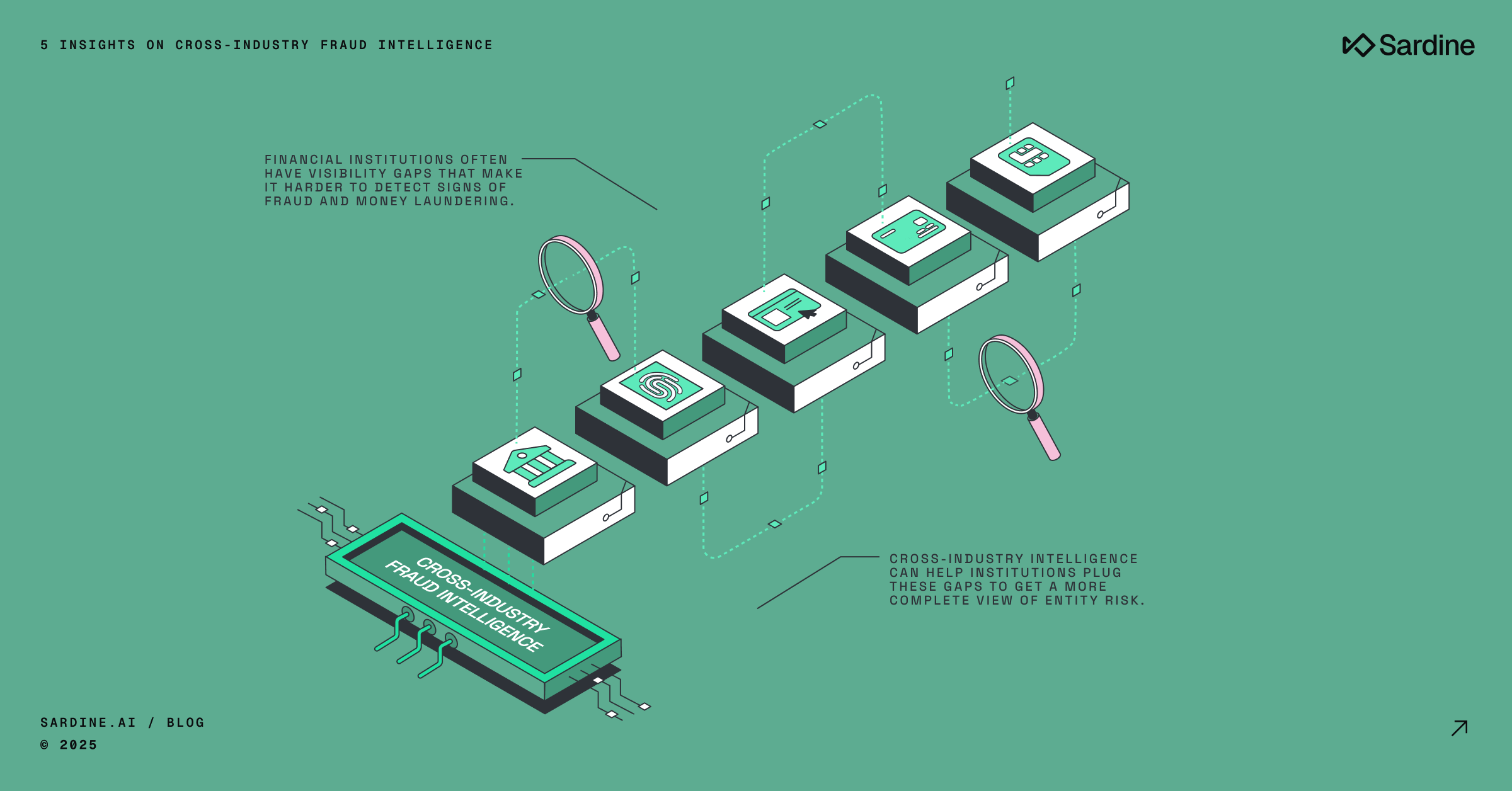
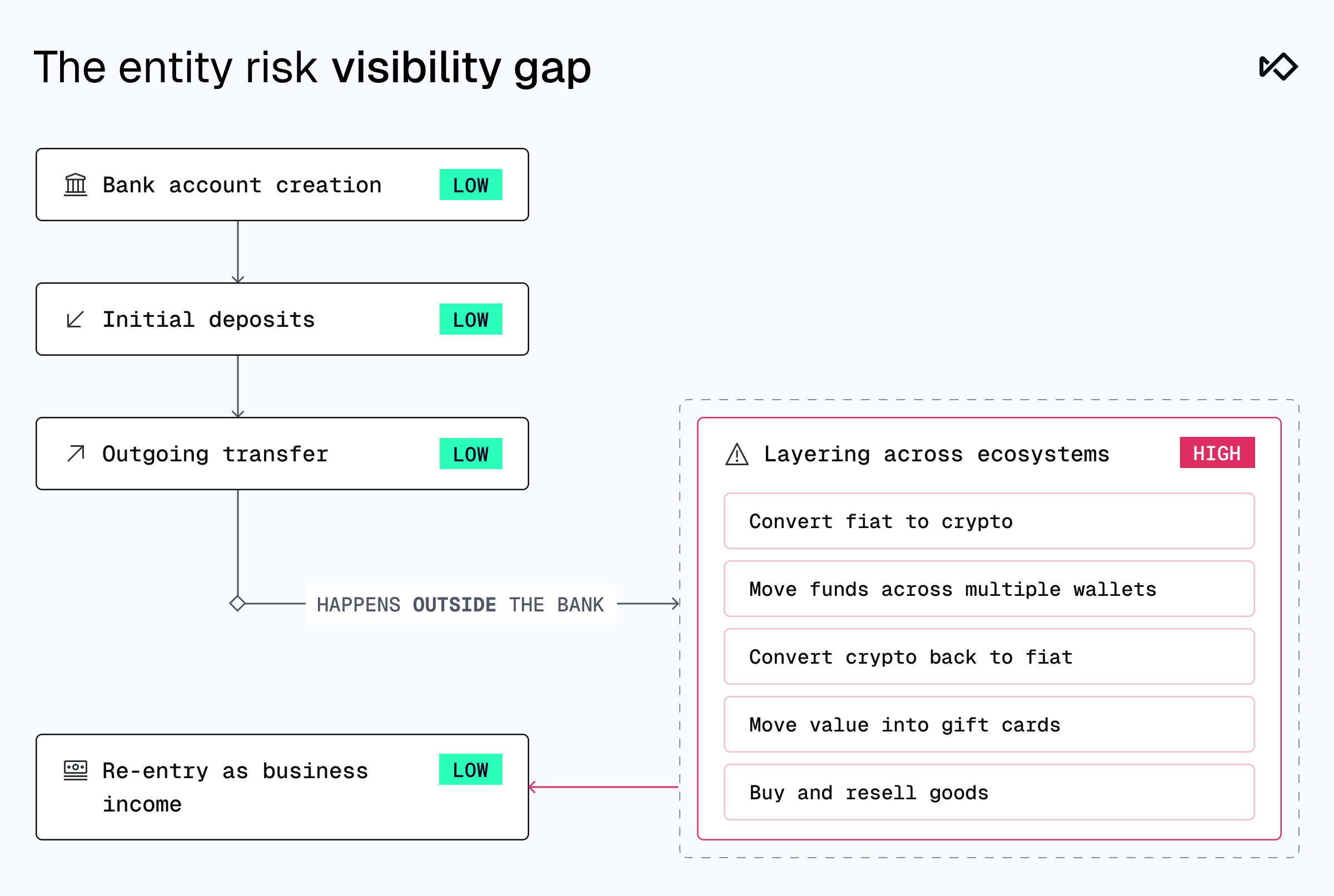
ある金融機関での取引や口座開設は一見正常に見えるかもしれませんが、他業界からのリスクシグナルと組み合わせて見ることで、その主体に、詐欺やマネーロンダリングを示唆する潜在的なリスクが隠れていることが判明する場合があります。
最近開催したウェビナーでは、Sonar コンソーシアムのプレジデントである Ravi Loganathan 氏をお招きし、この可視性のギャップが今日の銀行にどのような影響を与えているのか、そしてなぜ共有された不正インテリジェンスを活用することが、複雑な金融犯罪と闘ううえで不可欠なのかについて議論しました。
ここでは主な5つのポイントをご紹介します。
1. 金融犯罪に関するエンティティ属性は、あなたの機関の中だけにはとどまらない
不正行為は、単一の金融機関の中だけで始まり、留まり、完結するものではありません。悪意のある者たちは、複数の組織にまたがって脆弱性を日々探り続け、フィンテック企業から伝統的な銀行へと渡り歩き、その間に生じる可視性のギャップを悪用しています。
正当なユーザーと不正行為者を分けるのは、単発の不正取引だけではなく、デバイスやメールアドレス、電話番号といったベースとなる属性と、それぞれに紐づくパターンです。
消費者が日々、従来型の銀行から暗号資産取引所、マーケットプレイス、ネオバンクに至るまで、さまざまなプラットフォームで取引を行う中で、決済手段をまたいだ一貫した視点から、その主体の行動や不正の兆候を広く把握することが極めて重要です。
犯罪者は、繰り返し検知されることを避けるために、銀行、フィンテック企業、マーケットプレイス、P2Pサービスの間を頻繁に行き来します。そのため、どの事業者にとっても、自社のデータだけに基づいて正当なユーザーと高リスクな存在を見分けることは困難になります。
たとえば、ある端末は口座開設時には信頼できる顧客のものに見えても、その日の早い時間帯に別の金融機関で複数回のKYC認証に失敗した履歴と紐づいている場合があります。
たとえリスクが低い行動であっても、伝統的な銀行で安定した残高を維持しながら、同時に他所で高リスクな送金を繰り返すといった形で、特定のパターンを覆い隠してしまうことがあります。
こうしたパターンは、業界横断的な不正インテリジェンスがなければ見えません。共有されたリスクインテリジェンス、共有されたマネーロンダリング対策(AML)のリスクシグナル、そして行動リスク指標によって、エコシステム全体で対象がどのように振る舞っているかを理解するために必要な、より広い視野が得られます。 不正対策チームが対象のフットプリントを可視化するのを支援するツールは、組織的な不正グループや隠れたリスクネットワークを特定しやすくします。
「どの機関も単独では不正を防ぎきれないと思います」とラヴィは言いました。「……だからこそ、不正に関する情報やインサイトを共有することが、これからますます重要になっていくと思います。」
2. 進化する決済環境には、リアルタイムのリスクシグナルに関するインサイトが求められる
業界がリアルタイム決済や即時決済、新たな決済レールへとさらに移行していく中で、リアルタイムのリスク評価もそれに追いつかなければなりません。日単位・月単位の遅延を伴うバッチ処理に依存した従来型の不正検知モデルでは、もはや対応しきれません。不正の可視性に存在するギャップを埋めることは、これまでになく喫緊の課題となっています。
ラヴィが説明したように、「これは遅れて届く過去志向のデータの話ではありません。リアルタイムなインサイトを得るためのインフラとして考えているからこそ、このインフラが構築されており、その結果、取引が承認される前に照会への対応ができるようになるのです。」
Sonarは、独立した会員主導型の業界横断不正対策インテリジェンス・コンソーシアムとして、照会・応答・フィードバックというループを通じてこの課題に取り組んでいます。金融機関などの組織が口座開設、資金移動、支払い取引を開始する際には、その取引主体に関して Sonar Insights API を呼び出し、取引を承認する前に、リアルタイムで統合されたリスクシグナルを受け取ることができます。
リアルタイム決済の普及により、金融機関は数秒以内に正確な判断を下さなければならないというプレッシャーにさらされています。従来のバッチ処理型モデルでは、急速に進行する攻撃に対して十分な防御ができません。例えば、ある利用者が一つの金融機関で一見正当なRTP送金を開始する一方で、同時に複数の決済プラットフォームを使って小口かつ高速な送金を繰り返す、といったことが起こり得ます。
詐欺グループは、資金をさまざまなレール間で立て続けに移動させることで、システム間のタイムラグも悪用します。こうしたパターンは個別に見ると無害に見えますが、エコシステム全体で分析すると明確な姿が浮かび上がります。ベンダーに依存せずエコシステム全体をカバーするリアルタイムの共有リスクインテリジェンスにより、金融機関は資金が手の届かないところへ移動してしまう前に、高リスクな送金をブロックするために必要な可視性を得ることができます。
3. Sonarは銀行データだけでなく、業界横断的な不正検知インテリジェンスを提供します
Sonar は、金融サービスエコシステム全体から参加者を結集することに尽力しています。メンバーには暗号資産取引所、マーケットプレイス、フィンテック企業などが含まれており、今後さらに多様な組織へと拡大していく予定です。このような業種横断的なアプローチが重要なのは、良くも悪くも、あらゆるチャネルでエンティティ属性が利用されているからです。
銀行のデータだけでは、その主体の行動の全体像が明らかになることはほとんどありません。銀行でのオンボーディング時にはクリーンな本人確認情報を示していても、他の場面では高リスクな兆候を示している可能性があります。
たとえば、銀行口座の開設に使われたデバイスが、マーケットプレイスで複数のチャージバック請求に関連付けられていた可能性があります。
業界をまたいでシグナルを結びつけることで、Sonar は個々の事業者の中では見えない行動パターンを浮かび上がらせます。こうした文脈情報により、各機関はエンティティリスクについて、より賢く、より十分な情報に基づいた判断を下すことができます。
4. ベンダー統合ではなく、不正対策に集中する
Sonar は、特定のベンダーに依存せず、容易に導入できるよう特別に設計されています。金融機関などの組織は、API コールを通じて厳選されたリスクシグナルにアクセスし、既存のリスク判断プロセスや不正対策スタックに Sonar を組み込むことができます。
最新のテックスタックを備え、シグナルを機械学習モデルに統合できる環境でも、ルールベースのアプローチに限られている環境でも、Sonar は不正検知能力を強化できます。さらに、Sonar Marketplace を利用すれば、単一の API を通じて、あなたの不正関連データを充実させるサードパーティのデータベンダーにもアクセスできます。
66億台以上のデバイスと1億2,000万のエンティティを網羅しているため、メンバーは自社の内部データだけでは得られない、はるかに高度なインテリジェンスにアクセスできます。
多くの機関は、複雑なシステム連携が必要になるため、新しいリスクツールの導入をためらっています。Sonar は、既存のテックスタックに組み込める軽量なデータレイヤーとして動作することで、この問題を回避します。
例えば、銀行は既存のモデルに対するエンリッチメントソースとして Sonar を追加し、リスクワークフロー全体を作り直すことなく活用できます。シンプルなルールエンジンを使うフィンテック企業も、システムを再構築することなく、Sonar のリスクシグナルをブール値チェックとして取り込むことができます。
エンジニアリングチームが限られている組織でも、最小限のデータ入力でエンティティ単位のリスクシグナルを返す、シンプルなAPIコールに依存することができます。使いやすさに加えて、各機関は自前で構築すれば何年もかかるようなネットワークカバレッジの恩恵を受けられます。Sonarはエコシステム全体のパターンへ即時アクセスを提供し、チームがインフラ整備ではなく不正防止に集中できるようにします。
5. 規制に準拠したデータ共有と強固なガバナンスで信頼を構築する
一部の機関はデータプライバシーへの懸念からコンソーシアムへの参加を避けていますが、Sonar はこの課題に対応するため、包括的な運用ルールとガバナンスの枠組みを整備してきました。これにより、生の顧客情報を開示することなく、規制に準拠したデータ共有を可能にしています。
このコンソーシアムは、不正防止のためにグラム・リーチ・ブライリー法(GLBA)の下で運営されており、FinCEN から 314(b) の指定を受けており、マネーロンダリング対策を行っています。
例えば、GLBA により、会員は金融犯罪を防止する目的に限って関連情報を共有することが認められています。USA PATRIOT 法のセクション 314(b) は、交換できる情報の範囲について厳格なガイドラインを維持しつつ、マネーロンダリング対策(AML)に関するより深い連携を可能にします。OCC、CFPB、ボストン連邦準備銀行を含む規制当局は、四半期ごとに開催される会員フォーラムにサイレントオブザーバーとして参加しています。
データシグナルは共有される前に匿名化されるため、メンバーは生の顧客情報を開示することなくインサイトを得ることができます。この枠組みにより、コンプライアンスチームは、プライバシーへの期待を損なうことなくリスクインサイトを安全に活用できると安心できます。
ガバナンス構造はメンバー主導であり、データ利用ポリシーやプロダクトのロードマップを決定するローテーション制のグループによって運営されています。これにより、Sonar が特定企業の専有的なデータ資産ではなく、業界全体の独立したユーティリティとして機能し続けることが担保され、メンバーは安心してリスクシグナルを共有・受信できるようになります。
金融エコシステム全体で共有型リスクインテリジェンスを前進させる
2026年に向けて、私たちは新たなパートナーシップと機能拡充を通じて、Sonar をさらに拡大していけることに大きな期待を寄せています。
目標は明確です。金融機関が不正検知の匿名化されたシグナルとリアルタイムの共有リスクインテリジェンスを活用し、不正と戦い、リスクに関して自信を持って意思決定できるようにするための重要なインフラを構築することです。
コンソーシアムインテリジェンスを活用して不正の一歩先を行くためにSonarがどのように役立つか知るには、joinsonar.comをご覧ください。
よくある質問:業界横断の不正インテリジェンスと共有リスクシグナル
業界横断的な不正検知インテリジェンスは、信用情報機関のデータとどのように違うのですか?
信用情報機関はクレジットヒストリーを提供します。一方、Sonar はリアルタイムの不正検知シグナルを可視化します。具体的には、デバイスインテリジェンス、行動バイオメトリクス、マネーミュール口座の兆候、アカウント乗っ取りのインジケーターなどです。扱う課題が違えば、必要となるシグナルレイヤーも異なります。
Sonar は金融機関が潜在的なエンティティリスクを検知するのにどのように役立ちますか?
Sonarコンソーシアムは、既知の不正行為者に関するデバイス情報、行動、パターンに関するシグナルを共有する、銀行・フィンテック・ネオバンク・取引所・マーケットプレイスから成るプライバシー保護型ネットワークです。顧客の個人を特定できる情報(PII)が機関の境界を越えて共有されることはありません。各メンバーは、自社トラフィックに対して、付加情報を含んだリスクスコアを確認できます。
GLBAおよび314(b)の下で、業種をまたいだデータ共有は合法ですか?
はい。米国愛国者法(USA PATRIOT Act)の第314(b)条は、金融機関同士が詐欺やマネーロンダリングの兆候を安全な保護(セーフハーバー)のもとで共有することを明確に認めています。Sonar コンソーシアムは、その枠組みの中で運営されています。
コンソーシアムを利用すると、不正検知の判断にどれくらいの遅延が発生しますか?
50ミリ秒未満。ソナー信号は事前に計算され、通常のSardine APIコールと同じレイテンシーで提供されます。コンソーシアムによって顧客フローが遅くなることはありません。
なぜエンティティレベルのリスクスコアリングは、トランザクションレベルのモニタリングよりも効果的なのですか?
取引単位でのモニタリングだけでは、複数の機関にまたがる連携した不正行為を見逃してしまう可能性があります。エンティティレベルのリスクスコアリングでは、共有されたリスクインテリジェンス、金融犯罪に関する知見、行動指標を活用して、個人や企業全体のリスクを評価します。これにより、単一の取引だけでは検知できない、マネーミュールネットワークやファーストパーティ不正などの不正パターンを明らかにすることができます。
Sardineはコンソーシアム全体でどのようにプライバシーを保護していますか?
シグナルは、機関をまたいで共有される前にハッシュ化、派生処理、または集約されます。生の個人情報(PII)がコンソーシアム内を移動することはありません。各メンバーは自社の顧客に対する高度化されたスコアのみを確認でき、他のメンバーの顧客リストを見ることは決してありません。
異業種間のリスクシグナルから最も恩恵を受けるのは誰ですか?
銀行、フィンテック企業、決済プロセッサー、加盟店、スポンサー銀行は、リスクインテリジェンスを共有することでエコシステム全体の可視性が高まるというメリットを得られます。不正対策、コンプライアンス、与信、オンボーディング、カスタマー・デューデリジェンスなどの各チームは、エンティティベースのリスク判断に必要な、より強力なコンテキストを得ることができます。