Fraudology
AIのガードレール:AIへのプロンプト指示だけでは、拡大する不正に対処できない理由
Fraudologyへようこそ。今回もお楽しみください。
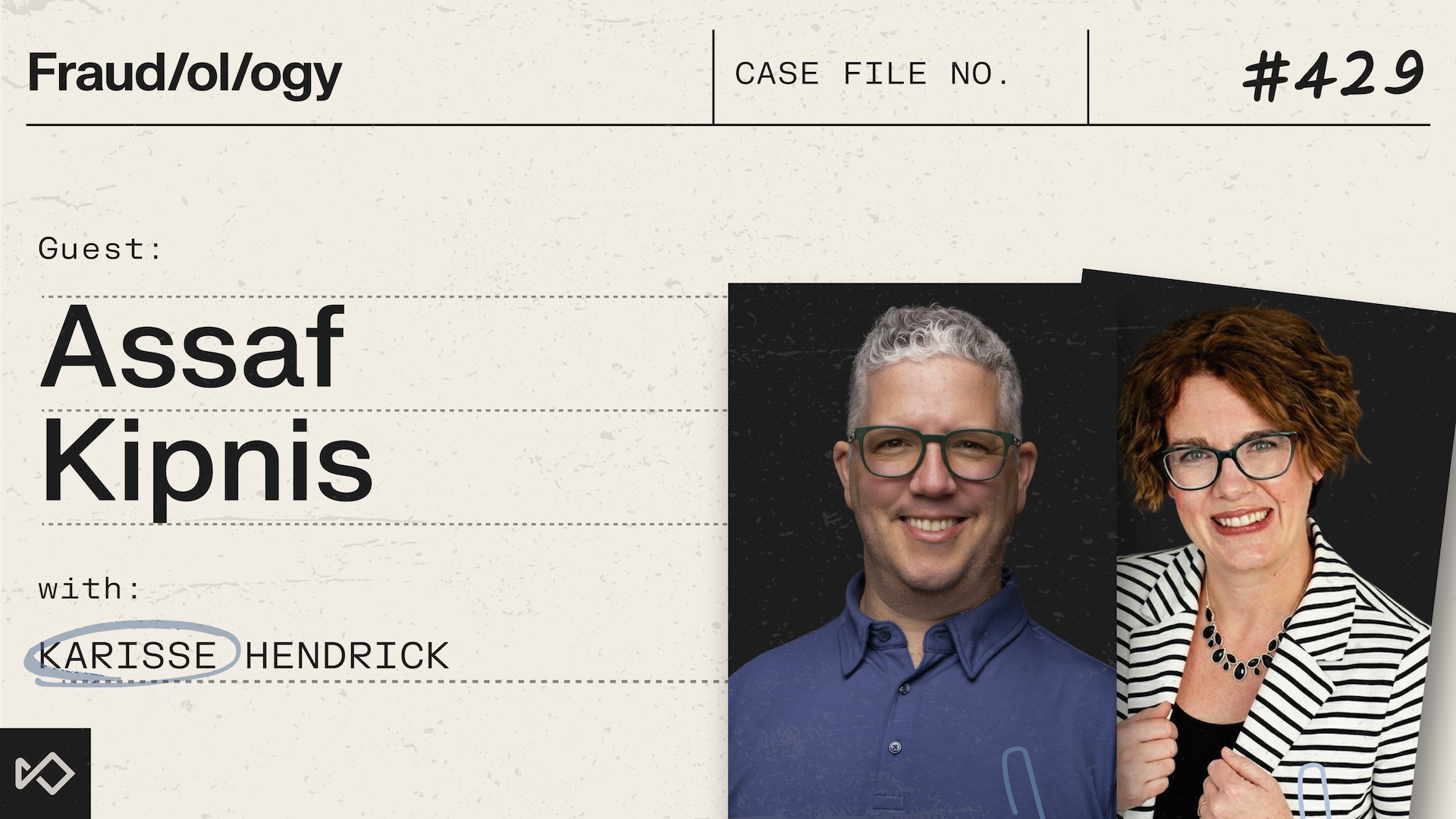
アサフ・キプニスが初めてこの番組に出演したのは、Facebookを退職して間もない2023年のことでした。その際は、悪意のある人物がソーシャルメディアのプラットフォームをどう悪用しているのかについて、2回にわたって話を聞きました。その後、彼はGoogleやAIスタートアップで働き、自身のコンサルティング事業を立ち上げ、AIを活用した開発に多くの時間を費やしてきました。現在は業務時間の約90%をAIを活用した開発に充てています。だからこそ、不正対策の責任者たちから繰り返し聞かれる、ある問いを投げかけるのにふさわしい相手なのです。AIを制御できる状態を保ちながら活用するには、どうすればよいのでしょうか?
今回は、AIのガードレールと、それをコードで強制的に適用する必要があるとアサフが考える理由について話します。また、不正利用対策が単なるブロックとは異なる理由、経営陣が不正対策チームをAIで置き換えられると期待すると何が起きるのか、そして導入後に着手するとAIガバナンスがはるかに難しくなる理由についても掘り下げます。さらにアサフは、調査ツールをどのように構築しているか、なぜAIを攻撃者と同じように扱うのか、そしてチャットボットだけでは事業を運営できないと考える理由も語ります。
今回のエピソードで取り上げる内容:
- AIが詐欺の手口よりもその実行スピードに大きな変化をもたらす理由と、通常業務もこなしながら対策にあたる担当者にとって、それが何を意味するのか。
- 不正利用対策が単なるブロックではない理由と、そう捉えるリーダーがAIによって対策チームは不要になると考える理由。
- 複数の調査の同時進行から、作成に数日かかるレポートを短時間のレビューで済ませられるようにすることまで、AIが不正分析担当者の対応力をどのように高めるのか。
- 不正対策チームでは、なぜメンバーが退職すると知識が失われるのか。そして、AIナレッジベースを活用して、彼らが培った知識をどのように引き継げるのか。
- AIが「わかりません」と言わない理由と、チャットボットが検索エンジンとは異なる理由
- なぜハルシネーションよりも誤った判断のほうが重大なのか、そしてなぜAIの出力を無条件に信頼してはいけないのか。
- プロンプトではなく決定論的なコードが、非決定論的なAIをいかにして定められた範囲内にとどめるのか。スプレッドシートに関する注意点も含めて解説します。
- AIエージェントの無秩序な増加から、アカウント乗っ取りの一貫した定義づけまで、導入後のAIガバナンスが難しい理由。
- 法務部門、裁判所、法執行機関から証拠を求められた際に、ブラックボックス型の意思決定では対応できない理由。
次のような方におすすめのエピソードです:
- 不正対策チームを率いている、またはその一員として働いていて、業務の一部にAIを活用するよう求められている方
- 経営陣が不正対策チームをAIに置き換えようとしているのではないかと懸念している方、またはその選択を検討しているリーダーの方
- 不正調査向けのAIエージェントを開発しており、どこにガードレールを設けるべきか知りたい方
- 法務部門、コンプライアンス部門、または経営陣にAIガバナンスについて説明する必要がある
- ガードレールをプロンプトではなくコードで実装すべき実践的な理由を知りたい
エピソードノート
AIが変えるのは詐欺の手口ではなく、そのスピードです
Assafは、セキュリティ、トラスト&セーフティ、不正対策の分野で13年の経験を積んできました。大手企業で学んだのは、規模への対応です。大手企業はあらゆる攻撃者にとって最初の実験台となるため、大規模な環境で何が機能し、ある変更が次の変更へと連鎖した結果、1年後に何が破綻するのかが見えてきます。リーダーが目の前の問題を、今測定できる問題だからという理由で解決しようとするときにも、同じパターンが見られるといいます。攻撃者側では、2019年から2020年ごろに産業化が始まったとAssafは述べています。AIがもたらすのは、主に規模の拡大です。攻撃者はツールをより速く開発して販売し、互いの手口を模倣できます。防御側にも同じように革新する自由はありますが、その間も日々の業務を続けなければなりません。AIが変えるのは不正のスピードであり、手口そのものではありません。
不正利用対策は、単にブロックすることではない
Assafの主張は、私の記憶に残るものだった。不正利用への対策は、単にブロックすることではない。ブロックは簡単で、成果も数値化しやすい。チームが自分たちの仕事をブロックすることだと捉えると、経営陣も同じように見るようになる。経営陣にAIで何ができるかと尋ねると、真っ先に返ってくるのは単純作業の削減だ。ブロックすることが仕事なら、その仕事を減らそうとする。全部門に対し、業務の25%にAIを活用するか、人の稼働時間を削減するよう指示した企業からも、同じ話を聞く。そうした企業の中には、今やトークンの利用料金がかさみ、各チームに利用を控えるよう求めているところもある。Assafによれば、AIによる人員削減はCFOに最も売り込みやすい話だが、目指すべき方向は間違っている。AIは不正調査アナリストの対応力を高める。以前は作成に何日もかかっていたレポートが、今では短時間の確認だけで済む。それでも、それぞれ複数の調査を担当する6人のアナリストの仕事が尽きることはない。ブロックするには不正を見つける必要があり、見つけるには人が必要なのだ。
ゾンビ、知識、そしてそれを持つ人々
私は、不正対策に携わる多くの人に以前から話しているたとえを紹介しました。不正は、一度倒せば終わりのドラゴンではありません。むしろ、こちらが前回講じた防御策に適応し、さらに手ごわくなって戻ってくるゾンビのようなものです。アサフは、あらゆる失敗を自分の引き出しに加えています。個人ならそれでよくても、企業には、その学びを組織で共有する仕組みが必要です。彼は、ある部屋にいたとき、同僚が「そのユーザー名なら5年前に対応したことがある」と話すのを聞いた経験を語りました。こうした知識こそ、担当者が退職したり、AIに置き換えられたりすることで、不正対策チームから失われてしまうものです。継続的に更新されるAIナレッジベースなら、チームが学んだことを蓄積できます。私は、不正対策の責任者からよく聞く懸念も取り上げました。従業員は、自分の知識を共有すると、自分が代替可能な存在になってしまうのではないかと恐れているのです。アサフは、知識の抱え込みは今に始まった問題ではなく、組織文化の問題だと言います。企業が人材を採用する際に重視するのは、知識以上に判断力です。そして、次の攻撃を見抜くのは、その判断力なのです。
AIが「わかりません」と言わない理由
アサフは、人々がAIも人間と同じように考えると思い込んでいることに気づきました。人間は閉まったドアにぶつかれば、そこから学びます。ところがAIは、同じドアにまたぶつかるかもしれません。AIにとって文脈は、意味のつながりを持たない単なるデータだからです。私も、自分の経験から学んだことを付け加えました。AIは決して「わかりません」と言いません。以前、友人と一緒に、私たちがでっち上げた不正の手口についてAIツールに尋ねたところ、自信満々にその定義を説明してくれたのです。アサフは、チャットボットは検索エンジンではないと説明しました。彼は、ある話題について説明してほしいとは頼みません。調査して専門家の記事を探してほしいと頼むのです。すると、何も見つからないこともあります。私は情報源に不安を感じています。不正対策の専門家が持つ知識の多くは本人の頭の中にしかなく、公開されている情報の多くは、最後に売り込みで締めくくられるベンダーの投稿だからです。不正対策の責任者を解雇し、代わりにチャットボットに尋ねる企業は、検証できない回答を得ることになるでしょう。
ハルシネーションではなく判断の誤り、そしてコードが限界を決める理由
Assaf氏は、本当の問題はハルシネーションではないと言います。問題なのは、モデルが与えられた文脈に基づいて下す判断であり、約半分のケースで自分とは異なる結論に至ると指摘しています。AIの出力は非決定的です。確率に基づいているため、一貫性は保証できません。AIの出力は信頼できるのでしょうか。それだけでは信頼できません。彼が示す答えは、コードで制約を設けることです。イエスかノーかを求めるなら、コードに判断させ、そのコードをAIに書かせればよいのです。スプレッドシートについても警鐘を鳴らしています。大量のスプレッドシートをAIに渡すと、見えないところで判断が行われ、データが損なわれる可能性があります。まずはコードで解析し、ドキュメント化するべきだとしています。彼は、不正調査のためのガードレールを独自の実行基盤に組み込んでおり、AIが何かを削除しようとすれば、コードがそれを阻止します。だからこそ、彼はAIを脅威アクターのように扱っています。AIには制限が必要であり、それはスキルやプロンプトではなく、コードによって強制されなければなりません。彼の言葉を借りれば、チャットボットでビジネスを運営することはできないのです。
導入後のAIガバナンス
Merchant Fraud Allianceで開催した私たちのAIブートキャンプに、AIガバナンスへの不安を抱えて参加したチームにどのような助言をするか、彼に尋ねました。彼の助言は変わりません。ガードレールとガイドラインをコードに組み込み、確実に適用することです。企業はAIを導入し、全員に利用クレジットを使うよう促し、誰もレビューしていないものを作ってしまいます。彼はこれを、ソフトウェアエンジニアにとって最悪の悪夢だと呼びます。ガバナンスには時間がかかります。モデルは、こちらの対策をすり抜けようとする敵のような存在だからです。壁を築けば、その下をくぐり抜けます。導入後にAIガバナンスに取り組み始めることは可能ですが、多大な労力が必要です。ある加盟店は、AIエージェントが乱立し、約27個のエージェントがそれぞれ異なる基準でアカウント乗っ取りを検知している状況を説明しました。どうすれば一貫した定義を設けられるのでしょうか。Assafはさらに、訴訟の証拠開示手続きで、その27個のうちどれが正しいのか問われる可能性があると指摘しました。法務部門や裁判所、法執行機関に証拠を示す必要があるとき、判断の過程がブラックボックスのままでは通用しません。
AIが失敗するたびに、その理由を問う
最後にアサフは、私も取り入れたいと思う助言をくれた。AIが失敗したときは、ただ「直して」と言って済ませてはいけない。なぜ起きたのかを問い、根本原因を分析することだ。私は、AIは私たちのように昨日の失敗から学ぶとは限らないと指摘した。アサフも、AIは痛みを感じないのだと同意した。教訓を導き出し、それをコードに落とし込むのは、人間でなければならない。
重要なポイント
- 不正対策の責任者は、AIを導入する際も人間が関与する体制を維持すべきです。AIは不正の手口そのものよりも、不正が行われるスピードを大きく変えるためです。
- 不正利用対策は単にブロックすることではありません。自分たちの仕事をブロックすることだと捉えているチームは、経営陣にAIで代替できると思わせてしまいます。
- AIがレポート作成などの煩雑な作業を担うことで、不正調査アナリストの業務能力が高まり、より多くの調査を実施できるようになります。
- 不正対策チームをAIに置き換えると、組織に蓄積された知識が失われます。継続的に更新されるAIナレッジベースでも、その知識を保持できるのは一部にとどまります。
- 企業が人を採用するのはその判断力を求めてのことであり、次の攻撃を見つけ出すのも、その判断力です。
- AIは決して「わかりません」とは言いません。チャットボットの即答よりも、調査のためのプロンプト、専門家による情報源、検証可能な回答のほうが重要です。
- ハルシネーションよりも誤った判断のほうが重大であり、AIの出力を無条件に信頼することはできません。
- AIのガードレールは、プロンプトやスキルではなくコードに組み込むべきであり、イエスかノーかの判断は決定論的なコードで処理すべきです。
- AIガバナンスは導入後にはるかに難しくなります。AIエージェントの無秩序な増加への対処に加え、アカウント乗っ取りなどの事象について、明確で統一された定義を設ける必要があります。
- ブラックボックス化された意思決定は、法務部門や裁判所、法執行機関から証拠を求められた際に、その正当性を立証できません。
まとめ
このエピソードから一つだけ学びを持ち帰るなら、AIのガードレールは方針を記した文書ではなく、設計上の選択だということです。プロンプトはモデルに適切な振る舞いを求めますが、コードはそれを強制します。何かがうまくいかないたびに「なぜ」と問いかけるアサフの習慣は、よい出発点になりますし、AI以外の分野でも広く役立ちます。早い段階で防壁を築き、モデルはその下をくぐり抜けようとするものだと想定し、次にどこへ防壁を築くべきかを判断できる人たちを大切にしてください。
エピソードの関連資料・リンク
オーナー兼主任コンサルタント/アドバイザー:ASK Consulting
つながる:Karisse Hendrick | LinkedIn
Fraudology Podcastのホスト
受賞歴のあるサイバー詐欺対策の専門家
Eコマース不正防止コンサルタント
スタートアップアドバイザー、基調講演者、
フォーチュン500企業の加盟店向けコンサルタント
Episode transcript

Karisse Hendrick
00:07
Welcome back to the Fraudology podcast.
Karisse Hendrick
00:09
I am so glad you're here and I'm so glad that Assaf
Karisse Hendrick
00:13
Kipnis is joining me again on Fraudology.
Karisse Hendrick
00:15
I had thought that it had only been like maybe a
Karisse Hendrick
00:18
year, year and a half since Assaf was with us.
Karisse Hendrick
00:22
It was back in 2023 when I looked up the episode.
Karisse Hendrick
00:25
Uh it was after he had left his job in Facebook and he talked
Karisse Hendrick
00:29
a lot about how bad actors and state actors were using social
Karisse Hendrick
00:33
media platforms for influencing political regimes and their
Karisse Hendrick
00:37
political influence using social media platforms.
Karisse Hendrick
00:40
Which was really interesting. It was a two-part episode.
Karisse Hendrick
00:44
It was really interesting.
Karisse Hendrick
00:46
I believe it was episodes 195 and 196 from back in May of 2023
Karisse Hendrick
00:50
if you want to go back into the archives and look for them.
Karisse Hendrick
00:54
We're now on like episode 430 something.
Karisse Hendrick
00:56
So um so it was a while ago but it was really fascinating.
Karisse Hendrick
01:00
Uh and I have kept tabs on Assaf's career
Karisse Hendrick
01:03
since and am really interested.
Karisse Hendrick
01:05
He's doing a lot in the world of AI um using AI for
Karisse Hendrick
01:08
fraud investigations as well as other things.
Karisse Hendrick
01:11
And he has a lot of thoughts on how companies should be using
Karisse Hendrick
01:15
AI and what they need to think about when using AI.
Karisse Hendrick
01:19
And that is why I wanted to bring him on the podcast today.
Karisse Hendrick
01:23
So Assaf, welcome back to Fraudology.

Assaf Kipnis
01:37
Thanks so much. Thanks for having me. It's been a long time.
Karisse Hendrick
01:42
It has.
Karisse Hendrick
01:42
And uh you know so I was just going to have you
Karisse Hendrick
01:46
start maybe introducing your background.
Karisse Hendrick
01:48
I know I asked you this question the last time you
Karisse Hendrick
01:51
were here but it was three and a half years ago.
Karisse Hendrick
01:55
Um how did you get started in fraud?
Karisse Hendrick
01:57
What is your, where have you where have you worked and what
Karisse Hendrick
02:01
have you done at a high level um that brings you to now?
Assaf Kipnis
02:05
So I've been in the space for about 13 years now.
Assaf Kipnis
02:08
I started out in security engineering um and then early in
Assaf Kipnis
02:12
my career got to LinkedIn where I was there for about three
Assaf Kipnis
02:16
years working on trust and safety investigations.
Assaf Kipnis
02:19
And when the team was very very small.
Assaf Kipnis
02:21
We're working on every type of actor we're working on scraping on
Assaf Kipnis
02:26
uh child safety we were working on financially motivated actors.
Assaf Kipnis
02:30
And then I moved uh in 2018 I moved to
Assaf Kipnis
02:33
Facebook where I spent In five years.
Assaf Kipnis
02:35
I was uh an investigator in the e-crime team.
Assaf Kipnis
02:38
Then I managed the e-crime team.
Assaf Kipnis
02:40
Um working on specifically on financially motivated actors, ad fraud,
Assaf Kipnis
02:45
uh a political influence for profit and a lot of scams.
Assaf Kipnis
02:48
And then we talked.
Assaf Kipnis
02:50
Uh after that I was at Google for about a year and a
Assaf Kipnis
02:53
half working on uh scams, how Google products can identify
Assaf Kipnis
02:57
scams at scale across all of their products.
Assaf Kipnis
03:00
Uh then I went to ElevenLabs which is an AI startup.
Assaf Kipnis
03:03
I was there for a short amount of time
Assaf Kipnis
03:06
running their uh investigations team.
Assaf Kipnis
03:08
Uh and then over the last year I got much deeper into
Assaf Kipnis
03:12
consulting and found out that I really liked it.
Assaf Kipnis
03:15
Uh I started my own consultancy uh ASK consulting.
Assaf Kipnis
03:18
Where I do both investigations and AI builds and advise companies
Assaf Kipnis
03:23
on how to merge AI into their processes, how to better do
Assaf Kipnis
03:27
investigations, how to superpower their uh analysts uh with AI.
Assaf Kipnis
03:31
Um I will say working at ElevenLabs was a very big eye
Assaf Kipnis
03:34
opener for me because they're an AI first company.
Assaf Kipnis
03:38
So, I've I've dove deep into uh building with
Assaf Kipnis
03:41
AI and that's 90% of what I do now.
Karisse Hendrick
04:04
Wow. Yeah.
Karisse Hendrick
04:05
You've you've gotten to be on the front, you know, when you've
Karisse Hendrick
04:09
been on the front lines, you've gotten to do some really
Karisse Hendrick
04:12
interesting things and see the scams that are new, right?
Karisse Hendrick
04:16
Well, there really are no new scams,
Karisse Hendrick
04:19
but there's new usages of scams.
Karisse Hendrick
04:21
There's new ways that scams are being, you know, um, used, right?
Karisse Hendrick
04:25
And there's new technology to superpower
Karisse Hendrick
04:28
those scams and industrialize them.
Karisse Hendrick
04:30
But you've been really on the front
Karisse Hendrick
04:32
lines of seeing the newest thing.
Karisse Hendrick
04:35
Because you've worked for some of the
Karisse Hendrick
04:37
biggest companies in Silicon Valley.
Karisse Hendrick
04:39
Um, you've had to be, you know, on your toes, so to speak, to
Karisse Hendrick
04:43
find new ways to identify them as fast as they're creating them.
Assaf Kipnis
04:49
Yes.
Karisse Hendrick
04:50
Which makes yeah makes you a perfect candidate for a consultant.
Karisse Hendrick
04:54
Because you've you've seen the hardest stuff and
Karisse Hendrick
04:57
the worst stuff and you've tackled it right.
Karisse Hendrick
05:00
So to now be able to help other companies, especially you
Karisse Hendrick
05:04
know small to mid companies, some large companies.
Karisse Hendrick
05:07
Um, you know, be able to identify problems
Karisse Hendrick
05:10
whether using AI or not.
Karisse Hendrick
05:11
Um, I think that puts you in a really good position.
Assaf Kipnis
05:20
Yeah.
Assaf Kipnis
05:21
And one of the biggest things I learned
Assaf Kipnis
05:23
from these larger companies is scale.
Assaf Kipnis
05:26
Is what works at scale, what doesn't work at scale.
Assaf Kipnis
05:29
Beyond being um these companies are always the first
Assaf Kipnis
05:32
guinea pig for any threat actor to try things.
Assaf Kipnis
05:36
So yes, you get to know the new things.
Assaf Kipnis
05:38
Um but you also learn you get to see what breaks at scale
Assaf Kipnis
05:42
or what works at scale or if you do one thing how does it
Assaf Kipnis
05:46
the cascade um a year later into something that breaks. So
Karisse Hendrick
05:56
Yeah,
Assaf Kipnis
05:57
That is a huge thing about working with these companies.
Karisse Hendrick
06:01
That's a really good point.
Karisse Hendrick
06:02
Yeah, you get to see what solutions work and
Karisse Hendrick
06:05
which solutions break, you know, at scale.
Karisse Hendrick
06:08
That makes perfect sense.
Assaf Kipnis
06:13
Yeah, it's it it's been very interesting.
Assaf Kipnis
06:15
And a lot of times you after you've been in these places, you get
Assaf Kipnis
06:20
to be the you get to be kind of the person who says, "Ah, yeah.
Assaf Kipnis
06:24
" You can do that, but go see what it will affect later. Just
Karisse Hendrick
06:31
Yes,
Assaf Kipnis
06:31
It's going to blow up somewhere else that
Assaf Kipnis
06:33
you're not going to be touching. And we all we all been there.
Karisse Hendrick
06:38
Because fraudsters and scammers, they're
Karisse Hendrick
06:40
constantly looking for the gap, right?
Karisse Hendrick
06:42
They're constantly looking for the vulnerability.
Karisse Hendrick
06:45
And so if what you build at scale has a gap or
Karisse Hendrick
06:47
a vulnerability, you know, hey, they're going
Karisse Hendrick
06:50
to break this once they figure it out.
Karisse Hendrick
06:52
They're going to find that gap.
Karisse Hendrick
06:54
So, why don't we fix that gap now?
Karisse Hendrick
06:56
And that's not always what, you know, what they want to hear,
Karisse Hendrick
06:59
what the what the big companies want to hear, right?
Karisse Hendrick
07:02
They want a lot of times they just want to fix the problem right
Karisse Hendrick
07:06
now, not fix the problem that's going to happen in six months.
Assaf Kipnis
07:10
It's I want to fix the problem that's right
Assaf Kipnis
07:12
in front of me and I can measure today.
Karisse Hendrick
07:14
Yes,
Assaf Kipnis
07:14
I think measure is the big one.
Karisse Hendrick
07:17
That's a challenge for people in fraud.
Karisse Hendrick
07:19
Because you know sure we can we can stop the challenge
Karisse Hendrick
07:23
today but we want to stop the challenge tomorrow
Karisse Hendrick
07:26
and the next day too at the same time.
Karisse Hendrick
07:28
And leadership often especially I would imagine at some
Karisse Hendrick
07:32
of the bigger companies, it's all about standing out.
Karisse Hendrick
07:36
And so they want to be able to measure it so they can
Karisse Hendrick
07:39
put it on their resume so they can get a promotion.
Assaf Kipnis
07:44
It it it's it's somewhat of a perverse incentive
Assaf Kipnis
07:47
that some people don't like to hear, but
Karisse Hendrick
07:52
Yeah. No, I can see that.
Karisse Hendrick
07:53
Um, so how does AI fit into your work that
Karisse Hendrick
07:56
you're doing as a consultant now?
Assaf Kipnis
08:00
So I'm just building things constantly.
Assaf Kipnis
08:02
I think usually I have six terminals open building all kinds
Assaf Kipnis
08:06
of stuff together cuz that's how my brain thinks.
Assaf Kipnis
08:09
I got to wait on one. So let's start five more. Um,
Karisse Hendrick
08:16
I think 80% of us have ADHD in fraud.
Karisse Hendrick
08:18
And I'd be willing to stand by that percentage.
Assaf Kipnis
08:21
Oh, yeah.
Assaf Kipnis
08:22
And, um, so one of the things that I enjoy the
Assaf Kipnis
08:25
most that I built is an investigative system.
Assaf Kipnis
08:28
So when I left the big companies, it was I it was
Assaf Kipnis
08:31
on my mind when I was at the big companies.
Assaf Kipnis
08:34
I said, "How would I ever do an investigation again?
Assaf Kipnis
08:37
" I I sit here sitting on all the data ever.
Assaf Kipnis
08:40
And if I don't have this data again, how do I find anything
Assaf Kipnis
08:44
like how do I do open source investigations?
Assaf Kipnis
08:47
And open source investigations for people who
Assaf Kipnis
08:50
are listening who do them, they are lengthy.
Assaf Kipnis
08:53
They take a really long time. You got to document everything.
Assaf Kipnis
08:57
So I started building myself a tool of
Assaf Kipnis
09:00
okay, how do I do an investigation?
Assaf Kipnis
09:02
It started with stuff that I did in the past about how do I find from
Assaf Kipnis
09:06
an ad what are the other ads that are running the same fraud?
Assaf Kipnis
09:11
Who are these actors? Where are they living?
Assaf Kipnis
09:13
How do I find uh affiliate marketing? So you can do that.
Assaf Kipnis
09:17
It just takes a really long time of opening a lot of websites.
Assaf Kipnis
09:21
So uh and finding patterns.
Assaf Kipnis
09:23
So I started building a system that I provide a seed and then
Assaf Kipnis
09:27
it extrapolates everything and continuously comes back to me
Assaf Kipnis
09:31
and says okay I found this which direction are we going?
Assaf Kipnis
09:35
And or I say okay we found this is interesting, but if I
Assaf Kipnis
09:39
was in the weeds I would cluster here and cluster there
Assaf Kipnis
09:42
and then find the similarities between the clusters.
Assaf Kipnis
09:46
So AI, the its best uh feature that it it finds commonalities.
Assaf Kipnis
09:50
It finds patterns. So
Karisse Hendrick
10:02
Yeah,
Assaf Kipnis
10:03
Just help me find patterns.
Assaf Kipnis
10:04
So um I've been using AI for a lot of automation of processes
Assaf Kipnis
10:08
that are tedious and take up a long time.
Assaf Kipnis
10:11
Uh and then into finding patterns in um in abusive behavior or
Assaf Kipnis
10:15
patterns in data, that will give me um what I probably would have missed.
Assaf Kipnis
10:20
Or I remember looking at graphs that were 5,000 nodes.
Assaf Kipnis
10:24
I can't look at a graph that's I can't make sense person.
Assaf Kipnis
10:28
But AI can make sense of the of the graph, give me something.
Assaf Kipnis
10:32
And then I can I can evaluate the assumption that AI makes.
Assaf Kipnis
10:36
Or I can say no throw it back try again.
Assaf Kipnis
10:38
Or I can say oh okay this actually makes sense with what I found.
Assaf Kipnis
10:43
And I built a bunch of other tools that kind of make my life
Assaf Kipnis
10:47
easier, but the investigative tooling has been a big one.
Assaf Kipnis
10:50
And the other one is for my own work and my own consultancy
Assaf Kipnis
10:54
I struggle, And I'm sure a lot of people are
Assaf Kipnis
10:57
you like I will struggle managing my work.
Karisse Hendrick
11:06
Mhm.
Assaf Kipnis
11:06
Uh I remember asking people how do you record everything
Assaf Kipnis
11:09
that you're doing and do you use a spreadsheet?
Karisse Hendrick
11:12
Yeah.
Assaf Kipnis
11:13
So it took a year, but I built a system for myself that essentially
Assaf Kipnis
11:17
I just get up in the morning and say what do I have to do today.
Assaf Kipnis
11:21
And, or what did that person say to me.
Assaf Kipnis
11:23
And that that, I go to that client.
Assaf Kipnis
11:26
I say what did that person say to me yesterday, and
Assaf Kipnis
11:29
what was our conversation about that we recorded,
Assaf Kipnis
11:32
and what is the actual work I need to do here.
Assaf Kipnis
11:35
So that has changed the way I work because I don't have to well I
Assaf Kipnis
11:39
don't take notes anymore which is really nice, but I don't have
Assaf Kipnis
11:43
to go have the mental load of everything spinning in my head.
Assaf Kipnis
11:47
Of what's the work.
Assaf Kipnis
11:48
And then that's extremely hard when you're working on multiple
Assaf Kipnis
11:52
projects, which was always really hard for me.
Assaf Kipnis
11:55
Uh, but now I can work on six projects at the same time.
Assaf Kipnis
11:59
And I'll just stop this one.
Assaf Kipnis
12:01
I'll say, Okay, where did I stop on this one?
Assaf Kipnis
12:04
What did these people say?
Assaf Kipnis
12:05
What were the emails that came in since
Assaf Kipnis
12:08
the time I last spoke to them?
Assaf Kipnis
12:10
And what changed and how did they uh like what I wrote?
Assaf Kipnis
12:13
And then continue from there.
Assaf Kipnis
12:15
So those are the main things uh the investigation stuff and
Assaf Kipnis
12:19
the knowledge base uh has been extremely helpful for me.
Assaf Kipnis
12:23
And and clients that I've been working with.
Karisse Hendrick
12:26
Yeah, I would imagine.
Karisse Hendrick
12:27
So, talking about doing investigations and all of that, what are
Karisse Hendrick
12:31
into scams or ad fraud or whatever you're working on, what are
Karisse Hendrick
12:35
some of the trends that you're seeing on the bad actor side?
Karisse Hendrick
12:39
Uh, I mean, I just did a presentation at MFA that I then
Karisse Hendrick
12:43
redid for the podcast two weeks ago or 3 weeks ago now.
Karisse Hendrick
12:47
That where we talked about, or I talked about, how
Karisse Hendrick
12:50
bad actors are using AI to industrialize fraud.
Karisse Hendrick
12:53
And they're they're scaling. They're scaling at at a rapid rate.
Karisse Hendrick
12:58
Um, a lot of, you know, every measurement that we have
Karisse Hendrick
13:01
of specific types of payment fraud, especially.
Karisse Hendrick
13:04
Because payment fraud is easier to measure
Karisse Hendrick
13:07
than some of the other fraud.
Karisse Hendrick
13:09
Um because of chargebacks, but every measurement that
Karisse Hendrick
13:12
we have, you know, around like card testing, well,
Karisse Hendrick
13:16
that's up over a 100% in the last few months.
Karisse Hendrick
13:19
And ATOs is up over 78% in the last like quarter,
Karisse Hendrick
13:22
because it's much easier easier to do with AI.
Karisse Hendrick
13:25
Um, are there other things that you're seeing from the
Karisse Hendrick
13:29
bad actor side that that are changing because they
Karisse Hendrick
13:32
now have access to these superhuman computers?
Karisse Hendrick
13:35
Or these supercomputers really.
Assaf Kipnis
13:48
I think the industrialization has been going on since 2019 2020.
Assaf Kipnis
13:52
Like really deep. Um,
Karisse Hendrick
13:56
The fraud as a service and all of that.
Assaf Kipnis
13:58
Yeah.
Karisse Hendrick
13:59
Yeah. Yeah. Agreed.
Assaf Kipnis
13:59
And if you asked me a year ago, I would say eh,
Assaf Kipnis
14:01
I don't think they're using AI that much. Um,
Karisse Hendrick
14:04
Yeah, even six months ago, I probably wouldn't have said that.
Assaf Kipnis
14:07
And now I'm it's AI is this is the interesting part.
Assaf Kipnis
14:10
I think AI is used for scale versus uh changing anything.
Assaf Kipnis
14:14
So you have you have the ability.
Assaf Kipnis
14:16
So the same way that I have the ability to now create tools
Assaf Kipnis
14:20
that I want to play around with, anybody else can do that.
Assaf Kipnis
14:24
So you can just build thing in a in a in a much faster way.
Assaf Kipnis
14:28
And you can innovate on the speed versus innovate on the tactic.
Assaf Kipnis
14:32
So in a in places where you don't have the capacity
Assaf Kipnis
14:35
or the capability to get to a very large amount
Assaf Kipnis
14:39
of people, then you've got to be real crafty.
Assaf Kipnis
14:42
Um because there's only x amount of stuff that I can do.
Assaf Kipnis
14:45
But now I can have AI write the code for me to do stuff a lot faster.
Assaf Kipnis
14:50
And that also superpowered the the fraud economy.
Assaf Kipnis
14:53
Because now everybody can make tools.
Assaf Kipnis
14:56
So now you can sell the tools because in the end
Assaf Kipnis
14:59
not everybody is going to be working with AI.
Assaf Kipnis
15:02
Uh I feel that uh on the defender, it's really it's it's a really
Assaf Kipnis
15:06
weird dichotomy that on the defender side you you hear people
Assaf Kipnis
15:10
saying oh thread actors are so good at AI and they're amazing
Assaf Kipnis
15:14
at it and they're doing all these crazy hacky things.
Assaf Kipnis
15:18
And you ask so how is AI on the defender side? I said backer side.
Assaf Kipnis
15:22
How do we Oh, it's awful and we can't use it and we hate it.
Assaf Kipnis
15:26
Like, they're people.
Assaf Kipnis
15:28
Attackers are people like you and they might hate it, too.
Assaf Kipnis
15:31
I think the the the bigger difference here is that
Assaf Kipnis
15:35
they the attacker has a lot more freedom to kind
Assaf Kipnis
15:38
of play around and try, uh and innovate.
Assaf Kipnis
15:41
While defenders have to continue doing their
Assaf Kipnis
15:44
job while they're trying to innovate.
Assaf Kipnis
15:46
But I haven't seen something that's like
Assaf Kipnis
15:49
or I'm seeing chat bots running a mock.
Assaf Kipnis
15:51
I I just uh I think people using chatbots a little
Assaf Kipnis
15:55
bit more for fraudulent transactions.
Assaf Kipnis
15:57
But then also the defender side that doesn't really know
Assaf Kipnis
16:01
how to digest chat bots yet, or virtual assistants.
Assaf Kipnis
16:04
But it, I am seeing the attacks just being more.
Assaf Kipnis
16:07
Before if they were they were, let's say in order to
Assaf Kipnis
16:11
get a fake account you would have to reach out to a a
Assaf Kipnis
16:14
fake account farm in Bangladesh and they would create
Assaf Kipnis
16:18
accounts for you and they would sell it to you.
Assaf Kipnis
16:21
You can now do it yourself.
Assaf Kipnis
16:23
You can go buy the tool or make the
Assaf Kipnis
16:25
tool and kind of make it yourself. And play around with it.
Assaf Kipnis
16:29
And the stakes are low.
Assaf Kipnis
16:31
So I think it's just um the velocity of the attacks became faster.
Assaf Kipnis
16:35
Because it's easier and it uh it kind of promotes this community.
Assaf Kipnis
16:39
That you can just sell new tools, that before had to be expert.
Assaf Kipnis
16:44
That you had to have an expertise in it to make it.
Karisse Hendrick
16:52
Yes.
Karisse Hendrick
16:53
And oftentimes there were multiple people
Karisse Hendrick
16:55
involved in one attack, right?
Karisse Hendrick
16:57
Because you needed multiple people's expertise
Karisse Hendrick
17:00
to complete the cycle of one attack. I just hit my microphone.
Karisse Hendrick
17:04
Sorry about that guys.
Assaf Kipnis
17:08
Uh the the thing is the expertise still sits there.
Assaf Kipnis
17:11
You still need someone who knows what they're doing.
Karisse Hendrick
17:15
Yes. But not maybe not as many, right?
Karisse Hendrick
17:17
You don't need like one expert in this and one expert
Karisse Hendrick
17:20
in that and one expert in that as much.
Assaf Kipnis
17:23
The thing is you can proliferate it.
Assaf Kipnis
17:25
You can build a tool that has the understanding.
Assaf Kipnis
17:27
You have it has the knowledge and I'll just use it.
Karisse Hendrick
17:31
Yes.
Assaf Kipnis
17:32
Um and that's, this is where I see also a gap in defending.
Assaf Kipnis
17:35
Is the the before we always had every attack
Assaf Kipnis
17:38
always came from some sort of playbook.
Karisse Hendrick
17:43
Yes.
Assaf Kipnis
17:44
Always. And nobody got that then.
Assaf Kipnis
17:46
But I don't know if anybody gets it now, but now
Assaf Kipnis
17:49
the playbooks are are a lot more robust.
Assaf Kipnis
17:52
They're a lot more um available.
Assaf Kipnis
17:54
Because you can replicate you take something that someone made and
Assaf Kipnis
17:58
replicate it for yourself and just move on or sell it yourself.
Karisse Hendrick
18:04
Yeah, those are all good points and
Karisse Hendrick
18:06
things that I'm seeing as well.
Karisse Hendrick
18:08
And then, you know, you started a little bit to talk about
Karisse Hendrick
18:12
the trends and themes that defenders are seeing.
Karisse Hendrick
18:15
You know, um, on the good side of fraud.
Karisse Hendrick
18:18
And I'm seeing several, seeing and hearing about,
Karisse Hendrick
18:21
you know, several different themes about AI.
Karisse Hendrick
18:24
That, um, I mentioned to you a little bit before
Karisse Hendrick
18:27
we recorded, but I'll mention a few now.
Karisse Hendrick
18:30
You know there were companies six, seven, eight months
Karisse Hendrick
18:33
ago that were giving directives to every department.
Karisse Hendrick
18:37
Saying okay by this date you have to be using AI for up to
Karisse Hendrick
18:41
25% of your or for 25% of your job for your entire team.
Karisse Hendrick
18:44
Or you were tasked with reducing human hours.
Karisse Hendrick
18:47
Um how whatever that metric was they
Karisse Hendrick
18:50
were like doing these guidelines.
Karisse Hendrick
18:52
And then you know the problem was is that nobody
Karisse Hendrick
18:55
knew what to use AI for at first, right? It took a little while.
Karisse Hendrick
18:59
Uh and then now there are some companies that are using
Karisse Hendrick
19:03
it for things like, you know, chargeback responses.
Karisse Hendrick
19:07
Which are still pretty manual.
Karisse Hendrick
19:09
But that's another, uh they're not able to get the data from
Karisse Hendrick
19:13
one place to the next to autopop populate everything yet.
Karisse Hendrick
19:16
Um and so there's still some manual work in that.
Karisse Hendrick
19:20
But um they're also using it for you know
Karisse Hendrick
19:22
uh data extraction and running reports.
Karisse Hendrick
19:25
Or um you know different different use cases.
Karisse Hendrick
19:28
And um what I've noticed happening is the hut.
Karisse Hendrick
19:31
Now that these companies that had this very aggressive directive
Karisse Hendrick
19:35
are realizing, oh we told them to use it and use it as
Karisse Hendrick
19:39
much as possible to reduce, you know, the amount of
Karisse Hendrick
19:42
human, you know, hours that we needed to pay out.
Karisse Hendrick
19:46
But now we have to pay the tokens.
Assaf Kipnis
20:02
Yeah.
Karisse Hendrick
20:03
Uh so now they're saying, "Wait, wait, wait.
Karisse Hendrick
20:05
Now we need you to pull it back.
Karisse Hendrick
20:07
" And I think that's that's one thing I'm seeing.
Karisse Hendrick
20:10
Um do you have thoughts on that one?
Assaf Kipnis
20:13
Oh yes. Um so I want to start from where we started.
Assaf Kipnis
20:16
And I think the problem is a mis is a is a fundamental
Assaf Kipnis
20:20
misunderstanding from leadership.
Assaf Kipnis
20:22
And sometimes it's also fraud leadership or abuse leadership.
Assaf Kipnis
20:26
That's abuse fighting is blocking. And I will die on this hill.
Assaf Kipnis
20:30
The thing so I've been thinking about this and I think things are
Assaf Kipnis
20:34
just like as we're talking kind of falling together into place for me.
Assaf Kipnis
20:39
One of the things that I really hate
Assaf Kipnis
20:41
about abuse fighting is blocking.
Assaf Kipnis
20:44
Uh blocking anything, blocking content, disabling
Assaf Kipnis
20:47
accounts, uh uh blocking websites. I I find it useless.
Assaf Kipnis
20:51
Uh and perform performative.
Assaf Kipnis
20:52
So the thing is if you're as a and I'm I have a
Assaf Kipnis
20:56
feeling I'm going to make some people unhappy.
Assaf Kipnis
20:59
But if if you're as as a team uh a profession and not necessarily
Assaf Kipnis
21:03
a profession but if if your job as a team if how you
Assaf Kipnis
21:06
see your job as a team is blocking things, then your
Assaf Kipnis
21:10
leadership thinks your job is blocking things.
Assaf Kipnis
21:13
And blocking things is easy. It's straightforward. It's menial.
Assaf Kipnis
21:17
And when when you talk to leadership when you talk to leadership
Assaf Kipnis
21:21
and you'll say what can you do with AI the first
Assaf Kipnis
21:25
answer is always how can I remove menial work.
Assaf Kipnis
21:28
And abuse fighting is blocking I'll just reduce that.
Assaf Kipnis
21:31
And then the the it hits that that's not what that is.
Assaf Kipnis
21:35
Blocking is a tool that you can use when you when you're fighting
Assaf Kipnis
21:39
abuse it's not a very effective tool but it's tool you can measure best.
Assaf Kipnis
21:44
So, to a degree, it's it's it's self-inflicted.
Assaf Kipnis
21:47
We've spent so much time measuring how many accounts
Assaf Kipnis
21:51
we've taken down and how much content we remove,
Karisse Hendrick
22:06
Right
Assaf Kipnis
22:07
And then to an outside reviewer, it seems menial.
Assaf Kipnis
22:10
You're just blocking stuff. Cool.
Assaf Kipnis
22:12
Or I've heard that you're the blocking team, which makes me ill.
Assaf Kipnis
22:16
And then sure, I'll bring AI and it will block stuff.
Assaf Kipnis
22:20
But then you start working at it and that's not the job.
Assaf Kipnis
22:24
It's part of the job. But um blocking needs finding. How do you find?
Assaf Kipnis
22:28
How do you investigate?
Karisse Hendrick
22:32
Yes. How do you identify?
Assaf Kipnis
22:33
Blocking needs understanding of patterns.
Assaf Kipnis
22:35
And you say yes AI can find patterns.
Assaf Kipnis
22:38
AI doesn't do doesn't do anything by itself.
Assaf Kipnis
22:41
If you don't know to tell it to look for the patterns.
Assaf Kipnis
22:44
I I for example I can give my investigative
Assaf Kipnis
22:47
tool to my daughter who's 13.
Assaf Kipnis
22:49
She'll find some stuff but it won't be very effective.
Assaf Kipnis
22:53
She'll find stuff you can block.
Assaf Kipnis
22:55
Which is great cuz I built her the thing.
Assaf Kipnis
22:57
But she won't be able to find like what's actually going on.
Assaf Kipnis
23:01
How do we actually go to the to the root of this and
Assaf Kipnis
23:05
finding and finding and making it difficult to act?
Assaf Kipnis
23:08
Uh and that's what happens.
Assaf Kipnis
23:10
You have either abuse teams that are now less people
Assaf Kipnis
23:13
who are doing the same blocking job they were
Assaf Kipnis
23:16
doing before just people are overworked.
Assaf Kipnis
23:19
Or teams that have completely been gutted and all
Assaf Kipnis
23:22
the things that people know how to do is gone.
Assaf Kipnis
23:25
Because the the the leadership is like oh you just block stuff.
Karisse Hendrick
23:30
Yeah,
Assaf Kipnis
23:32
AI block stuff. Great. Find the stuff, block the stuff.
Assaf Kipnis
23:35
Do uh image image searches, which is also useless.
Assaf Kipnis
23:39
Or uh word matching and block it or make do a classifier.
Assaf Kipnis
23:42
And to me, that's that's the real crime here.
Assaf Kipnis
23:45
Like you're losing all the actual knowledge here.
Assaf Kipnis
23:49
And you're not going to get it back.
Karisse Hendrick
23:54
I get what you're saying.
Karisse Hendrick
23:55
That it is easy to slip into the trap of
Karisse Hendrick
23:58
thinking that our job is blocking.
Karisse Hendrick
24:00
And sometimes I slip into that trap too.
Karisse Hendrick
24:03
I think our job is identifying for sure. And finding.
Karisse Hendrick
24:06
Ideally think that it should be stopping
Karisse Hendrick
24:09
the root cause of the issue, right?
Karisse Hendrick
24:11
So finding how they're getting in finding the vulnerability
Karisse Hendrick
24:15
fixing that vulnerability and changing changing that.
Karisse Hendrick
24:19
And unfortunately a lot of times that takes
Karisse Hendrick
24:22
resource extra resources than you have.
Karisse Hendrick
24:24
A lot of times online companies aren't looking at those signals.
Karisse Hendrick
24:29
They aren't or they they aren't ingesting those
Karisse Hendrick
24:32
signals the signals that they need to identify
Karisse Hendrick
24:35
the bad actors earlier in the stream.
Karisse Hendrick
24:37
And that's also something I talked a lot about in my presentation
Karisse Hendrick
24:42
was how fraud is no longer happening just at the
Karisse Hendrick
24:45
point of transaction or the point of login.
Karisse Hendrick
24:48
It's happening throughout the process.
Karisse Hendrick
24:50
And if you're able to identify it from the moment they step
Karisse Hendrick
24:54
on your platform, or your website, all the way through, and
Karisse Hendrick
24:58
you're able to ingest all of those signals all the way through,
Karisse Hendrick
25:02
you can have a better picture of what they're doing.
Karisse Hendrick
25:06
And how you can stop them.
Karisse Hendrick
25:07
Um, but not every company is there yet.
Karisse Hendrick
25:10
Not every company has those signals or
Karisse Hendrick
25:13
has the ability to look upstream.
Karisse Hendrick
25:15
And so that does turn them more in the default is blocking.
Karisse Hendrick
25:19
Um the default is well we'll just keep playing whack-a-mole
Karisse Hendrick
25:23
and stopping them where we can find them.
Karisse Hendrick
25:25
And that might mean stopping them at account creation.
Karisse Hendrick
25:29
And then we measure how many accounts we you know we closed.
Karisse Hendrick
25:33
Um and it does come down to measuring.
Karisse Hendrick
25:35
Because you know it's people's jobs right?
Karisse Hendrick
25:38
They want to be able to tell their leadership they did something.
Karisse Hendrick
25:43
And if you know they still can if they're
Karisse Hendrick
25:45
do if they're finding the root cause.
Karisse Hendrick
25:48
And changing the you know what they can ingest
Karisse Hendrick
25:51
and how they can identify them earlier.
Karisse Hendrick
25:53
They can say hey we've had you know x% less account
Karisse Hendrick
25:57
login, or you know account creation fraud,
Karisse Hendrick
26:00
or account takeover fraud, or whatever.
Karisse Hendrick
26:02
But it's just a different way of looking at it.
Karisse Hendrick
26:05
Is is that basically what you're saying, as far as
Karisse Hendrick
26:09
what should be done instead of the blocking?
Karisse Hendrick
26:12
Or did I oversimplify?
Assaf Kipnis
26:17
No, what you're saying is is kind of how I'm thinking about it.
Assaf Kipnis
26:19
Sometimes you have to block stuff. I get that.
Karisse Hendrick
26:22
Yeah.
Assaf Kipnis
26:23
Um that that also erodes of the on the threat that erodes the threat
Assaf Kipnis
26:27
actor's abilities and makes it annoying to be on your platform.
Assaf Kipnis
26:31
And I think that's the main goal.
Assaf Kipnis
26:33
Your main goal is to make it annoying to
Assaf Kipnis
26:36
be on their platform and expensive.
Karisse Hendrick
26:39
Mhm. Always the goal.
Assaf Kipnis
26:42
And and when I have when I see companies saying, "Well, we don't
Assaf Kipnis
26:46
need a fraud team anymore because we're just going to put AI.
Assaf Kipnis
26:50
" I think it does two things.
Assaf Kipnis
26:52
One, it just does not fight fraud at all.
Assaf Kipnis
26:55
It's just it's like I'm not really sure how you're
Assaf Kipnis
26:58
bringing in something that's doesn't understand your
Assaf Kipnis
27:01
company, doesn't understand your customer.
Assaf Kipnis
27:04
And even if you teach you the processes,
Assaf Kipnis
27:07
first of all, who's doing that.
Assaf Kipnis
27:09
You're still going to struggle with having it go on its own.
Assaf Kipnis
27:13
Uh and and and do things and make decisions that are are the correct
Assaf Kipnis
27:17
decisions for your use case or correct decisions for your company.
Assaf Kipnis
27:22
On the other hand of that, it also causes
Assaf Kipnis
27:25
people not to want to use AI at all. I've spoken to people.
Assaf Kipnis
27:28
I said, "I'm building investigative tools with AI.
Assaf Kipnis
27:32
" And the first answer was, "Well, it's not going to take my job.
Assaf Kipnis
27:36
" Okay.
Assaf Kipnis
27:37
So, the I can't blame those people because that's what you hear.
Assaf Kipnis
27:41
It's We just want to reduce headcount.
Assaf Kipnis
27:44
And I still hear people uh in startups for AI startups and companies
Assaf Kipnis
27:48
that say we're going to use this to reduce headcount.
Assaf Kipnis
27:52
Because that's the easiest way to get
Assaf Kipnis
27:54
into a CFO's heart saying I'm here. I'm going to reduce headcount.
Assaf Kipnis
27:59
Uh the and it's wrong.
Assaf Kipnis
28:00
The way I see it and at least the way
Assaf Kipnis
28:03
I use it for me, it's a superpower.
Assaf Kipnis
28:05
I can do things that I couldn't do before.
Assaf Kipnis
28:08
And yes, I can do four, five, six investigations at a time.
Assaf Kipnis
28:12
Are you telling me that you only have four
Assaf Kipnis
28:15
to five to six investigations at a time?
Assaf Kipnis
28:17
As as as a company that fights fraud? No. You have six analysts.
Assaf Kipnis
28:22
If each of them can do two to six investigations
Assaf Kipnis
28:25
at a time, they'll never run out of work.
Karisse Hendrick
28:30
Oh, that's true.
Assaf Kipnis
28:31
Because, and and I think that comes with another perception that we
Assaf Kipnis
28:35
talked about earlier, that some people who are less who are some
Assaf Kipnis
28:38
in leadership that are less understanding of what fraud means.
Assaf Kipnis
28:42
It's like oh we took down this cluster of accounts.
Assaf Kipnis
28:45
So it's done, right? It's never going to come back. We won.
Assaf Kipnis
28:49
And if that's how you think about it, then
Assaf Kipnis
28:51
we don't really need a police force.
Assaf Kipnis
28:54
Because we took down the guy standing on the
Assaf Kipnis
28:56
street or girl standing on the street.
Karisse Hendrick
28:59
Yeah.
Assaf Kipnis
29:00
Selling drugs. We're good. We won, right?
Karisse Hendrick
29:03
We don't have a drug problem anymore.
Karisse Hendrick
29:04
We took down the drug dealer. Yeah. That's a good point.
Assaf Kipnis
29:08
The the perception is is is wrong because you're you're just looking
Assaf Kipnis
29:12
at it as and I still see that and it still boggles my mind.
Assaf Kipnis
29:16
People still think it's that one to five dudes sitting somewhere.
Karisse Hendrick
29:21
Yes.
Assaf Kipnis
29:22
Running scams like that hasn't been the
Assaf Kipnis
29:24
case since the last decade at least.
Karisse Hendrick
29:27
No, we're talking about scams compounds, which actually
Karisse Hendrick
29:30
my last guest on the podcast escaped a scam compound
Karisse Hendrick
29:34
in Laos, which was very interesting.
Assaf Kipnis
29:38
That is
Karisse Hendrick
29:38
Um and crazy. Um is a crazy story.
Karisse Hendrick
29:40
But um you know, we've got, you know, criminal organizations.
Karisse Hendrick
29:44
We've got state actors that are funding their com their country's
Karisse Hendrick
29:48
military abilities based on, you know, transaction fraud and
Karisse Hendrick
29:52
and other types of fraud and banking and and other places.
Karisse Hendrick
29:56
I mean, we it's industrialized.
Karisse Hendrick
29:58
It's no longer a few guys sitting in a basement at
Karisse Hendrick
30:01
their mom's house like you know people picture.
Karisse Hendrick
30:05
You're absolutely right.
Assaf Kipnis
30:09
The perception for some reason is still that.
Assaf Kipnis
30:12
And oh I've I heard people oh I blocked this person's um device.
Assaf Kipnis
30:16
Cool.
Karisse Hendrick
30:20
He'll be back with a proxy device. Yeah,
Assaf Kipnis
30:24
It's cheap.
Assaf Kipnis
30:24
And that's another thing that AI AI made things even cheaper.
Assaf Kipnis
30:28
They were cheap before. They're cheaper now.
Karisse Hendrick
30:31
A lot cheaper. And that allows them to scale.
Assaf Kipnis
30:34
Yeah. The, and the thing is it allows the threat actors to scale.
Assaf Kipnis
30:38
Right? You said that. What are companies doing?
Assaf Kipnis
30:41
Replacing instead of scaling.
Karisse Hendrick
30:47
You're right.
Assaf Kipnis
30:48
So scale your people. Make them do the job faster, better.
Assaf Kipnis
30:51
Uh make them not do the stuff that they're, for example,
Assaf Kipnis
30:55
the thing I hate doing most is writing the report.
Assaf Kipnis
30:58
I would spend days writing the report.
Karisse Hendrick
31:05
The OSINT report. Yeah.
Assaf Kipnis
31:05
I now spend 10 seconds writing. I did the investigation.
Assaf Kipnis
31:08
And now I hate that part. Write the report for me.
Assaf Kipnis
31:12
I'll read it to make sure that it's what I
Assaf Kipnis
31:14
said, which my process does that anyway. And off we go.
Assaf Kipnis
31:18
Um, it releases me as an investigator from a lot
Assaf Kipnis
31:21
of the things that take me a really long time.
Assaf Kipnis
31:24
And allow me, not just by being able to automate things, it
Assaf Kipnis
31:28
allows me to just not do things that I don't want to do.
Assaf Kipnis
31:32
That would take me so long because they just take me a long time.
Karisse Hendrick
31:38
Yeah. Um, you reminded me a minute ago of this analogy.
Karisse Hendrick
31:41
That I feel like everyone in fraud has heard at one point now.
Karisse Hendrick
31:45
Because I used to present about it at like so many conferences.
Karisse Hendrick
31:50
Um but it was the fact that so many people who fight
Karisse Hendrick
31:53
fraud, or their leaders, uh you know their leaders
Karisse Hendrick
31:56
think of fraud as fighting a dragon. Like it's one single attack.
Karisse Hendrick
32:01
And you use all the same tools that you used
Karisse Hendrick
32:04
for the last dragon that you fought.
Karisse Hendrick
32:06
And it's pretty predictable how you're going to
Karisse Hendrick
32:09
slay that dragon, because you did it before.
Karisse Hendrick
32:12
And you, once you slay that dragon, you can go
Karisse Hendrick
32:15
back to your village and do another job.
Karisse Hendrick
32:18
But what it really is is it's like fighting zombies.
Karisse Hendrick
32:21
That continually are, you know, reiterating
Karisse Hendrick
32:24
themselves and changing.
Karisse Hendrick
32:26
And you kind of have to just grab whatever tool you can.
Karisse Hendrick
32:29
Or you have to, you know, or maybe you take a minute to be
Karisse Hendrick
32:33
strategic and say, Hey, we need to have, you know, specific
Karisse Hendrick
32:37
tools to find these zombies sooner or whatever it is.
Karisse Hendrick
32:41
But you never have time to go back to
Karisse Hendrick
32:43
your village and be celebrated. You never have time to.
Karisse Hendrick
32:47
Because they're always gonna come back and they're usually
Karisse Hendrick
32:51
going to come back bigger and stronger and faster.
Karisse Hendrick
32:54
And they've adapted to the defenses that you put in place.
Karisse Hendrick
32:58
So, you're never going to be done.
Assaf Kipnis
33:05
Yes. And that's the crux of being a defender.
Assaf Kipnis
33:07
I remember being in the military border defense.
Assaf Kipnis
33:10
If you are if your country is has a hostile
Assaf Kipnis
33:13
border, you never leave the border.
Karisse Hendrick
33:16
That's a very good point.
Assaf Kipnis
33:18
You're always there. And you have the much much harder job.
Assaf Kipnis
33:21
Because you have to figure out is that a bad guy testing
Assaf Kipnis
33:25
me or is this just a dude walking around?
Assaf Kipnis
33:28
As uh as a defender, you have patterns.
Karisse Hendrick
33:33
Mhm.
Assaf Kipnis
33:33
As an attacker because you have to you have
Assaf Kipnis
33:35
to systematize what you're doing. It has to you have to do it.
Assaf Kipnis
33:40
And you you have a goal
Karisse Hendrick
33:43
And that creates patterns.
Assaf Kipnis
33:45
Exactly.
Assaf Kipnis
33:45
And the attacker just needs to sit there and
Assaf Kipnis
33:48
view your patterns and figure it out.
Assaf Kipnis
33:50
It's kind of it's like it's like escaping.
Assaf Kipnis
33:52
I'll make it less dramatic like this. Maybe like escaping a prison.
Assaf Kipnis
33:56
You sit and the light goes like this and like this.
Assaf Kipnis
33:59
Okay, I can time it. I think that speaks to people more.
Assaf Kipnis
34:02
And the prison guard always has the hardest job.
Assaf Kipnis
34:05
They have to look everywhere.
Karisse Hendrick
34:07
Mhm.
Assaf Kipnis
34:07
Uh and the the person escaping just needs to find oh, I found that.
Assaf Kipnis
34:10
Boom. Now I can go.
Karisse Hendrick
34:12
Yes. Yes.
Assaf Kipnis
34:14
Um, but think about it at massive scale.
Assaf Kipnis
34:16
That you have everybody trying to figuring you to figure you out.
Assaf Kipnis
34:21
But something you said really uh got me is the slaying the dragons or
Assaf Kipnis
34:25
or getting the zombies and then every time and this is how I work.
Assaf Kipnis
34:30
Every time I fight something or I find something
Karisse Hendrick
34:37
Mhm.
Assaf Kipnis
34:38
Or I fail, I say, "Ooh, new tool. Toolbox. "
Karisse Hendrick
34:43
Yes.
Assaf Kipnis
34:44
Now, next time I see something that looks
Assaf Kipnis
34:46
like that, I'll say, "Ah, right.
Assaf Kipnis
34:47
" So, the thing is what I'm saying right
Assaf Kipnis
34:49
now works for me as a one person. It doesn't work at scale. Right. It
Karisse Hendrick
34:53
Right.
Assaf Kipnis
34:54
You sit at a company and the way I've that happened to me in the
Assaf Kipnis
34:58
past is I would say, Ooh, this username is really annoying.
Assaf Kipnis
35:02
They keep coming back.
Assaf Kipnis
35:03
And then from the other side of the room someone will say, that guy?
Assaf Kipnis
35:08
I worked on that 5 years ago. Let me tell you.
Assaf Kipnis
35:11
And and that's the thing that you're losing if you are
Assaf Kipnis
35:14
allowing people to leave or having people leave.
Assaf Kipnis
35:18
And the funny part and, or replacing them with AI, and
Assaf Kipnis
35:21
the funny part that's the best thing about AI.
Assaf Kipnis
35:24
You can create a living knowledge base, that someone fights
Assaf Kipnis
35:28
something, they figure out a tactic, you have it in the knowledge base.
Assaf Kipnis
35:33
And then when someone else like sees the exact same thing,
Assaf Kipnis
35:37
the knowledgeist will say, this person found that.
Assaf Kipnis
35:40
This is exactly what they did.
Karisse Hendrick
35:49
Mhm.
Assaf Kipnis
35:50
Now we can learn from that.
Karisse Hendrick
35:52
The challenge with that that, and this is a challenge that a
Karisse Hendrick
35:55
fraud leader for a large company told me, was that they're
Karisse Hendrick
35:59
having a really hard time with their team members, their
Karisse Hendrick
36:03
employees being willing to share their knowledge with AI.
Karisse Hendrick
36:07
And I don't blame those people.
Karisse Hendrick
36:09
Because they're worried, and maybe rightfully so. I don't know.
Karisse Hendrick
36:13
But they're worried that if they give up that domain expertise,
Karisse Hendrick
36:17
those years of everything that they know, right, and how well
Karisse Hendrick
36:21
they know the systems and how they talk to each other and and
Karisse Hendrick
36:25
how to fix the problem and oh yeah, I remember this guy in that
Karisse Hendrick
36:29
department can fix that for me or you know, just all the things
Karisse Hendrick
36:33
they know, because they've worked there for so long.
Karisse Hendrick
36:37
There's they're not going to be able to transfer all the
Karisse Hendrick
36:41
things, but they're worried that they're going to transfer
Karisse Hendrick
36:44
enough, that the company is going to look at it and say,
Karisse Hendrick
36:48
"Okay, we've now basically downloaded your brain.
Karisse Hendrick
36:51
And we don't need you anymore, because
Karisse Hendrick
36:54
it's now in the knowledge base.
Karisse Hendrick
36:56
" And that's a struggle that employers are having.
Karisse Hendrick
36:59
And I and then a struggle that employees are having.
Karisse Hendrick
37:03
Like I don't want to tell my boss no, but at the
Karisse Hendrick
37:06
same time I don't want to dump my brain into this
Karisse Hendrick
37:09
thing that's going to remember it forever.
Karisse Hendrick
37:12
And I'm not going to be as useful anymore.
Assaf Kipnis
37:15
So I want to challenge that.
Karisse Hendrick
37:18
Yeah.
Assaf Kipnis
37:19
And that this is not a new thing.
Karisse Hendrick
37:22
Huh.
Assaf Kipnis
37:23
How many, you've worked at many places.
Assaf Kipnis
37:25
How many co-workers did you have that were that coworker
Assaf Kipnis
37:28
that was did not want to share with anybody.
Assaf Kipnis
37:31
Because they were they were like I am the only one
Assaf Kipnis
37:34
who knows this thing and I'm not going to tell
Karisse Hendrick
37:37
A few of those. Yeah. Mhm.
Assaf Kipnis
37:38
That is a cultural problem.
Karisse Hendrick
37:40
Huh.
Assaf Kipnis
37:41
If you if you convince your employees that they're only
Assaf Kipnis
37:44
as good as what knowledge they have now, and if they don't
Assaf Kipnis
37:48
have it anymore, or they're not special anymore, you'll
Assaf Kipnis
37:52
get rid of them, and is that's how they'll think.
Assaf Kipnis
37:55
So they thought that way before and they'll think that way now.
Assaf Kipnis
37:59
But now there's a new monster, a new a new
Assaf Kipnis
38:02
thing that will steal your knowledge. So that's the first one.
Assaf Kipnis
38:06
So I don't think that's a new issue.
Karisse Hendrick
38:10
That's that's true. Yeah.
Karisse Hendrick
38:11
They wouldn't want to give it to other employees.
Karisse Hendrick
38:14
They wanted to be the one that knew the thing, right?
Karisse Hendrick
38:17
I'm the one that knows that geography or I'm the
Karisse Hendrick
38:20
one that knows that system or I'm the one that
Karisse Hendrick
38:23
knows, you know, ATOs or whatever it is.
Karisse Hendrick
38:25
That fraud attack, you know,
Assaf Kipnis
38:27
But that also downplays your own expertise.
Assaf Kipnis
38:29
That you you're downplaying your you're saying the AI brain
Assaf Kipnis
38:33
is better than my brain and I can't compete, which yeah, it's
Assaf Kipnis
38:37
what it's what uh frontier companies want you to think.
Assaf Kipnis
38:41
That AI knows everything about everything
Assaf Kipnis
38:44
all the time, which is just un untrue.
Assaf Kipnis
38:46
Companies should, companies hired you for your judgment.
Karisse Hendrick
38:51
Yeah.
Assaf Kipnis
38:51
Not your, sometimes for your knowledge but mostly for your judgment.
Assaf Kipnis
38:54
And your judgment is going to continue with you.
Assaf Kipnis
38:57
Your judgment is going to be the part that
Assaf Kipnis
39:00
tells you how to go find new attacks.
Assaf Kipnis
39:02
Because on the other side there that the the attackers
Assaf Kipnis
39:05
are not saying let's just AI do everything and
Assaf Kipnis
39:07
we're just going to sit here and make money.
Assaf Kipnis
39:10
They're not able to do that. They need to continuously iterate.
Karisse Hendrick
39:14
Mhm.
Assaf Kipnis
39:15
So you need brain on this side.
Assaf Kipnis
39:17
It's like the silliest thing is let's fight AI with AI.
Assaf Kipnis
39:20
Which makes no sense. Because what does that even mean?
Assaf Kipnis
39:24
But let's fight innovation with innovation
Assaf Kipnis
39:27
and innovation comes from people.
Assaf Kipnis
39:29
The thing I've noticed about so it might change in the future
Assaf Kipnis
39:33
but me my working with AI is I noticed one thing.
Assaf Kipnis
39:36
People think of AI the same way of AI thinking, as the
Assaf Kipnis
39:40
same way that they think of a person thinking.
Assaf Kipnis
39:43
So if I ran out this room and the door was closed
Assaf Kipnis
39:46
and I smashed into the door, I would fall.
Assaf Kipnis
39:49
Trust me, I will open the door every single time. I will watch.
Assaf Kipnis
39:53
AI will smash into that door every time. Or 70% of the time.
Assaf Kipnis
39:57
Because maybe the knowledge transferred, maybe
Assaf Kipnis
40:00
it didn't transfer, maybe it transferred
Karisse Hendrick
40:03
Maybe it didn't understand the context.
Karisse Hendrick
40:05
Or it didn't you know it didn't understand the context
Karisse Hendrick
40:09
or the you know contextual like exactly how you
Karisse Hendrick
40:12
know how things go together with each other
Assaf Kipnis
40:15
And you can teach you can you can explain
Assaf Kipnis
40:17
context in a way that AI can consume it.
Assaf Kipnis
40:20
But it's not the same way you perceive context.
Assaf Kipnis
40:23
Context for AI is just flat data.
Karisse Hendrick
40:28
Yeah
Assaf Kipnis
40:29
For you, you start saying oh I did this, and then
Assaf Kipnis
40:32
I did this, and then I fell on my face.
Karisse Hendrick
40:35
Yeah.
Assaf Kipnis
40:35
Okay.
Karisse Hendrick
40:36
I'm not going to do that and that. Yeah.
Assaf Kipnis
40:38
And and that happens to, when you would use AI, you're like, Hold on.
Assaf Kipnis
40:42
Why'd you do this again?
Assaf Kipnis
40:44
We just did this yesterday and it blew up
Assaf Kipnis
40:46
in my face and it's like I I don't know. That's what I know. I It's
Karisse Hendrick
40:54
Yeah,
Assaf Kipnis
40:54
It's surprise. It's funny.
Assaf Kipnis
40:55
On one hand, we get surprised when AI does things
Assaf Kipnis
40:58
that you're like, why did you do that? That makes no sense.
Assaf Kipnis
41:01
And then we give it this like it can do anything.
Karisse Hendrick
41:04
Yeah, that's true.
Karisse Hendrick
41:05
Well, and you know the other thing is that I've learned
Karisse Hendrick
41:08
is that you know AI never says I don't know.
Karisse Hendrick
41:11
Or and it never says I'm not sure, right? It
Assaf Kipnis
41:16
Yes
Karisse Hendrick
41:17
It will just give you an answer.
Karisse Hendrick
41:19
I mean uh Frank McKenna and I were playing around
Karisse Hendrick
41:22
with Google AI like a few uh months ago. I don't know.
Karisse Hendrick
41:26
Time is a construct I feel like but.
Karisse Hendrick
41:28
It it was yeah probably a couple months ago.
Karisse Hendrick
41:31
And uh we were just saying like, what is pizza fraud?
Karisse Hendrick
41:34
Or what is like, we were just making up titles of fraud tactics.
Karisse Hendrick
41:39
And then it would make up a totally weird, almost nonsensical
Karisse Hendrick
41:43
definition, of this type of fraud attack that we made up.
Karisse Hendrick
41:47
Um you know, so it's not going to say that's not a thing.
Karisse Hendrick
41:50
Or I don't know, or I'm not sure that that's a thing.
Assaf Kipnis
42:01
There's, so the way I think about that is again
Assaf Kipnis
42:04
the way people are told how to use AI.
Assaf Kipnis
42:06
You're told to open the chatbot and ask questions
Karisse Hendrick
42:13
Yes
Assaf Kipnis
42:14
It's not Google.
Assaf Kipnis
42:15
So the, if you think about it, the way Google does it.
Assaf Kipnis
42:18
Google doesn't just give, usually, doesn't just
Assaf Kipnis
42:21
give you answers give you here links.
Assaf Kipnis
42:24
And maybe the links will will derive something that it will tell you.
Assaf Kipnis
42:28
Um when you ask a chat a question about pizza fraud,
Assaf Kipnis
42:32
it only has the context that that that it probably,
Assaf Kipnis
42:35
the probability is available to it right now,
Karisse Hendrick
42:42
Oh 100%
Assaf Kipnis
42:43
And it's let me build this together. I never do that.
Assaf Kipnis
42:46
I never ask my Claude tell me about that. I say go research that.
Assaf Kipnis
42:50
And research me, find articles specific to this field by experts.
Assaf Kipnis
42:55
Go find all that stuff. And to me it will say I found nothing.
Assaf Kipnis
42:59
I don't see anything of what you're talking about.
Assaf Kipnis
43:02
And and that's where, and I think it's just a matter
Assaf Kipnis
43:06
of having an understanding of how to use AI.
Assaf Kipnis
43:09
And it's just in the business space and specifically in fraud and
Assaf Kipnis
43:13
safety, It's not the same way that you would use it as a consumer.
Assaf Kipnis
43:17
Well, consumers probably use less, but it needs to
Assaf Kipnis
43:21
be a lot more thoughtful when you're using it.
Karisse Hendrick
43:31
Mhm. That that does make sense.
Karisse Hendrick
43:33
And yeah, we weren't we weren't giving it any context to be fair.
Karisse Hendrick
43:37
But um that's a good The other concern I have as far
Karisse Hendrick
43:40
as asking Claude or any of the other tools to research
Karisse Hendrick
43:44
fraud topics, is that most of the fraud knowledge
Karisse Hendrick
43:47
within our industry lives within our brains.
Karisse Hendrick
43:50
That's why conferences are still so important, right?
Karisse Hendrick
43:54
Like that you can talk to each other one on one.
Karisse Hendrick
43:57
Because a lot of us are, you know,
Karisse Hendrick
43:59
a little cynical and skeptical.
Karisse Hendrick
44:01
And we're not going to write it in an email and say, "Oh yeah,
Karisse Hendrick
44:05
that's what happened to me when I worked at Facebook.
Karisse Hendrick
44:09
Let me tell you all about it.
Karisse Hendrick
44:11
" All all that we did, and all that we saw.
Karisse Hendrick
44:14
Like no, you're going to say, you know, "Hey, let's
Karisse Hendrick
44:17
hop on a phone call," or something like that.
Karisse Hendrick
44:20
Or like let's get together.
Karisse Hendrick
44:22
Because you don't, you know it just, or maybe you aren't
Karisse Hendrick
44:26
even talking about a specific company, right?
Karisse Hendrick
44:29
It just, we don't feel comfortable doing that.
Karisse Hendrick
44:32
So, a lot of what's out there in the in the OSINT world,
Karisse Hendrick
44:35
as far as fraud, you know, trends and fraud tactics
Karisse Hendrick
44:39
and things like that, are written by vendors.
Karisse Hendrick
44:42
And, you know, a lot of them are blog articles that might
Karisse Hendrick
44:46
might turn into a sales pitch at the end, right?
Karisse Hendrick
44:49
Like, here's the problem and the only
Karisse Hendrick
44:51
thing that can solve it is my tool.
Karisse Hendrick
44:54
Um, and so I I worry about that too, is like if if we're
Karisse Hendrick
44:57
relying on open information about fraud, like if I
Karisse Hendrick
45:01
say, "Hey, research everything you know about account
Karisse Hendrick
45:04
takeover", you know, account takeover fraud.
Karisse Hendrick
45:07
It's mostly going to find not expert, you
Karisse Hendrick
45:10
know, research or anything like that.
Karisse Hendrick
45:12
It's going to find blog articles from 17 different
Karisse Hendrick
45:16
fraud companies that were hoping that you
Karisse Hendrick
45:18
know someone would click on it for SEO.
Karisse Hendrick
45:21
Like you know, so that I think
Assaf Kipnis
45:26
Yep
Karisse Hendrick
45:27
Our industry is different than other industries,
Karisse Hendrick
45:29
like marketing for example, where you know there's
Karisse Hendrick
45:33
tons of open-source articles and stuff.
Karisse Hendrick
45:35
Because the other reason we're not going to say it
Karisse Hendrick
45:38
publicly, is because we don't want the bad guys
Karisse Hendrick
45:41
to have any advantage that they might have.
Karisse Hendrick
45:44
Like we talk about fraud all the time on fraudology.
Karisse Hendrick
45:47
Yes, this is going to turn into open source information.
Karisse Hendrick
45:50
But you and I are not talking about specifics.
Karisse Hendrick
45:53
We're not talking about specifically how we identify
Karisse Hendrick
45:56
this type of fraud or what's being used. So, it's okay, right?
Karisse Hendrick
46:00
So, but it's not going to be used for, you know, you're not
Karisse Hendrick
46:04
going to be able to be a company who fires their fraud manager,
Karisse Hendrick
46:08
and then just ask Claude what what they would do.
Karisse Hendrick
46:11
And there are companies that are considering
Karisse Hendrick
46:13
that or have done that.
Karisse Hendrick
46:15
And said, "We'll just ask Claude when we have a fraud question.
Karisse Hendrick
46:19
" And I'm like, no, no, no. You're going to get
Assaf Kipnis
46:22
Yeah.
Karisse Hendrick
46:24
Bogus blog articles that don't have any real answers.
Assaf Kipnis
46:28
You're also going to get um decisions,
Assaf Kipnis
46:30
or directions, that you cannot test.
Assaf Kipnis
46:32
An example is, so the whole issue that I have with working with
Assaf Kipnis
46:37
Claude or with AI is that it's not hallucinations hallucinations
Assaf Kipnis
46:41
it's decisions that it made with whatever context that it had.
Assaf Kipnis
46:45
And then it just made that decision and went that direction.
Assaf Kipnis
46:49
And part of my work, and the main thing
Assaf Kipnis
46:52
of my work, is saying no no no. Why did you make that decision?
Assaf Kipnis
46:56
Why'd you go there? We're going that way.
Assaf Kipnis
46:59
Because, and it will confidently make a decision, and
Assaf Kipnis
47:02
it's making a decision on the context that it has.
Assaf Kipnis
47:05
And maybe I didn't give it the all of the context, and I,
Assaf Kipnis
47:09
does it doesn't have the context that I have in my head.
Assaf Kipnis
47:13
It will say, "Oh, I finished the investigation.
Assaf Kipnis
47:16
I found this and this and this and this.
Assaf Kipnis
47:19
" And then I sit there and I say, "Okay, what about the
Assaf Kipnis
47:22
connection between here and here and here and here?
Assaf Kipnis
47:26
" And of course, it will say that that is a great idea.
Assaf Kipnis
47:29
But the way I think about it is it would not make the same
Assaf Kipnis
47:33
determinations that I make at least 50% of the time.
Assaf Kipnis
47:37
I, but the the thing is is that you can't trust it to be consistent.
Assaf Kipnis
47:41
It's probabilistic.
Assaf Kipnis
47:43
Uh and people really like to harp on on um hallucinations.
Assaf Kipnis
47:47
Hallucinations again are decisions that went awry.
Karisse Hendrick
47:57
Yeah.
Assaf Kipnis
47:58
So I want you to consistently make decisions like I would, right?
Karisse Hendrick
48:03
Mhm.
Assaf Kipnis
48:04
But it won't.
Assaf Kipnis
48:04
Because it doesn't have all your context and also another
Assaf Kipnis
48:08
person's not going to make another the same decision
Assaf Kipnis
48:11
like you because you think differently.
Assaf Kipnis
48:14
Um, and it's not going to ask itself
Assaf Kipnis
48:16
questions and say, "Oh, am I wrong? "
Karisse Hendrick
48:19
Right? That's a good point.
Karisse Hendrick
48:20
So my question that I had written out was how can you trust
Karisse Hendrick
48:24
that the output of working with AI is accurate?
Assaf Kipnis
48:28
So if you're only looking at the output from AI, you can't.
Assaf Kipnis
48:31
You can't trust it to be accurate.
Assaf Kipnis
48:34
What you can do is bound it with code.
Assaf Kipnis
48:36
It's saying if this happens, um so first of all I'll go back.
Assaf Kipnis
48:40
It's it's nondeterministic.
Assaf Kipnis
48:42
So if you have something that you want to know
Assaf Kipnis
48:45
if the answer is yes or no, don't ask AI. There's code for that.
Assaf Kipnis
48:49
Code does that. Scripting does that really well. And you know what?
Assaf Kipnis
48:54
AI will write the code for you.
Karisse Hendrick
49:00
Ah. Mmhmm.
Assaf Kipnis
49:01
Find out.
Assaf Kipnis
49:02
Um but it's a lot of times it's also identifying
Assaf Kipnis
49:05
where are the limits for AI.
Assaf Kipnis
49:07
So an example would be we are working a lot with spreadsheets, right?
Assaf Kipnis
49:11
It's the space works a lot with spreadsheets.
Karisse Hendrick
49:16
Yes.
Assaf Kipnis
49:17
If you put a spreadsheets in, spread a lot of spreadsheets with a lot
Assaf Kipnis
49:21
of information into AI, it's very possible that it will make some
Assaf Kipnis
49:25
decisions there that you can't see that will corrupt your data.
Assaf Kipnis
49:30
So don't have the AI read the spreadsheet.
Assaf Kipnis
49:32
Have code parse it into documentation that then is easier
Assaf Kipnis
49:36
for the AI to parse and then make decisions.
Assaf Kipnis
49:39
Um, and within the, generally within the the Claude codes
Assaf Kipnis
49:43
harness, I have a lot of things that if Claude tries to
Assaf Kipnis
49:47
do that, uh, the the code says no, you can't do that.
Assaf Kipnis
49:50
I'm not even call my harness doesn't even call the the LLM at all.
Assaf Kipnis
49:55
Or it says you can only do this.
Assaf Kipnis
49:57
Or if the AI tries to do something, it blocks it. It says nope.
Assaf Kipnis
50:01
If it tries to delete something, it just blocks it.
Assaf Kipnis
50:04
Cuz you cannot do this action.
Assaf Kipnis
50:06
So I think this is why I say I think about it like a thread actor.
Assaf Kipnis
50:11
Because I it needs to have parameters of what it can it
Assaf Kipnis
50:14
can't do and they need to consistently be enforced
Karisse Hendrick
50:26
Right
Assaf Kipnis
50:26
And not enforced with skills or you telling it not to do it.
Assaf Kipnis
50:30
This is the thing.
Assaf Kipnis
50:31
People, oh but I made a never hallucinate or always do that.
Assaf Kipnis
50:35
Yeah, I learned pretty quickly that doesn't work.
Assaf Kipnis
50:38
Like you, it will make a a determination to, oh, I needed to
Assaf Kipnis
50:42
do this faster, so I decided to not read your whole skill.
Karisse Hendrick
50:47
Mmmm
Assaf Kipnis
50:48
Okay, that's where code comes in.
Assaf Kipnis
50:50
Okay, if I really need you to not to do something specific,
Assaf Kipnis
50:54
you can write code to say just do that.
Karisse Hendrick
50:57
Hmmm
Assaf Kipnis
50:58
And this is where it gets more a lot more
Assaf Kipnis
51:00
complex than talking to a chatbot. But this is where chat bots fail.
Assaf Kipnis
51:05
You cannot have run a business with a chatbot.
Karisse Hendrick
51:09
Huh, that's a very good quote.
Karisse Hendrick
51:10
I think that should be like your professional coat.
Karisse Hendrick
51:14
You you can quote you cannot, you know, maybe it's on your
Karisse Hendrick
51:18
tombstone or it's, you know, your your whatever your quote,
Karisse Hendrick
51:22
but you cannot run a business with a chatbot.
Assaf Kipnis
51:25
No, you can't.
Karisse Hendrick
51:26
I think that's very good.
Karisse Hendrick
51:27
Oh, you know, one other thing I wanted to just talk about really
Karisse Hendrick
51:31
fast was, um hopefully we can talk about this fast.
Karisse Hendrick
51:35
Um AI governance.
Karisse Hendrick
51:36
So, that was in the AI boot camp that
Karisse Hendrick
51:38
we had for Merchant Fraud Alliance.
Karisse Hendrick
51:41
That was something that came up quite a bit.
Karisse Hendrick
51:44
Was okay, now that we're using AI and everybody's
Karisse Hendrick
51:47
using it in a little bit of a different way, and
Karisse Hendrick
51:50
you know different flavor and and all of that.
Karisse Hendrick
51:53
Like you know, it's now what do we do for AI governance using AI?
Karisse Hendrick
51:58
Um and what advice would you have for them?
Assaf Kipnis
52:03
I think it's the same advice.
Assaf Kipnis
52:04
Is have guard rails and guidelines that are enforced
Assaf Kipnis
52:08
in code about what you can and you can't do.
Assaf Kipnis
52:11
Um, and I think this is what happens, right?
Assaf Kipnis
52:14
You bring in AI, you tell people use all
Assaf Kipnis
52:16
your credit, they build a lot of stuff.
Assaf Kipnis
52:19
And this is an a software engineer's worst nightmare, right?
Assaf Kipnis
52:23
Because nobody looked at the code, whether it's good or bad.
Assaf Kipnis
52:27
Nobody looked at the code.
Assaf Kipnis
52:29
Nobody saw how this engages with production.
Assaf Kipnis
52:32
Even with policy, Uh how does it how does it
Assaf Kipnis
52:35
when it meets real life, how does it work?
Assaf Kipnis
52:37
You have to have the same thing that you have for people.
Assaf Kipnis
52:41
You can only do this.
Assaf Kipnis
52:43
And you have to decisions can only be
Assaf Kipnis
52:45
applied within specific parameters.
Assaf Kipnis
52:47
And that ends up being again uh the guardrails have to be in code.
Assaf Kipnis
52:52
You say to the to the to the LLM, you
Assaf Kipnis
52:54
cannot do that or you must do this.
Assaf Kipnis
52:57
Um, a lot of times, like I said, people try to do
Assaf Kipnis
53:00
that with skills, try to do that with pros. And that doesn't work.
Assaf Kipnis
53:04
And that's a general misunderstanding of how LLM's work.
Assaf Kipnis
53:08
Because they're just going to try to get it's just I'm trying
Assaf Kipnis
53:12
to get from point A to point B the fastest I can.
Assaf Kipnis
53:15
Uh but if I say I build a wall, and you you you I just and
Assaf Kipnis
53:19
not allowing you to pass this wall, go the other way.
Karisse Hendrick
53:32
Yeah.
Assaf Kipnis
53:32
Um or, and you and you, the thing is governance takes a really long
Assaf Kipnis
53:36
time because you have to figure out, because this is not a person.
Assaf Kipnis
53:40
This is some this is an adversary that's
Assaf Kipnis
53:43
going to try to get around you. So you have to say I built the wall.
Assaf Kipnis
53:47
Oh crap. It went under the wall. All right.
Assaf Kipnis
53:50
So now I got to go deeper.
Assaf Kipnis
53:52
Or now do I have to go 10 steps back and
Assaf Kipnis
53:55
figure out like what happened here?
Assaf Kipnis
53:57
Um so starting AI governance after having like full infra
Assaf Kipnis
54:01
that's AI dependent is going to be very very hard.
Assaf Kipnis
54:04
It's possible it's just a lot of work.
Karisse Hendrick
54:07
Yeah.
Karisse Hendrick
54:07
I was wondering as they were sharing that frustration
Karisse Hendrick
54:11
and that concern of like, uh now we have to figure
Karisse Hendrick
54:14
out the rules, around the guidelines, right, around
Karisse Hendrick
54:18
what we're doing and how we're using it.
Karisse Hendrick
54:20
I was thinking, is that backwards?
Assaf Kipnis
54:23
But we do everything backwards. We do security and fraud backwards.
Assaf Kipnis
54:27
Everything is like, because you get the shinies,
Assaf Kipnis
54:29
you see something cool, you build, I'm guilty.
Assaf Kipnis
54:32
And then you're like crap, I have three AI agents
Assaf Kipnis
54:35
that are writing to the same documents.
Karisse Hendrick
54:38
Yes.
Karisse Hendrick
54:39
Or I have three analysts using it in
Karisse Hendrick
54:41
three completely different ways.
Karisse Hendrick
54:43
And we need to have some guidelines around like how, you
Karisse Hendrick
54:47
know the merchant that had used AI the most within this
Karisse Hendrick
54:50
boot camp was sharing like they've had to have a lot
Karisse Hendrick
54:54
of conversations around how do you define this.
Karisse Hendrick
54:57
How do you identify this.
Karisse Hendrick
54:59
Because she realized oh I have I don't
Karisse Hendrick
55:01
know 27 agents, or whatever it is.
Karisse Hendrick
55:04
And and they all find account takeover differently, like with
Karisse Hendrick
55:08
different SQL queries, or with different, you know things.
Karisse Hendrick
55:11
How do we tell, you know, Claude how to identify ATO
Karisse Hendrick
55:15
when 27 people are finding it in 27 different ways?
Assaf Kipnis
55:22
And how do you explain it to legal?
Assaf Kipnis
55:23
The this one file the right ATO's and this is where someone
Assaf Kipnis
55:25
said to me, I told you earlier, someone said to me
Karisse Hendrick
55:28
Yeah
Assaf Kipnis
55:29
Well it doesn't stand up in court.
Assaf Kipnis
55:31
But yeah, if I can find if I do discovery and I find that you
Assaf Kipnis
55:35
have 27 ways to find ATO, tell me which one is right?
Karisse Hendrick
55:39
Yeah that's true
Assaf Kipnis
55:42
Especially if it the biggest problem is if you treat, If
Assaf Kipnis
55:45
you allow AI to be a black box and in governance and
Assaf Kipnis
55:49
safety and security and fraud, you have a problem.
Assaf Kipnis
55:52
You can't have black boxes. You don't know what's going on.
Assaf Kipnis
55:56
Especially if you're going to legal and saying,
Assaf Kipnis
55:59
"I know that this is a bad actor. Sends the send the FBI there. "
Karisse Hendrick
56:05
Mhm.
Assaf Kipnis
56:06
Show me proof.
Assaf Kipnis
56:07
You can do that, but only if you put the appropriate
Assaf Kipnis
56:10
guard rails and processes inside.
Assaf Kipnis
56:12
But I think this is a problem that everybody is going to have.
Assaf Kipnis
56:16
Most people are going to have.
Assaf Kipnis
56:18
Like it was really cool and then it got scaled and then
Assaf Kipnis
56:22
you're like, "Oh no, now we have to build governance. "
Karisse Hendrick
56:29
Yeah.
Assaf Kipnis
56:30
And that's how it is.
Karisse Hendrick
56:32
Yeah, that's true. Well, this has been a really fun conversation.
Karisse Hendrick
56:36
We're just at the top of the hour.
Karisse Hendrick
56:38
I had a feeling that we would have good banter on this topic.
Karisse Hendrick
56:42
Um, I've definitely learned a lot about, you know, how to think
Karisse Hendrick
56:46
about AI in a different way uh after talking to you today.
Karisse Hendrick
56:50
And I think a lot of other people have too.
Karisse Hendrick
56:52
I'll definitely include a link to your uh LinkedIn
Karisse Hendrick
56:56
as well as to your consulting page.
Karisse Hendrick
56:58
I think there's a few companies I thought of that I wrote
Karisse Hendrick
57:02
down as we were talking that I was thinking, you know,
Karisse Hendrick
57:05
it would be really good and helpful for them and I think
Karisse Hendrick
57:09
they'd be really open to having us off come into the
Karisse Hendrick
57:12
their company and just do like a workshop, right?
Karisse Hendrick
57:15
Like a thinking out loud workshop of like, hey, this is how we're
Karisse Hendrick
57:19
thinking about using AI or this is how we're using it now.
Karisse Hendrick
57:23
Tell us where, you know, what we're doing wrong or how
Karisse Hendrick
57:27
we need to think about it or how we can put some code
Karisse Hendrick
57:30
around it to make sure that it's, you know, going
Karisse Hendrick
57:33
to do the right thing and have the right output.
Karisse Hendrick
57:36
Um, I think that would be a really good, I think
Karisse Hendrick
57:39
a lot of companies would benefit from that.
Karisse Hendrick
57:42
Right now they're they're not really, you know, they don't really
Karisse Hendrick
57:46
have anyone to go to to be like, hey, am I doing this right?
Karisse Hendrick
57:50
Or am I, you know, what am I not thinking of?
Karisse Hendrick
57:53
But because you've had to do it already for, you
Karisse Hendrick
57:56
know, two very large companies, you've been
Karisse Hendrick
57:59
through those processes that they haven't.
Karisse Hendrick
58:02
So, I think that could be a really good service to offer.
Assaf Kipnis
58:06
Yeah.
Karisse Hendrick
58:07
Um, I'm just, you know, adding to your your consulting offerings,
Karisse Hendrick
58:11
but I think that that would be really beneficial. Um, yeah.
Karisse Hendrick
58:15
Is there anything else that you want to mention
Karisse Hendrick
58:18
before we uh call it an episode?
Assaf Kipnis
58:23
Um, always go look for the root cause of whatever failed.
Assaf Kipnis
58:26
Don't let don't say fix it and move on. Say why did this happen?
Assaf Kipnis
58:31
I think that is the core of how I work with AI.
Assaf Kipnis
58:34
I always say, "Oh, you failed here. I don't want to hear fix it.
Assaf Kipnis
58:38
Tell me why. Do a root cause analysis. Tell me why. How can we learn?
Assaf Kipnis
58:43
" And I think that's the way people
Assaf Kipnis
58:45
should look at at working with AI.
Assaf Kipnis
58:47
Anytime every time it fails at the opportunity to learn
Karisse Hendrick
58:54
That's true in life too, right?
Karisse Hendrick
58:56
Every time we fail, it's an opportunity to learn.
Karisse Hendrick
58:59
But that's good to transfer it to AI as well.
Karisse Hendrick
59:02
Uh because they're not, it's as you said
Karisse Hendrick
59:05
it's not necessarily learning, right?
Karisse Hendrick
59:07
Like it's not necessarily going to say, "Oh,
Karisse Hendrick
59:10
I walked into that door yesterday. I'm not going to do it again.
Karisse Hendrick
59:14
" It's going to follow the path it's
Karisse Hendrick
59:17
been given every single time.
Karisse Hendrick
59:19
Um and so if if we are learning from it and then
Karisse Hendrick
59:22
helping it not make that mistake tomorrow,
Karisse Hendrick
59:25
that's only going to make things better.
Assaf Kipnis
59:29
Yeah. It doesn't feel the pain that you feel is not.
Karisse Hendrick
59:33
That's true.
Karisse Hendrick
59:33
And it's not attached to a paycheck or
Karisse Hendrick
59:36
all the things that a paycheck means. It doesn't have a family.
Karisse Hendrick
59:40
It doesn't have, you know, the meaning.
Karisse Hendrick
59:42
I mean, it it's getting paid by tokens
Karisse Hendrick
59:45
whether they're right or wrong. So, it doesn't really matter.
Karisse Hendrick
59:49
That's a good point.
Karisse Hendrick
59:50
Well, thank you again so much for such a great conversation.
Karisse Hendrick
59:54
I um hopefully it won't be three years
Karisse Hendrick
59:56
again for the next time you come on.
Assaf Kipnis
59:59
All right. Thanks so much.
Karisse Hendrick
60:00
I'll talk to you soon.
View full transcript