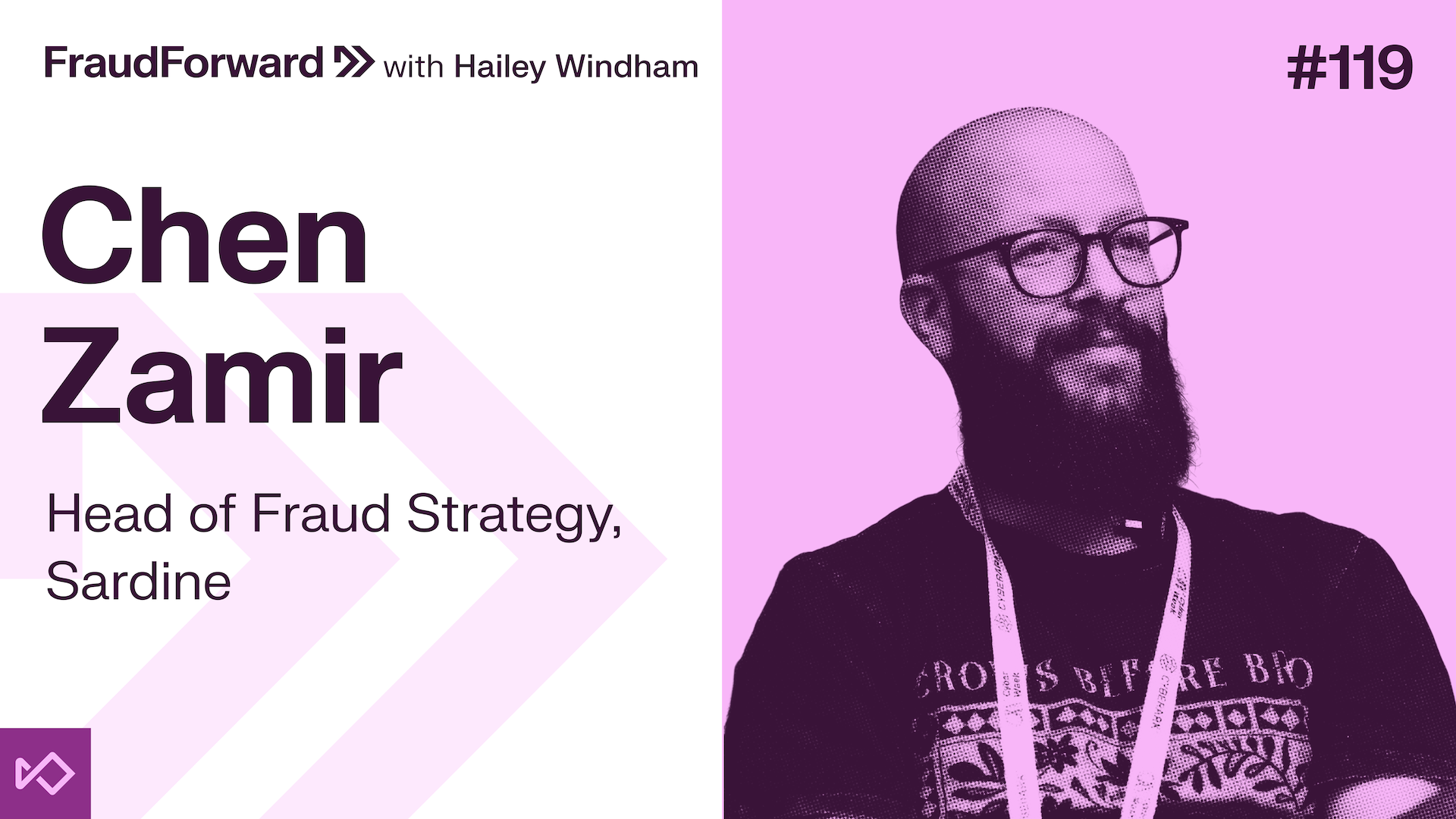
How is a teller supposed to prevent fraud when the first thing you're expected to do is ask whether a customer wants to open a new credit card?
How are they supposed to notice when someone is scared, distracted, or being coached? When that clock, it's already running.
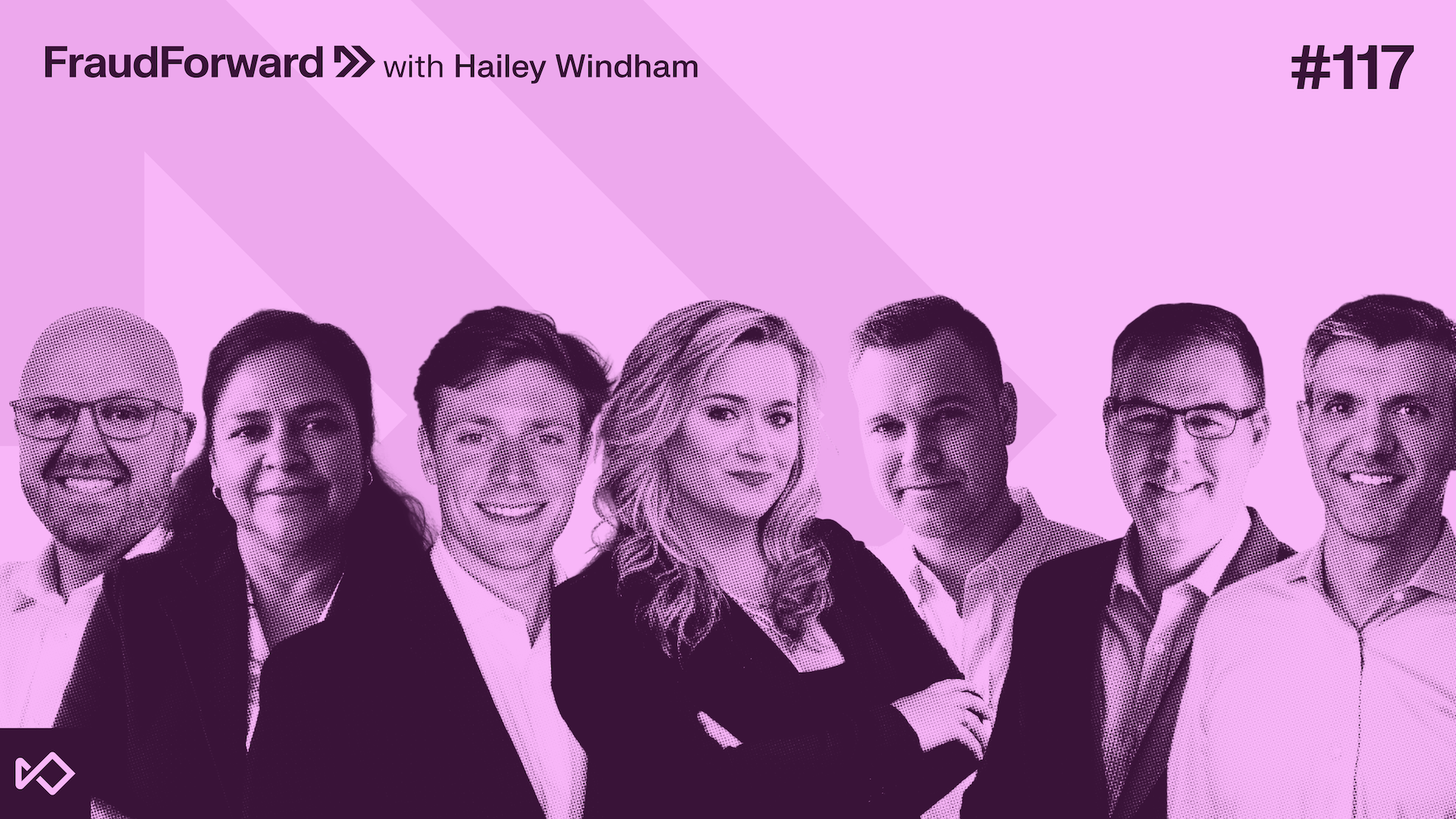
What's up, fraudsters? This episode, uh, started with a can of hairspray. Jen and I were getting ready for a networking event and while I was curling my hair, uh, she looked at the hairspray can and said it reminded her of the can of starch her mother used every morning when she was getting ready for work as a teller. That comment, and many others that we have, you know, took us somewhere that neither of us really expected. We started talking about a time when someone could become a teller, build an entire career at a bank, know generations of families, and be proud to stay in that role. Being a teller wasn't simply a stepping stone into something more important. The teller was important. Today, we still call tellers our first line of defense, but we've also loaded that line with sales goals, referral quotas, transaction time expectations, lobby metrics, compliance responsibilities, and pressure to keep people moving. Meanwhile, fraud has become more human than ever. Scammers aren't just stealing credentials, they're manipulating customers into moving the money themselves. So, today, Jen and I are asking a difficult question. Have we made it harder for the people closest to our customers to actually see them? Jen, let's start with that can of hairspray.
So, obviously we love to get ready for network events together. Because it's also our time to just kind of chitchat. Um, but I'd love it if you could, you know, start back with the story. Tell me about your mom and the can of starch. Like what did her routine say about how she viewed her job?
Prepping for this conversation had me going down a rabbit hole of of my history. Which was a lot of fun. And very nostalgic. So, I I just, I can remember seeing that can of hairspray sitting on the counter. And it immediately reminded me of what my mom's can of starch looked like. And it it took me down this thought process of what what was her routine every morning getting ready for her her teller job at at the bank. And she worked at a couple of different banks um throughout my childhood. She would wake up, her outfits were always picked out the night before. They were always matching. And you know, this was my memories go back to like, let's just put put into context, like the '90s. And you know, I can remember her purple dress with her purple and orange jacket. And she had the purple pumps. And she had this wall of earrings. And she would always match her earrings to her outfit. And, you know, there was always nylons. And, you know, her outfits were always perfectly starched. And then she spent an hour on hair and makeup. She would always sit at the kitchen counter with her makeup mirror. And I'll I'll never forget this. And she'll probably kill me for sharing this, but she would always meticulously separate her eyelashes. When she would put on her mascara. So when I think about that, I think about the pride that she took in the role that she had. And then, you know, advance a few years and when I started into my credit union career. You know, that was, it was fun to connect on that level. Um, and have conversations about what her bank job looked like, versus what my credit union, uh, role looked like. And it was, it was a fun connector for us.
I love that. So, do you think um you know was being a teller something she considered a a temporary position or was it a career that she took pride in?
She took pride in it. And it was definitely not temporary. Um, so I can remember her being offered roles in different areas of the bank. Like they wanted her to become a loan officer. She was really really good with people. So they wanted her to take different roles, and and do account openings, and and do loans. And um, she turned down a lot of, a lot of promotions. Which would have been a promotion for her, um, to stay in her teller role. I believe the title that she ended her career on was lead teller. And so, she loved being a teller. I can remember her coming home with, uh, certificates and awards for balancing. She always had, you know, perfect balancing, and sometimes that was really late at night. Because maybe it took a minute to find that offage, but she always she always found it. Um, and she took a lot of pride in in training the next generation. And it was it was kind of fun to think about that because there is a gentleman he is a VP at First Security Bank, and I will never forget. He was like in his early 20s, when my mom was probably in her late 20s early 30s, and my mom trained him as a teller. And to watch his career over the last 25 years, has been has been fun. And there's there's lots of those examples though, but it's definitely not temporary.
Yeah. No, we um we have a a a teller like that in in my hometown. And actually at the bank where I started. And she would she loved being the drive-through teller. And that's what she wanted to do. She didn't want to necessarily move up. And, you know, always have to, which she did, I believe, become like lead teller or like the second under where she's having to balance the ball, too. But she was like, you know, no, I I just like to be around the people. Um, and I think it's an interesting uh conversation. Again, it's one that you and I kind of we kind of had it in the hotel room and then uh we were like, we need to give this magic to the rest of the world. Um, but what do you think uh what did the tellers like like your mom know about their customers that wouldn't necessarily appear in a core system or CRM today?
Everything. Multiple generations, knew their kids. I I can remember my mom buying baby shower gifts for her customers. Just out of the kindness of her heart because, you know. Maybe even their parents. So, multiple generations, everything about everyone. Um, she she took a lot of time to know people. Um you know, and I can even remember her telling stories years later. And of course, she never she never would, um, say what financial institution it was, cuz she was very very big on security. But, um, I can remember her telling me, when I was in my probably early 20s, that she remembers, uh, Kurt Cobain coming into the bank when he was little. So we're from, we're from Grace Harbor in Washington State. Um which is the home of Nirvana. And she remembers his mom bringing him in when he was little.
Which is kind of a cool story.
Very cool story. Very cool story. Um, you know, and I think that it says something for a community, right? When the same person has served customers at that window. For for years and even decades, right? It's where truly, a a community can look and say, I know this is going to, I'm going to be taken care of. Or I know when I call the bank and I say, hey, I've got someone who is a new employee. They don't have an account, but I'm sending them with a check. If you can cash it for them, it's a payroll check. Like, we know that person. and we know that familiarity and it's something that you know can't really be established with a a new teller that comes in. And we're having this continuous rotation because of the new uh things that are expected of tellers. The other thing I I wanted to ask uh you know as we continue to dive into this is, do you think institutions have unintentionally devalued people who are happy and successful in those frontline roles?
You know, I don't know if it's, if it's the same across the board. I can't speak for every financial institution. But, um, the the credit unions that I've worked for. Um, they did transition the teller role into more of a member service experience. So, one person doing account openings, loans, teller work. You know, those sorts of things. And, I don't know if it devalued, or just you have so many things that you need to focus on. And sales being one of them. And you have goals to meet. And I don't know that that's necessarily a bad thing. But, it it always has led me to wonder if some of these scams that are successful today, would have been successful with my mom. Because my mom knew them. She knew their normal habits. You know, they trusted her. They had been going to her for years. Their children go to her. Their parents go, you know, went to her. Um, so it it's just always led me to wonder, if if it would have been different back then. And I'm I'm not sure the answer. But it's just something that's been on my mind for a long time because I believe that transition was sometime in like the 2010s. You know, it's probably been 10-15 years since the, since that that which, what I saw was that role transition.
Right. Yeah. We still use language that suggests that tellers are essential. We call them the eyes and ears of the institution. We call them the first line of defense. You and I know that firsthand how, you know, important the teller is. Um, but the way we measure their performance, right? Maybe telling them something that's very different. So I want to, uh you know, shift into, you know, from from relationships to to metrics, right? Um, you you mentioned that it was like early 2010s when that teller role began shifting from relationship focus service to sales and efficiency. Um, what are tellers commonly being measured on today?
You know, I I'm not sure across the board. But what I've seen is account openings, loans being opened and approved. Um, you know, I think that there there's some discussion about timing. You know, how much time, and I'm not sure if the, if it's still on the teller line or if it's more like contact center representatives. I know those those calls are a lot of times timed. And you need to move on to the next one. And they've got people waiting and lines out the door. Which again probably isn't much different than it was in my mom's, um, day. But, you know, I think the focus was just a little bit different. Where you had a little bit more flexibility to spend some more time with people. Um, and really, and really know them.
Yeah, so true. Um, I think the individual, or individually those goals. Like the the transaction, the speed, the referrals, the accuracy, service, compliance and fraud prevention. You know, it sounds reasonable. If if we look at those items individually. But all stacked together, they really do kind of create almost, like an anxiety. Whenever the, a customer comes up. You know, I can remember when I first got on the teller line, before there were any type of goals. And that wasn't that long ago. It was like 12 years ago that I was a teller, for a short while. Um, but while I was there, I didn't necessarily have any goals. Uh, as far as like sales and things like that. So, I can remember being really excited. Anytime somebody came in. Because I hated sitting idly, you know. And so if a new person walked in, with a face. Hey, please come talk to me. Hi, my name’s Hailey. I'm open. Come, come to this window, please. I would love to count your money. Do whatever you want me to do. Hello, come to me. Um, but you know, now when I walk in. You can see that reserved of, please don't make eye contact with me. Don't come to my window. Or, you know, whenever you get there, it's like okay, what can I help you with? Oh, let me tell you about this thing. Let me tell you about this thing. And it's like, are you seeing me or am I just a number anymore? And I kind of feel like that's what happens when all of that is is really stacked together. You know, what do what do you think about that?
Uh I completely agree. You know, I was as you were talking about your experience on the teller line. Uh, when I first started in fraud, my my role was only part-time. So I worked part-time in the call center, for I think five or six months. By the way, I have the utmost respect for call center reps. That that job is very hard. I've never been a teller, so I can't I can't speak to that role. I'm sure there's some similarities as far as um difficulty. Um, but the contact center rep, um has my utmost, um admiration. Because that is a very difficult job. But I can remember the conversation, the leadership conversations, when I was a call center rep. Were a lot about uh initiatives. You know, I remember having a home equity line of credit initiative. And there were, you know, there were contests to see who could, who could cross-sell the many the most helocks. And, you know, how many credit cards you opened. And it was all tracked and, you know. So yes, there was a focus on on member service. Of course, that's the the the primary driver in a call center is member service. But the service was typically that, you know, sales type service. So, you know, I can remember being, you know, kind of like anxious when I would get that member on the phone who you could tell just wanted to talk. Because in the back of my mind, I'm thinking, I have goals to meet. I need to cross-sell, you know, home equity lines of credit and credit cards. And, you know, do all of these things. And I've got this gentleman on the phone who, um, has just now told me a 27 minute story about his 27 different grandchildren. And as much, as personally I would have loved to have just stayed on the phone and and talked to him all day. You know, there there was, there was a focus. And, you know, trying trying to move on. So, you know, I think it does, um, it does make things a little more complex. That's for sure.
It it so does. It it almost feels like we are, um, measuring, um, the the easiest things to count. Versus the behaviors we say we value. Um, you know, looking at teller performance, even call center rep performance. Um, if if we would look at it as a relationship quality and fraud intervention. Um and treat those as real outcomes versus the the numbers and the easy metrics. I think we would see a real difference. You know, you just mentioned that one um call scenario, and I I had another one kind of prepared for like a a branch situation. But it's where that longtime customer enters the branch to send an unusual wire. She is distracted, keeps looking at her phone, and insists that the transaction is urgent. The teller has a line forming, a referral goal to meet, and a manager monitoring transaction times. Or maybe even the manager's out to lunch. You know, that's always been a thing, too. What is the teller prioritizing? It's almost like, okay, I have to get this thing done. Because I've got this long line that's forming, because it's lunch. Someone's out. I don't really know, you know, where my authority is. You know, what do what do you think happens in that situation? I mean, I know that you have, uh, when you were a practitioner, you were using your quarterly times to train um tellers, on on this side type of situation. Um, but what what are you hear, what were you hearing from tellers in these types of situations? Like what did they think was the right thing to do? And where did you have to tell them, hey, this is where we could do better next time?
Oh gosh, I love that question. Because this specific scenario was something we talked about. So, I think in the beginning, before we kind of broke down some of the silos and started collaborating a little bit better. I think that the, the thought process was just take the information. Get it down on the wire form. And send it to the wire desk. And maybe the wire desk will look at it, evaluate it, decide if there's red flags. And then the wire desk is going to call the member anyway to verify some information before. Because, you know, there's, um, some not necessarily dual control. But like checks and balances. Wire form comes in from the front line. Wire desk gets it. Wire desk has some things that they need to do to validate it before the wire gets sent out through the Fed. So, I think that there was this assumption that, I'm just going to go ahead and take this information, even if there's some maybe a bad feeling or red flags, somebody else is going to be validating this anyway. I'm just going to get it to where it needs to be. So, we had that conversation. It was like, wait, hold on. I'm fine with you taking down that information. But please, before you send it on to the wire desk, raise the red flag. Hey, I got this information. But I don't have a good feeling about it, and here's why. Don't let that wire form get sent to the wire desk. And assume that somebody else will know that you had that bad feeling. Or will will catch those red flags. Let's work together on this, before that wire form gets to the desk. Because the minute that wire form gets to the desk, there's that possibility that that wire goes out without, something happening. You're relying on too many things to occur perfectly. For wire fraud to be stopped. And let's not let's not do that. Cuz that's a that's a huge risk. So yeah, I think making sure that everybody who touches a wire, understands their role, the process, and where that process needs to be paused, for that that additional um security check.
I love that. It's like sometimes we may prioritize just hurry up and getting the line cleared. Um, but we do still have a a job ultimately. And it is to protect the financial security of our our members, and our customers. Um, I think that that conflict matters. Because modern scams don't always look like unauthorized access, right? Sometimes the legitimate customer is standing directly in front of us. Asking us to to help them complete a transaction. Um, so I I wanted to, as I was thinking about this conversation,. Um, there was a, another scenario that happened. And it did have to do with wires. And I kind of put it in the newsletter. Hint hint, wink wink. Please subscribe, uh, to the Monday Fraud Fix. Um, but uh I wanted to tie it back in here. So our legal framework frequently treats two identical, nearly identical, acts of deception differently. If a customer gives up credentials, and the criminal initiates the payment, we generally call it unauthorized fraud. If a criminal manipulates the customer into initiating the payment, we generally call it an authorized scam. The criminal's objective is the same. The deception may be equally sophisticated. The loss is equally real, yet the outcome often depends on whose finger pressed the button. Um, so Jen, what does the term authorized fail to capture about a scam victim's state of mind?
That's very, very difficult. And probably one of the bigger challenges in my career in handling, um, this specific scenario. Is what was the frame of mind when that when that individual initiated that payment? You know, did they initiate it? Yeah. They asked us to wire money from point A to point B. And that's what we did. We did what they asked. But what was happening on the other side. And that's what makes it that that challenging. And that much more devastating. Because as practitioners, we're there to ask questions, investigate the analytics. You know, you're looking at a lot of data points, IP addresses, you know, maybe biometric analysis. Where did the OTP go? You know, what phone number did this come from? Whose voice was it? You know, all of these different data points. But how can we really know what was happening on the other end? Um, you know, our our members are coached to lie to us. They're coached to not believe us. They're coached to think that we are actually the the the suspect instead of the support. Um, so no situation is ever going to be the same. Every scenario that I, every wire fraud case that I've ever worked looked a little bit different. No two cases were ever alike. So it's almost impossible to even answer that question. Other than, I always joke that every answer in this industry is it depends. Because there are so many factors that every fraud situation depends on.
Yeah. So true. It's almost like, the coercion behind it, right? When we when we think about a transaction, you know. Fraud happens, which can be, you know, if I think of unauthorized for us in in, like our current world. Obviously it is, I had nothing to do with the transaction either, right? If if I didn't do it. But obviously, we're giving up credentials. And someone else hits the button. Then we're like, oh yeah. Well, they didn't do it. But they did give access. Just like you give someone a debit card. And they have your pin number.
What's going to happen there? If we, you know, you gave them access. And so there's that issue. But then it's also, we are. And I'm kind of like going through this in my mind. And I'm like, maybe this is right, maybe this isn't. But that's why it's a podcast. And we can have this open debate. Um, or conversation. Where, you know, I'm thinking about a debit card transaction. If I am scammed, and I buy something that I think is one thing but really it's another. The only coercion I had, was good marketing.
And, but no one told me to hit the button. No one told me that I needed to buy this thing. That was at a too good of a deal, price that I wanted. And yeah, we can file a dispute that it wasn't the right thing, and maybe it comes back, maybe not. Um, and the same thing with, you know, going to purchase something from someone. And sending them the money ahead of time, and then me not getting it. Obviously, we'll have to go through civil claims court to get that settled, right? But when we're thinking about the bank, and our like as a customer. Hey, I'm coming in because I was told that if I didn't, I'm going to lose all my money. And what are we doing to prevent that? Why are we not automatically saying, hey, you're trying to take out 80% of your savings that you've had with us for 30 years. Why do you want to do this now? Maybe the one transaction goes through that is 40% of your savings. But then the second day you're coming in, like we have to be asking questions. We can't just be working on the efficiency model of no friction, making sure that our customers are happy, no arguing, it's their money, let them get it. Yeah, it is their money. And I'm I'm all for that. However, there are states that have things in place that we can help. We can put a hold. And we can tell them this is why we're holding it. If you're going to get mad and upset, then I'm sorry. Maybe you do want to move your business. But at the same time, you need to understand this is where we're coming from. And I don't think, I was having a conversation with Erin West the other day about this. And I said, you know, and she was mentioning that, you know, the telco and the social media. Like they have a big part in all of this, that that we are still trying to blame the banks on. But I think, that truly if we consistently had the same rules across every financial institution, the difference that would make. Like obviously your kids are going to get away with more at grandma's house. Because grandma doesn't have the same rules. But if grandma followed the same rules that mom and dad set, the child wouldn't be a monkey over there. And would act like they had some sense, you know.
So, this is just my little thought process. But I mean, I'd love to know what your thoughts are.
I I love that. And I've actually put a lot of thought into that lately. I was actually just, I can't remember who I was having this conversation with. But it was maybe three or four days ago. Um, which is kind of concerning that I don't remember who it was with, and it was only a few days ago. But yeah, I talk a lot. You know, we talk about having some sort of indemnity form for cash withdrawals. If that was standard across the industry. That anything over 2,000, 5,000, even, you know, 7 8,000, whatever it is. If we had a form. And it's not about the indemnity of it. It's about the list of questions that are being asked. Would it solve every case? No. I, you know, as you were talking, I was thinking about these specific scenario that had happened, um quite a few years ago. Where our members had come in. And withdrawn a large amount of cash. And our front line did a phenomenal job. They asked detailed questions, sat them in an office, had conversations. These individuals were so manipulated by the scammers. They had the full story. They were going on their 40th or 50th anniversary road trip. And they were going to hit these states. And they were going to do the, I mean they had it was mapped out like you were reading a book. And it was, they were so convinced themselves. That their story was so convincing to the credit union. That we handed the money out to them. Because it was their money. And they had a perfectly reasonable explanation as to why they needed this this money. And I want to say, they withdrew on two separate occasions, within a short period of time. It was a large amount of money. Um, and it was a scam. But if we would have, you know, had a a standard form. Then nobody feels like they're being picked on. I think a lot of times when we sit down with somebody. And we have these conversations. They feel like they're being targeted. Um, it it disrupts, you know, a little bit of ego. Like you don't think I'm smart. You don't think I would know that I'm being scammed. It has nothing to do with that. We know that the scammers are manipulative. But that's not how the member takes it. They take it as, we're questioning their integrity. We're questioning their, you know, truthfulness. All of these factors play into, unfortunately, lies and deception. And almost a defensiveness. Like how dare you ask me what I'm doing with my money. It's my money. Stay out of my business. But if it was standard across the industry, at a certain dollar amount. And maybe the dollar amounts would change, and the scam would continue. I'm not sure. You know, the, this, the fraudsters always find a way around our our parameters. But even if we had a standard procedure and it helped 1% 10% of victims, I think it would be worth it. And then it was standard across the industry. If you withdraw cash, you're getting, or at a certain amount, you're getting sat down. You're having these questions, and you need to sign this form, that none of these things apply to this situation. Again, you know, I I know those forms don't hold up in court, and that's fine. It's not necessarily about a court battle. It's about awareness, and I think the consistency part of it would be would be beneficial.
I love that. And I love that you mentioned, uh you know, it's not, it, this isn't about a court battle. That that we're not here to talk about the liability aspect, right? But we are here to talk about, what could we do differently. Um, you know, I've got like a list of questions here in front of me. But I'm gonna like combine several of them together. Because I think that it will work better based on just the way that the conversation's flowing. You talked about, uh, you know, that that person being right there in front of the teller. Looking to to move money, right? And and wondering what that looks like. Uh, before the money moves. And, you know, if I put myself back in that situation. And it's me telling someone who has been at the bank for a long time. And they've known me. And I go, I don't feel comfortable with this. And they're like, well, it is my money. And I can see where you will have that opportunity, or those situations, where the the customer could become belligerent. They could. And and we've seen it. Because they're acting out of urgency. Based on what they've been told, the lies they've been fed. But on the other side of things, right, how does it affect the the customer's trust in an institution? When we've allowed the money to go. When we didn't push back enough, that the money still went out. When we didn't escalate it to the higherups. Um, because for me as a teller, I would feel like I could have done more if someone lost it. That guilt would just eat me up. But as an institution, we do need to try to look at what more could be done. And so when I'm thinking about, you know, again, uh even if an institution isn't legally responsible for the loss, right. Does it have the opportunity to examine whether an intervention was was possible? Um, and how could we, or how can institutions review those, like, denied scam claims? Or just scam losses that were member or customer losses, without turning that review into like an automatic liability discussion? What are your thoughts there?
Um, you know, I've talked a lot about this in the last year. So I feel like it might be a little redundant. But maybe there's somebody that hasn't heard me talk about this. But I think it's really important. Um, you know, especially as you're talking to, you know, within your institution and to your executive leadership, to talk about the difference between an institution loss and a member loss.
They're two very very different things, just like you said. You know, maybe you're not, you're not reimbursing somebody. But money has been lost. And I think that that that needs to be analyzed and those conversations need to be had. Out outside of the the context of liability. As an institution, deposits are important for a multitude of reasons. And if a member loses money, that's funds on deposit at your institution that no longer exist. And that does have a domino effect in your business model, somehow. Um, my area of expertise is fraud. So, could I explain what the uh effects of that? No. But I know that it does. Because I hear it from executives all the time. We need to open accounts. We need deposits on account. You know, we need to grow our deposits. There's this context around growing deposits. Every dollar lost from a scam, affects the institution.No matter if it is a member loss, or a an institution loss. Um, so I think that tracking, number one, is is super important. That you're tracking those those scams. Um, even if you're not reimbursing them. And having conversations around what what happened. If you take all the numbers out of it, and you focus on the story, and the humanity behind these these situations. I think it also provides powerful context. And and I know, and again I I know I've talked about this before, but you know, somebody who's lost $1,500, I've I've had to call 911. And and have them checked on. Because I thought that they were going to harm themselves. And I had a member lose 150,000. And she didn't bat an eyelash. It's it's a matter of of of where are you at in life? What is your vulnerability? What is your financial situation? And no matter what though, there's a humanity behind it. Every loss matters. It means something. And what are those funds going to? I I think we need to kind of almost, step away from the numbers. And and talk more about the stories. And then really understand the flow of funds in, um, in the economy. What are those funds going to? And I can tell you it's not good.
No. Yeah, totally agree. [Ad Break (30:32): Finally. I'm so happy to share with you all that the Saturday Fraud Strategist is now a podcast. What? Yeah. On top of my weekly newsletter, you could now listen to, and watch, me talk about my, and hopefully your, favorite topic, fraud strategy. And from time to time, I'll be hosting operators and founders to discuss where the industry is headed and what we fraud fighters should pay attention to. I must say, I'm super excited and if I'm being honest, a bit nervous about all of this. I've been debating with myself whether to start a podcast for ages, but kept putting it off. But now this teaser is out. So I guess there's no turning back. So if you want to join me for the ride, head over to Sardine's website and subscribe now. Are you ready? Am I ready? We'll find out next Saturday.]
And which brings me to my next point. Like if an organization, it were to pull like their last 20, either denied scam claims, or uh member loss uh scenarios. What could those claims teach an institution about its frontline controls?
Oh, I think it could teach a lot. Number one, you would want to break down where where the breakdown in controls occurred. And whether it was a breakdown in your own controls, or a situation with the member. I think you can learn something from each one of those scenarios. Do we know our members? So, we talk a lot about know your member in the in the, um, in the context of compliance. But really know your member, know your customer is key to the this this and really where this entire conversation started. Is my mom knowing multiple generations of people. Knowing their understanding their finances, helping them balance their checkbooks, understanding their retirement plan, understanding what their goals in life were. What their, you know, needs were. You know, were they going to be buying a car soon? Their kid going to turn 16 soon and going to need a car? You know, even though her her job was not loans, she knew their needs and could, you know, escort them over to a loan officer if they needed it. And I think if we really focus on, that know your member. Understand, and again that's going to be difficult, because I I don't, from what I've seen in the last 10 years, I feel like the turnover rate on the front line is a little bit higher than it it was 15, you know 10 15 years ago.
Yeah. And you know, I'm sure that there's that's a whole podcast in itself. But, uh you know, that that's going to be one of the challenges that we face. Is higher turnover rates, uh, on the front line are going to make it more difficult for people to know their members. Because they're not in a position long enough to have, you know, multiple generations of of members, you know, come to them. So, I know I kind of squirreled off a little bit there for a second. But, you know, I do feel like, that we have a lot of challenges ahead of us. But if we were to take each one of those losses. And really break down what happened, where it happened, and why it happened, I do think we could learn a lot from it. Um, the the hard part is, I always say you have to slow down sometimes to speed up. Um, but a lot of times, especially in the credit union world, you don't have time to slow down.
Yeah, we don't have time to slow down. But we need to, uh, to take the opportunity to understand. You know, what payments rails were were used. Was there an opportunity for escalation that we didn't take? Uh, was there a a conversation that could have been had that wasn't? And this isn't something to use necessarily as as derogatory marks on a report card, for for an employee. But as a lessons learned for an institution. Um, the other thing, uh you know, that I just want to mention before we move into the next segment. Which is, you know, this isn't necessarily an argument about who should absorb every loss. But it's an argument for understanding what happened before we reduce the entire event to just a transaction code and the person who pressed send. Um, so one thing that you began to touch on that I'm really excited about. Is, uh, making sure that we understand that the teller is our human fraud control, right? Um, and the call center rep for that matter. But specifically today, we are talking about the the tellers. Um, so we're going to talk about, you know, what tellers need in order to recognize and interrupt modern scams. So, um, you know, Jen, what can an experienced teller notice that a transaction monitoring rule may never capture?
Oh my gosh, I feel like that list is so long. We see a lot of people walking in with AirPods, earbuds, cell phones out. Um, I think monitoring just with a quick glance to see how is somebody behaving. Are they on the phone? Do does it look like they're talking to themselves? Especially like, you wouldn't be able to tell if I had AirPods in right now. Because my hair is long. And it goes over my ears. But am I standing in line saying something? And I'm just, am I talking into my into my AirPods, and you just can't see the AirPods? So, I think visual representation is really important. What is somebody's behavior? What is their, um you know, are they standing up straight? Do they look nervous? Are they you know, flubbing their words? Um, do they seem scared, or intimidated, or like vague? You know, when you ask somebody the purpose of a wire. If I was going to send a wire to purchase something, but people are going to tell you, you know. I'm wiring these funds to purchase a car, you know. This is what I'm buying. This is who I'm buying it from. What I have seen is a lot of times, when somebody is wiring funds. And it is, they're involved in a scam, they use a very vague remodel, business reasons, business purpose. I think anytime somebody answers you vaguely. That should cause the hair on your neck to stand up, just a little bit. You know, just like with anything, is it a, you know, that smoking gun? Probably not. But could it be a red flag to say, okay, I need to pay a little bit closer attention to this. Or maybe I need to, you know, pause for a second. And and create a little bit of friction in this transaction before we allow these funds to go out the door. Um, so I think that there's so much power in human interaction. Uh because no no AI model, no transaction monitoring, um, is ever going to catch somebody somebody's nerves, somebody's demeanor. You know, especially if you're a more experienced teller that has been on the line for a little while. And you do know that person. You know how they they normally behave. You know their normal activity. You know, they come in on Fridays and deposit their paychecks. And maybe get a couple hundred cash. You're going to know when something is outside the normal. Transaction monitoring is going to know it. But probably after the fact. Sometimes real time. But commonly after the fact.
That uh, you know, there's a scenario that plays in my head for like the the teller that's been there forever. You know, if my grandfather were to walk into a branch and say, hey, I need to wire money to my granddaughter who's, you know, looking to buy a car. They're going to say, oh, Hailey's looking for a car? And he'll be like, oh, oh. You know. And you know, that's just a conversation that. Like clearly, it wasn't going to go addressed to Hailey. It was going to go addressed to someone else. And so, you know, that's where I think that a lot of times too, these tenure tellers who've been there forever. Who knows the community. Who know the people. Because honestly, the people that come into the branches, they they want that personal interaction. Because I'm guilty of not wanting that personal interaction. I I will go to, you know, the the pay at the pump. And I will circle around until I don't have to go into the gas station, you know. Um, but there are those who do enjoy that that uh conversation. And knowing that when they walk in, you know. There were a few customers who would wait in line until I was available. Because they wanted to to talk to me. And I mean, those always made me feel the best. I was like, I am someone's favorite. I loved us. Best day ever. Um, yeah, but it doesn't it didn't always happen. Sometimes there was another one. They were like, I I'll wait on her. And I'm like, oh man, that is a stab in the heart, but okay, I understand. That's your that's your person. I get it. Um, and when we don't have that, we lose that aspect of someone who truly knows and understands what the customer has is normal, right? That that again, like you mentioned, that knowing the customer's, uh you know, behavior. Um, or knowing them in in reality. Um, so my my next point is, you know. Should tellers then be encouraged to slow down a transaction. When something feels wrong. Even if they cannot immediately articulate, you know, why it feels wrong.
I think it not only should be in, uh, allowed. It should be encouraged and celebrated. Yeah, you know, I I and and you know, maybe that's a a good thing. To kind of double click on, Hailey. Is, what are we doing to incentivize the scam prevention? Are we doing enough to celebrate when a scam is detected and deterred? You know, and I and I think about my own role. I feel like I could have done a better job on that. We talked a lot about it. And we, you know, had a lot of, um, trainings and conversations. And, um you know, kudos and things like that. But it almost feels like somebody preventing funds from from being wrapped up in a scam, should be like shouted from the rooftops. And there should be, you know, a newsletter that goes out. And there should be prizes and, you know, just do more to celebrate that. To really encourage those. That that friction that, you know, I think we we say the word friction. And I think to you and I that's now an endeared endearing term. Because we know that that friction saves people. But I think the term friction has been used so negatively in the last, you know, how many ever years. Because friction means slower. It means maybe a a legitimate transaction got declined. Which we all know can really upset people. So I think that, you know, we've used that term negatively for so long that we almost need to, you know, kind of continue to flip the script on it. And say, you know, what well friction, according to Miss Karen Boyer, is the new member service. So, um you know, I think we need to keep in mind that sometimes saying no is really um is really beneficial. Even when it feels like you're doing something negative for somebody.
Yeah. No. Completely agree. I was going to make sure I quoted, uh, Karen just there. Where fraud prevention is the new customer service. And, uh, fraud is the new friction. So, uh, yes completely agree. Um, the other thing is obviously making sure that. Um, oh I was going to call out. Yeah, if you do want to feature a fraud fighter, there is another newsletter that I mentioned earlier. The Monday Fraud Fix, where I do call out, um, and feature fraud fighters who've done amazing things. So, if you have anyone. Please feel free to, um, send that to me in an email. Or do a comment. And I'll reach out to you. Or a LinkedIn message. Um, so yeah, completely agree. They should be um encouraged. And celebrated to slow down these transactions. Um, and you know, it brings the the point to of, how can managers support a teller who who made a good faith decision. That that creates a, you know, a longer uh time frame. And and maybe, uh you know, a longer wait and an upset customer. What what can managers do to to support that that that teller?
So, I, you know, what I've seen in the industry is, uh you know, maybe comp time, PTO time. What what is that, what are their favorite, you know, do they have a favorite coffee? You know, something just like you. With your Scooby Snacks program. Which I thought was brilliant, by the way. Um, you know, something that lets people know that, not only is is what you're doing the right thing, it's valued. And and we appreciate it. And it actually does serve humanity in such a positive way. You know, I, as we're talking, all, like I feel like a million things are going through my brain. You know, times that I've failed. And, um, I will never forget the $35,000 wire that I sent out. Knowing it was fraud. But before I realized I didn't have to. This was pretty early in my career. And this woman advanced 25, she had $10,000 in her checking account. She advanced 25,000 off of a credit card. And she was going to wire these funds. And I talked to her for a long time. And she was very adamant about sending the wire. And I was very adamant about not sending the wire. And ultimately I sent the wire. And the next day she called me. And she said, you were right. And I said, I didn't want to be right. And it was that $35,000 wire that changed everything moving forward. Um, I was not reprimanded for that. Because I was doing what the member had asked me to do. And she had authorized it. There was no identity theft. It was her, you know, all of the things. But I will never forget my my leader, in the most kind, and understanding way, saying, wires are a service we provide. And they are a service we can deny. If we don't feel like it's a legitimate situation. You absolutely have the authority. So, I think that clarifying authority is really important. What does our membership and account agreement say we have to do? Versus what we have some authority to say no to? You never want to deny a transaction that somebody wants to do, but maybe it's in their best interest. So, I think understanding your own parameters are are really important. You know, just understanding the parameters of your institution. Every membership and account agreement looks a little bit differently. And, um, you know, knowing knowing what you, what you have the authority to approve, and and not approve is is really is really valuable.
So true. So true. Yeah. So I love that. I love the consistency that we want to have. And I think that the call out here is, get your pens ready. This is the phrase that you need to keep in your pocket. Keep it in a post-it note on your computer. We will not knowingly participate in fraudulent activity and your transaction is following a pattern of recognized fraudulent or scam behavior, and we will not facilitate this transaction. And if they want their money out in cash, then okay. But you did what you could. And that's all we can do at this at this point in time.
And understand your state parameters. What what does your state allow you to do? To try to help somebody. Every state's going to look a little bit different. Know your, know your RCWs that protect you.
So true. So true. Okay. So, we're going to, uh, round this out. And obviously talk about rebuilding the role. So, obviously moving from, you know, critiquing how it's currently setting set up. And moving to like a actionable recommendations. You know, I love insights. Um, and and things that, those practical insights, and things that we can do tomorrow. You know, if you could redesign the teller role, around both service and fraud prevention, what would you change first?
I think I would really evaluate what goals are set for each individual. And make sure there is a, there's capacity for building relationships. The know your member experience. Making sure that that there's capacity for that. And that the the goals are attainable. I think it's really really important that that the goals set have, that that that individual has the capacity to also build those relationships out. That's the first thing that I would, not necessarily change. Because every institution, maybe some institutions, already do this. But that I would evaluate, to ensure. Um, and that I would be having conversations with individuals. To make sure that they understood the power of know your member.
What expectations, or metrics, need to be reconsidered, do you think? Or, um, betterly asked, you know. Should a prevented scam count as strongly as a product referral or fast transaction time?
100%. I think even more so. Um, it's going to be difficult. Because not everybody's going to have that opportunity to prevent a scam. But I do think that it should be evaluated somehow. And and definitely celebrated.
So true. Um, now obviously we're talking about the the career teller. That was the whole premise of this conversation. Um, you know, so I'm I want to just kind of talk through, you know, rather quickly. Um, you know, what or how could institutions create a legitimate career path for people who want to remain customer facing? And then like, what would a senior or master teller role look like? Like should these people have, um, or these experienced tellers, receive like specialized fraud training? An additional authority versus, you know, obviously the the newbie teller coming in on the line.
Yeah, I think that would be a really valuable, um, path. Is having your newer tellers, your more experienced tellers. And then your senior, kind of lead tellers. And the, you know, I think I think about my mom's role. I I know she was always training new new staff. Um I, you know, I think the focus on training, to new people. So, what I'm seeing, a lot of in the industry, is a lot of individuals coming from customer customer service positions. Like baristas, Starbucks, you know, fast food. And they're coming on to the teller line, with little to no experience. They're getting trained, and I'm not trying to knock anybody's training program. Um, but I almost think a mentor, or a lead teller, for a significant amount of time, for a new person. Would be really, really beneficial. And again, some some individuals might be doing that, maybe not, not not sure. Um, but I do think that there would be value in that, making making that almost like a dual role for a little while. Having a a new teller with a more experienced seasoned teller, for a significant amount of time, to really help them. Um, understand the role and the importance that fraud prevention plays in the role.
So true. I think some of the other things that we were mentioning before. Um, you know, obviously review the teller scorecards for like conflicting expectations. Um, you know, these are just like those practical recommendations that we were thinking too, that the institution can do now. Um, obviously, uh, remove the sales prompts from suspicious, or high-risk transactions. Um, give tellers the permission to slow down, without being penalized. Create a direct escalation path to the fraud team. I think that's a big one that a lot of fraud teams miss a little bit. Um, where truly, like I get that you're inundated. However, there needs to be a moment where they can press the red button. And someone's going to answer.
I have heard of a lot of, um, a lot of fraud teams having, uh, ticketing systems to contact them. And although I think there's value in that, um, I think there needs to be like you said, press the red button. And you get somebody, um, from fraud. Scams are immediate. Wires are really immediate. Um, and those losses are are again impacting humans. Um, so I think it's really important that they have a fasttrack way to talk to somebody on a fraud team.
So true. Um, you know, train around customer behavior not only transaction typologies.
Uh, this one, uh, I had uh put on the list. And it was one I always wanted to do. And just, you know, unfortunately I was out of the credit union before I could. But it was, um, conduct roleplay exercises. You know, involving coached customers. You know, the the grocery stores have those mystery shoppers. Why can't we do something like that? And I know that we have mystery customers who just do like random transactions, but what if we gave them a fraud scenario. That was fake. And we wanted to see how well we could do, or not do. Um, I think that'd be really cool. Um, you know, share intervention outcomes with frontline employees. You mentioned the newsletter. It's something that I enacted at my credit union. Obviously shouting out, hey, this is what worked. This was really good. Um, recognizing those prevented losses and meaningful customer conversations. Uh, create that senior teller and frontline fraud specialist career paths. Fraud ambassadors is a really good thing to do. Um, and if you want a plan, reach out. I have one written and ready to go. Um, and then, you know, reviewed those denied scam claims for missed intervention opportunities. These are things that could have been done.
Yeah. Oh my gosh, I love that. So much. You know, as as we're having this conversation, I'm and and especially that seasoned, long-termed, frontline employee role. Uh, yeah, I can think back to the the women that my mom, it was primarily women. There were some men, but the my mom's core group of of friends at work were women. And I'm still connected to those women. You know, that I've known since I was five, six, seven years old, maybe even before. One was our neighbor. And my mom used to commute with her into work every day. I think they commuted for 10 years. You know, there was a one of them started a small business after she left banking. And my mom went to work as an accountant for her for years. Or accounting, uh, I think accounts payable for years. So these these women, in their almost 70s, are still connected today. That worked together in the bank when they were in their 20s. And I just, I don't know. I think that is, that is so cool. Uh, my sister came up. Uh, there was a news article in the local newspaper when we were kids. The bank had had this big holiday celebration. And here's all of us kids lined up. And I was going through that photo. And there were so many of us kids that ended up in banking careers. There was one that's, um, I want to say VP of marketing at an institution. I believe his dad was the president of the bank. And like, just so many people transitioned into some sort of, you know, finance or or or banking role beyond, um, beyond the bank holiday parties.
It's been, it's fun been fun to go down memory lane.
So true. Okay, final question for you, Jen. If your mom were beginning her teller career today. What would you want her institution to understand about the value that she brings?
Oh my gosh, I love that. I love that question. So, if she was starting her role today, what essentially, what value would she bring to that institution? Um, number one, she was, uh, an absolute people person. Very very outgoing, loved to connect with people. Um, she would be the ultimate know your customer, know your member, ambassador, advocate. Um, you would never have missing occupation on a CTR. Because she would not only know their occupation, she would know their kids' occupation and their parents' occupation. Um, and if that occupation changed on Tuesday, she would be aware of it by Wednesday. And I I just I feel like there's just so much value in that that desire to connect with people. Especially in this industry. Um, again, not just for compliance purposes, but for fraud prevention measures. Um, so uh that. I think she was an amazing leader, and advocate for new employees, and new people that were were coming up in the industry. I think she had a real desire to, um, help them. The way she had been helped by others, and you know, above her. Um, gosh, number one, I mean she was, she did have quite a few certificates for her perfect balancing skills. So her, uh, her balancing, her door balancing was on par. Um, yeah, I think that just the value of of her as an individual. Um, is is what you want in in any employee. But especially somebody that's member member facing.
So, so true. I you know, as we close this out, we cannot continue calling tellers our our first line of defense while measuring them like a checkout line. If we expect someone to recognize that a customer is frightened, being coached, or acting outside their normal behavior, we have to give them time to observe. We have to give them the training to understand what they're seeing. And most importantly, we have to give them permission to act on it. Because when the customer is the one pressing send, the teller may be the last person with an opportunity to interrupt the scam. And I think, you know, Jen, your perspective on the value that your mom would bring on the teller line today, shows every fraud leader, branch leader, and executive listening, that they need to reconsider the position of the teller role. And what exactly they they bring to the organization, the value that they bring. So, uh, you know, Jen, I just want to thank you again for for coming on to the podcast. Of course, to, you know, talk about our random ADHD conversations that went from a can of hairspray to to this podcast,
Entire childhood being raised in the banking industry.
Exactly. Exactly. So, fraud leaders listening. Uh, I want you to do two things this week. First, review your Teller scorecard. Look at every goal you have placed on your frontline employees. And ask whether those expectations make it easier, or harder for them to recognize fraud. Then pull your last 20 denied scam claims or member or customer losses. Don't begin with the question of liability. But ask whether there was a moment when someone could have seen the the customer, slowed the transaction down, or interrupted the deception. We inherited many of these systems, goals, and distinctions. But that doesn't mean that we have to stop questioning them. So for everyone out there, stay vigilant, stay informed, and keep moving fraud forward.
Thanks for listening to Fraud Forward. Remember, every conversation, every connection, and every insight moves our industry one step closer to stronger fraud defenses. If today's episode sparked an idea, share it with your team or tag me on LinkedIn. I love hearing how you're moving fraud forward in your own organization. Until next time, stay curious, stay resilient, keep moving fraud forward.