KYB
KYB
Clear, actionable insight into business risk
Assess businesses, map ownership, and monitor risk using real-time registry data, AI-powered due diligence, and unified workflows.













Turn KYB into a real-time decisions engine

Move beyond point-in-time checks
Continuously monitor business changes across ownership, registration, products, and risk exposure over time.

Understand business risk, not just business data
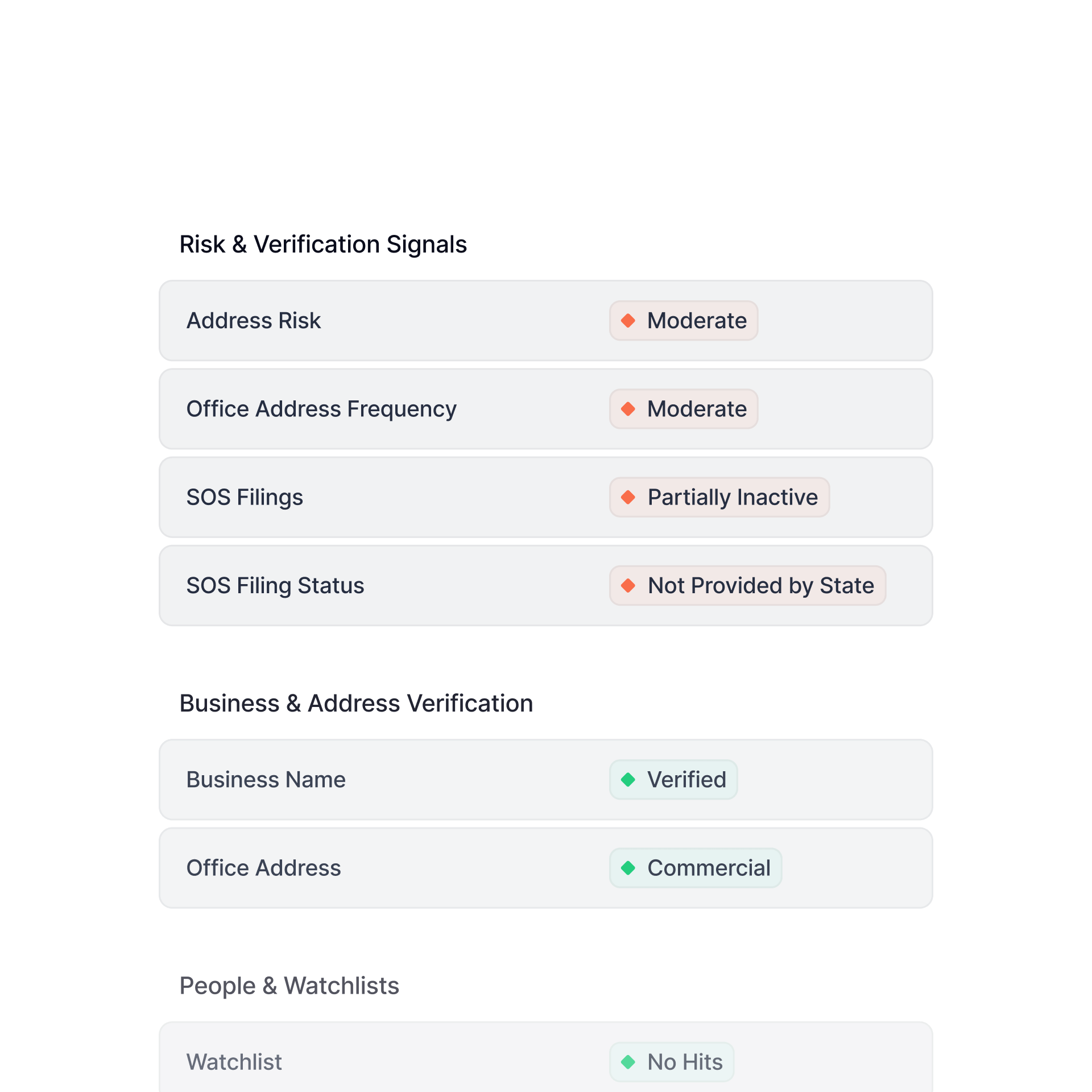
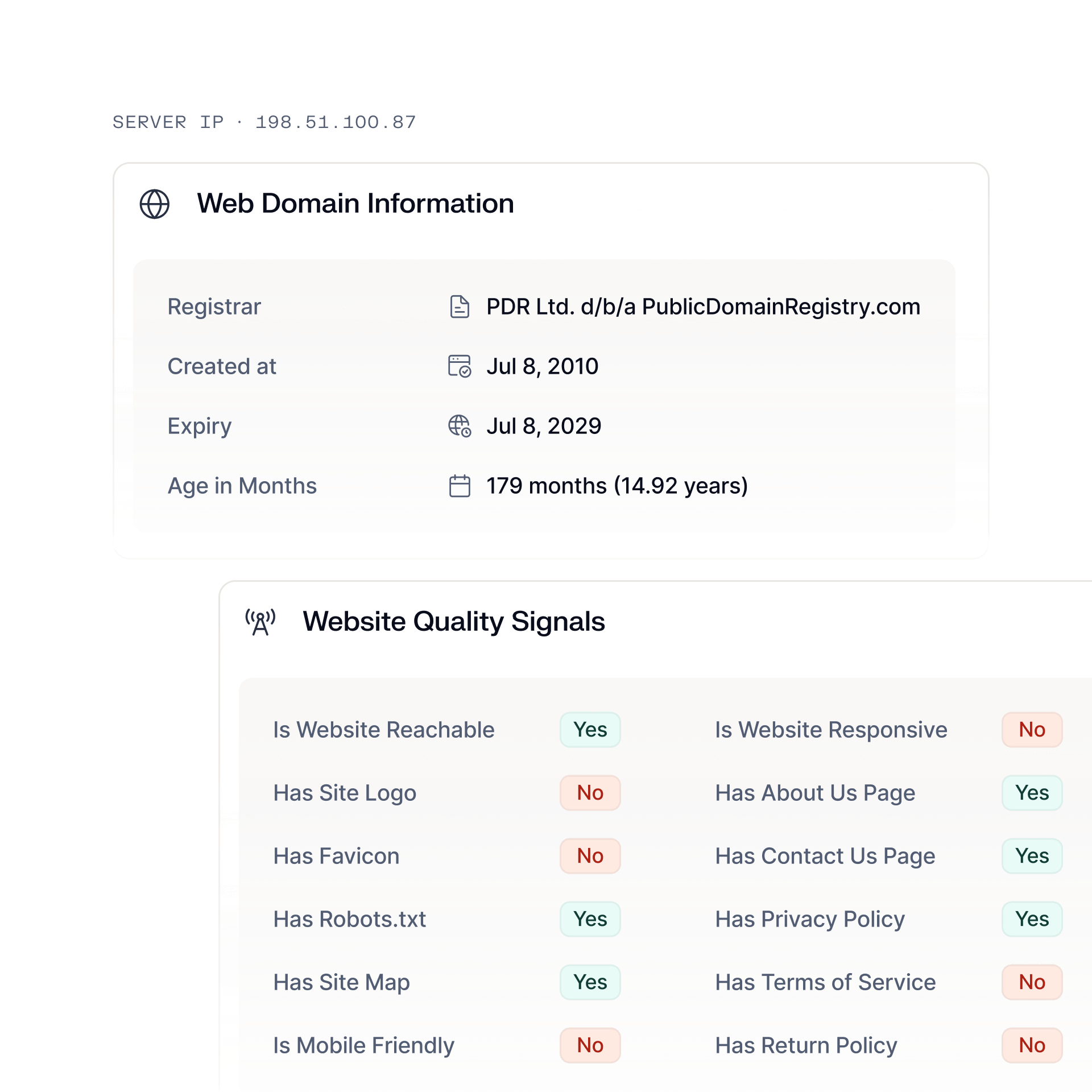
Translate registry filings, ownership, web presence, nature-of-business, and OSINT signals into actionable risk scores.
Scale KYB without scaling headcount
AI agents automate due diligence, missing-data resolution, and monitoring so teams focus on high-risk cases.
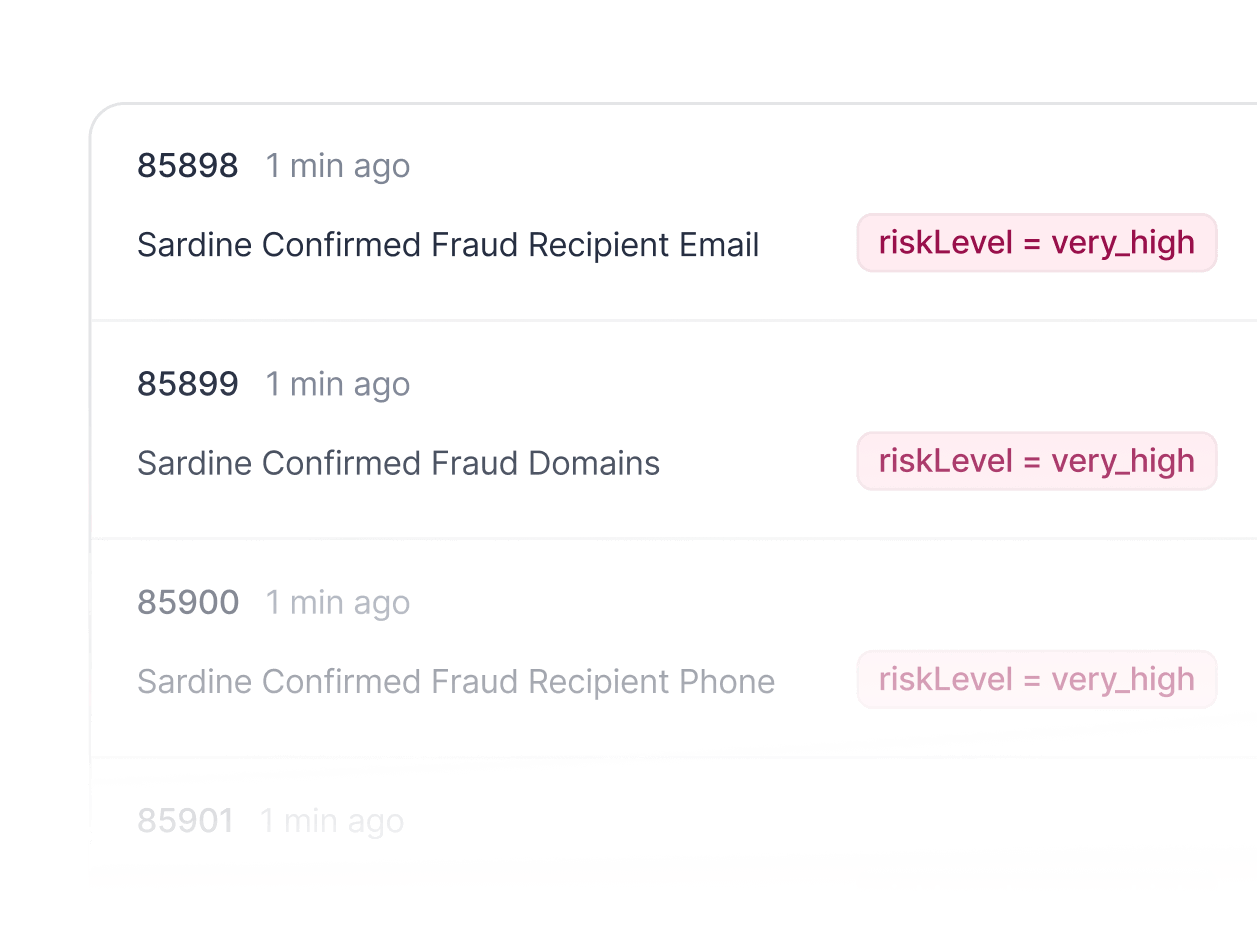
Monitor business and ownership risk as entities evolve

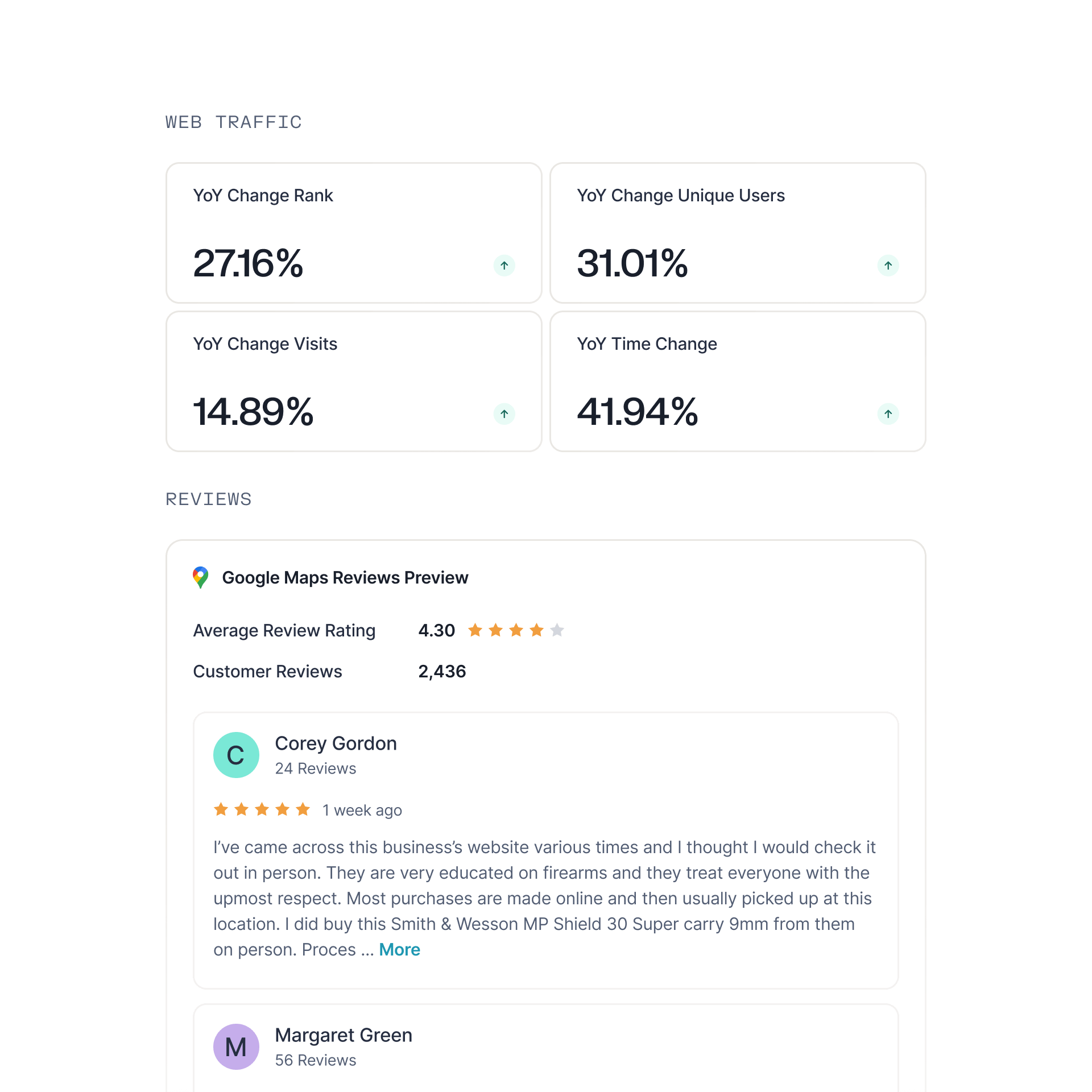
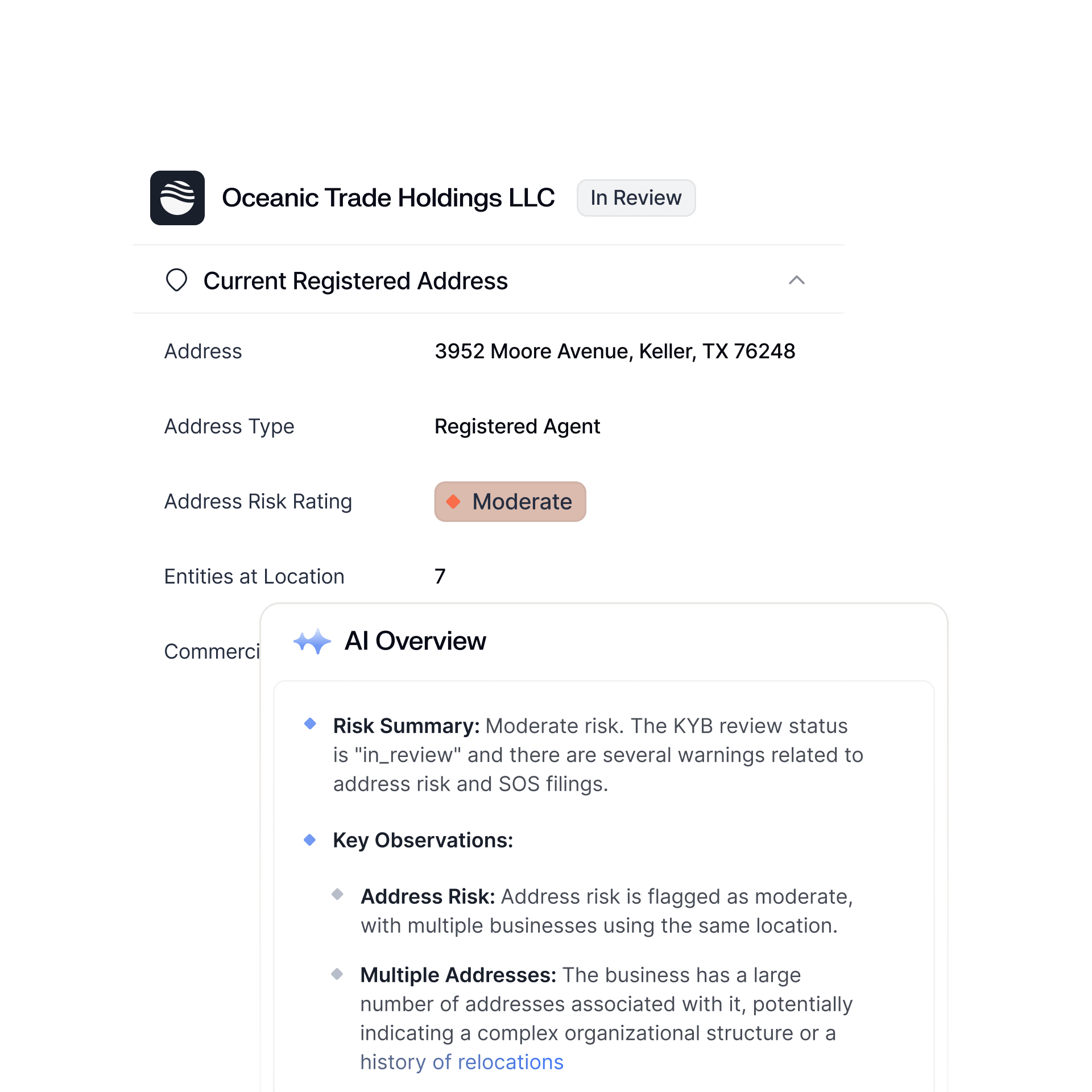
Payroll Onboarding
Onboarding onto payroll platforms
Verify businesses and contractors before onboarding, with controls to detect payout and platform abuse.
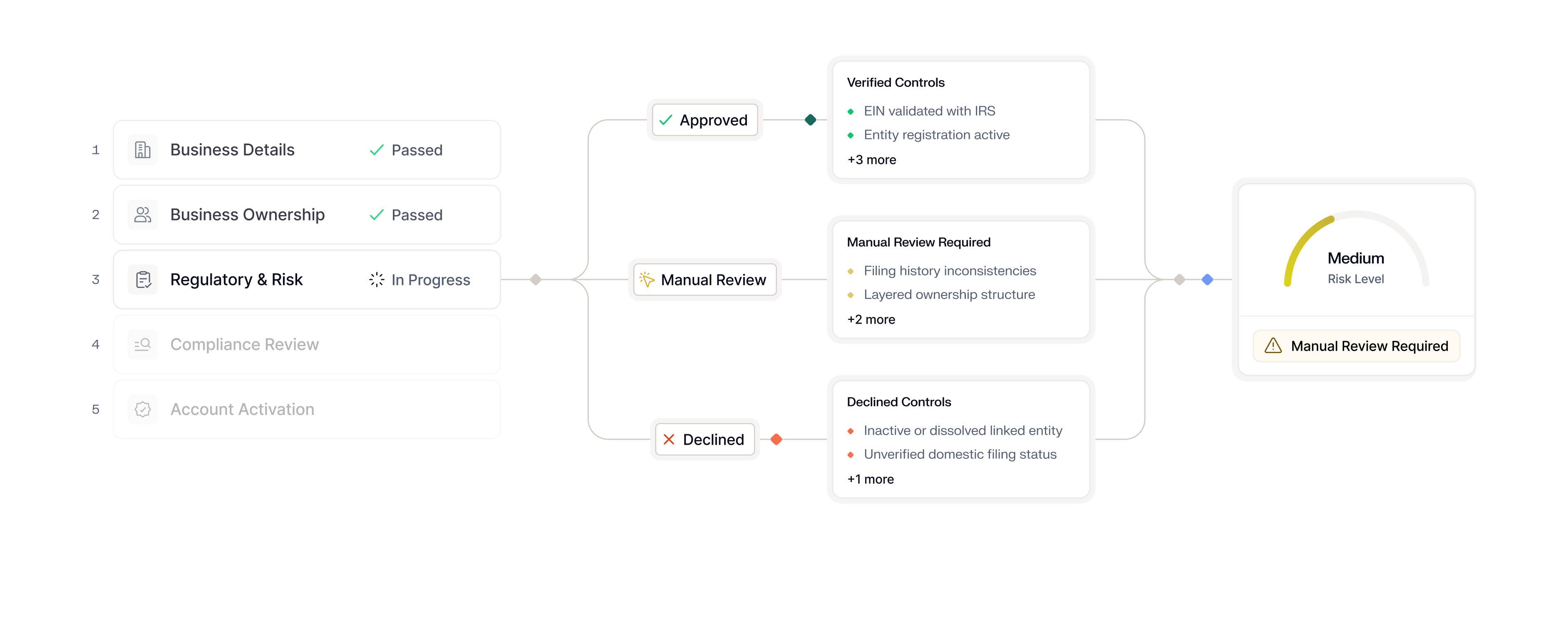

Monitor business status, ownership, and risk signals throughout the lifecycle.

Escalate reviews automatically when changes in entity status, ownership, or external signals increase risk.

Maintain a record of KYB checks, changes, and reviewer actions tied to payroll access and approvals.
Credit Underwriting
Credit and lending
Verify business documentation, ownership data, online reputation, and network risk before extending credit.

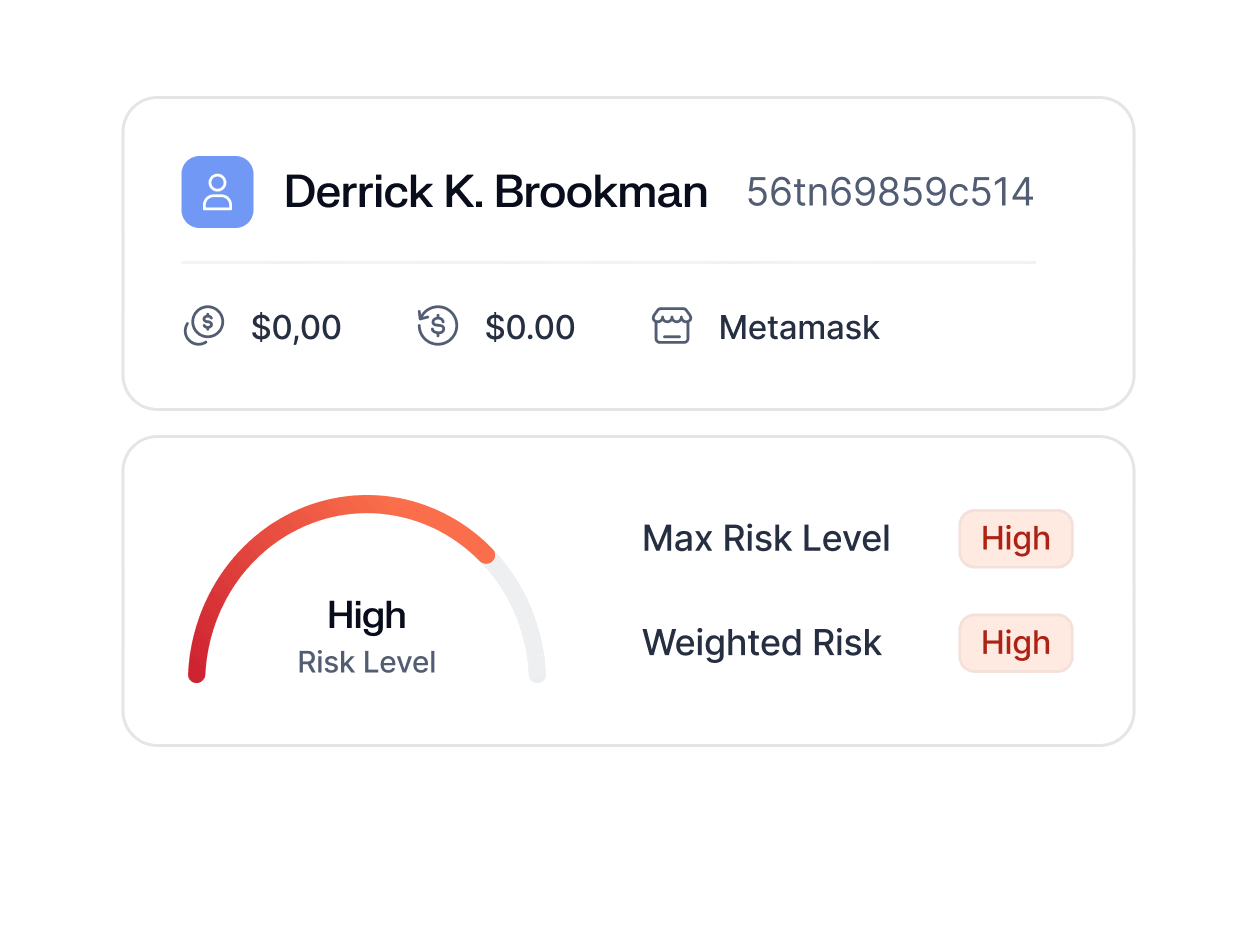


Automate due diligence with KYB AI agents
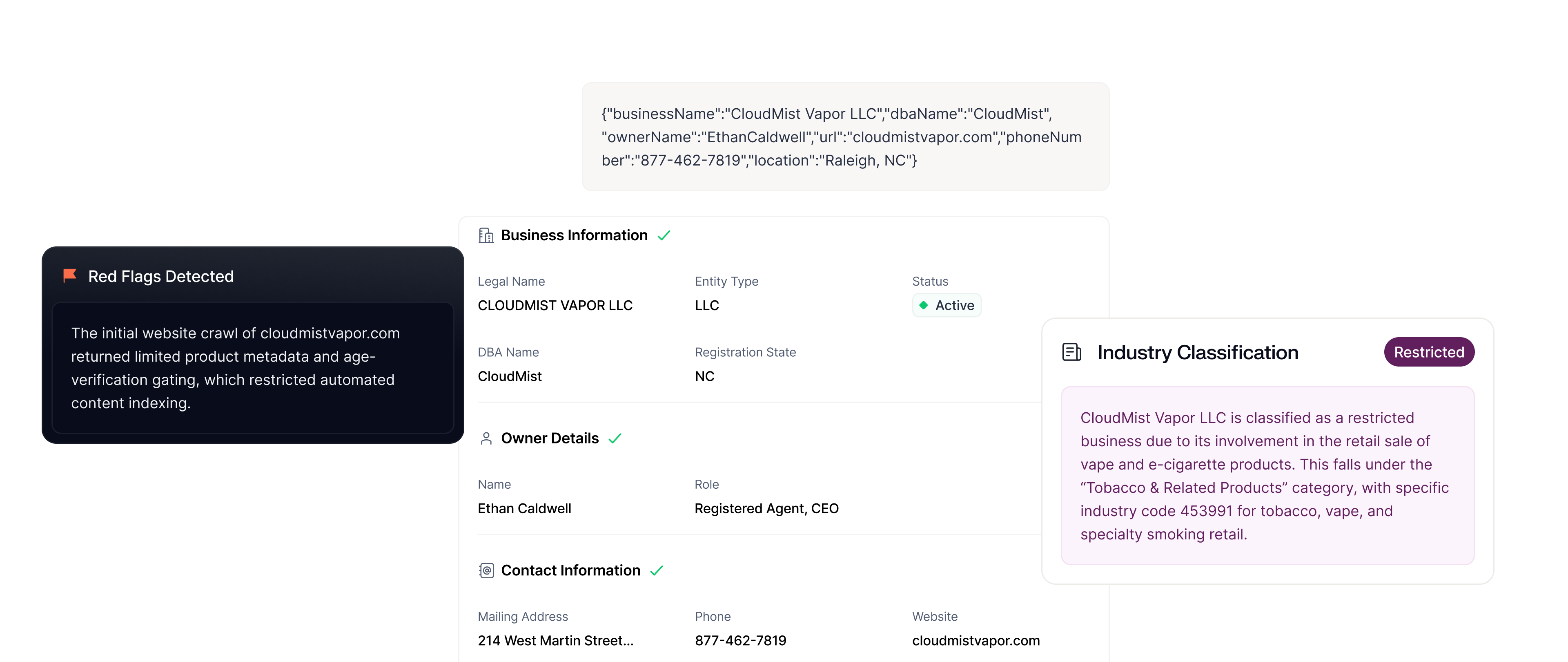
AI agents gather missing data, corroborate business details, and resolve most KYB reviews automatically.
Backed by the industry’s leading agentic risk platform
Device & Behavior
Gain full visibility into business activity
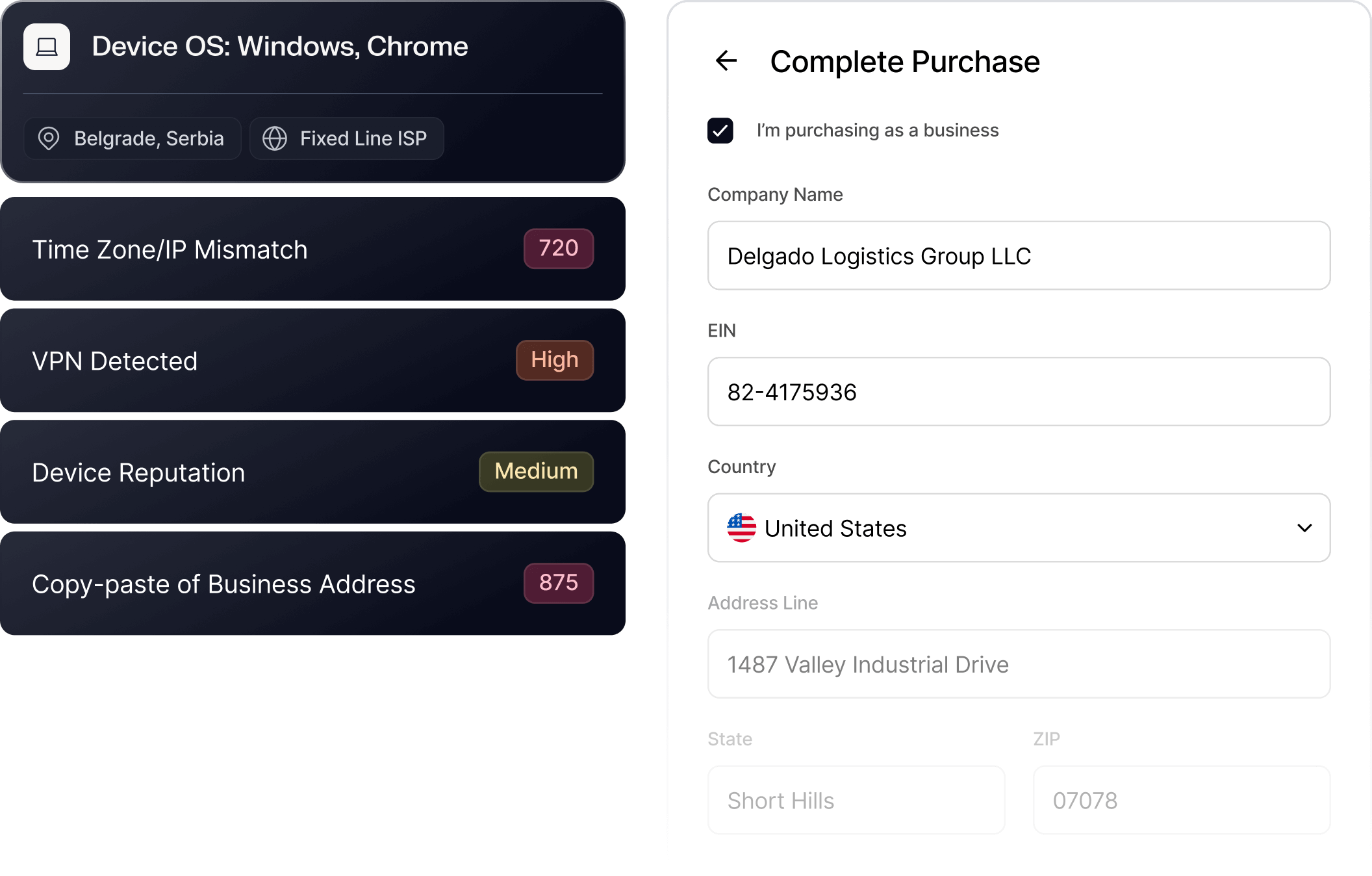
Use device, behavioral, and network signals to uncover shell corporations, coordinated fraud, and repeat bad actors.


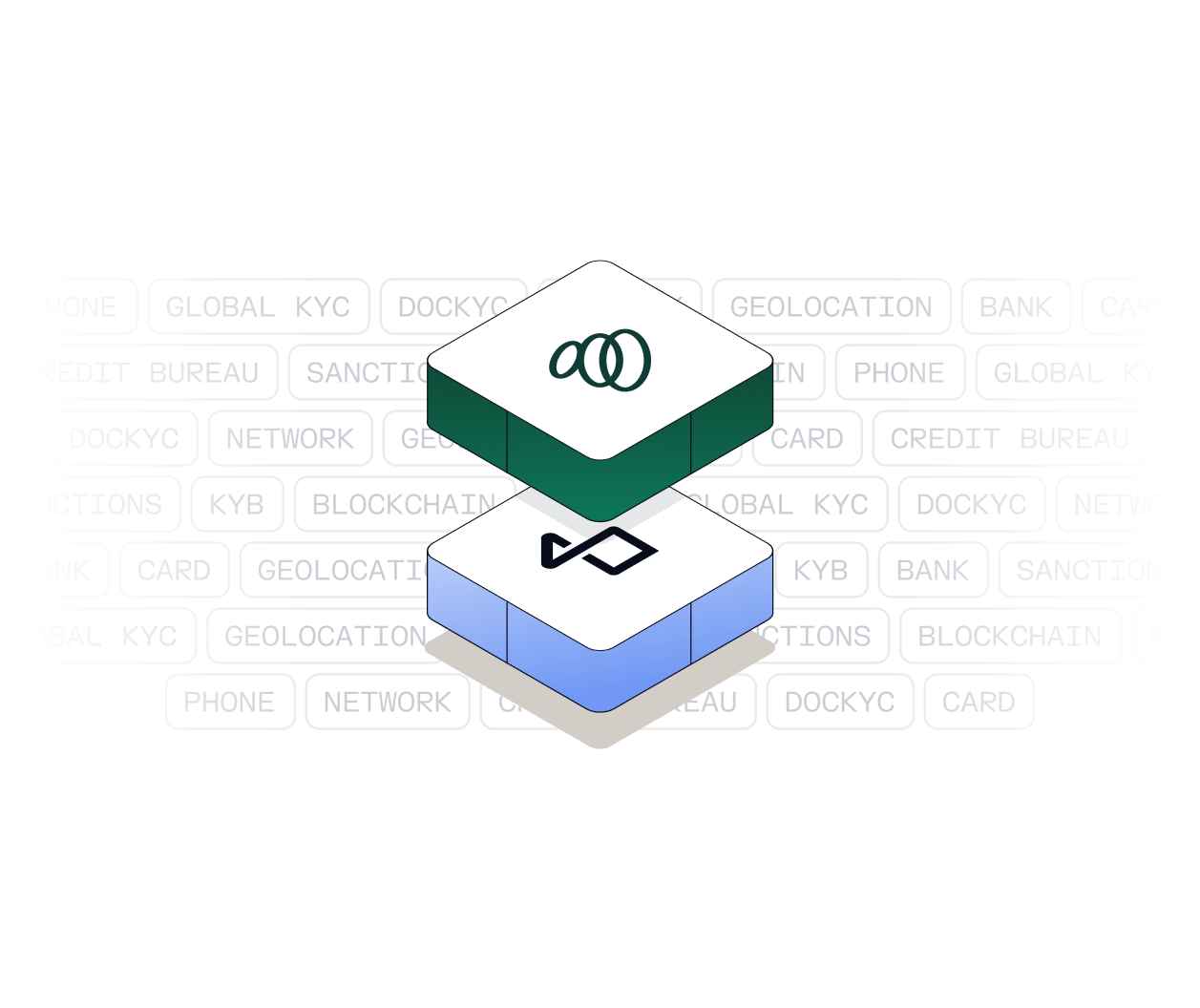
Data Consortium
Understand the full business footprint
Use shared registry connections and network intelligence to surface emerging high-risk entities and ownership patterns.
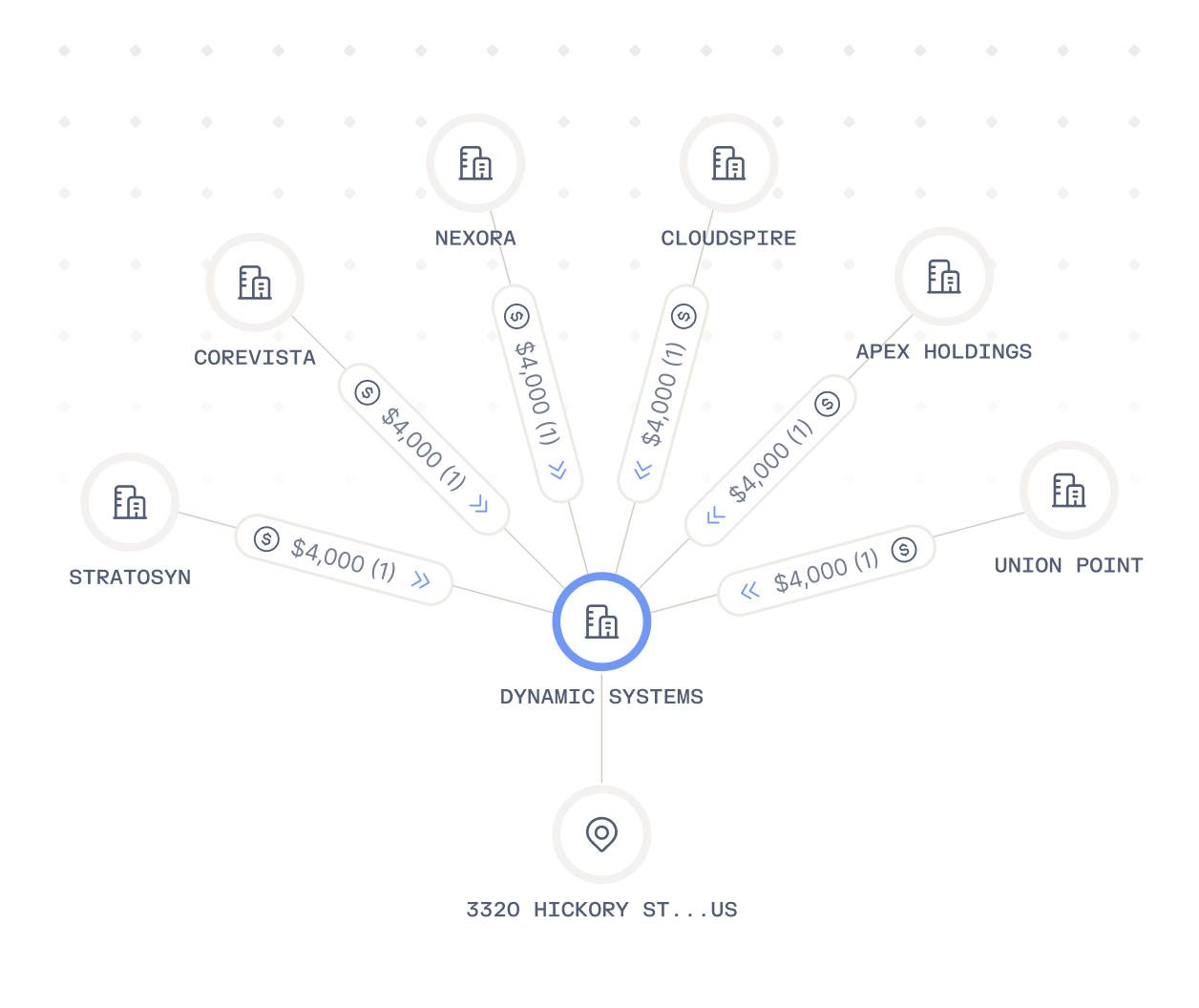
Fraud Investigations
Visualize ownership & control
See connections between businesses, UBOs, and related entities to uncover indirect risk and complex structures.
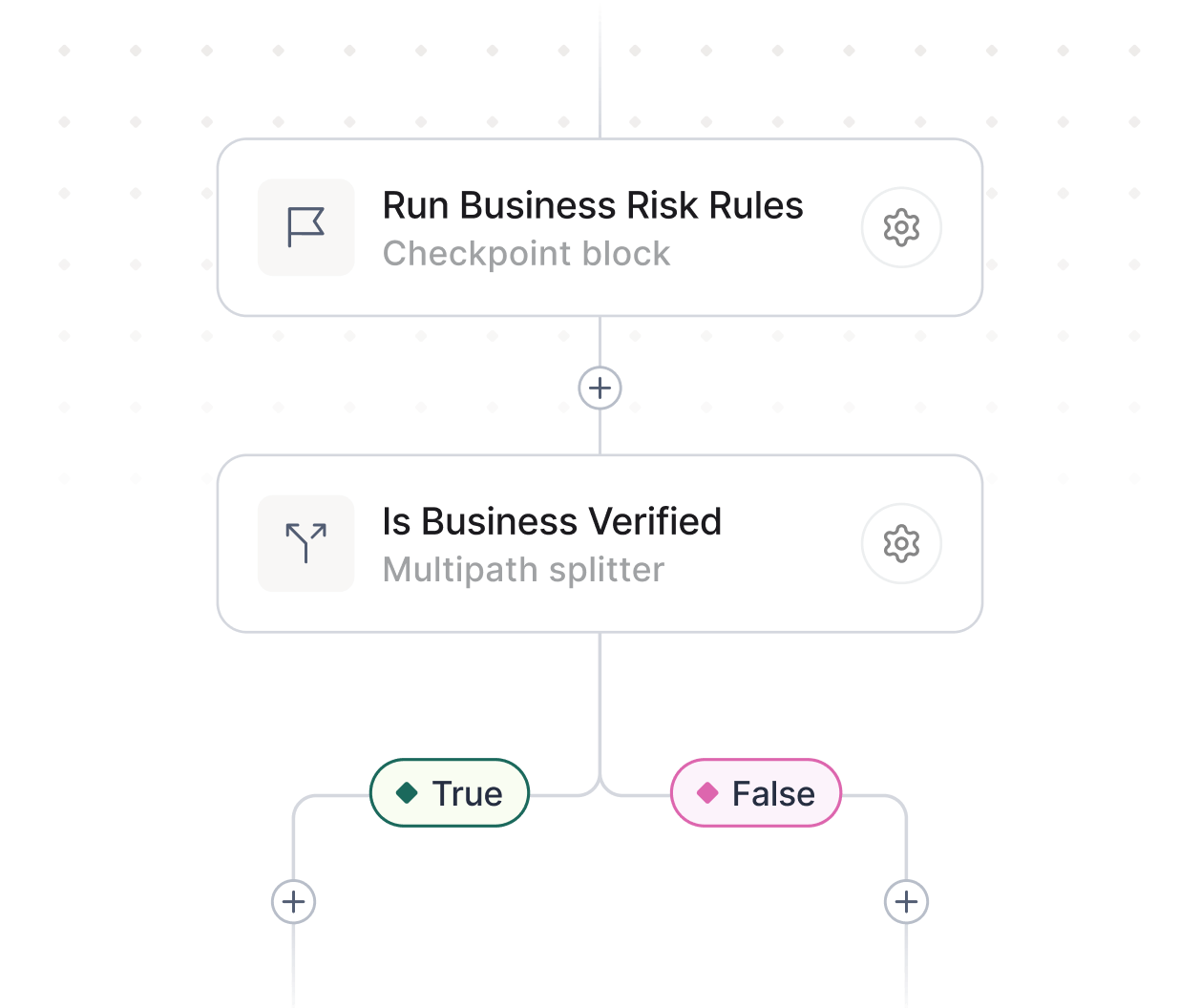
Rules & Workflows
Design KYB policies
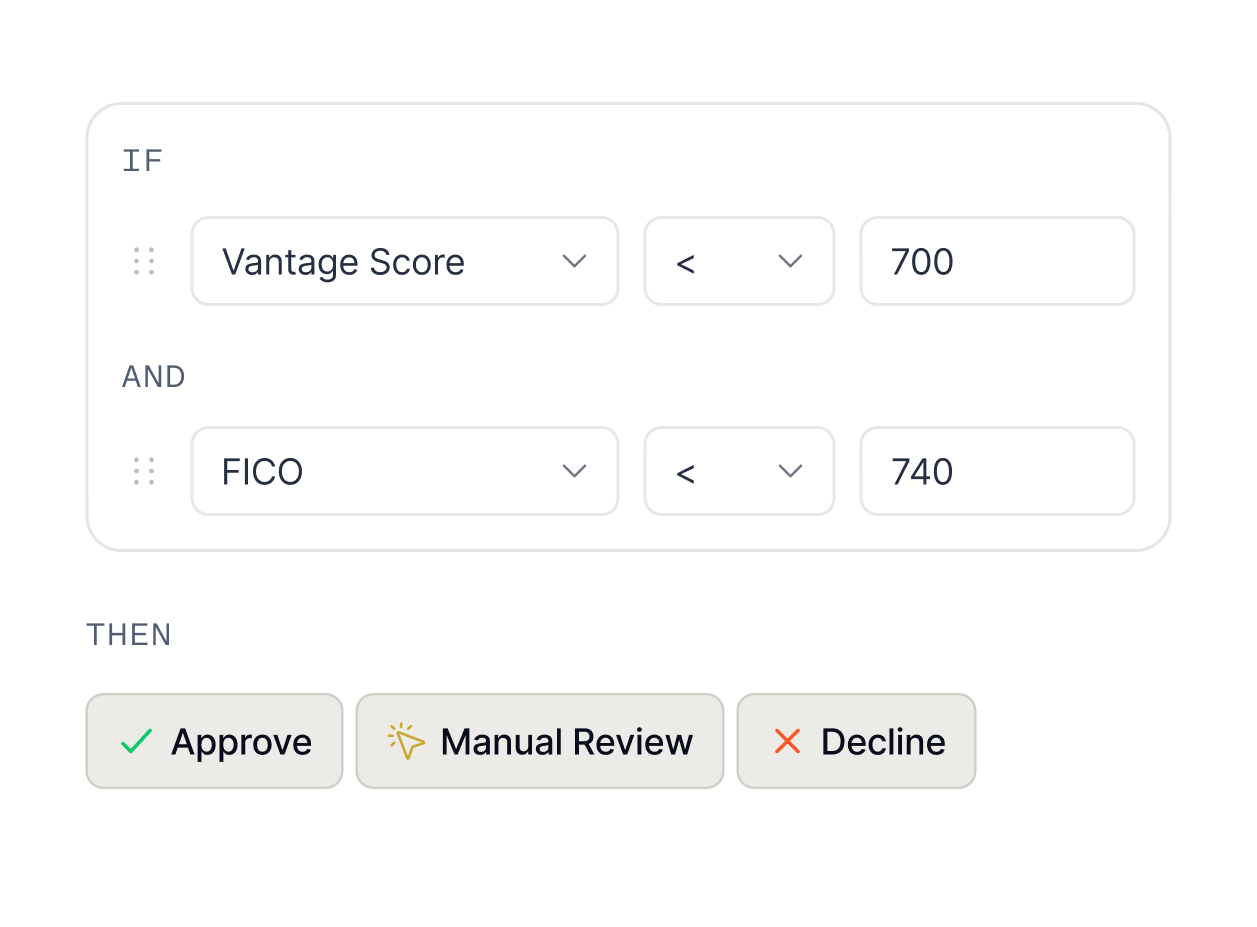
Build risk-based KYB, UBO, and EDD workflows with configurable thresholds, step-ups, and routing that’s fully auditable.



Deep KYB checks that don't slow onboarding
Frequently asked questions

How does Sardine verify businesses globally?
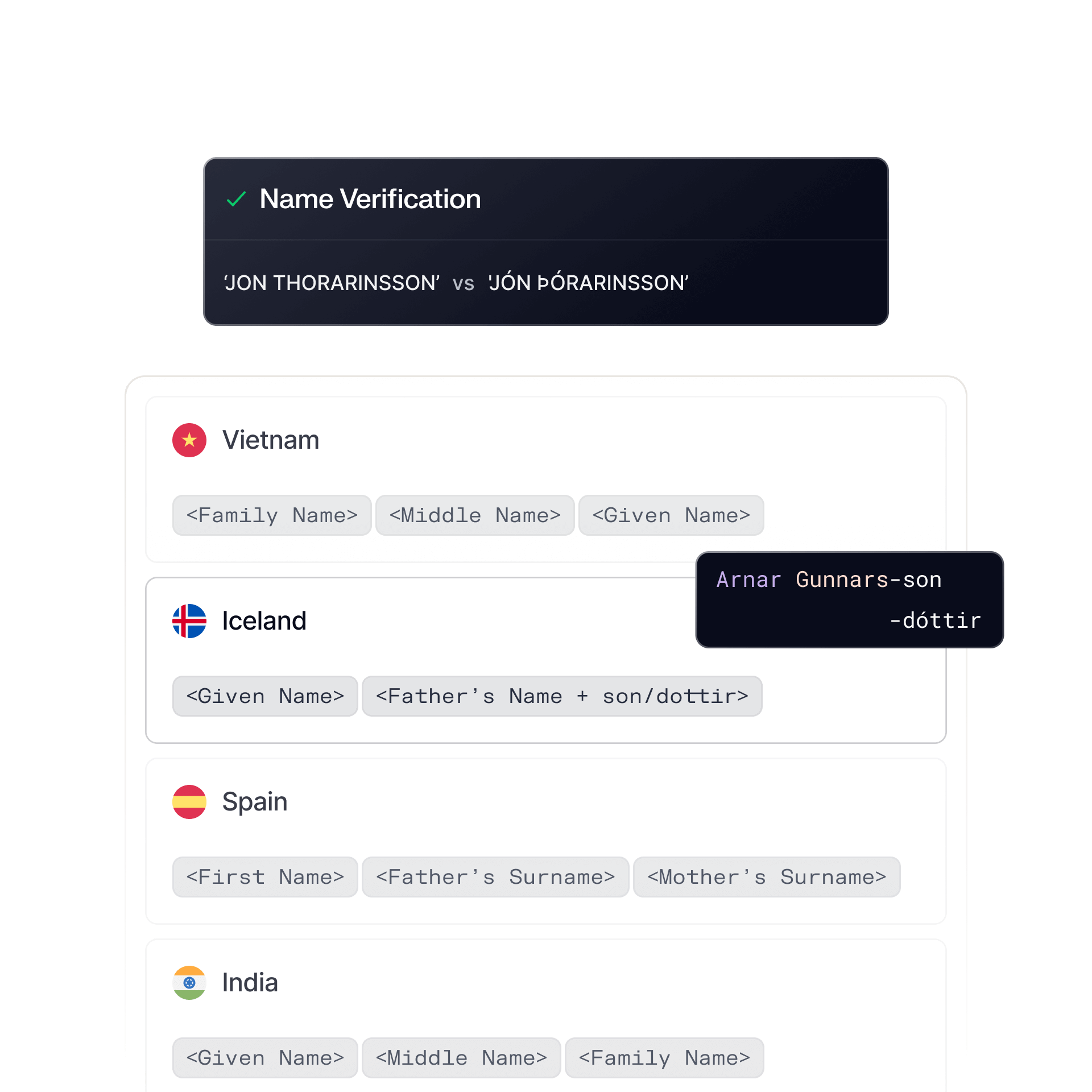
Sardine verifies businesses in real time using authoritative commercial registries across hundreds of jurisdictions. The platform confirms legal existence, registration status, addresses, tax identifiers, and filing status while normalizing regional naming conventions to reduce false positives and manual review.
Structured data normalization and cross-source corroboration resolve inconsistencies in entity names, transliterations, and registration formats. This improves global match rates while maintaining defensible KYB and CDD standards aligned with regulatory expectations.
How does Sardine identify beneficial owners and complex ownership structures?
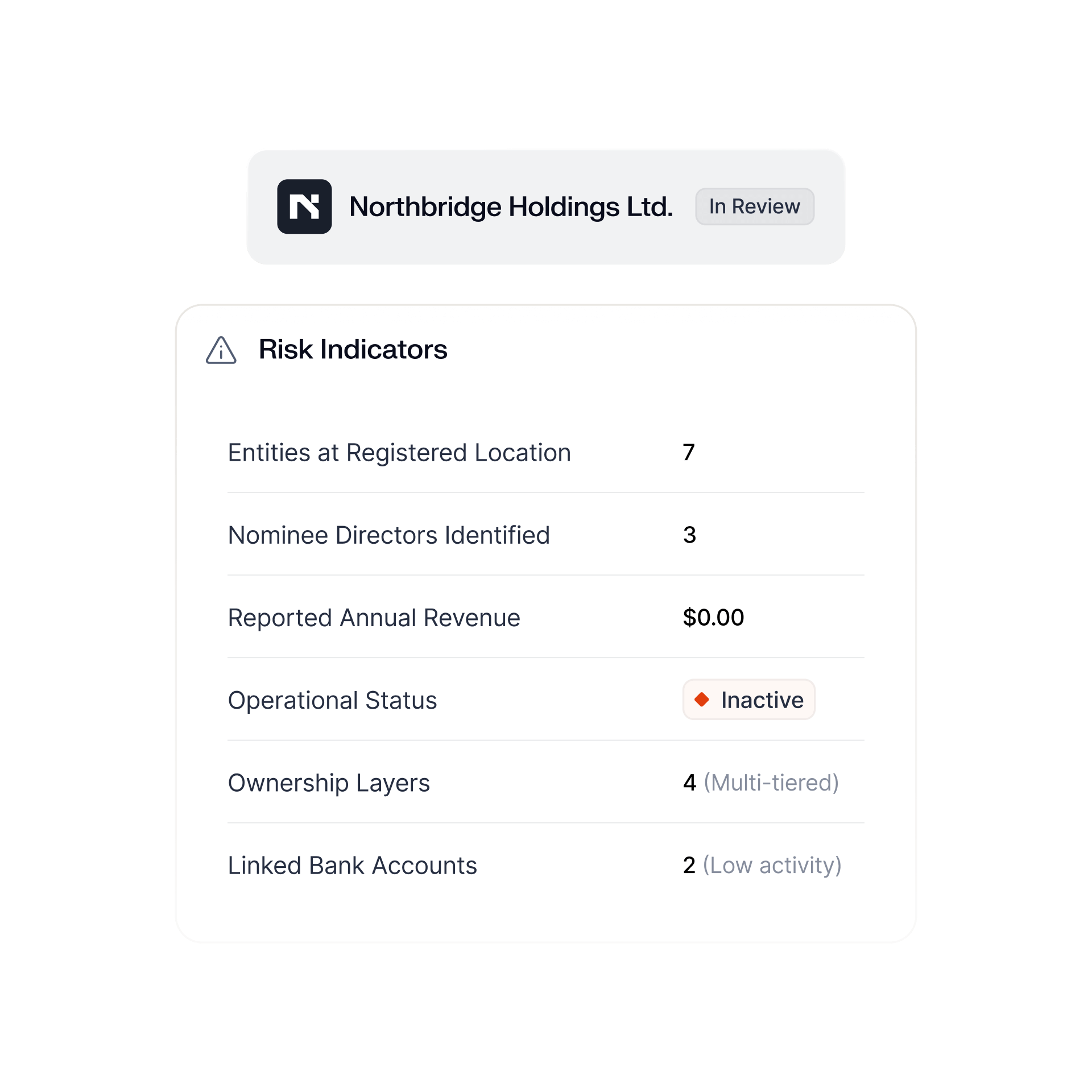
Sardine maps businesses, UBOs, controllers, and related entities through its Fraud investigations to enable multi-layer ownership analysis. The system performs look-through resolution across direct and indirect ownership to detect shell entities, nominee arrangements, circular ownership, and control concentration risks.
This supports compliance with OFAC aggregation guidance, AML directives, and risk-based UBO identification standards, providing transparency across complex domestic and multinational structures.
How is KYB kept up to date after onboarding?
Sardine supports continuous KYB through event-driven monitoring of ownership changes, officer updates, registration status shifts, dissolutions, adverse media, and external risk signals.
Risk-weighted alerts allow compliance teams to reassess exposure as entities evolve rather than relying on static, point-in-time verification. This enables perpetual due diligence models that align with modern AML supervisory expectations.
How does Sardine reduce false positives in KYB workflows?
False positives are reduced through structured registry normalization, cross-source corroboration, and configurable risk thresholds. Instead of escalating every inconsistency, the system evaluates cumulative business risk across ownership, jurisdiction, filings, and external intelligence.
Low-risk discrepancies such as formatting variations or regional naming differences are resolved automatically, preserving analyst capacity for material risk cases and reducing onboarding friction.
How does Sardine help teams scale KYB without adding headcount?
AI agents automate deterministic due diligence tasks including missing-data resolution, OSINT research, adverse media review, document validation, and alert prioritization.
All automated actions are logged with structured evidence and decision rationale to preserve auditability. This reduces manual review queues while maintaining explainable decisioning for internal QA and regulatory examinations.
Can Sardine support different KYB requirements across products and geographies?
Yes. Sardine enables configurable KYB policies by product type, customer segment, geography, and risk appetite. Institutions can define thresholds, documentation requirements, escalation paths, and enhanced due diligence triggers per use case.
This supports differentiated workflows for merchant onboarding, payroll platforms, commercial banking, and credit underwriting while maintaining centralized governance and compliance oversight.
How does Sardine detect shell corporations and coordinated business fraud?
Sardine combines registry intelligence, ownership mapping, device signals, behavioral indicators, and consortium data to identify shell entities and coordinated fraud activity.
The platform surfaces patterns such as reused addresses, shared devices, overlapping beneficial owners, suspicious formations, and cross-entity infrastructure. This enables earlier detection of high-risk entities before account approval, lending decisions, or payment access.