Agentic AI for AML
Agentic AI for AML
Operationalize AI agents for AML compliance
Automate sanctions screening, transaction monitoring, due diligence, adverse media, and SAR generation with structured oversight and defensible audit trails at every step.













Agents that make your risk
team 2-5X more efficient
Automate repeatable compliance tasks, enforce consistent policy application, and maintain audit-ready documentation so your team can handle more alerts, faster.

Faster entity research
Automate OSINT and entity research, extract key risk insights, and produce regulator-ready documentation.
Auto-resolution rate
Performs EDD and complex business verification to reduce Average Time to Resolution from days to minutes.
Faster onboarding reviews
Streamlines due diligence, validates documents, and clears obvious false positives from alert queues.
Faster case disposition
Generates case summaries, compiles evidence, and prepares SAR narratives directly from your data.
Agents integrated with your data and compliance workflows
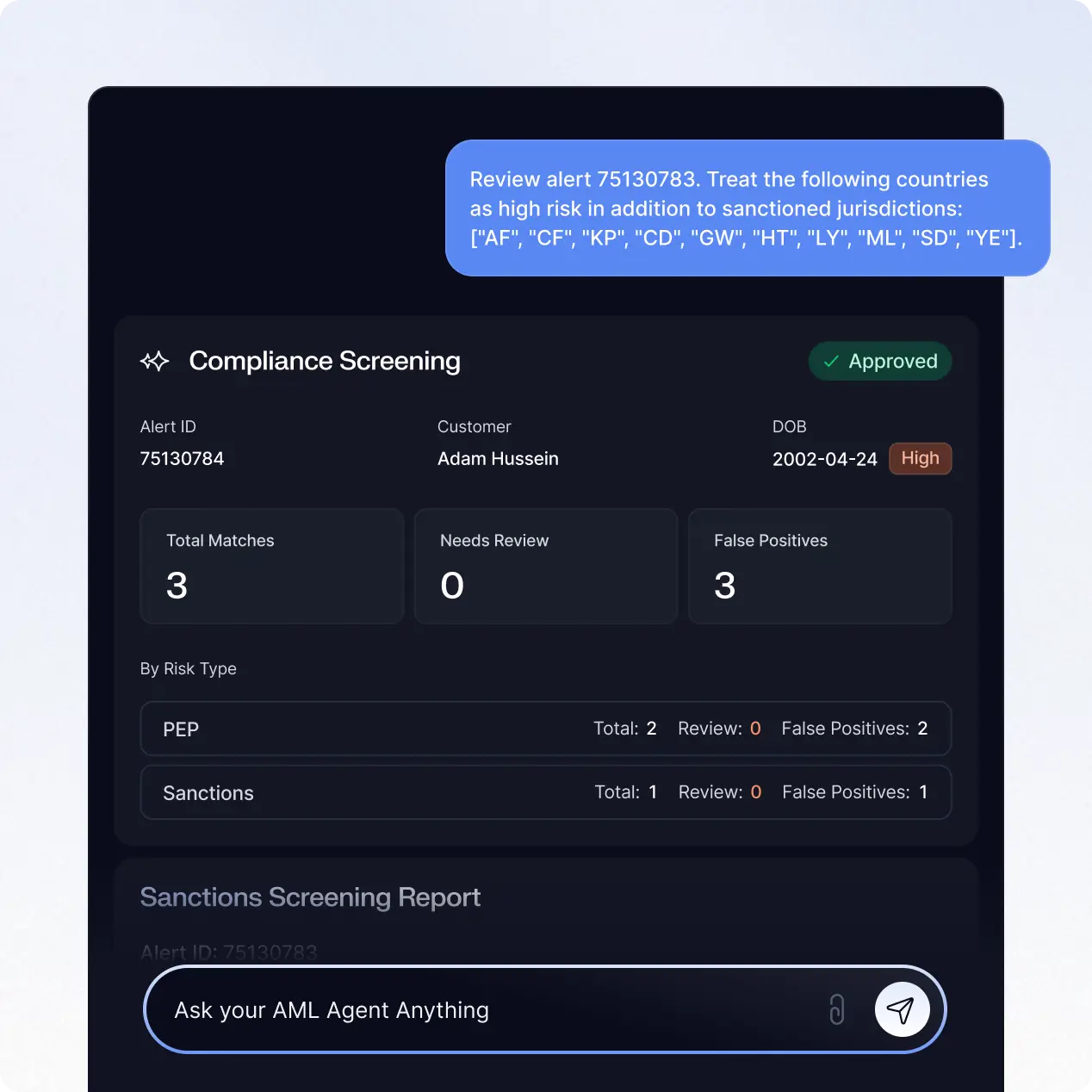
Accelerate L1 and L2 alert triage and disposition
Screens KYC, sanctions, PEP, and adverse media alerts to clear obvious false positives faster, such as name mismatches, transliteration errors, flipped DOB formats, and weak name matches.
The agent pulls together relevant customer context, match details, and supporting evidence to provide a disposition recommendation with rationale for human review.
- Doc KYC Agent
- PEP Screening Agent
- OSINT Search Agent
- Sanctions Screening Agent
Complete Enhanced Due Diligence (EDD) in minutes
Searches online sources, social media, and public databases to complete EDD faster.
The agent analyzes adverse media, screening results, historical activity, and external risk signals to surface relevant risk factors and potential typologies, then turns those findings into a clear case summary.
- OSINT Search Agent
- Doc KYC Agent
- Data Analyst Agent
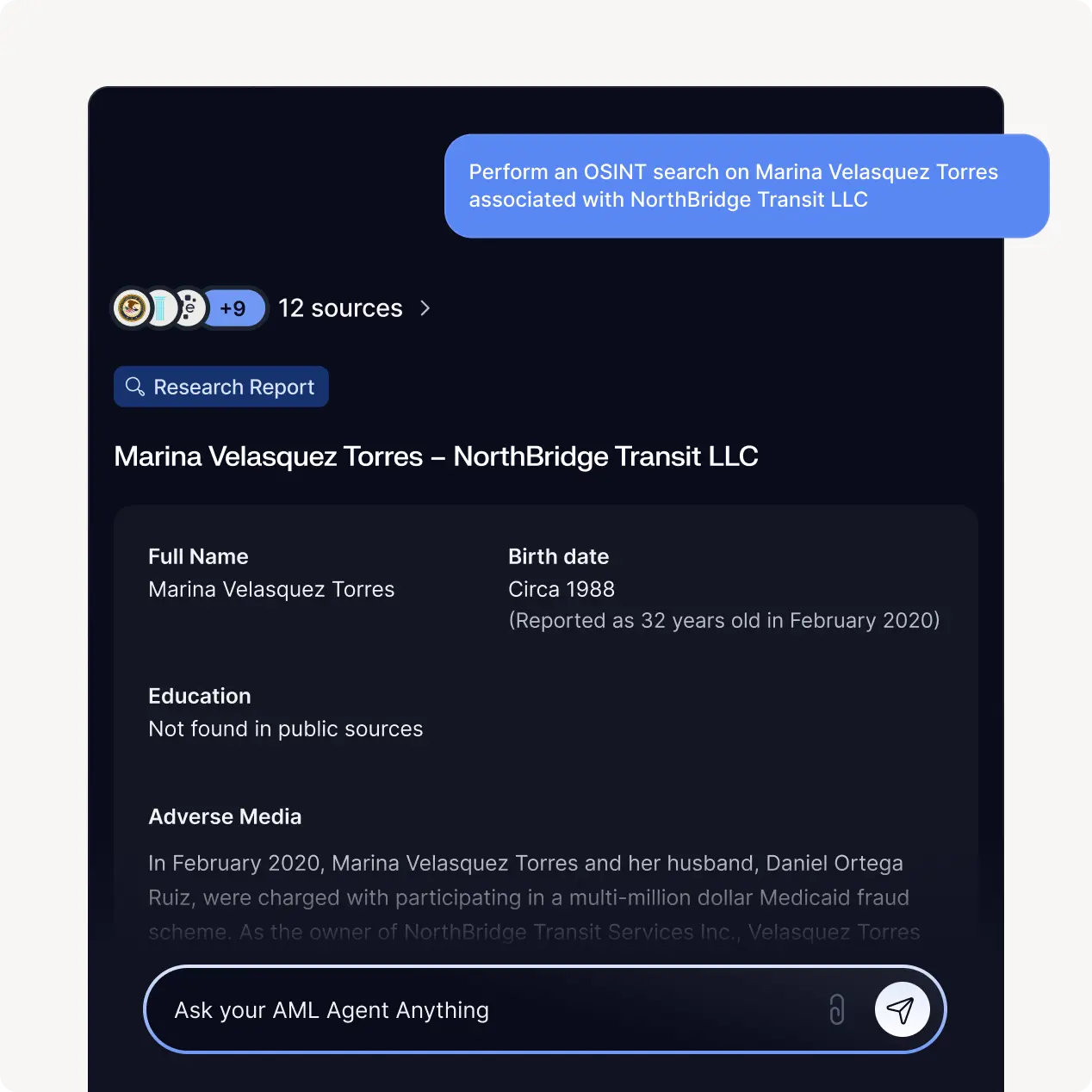
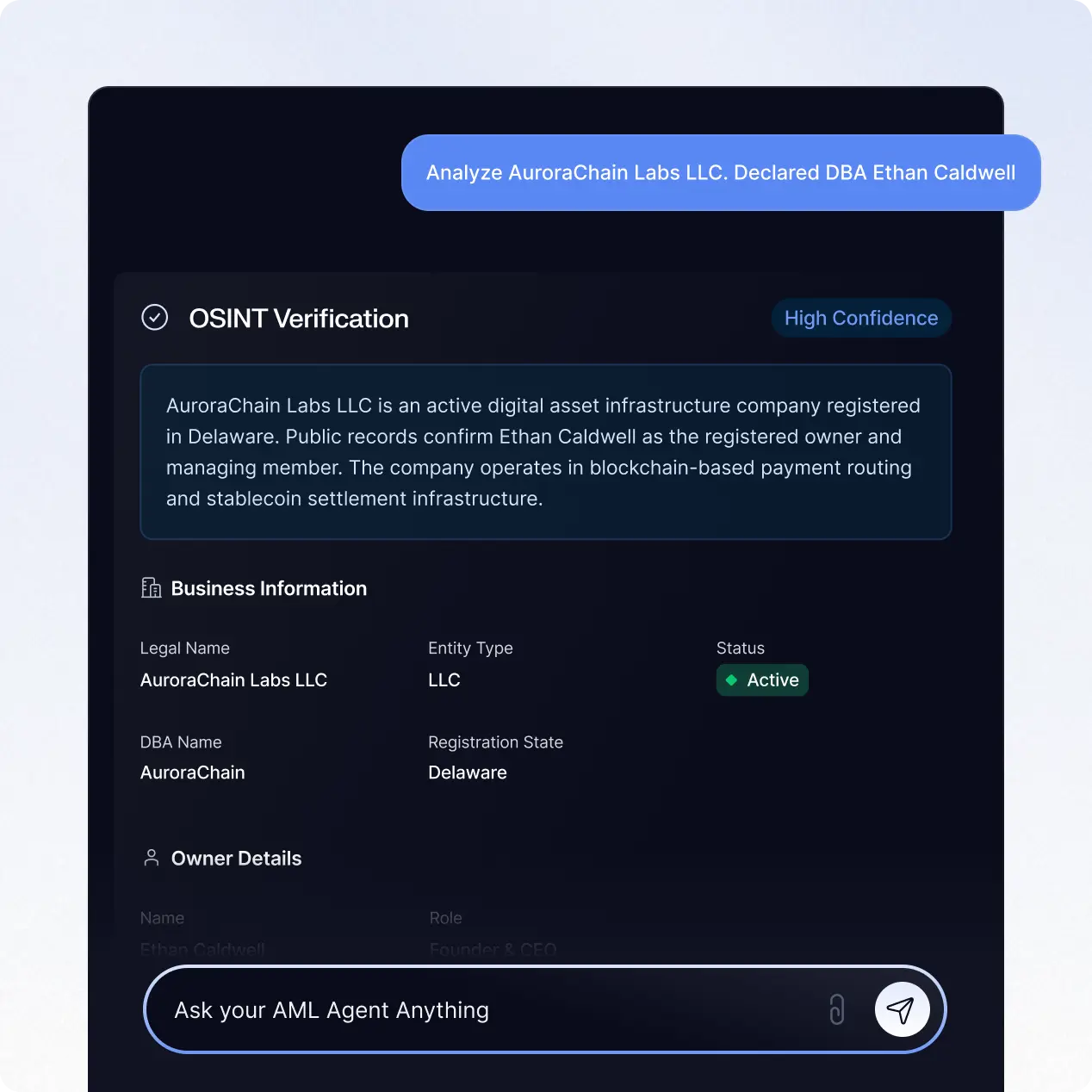
Onboard businesses faster with automated reviews
Performs deep research into businesses, beneficial owners, and related entities across registration records, ownership structures, DBAs, filings, licenses, documents, and online sources.
The agent validates business legitimacy, flags potential fraud or money laundering risk, and packages its findings so analysts can quickly approve low risk businesses and review higher risk cases.
- Business Due Diligence Agent
- OSINT Search Agent
- Graph Analyst Agent
- Doc KYC Agent
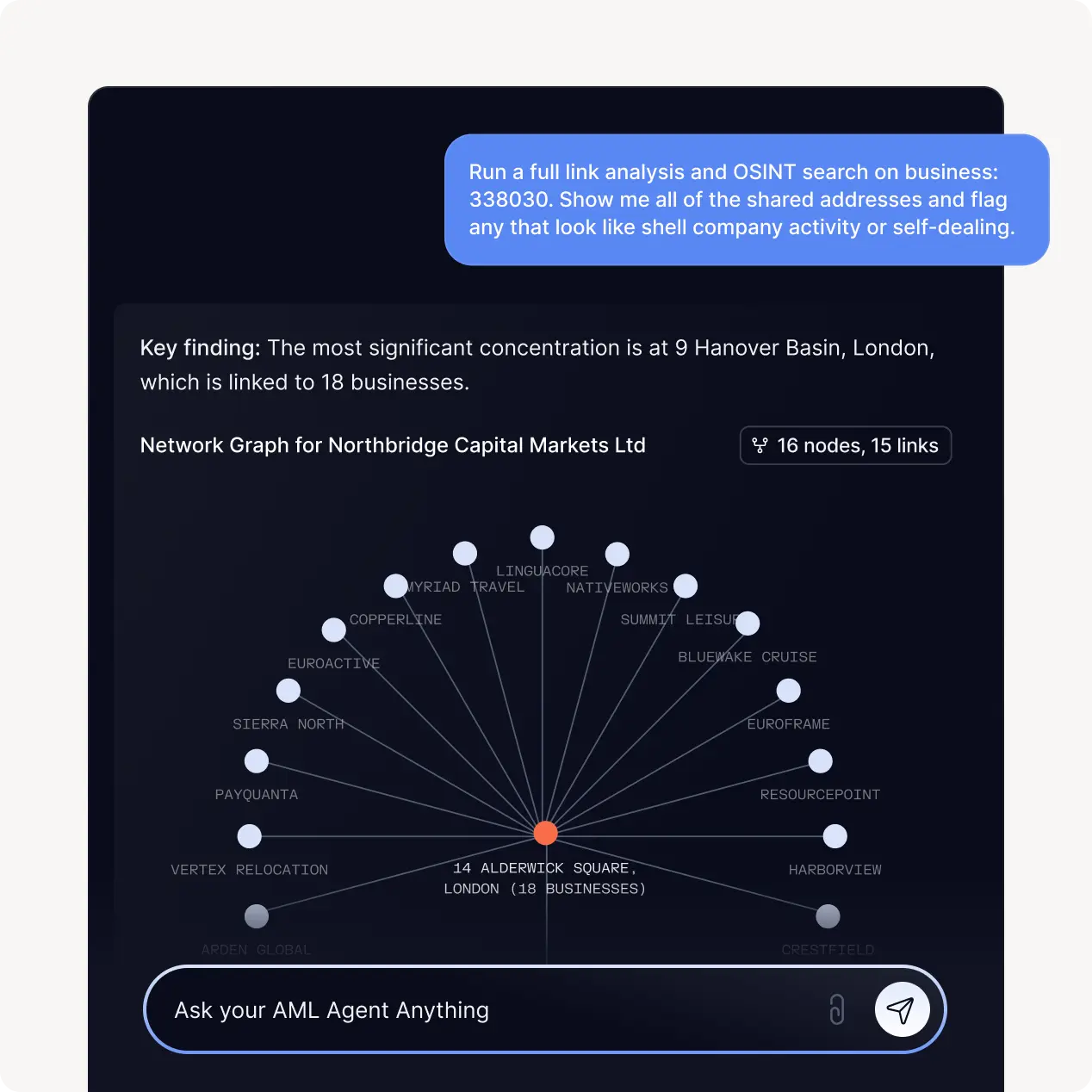
Surface criminal networks and hidden relationships
Analyzes connections across customers, counterparties, shared addresses, and transaction flows to surface any signs of mule rings, self-dealing, and other money laundering activity.
The agent helps analysts quickly make sense of complex network activity, so they can clear lower-risk cases faster and focus investigations on the cases most likely to require escalation.
- Graph Analyst Agent
- Data Analyst Agent
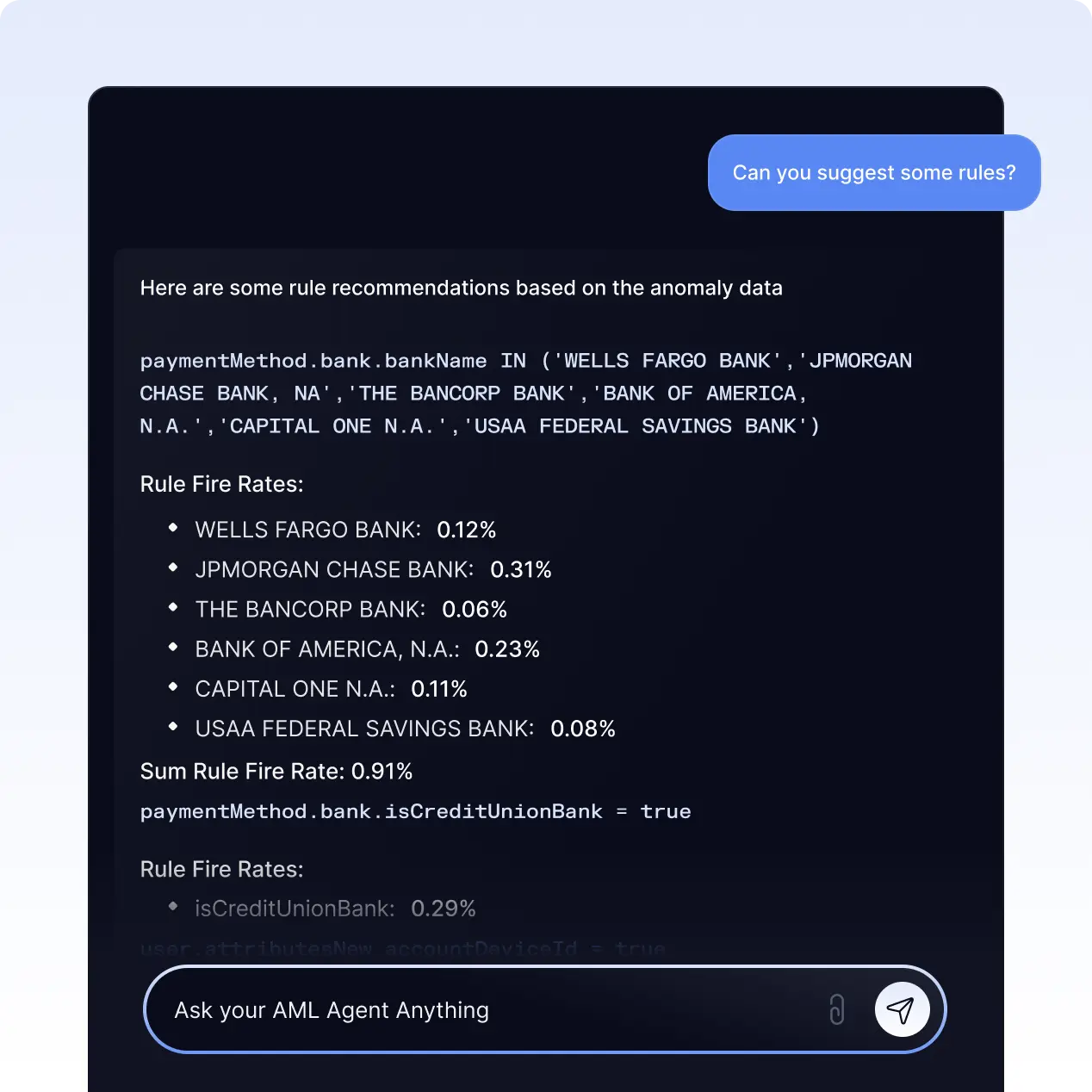
Create and optimize AML monitoring rules faster
Quickly create, test, and roll out transaction monitoring rules without waiting on engineering or vendor support. Describe rules in any language, and the agent converts them into production-ready logic.
The agent can also help you tune rule thresholds to improve alert quality, fire rates, and monitoring coverage as typologies evolve.
- Rule Assistant Agent
- Data Analyst Agent
Streamline case reviews and SAR generation
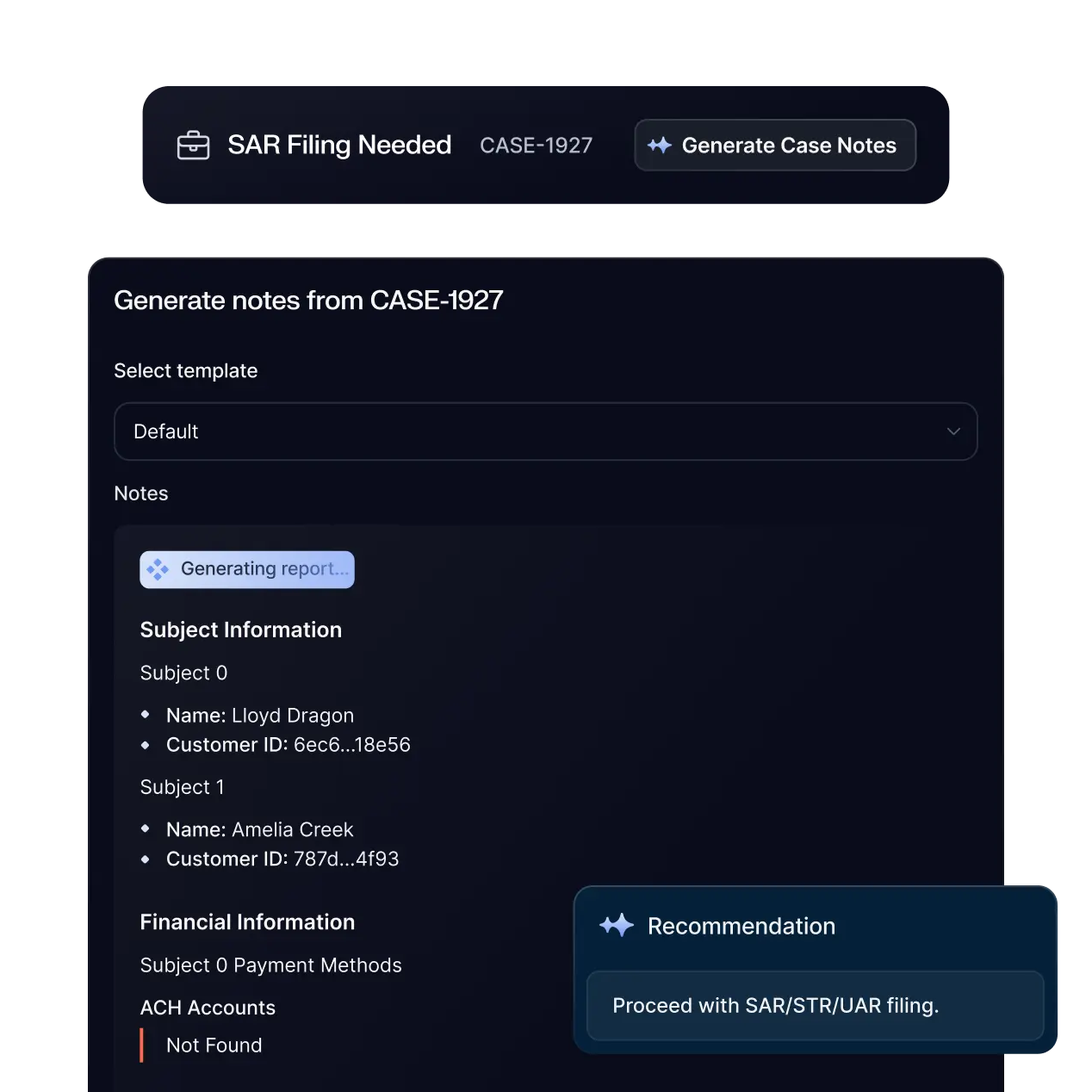
Review cases faster with AI-generated case summaries that include transactions, alerts, customer history, investigation findings, and linked supporting evidence in one centralized view.
If you decide to file a SAR, the agent drafts a high-quality narrative aligned with your team's SOPs and AML best practices. The result is faster case disposition, faster time to resolution, and higher SAR throughput per analyst.
- SAR Generation Agent
Real customer results, live in production
Unlock the full potential of Sardine’s risk platform
Our agents know how to apply the platform’s most advanced capabilities so teams can operate with expert precision and less manual work from day one.

Agentic AML Ops
Automates repeatable compliance tasks, enforces consistent policy application, and maintains audit-ready documentation.

Device & Behavior
Analyze every customer touchpoint to identify advanced fraud patterns, without adding friction.

Machine Learning
Trained on billions of data points to protect onboarding, login, and payment flows.

Consortium Data
Cross-industry intelligence from our consortium spanning billions of devices and consumers.

Connections Graph
Map relationships between users, devices, IP addresses, phone, email, and transactions.

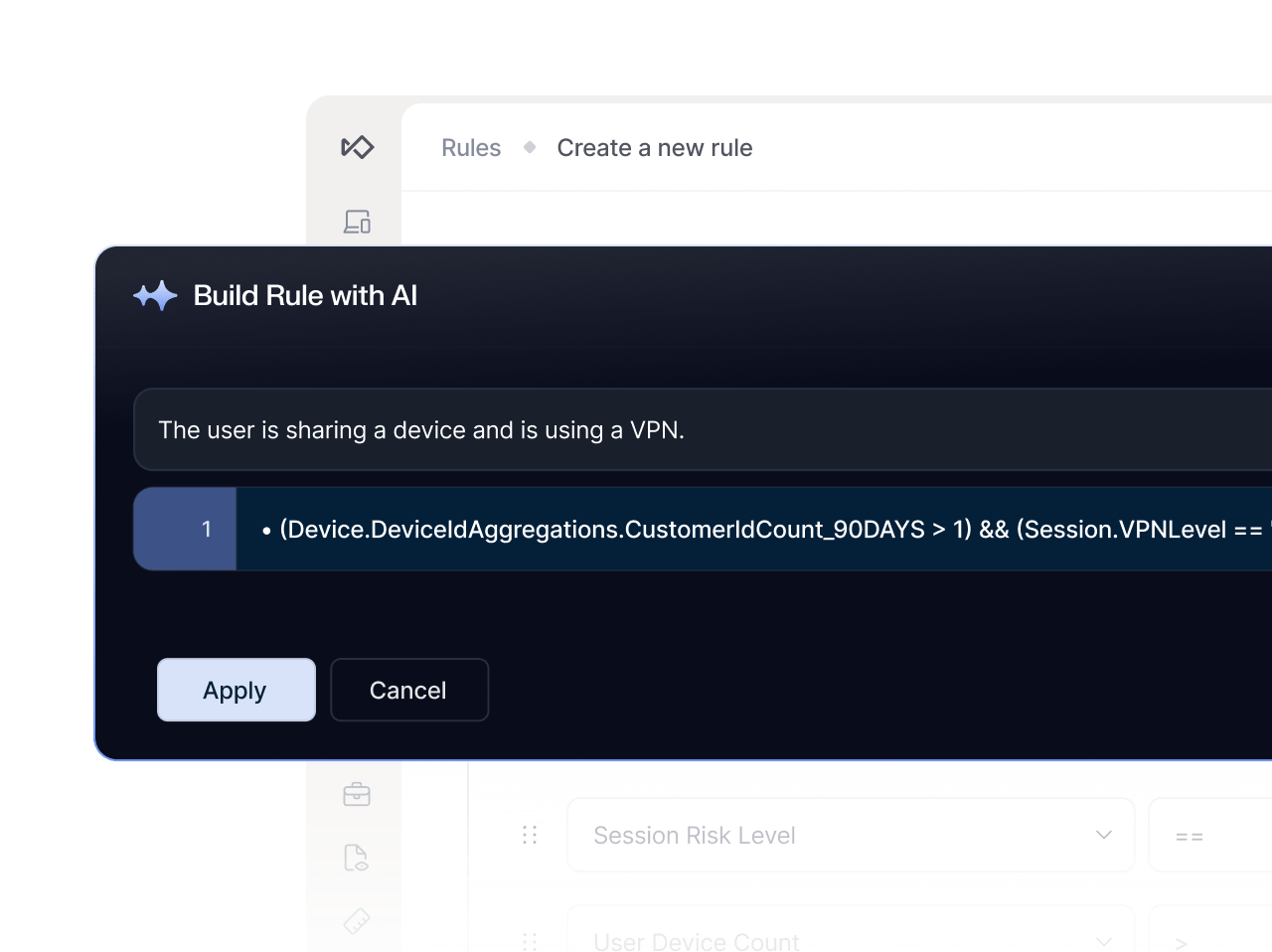
Rules & Workflows
Easily create, test, and deploy rules without engineering or vendor support.

Case Management
Centralize alerts, transactions, entities, and decisions in one integrated view.
Frequently
asked questions

How does agentic AI improve AML operations without reducing compliance oversight?
Agentic AI improves AML operations by automating repetitive investigative work while preserving structured human oversight. Instead of replacing analyst judgment, AI agents handle tasks such as sanctions screening, adverse media review, entity research, transaction summarization, and SAR drafting within defined workflows. This helps compliance teams reduce review times, apply policy more consistently, and maintain defensible audit trails for internal governance and regulator review.
What AML tasks can be automated with AI agents?
AI agents can automate a wide range of AML tasks across the compliance lifecycle. Common use cases include KYC and KYB onboarding reviews, sanctions and PEP screening, adverse media analysis, transaction monitoring triage, entity and counterparty research, beneficial ownership investigation, alert summarization, and SAR narrative generation. The highest impact deployments usually focus first on repeatable, rules-governed tasks that consume analyst time but do not require bespoke legal interpretation in every case.
Can AI agents help reduce false positives in sanctions and adverse media screening?
Yes. AI agents can reduce false positives by gathering more context around a match before escalating it to an analyst. Rather than relying only on name similarity, they can review ownership structures, jurisdiction, business type, transaction activity, external intelligence, and supporting documentation to determine whether a hit is likely relevant. This gives compliance teams a more complete risk picture, improves consistency, and helps analysts spend more time on genuinely suspicious cases instead of repetitive low risk reviews.