Fraud Detection Machine Learning
Fraud Detection Machine Learning
Detect fraud earlier with fewer false positives
Machine learning models trained across billions of sessions detect fraud across onboarding, login, and payments, and keep improving over time as new fraud patterns emerge.
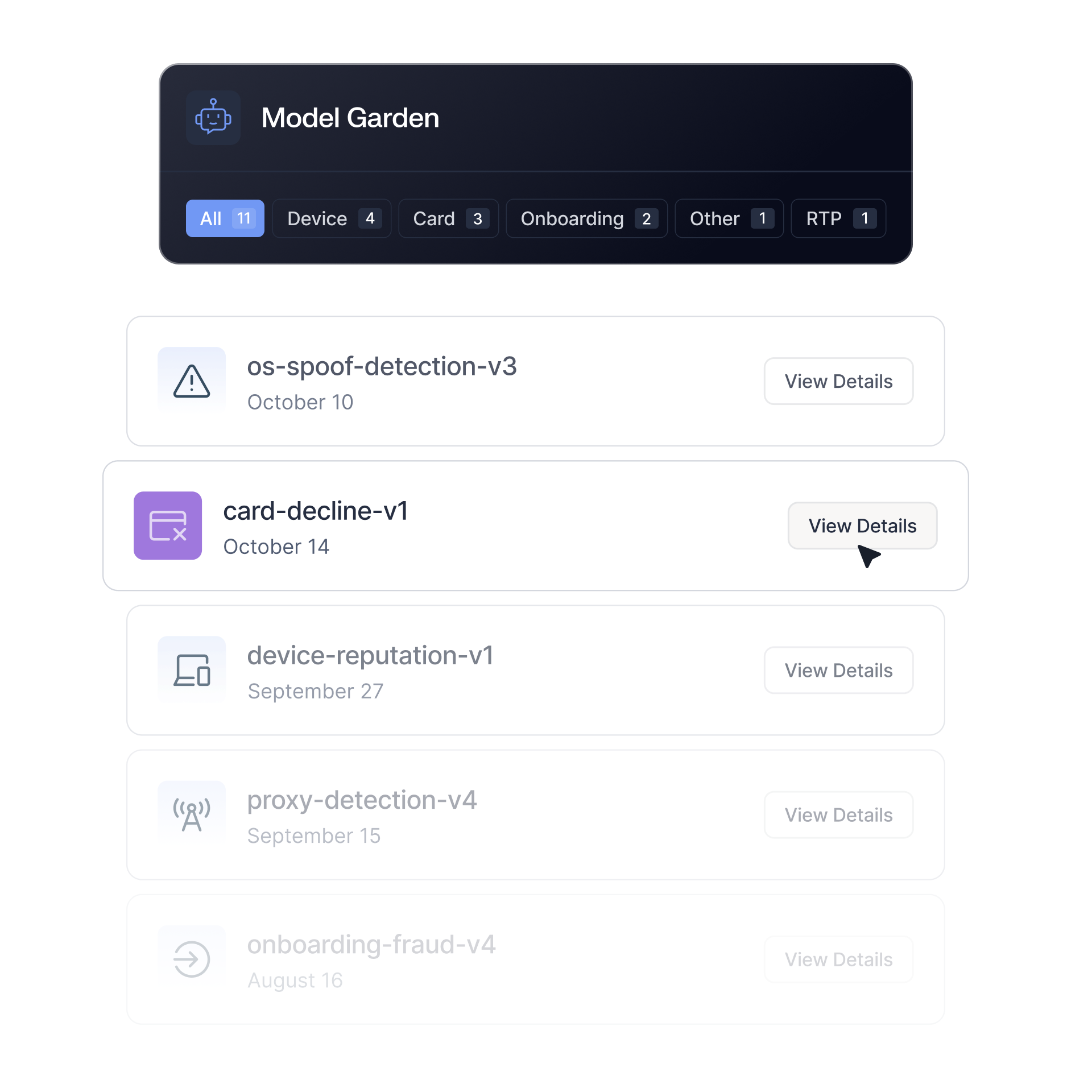












Deploy fraud models with flexibility and control
Use our consortium-trained models, train your own models with our feature store of 12,000+ risk features, or bring your own models and host them on our infrastructure.
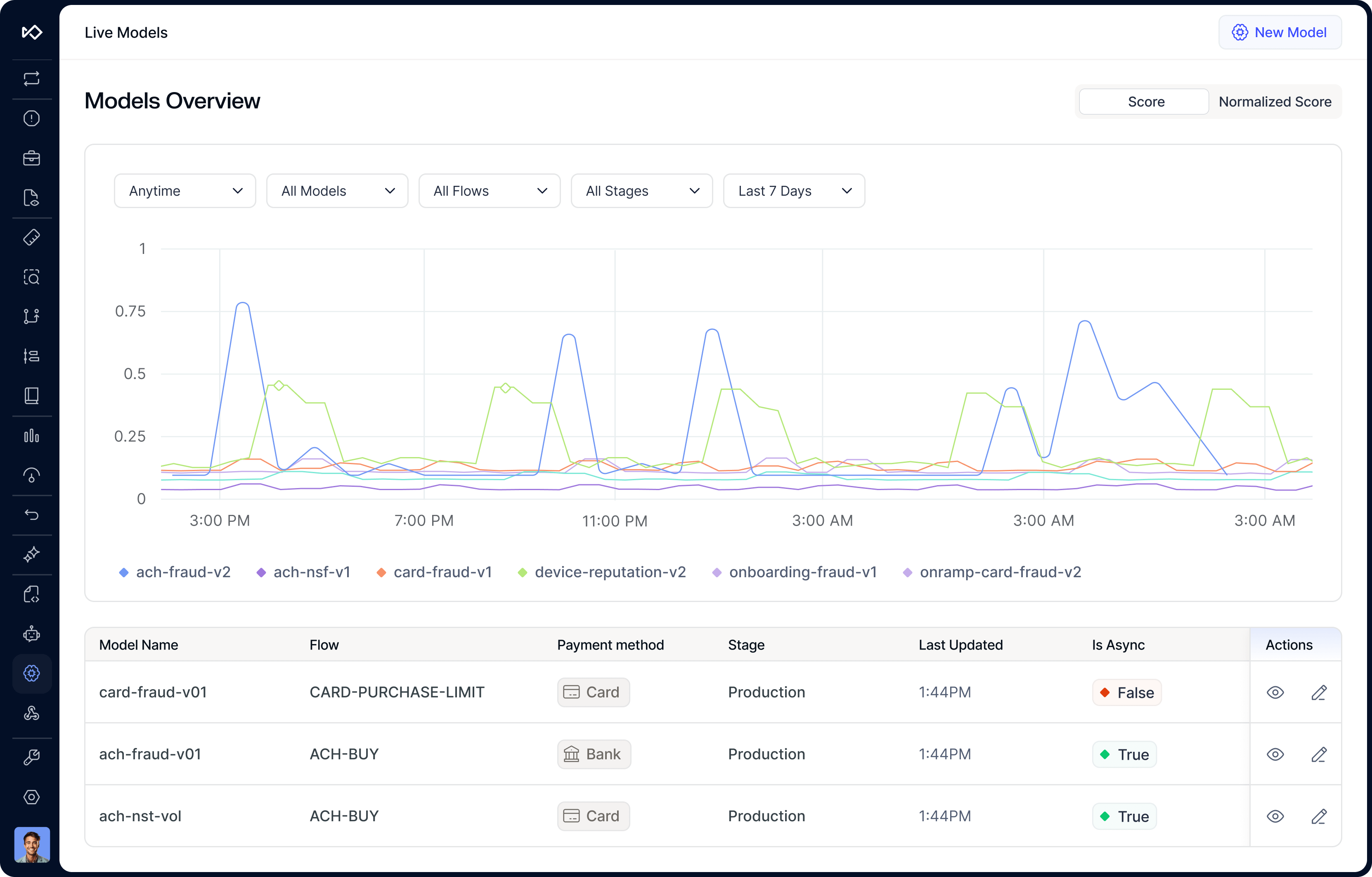
Full explainability behind every decision
All models are fully explainable via SHAP values, with visibility into model weights and feature attribution. You can also define your own confidence thresholds based on feature importance.

Learn from fraud patterns across the network
Your models benefit from fraud signals seen across Sardine’s global network, so detection reflects what others are seeing, not just what has already hit your business.

Full flexibility over your model strategy
Use out-of-the-box consortium models, train custom models with our feature store of 12,000+ risk features, or integrate your own models into Sardine’s rules engine and score normalization.

Global fraud intelligence built into every model
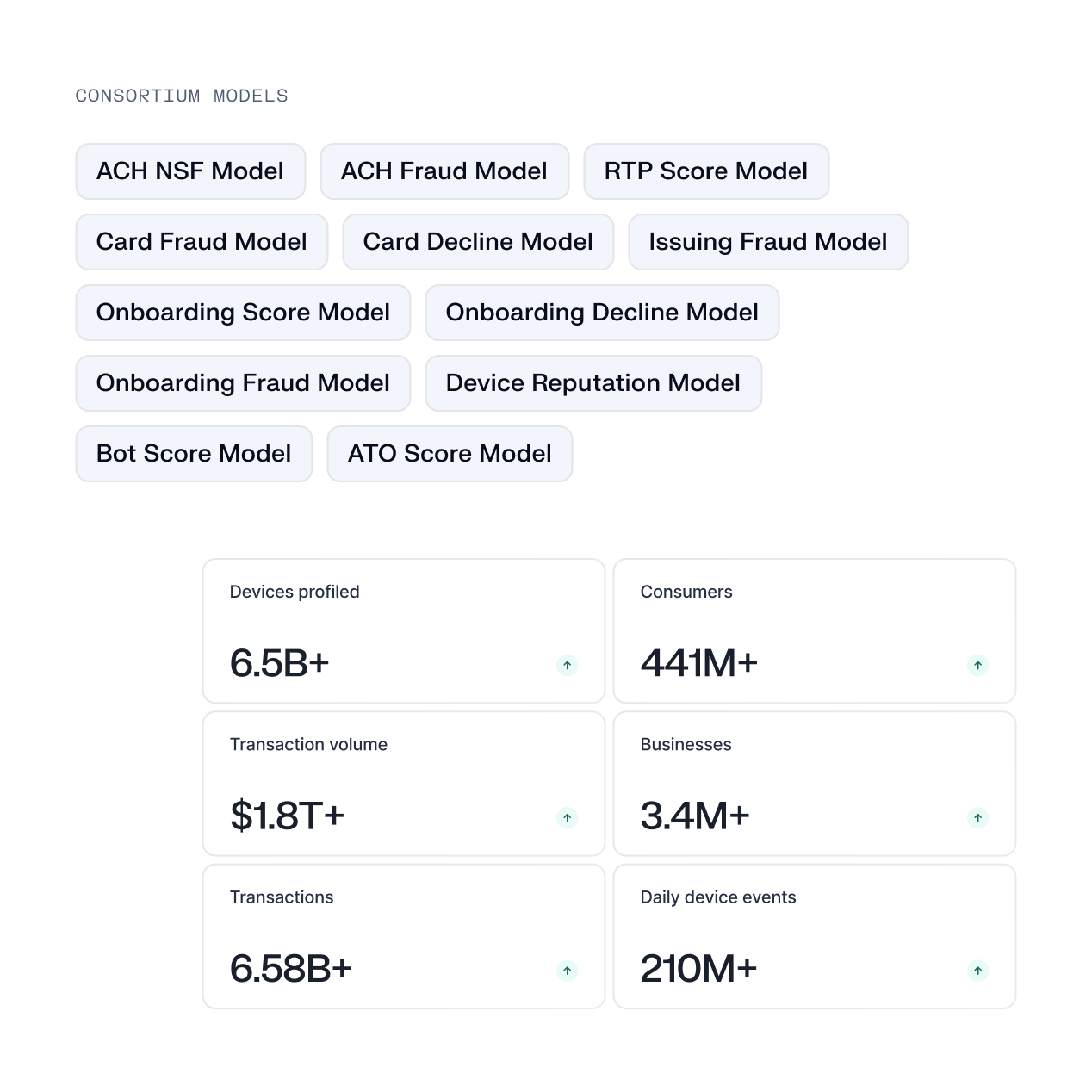
Consortium-trained models that stay ahead of new attacks
Every model is trained on collective signal from the fastest-growing global fraud consortium, spanning billions of devices and consumers.
Attack patterns detected across one customer's traffic improve detection for the entire network, so your models are informed by fraud you've never encountered.
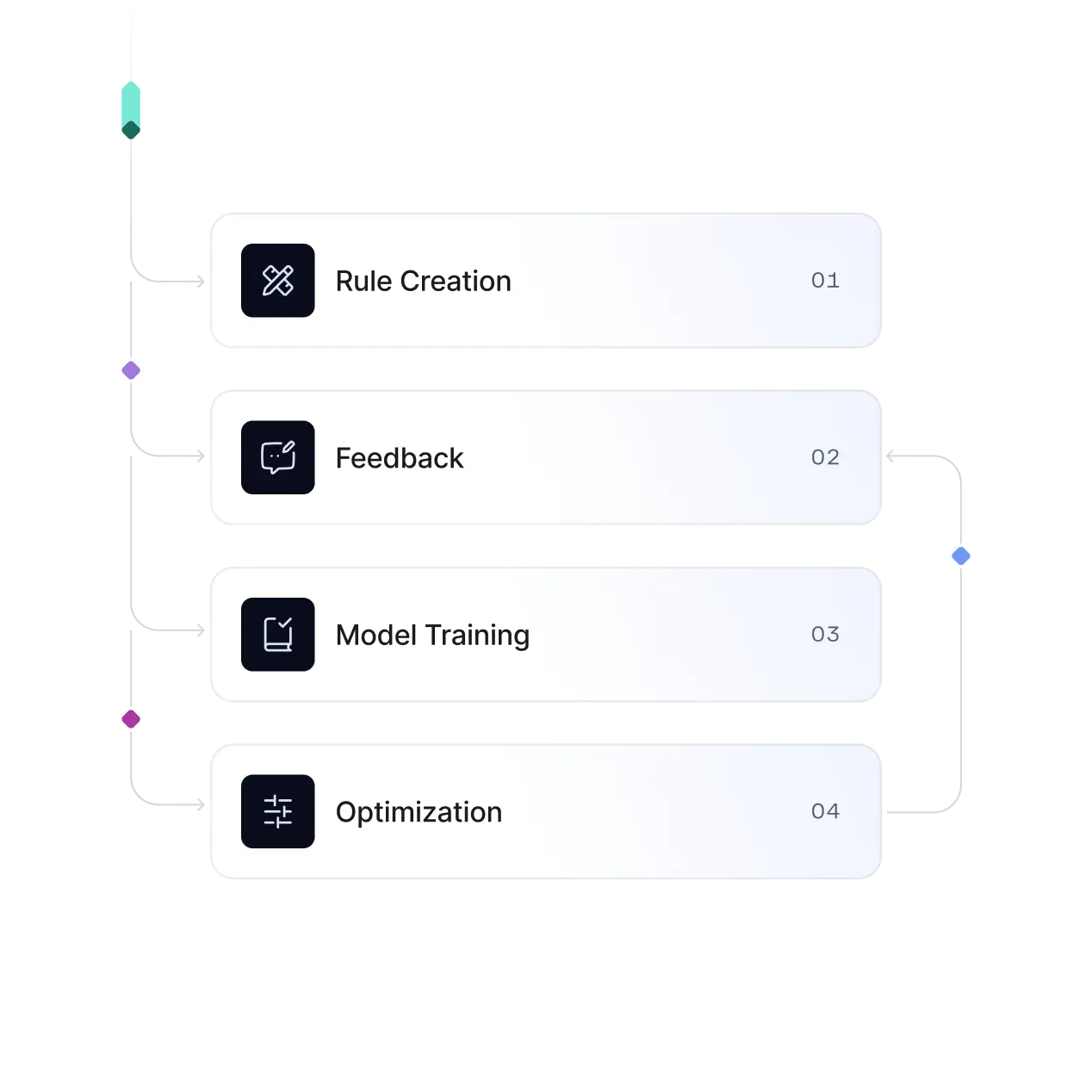
Combine rules with ML for a dual-layered defense strategy
Use rules to respond quickly to known fraud patterns, then apply machine learning to improve decisions over time based on feedback, risk signals, and changing attack behavior. Together, they give your team more control up front and better accuracy as fraud evolves.
Train custom ML models
Train custom ML models using Sardine's feature store of 12,000+ real-time signals across device, behavior, network, identity, and transaction data, with hundreds added every quarter. A customizable API lets you select exactly what evaluation data to ingest, and connects directly to Snowflake, GCP, or BigQuery to build and deploy models tailored to your risk strategy.
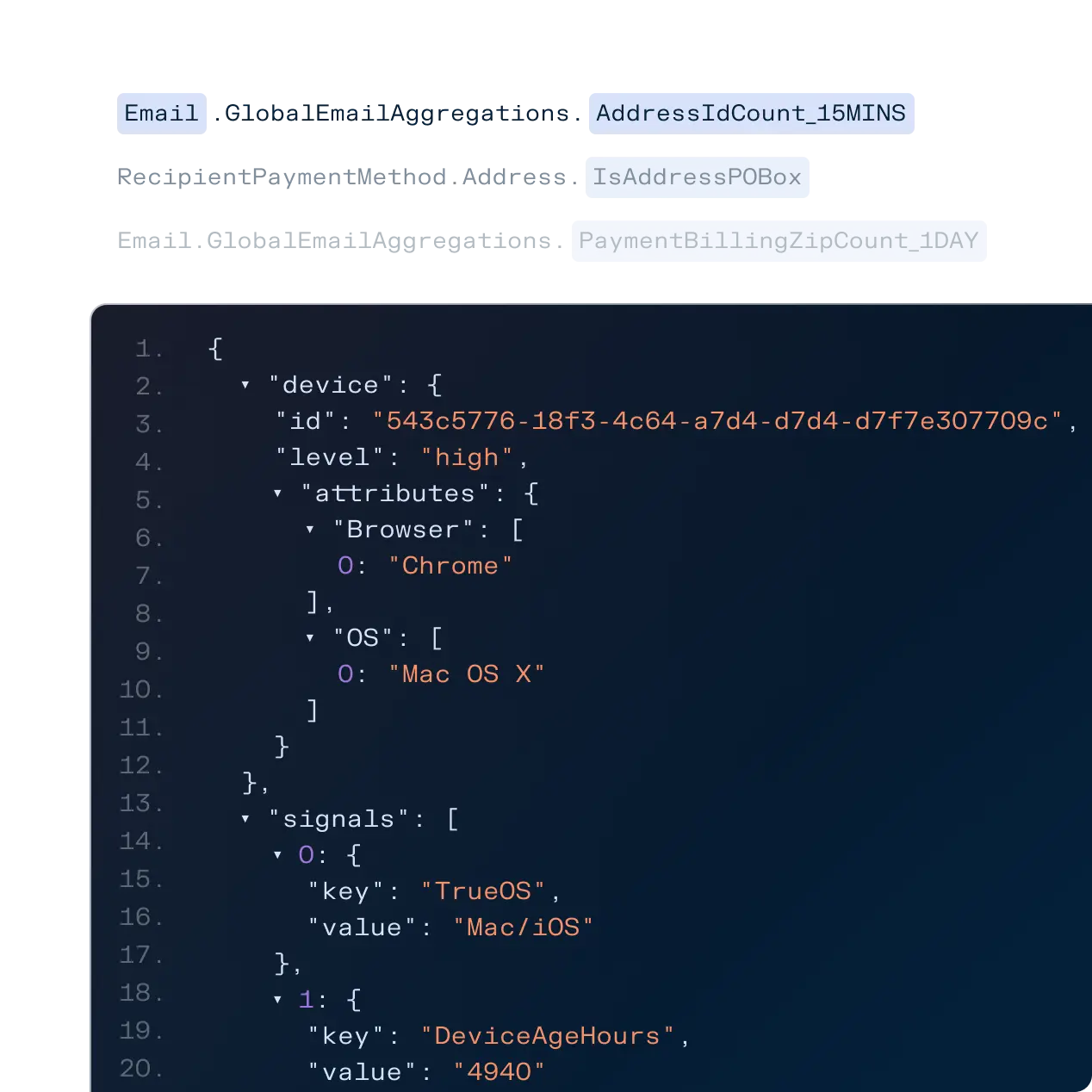
Host and deploy ML models
Deploy and manage ML models in Sardine's Model Garden, running both Sardine's proprietary models and your own in a single production environment with a self-service interface for upload and management. Custom models integrate natively with the rules engine and score normalization, with white-glove support available for complex deployments.
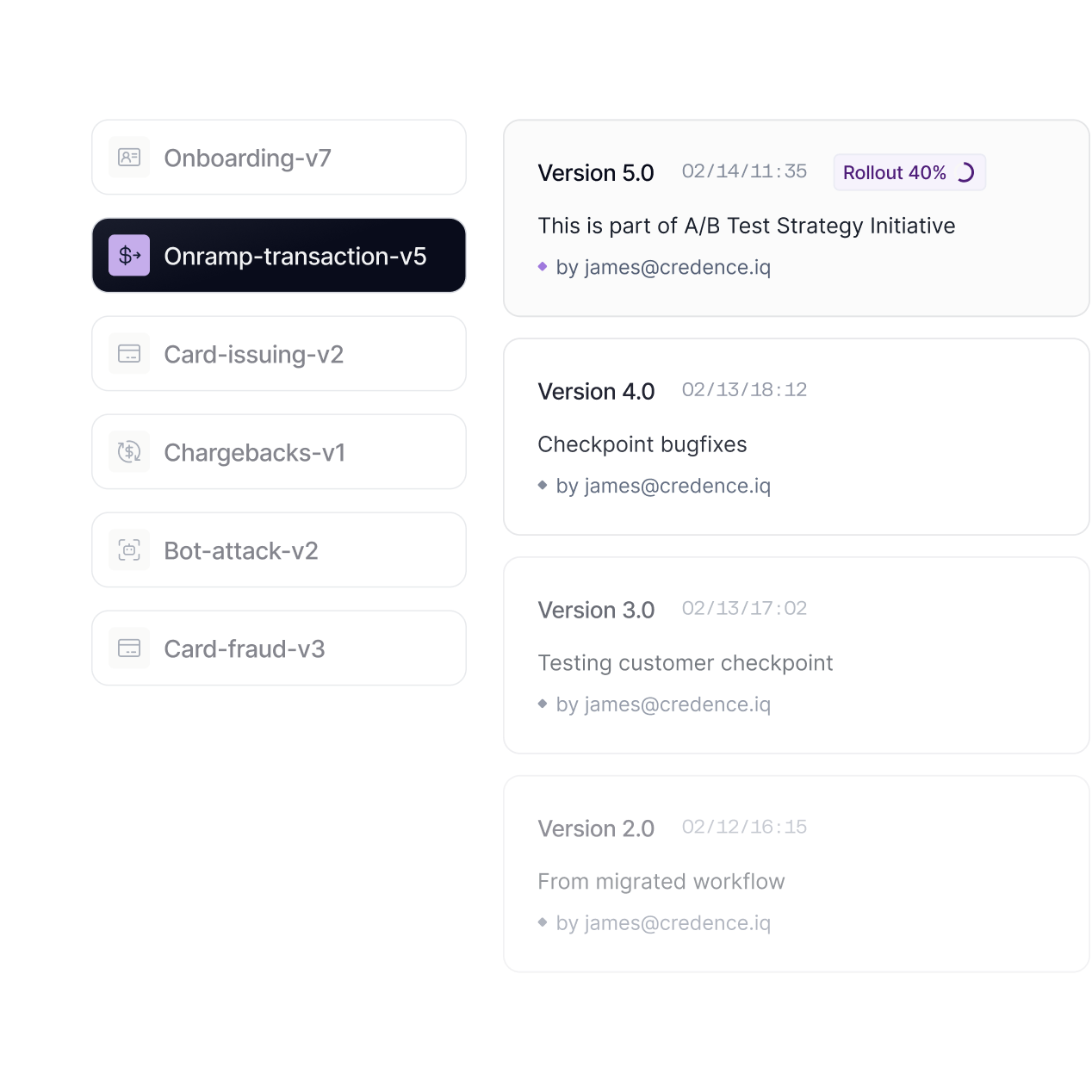
Adaptive models across the risk lifecycle

Device & behavior
Adaptive device and behavioral signals to detect fraud, bots, and account takeover earlier.

Data consortium
Network intelligence from 6.5B+ devices and cross-platform fraud signals.

AI agents
AI agents that automate fraud detection, investigation, and decisioning workflows.

Case management
Investigate alerts, collaborate with teams, and resolve fraud cases faster.

Fraud investigations
Visualize relationships between users, devices, accounts, and transactions.

Rules & workflows
Build flexible rules and automated workflows.

Frequently
asked questions

How does Sardine make fraud model decisions explainable to risk teams?
Sardine gives risk teams feature-level visibility into every fraud score so they can see which signals influenced the decision. That means teams can understand why a model flagged a user, transaction, or session, review the strength of the underlying indicators, and apply thresholds with more confidence. This level of transparency is especially useful for fraud operations teams that need to tune policies, investigate outcomes, and maintain internal governance over model driven decisions.
Can we use our own fraud models inside Sardine?
Yes. Sardine allows teams to bring their own fraud models and run them within the same environment as Sardine’s native models. This gives organizations more flexibility to preserve proprietary modeling strategies while still using Sardine for deployment, orchestration, scoring, and decisioning. For teams with in-house data science resources, this makes it easier to operationalize custom fraud machine learning without stitching together separate model infrastructure and risk tooling.
How does Sardine combine machine learning and rules in production?
Sardine combines machine learning and rules in one decisioning layer so teams can apply both adaptive scoring and explicit policy controls in the same workflow. Rules can enforce hard requirements, routing logic, and business constraints, while machine learning helps detect complex fraud patterns that are harder to define manually. This allows fraud teams to build a more practical production setup where models inform decisions and rules shape how those decisions are applied.
What fraud workflows can Sardine machine learning models score?
Sardine machine learning models can score risk across key fraud workflows such as onboarding, login, account funding, payments, and broader account activity. This matters because fraud patterns often appear differently depending on the moment in the customer journey.