KYC Onboarding
KYC Onboarding
Make confident onboarding decisions with adaptable KYC
Verify customers globally using identity, device, and behavioral signals with progressive checks that adapt to risk.













Resolve risk early, keep onboarding flowing
Run KYC as a continuous risk process, not a one-time check
Customer Due Diligence
CDD at account opening with risk-based step-ups
Establish a compliant baseline while streamlining onboarding for low-risk users.
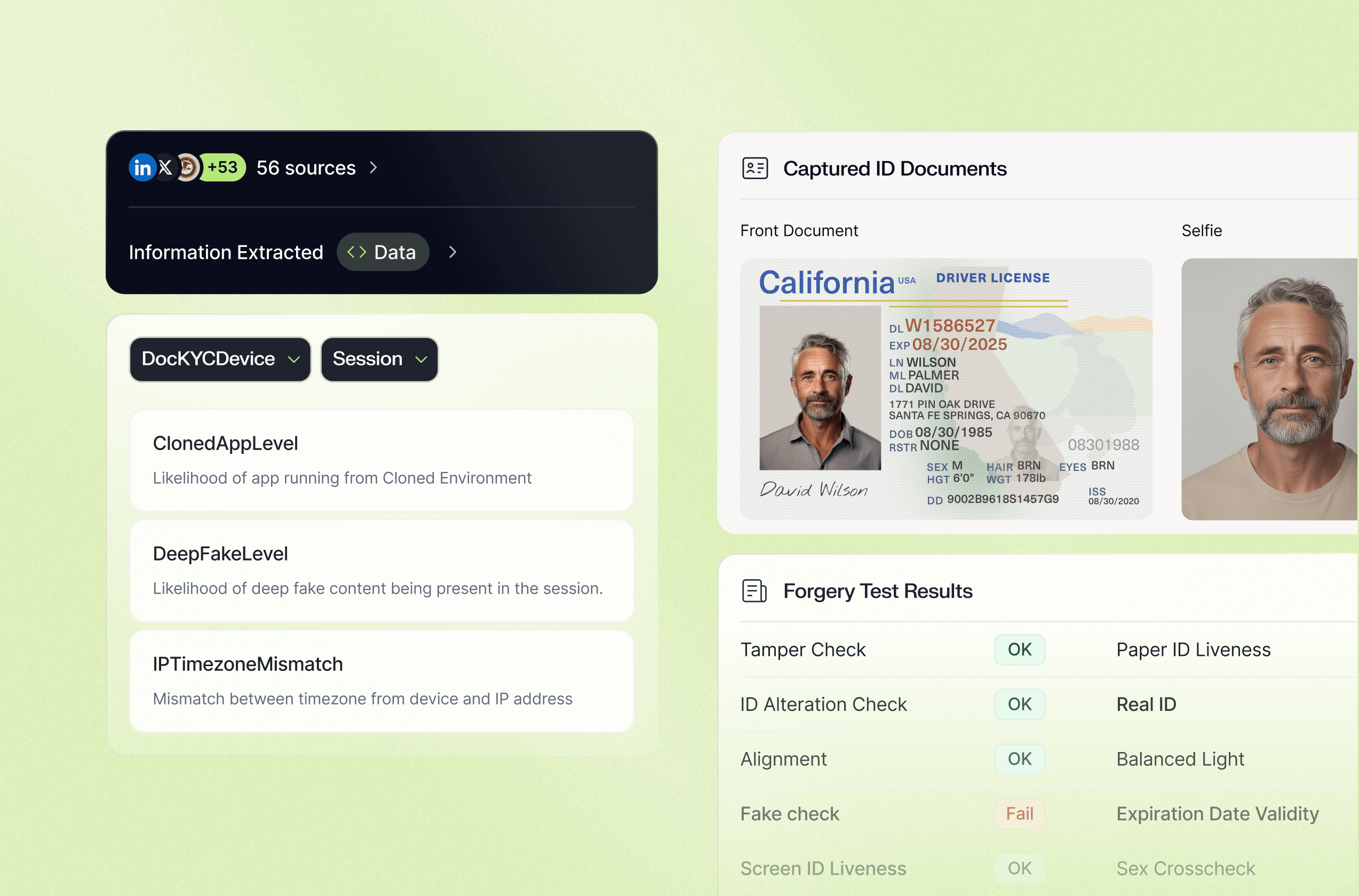

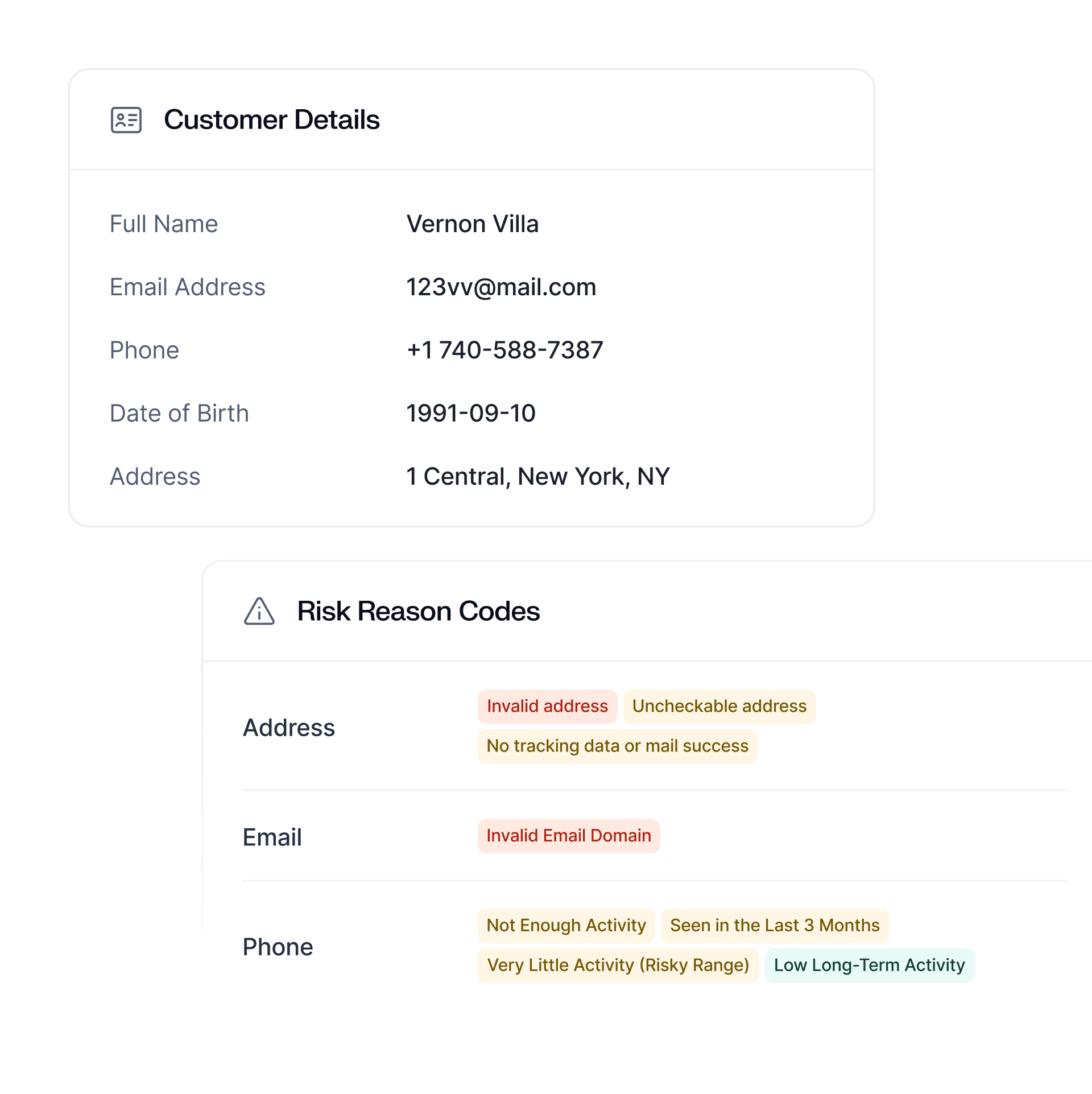
Pre-screen users using device, behavior, and network intelligence to assess risk before adding friction to good users.

Verify customers with 150+ data sources to improve match rates, reduce friction and support thin-file users.

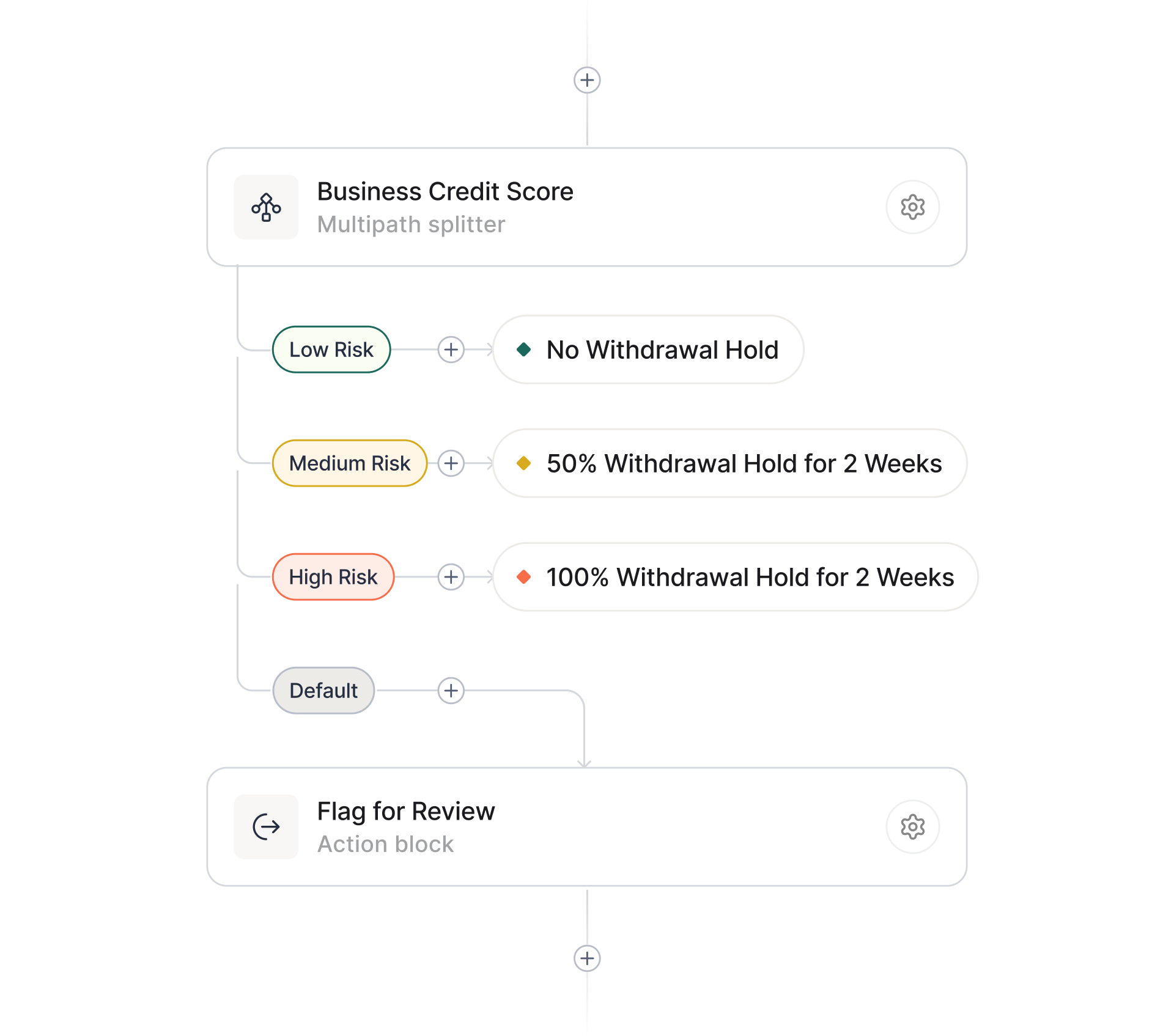
Apply document verification, enhanced checks, or additional review only when risk thresholds are met.
Customer Risk Rating
Ongoing monitoring and customer risk rating
Know where your risk lies as customer behavior profiles evolve over time.
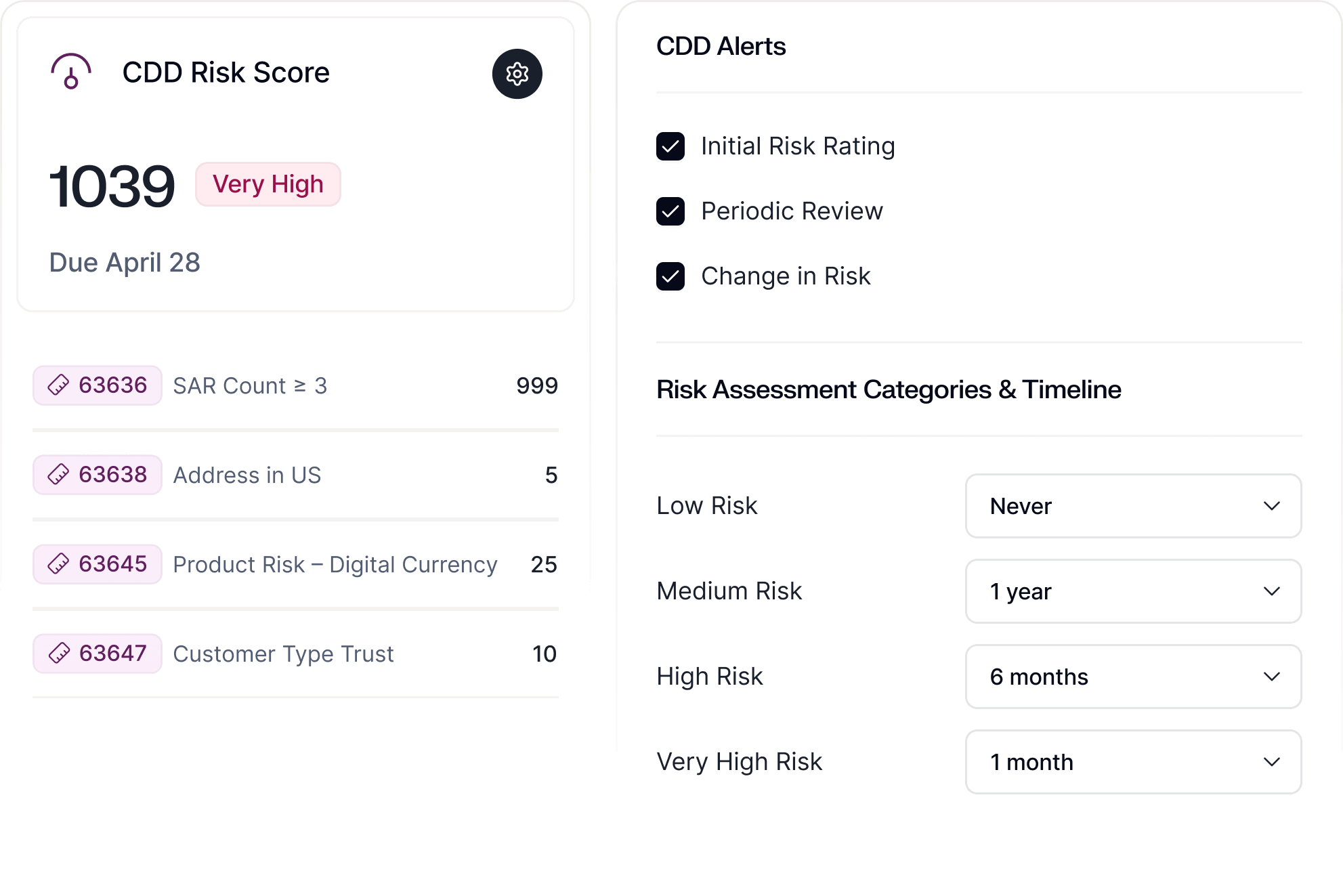

Monitor customers against sanctions, PEPs, and adverse media updates, without running separate workflows.

Run CDD refreshes, dormant account reviews, and periodic reassessments based on risk level.

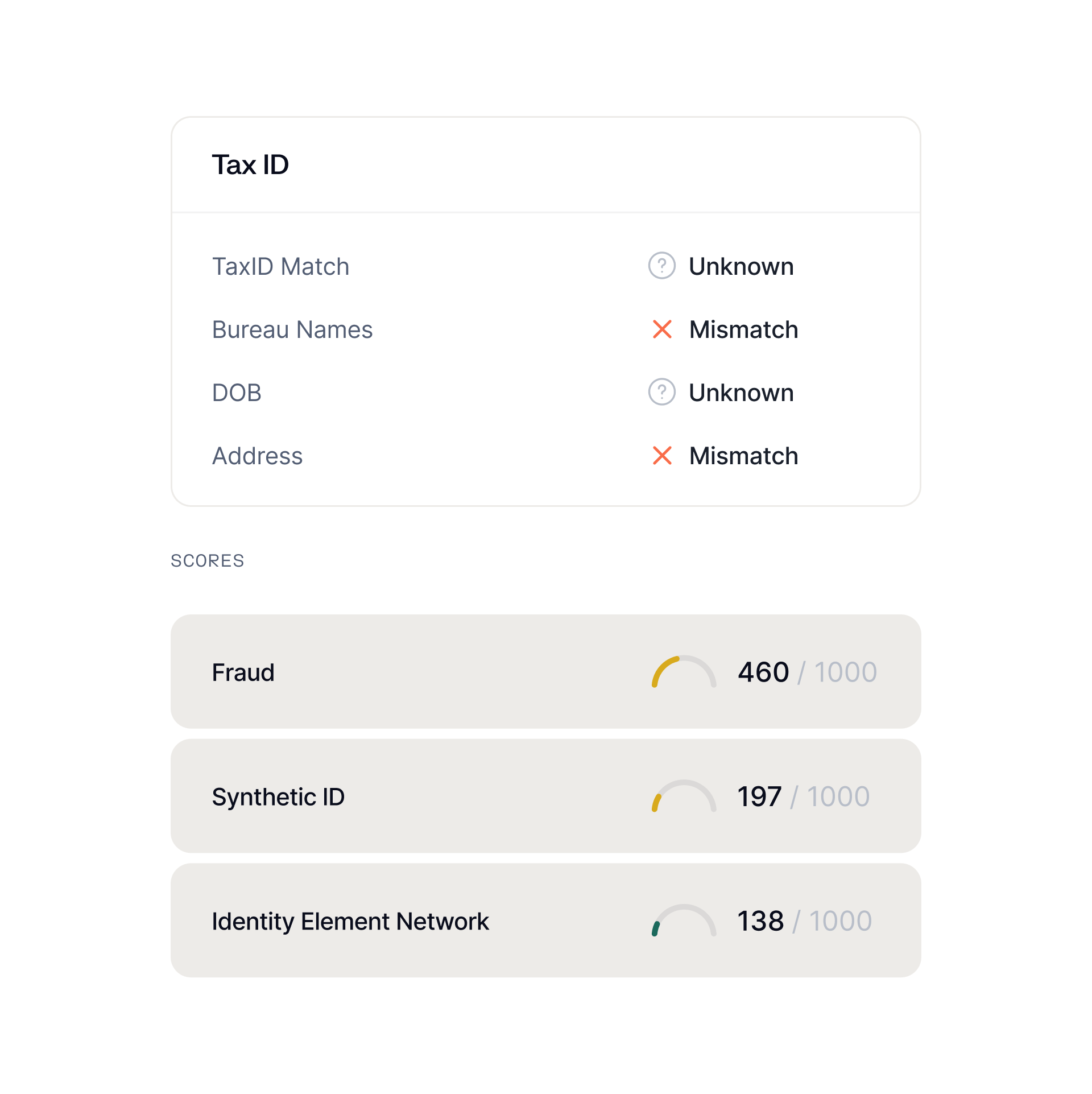
Use consortium signals from Sardine and Sonar to uncover repeat abuse, AML risk, and unseen identity attributes.
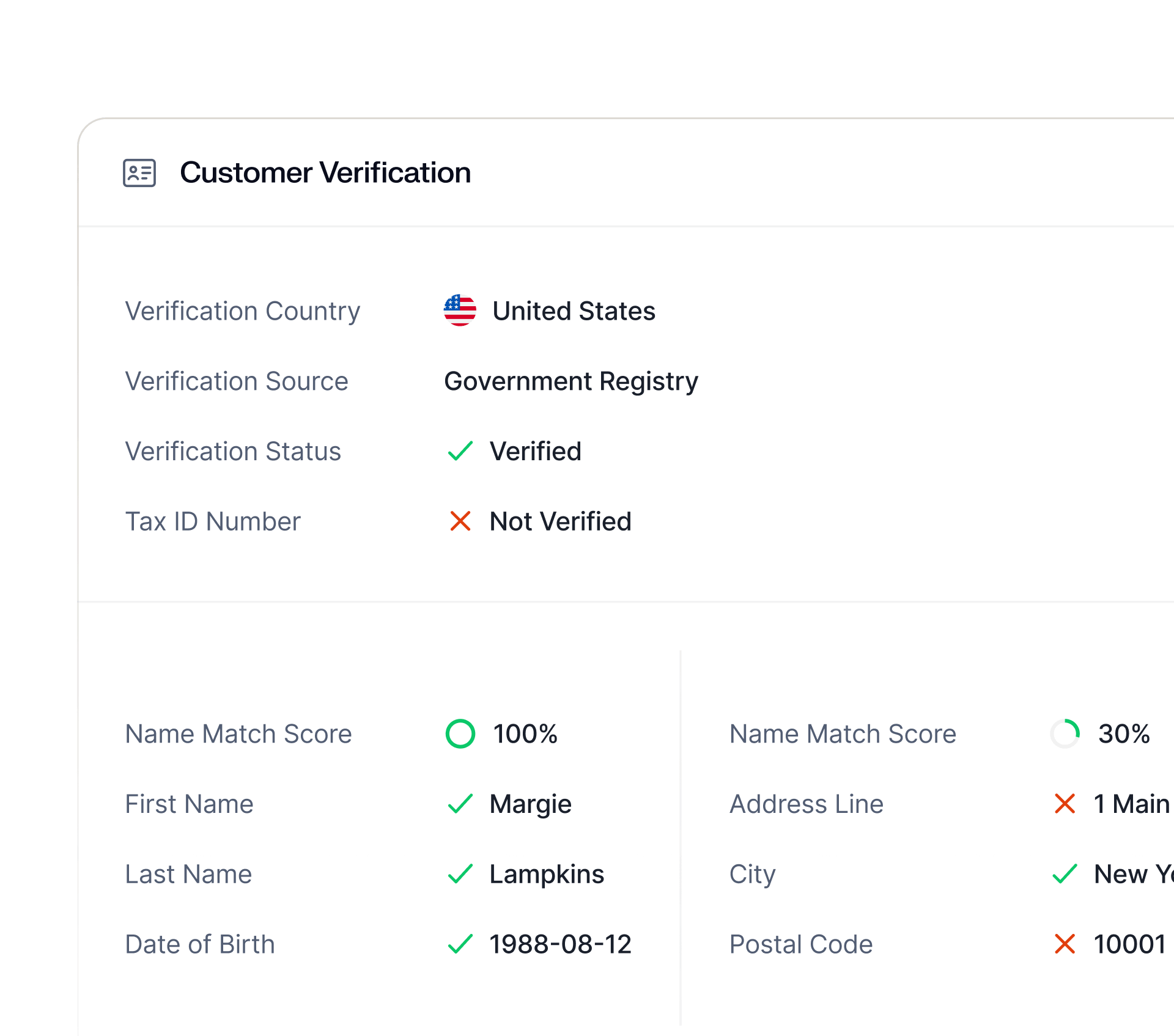

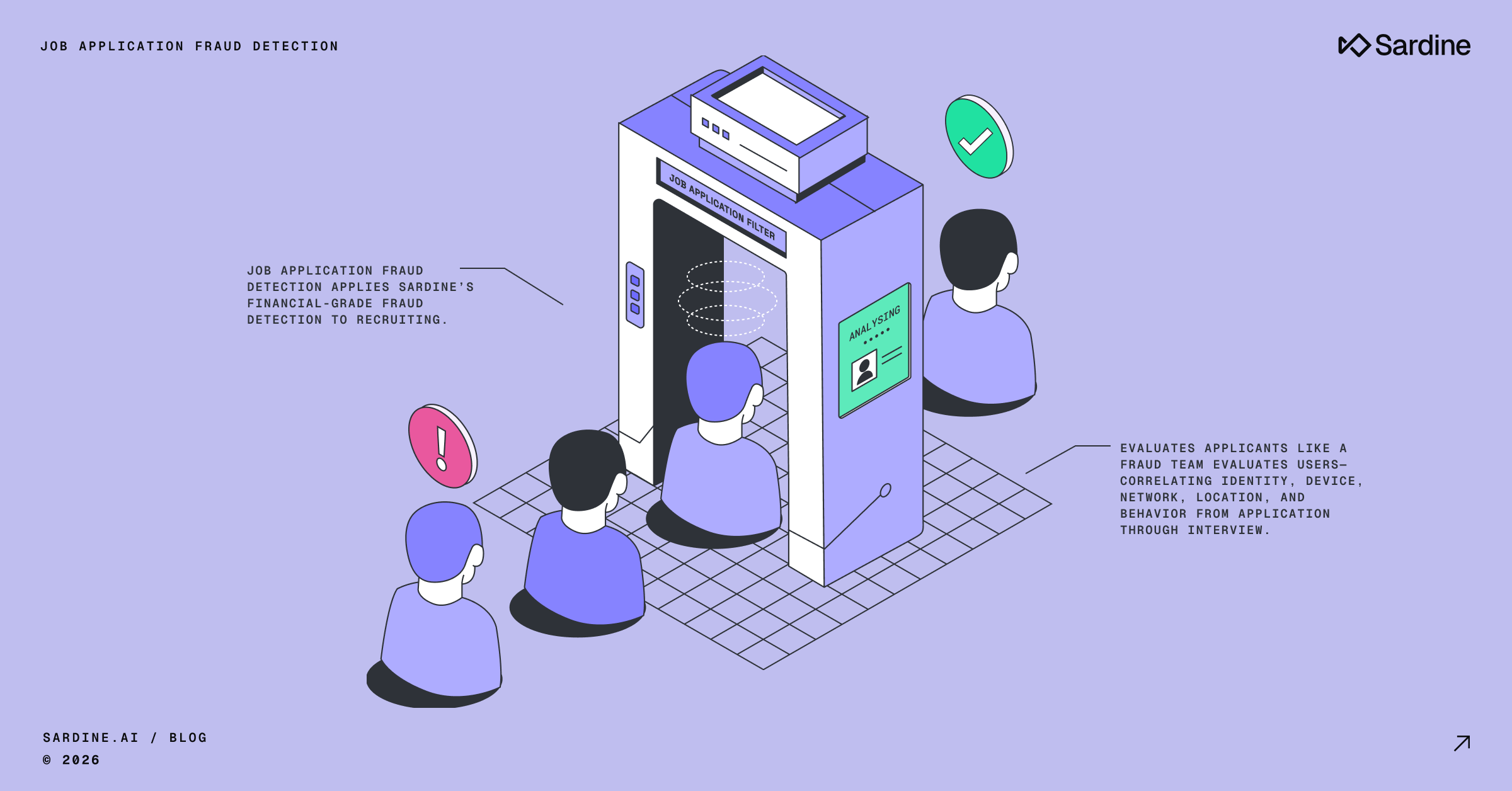
Clear KYC backlogs with AI-assisted review
AI agents resolve identity issues, enrich KYC decisions with OSINT, and clear routine reviews for human judgment.
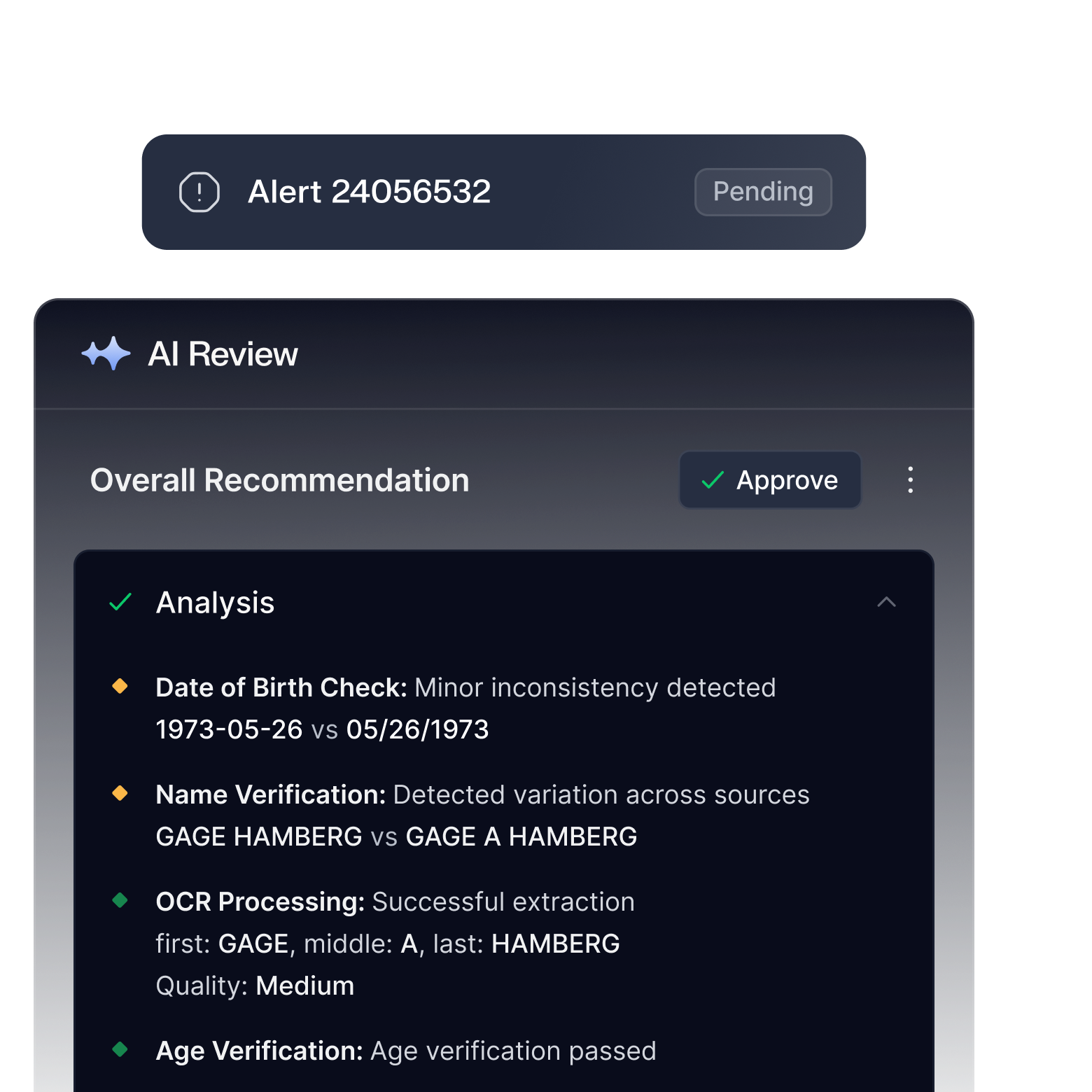
Resolve identity errors
Correct name mismatches, OCR errors, transliterations, and format inconsistencies across sources.
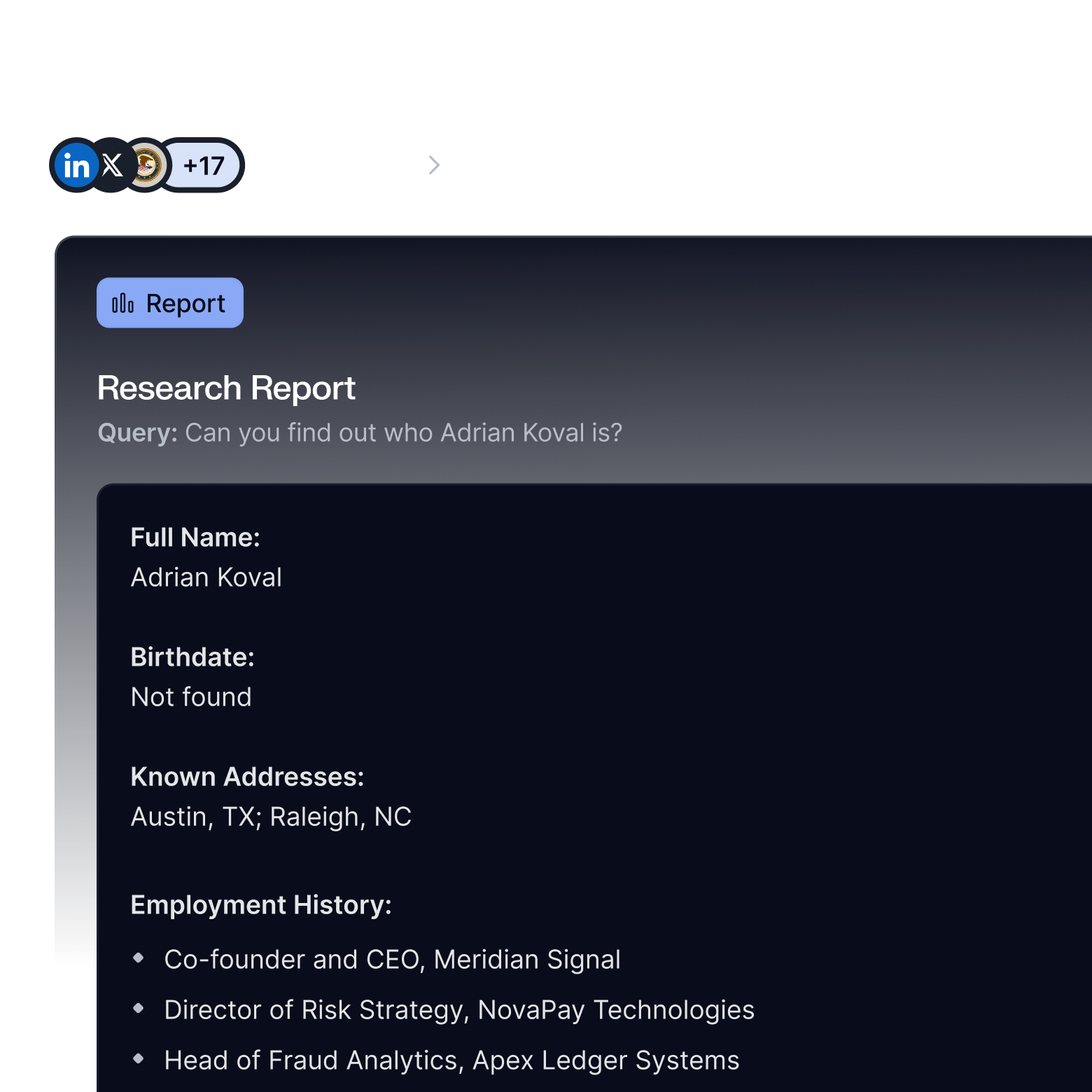
Enrich decisions with OSINT
Automatically surface relevant public web signals to confirm identities and highlight elevated risk.
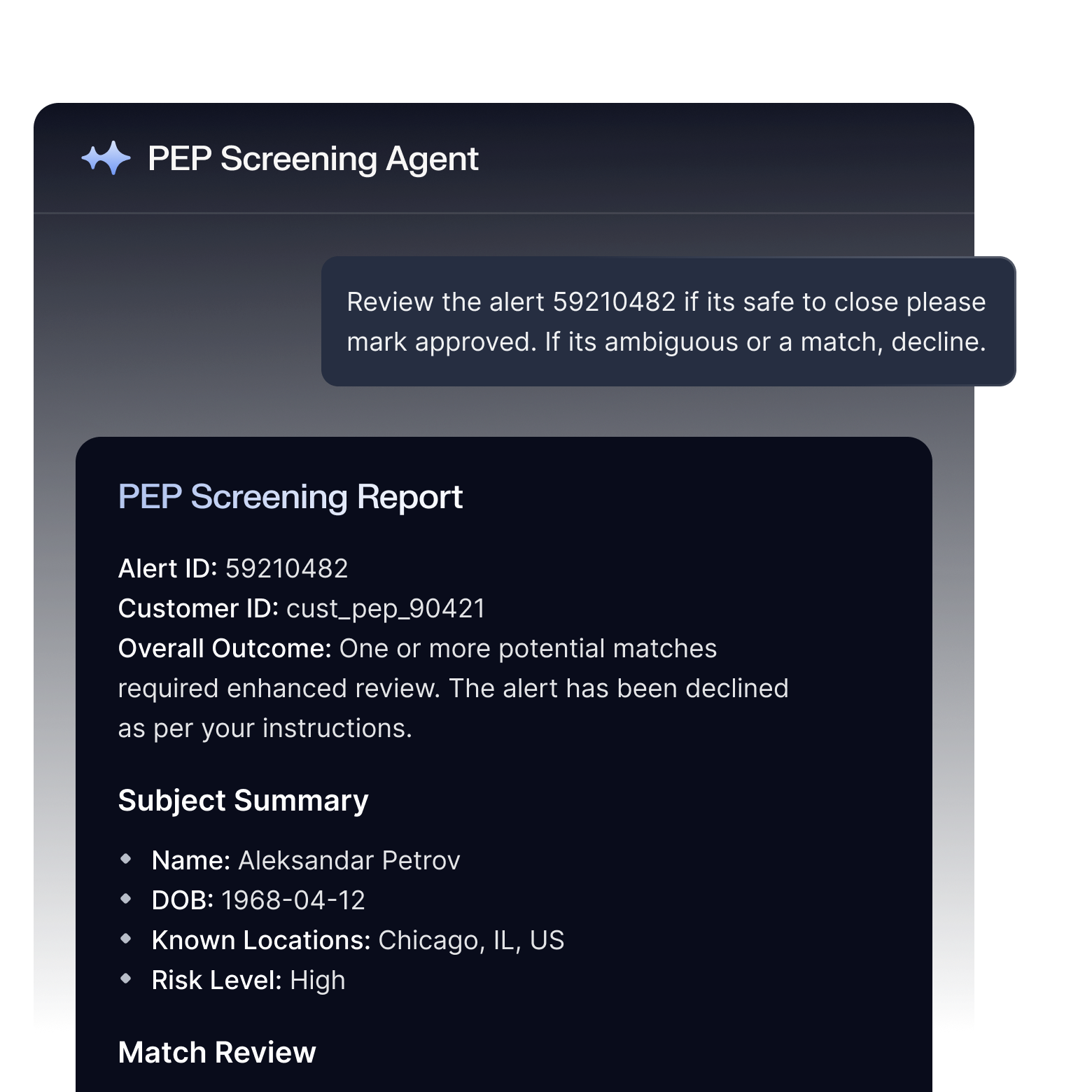
Auto-clear low-risk cases
Identify low-risk matches and inconsistencies to reduce manual review and queue backlogs.
Audit-ready decision trails
Document every check, decision, and signal with clear reasoning for regulators and auditors.
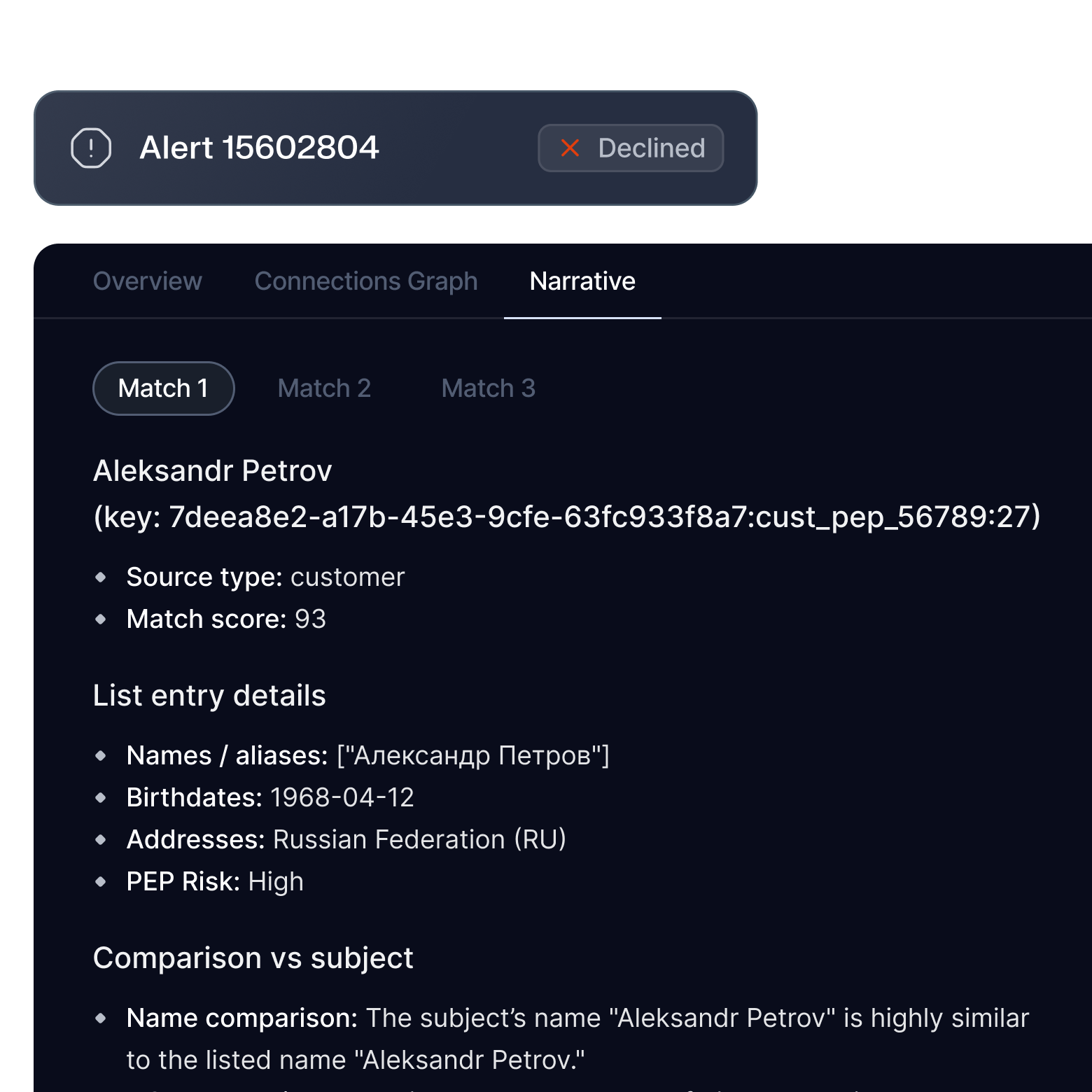
Backed by the industry’s leading agentic risk platform
Device & Behavior
Get the full story behind every user
800+ device and behavioral signals support passive risk resolution, identity binding, and detecting bots, emulators, impersonation, and deepfake-driven attacks.
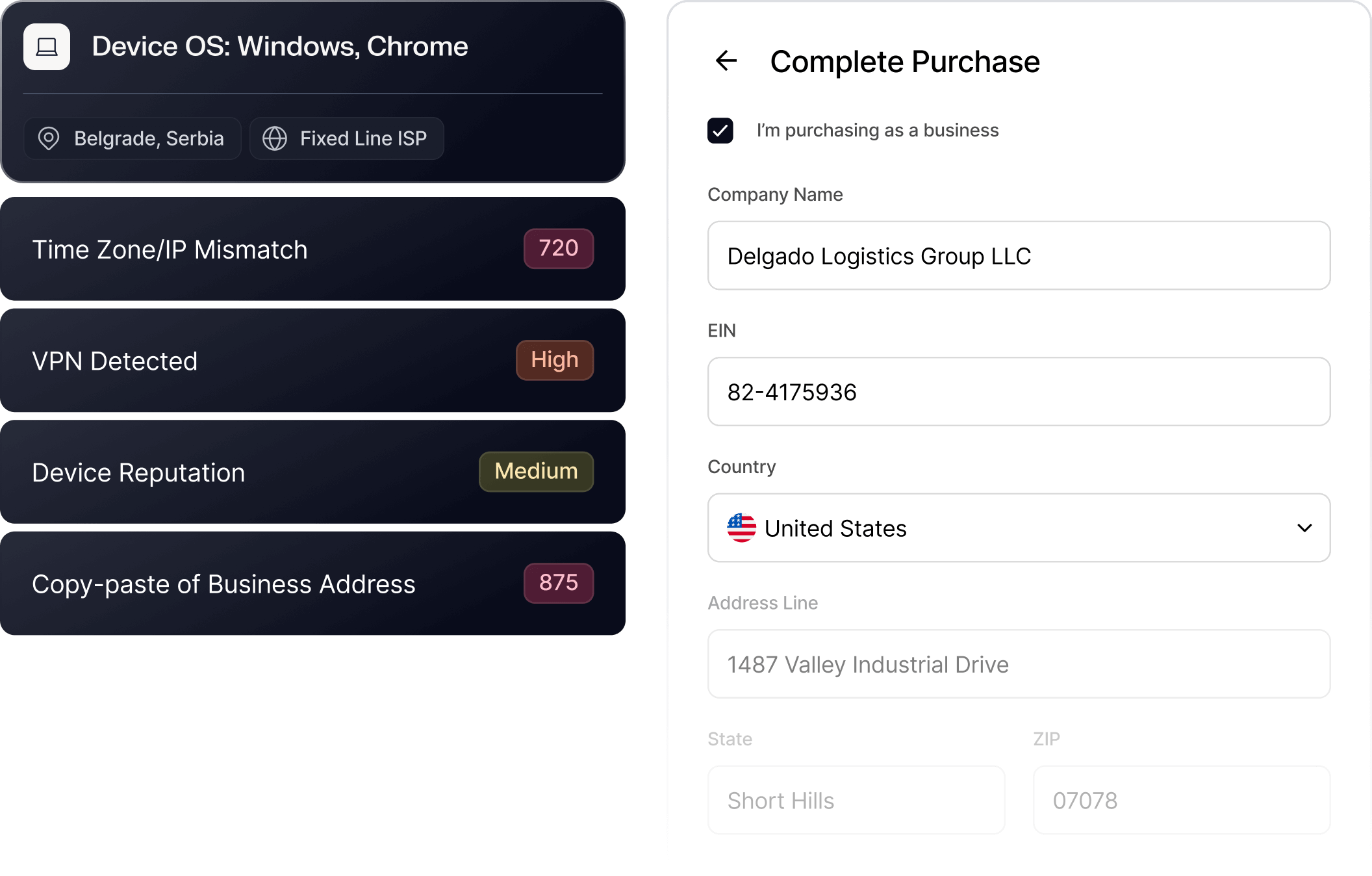



Data Consortium
Understand all aspects of an identity
Network-level intelligence and shared risk signals improve match rates and surface risky identities that traditional KYC misses.
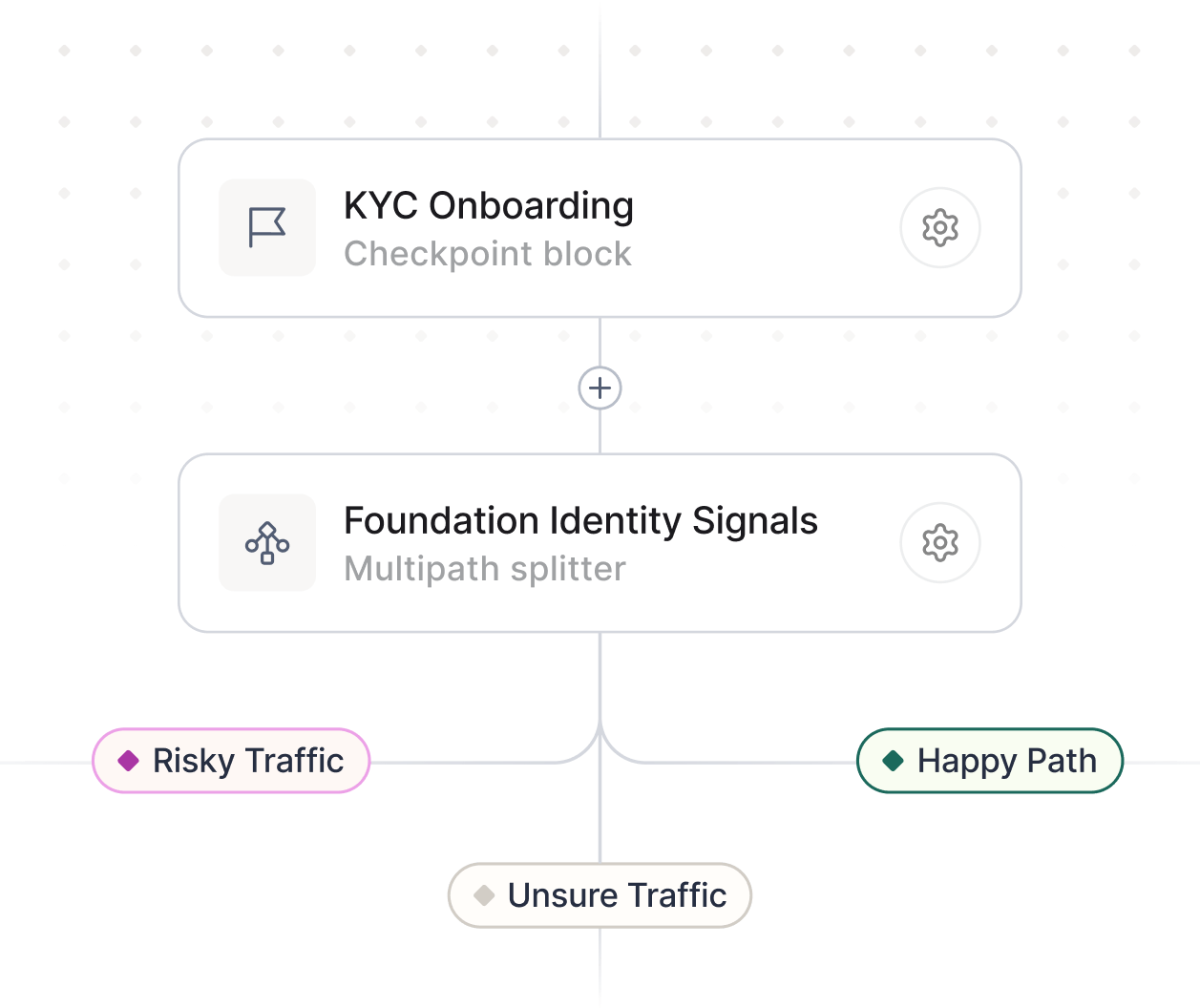
Rules & Workflows
End-to-end KYC workflows
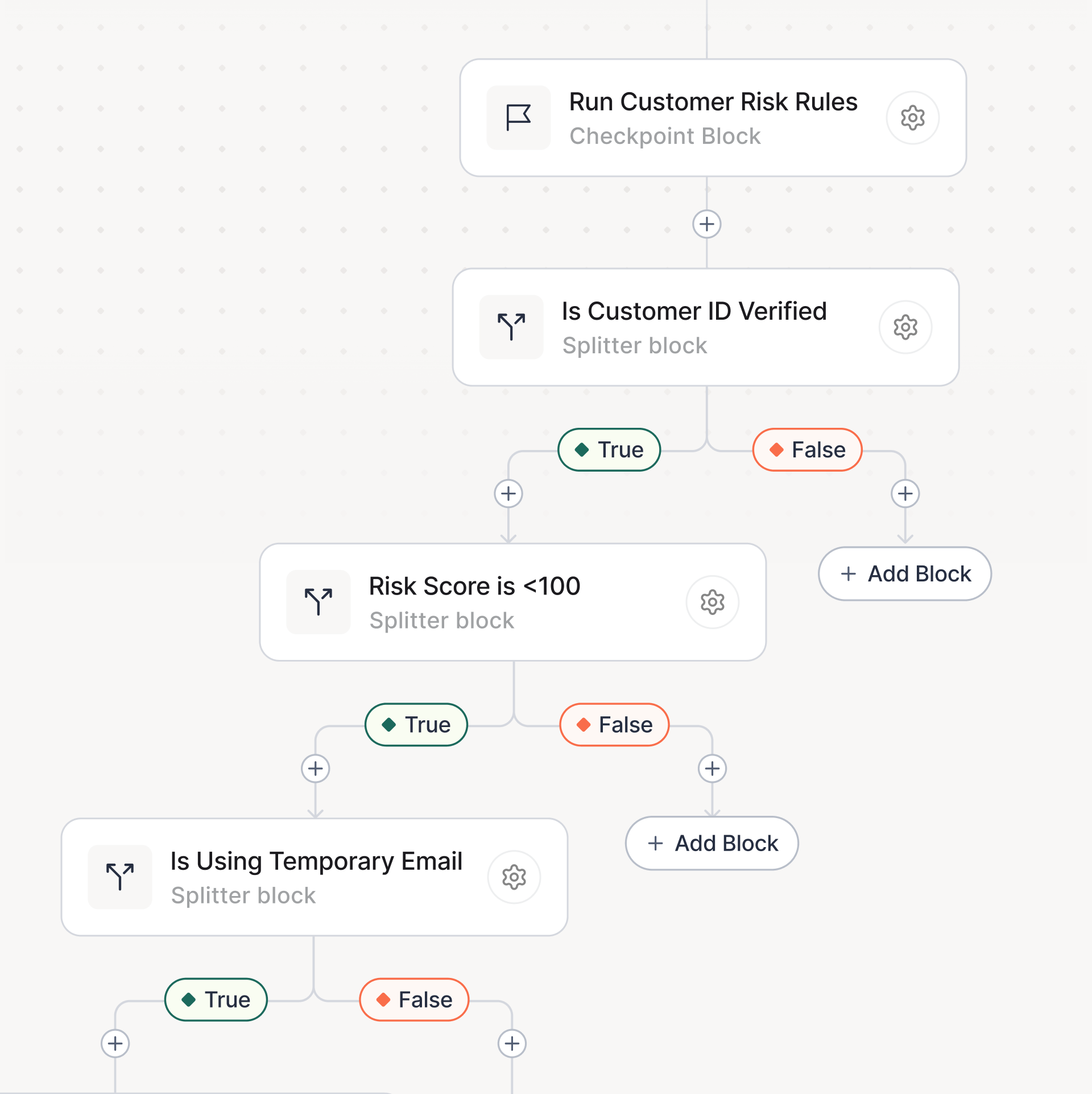
Configure risk-based workflows to orchestrate KYC, KYB, and EDD checks end-to-end, with clear policy control and auditability.
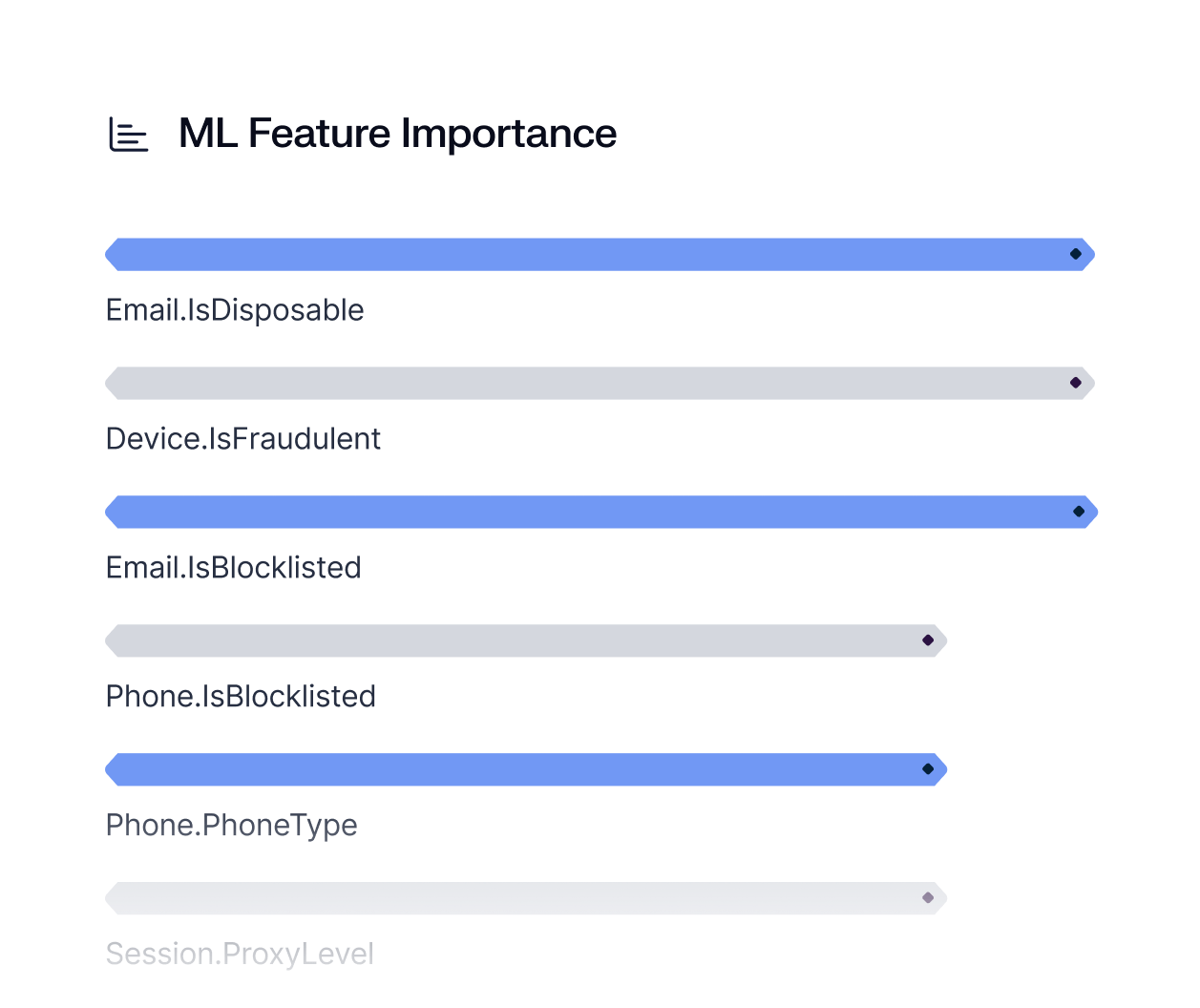
Machine Learning
Models that only get smarter
Sardine’s custom models combine identity, device, behavior, and network signals to reduce noise, improve accuracy, and surface true risk.



Deep KYC checks without slowing down onboarding
Frequently asked questions

How do we control when Sardine steps up to DocKYC or enhanced review?
Teams configure step-ups using risk thresholds, geographies, products, and policy rules. This allows you to define exactly when document verification, manual review, or EDD is required, without hardcoding logic or changing vendors.
Sardine’s configurable workflow builder enables risk-based step-up logic tied to identity signals, device and behavioral intelligence, transaction context, sanctions exposure, and entity risk scoring. You can define dynamic thresholds by jurisdiction, product line, customer segment, or regulatory requirement to ensure DocKYC, enhanced due diligence, or manual review is triggered only when material risk indicators are present.
Rules can be tested in shadow mode, backtested against historical onboarding data, and adjusted without engineering involvement. This provides compliance and risk teams with full policy control while maintaining regulatory defensibility and operational efficiency.
How does Sardine handle edge cases like thin-file or non-traditional users?
Sardine uses identity waterfalls and alternative signals to verify users who lack strong bureau or credit histories. This reduces false positives for legitimate users while still surfacing risk when signals do not corroborate.
Rather than relying on a single data source, Sardine orchestrates multiple global and regional identity providers in a structured waterfall model. If a primary source returns limited or inconclusive data, secondary and tertiary signals are evaluated, including phone and email intelligence, device binding, behavioral biometrics, consortium risk data, and transaction history when available.
This layered verification approach improves match rates for thin-file, young, immigrant, or credit-invisible users while preserving strong detection of synthetic identities, impersonation attempts, and mule accounts.
Can we see why a KYC decision was made?
Yes. Every decision includes contributing signals, risk factors, and reviewer actions when applicable. This creates a clear audit trail for internal quality assurance, model validation, and regulatory examinations.
Sardine provides explainable risk decisioning across KYC, KYB, and AML workflows. Each approval, decline, or escalation is supported by structured evidence including signal weights, corroboration logic, rule triggers, model outputs, and analyst notes.
This audit-ready documentation supports regulatory exams, independent model validation, internal compliance reviews, and board-level reporting. Decisions are transparent and traceable across identity, device, behavioral, and consortium risk signals.
How does Sardine fit into existing KYC and AML tooling?
Sardine can replace point solutions or orchestrate alongside them. Many teams consolidate multiple identity, fraud, and compliance tools into Sardine while keeping downstream AML, transaction monitoring, or case management systems intact.
The platform operates as a unified risk layer across onboarding, funding, payments, and ongoing monitoring. It integrates with core banking systems, AML transaction monitoring engines, sanctions screening providers, and case management tools through API connections.
Institutions can deploy Sardine as a full KYC orchestration platform, as a decisioning layer on top of existing vendors, or as a consolidation engine to reduce vendor fragmentation and improve signal consistency.
What happens when data sources disagree or return inconsistent results?
Sardine’s risk engine evaluates corroboration across sources rather than relying on a single match. AI agents automatically score, surface, and resolve inconsistencies when possible before cases reach analysts.
Identity verification is evaluated as a cumulative risk assessment. When discrepancies occur, such as name variations, transliteration issues, address normalization conflicts, or OCR mismatches, automated agents attempt resolution using structured corroboration logic.
Only inconsistencies that exceed defined risk thresholds are escalated for manual review. This reduces unnecessary declines and prevents operational bottlenecks while maintaining compliance rigor.
Does Sardine support ongoing monitoring and perpetual KYC?
Yes. Sardine supports continuous KYC and risk-based monitoring throughout the customer lifecycle.
Beyond account opening, customers can be enrolled in automated monitoring workflows for sanctions updates, adverse media changes, behavioral risk shifts, dormant account reviews, and CDD refresh requirements.
Risk scoring adjusts dynamically as new device, behavioral, transaction, or consortium intelligence signals are observed. This enables institutions to maintain regulatory compliance without relying on manual periodic reviews.
How does Sardine detect synthetic identities and AI-driven fraud?
Sardine combines identity verification with device intelligence, behavioral biometrics, and cross-industry risk signals to detect synthetic and manipulated identities.
Synthetic identities may appear legitimate within bureau data but reveal inconsistencies at the device, behavioral, or consortium level. Sardine identifies anomalies such as identity and device mismatch, emulator usage, deepfake document artifacts, scripted behavioral patterns, and mule network linkages.
This multi-layered detection model strengthens KYC onboarding controls against emerging AI-enabled fraud without introducing unnecessary friction for legitimate users.
How does Sardine reduce false positives in KYC workflows?
False positives are reduced through risk-based orchestration, identity waterfalls, and cross-signal corroboration.
Instead of escalating every discrepancy, Sardine evaluates cumulative risk context across identity attributes, device intelligence, behavioral patterns, and consortium intelligence. AI agents resolve low-risk mismatches such as minor spelling variations, formatting inconsistencies, or OCR discrepancies.
This improves match rates, shortens onboarding time, and reduces manual review queues while maintaining strong fraud detection standards.
Is Sardine compliant with global KYC and AML regulatory requirements?
Sardine is designed to support global regulatory frameworks including CIP, CDD, EDD, BSA, AML, sanctions screening, and intelligence sharing requirements under applicable legal standards.
The platform provides audit-ready documentation, explainable decisioning, configurable risk policies, and jurisdiction-specific controls. Teams can align onboarding workflows with regional regulatory requirements while maintaining centralized governance and oversight.
This enables financial institutions, fintechs, sponsor banks, and regulated marketplaces to scale KYC operations without sacrificing compliance integrity.