Rules Engine
Rules Engine
Build, test, and deploy fraud and AML rules faster
Create rules with AI or in our no-code rule builder, test performance before launch, and deploy updates without waiting on engineering or vendor support.
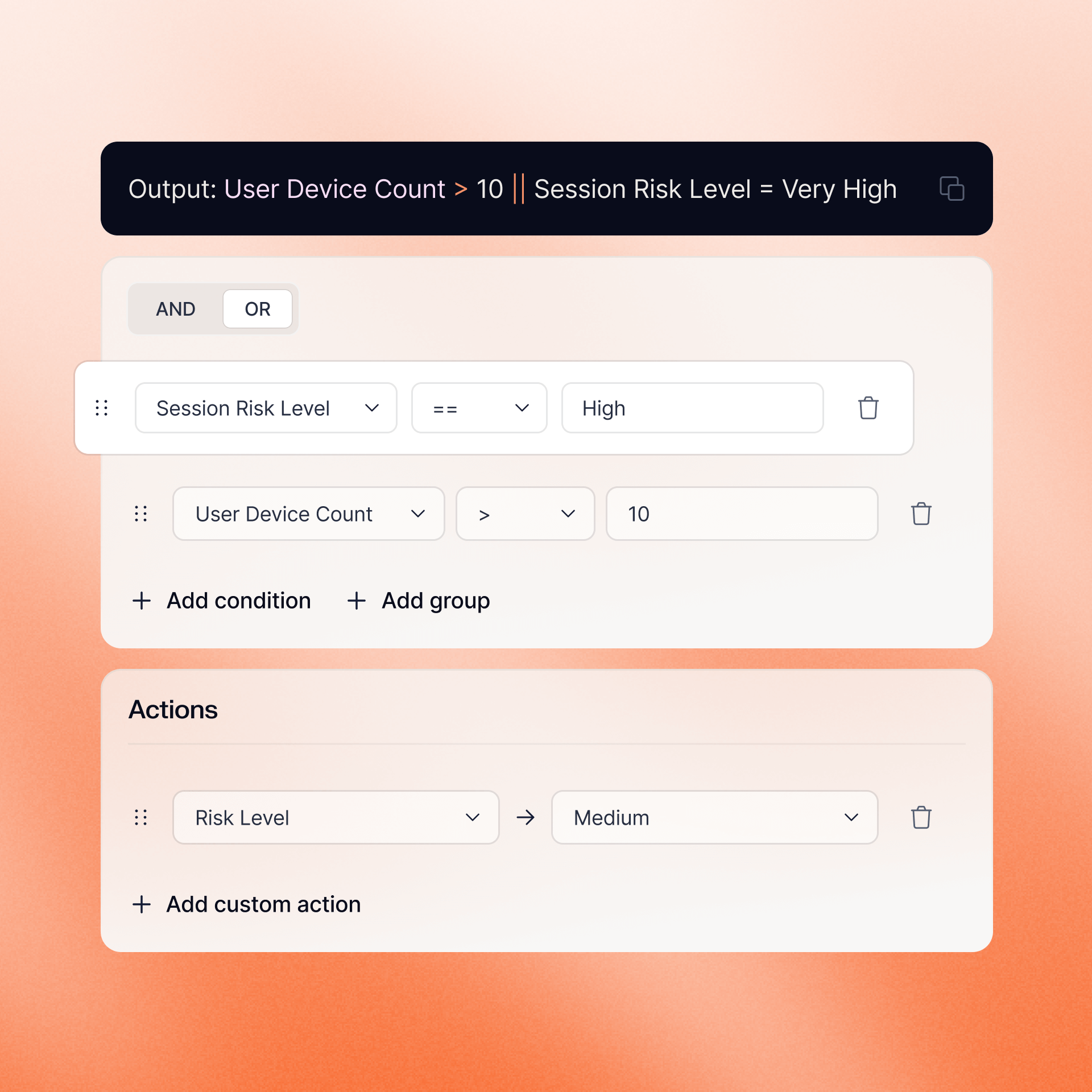












Flexible controls built for the speed of modern financial crime
Build and adjust controls quickly, automate decisions and escalations, and respond to new patterns with a flexible, no-code rule engine.


Out-of-the-box protection
Packaged with pre-built coverage for common fraud and AML typologies, then tailor controls to your risk strategy.

Easily build and deploy rules
Write rules with AI or in our no-code rule builder, test performance, and deploy them into production without engineering.

Automate any workflow
Put agents to work on onboarding reviews, risk checks, and follow-up actions based on your configuration.
Centralize fraud and AML decisioning on one rules engine
Quickly build and launch rules without engineering support
Write rules in natural language, and Sardine’s AI turns them into production-ready logic with conditional triggers. Create rules from scratch or customize proven templates from our library of hundreds of fraud and AML rules, without engineering or vendor support.
Evaluate risk using our 12,000+ ML risk features in your rules, including signals from past sessions, aggregations, and custom data fields.
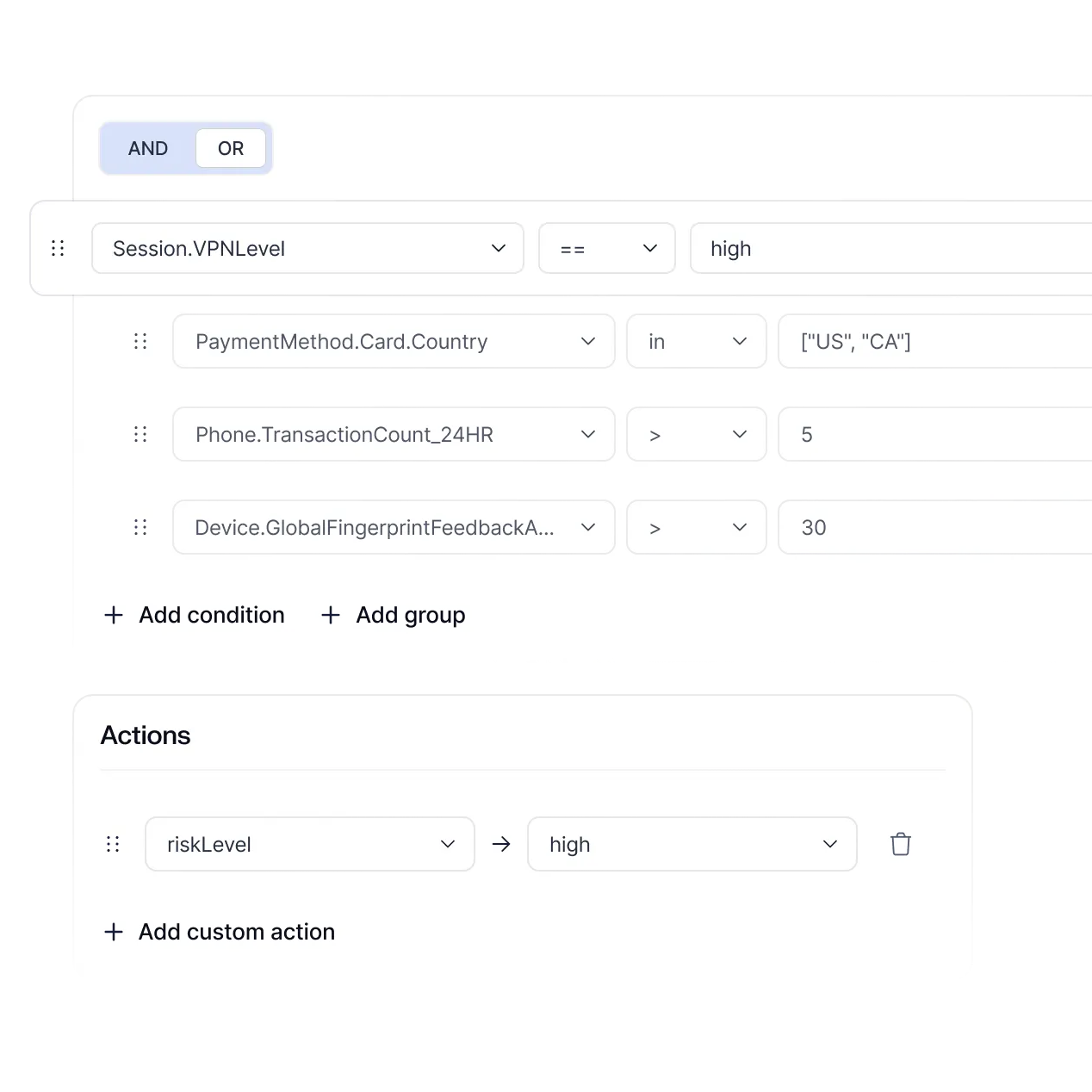
Test rule performance before deploying to production
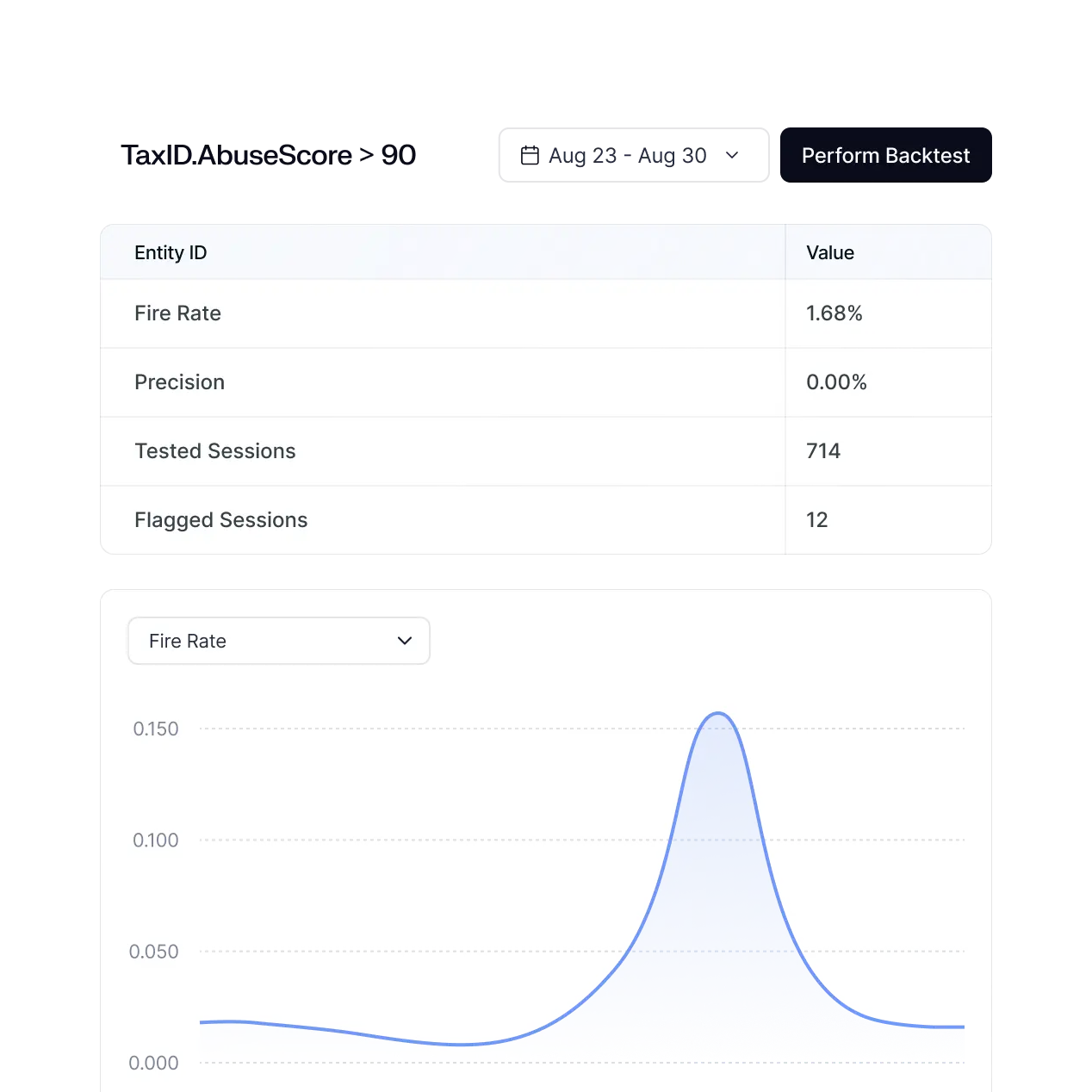
Backtest rules on historical data, run them in shadow mode on live traffic, and A/B test different strategies before rollout.
Robust analytics show precision, recall, and fire rate so you can strengthen detection while keeping alert and investigation volume in check.
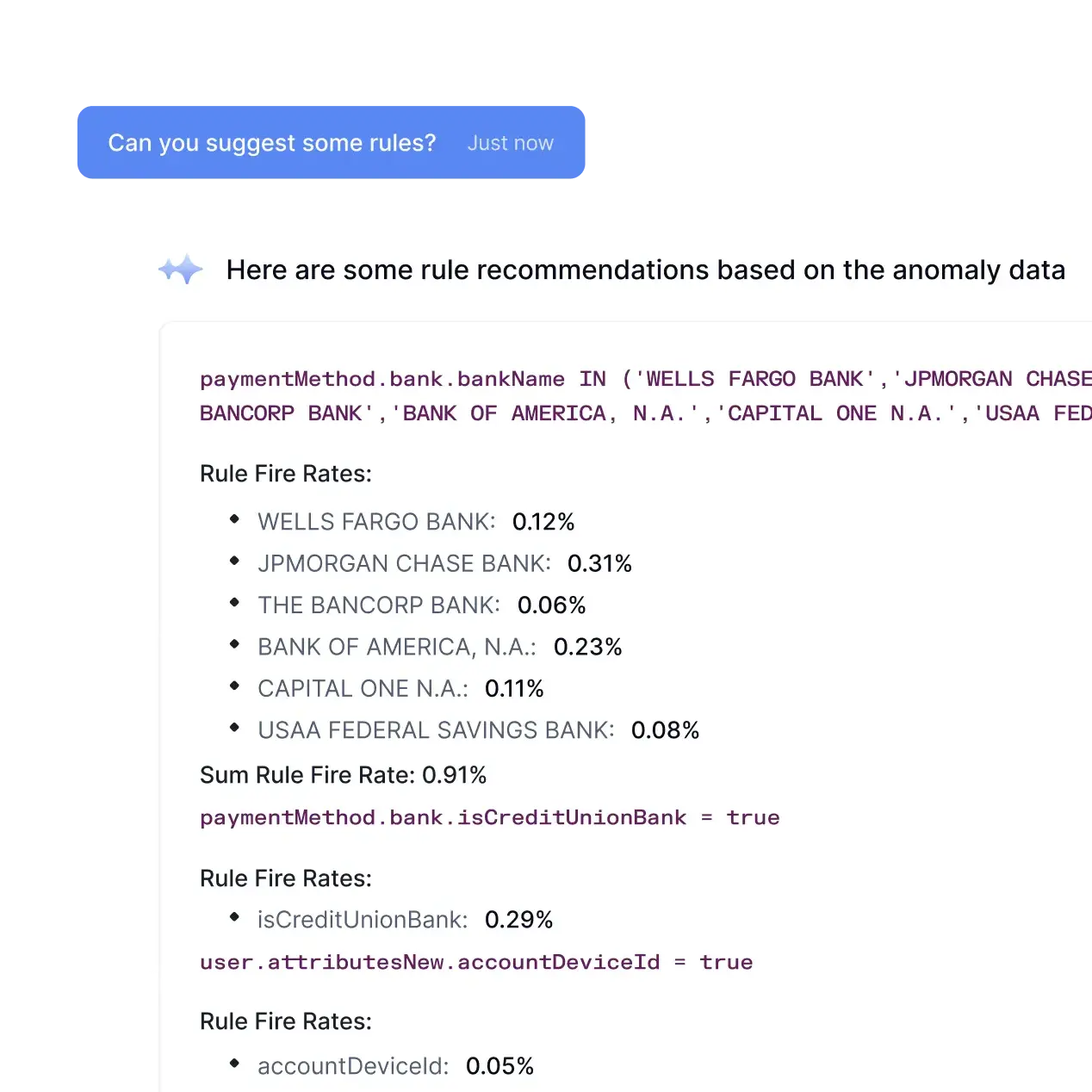
Leverage AI to continuously adapt your defenses
Sardine’s Anomaly Engine monitors live traffic to detect unusual patterns across devices, sessions, payments, and identities. Automatically receive rule recommendations tailored to your traffic profile and emerging threats.
Automate workflows without writing a single line of code
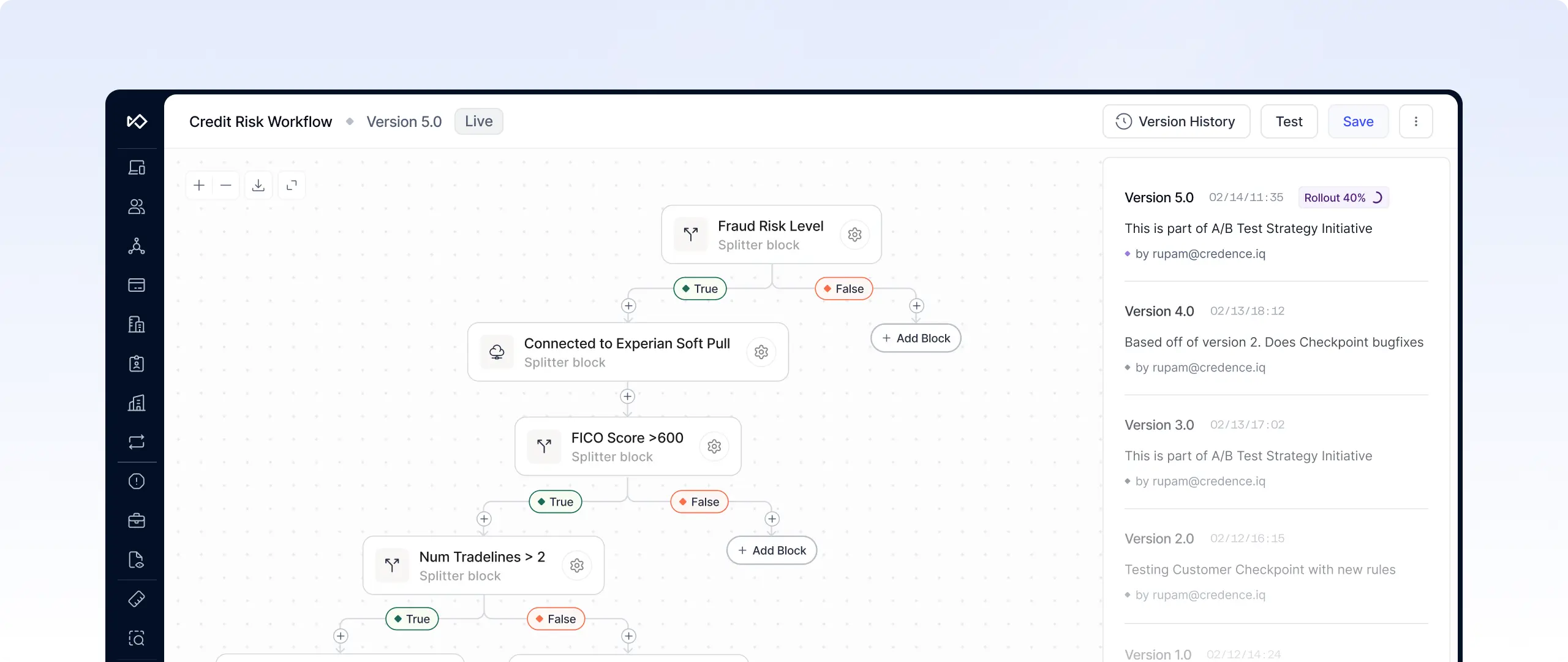
Connect your data sources, define branching logic, and configure decision paths for onboarding, approvals, reviews, and ongoing monitoring with our no-code, drag-and-drop interface.
Built on the industry's leading agentic risk platform

Device & behavior
Analyze every customer touchpoint to identify advanced fraud patterns, without adding friction.

Machine learning
Trained on billions of data points to protect onboarding, login, and payment flows.

Consortium Data
Cross-industry intelligence from our consortium spanning billions of devices and consumers.

Agentic AI
Automate onboarding reviews, alert handling, investigations, and case management.

Case management
Investigate alerts, collaborate with teams, and resolve fraud cases faster.

Connections Graph
Map relationships between users, devices, IP addresses, phone, email, and transactions.


Frequently
asked questions

How does Sardine help fraud teams respond to new attack patterns without waiting on engineering?
Sardine enables fraud and AML teams to launch new controls as soon as they identify a threat, without relying on product roadmaps or engineering tickets. Analysts can translate newly observed abuse patterns into live decision logic and react while attacks are still evolving. This gives teams a faster way to protect onboarding, login, payments, payouts, and other sensitive flows when timing matters most.
How does Sardine let analysts turn fraud patterns into production rules quickly?
Sardine is built so the people closest to the risk can create and refine rules directly. Teams can define logic in natural language or use a no code builder to encode patterns they are seeing in production, apply thresholds, and move quickly from detection insight to active control. That reduces the gap between fraud discovery and fraud prevention.
How does Sardine help teams test rule changes safely before enforcement?
Sardine gives teams controlled ways to evaluate rule performance before they fully enforce a new strategy. Risk operators can assess impact using historical data, observe how rules behave on live traffic, and understand how changes affect fraud outcomes and customer experience before rollout. This helps teams move faster without introducing unnecessary disruption.
How does Sardine combine fraud rules, AML rules, and workflows in one system?
Sardine unifies decision logic across fraud, AML, and operational workflows so teams can manage more than isolated point controls. Rules can evaluate signals across onboarding, transactions, identity, behavior, account activity, and compliance risk, while workflows determine what happens next based on that context. This allows organizations to coordinate detection and decisioning in a more consistent way across the customer lifecycle.