AML Transaction Monitoring
AML Transaction Monitoring
Deploy adaptable, out-of-the-box AML transaction monitoring
Identify known and emerging AML typologies with pre-built rules, graph intelligence, and AI-assisted investigations.













Enterprise-grade AML transaction monitoring
Detect AML typologies out of the box
Go live fast with prebuilt, regulator-aligned AML rules to detect common typologies from day one, eliminating months of manual rule development and tuning.

Uncover coordinated financial crime
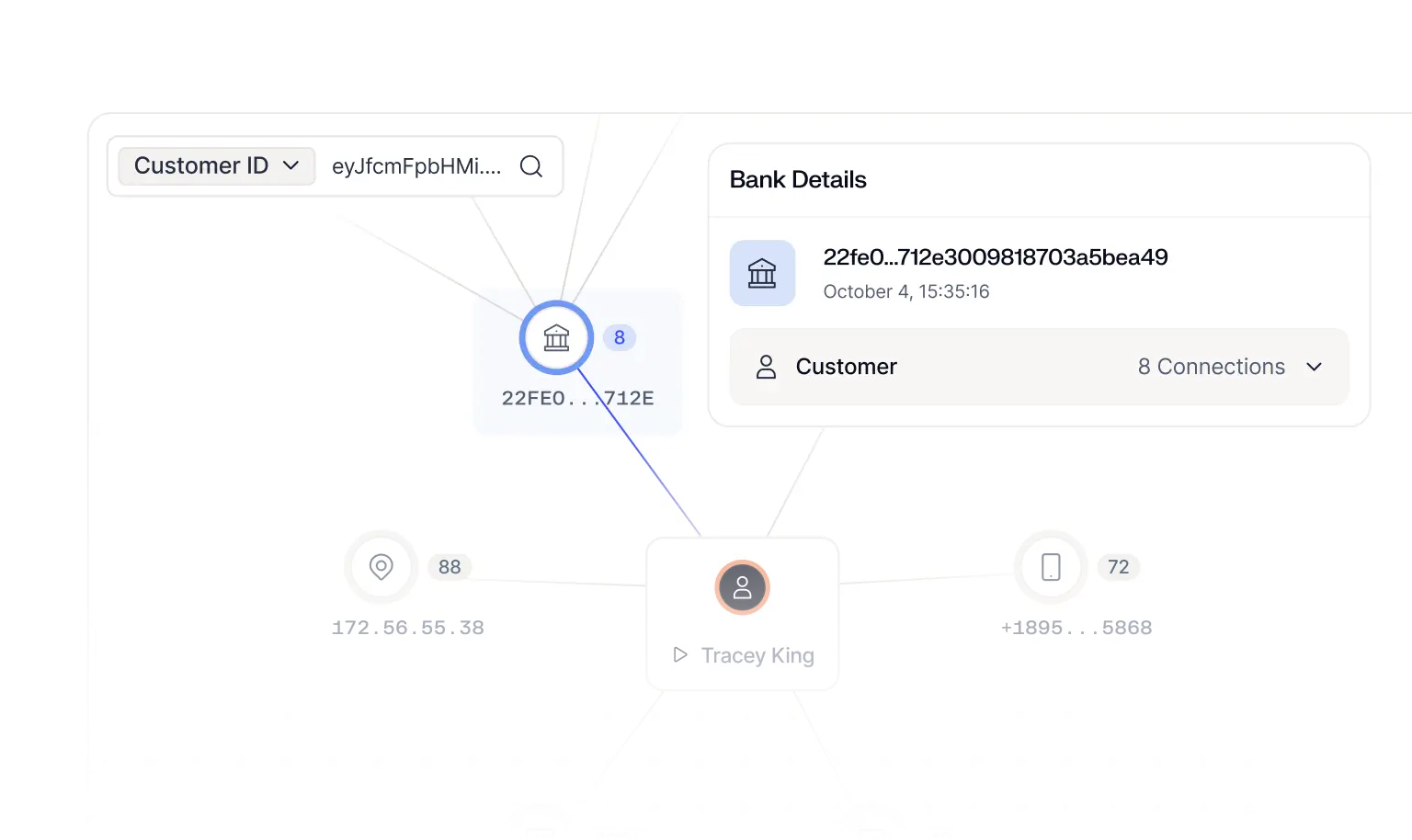
Use graph intelligence to flag shared infrastructure, hidden networks, and cross-entity relationships across customers, devices, counterparties, and transactions.

Reduce false positives and operational burden
Automate low-risk alert triage, accelerate investigations with AI-generated summaries, and lower manual review volume while maintaining explainable decisions.

Disrupt financial crime at every stage
Transaction Activity
Detect money laundering scenarios
Monitor transactions for structuring, layering, funnel accounts, pass-through activity, and other emerging AML typologies.
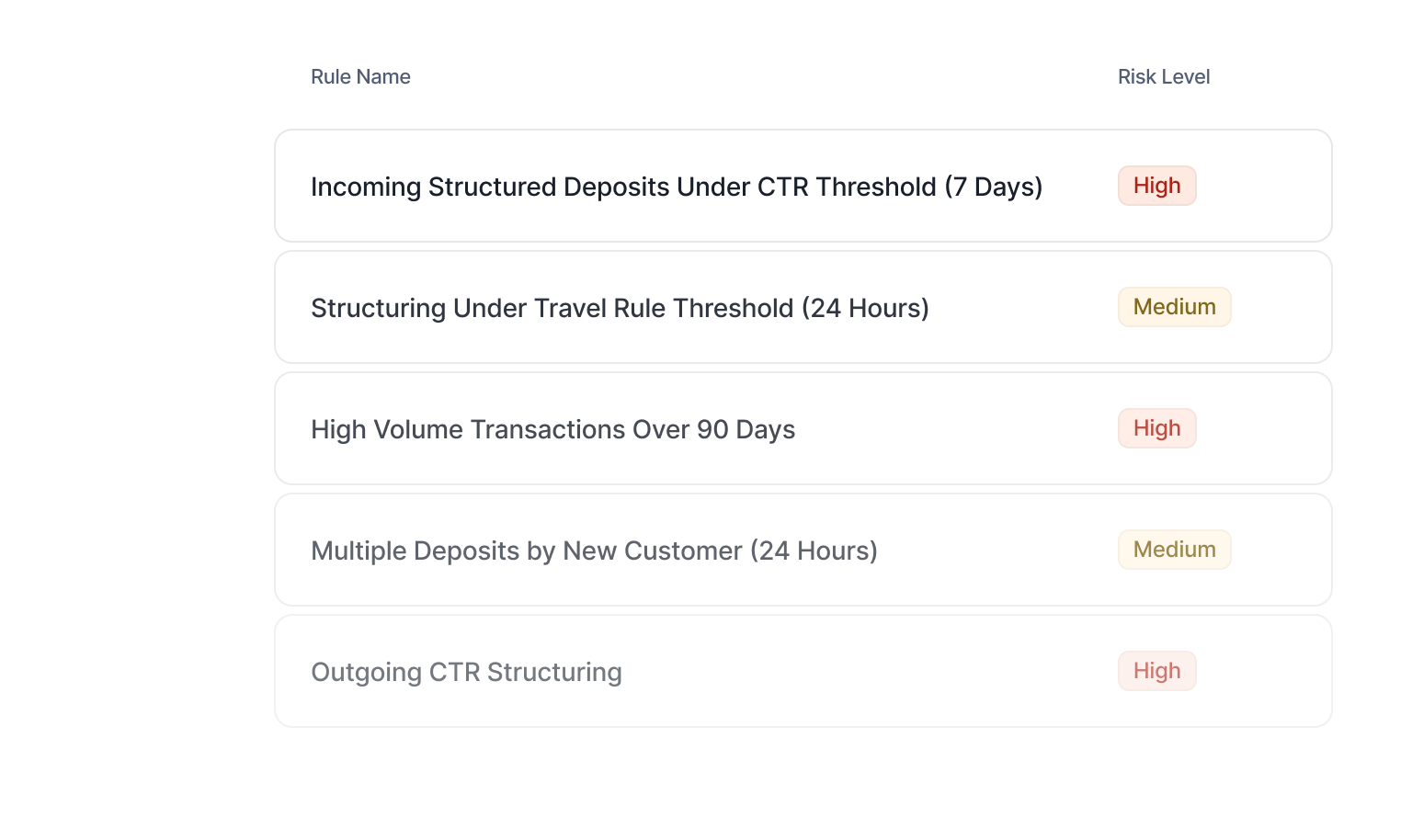

Spot repeated deposits and withdrawals below reporting limits across configurable time windows & related accounts.

Flag rapid international transfers, funnel accounts, and sudden shifts inconsistent with customer profiles.

Surface rapid in-and-out flows, minimal account balances, and behavior indicative of layering activity.
Counterparty Screening
Identify high-risk counterparties
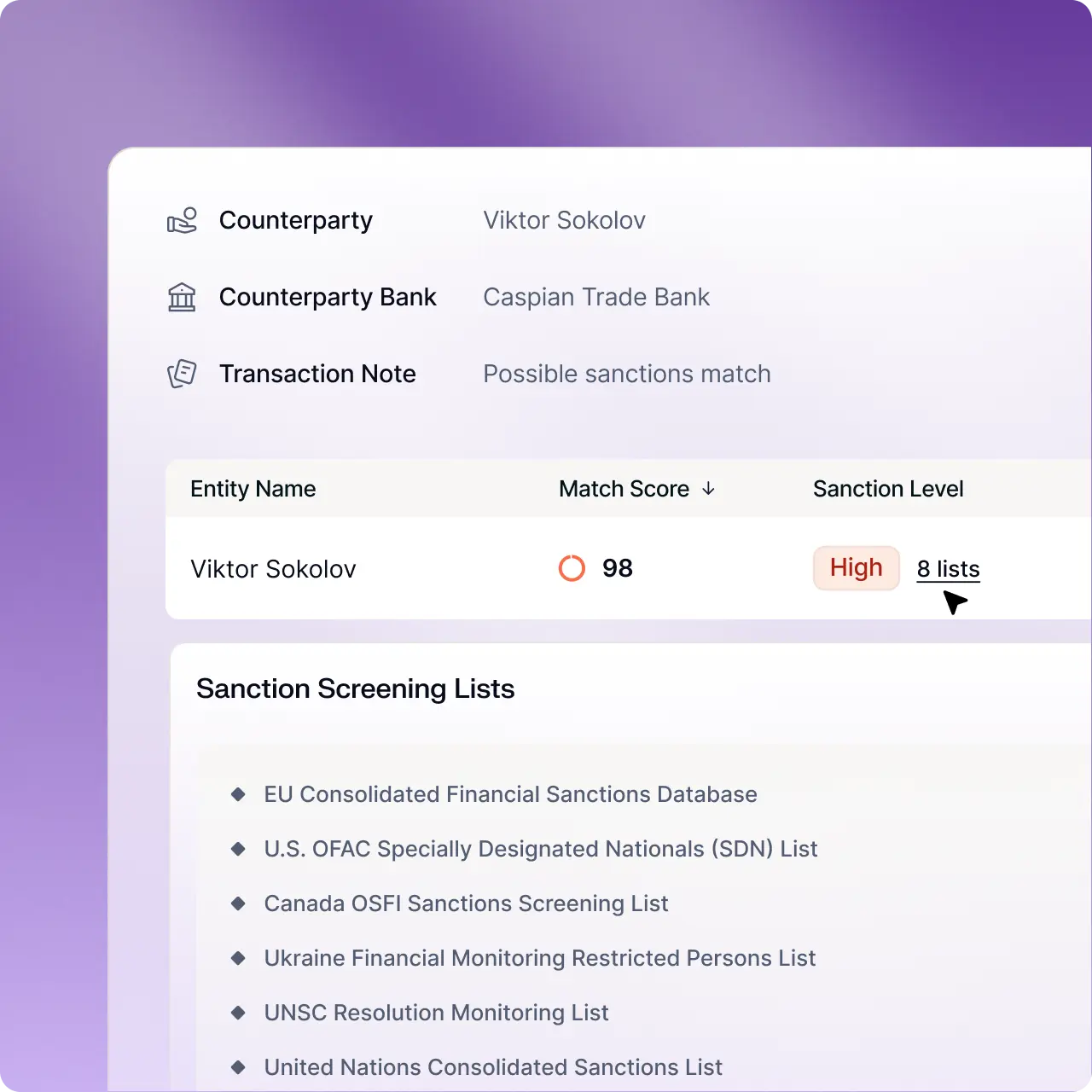
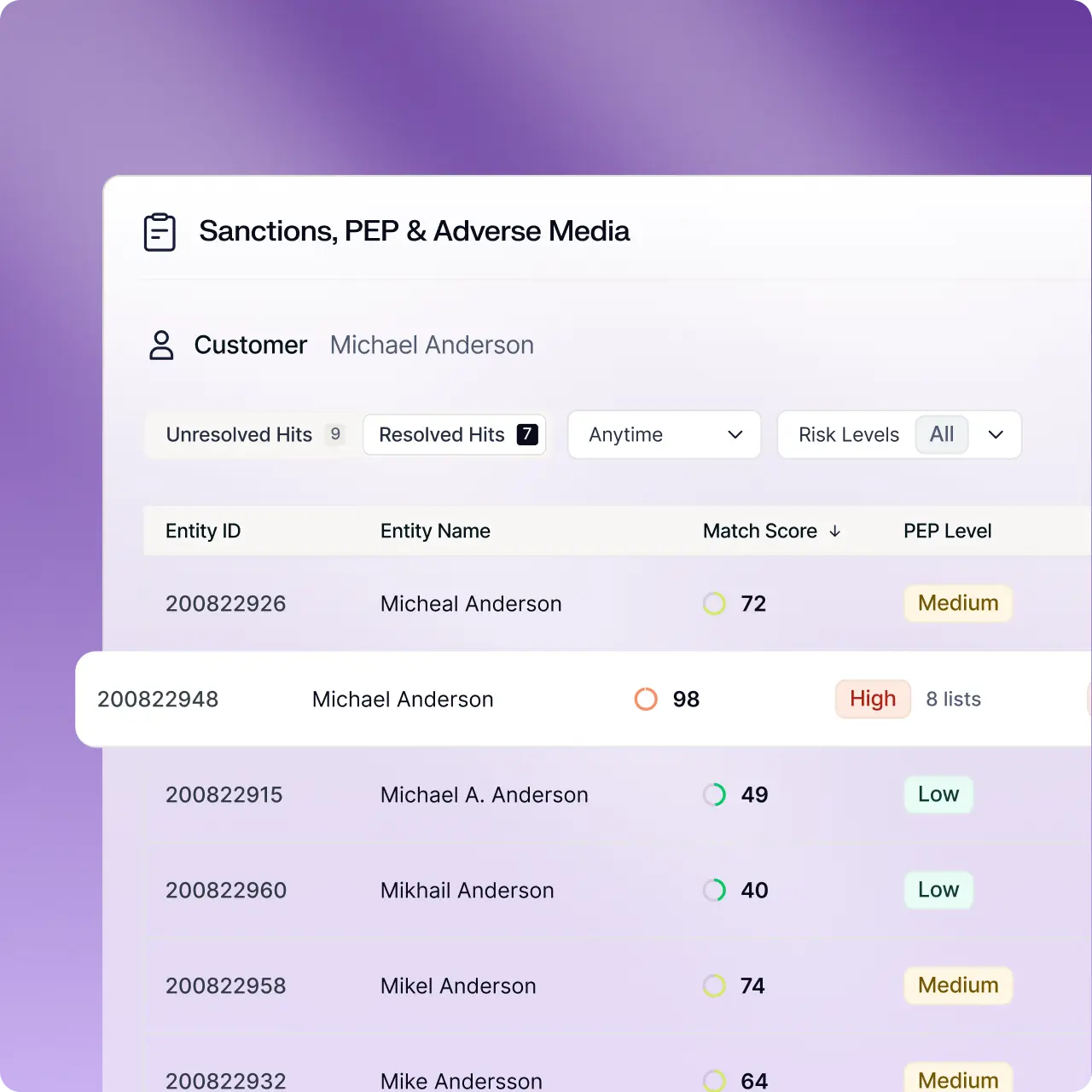
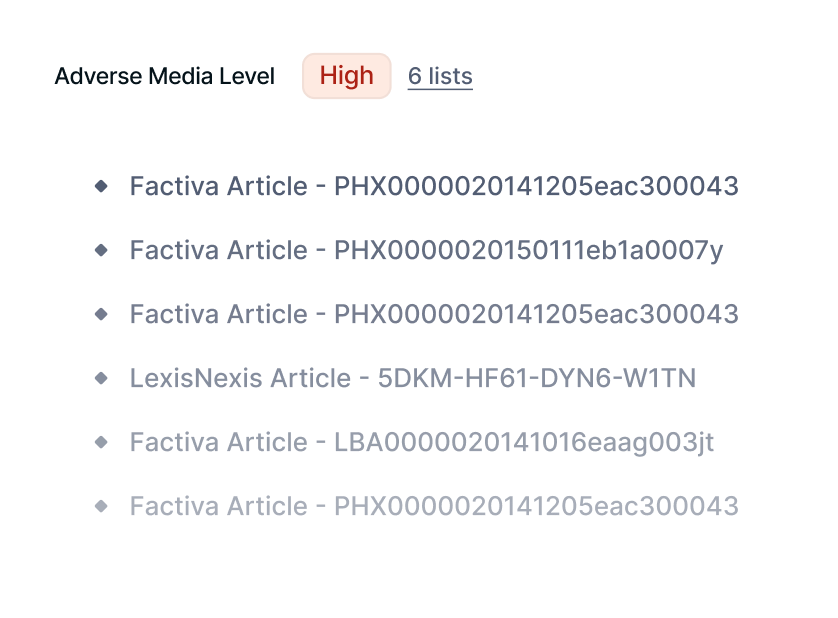
Screen transaction counterparties and counterparty banks to identify sanctions exposure, PEP connections, and high-risk geographies before funds move.
Customer Risk Rating
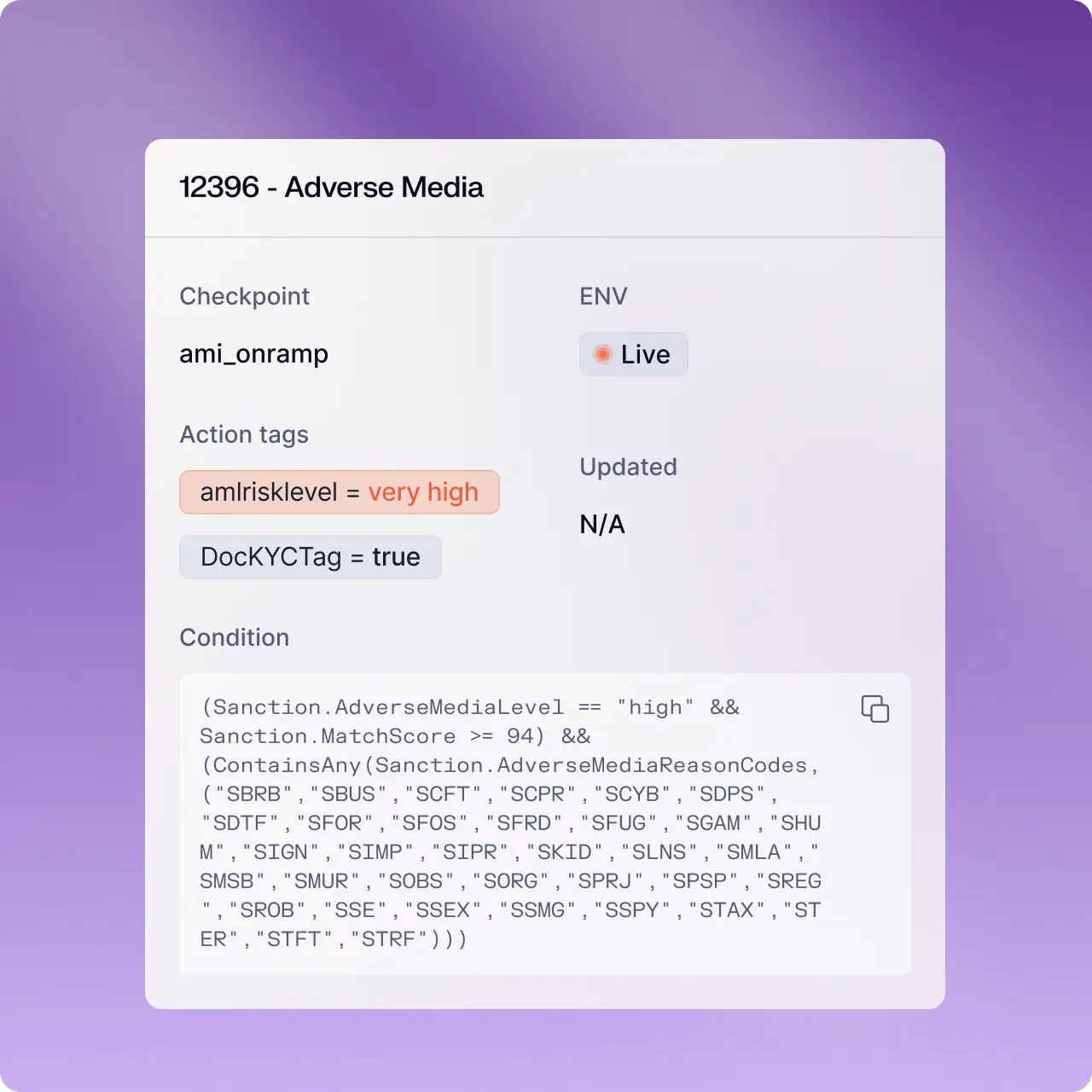
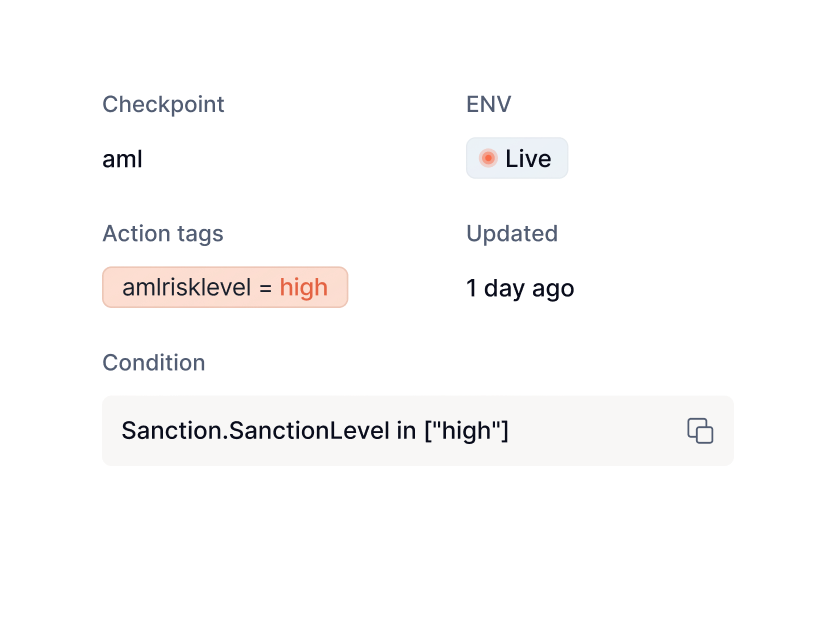
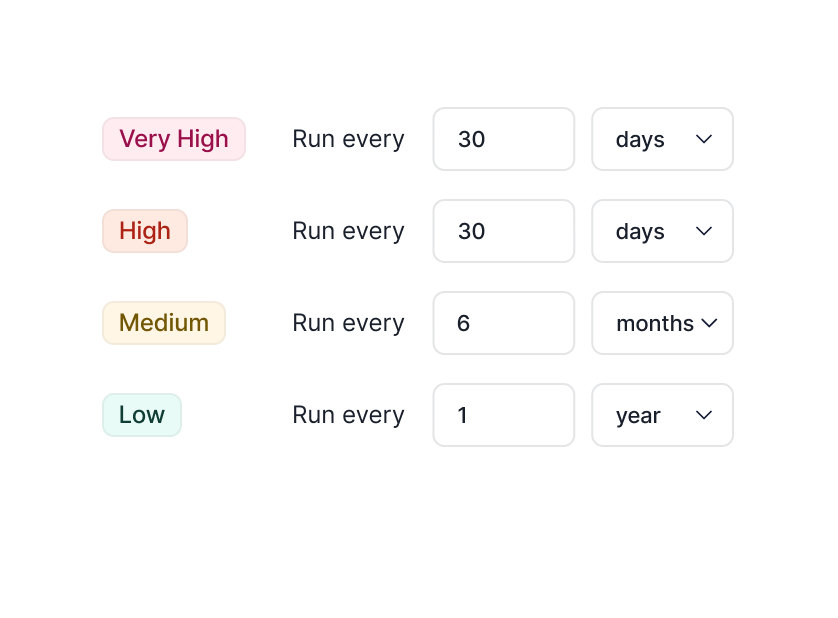
Continuously monitor customers to detect changes in AML risk or sanctions exposure



Jurisdiction Controls
Prevent activity from sanctioned countries and high-risk jurisdictions
Prevent onboarding and transactions from sanctioned, embargoed, or unauthorized jurisdictions in real-time.
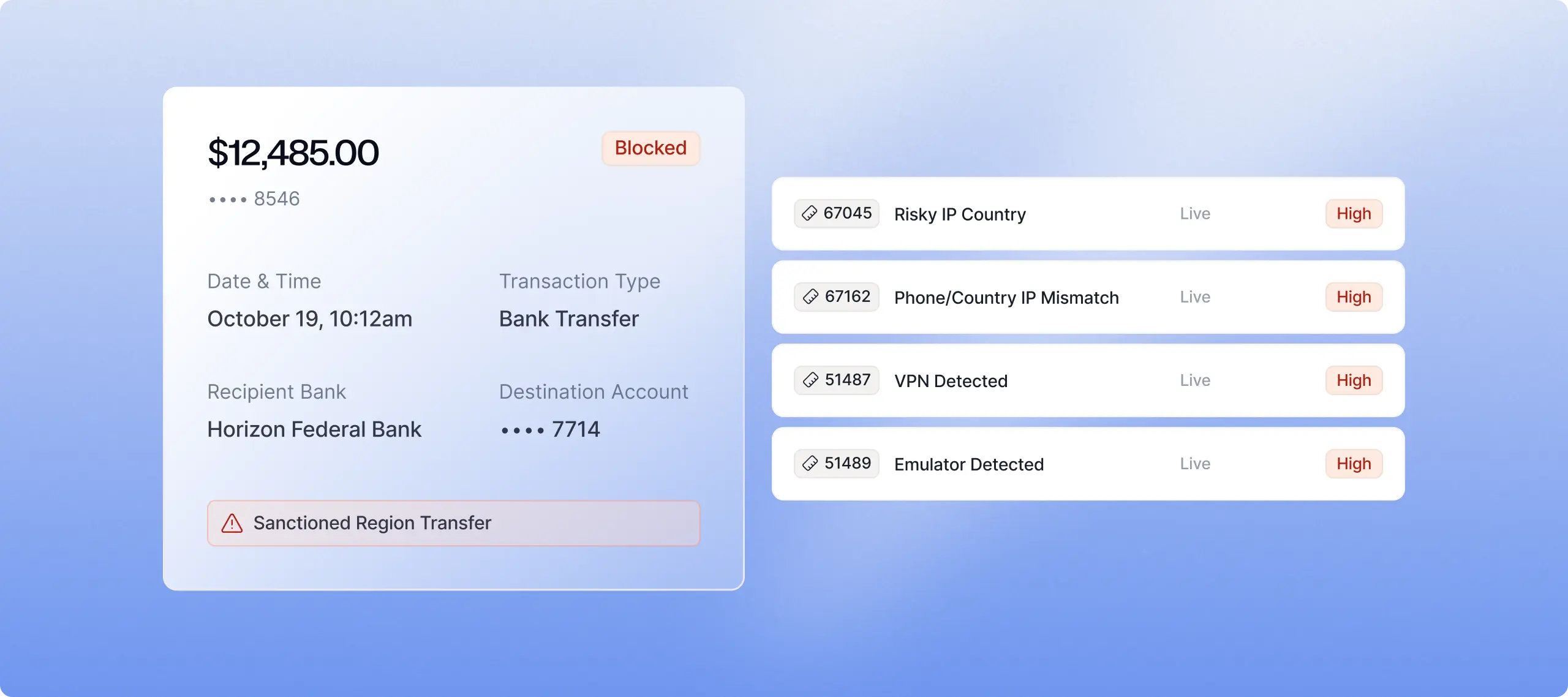

Flag IP mismatches, VPN usage, and geolocation anomalies tied to restricted countries.

Stop payments routed to embargoed countries or restricted regions.

Identify proxy networks, VPNs, emulators, and IP masking used to bypass controls.
Agents that make your risk team 2-5X more efficient
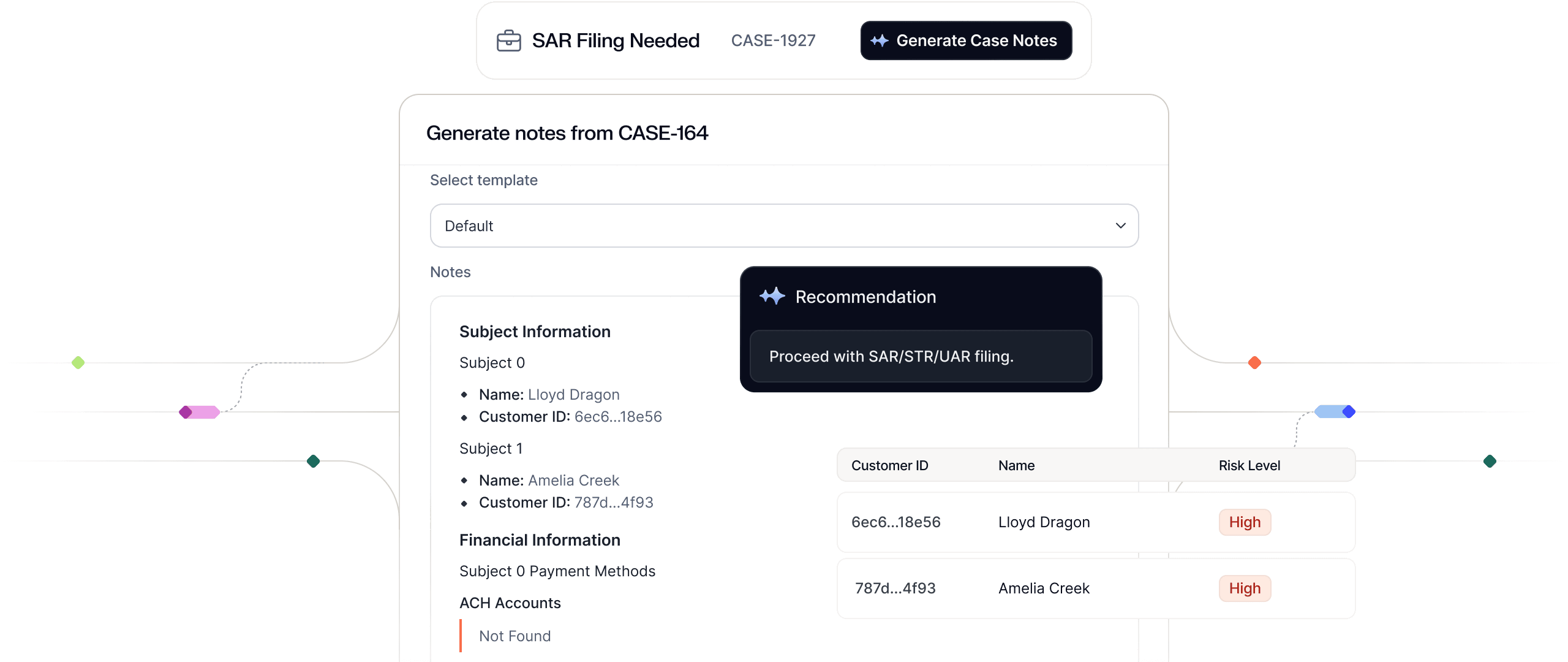
Automate repeatable compliance tasks, enforce consistent policy application, and maintain audit-ready documentation so your team can handle more alerts, faster.
Backed by the industry’s leading agentic risk platform
Fraud Investigations
Link transactions, users, devices, and entities
Unify transactions, users, devices, IPs, counterparties, and fraud outcomes into a single intelligence layer, turning isolated activity into connections.


Case Management
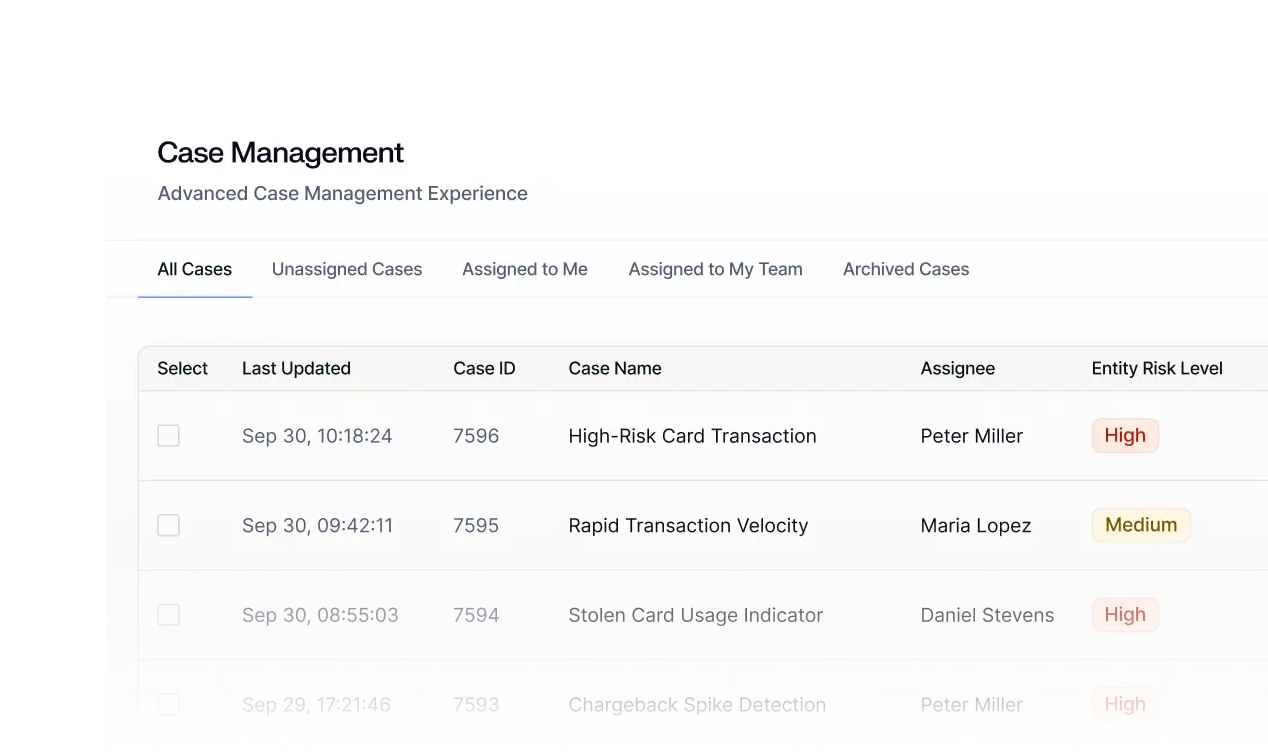
End-to-end investigations with configurable, regulator-ready workflows
Manage alerts, investigations, evidence, and reporting in a single AML platform where AI-assisted triage reduces manual reviews while preserving oversight.
Machine learning
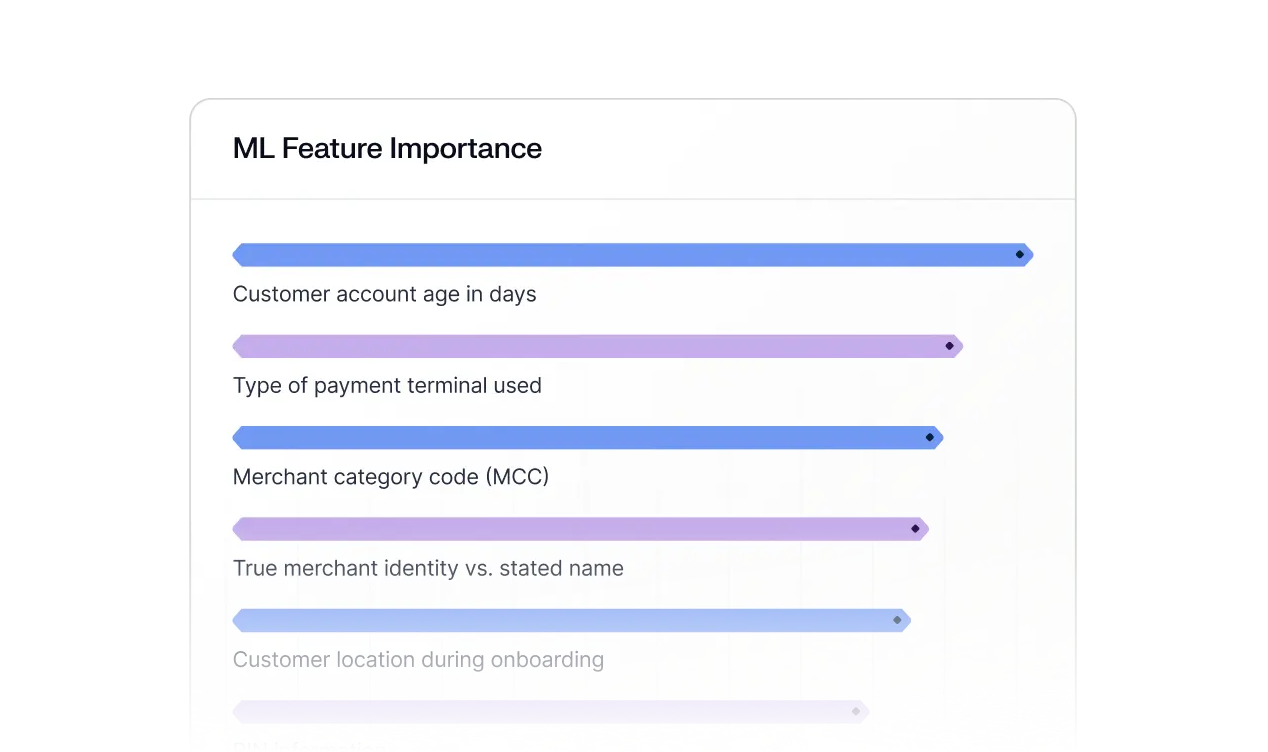
Score activity against each customer's own baseline
Models weigh each transaction against that customer's history and cohort behavior, so profile-consistent activity stays out of the queue and true outliers surface with context attached.



Uncover and disrupt complex financial crime networks
Frequently
asked questions

How does Sardine detect AML typologies out of the box?
Sardine includes a prebuilt AML rule library covering structuring, layering, pass-through activity, velocity spikes, and mule behavior. Teams can deploy scenarios immediately, adjust thresholds by segment, backtest against historical data, and tune controls without building custom models from scratch.
How does Sardine reduce false positives?
AI agents triage alerts, resolve obvious low-risk cases, and generate structured investigation summaries for analysts. Alerts are enriched with fraud, device, identity, and transaction context so reviewers spend less time gathering data and more time making decisions.
How does the graph engine improve detection?
The graph links accounts, devices, IPs, counterparties, and transactions into a single investigative view. Analysts pivot across entities, trace funds flows, and spot shared infrastructure, which surfaces coordinated activity that rule-based checks miss when they evaluate events one at a time.
How does Sardine support global AML/CFT obligations?
Monitoring scenarios are aligned to FATF guidance and regional expectations across the U.S., EU, and key APAC regulators. Teams can configure thresholds, document rationale, maintain audit trails, and generate regulator-ready case records directly from the platform.
How does Sardine connect fraud and AML signals in transaction monitoring?
Sardine brings fraud, identity, device, counterparty, and transaction signals into the same monitoring environment so teams can evaluate suspicious activity with more context. Instead of treating fraud risk and AML risk as separate workflows, Sardine helps analysts understand how account behavior, infrastructure reuse, counterparty exposure, and funds movement relate to one another. This makes it easier to identify laundering patterns tied to mule activity, account abuse, and fraud-driven financial crime.
How does Sardine help teams investigate linked accounts and laundering networks?
Sardine helps teams investigate linked activity by connecting users, devices, IPs, counterparties, and transaction flows in one view. This allows analysts to move beyond a single alert and understand whether suspicious behavior is part of a broader network. By exposing shared infrastructure and related entities, Sardine supports faster investigations into coordinated laundering activity that might otherwise remain hidden across disconnected systems.
How does Sardine help AML teams respond when suspicious behavior changes over time?
Sardine helps AML teams respond to changing behavior by combining adaptable rules, AI-assisted investigations, and network-level analysis in one system. As transaction patterns shift, teams can refine monitoring logic, review new relationships between entities, and investigate emerging risk without rebuilding their program from scratch. This gives compliance teams a more flexible way to keep pace with evolving typologies while maintaining clear decision context and audit readiness.