
Hiring teams are facing a new class of fraud: fake job applicants using AI, stolen identities, and location spoofing. What were once rare edge cases are now happening at scale, across industries, and often going undetected until candidates are deep into interview loops.
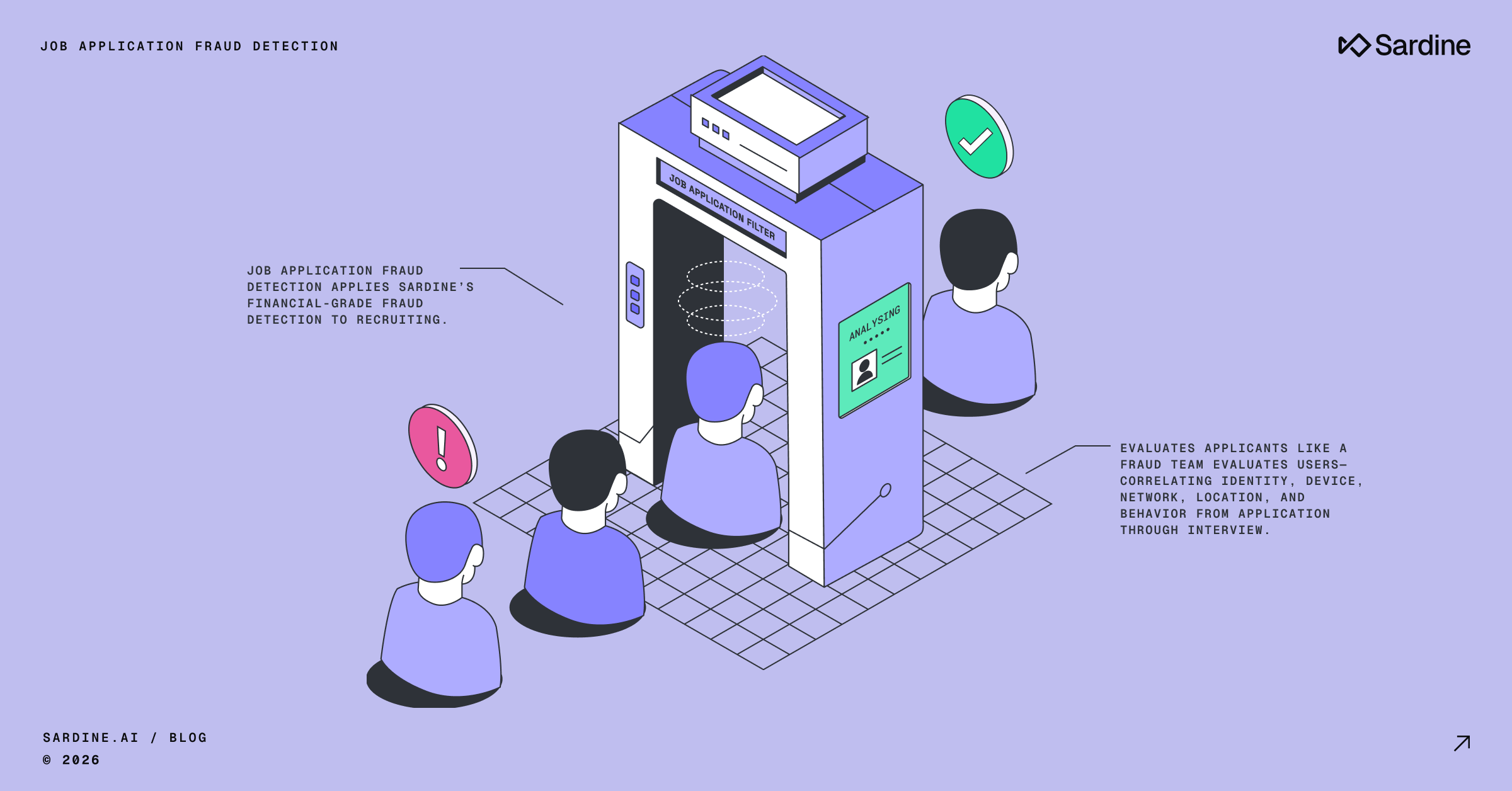
To address this, we’re launching our Job Application Fraud Detection. Built on the same fraud detection technology we use to stop financial crime, the solution brings real-time identity, device, and location intelligence directly into the hiring process. Teams can now detect applicant fraud early and continuously, from initial application through live interviews, before bad actors get inside.
Why job applicant fraud is escalating
Remote work, generative AI, and abundant breached personal data have changed the threat model for recruiting. Bad actors can now fabricate realistic resumes, generate convincing cover letters, and even deepfake live video interviews using off-the-shelf tools.
Gartner estimates that by 2028, 1 in 4 candidate profiles worldwide could be fake.*
Hiring systems were never designed to defend against this. Applicant tracking systems are built for speed and candidate experience, not adversarial behavior. Fraudsters have learned how to exploit the gaps between identity, device, location, and behavior to slip through.
For security teams, this is a serious risk. A single fraudulent hire can bypass perimeter controls and walk straight into internal systems, customer data, and operational workflows. What looks like a recruiting issue quickly becomes a cybersecurity and fraud problem.
How Sardine detects job applicant fraud
Fraudulent job applications follow many of the same patterns as coordinated financial fraud. In both cases, bad actors rely on stolen or synthetic identities, obfuscated devices, and manipulated network signals to appear legitimate while operating at scale.
Because Sardine already detects these behaviors across financial ecosystems, we entered hiring with a head start. We’ve applied the same identity, device, and network intelligence to the hiring process, allowing HR and security teams to go beyond subjective resume and interview checks and evaluate whether an applicant is genuinely who they claim to be.
What we found in our own hiring pipeline
To validate this approach, our CEO ran the Data Analyst AI Agent against Sardine’s own incoming applications over a one-month period.
The data revealed a clear pattern. Software engineering and integration roles are being heavily targeted, with some positions seeing fraudulent applications outnumber legitimate ones by a wide margin.
Role | High-risk rate |
Software Engineer – Backend (Go) Europe/UK | 88.6% |
Software Engineer – Backend | 78.8% |
Software Engineer | 76.8% |
Software Engineer – Backend (Brazil) | 76.3% |
Integrations Engineer – UAE | 64.5% |
Forward Deployed AI Engineer | 52.7% |
DevOps Engineer | 51.1% |
Nearly nine out of 10 applications to the Backend Go Engineering role in Europe and the UK were flagged as high risk. Of the more than 3,000 total high-risk applications in that period, two signals account for the overwhelming majority of detections:
- IP vs. claimed country mismatch (2,416 triggers, 76%): The applicant’s device IP address revolves to a country that doesn’t match the home address on their application.
- IP vs. phone country mismatch (2,383 triggers, 75%): The applicant’s phone number is formatted for one country, but their device is connecting from another.
What’s notable is what isn’t triggering: only 52 cases showed a mismatch between phone country and claimed address. Bad actors are correctly matching their phone number country code to their fabricated address profile, the first step in their scam, but they’re failing to mask their true device IP. A strict rule on device_ip_country ≠ customer_country_code for backend engineering and integrations roles will intercept the substantial majority of these fraudulent applications.
Detecting fraud early in the hiring cycle
Job Application Fraud Detection integrates directly with applicant tracking systems using webhooks, allowing companies to assess risk as applications are submitted, without changing existing workflows or adding any friction for legitimate candidates. From the recruiter’s perspective, the process looks exactly the same.
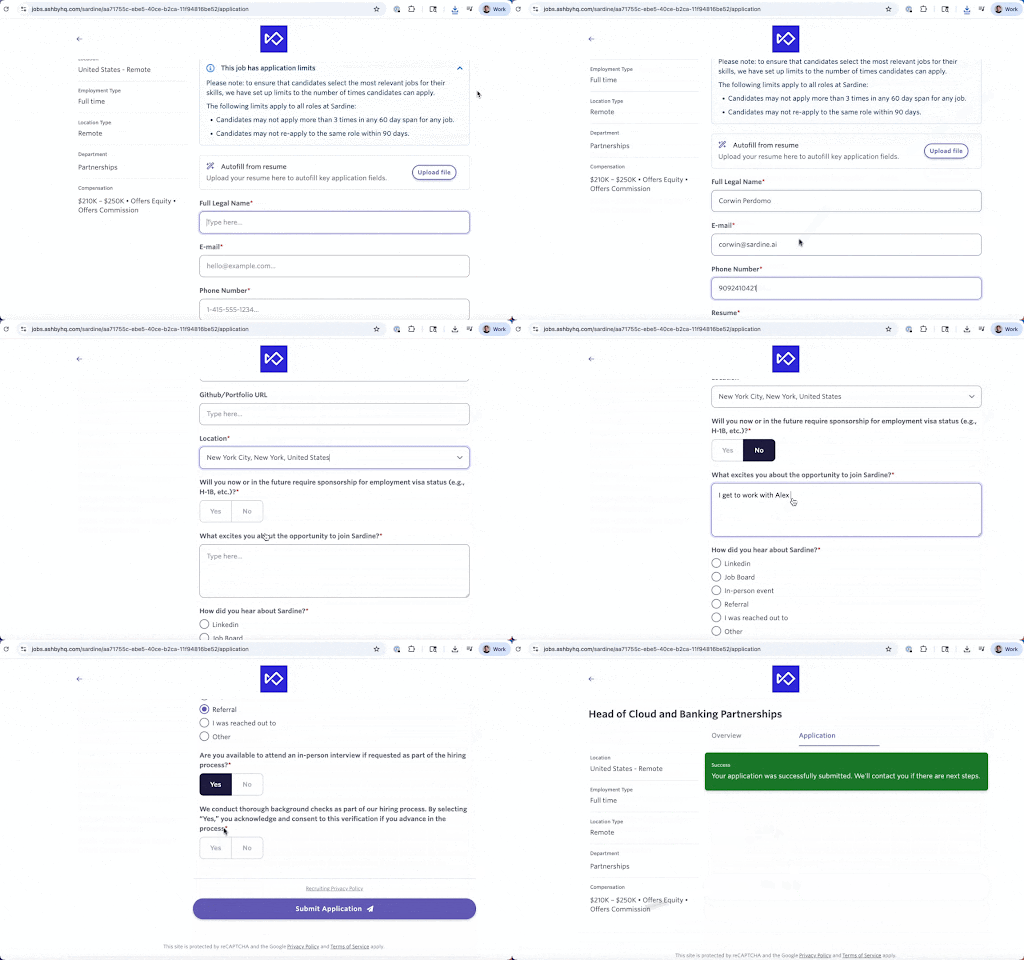
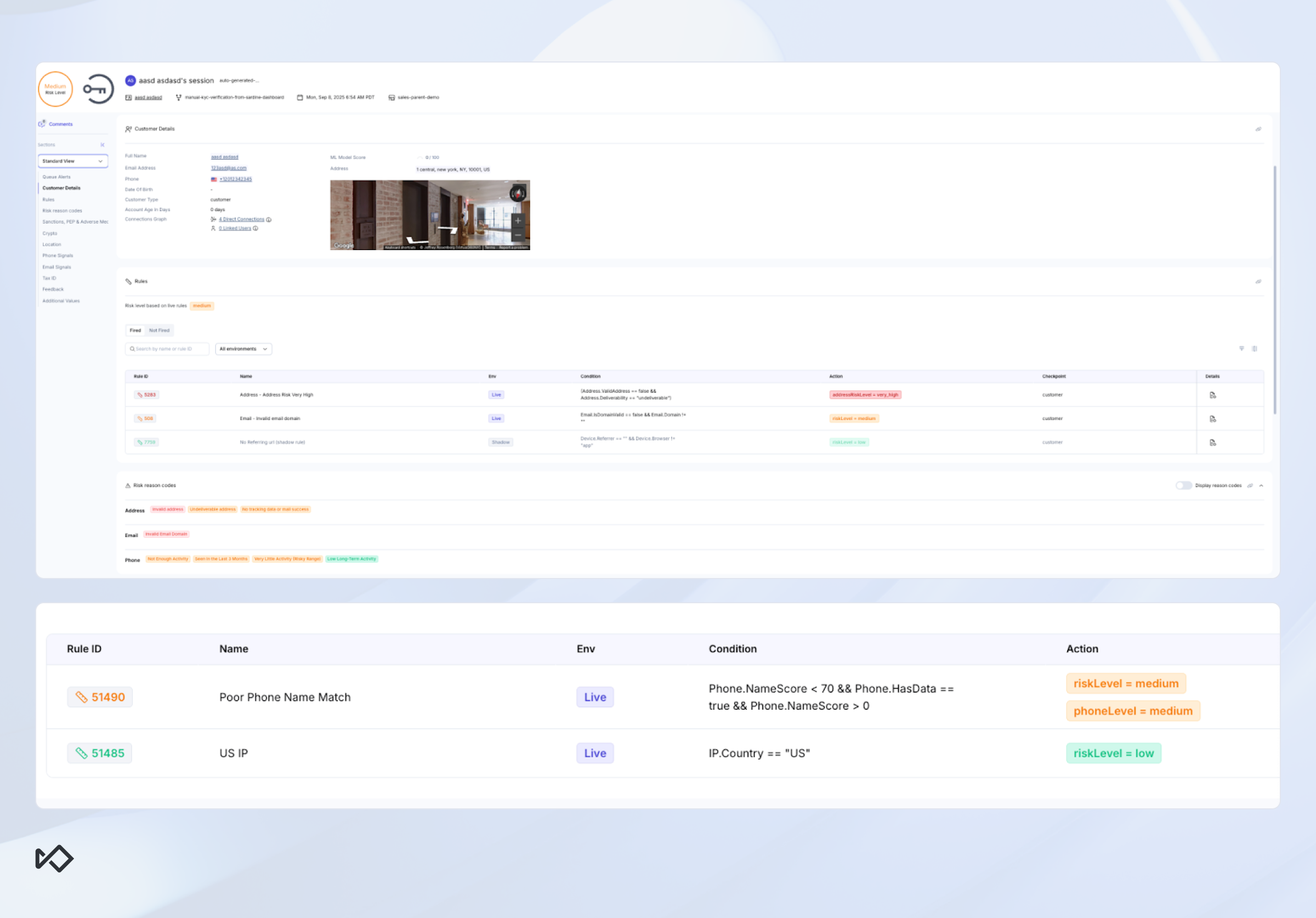
At the application stage, Job Application Fraud Detection screens for signals that often indicate fake or synthetic identities, including:
- Identity consistency: Are the given phone numbers, email addresses, and names aligned with each other and with trusted external data?
- Email risk: Is the email address newly created, using a disposable domain, or previously associated with abuse?
- Phone signals: Is the applicant using VoIP, a non-premium mobile carrier, or are there mismatches between phone data and their claimed identity?
- Device intelligence: Is the same device or environment submitting multiple applications, or showing signs of obfuscation?
- Location integrity: Does IP address, network data, and device telemetry align with the applicant’s stated location?
Each applicant is assigned a clear low, medium, or high risk level, along with the rules that triggered it. This allows recruiting teams to focus attention where it matters, without slowing down legitimate candidates.
Continuous validation during interviews
Fraud doesn’t stop once an interview is scheduled. In many cases, this is when impersonation attempts actually escalate.
Job Application Fraud Detection extends detection into live interviews by generating a custom Sardine interview link that runs quietly in the background during video calls. This allows Sardine to validate that the person on screen is the same individual who applied.
During interviews, the solution can detect:
- Location masking: VPNs and proxies used to hide a candidate’s true country or region. Sardine can pierce these tools to reveal true location signals.
- Deepfake and video manipulation: Use of virtual cameras, injected video feeds, or face-swapping tools during live interviews.
- Device and browser anomalies: Emulators, remote desktop tools, or environments designed to conceal identity.
- Suspicious behavior patterns: Automation, scripted interactions, or unusual multitasking that suggests real-time assistance or impersonation.
While surface-level profiles can look convincing, these underlying technical fingerprints are extremely difficult to fake consistently.
Custom rules that match your hiring logic
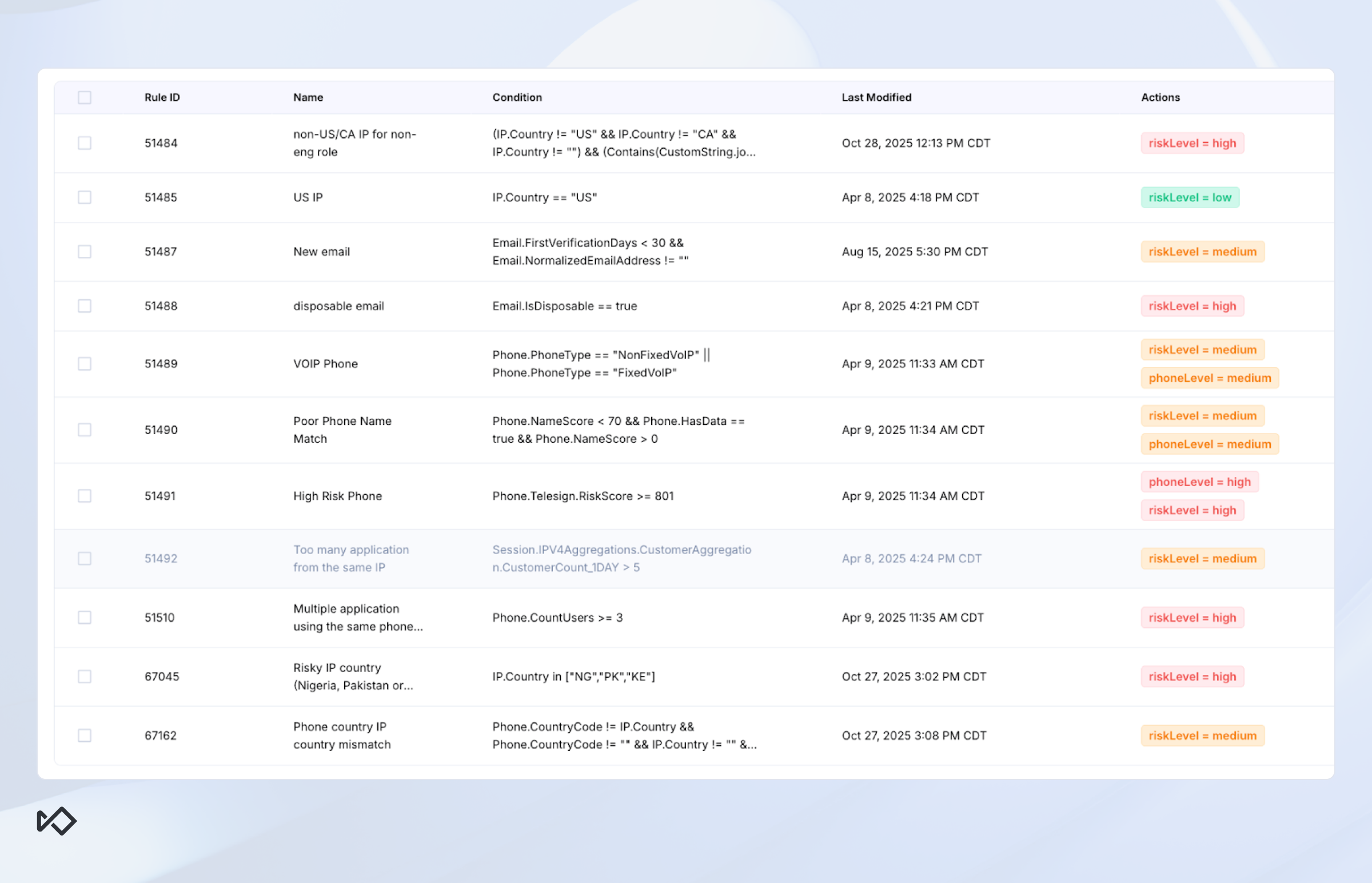
Every company has different risk tolerance and hiring needs. Job Application Fraud Detection starts teams off with base rules, such as New Email, Poor Phone Name Match, or Risky IP Country. Then, teams can create custom rules using Sardine’s data, automating checks that would otherwise require manual review.
Teams can flag when a candidate’s device or location changes between application and interview, detect reuse of identities across roles, or escalate interviews when high-risk behavior appears. This ensures every candidate is evaluated consistently, using the same criteria every time.
Risk insights directly where your team needs them
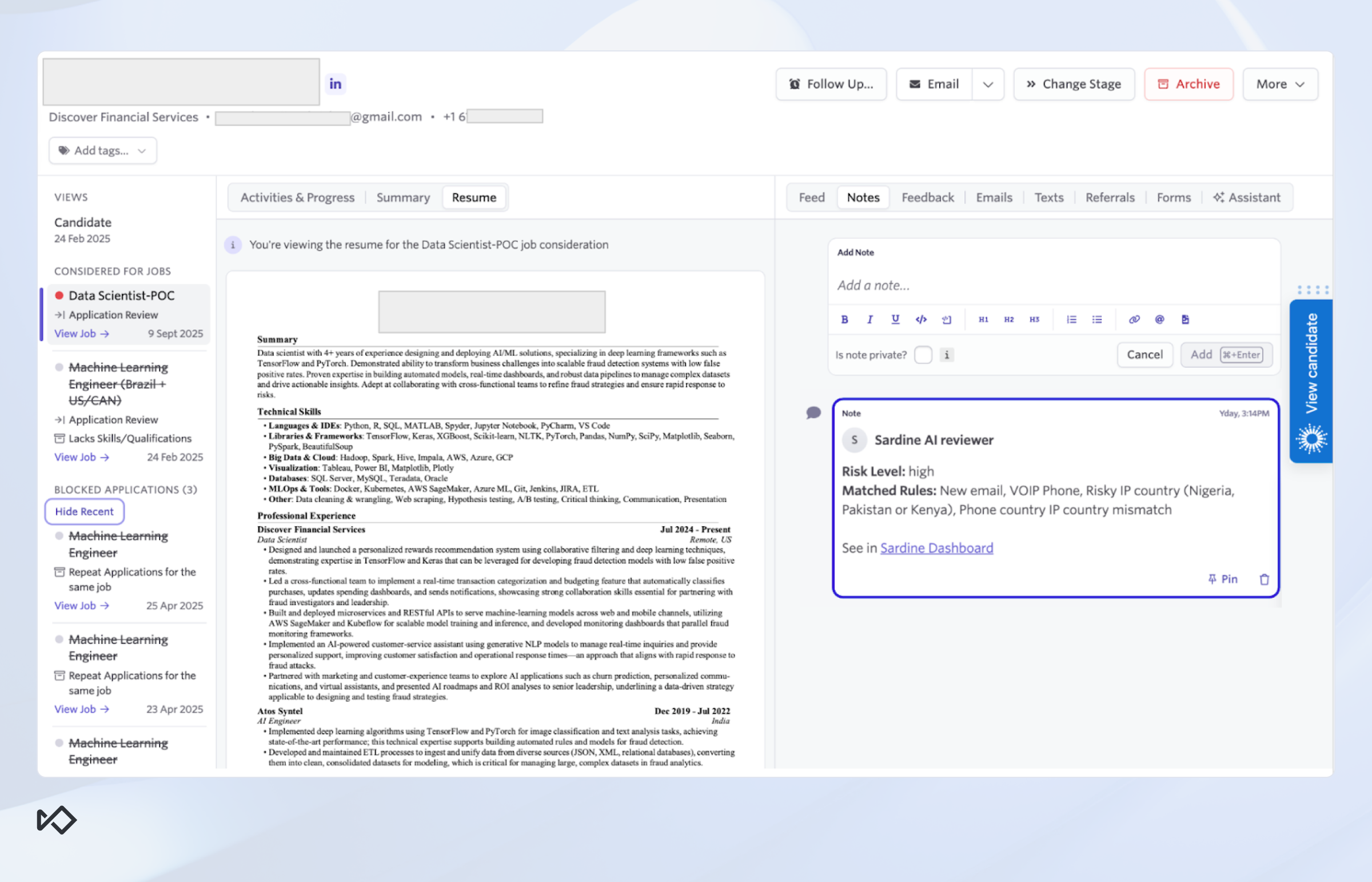
HR teams can surface results of recent applications, without ever leaving their ATS. Alternatively, your cybersecurity or fraud team can evaluate from within the Sardine platform dashboard.
Designed for high-risk industries and modern teams
Job Application Fraud Detection is already being used by companies in high-risk sectors, including fintech and crypto, where the consequences of a bad hire are especially severe. But the problem is not limited to those industries.
Any company hiring remotely, at scale, or for sensitive roles now needs fraud defenses built into recruiting. With Job Application Fraud Detection, hiring teams gain new visibility, without adding friction for real candidates.
Closing the front door
Fraudsters are adapting quickly, and hiring processes need to do the same.
Job Application Fraud Detection helps companies close one of the most overlooked entry points into the enterprise. By bringing fraud detection into the hiring lifecycle, we can stop fake applicants before they become fake employees.
If you want to learn more about this solution and how it fits into your hiring stack, reach out to our team.
* Gartner Survey Shows Just 26% of Job Applicants Trust AI Will Fairly Evaluate Them