

38 min
Today we are talking about AI scam predictions 2025 and what fraud fighters should expect as artificial intelligence reshapes the fraud landscape.
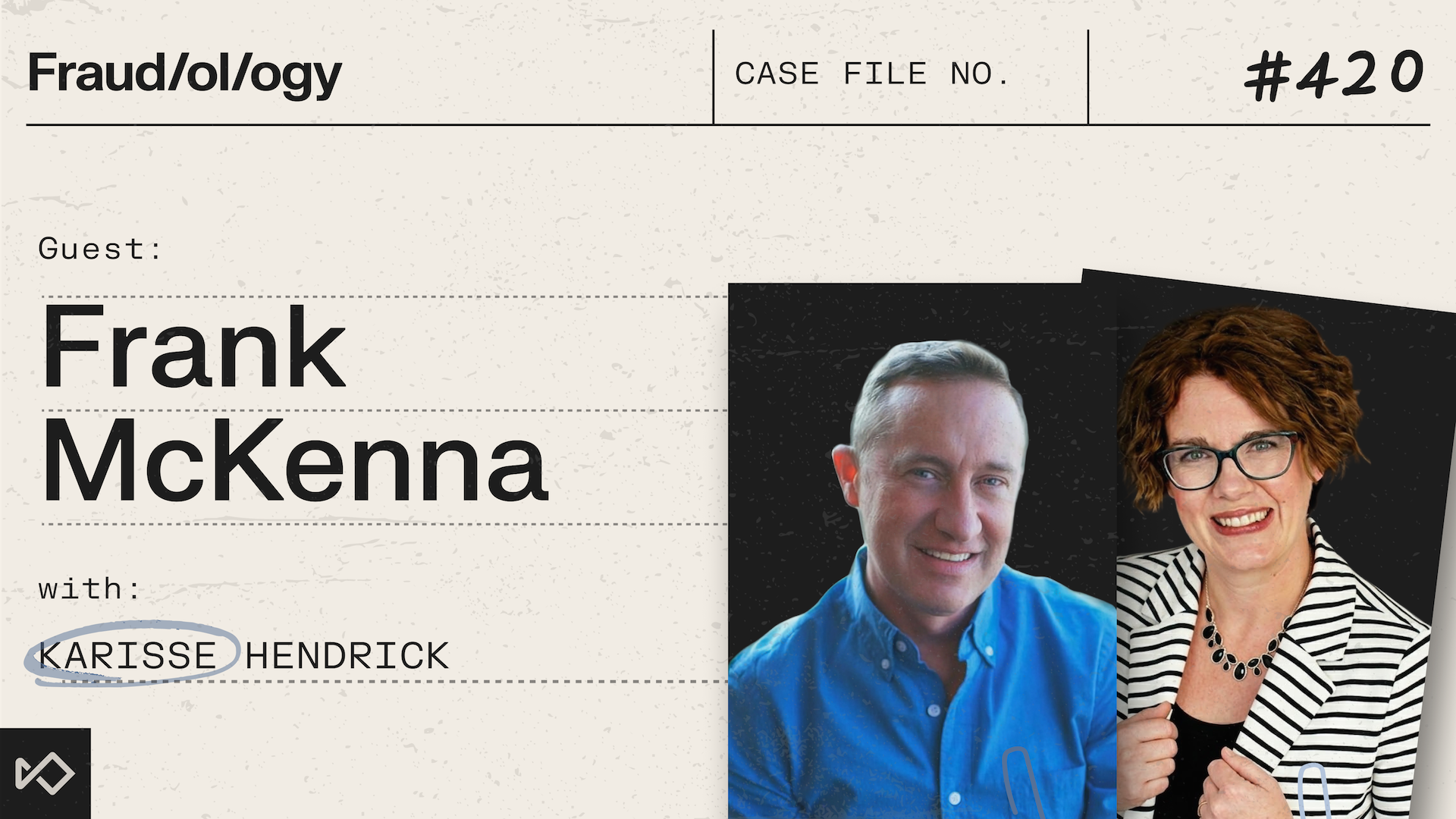
In this episode I sat down with fraud expert Frank McKenna to talk through some of the trends we both expect to see in the year ahead.
And honestly, the biggest theme that kept coming up was trust.
Or more specifically, the collapse of trust in digital interactions.
AI tools are making it easier than ever for criminals to create convincing messages, impersonate real people, and exploit personal data from past breaches.
When you combine those capabilities with large scale data leaks, the result is a new generation of highly targeted scams.
What you’ll hear in this episode
You should listen to this episode if you
If you liked this episode, be sure to subscribe and review the podcast on iTunes, Spotify, YouTube, or wherever you listen to podcasts. It really helps with getting the word out.
Let’s break this down.
For years, fraud prevention relied on the assumption that people could still trust certain signals online.
A familiar voice.
A recognizable face.
A message that looked like it came from a legitimate organization.
AI is changing that.
The ability to generate realistic voices, images, and written messages means criminals can replicate those trust signals at scale.
And that matters.
Because once trust in those signals erodes, people lose reliable ways to distinguish legitimate communication from scams.
One of the more concerning trends discussed in this episode involves data sniper scams.
These scams combine breached personal data with AI generated messaging to create extremely targeted fraud attempts.
Instead of sending generic phishing emails, criminals craft messages that reference specific details about the victim.
That could include addresses, previous purchases, employer information, or financial activity.
When victims see those details in a message, the communication feels credible.
That credibility dramatically increases the success rate of fear-based scam messages.
Another major trend involves AI-powered romance scams.
Romance scams have existed for years, but AI tools are making them significantly more convincing.
Criminals can now generate synthetic profile images, fabricate entire social media histories, and create realistic video content.
Some cases have even involved celebrity deepfake fraud, where scammers impersonate well known public figures to gain credibility.
These next-generation social engineering attacks combine emotional manipulation with advanced technology.
The conversation also touched on crypto crime risks and the broader fraud regulation outlook.
Cryptocurrency continues to play a role in many fraud schemes because it allows funds to move quickly across borders.
At the same time, regulatory environments are evolving as governments respond to new fraud threats.
Changes in political leadership can influence how aggressively regulators pursue fraud enforcement, particularly in emerging areas such as digital assets.
One of the most important themes in this conversation was fraud education for analysts.
Fraud analysts are often the first people to spot emerging patterns in scams and social engineering attacks.
Organizations that empower fraud analysts to share insights internally and across the industry can respond faster to new fraud tactics.
Fraud knowledge sharing and collaboration against fraud will be essential as AI driven scams continue to evolve.
The key takeaway from this episode is simple.
AI scam predictions 2025 point toward a world where digital trust becomes harder to maintain.
Fraud teams that stay informed about emerging cyber fraud predictions and invest in education, collaboration, and adaptive fraud defenses will be better positioned to face the next generation of scams.
Stay vigilant, stay informed, and keep moving fraud forward.