


38 min
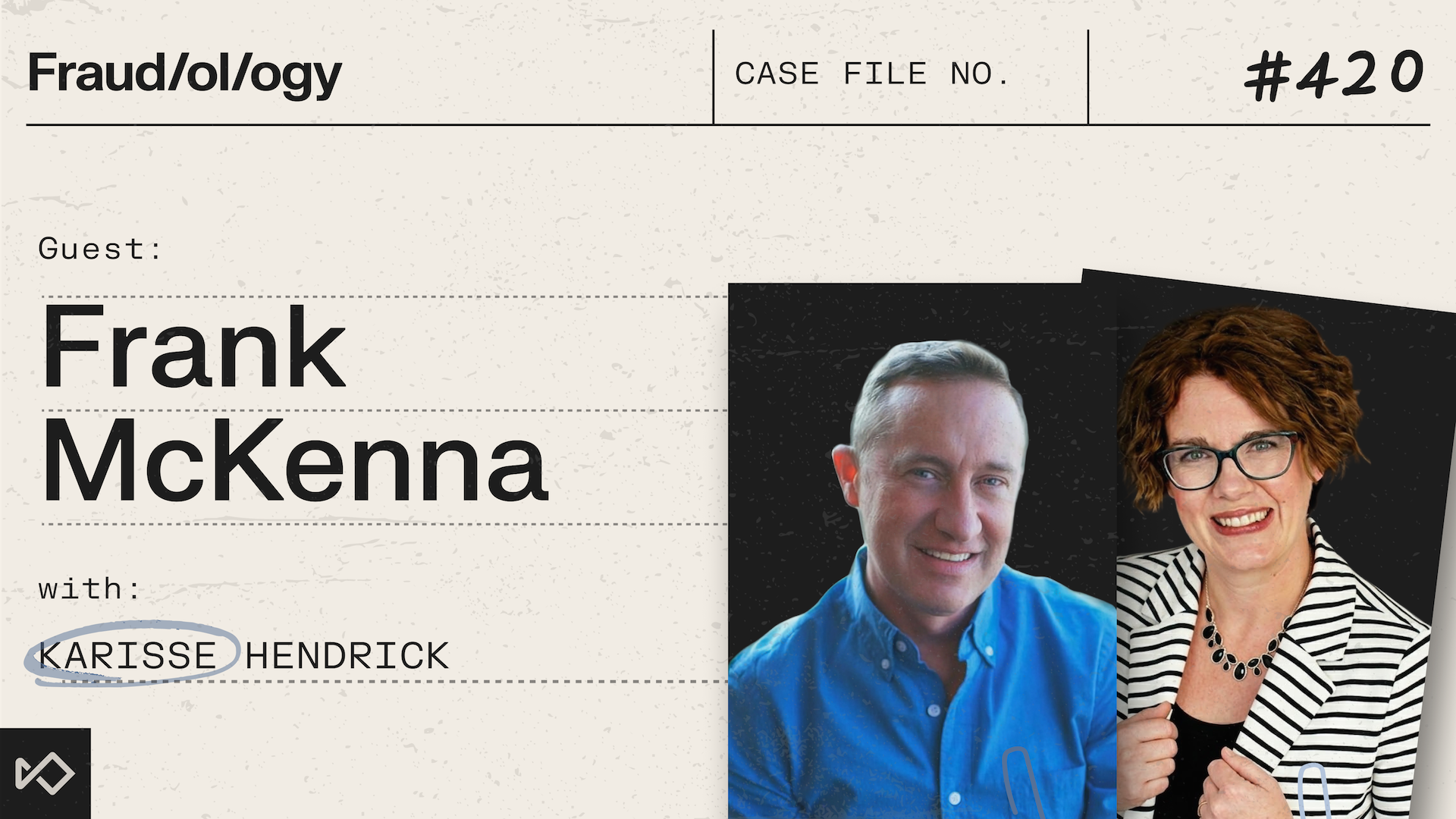
Guest: Frank McKenna
Today I’m talking with Frank McKenna about auto lending fraud, and this is one of those conversations that sounds niche at first until you realize it really is not. Yes, the report focuses on vehicle financing. Yes, the numbers are tied to auto loans. But the patterns underneath it? Those are showing up all over fintech.
That is why I wanted to dig into this.
Frank walks through the Point Predictive auto fraud report and the scale of what is happening in auto finance right now. We’re talking about a huge jump in fraud, billions tied to abuse of the loan process, and a mix of identity fraud in lending, application manipulation, and organized exploitation that should absolutely get the attention of teams outside the auto space too.
And that matters.
Because auto lending fraud is really a case study in what happens when digital applications, high-value assets, identity abuse, and economic distortion all collide. If you work in fintech, lending, underwriting, or onboarding, there is a lot here that should feel very familiar. Maybe a little too familiar.
Here is what that means in practice:
What you’ll hear in this episode:
You should listen to this episode if you:
If you liked this episode, be sure to subscribe and review the podcast on iTunes, Spotify, YouTube, or wherever you listen to podcasts. It really helps with getting the word out.
In this episode, I talk with Frank about what is happening in auto lending and why it matters well beyond car loans. Because once you strip away the product category, what you are left with is a very useful fraud pattern, high-value transactions, identity abuse, pressured underwriting, and criminals who figured out where the system was easiest to bend.
Let’s break this down.
At first glance, a 260 percent increase in auto lending fraud sounds extreme. And it is. But it also follows a pattern I think a lot of fraud teams will recognize. Bad actors go where the money is, where the controls are uneven, and where the value of getting through once is high enough to make the effort worthwhile.
That is exactly what auto finance can offer.
You have a large-ticket asset. You have digital and dealer-assisted application flows. You have identity-based decisioning. You have pressure to approve legitimate borrowers quickly. And you have multiple points where bad information can get dressed up to look plausible. That usually creates a pretty obvious opening for fraud.
Here’s what’s actually happening.
A lot of the fraud in this space comes back to identity. Not always in the exact same form, but close enough. Synthetic identity in auto loans. Stolen or manipulated applicant information. False income or employment details. Layered application abuse. It all points back to one core issue, the lender is trying to decide whether the person and the story in front of them are real enough to trust.
And that is harder than it sounds.
Because once a bad application gets far enough into the process, the downstream loss gets expensive very quickly. That is one reason identity fraud in lending matters so much. It is not just a front-door problem. It affects underwriting, repayment, recovery, and sometimes the entire economics of the transaction.
This is where things get interesting.
If you work in fintech and your company has nothing to do with vehicles, it would be easy to treat this as someone else’s problem. I think that would be a mistake. The mechanics here are much more portable than the product category.
We’ve seen this playbook before.
Fraudsters learn how to exploit identity verification, application flows, approval pressure, and disconnected risk ownership in one sector, then they apply the same logic somewhere else. Maybe not perfectly. But close enough. That is why the fintech fraud lessons here are so useful. Auto is one example. The pattern is much bigger.
One of the more interesting parts of the conversation is Frank’s view that covid stimulus fraud impact helped fuel what the lending market is seeing now. And honestly, that makes sense to me.
Because fraud money does not just disappear.
It gets reused. It funds more attempts. It gives bad actors more room to test, organize, and scale. If people walked away from earlier fraud waves with more capital, better tactics, and more confidence, then of course some of that pressure would show up later in lending. That is how fraud ecosystems work. One success funds the next one.
That matters.
So what should teams do with this?
First, do not dismiss auto lending fraud as too specific to matter elsewhere. Second, review your own application and underwriting process the way a fraud ring would. Look for where trust gets granted too easily, where dealers or partners introduce risk, where identity confidence is weaker than it appears, and where approval pressure may be hiding bigger problems.
That is the part I want teams to sit with.
Because auto finance fraud is not just a big-number story. It is a useful fraud operations story. One that shows how quickly losses can grow when identity abuse, valuable assets, and scalable application channels line up in the wrong way. And if you are in fintech, that is worth taking seriously before the same logic shows up in your own queue.
The big takeaway from this episode is pretty straightforward. Auto lending fraud is a strong case study in how modern lending abuse scales, and fintech teams should pay close attention to it. The tactics, incentives, and identity weaknesses behind it are not unique to car loans. They are part of a much broader lending fraud pattern.