38 min

Today I want to talk about application fraud detection and what it looks like when fraud at onboarding stops being a simple identity problem and starts becoming a much broader risk problem.
Because that is really the issue here.
A lot of teams are still treating application fraud like it begins and ends with identity verification.
It doesn’t.
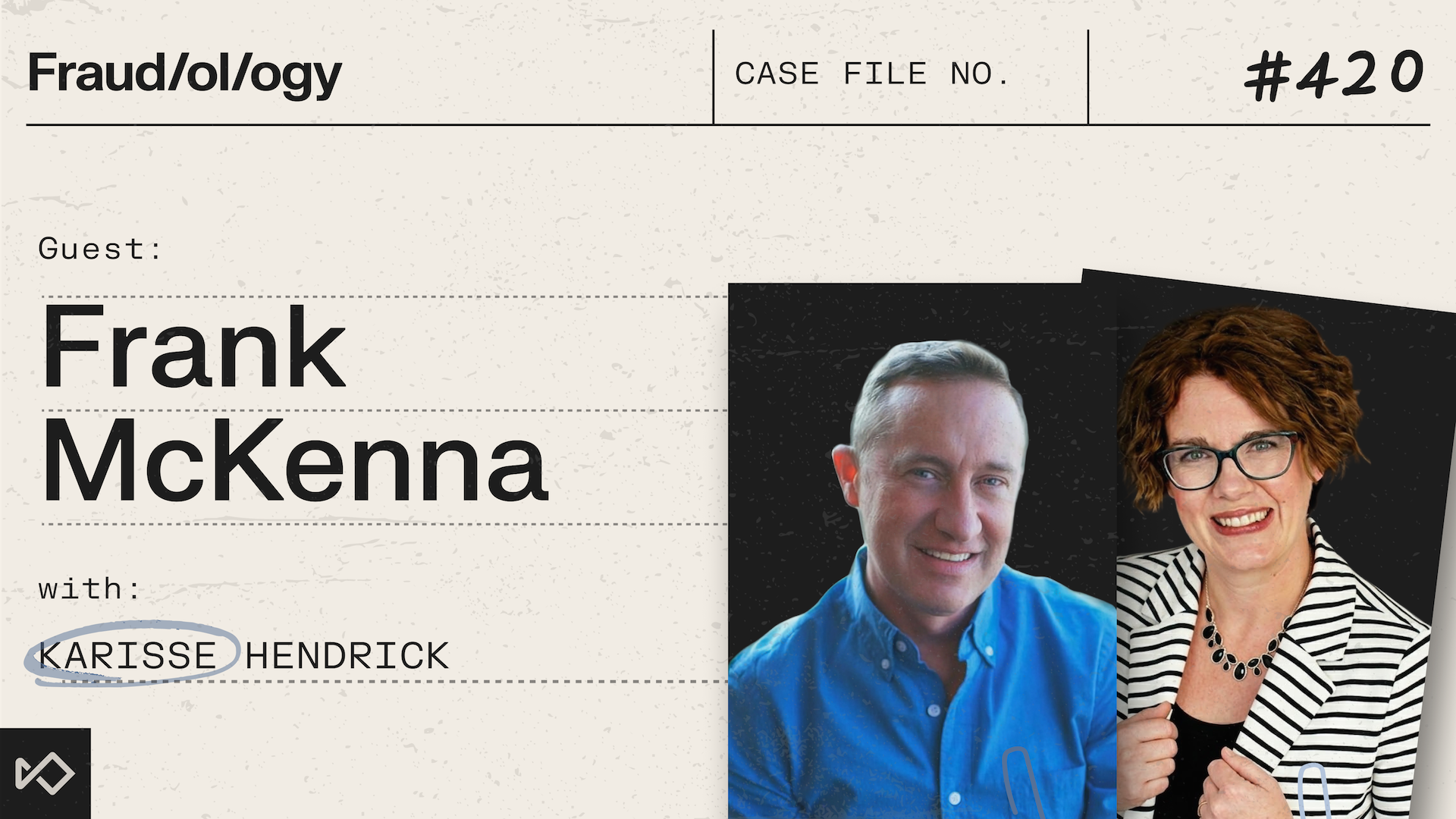
In this episode of Fraudology, I welcome back Frank McKenna to talk through the sharp rise in application fraud targeting digital banking and lending.
We dig into research from Visa showing that financial institutions are seeing growing losses as criminals exploit digital platforms with identity theft, document forgery, bots, and increasingly convincing deepfake biometric fraud.
We also talk about why application fraud has surged so sharply, including data breach-driven application fraud, first-party application fraud, third-party application fraud, and the way digital lending environments make it easier to submit large volumes of fraudulent applications.
And this matters.
Because application fraud detection now depends on seeing much more than the identity claim sitting in front of you.
What you’ll hear in this episode
You should listen to this episode if you
If you liked this episode, be sure to subscribe and review the podcast on iTunes, Spotify, YouTube, or wherever you listen to podcasts. It really helps with getting the word out.
Let me break this down.
One of the biggest mistakes teams still make is assuming that if the identity looks real, the application risk must be low.
That used to be survivable.
Not anymore.
Application fraud detection now has to account for a much wider set of signals because fraudsters have become very good at making the identity layer appear clean enough to pass.
Frank and I talk through why identity theft in lending is only one part of the picture.
Synthetic identity application fraud, first-party application fraud, and third-party application fraud all introduce different types of risk.
Some applicants are using stolen identities.
Some are using manipulated identities.
Some are using their real identity with no intention of repaying the loan.
Different mechanics. Same financial damage.
That is why fraud signals beyond identity verification are so important.
If teams only ask whether the identity is real, they miss the much more important question.
What behavior, intent, and surrounding signals exist around that identity?
Digital lending is obviously more convenient for legitimate applicants.
But it is also more convenient for criminals.
Once application flows move online, fraudsters can automate, test, and repeat abuse at scale in ways that were much harder in traditional branch-driven systems.
Frank highlights research showing that roughly one in fifteen digital loan applications is now fraudulent.
That is dramatically higher than typical transaction fraud rates.
That gap tells us something important.
The application stage has become one of the primary pressure points in fraud.
Bot-driven loan applications, data breach-driven application fraud, and mass submissions using stolen identity data are all easier to execute in digital-first onboarding systems.
Another major theme we discuss is the growing abuse of documents and biometric verification.
Frank and I talk about a 244 percent surge in digital document forgeries and a 40 percent increase in deepfake biometric fraud attempts.
That is a serious problem.
At first glance, document verification and selfie checks appear to be strong controls.
And sometimes they are.
But as fraud tactics evolve, these controls can become easier to manipulate than teams expect.
Digital document forgery detection and deepfake biometric fraud are no longer fringe threats. They are active pressure points in application fraud.
This is where layered defense becomes essential.
If a bank or lender relies too heavily on a single signal, fraudsters only need to defeat that one control.
Another important point we cover is first-party application fraud.
This is often underweighted in many fraud programs.
Not every fraudulent application involves a fake identity.
Sometimes the identity is real, the documents are real, and the applicant understands the process perfectly.
The problem is intent.
First-party application fraud occurs when a legitimate individual applies for credit without intending to repay.
Traditional identity controls may not detect that behavior because the identity itself is valid.
We also talk about credit washing fraud schemes.
These involve exploiting consumer protection laws intended to help victims of human trafficking by removing negative credit history.
Unfortunately, some fraudsters are manipulating those protections to reset their credit profiles and apply for new loans.
The bigger lesson from this conversation is clear.
Application fraud detection cannot rely on a single signal anymore.
Not identity alone.
Not documents alone.
Not biometrics alone.
Effective onboarding now requires layered fraud detection that evaluates multiple signals together.
Identity, documents, device signals, behavioral patterns, application velocity, funding sources, and historical data all contribute to the full risk picture.
Account opening fraud detection should be treated as a strategic control point, not just a compliance step.
Fraudsters have already moved beyond simple identity abuse.
Fraud detection has to move beyond identity-only thinking as well.
The bigger theme in this episode is that application fraud is multifaceted.
The incentives are high.
The tools are better.
And the digital environment makes scale easy.
Frank McKenna explains why banks and lenders are under increasing pressure and why application fraud detection has to evolve beyond identity-only thinking.
For fraud teams, that means asking harder questions during onboarding, building layered controls, and treating application abuse as one of the most critical risk fronts in digital financial services today.