38 min
Today I am talking about deepfake KYC fraud and what happens when identity checks that once felt strong enough start getting tested by synthetic media that looks a lot more believable than most teams are ready for. Because that is really the issue here. A lot of organizations still treat identity verification like a stable layer of trust. It is not. Not anymore.
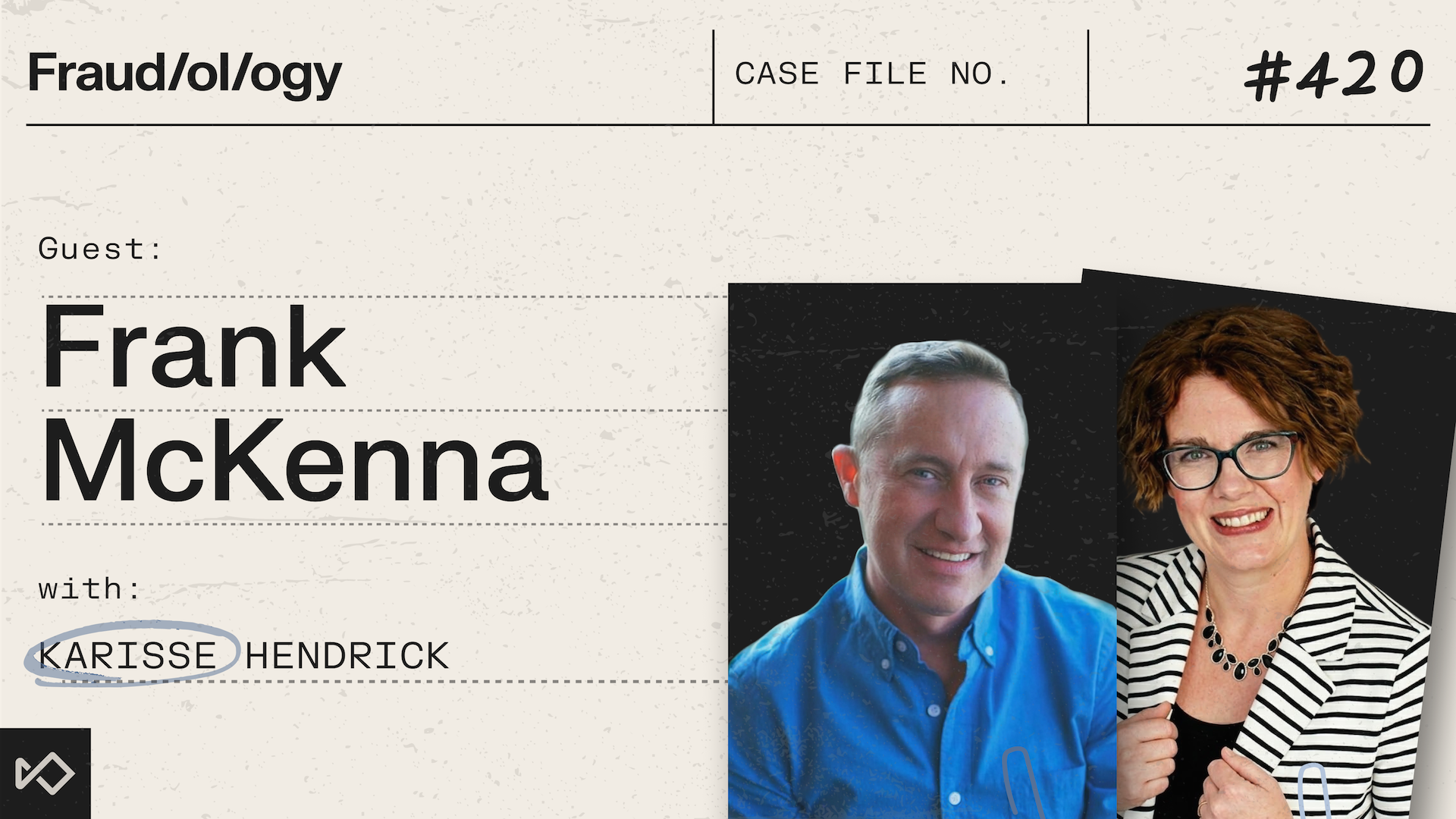
In this episode of Fraudology, I welcome Frank McKenna to unpack how scams have evolved from relatively simple calling card schemes into much more sophisticated digital fraud powered by AI-enabled scams and synthetic media fraud. We look closely at deepfake impersonation risks, identity verification threats, and the very practical ways these changes could affect banking KYC risk and retail identity fraud.
We also get into a deepfake real estate scam, the growing visibility of fraud through social media, the virality of glitch scams, and new scam prevention technology like the Scam Ranger tool. And this matters. Because deepfake KYC fraud is not just a future concern. It is a direct challenge to digital identity verification, onboarding trust, and the assumptions many teams still make about what a real person looks and sounds like online.
Here is what that fraud lens means in practice:
What you’ll hear in this episode:
You should listen to this episode if you:
If you liked this episode, be sure to subscribe and review the podcast on iTunes, Spotify, YouTube, or wherever you listen to podcasts. It really helps with getting the word out.
Let’s break this down. One of the biggest shifts in fraud right now is that identity no longer has to be stolen in the traditional sense to be abused effectively. It can be generated, manipulated, or convincingly staged. That is what makes deepfake KYC fraud such a serious issue for fraud teams.
At first glance, digital identity verification can still look strong. A document matches. A face scan appears consistent. A voice sounds real enough. But when synthetic media fraud gets good enough to support the identity story, those checks stop being as reassuring as they used to be. That is the problem.
This is exactly why deepfake KYC fraud matters. It turns identity verification threats into operational reality. And once fraudsters can use AI-enabled scams to build more convincing people, KYC process security has to become much more skeptical than it has been historically.
This is where things get interesting. A lot of fraud conversations still frame deepfakes like a niche or emerging problem. But the real story is usability. Once AI tools become accessible enough, KYC bypass tactics stop being reserved for highly specialized attackers.
Frank and I walk through how quickly scam methods have evolved, and the key point is not just that the content looks better. It is that it is becoming easier to create, easier to test, and easier to fit into existing fraud workflows. That changes the economics of fraud. And that matters.
Banking KYC risk and retail identity fraud are now dealing with the same broader issue: it is getting easier to manufacture trust signals that look good enough to pass a fast-moving onboarding process. That usually does not end well.
One of the most useful examples in the episode is the deepfake real estate scam, because it shows how synthetic media does not stay confined to simple scams for very long. Once it works in one environment, it moves into higher-value and higher-trust interactions.
Here’s what is actually happening. Real estate, lending, and other trust-heavy transactions depend on identities, communications, and approvals feeling legitimate. If a deepfake can help reinforce that legitimacy, then the fraud becomes much more persuasive. Not because the fake is perfect. Because it is good enough in the right context.
This is one of those cases where next-generation identity fraud becomes very real very quickly. The fraud is not just about a manipulated image or voice. It is about the full credibility package surrounding the interaction.
The episode also touches on social media fraud visibility and glitch scam virality, which is important because fraud spreads differently once it becomes public entertainment, public instruction, or public validation. And yes, that is a problem.
When scams go viral, they do more than attract attention. They normalize tactics, spread awareness among bad actors, and make certain fraud methods feel easier to replicate. That is especially true for glitch scams and other schemes that get amplified through social channels.
This matters for deepfake KYC fraud too. Because social platforms do not just expose people to scams. They also accelerate how quickly scam methods and proof-of-concept tactics circulate. Fraud trends in banking and fraud trends in retail are now shaped partly by how quickly abuse patterns spread online.
Frank and I also discuss tools like Scam Ranger, which is useful because teams do need better scam prevention technology and stronger AI scam detection if they want to keep pace. But tooling alone is not the whole answer.
The bigger lesson is that deepfake KYC fraud requires a mindset shift. Teams need to stop assuming that a polished identity equals a legitimate person. They need to ask what else supports the identity, what contextual signals line up, and where the onboarding journey might be too easy to manipulate. That is the real work.
KYC process security gets stronger when teams think in layers: documents, behavior, device context, historical consistency, social footprint, interaction quality, and escalation logic. Not because any one signal is perfect. Because no one signal should be trusted alone anymore.
The bigger theme in this episode is that deepfake KYC fraud is part of a much larger change in how identity gets abused online. Frank helps make that shift practical by connecting AI-enabled scams, real-world fraud examples, social media visibility, and prevention tools into one clearer picture. And that is the takeaway. Identity verification is no longer just about confirming that something looks real. It is about deciding whether the entire story around that identity actually holds up.