

38 min
Today I want to talk about deepfake scam detection and what it looks like when synthetic media stops feeling experimental and starts becoming operationally useful for fraudsters.
Because that is where we are now.
Not hypothetical.
Not early-stage.
Real enough, cheap enough, and convincing enough to create real problems for fraud teams, investigators, and anyone relying on trust signals that used to hold up a lot better.
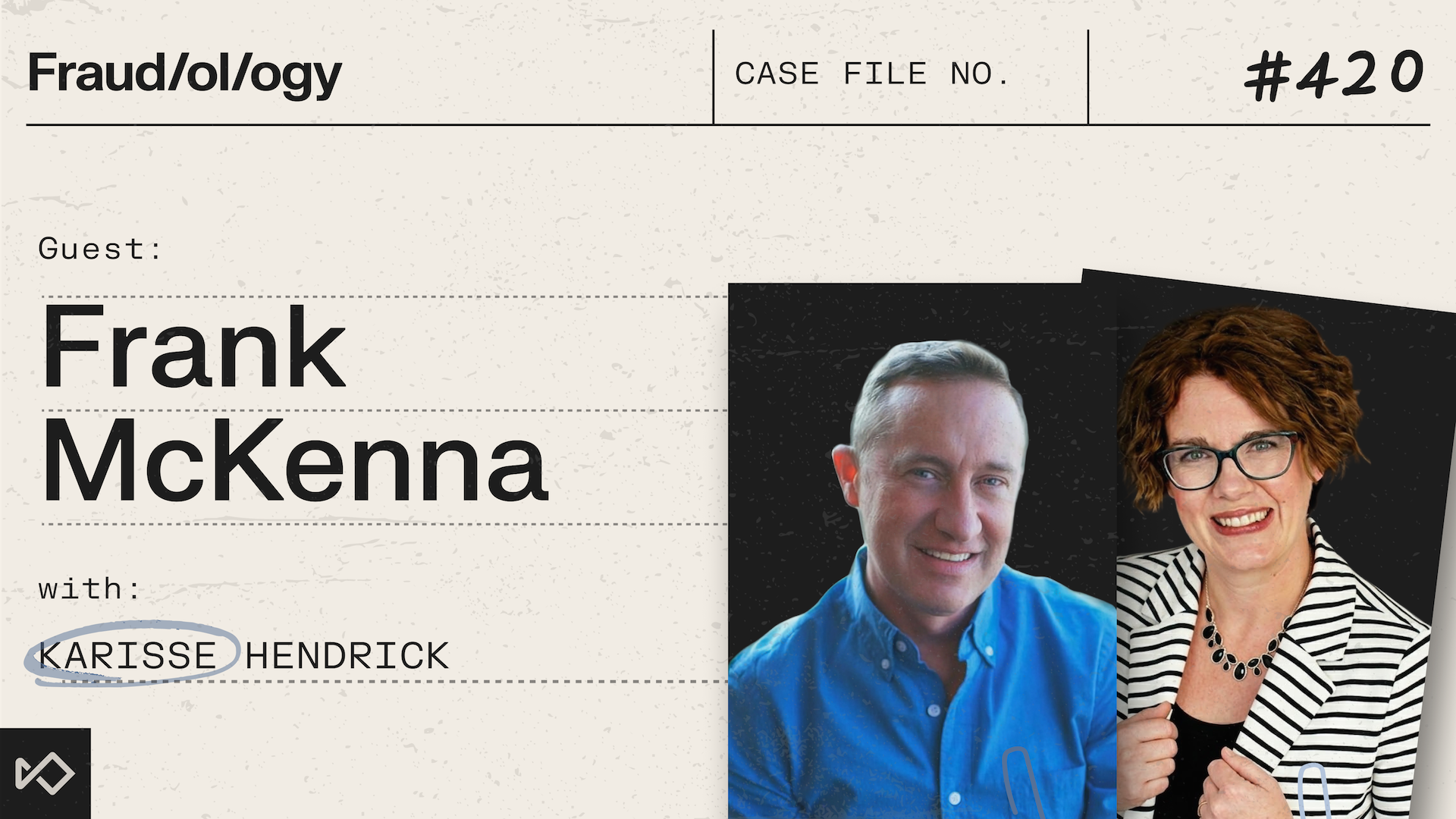
In this episode of Fraudology, I’m joined again by fraud prevention expert Frank McKenna, co-founder of Point Predictive, to dig into the rise of deepfakes and AI-generated voice clones.
We walk through examples that are honestly hard to ignore, including court cases influenced by deepfakes, cloned identity scams in real estate transactions, voice clone extortion attempts, and even a scam video call that targeted Frank’s own mother.
We also get into OpenAI Sora deepfake risks, celebrity deepfake impersonation, and the emerging tactic of data sniping, where breached personal data gets paired with AI-generated content to build extremely targeted scams.
And this matters.
Because deepfake scam detection is no longer just a cybersecurity concern. It has become a fraud operations problem, a customer protection problem, and a digital trust problem all at the same time.
Here is what that fraud lens means in practice:
What you’ll hear in this episode:
You should listen to this episode if you:
If you liked this episode, be sure to subscribe and review the podcast on iTunes, Spotify, YouTube, or wherever you listen to podcasts. It really helps with getting the word out.
Let me break this down.
Deepfakes used to feel like something that belonged in research demos or strange corners of the internet.
Not anymore.
What Frank and I get into here is the tipping point where synthetic media becomes useful enough for criminals to deploy in real fraud operations.
That is the shift.
At first glance, a cloned voice or manipulated video can still feel like an edge case. But when the realism improves and the tools become easier to access, those edge cases turn into repeatable workflows.
AI voice cloning scams, deepfake video call scams, and other forms of video deepfake fraud are now realistic enough to influence victims, confuse investigators, and create hesitation inside organizations that are not prepared for this level of deception.
That is exactly why deepfake scam detection matters so much right now.
Fraudsters do not need perfect realism.
They just need enough realism to create urgency, trust, or confusion.
Once that happens, the scam has already done most of its job.
One of the reasons this conversation with Frank is so valuable is that it stays grounded in real examples.
He shares cases involving cloned identity scams and deepfake real estate fraud that show how synthetic media enhances existing fraud tactics.
And that is the key point.
Criminals do not always invent new categories of fraud. Often they simply upgrade the existing ones.
Real estate transactions, identity checks, notarization flows, high-trust communications, and financial approvals all become more vulnerable when fake media reinforces a convincing story.
That is where things start getting complicated.
Digital identity verification against deepfakes becomes harder when a fake document, a fake face, a cloned voice, and real breached data are combined into something that appears legitimate.
Unless teams know what to question, those signals can easily pass initial checks.
Another important concept we cover is data sniping.
This is the tactic of combining breached personal data with AI-generated media to build highly targeted scams.
And yes, it is a serious problem.
We have seen versions of this playbook before. Stolen data makes scams believable. AI makes them easier to scale and personalize.
Put those together and you get more precise impersonation attacks with much less manual effort.
That is why data sniping scams deserve attention.
The scam does not rely only on fake content. The surrounding details are real enough to support the deception.
Names, addresses, family connections, account references, and past breach data can all be layered together with hyper-realistic scam content.
That combination is what makes breached data plus AI fraud particularly dangerous.
Frank and I also discuss OpenAI Sora deepfake risks and celebrity deepfake impersonation.
The bigger issue here is accessibility.
As generation tools improve, more people can create convincing fake audio and video without advanced technical skills.
That changes the fraud environment quickly.
Once the barrier to entry drops, more attackers experiment with AI deception in fraud. Some use it for fake endorsements. Some for extortion. Others for deepfake video call scams or voice clone extortion.
Different tactics, same pattern.
Next-generation impersonation attacks become easier to produce and harder to identify.
For fraud analysts and investigators, that means training has to evolve.
Fraud analyst deepfake training should focus not only on spotting obviously fake content, but also on understanding how criminals blend synthetic media with real-world context.
The bigger theme in this episode is simple.
Deepfake scam detection is becoming core fraud work.
Not something experimental. Not something that belongs only to cybersecurity teams.
Deepfakes, cloned voices, breached data, and AI-enhanced impersonation all contribute to the same growing problem.
Trust is easier to fake than it used to be.
Once fraud teams accept that reality, they can start asking better questions.
Which signals still matter?
What should trigger escalation?
Where are we over-trusting audio, video, or identity context?
That is where the real work begins.