38 min
Episode \#No episode number
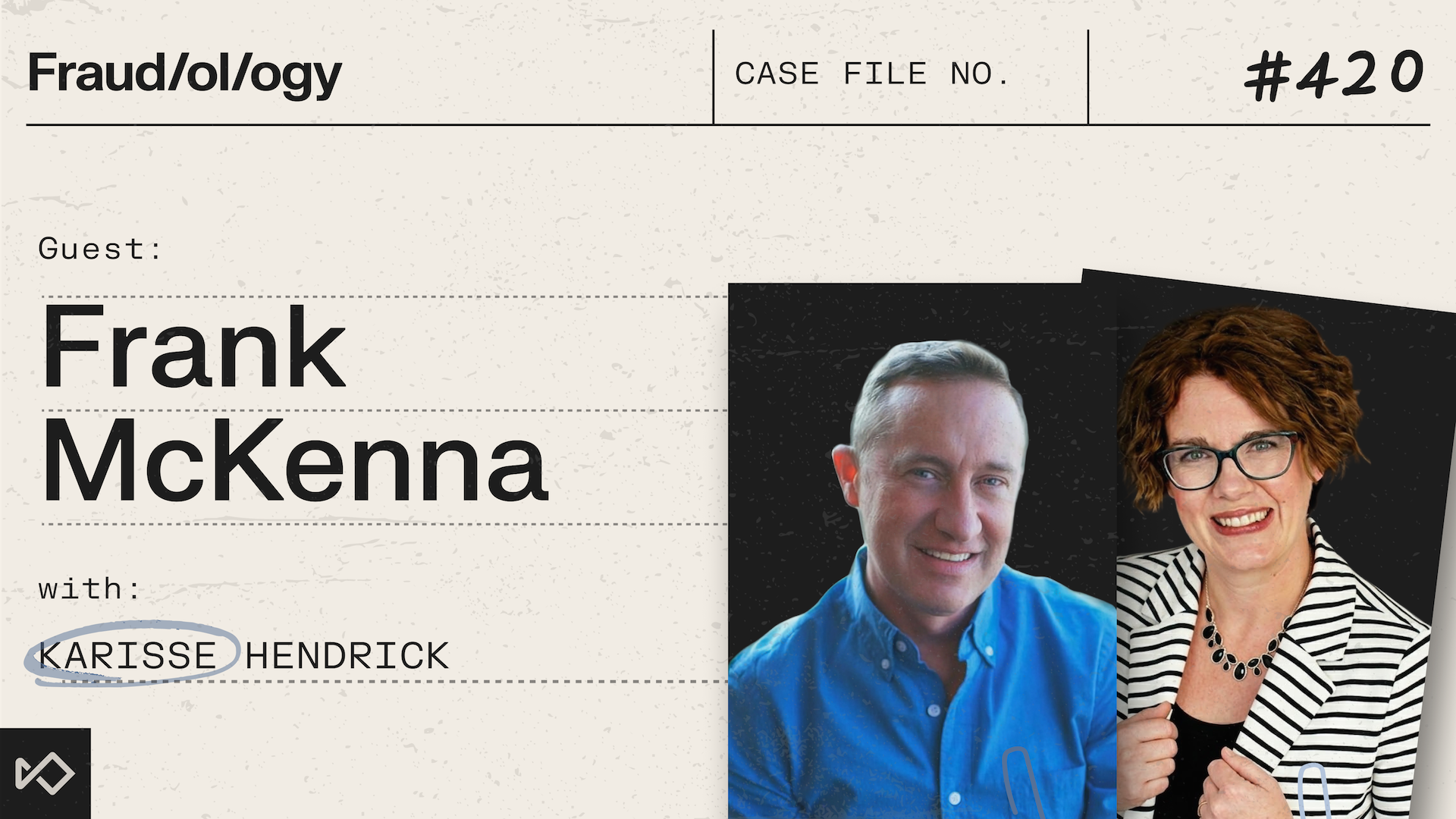
Guest: Frank McKenna
Today I’m talking with Frank McKenna, someone a lot of fraud fighters already know through his work, his pattern recognition, and especially through his blog, Frank on Fraud. If you’ve spent any time in this industry, chances are you’ve read his analysis at some point. And for good reason.
Frank has spent three decades working across banking fraud trends, auto loan fraud, and credit card fraud. So this conversation is not just about one fraud type or one moment in the market. It is about what changes, what stays the same, and what experienced fraud people learn when they’ve watched criminals, controls, and technology keep evolving over time.
This is one of those episodes that matters because it goes beyond headlines. We get into Frank’s path into fraud, why he stayed in it, and how fraud prevention collaboration has shaped the way he looks at investigations, trends, and strategy. And honestly, that part stands out. Because the longer you work in fraud, the more obvious it becomes that no one solves much in a silo.
Here is what that perspective means in practice:
What you’ll hear in this episode:
You should listen to this episode if you:
If you liked this episode, be sure to subscribe and review the podcast on iTunes, Spotify, YouTube, or wherever you listen to podcasts. It really helps with getting the word out.
Let’s break this down.
One of the reasons I wanted to revisit this conversation is that Frank brings something a lot of fraud content does not. Context. He has seen fraud evolve across banking, auto loans, and credit cards, which means he is not reacting to every new tactic like it appeared out of nowhere. He is looking at what changed, what simply got repackaged, and what teams should actually pay attention to.
That matters.
Because fraud investigation trends are easy to misunderstand when they get stripped from the bigger picture. A new tool shows up. A new scam gets attention. A new channel becomes popular. And suddenly everyone acts like the whole industry changed overnight. Usually, it did not. More often, the pressure points changed, the scale changed, or the speed changed.
Here’s what’s actually happening:
This is where things get interesting.
Frank is probably best known publicly for Frank on Fraud, and that matters because the blog is not just commentary. It is a collaboration engine. It pulls together fraud news analysis, industry observations, and examples from different corners of the ecosystem in a way that helps fraud teams connect dots faster.
Right.
And that is a big deal in this field.
Fraud prevention collaboration is one of those things everyone says they value, but not everyone actually invests in. Good fraud teams learn from peers. Great fraud teams build systems for that learning. They stay plugged into what other industries are seeing, what adjacent teams are fighting, and what tactics are starting to travel from one vertical to another.
That usually leads to better decisions.
At first glance, these may sound like separate worlds. But when you look closer, they really are not.
Banking fraud trends, auto loan fraud, and credit card fraud all show different versions of the same core problem. Attackers look for weak verification, inconsistent controls, slow information sharing, and businesses that are optimized for growth without enough resilience behind the scenes. The details change. The incentives do not.
And that matters for fraud teams.
Because one of the fastest ways to miss risk is to assume your vertical is somehow too unique to learn from anyone else. We have seen this playbook before. The methods criminals use in one space often show up in another once the economics make sense.
So when Frank talks about multiple sectors, that is not just career trivia. It is a better way to understand fraud prevention strategies across the board.
There is a reason conversations like this hold up.
Frank brings fraud expert commentary that comes from actually doing the work, watching the industry shift, and continuing to stay engaged with what is happening now. That combination matters a lot more than polished takes or recycled headlines. Especially in fraud.
Honestly, that is one of the reasons I wanted this episode in the Fraudology archive.
If you are newer to the industry, this is a strong reminder that fraud career growth is not about memorizing terms or chasing every new buzzword. It is about building judgment. And if you have been in this field for a while, it is a good reminder that staying curious is part of the job too.
The big takeaway from this episode is pretty simple. Fraud investigation trends make more sense when you learn from people who have watched the industry change over time and stayed curious enough to keep connecting dots. Frank brings that perspective. And for fraud teams trying to stay sharp, that kind of context is incredibly useful.