38 min
Today I am talking about fraud prevention ROI and why one of the hardest parts of fraud leadership is proving the value of stopping something before the damage becomes obvious to everyone else. Because that is really the issue here. It is always easier for a business to understand a visible loss than an avoided one. That gap is exactly why so many fraud teams struggle to get the tools, budget, and support they need before a disaster happens instead of after.
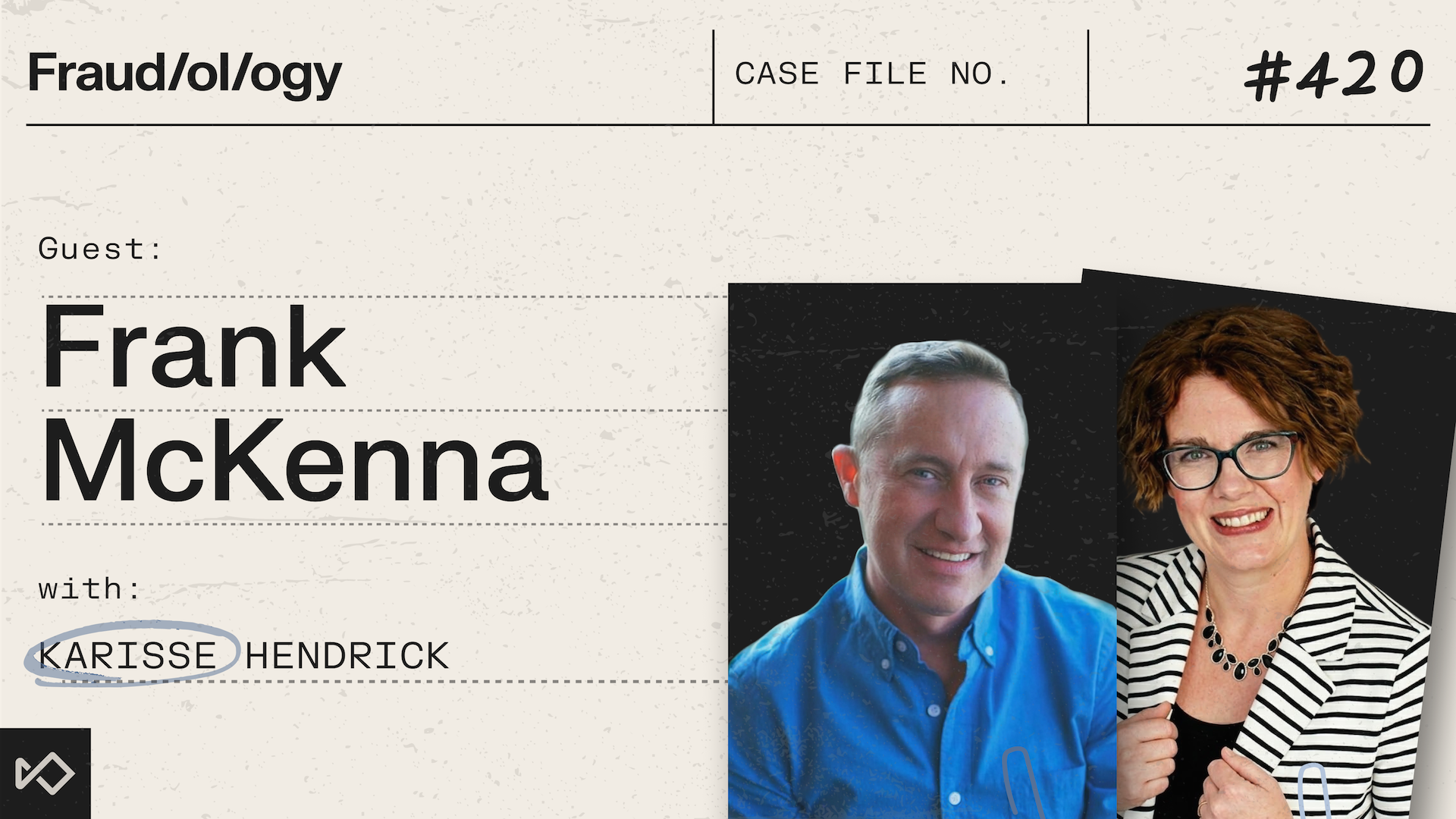
In this episode of Fraudology, I talk with Frank McKenna from the Frank on Fraud blog and co-founder of Point Predictive about his recent article, “Is Your Boss Being Too Cheap on Fraud Tools? Read This...” We use that as a starting point to expand into a broader conversation about how fraud leaders can more accurately quantify risk, explain future fraud losses, and build a business case for fraud tools before the pain is fully visible.
We also get into real-world advice for fraud budget justification, how to think about the cost of underinvesting in fraud, and some cautionary tales that can help when you are facing skepticism or pushback from leadership. And this matters. Because fraud prevention ROI is not just a finance exercise. It is what helps teams move from reacting to avoidable disasters to building proactive fraud planning that actually protects the business before the losses force attention.
Here is what that fraud lens means in practice:
What you’ll hear in this episode:
You should listen to this episode if you:
If you liked this episode, be sure to subscribe to the Fraudology podcast on your favorite podcast platform to be alerted when new episodes are released.
Let’s break this down. One of the biggest challenges fraud teams face is that success often looks like nothing happened. No major breach. No big fraud spike. No ugly executive scramble. That is good for the business, obviously, but it also makes fraud prevention ROI harder to communicate.
That matters because most businesses are better at reacting to visible losses than funding invisible prevention. If the fraud team does its job well, the disaster never becomes a headline internally. But that does not mean the value is small. It usually means the value was realized early enough to stay hidden.
This is exactly why fraud prevention ROI needs stronger explanation. The team cannot assume the business will automatically understand the cost of disasters that never happened.
This is where the conversation gets especially practical. Fraud leaders often know the risk is real, but knowing it is real and proving it in a way leadership accepts are two different things.
Here’s what is actually happening. Fraud teams may speak in terms of attacks, abuse patterns, tools, controls, and suspicious behaviors. Executives are often listening for revenue risk, margin impact, operational cost, customer trust, and exposure to future loss. If the fraud team does not translate the risk into that language, the business case can fail even when the underlying need is real.
That is why quantifying fraud risk matters so much. The goal is not just to say fraud is dangerous. It is to show what the business stands to lose by waiting.
Another major theme in this episode is the cost of underinvesting in fraud. This point matters because a lot of businesses think they are saving money when they delay spending on fraud tools or staffing. Sometimes they are really just postponing a much larger bill.
That is why Frank’s article resonates. A company can be “too cheap” on fraud tools in ways that look rational in the short term but become extremely expensive later. Once losses scale, once customer trust is damaged, or once the business is stuck reacting to a problem it could have mitigated earlier, the savings stop looking very smart.
This is exactly why fraud tool investment should not be judged only by the current-state pain level. It should also be judged by the cost of being unprepared.
One reason fraud leaders struggle here is that no forecast is perfect. And that is true. Fraud loss forecasting will always involve uncertainty. But uncertainty is not a good excuse for doing nothing.
In practice, businesses make forward-looking investments all the time based on imperfect information. Fraud should not be the one category that only gets funded after a loss proves the point. The real skill is building a reasonable, evidence-based picture of exposure using trend data, case patterns, comparable incidents, and the business’s own weak spots.
This is one of the reasons fraud prevention ROI has to be framed as risk management, not fortune-telling. The point is not perfect prediction. The point is responsible preparation.
The broader takeaway from this episode is that great fraud leaders do not just respond well. They help the company prepare early enough that the response is smaller, faster, and less painful than it otherwise would have been.
That means building the fraud prevention ROI case before the crisis. It means showing how fraud technology value connects to business resilience. It means helping leadership understand that fraud spending strategy is not just about current cost. It is about future stability.
That is really the point Frank and I keep coming back to. If you wait until the fraud disaster is obvious, you are already negotiating from the worst possible position.
The bigger theme in this episode is that fraud teams often know exactly where the risk is building long before the rest of the business feels the urgency. Frank and I talk about how to close that gap, how to build a stronger business case, and how to explain fraud tool value in ways leadership can actually act on. And that is the real takeaway. Fraud prevention ROI is not about proving value after the fact. It is about helping the business invest early enough that the fact never becomes a disaster.