38 min
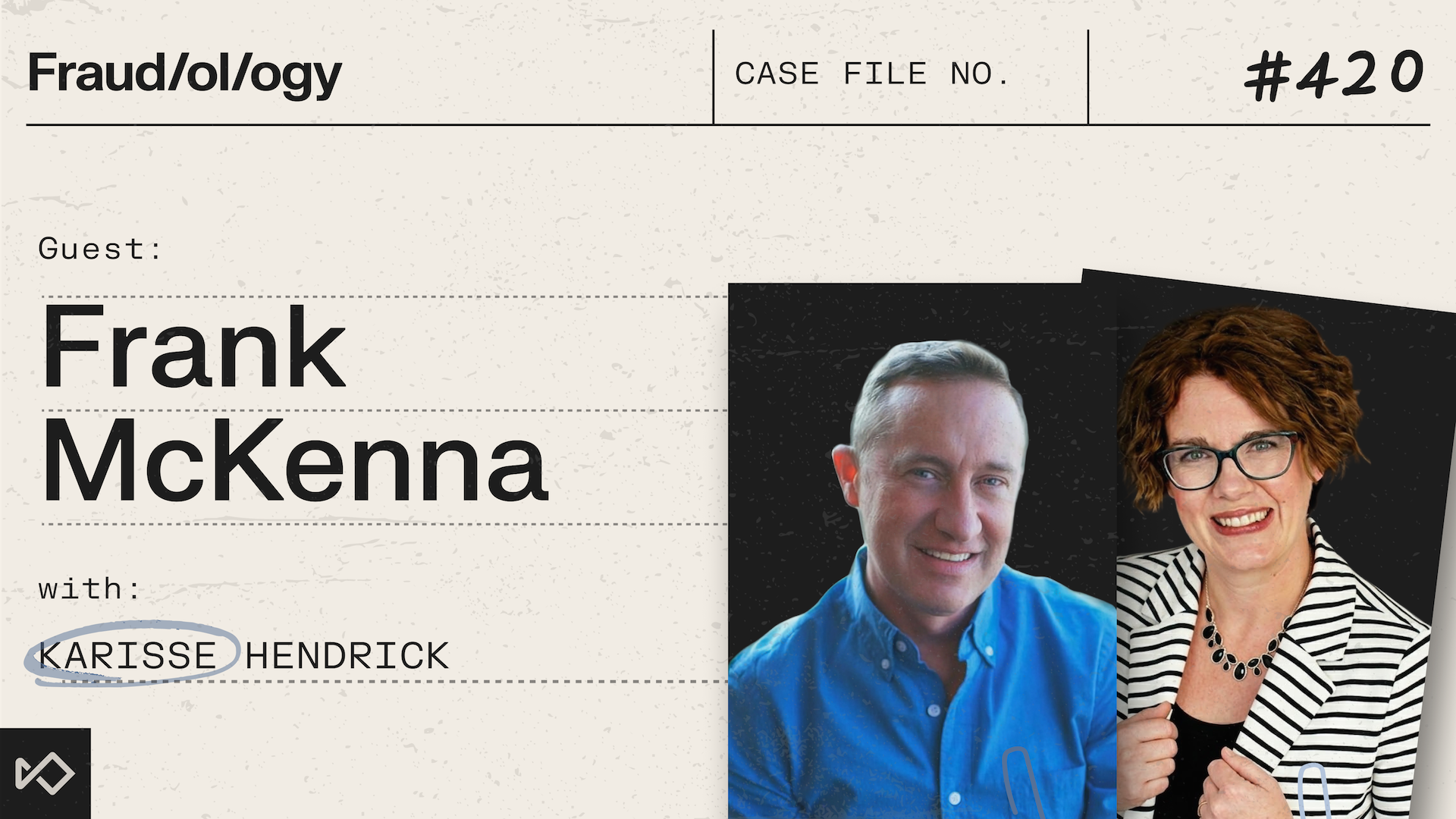
Guest: Frank McKenna
In this episode, I’m talking with Frank McKenna, and this is one of those conversations that feels especially valuable because Frank has seen just about every version of fraud change over time. He has spent three decades fighting fraud across banking, auto loans, and credit cards, which means he has watched fraudster behavior changes happen in real time, right alongside shifts in prevention tools, investigation strategies, and the way companies think about risk.
A lot of people know Frank through Frank on Fraud, his blog that tracks fraud news analysis, scam trends, and what is happening across sectors all over the world. And honestly, that is part of what makes his perspective so useful. He is not looking at one slice of the problem. He is looking at patterns across industries, attack types, and fraud strategy evolution over time.
And that matters.
Because fraud prevention thought leadership is only useful if it stays grounded in what teams are actually seeing, what criminals are actually doing, and how companies can respond in practical ways. In this conversation, we get into Frank’s fraud career journey, why he got hooked on fraud prevention in the first place, and how fraud prevention collaboration is helping address problems like auto loan fraud in ways that one company alone usually cannot solve.
Here is what that perspective means in practice:
What you’ll hear in this episode:
You should listen to this episode if you:
If you liked this episode, be sure to subscribe and review the podcast on iTunes, Spotify, YouTube, or wherever you listen to podcasts. It really helps with getting the word out.
Let’s break this down.
One of the most useful things Frank brings to this conversation is range. Not just years of experience, although thirty years is a lot. I mean range across product types, risk models, and fraud environments. Banking fraud trends do not look exactly like credit card fraud. Auto loan fraud is its own beast. But when someone has worked across all of them, they start to see what changes, what repeats, and what companies keep underestimating.
That is where real anti-fraud expertise gets interesting.
Because the point is not just that Frank has seen a lot. It is that he can connect those experiences into meaningful fraud prevention thought leadership. He has watched criminals adapt their methods. He has seen technology improve. He has watched fraud teams get smarter in some ways and still leave the same gaps in others. And honestly, that kind of perspective is hard to fake.
Here is why that matters:
At first glance, a fraud prevention blog might sound like just another content channel. But when you look closer, Frank on Fraud is really about pattern recognition at scale.
That is the part that matters.
Frank is looking across stories, geographies, and verticals and asking the same questions good fraud teams ask every day. What actually happened? Why did it work? What weakness did it exploit? And what should smart teams be paying attention to before that same tactic spreads somewhere else?
That is why financial fraud commentary can be so valuable when it is done well.
It is not about collecting headlines for the sake of it. It is about helping fraud professionals understand which stories are signals, which ones are noise, and which trends are likely to show up in their own world next. A good fraud prevention blog does not just inform people. It sharpens their instincts.
This is where things get especially important.
Auto loan fraud is one of those areas where isolated defense usually is not enough. Fraudsters do not care about company org charts. They do not care about siloed data. They do not care that one lender can only see one slice of the activity. They are perfectly happy to move across applications, identities, dealers, and institutions if nobody is connecting the dots.
That usually does not end well.
This is why fraud prevention collaboration matters so much. When institutions share insights, compare patterns, and work from a broader view of the problem, they have a much better shot at spotting the behavior that would otherwise look normal in isolation. That does not mean collaboration solves everything. Obviously. But it does change what is visible.
And that is a big deal.
Because a lot of fraud investigation trends point in the same direction. The more connected the attack path is, the more connected the defense needs to be.
One of the things I really appreciate about this conversation is that it does not treat fraud change as abstract. Frank has lived through the shifts. He has seen changes in fraud tools, fraud tactics, investigative methods, and organizational priorities. So when he talks about fraud strategy evolution, it comes from experience, not theory.
Right.
And that makes a difference. Because it is easy to talk about innovation in fraud prevention like every new technology automatically fixes the old problems. It does not. Some things improve. Some things create new blind spots. Some things make teams faster. Some things just make dashboards prettier. Not exactly the same thing.
What actually holds up is the ability to adapt without losing common sense.
That is one reason this episode is so useful for fraud professionals at all levels. Whether you are early in your fraud career journey or have been in this space for years, there is something valuable in hearing how an experienced operator thinks about change, what remains true, and where collaboration fits into the future of fraud prevention.
The big takeaway from this episode is pretty straightforward. Fraud prevention thought leadership is not about sounding smart. It is about helping people see the problem more clearly. Frank McKenna brings that kind of clarity through decades of experience, strong pattern recognition, and a real commitment to fraud industry education. And in a field where criminals adapt constantly, that kind of perspective is worth paying attention to.