

38 min
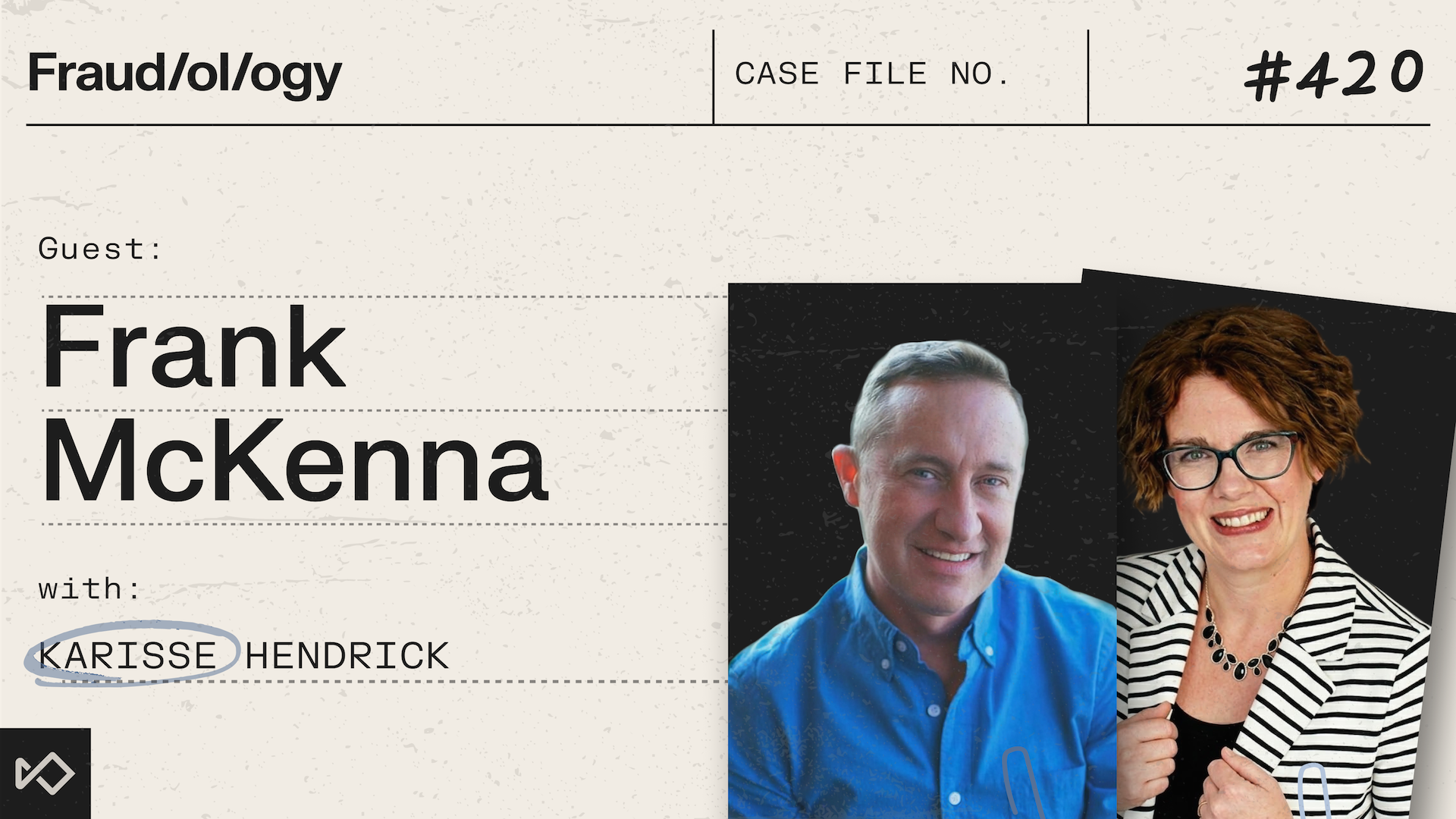
Guest: Frank McKenna
Let’s break this down.
In this episode of Fraudology, I’m joined by Frank McKenna, co-founder of Point Predictive and one of the most well-known investigators tracking fraud activity online. Frank spends a lot of time monitoring where fraud groups operate, how they organize, and how criminals move across platforms. And lately, that work has uncovered something that should concern a lot of people.
Because here’s what’s actually happening.
Fraud communities that once operated quietly on dark web forums are now showing up on mainstream social media platforms. Facebook groups, Instagram communities, and even TikTok networks are increasingly being used to organize scams, recruit new participants, and share fraud techniques.
One of the most striking examples is something called “Fraud University.”
At first glance, it might look like just another online community. But when you dig deeper, it becomes clear that these groups function as training environments where criminals teach each other how to run scams, bypass platform protections, and exploit victims at scale.
And that raises a bigger question.
What responsibility do large technology platforms have when fraud communities operate openly on their networks? Because the current systems for social media fraud enforcement often struggle to identify and remove these organized groups before real harm occurs.
Here is what that social media fraud enforcement challenge means in practice:
What you’ll hear in this episode
You should listen to this episode if you
If you liked this episode, be sure to subscribe & review the podcast on iTunes, Spotify, YouTube, or wherever you listen to podcasts. It really helps with getting the word out.
For years, fraud investigators focused heavily on dark web forums where criminals traded stolen data and shared attack methods. Those spaces were hidden, fragmented, and often difficult for mainstream users to access.
But that environment is changing.
Increasingly, investigators are seeing criminal migration from dark web communities to mainstream social media platforms. Facebook groups, Instagram fraud groups, and TikTok scam networks are becoming places where fraud techniques are shared openly.
And that matters.
Because when fraud communities move onto mainstream platforms, the scale of potential victims increases dramatically.
Operational indicators may include:
This is exactly why social media fraud enforcement has become such an important issue for trust and safety teams.
Another challenge discussed in this episode is the difficulty investigators often face when trying to report fraud activity on social platforms.
At first glance, most major platforms provide reporting tools designed to flag harmful content or illegal behavior. But in practice, investigators frequently find that these systems struggle to handle organized fraud networks.
And that creates a gap.
Operational indicators may include:
When these reporting systems fail, scam communities can remain active long enough to attract thousands of participants. And by the time action is taken, significant damage may already be done.
Another theme we explore in this episode is how organized groups like the Yahoo boys are adapting their operations to take advantage of mainstream platforms.
These groups historically operated in more isolated environments. But social media now offers something far more powerful: global reach, built-in communication tools, and easy recruitment.
That combination allows scam groups to grow faster than traditional fraud ecosystems.
Operational indicators may include:
The key thing to understand is that social media has become an operational hub for certain types of online fraud.
The final part of this conversation focuses on responsibility. As social media platforms become more central to digital life, they also become critical infrastructure for preventing abuse.
That’s where the debate begins.
What role should big technology companies play in stopping organized fraud communities on their platforms? And how far should platform enforcement go when addressing criminal behavior that occurs within user communities?
Operational indicators may include:
This is a complicated issue. But one thing is clear.
As organized fraud moves into mainstream platforms, social media fraud enforcement will increasingly shape how effectively the industry can protect users from scams.