Software
Software
Grow your user base without funding fraud
Fake accounts farm free trials and credits, stolen cards buy usage, and stolen credentials take over real accounts. Sardine uses device, behavioral, and business signals to stop them in real-time.
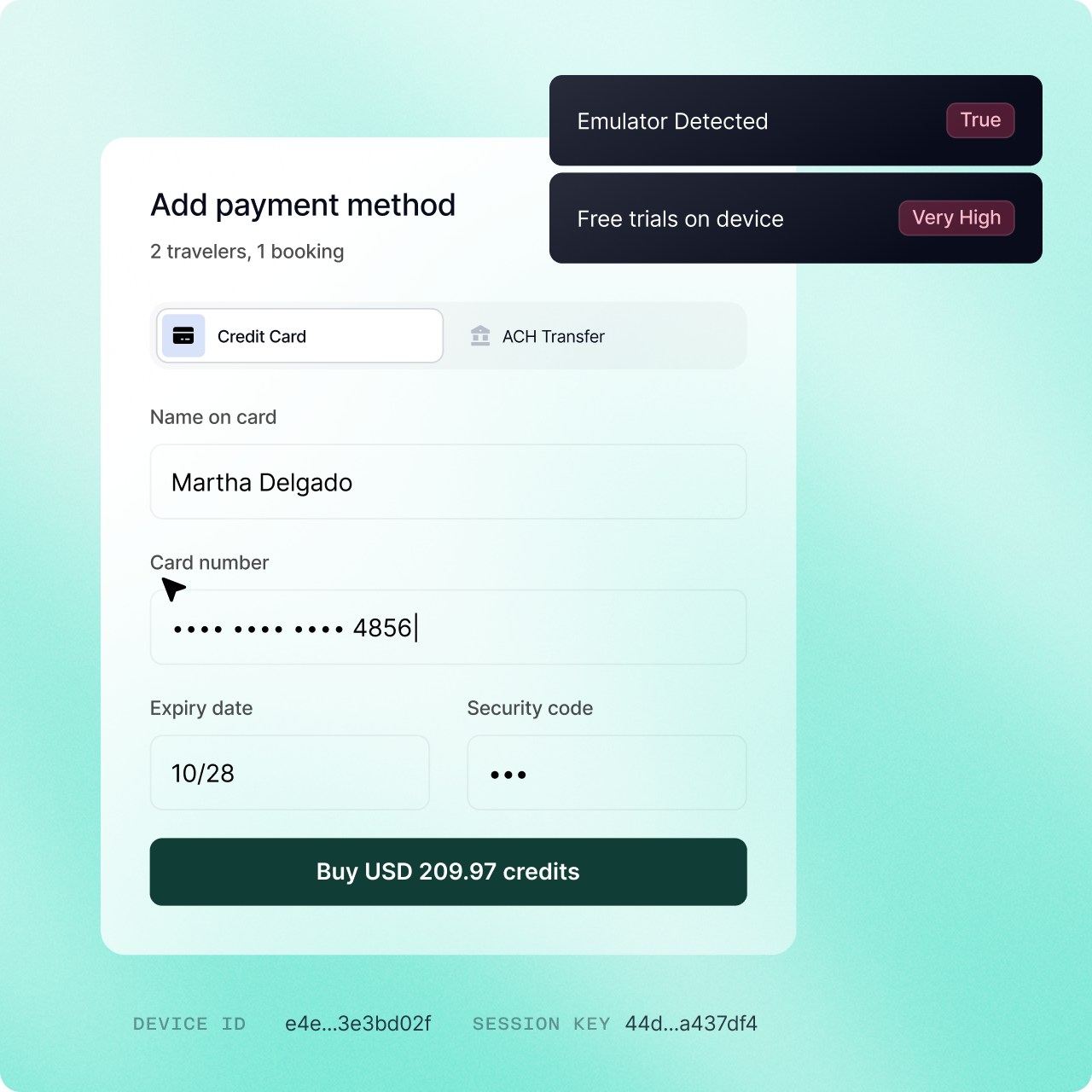

One view from sign-up to usage
The same device and behavioral signals follow each account across sign-up, payment, login, and API use.

Approve real customers without extra steps
Check the person or business at sign-up, and step up with ID or business checks only when risk is high.

Find the accounts behind credit abuse
Link accounts that share a device, card, email, or phone, and tell scripted bots from real users.

Catch repeat fraudsters before they sign up
Connect risk across device, email, and identity to catch known fraudsters before they sign up.
Reduce risk across the customer lifecycle, from sign-up to usage
Onboarding Fraud
Approve real customers and keep fake accounts out
Fake accounts farm free trials, credits, and referral rewards, and some businesses sign up only to abuse the platform. Each sign-up is checked before access is granted.
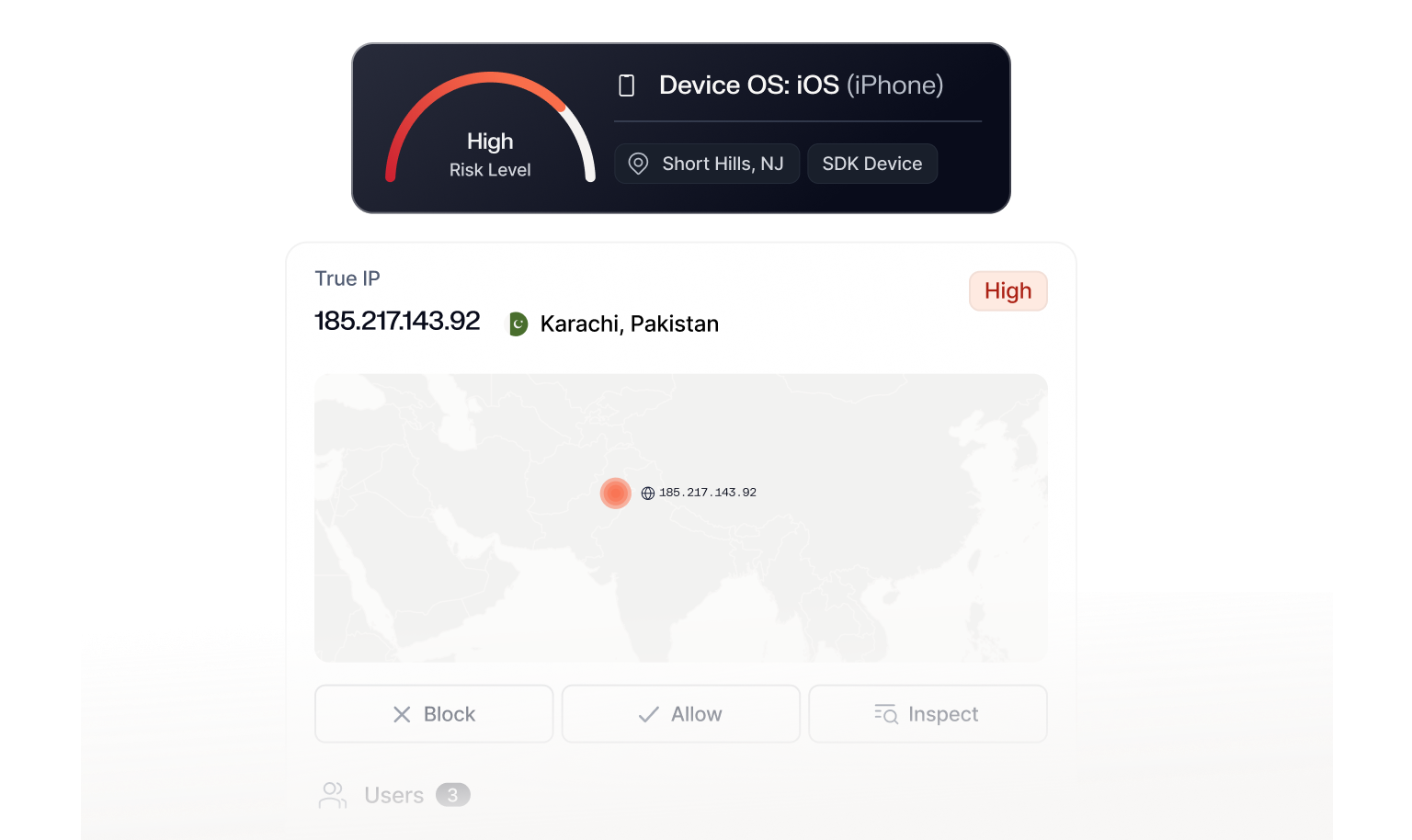

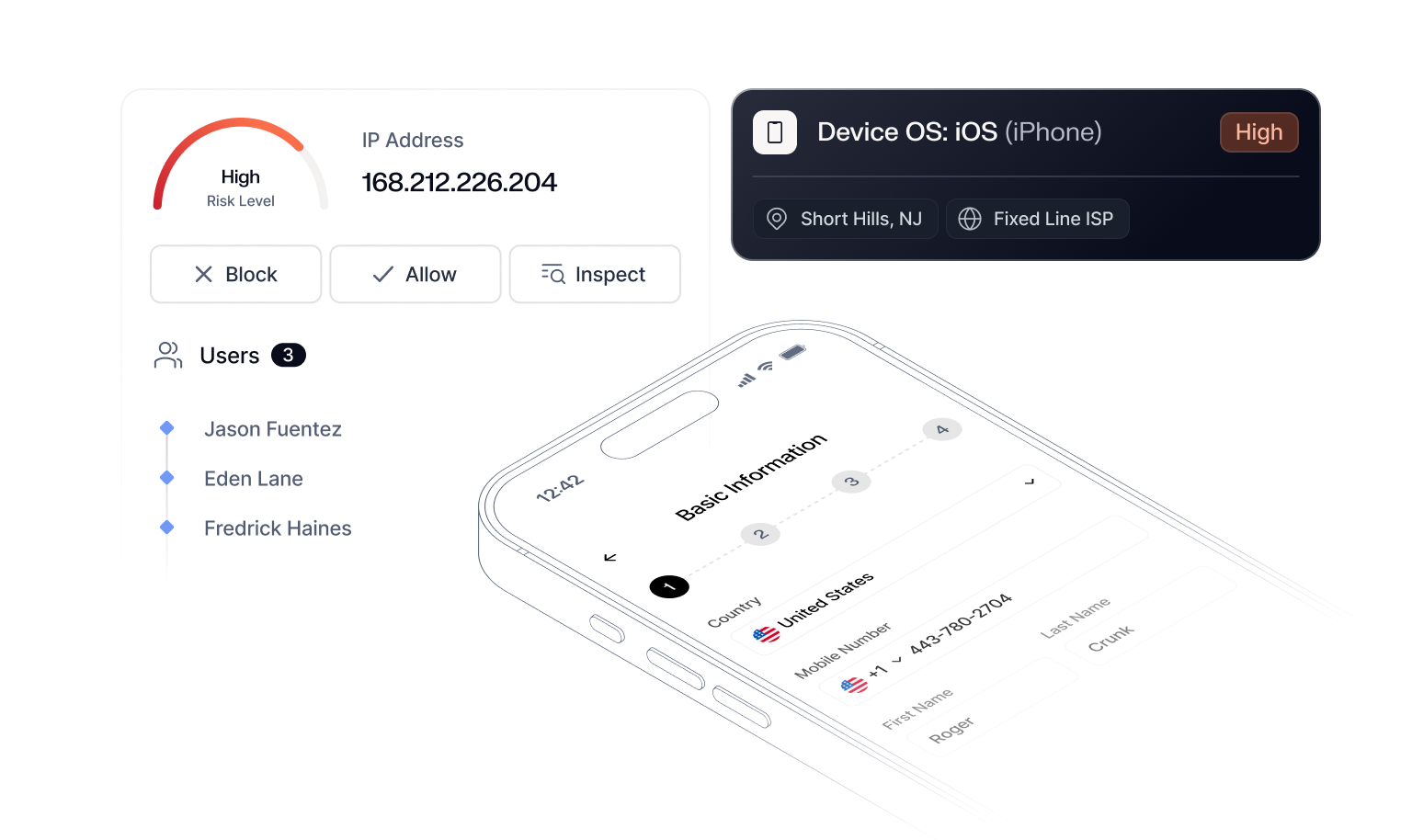
Recognize one device behind many accounts, even when emails and phone numbers change, and flag referral loops.

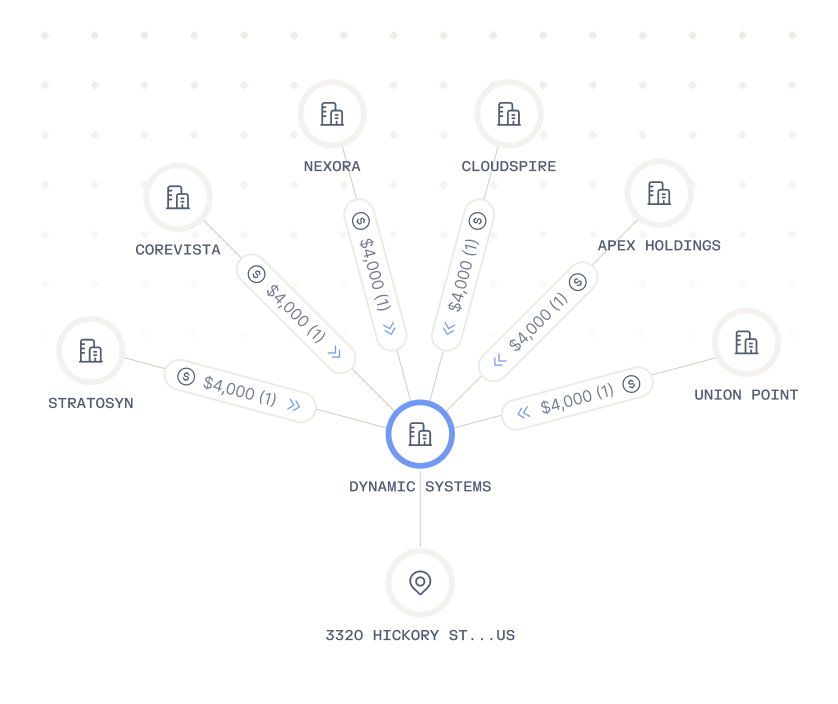
Run KYB checks on business sign-ups, including registration, address, web presence, and owners, then step up when a check fails.

Block scripted sign-ups and automation, and step up with ID or selfie checks only when risk is high.
Payment Fraud
Stop stolen cards before they buy usage
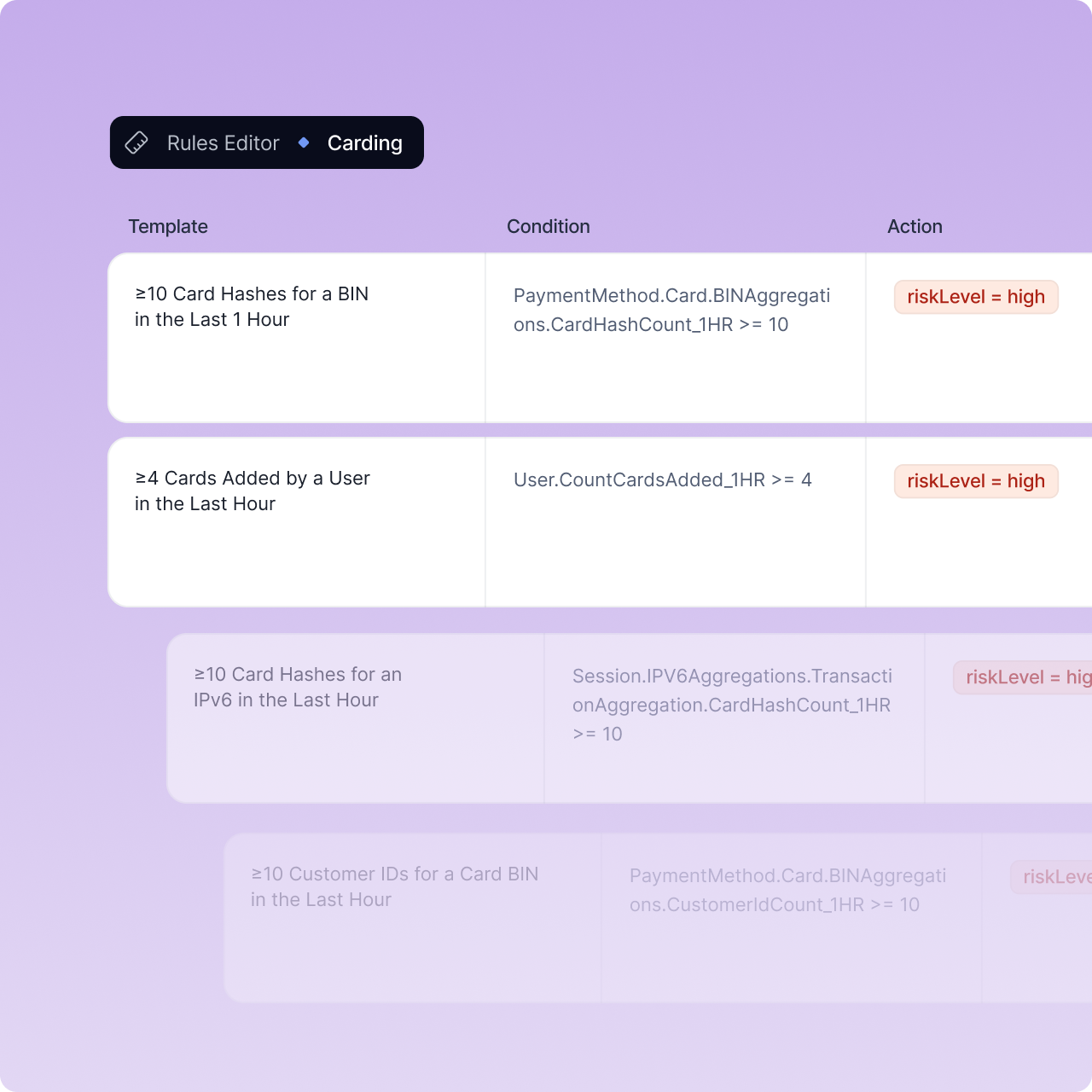
Stolen cards buy credits and subscriptions, and chargebacks follow. Each payment is scored in real-time with identity, device, and behavior signals.
Account Takeover
Stop stolen logins from spending your credits
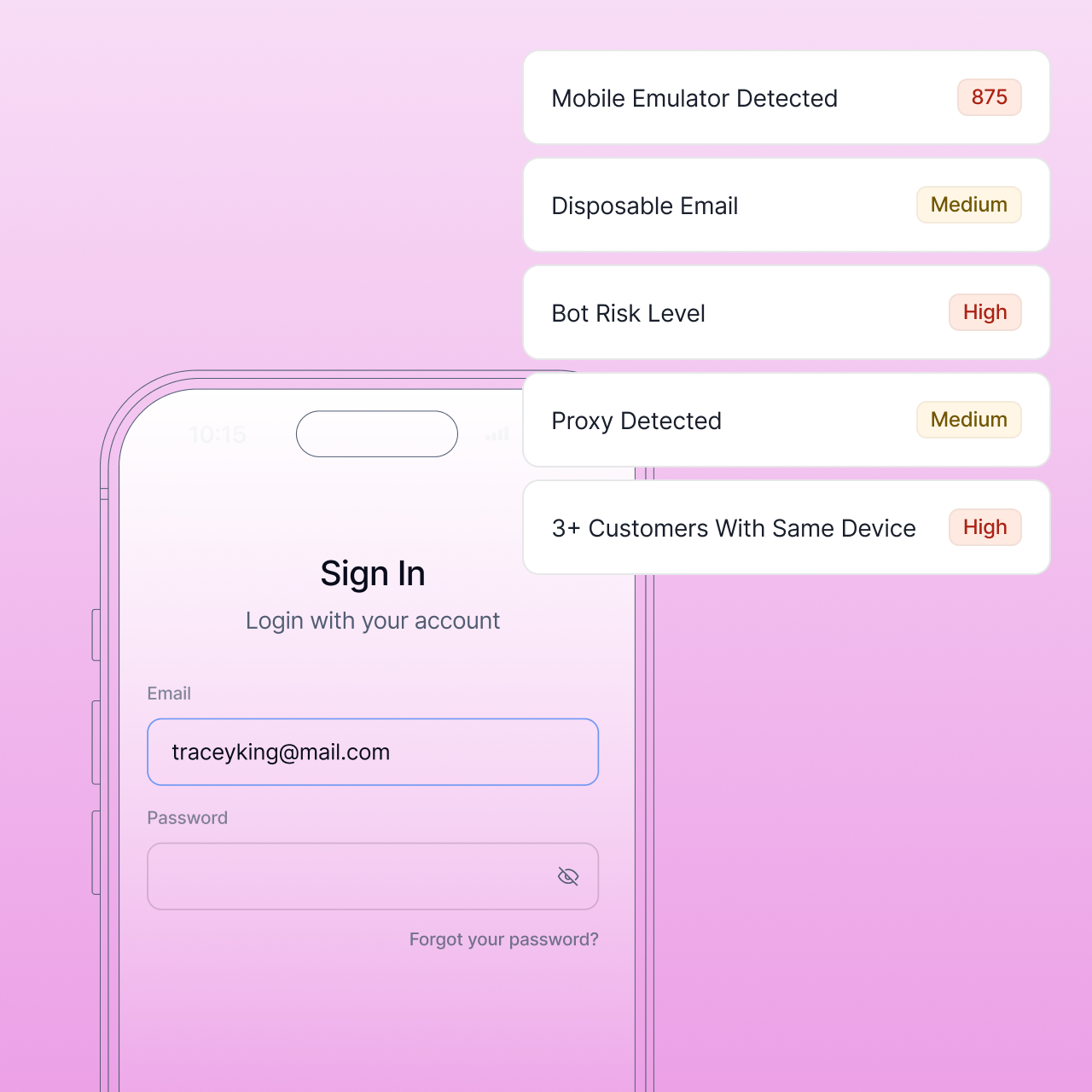
Attackers use stolen credentials to take over accounts and spend stored credits. A new device, a remote access tool, or a changed payment method gives them away.
AI Token Fraud
Stop fraud from consuming your compute
Fraudsters use free credits, stolen payment methods, and compromised API keys to consume compute at your expense. Signals follow the account from sign-up to API use.
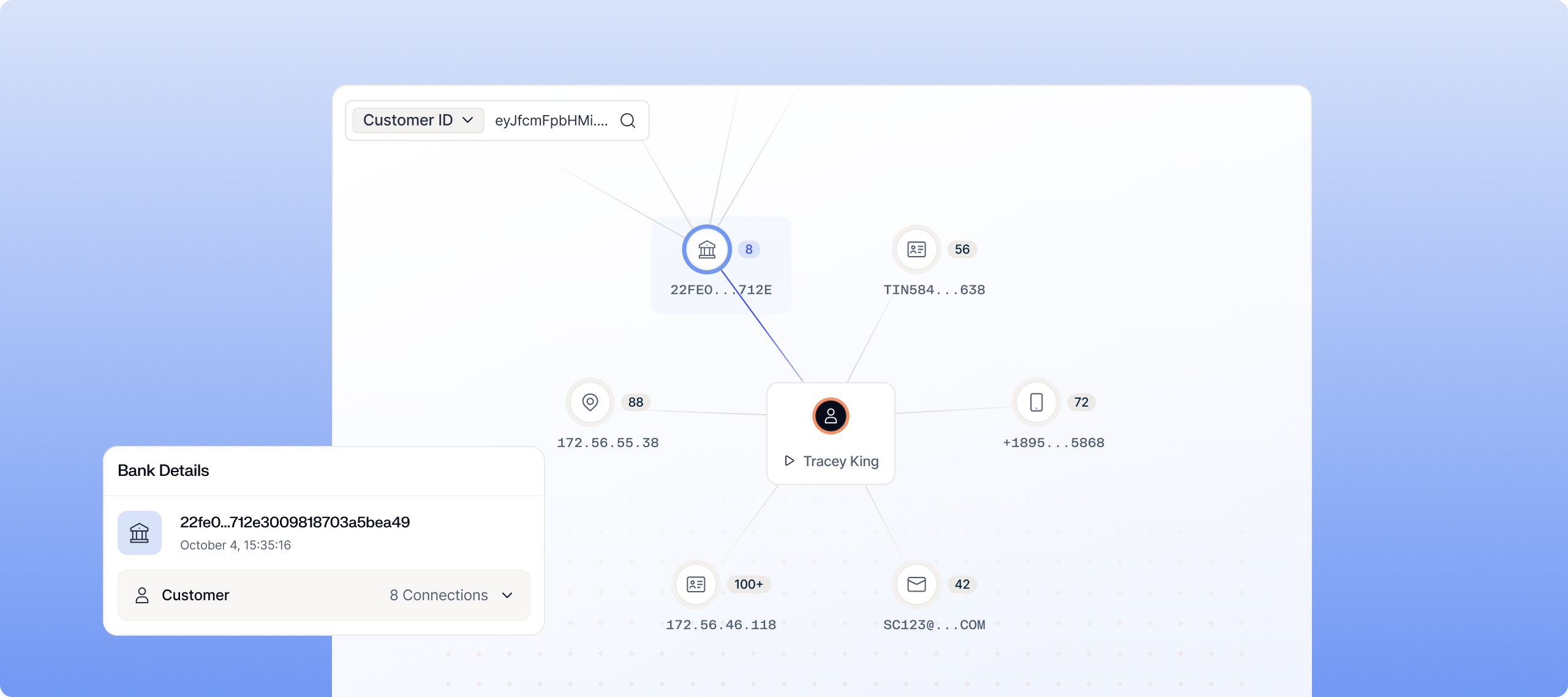

Stop coordinated rings from creating accounts to exploit free trials and drain credits.

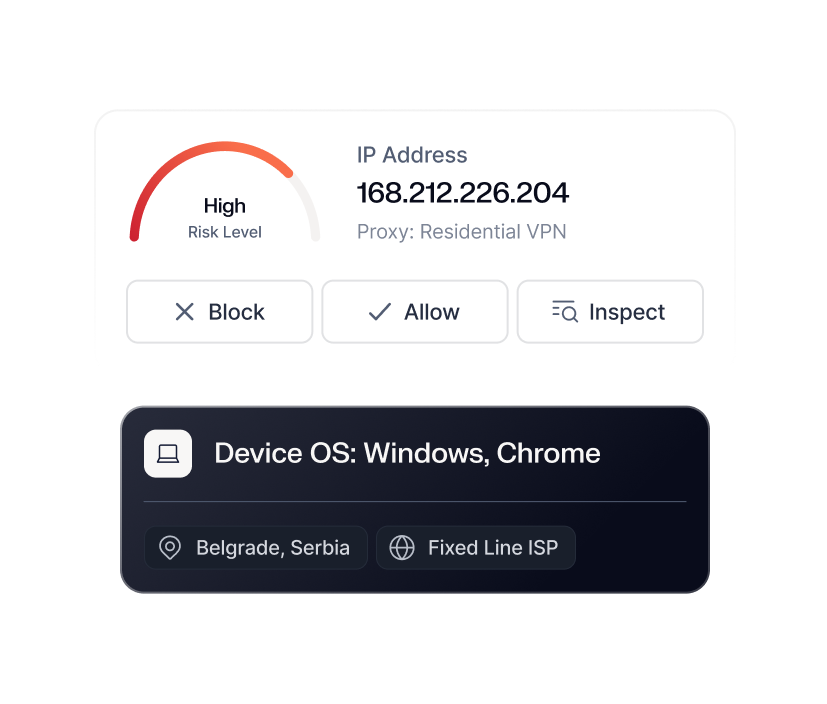
Detect suspicious access and automated API abuse that uses stolen keys, and token reselling.

Verify the businesses that sign up, and review the web presence of custom domains for signs of abuse.
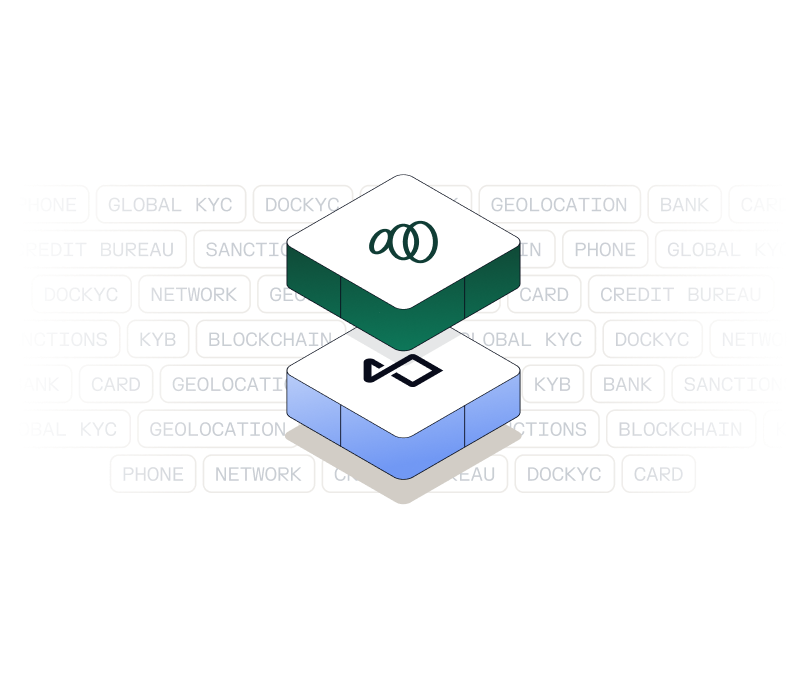
Score every sign-up with signals beyond your own data
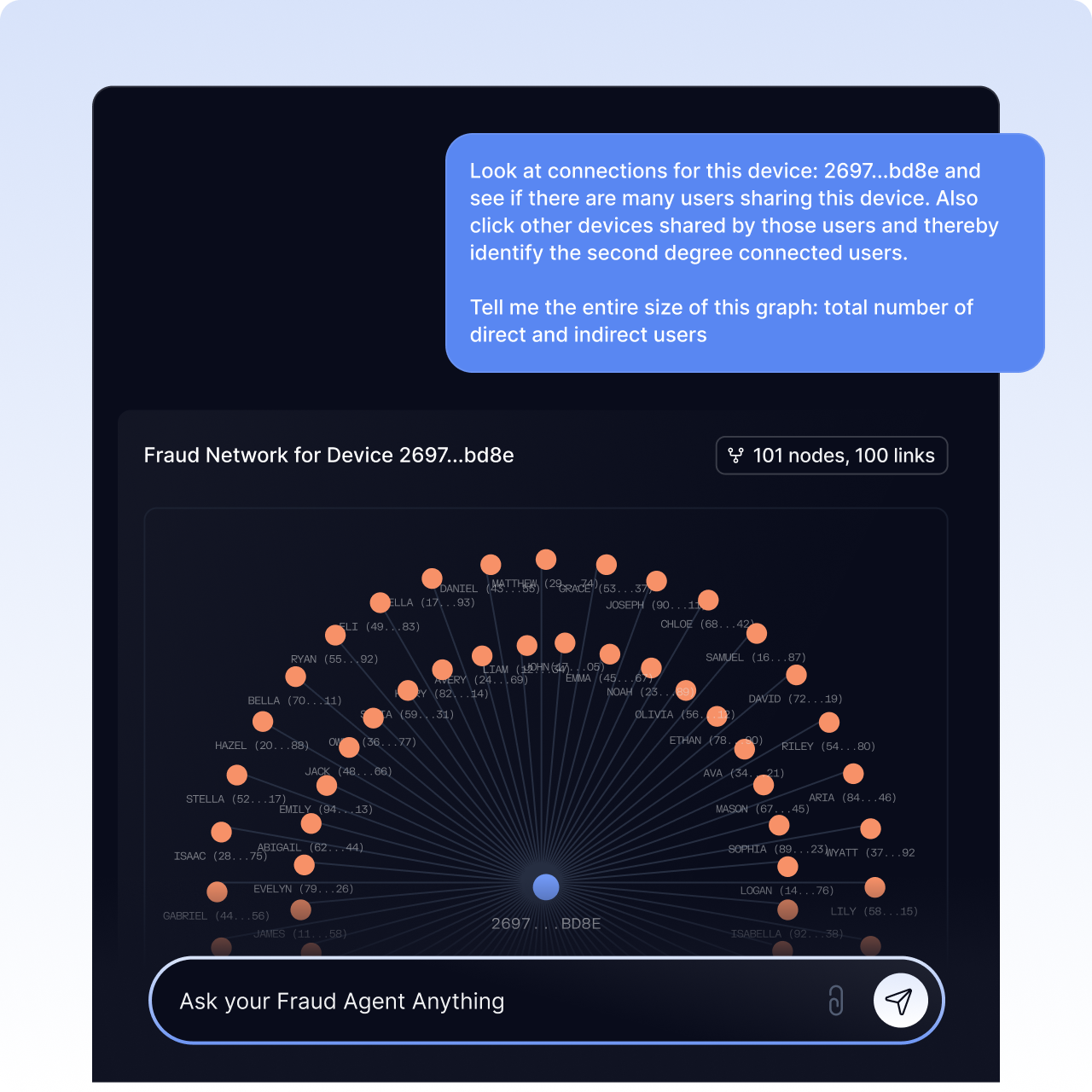
Agentic AI
Spend review time on accounts that need judgment
Agents research businesses and owners, uncover connected accounts and fraud rings, and document every decision, so your team spends its time on cases that need judgment.
Backed by the industry’s leading data platform
Device and behavior
Know the person behind every sign-up
Device and behavioral signals show whether a real person is present, whether the device can be trusted, and whether it is the same person who signed up or is spending the credits.


Network intelligence
Spot fraudsters seen elsewhere first
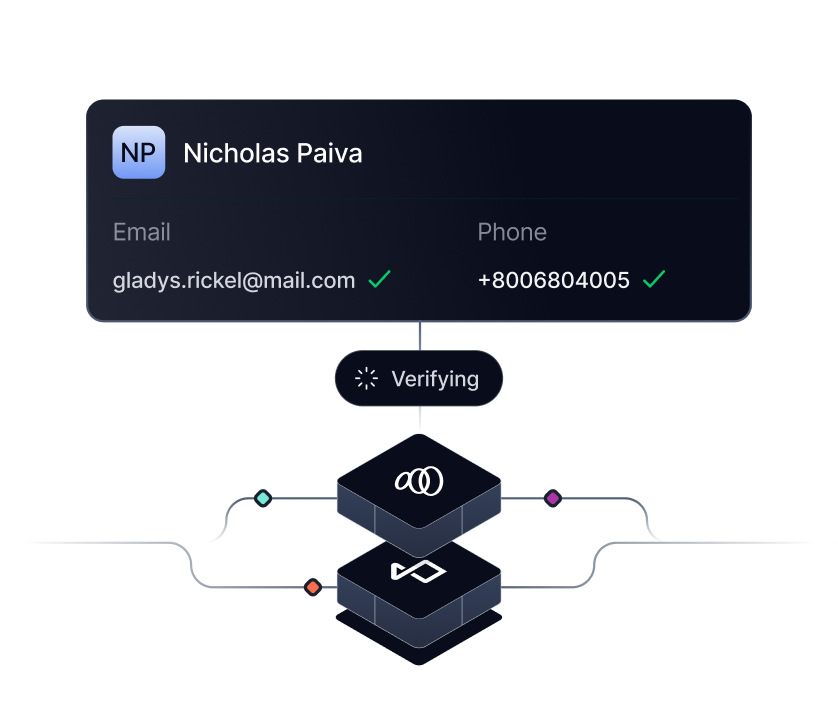
Signals from Sardine's customer base show devices, emails, and identities flagged elsewhere, before a sign-up gets credits or a payment is approved.
Rules and workflows
Set the rules your fraud team controls
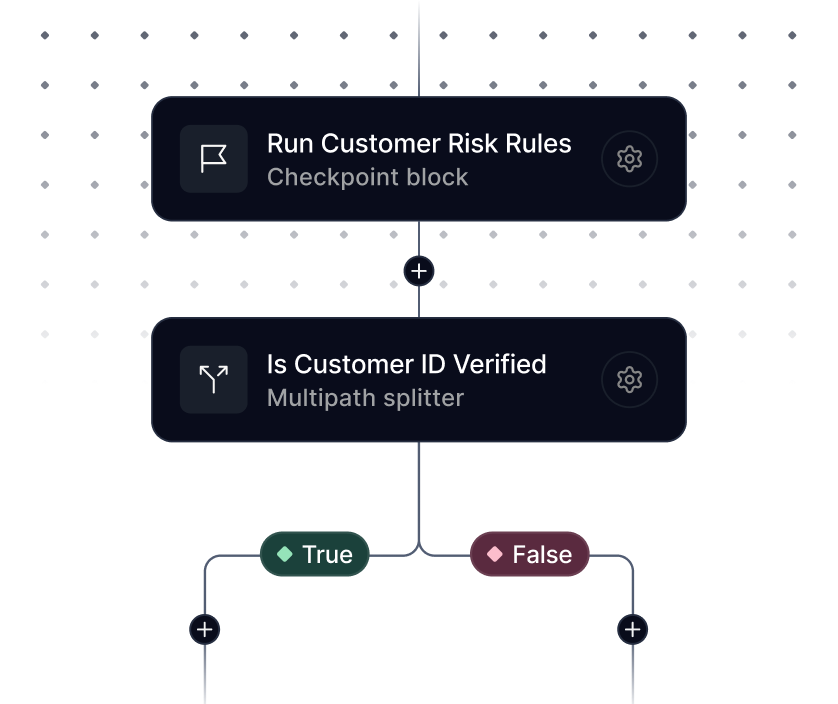
Write and tune rules for sign-ups, payments, and usage without code, step up only when risk is high, and keep an audit trail of every decision.
Machine learning
Score every sign-up and payment, and see why
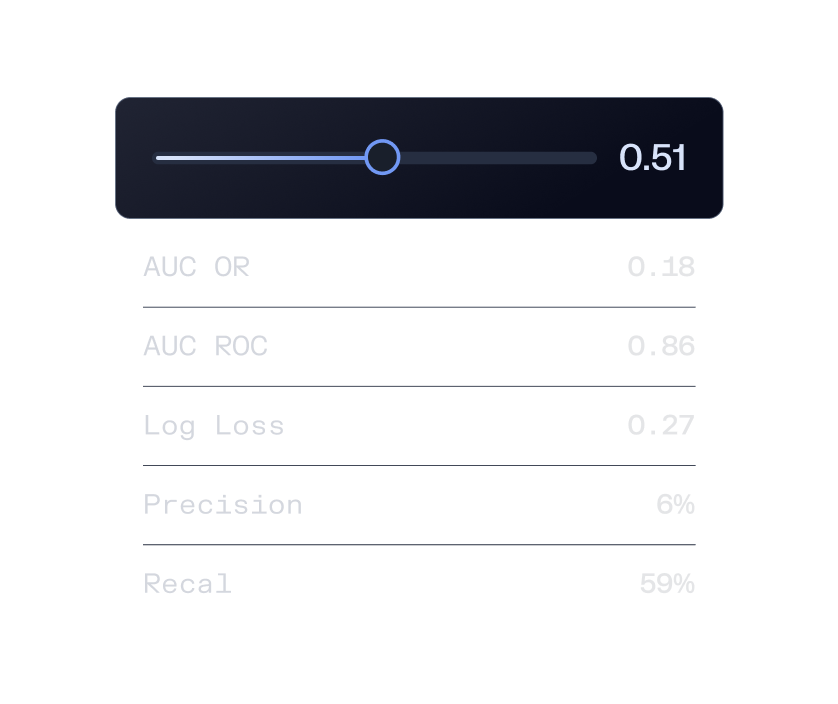
Sardine's models score each sign-up, payment, and login in real-time and show the reasons, so analysts can trust the call and tune the rules.
Frequently
asked questions

How is Sardine different from the fraud tools software companies already use?
Software companies often run sign-up checks, payment fraud, and account security as separate tools. One platform puts device, behavioral, and network signals together, so every team works from the same view.
Agents also handle the first pass of alert triage and evidence gathering.
Can Sardine work alongside our existing billing and identity systems?
Yes. It works alongside your billing, identity, and case management systems. Start with one decision point, such as sign-up or payment, and measure the lift against your current setup.
How does Sardine detect fake accounts and free trial abuse?
A persistent device identifier survives cleared cookies and reinstalled apps, with a confidence score for each match. Rules flag one device tied to many accounts, and the Connections Graph links accounts through shared emails, phones, cards, and addresses.
Full-session behavioral signals separate scripted sessions from real users, even when credentials are valid.
How does Sardine protect against stolen API keys and token fraud?
Device and behavioral signals follow an account from sign-up to API use, so suspicious key creation and usage can be flagged and reviewed.
Can Sardine verify business customers?
Checks cover registration records, address, web presence, and owner and sanctions screening. Each business gets a risk summary with a recommended next step.
How does Sardine keep sign-up friction low for legitimate users?
Sessions are scored with passive behavioral and device intelligence, with no visible challenge by default. Step-up checks happen only when risk materially increases.
How fast can we see results?
Start with a shadow-mode evaluation: run alongside your current tools on live or historical traffic, then compare detection and false-positive rates.