

#12128 min
What’s up fraud fighters! Welcome to Fraud Forward.
Today I want to talk about something that sits underneath every fraud program whether we acknowledge it or not. Banking ethics.
Because fraud prevention is not just about technology, controls, or monitoring systems. At the end of the day, the culture inside an institution determines how people respond to risk.
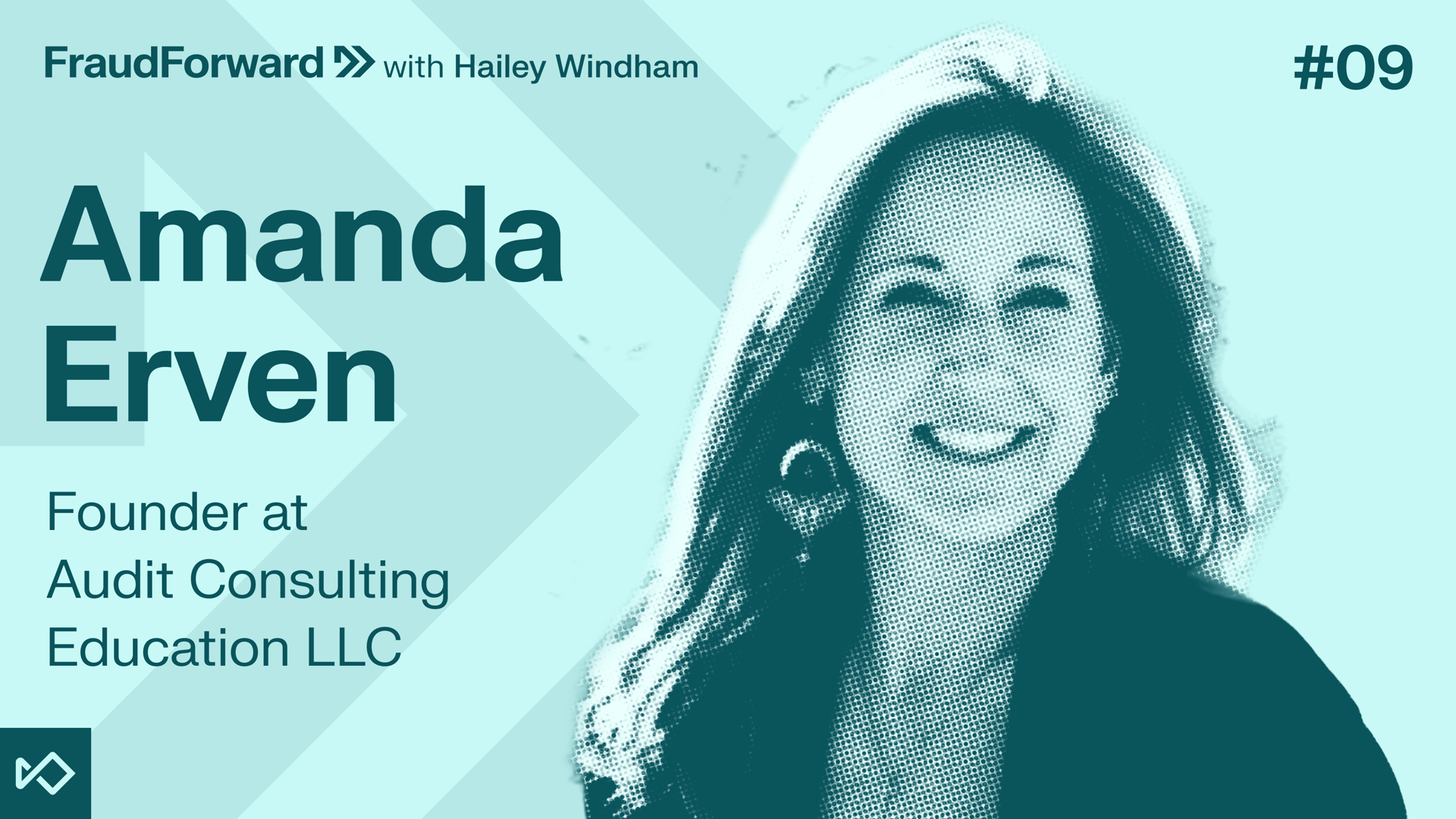
In this episode, I sit down with Amanda “Jo” Erven to talk about the connection between banking ethics, internal audit fraud prevention, and long-term customer trust.
Jo has worked across both industry and education, and what I love about her perspective is that she focuses on the small signals that often predict much larger problems.
Things like:
Those small signals matter more than we often realize.
We also talk about how internal audit functions are evolving. In strong institutions, internal audit is not just a compliance checkpoint. It becomes a strategic partner in fraud prevention.
Independent audit oversight, strong documentation standards, and consistent escalation practices help organizations identify vulnerabilities early.
Jo also brings in lessons from real-world cases.
From the Wells Fargo scandal to executive-level crypto fraud incidents, we have seen how quickly lapses in banking ethics can erode public confidence.
And one of the themes that kept coming up in our conversation is that ethical leadership cannot be performative.
It has to show up in daily decisions.
We also spend time discussing how ethics training for bankers, fraud retreat education sessions, and compliance education initiatives help reinforce institutional integrity programs.
And of course, we cannot talk about the future of governance without talking about technology.
As AI adoption accelerates, institutions are facing new governance questions around the impact of automation and the ethical use of data. Those decisions require thoughtful alignment between innovation and oversight.
For me, this episode is really about reminding ourselves that ethics is not an abstract principle.
It is a daily practice.
If you liked this episode, be sure to subscribe and review the podcast on iTunes, Spotify, YouTube, or wherever you listen to podcasts. It really helps more fraud fighters find these conversations.
Before we double click on the notes, I want to say something that I believe deeply.
Fraud prevention starts with culture.
The strongest control frameworks in the world cannot overcome an environment where people feel uncomfortable raising concerns.
When I think about fraud prevention, one of the first things I look at is the ethical culture of the organization.
Banking ethics shapes how institutions respond to risk long before fraud becomes visible.
Small decisions matter.
When minor discrepancies are ignored or quietly explained away, it can create a culture where shortcuts feel acceptable.
That is why a strong minor discrepancy reporting culture is so important.
When employees feel encouraged to report issues early, institutions gain the opportunity to correct problems before they escalate.
Internal audit fraud prevention works best when audit teams operate with independence and clarity.
Strong audit independence standards and clear board oversight responsibilities create the structure needed for honest evaluation of controls.
When audit and compliance collaboration is active, risk governance best practices become embedded into daily operations rather than triggered only after an issue appears.
Leadership tone also plays a huge role.
Ethical leadership accountability influences how employees interpret policies and how comfortable they feel escalating concerns.
That kind of culture strengthens customer trust in banking and reinforces institutional resilience.
One of the ideas Jo and I kept coming back to is that internal audit should not function only as a retrospective checkpoint.
In strong institutions, internal audit acts as a proactive partner in fraud prevention.
Audit teams that engage closely with operations and compliance functions can identify gaps in organizational misconduct controls before they turn into reputational crises.
We have seen what happens when those signals are missed.
The Wells Fargo scandal lessons are a perfect example of how cultural pressure and ethical blind spots can expand over time.
Executive-level crypto fraud cases have also shown how quickly trust can erode when governance fails at the top.
Corporate fraud deterrence depends on continuous oversight.
When audit findings feed directly into operational improvements, institutions strengthen their financial institution integrity programs and reduce long-term exposure.
Another part of the conversation that stood out to me was how important ongoing education is.
Ethics training for bankers cannot be a one-time event.
Institutions that build strong ethical cultures often reinforce those values through:
These programs help employees understand how ethical decision-making applies to real-world situations.
Technology is also introducing new governance considerations.
The AI impact on ethical behavior is something leaders are actively navigating.
Automation can improve efficiency, but it also raises questions around bias, oversight, and accountability in digital decision-making.
That means governance frameworks must evolve alongside innovation.
When ethics becomes part of daily operations rather than a compliance exercise, institutions build durable trust.
Banking ethics becomes a living standard guiding decisions across teams and leadership levels.
Banking ethics is not an abstract concept.
It is the foundation that supports fraud prevention, internal audit effectiveness, and long-term customer trust.
Institutions that reinforce ethical leadership accountability, support audit independence, and invest in education create stronger cultures of transparency.
And those cultures are far more resilient when risk inevitably appears.
The mission stays the same:
The future of banking fraud prevention depends on community.
The future of credit union fraud prevention depends on collaboration.
The future of fraud industry evolution depends on shared intelligence and values alignment.
We are leveling up.
And we are doing it together.
Stay vigilant, stay informed, and keep moving fraud forward.