What's up, fraud fighters?
Welcome back to another episode of Fraud Forward.
This week is International Fraud Awareness Week.
And for those of you who don't know, the Association of Certified
Fraud Examiners dedicates an entire week every November to raising
awareness about fraud, educating the public, and encouraging
organizations to take fraud prevention seriously.
Of course, around these here parts, every week is fraud week.
Usually, this is the time when we're talking about
scams, fraud trends, emerging threats, or ways we can
better educate our customers and our members.
Today, I want to take that conversation in a slightly different
direction because last week something kind of crazy happened.
So, I want to talk about airplanes.
Yep, you heard it right. I want to talk about airplanes.
More specifically, we're going to talk about what happened
on Friday, November 13th, when the Federal Aviation
Administration issued a nationwide ground stop.
If you missed the news, flights across the country
were grounded because of a technical issue involving
the FAA's telecommunications infrastructure.
Not a hurricane, not a terrorist attack, not even a cyber attack.
At least according to what investigators have reported so far.
So, this is a technology problem, one that exposed just how
vulnerable a critical piece of our nation's infrastructure can be.
As I was reading through the details this weekend, I
couldn't help thinking about the banking industry.
Our core systems, our payment rails, our fraud technology, our
processors, the vendors we depend on every single day.
We are moving faster than ever before.
Real-time payments, digital banking, artificial
intelligence, and now Agentic Commerce.
Yet, how much of that innovation is sitting on top
of infrastructure that was built decades ago?
It got me wondering how could banking experience
its own nationwide ground stop.
More importantly, if something like that
happened, would we be prepared?
And that's what I want to talk about today. So, let's get into it.
First, I want to walk through what happened.
Because the details are important.
According to the FAA's explanation released Sunday, its legacy
equipment became unstable when the network started receiving
approximately a 1,000 connection attempts every 4 to 5 seconds.
That's pretty wild. 1,000 connection attempts every few seconds.
That created instability with aircraft
communications and radar feeds.
The problem affected 17 of the FAA's 22
air route traffic control centers.
And spread into additional air traffic control facilities.
The FAA made the decision to issue a nationwide ground stop.
Planes already in the air had to be managed safely
and airlines across the country were suddenly dealing
with a massive operational disruption.
The ground stop lasted more than 4 hours with air
traffic resuming around 8:15 Friday evening.
The disruptions didn't magically disappear
once the system stabilized either.
So airlines had to deal with delayed flights, cancelled
flights, displaced aircraft, crews and passengers.
I can't even imagine. A total nightmare.
So the FAA said the initial investigation pointed to two potential
locations involved in the flooding the network with excessive data.
One of those locations was in Arkansas where a contractor
had been performing routine telecommunications
work including installing a new router.
They were transitioning away from aging technology.
We're talking about replacing old copper-based communications
infrastructure with newer technology.
Something that sounds fairly routine, right?
Yet the legacy network couldn't handle what was happening.
And the consequences spread across the country.
Now, the investigation is still ongoing.
So we don't know every detail about the root cause.
The FAA also said it has no indication
that this was a cyber attack.
And I'm not suggesting somebody deliberately caused this either.
But what I am suggesting is that we should pay very
close attention to what this incident exposed.
You know, it's a a problem that began within an interconnected
technology environment that affected an entire national system.
One problem, nationwide consequences.
That's the part that I think every financial
institution should make you stop and think. Right?
Now, obviously, I'm not going to be talking about airplanes
the entire time, but I did want to give that briefing before
I dive into where I think this is all connected.
So, let's talk about banking.
Now, if you've spent any amount of time working inside a bank
or credit union, you know exactly where I'm going with this.
We have some incredibly sophisticated technology in this industry.
We can open accounts digitally. We can move money in seconds.
We can use artificial intelligence to identify
unusual behavior and suspicious transactions.
We're beginning to explore a world where AI agents can interact
with financial services on behalf of consumers.
That's pretty incredible when you think about how far we've come.
Yet, behind all of that technology, we still have financial
institutions operating on core systems, designed decades ago.
Some of those systems have been upgraded, patched,
customized, and integrated so many times that replacing
them has become an enormous undertaking.
Now, before anybody starts getting upset with me,
I'm not saying every legacy system is bad.
Some of these systems are incredibly reliable.
They process transactions for years, sometimes
decades, and they continue to do their job.
Age alone doesn't make technology unsafe.
The problem is when our expectations of those
systems have changed dramatically.
And we haven't fully addressed the dependencies, limitations,
or the risk that come with those changes.
Think about how much banking has evolved.
We used to have banking hours.
Literally, you went to the bank during business hours,
conducted your transactions, and went home.
But today, consumers expect access to their
money 24 hours a day, 7 days a week.
They want to move money instantly.
They want access from their phones.
They want transactions processed without delays.
They want everything to work seamlessly.
Meanwhile, the infrastructure behind these experiences can involve
multiple vendors, processors, integrations, and core platforms.
The customer sees one banking app.
Behind that app may be a whole technology of a whole network of
technology providers that have to communicate with each other.
What happens when one of those communications fails?
What happens when a core system can't
keep up with a new integration?
What happens when a routine update creates a
problem somewhere else in the environment?
How confident are we that we understand those dependencies?
Something the FAA incident reminded me of is that you don't
necessarily need an attack to have a serious operational crisis.
Sometimes technology fails.
Sometimes an update doesn't behave as it's expected, right?
Sometimes something that seems completely routine
creates consequences nobody anticipated.
The question isn't whether technology will ever fail.
The question is whether we've built our organizations
to withstand those failures.
Now, I don't want this episode to sound like I'm
predicting some catastrophic banking shutdown. I'm not.
I'm also not suggesting the aviation industry and banking industry
operate exactly the same way because they don't.
What I am saying is that the potential for widespread disruption
is something our industry needs to take seriously.
We have already seen what happens when shared financial institution
infrastructure experiences an operational issue.
Let's go back to February 24th, I believe, of 2021.
Um I I know it was February of 2021.
The Federal Reserve experienced a significant service disruption
that affected critical payment services including Fed Wire,
Fed ACH and other, you know, financial services.
The cause of that was an operational error.
Not some elaborate fraud scheme, not a sophisticated criminal
organization, but an operational error that interrupted
services financial institutions rely on to move money.
The disruption lasted several hours.
And even once services resumed, there were backlogs
and transaction processing issues to work through.
Now, think about that from the perspective
of a financial institution.
You can have the best fraud team in the world.
You can have incredible technology.
You can have policies, procedure controls, monitoring, reporting,
and all the things we spend our careers building.
Yet your institution still relies on infrastructure
you don't completely control. That should concern us.
Not because we should expect every system to be perfect.
That's un that's unrealistic. Come on.
But it should concern us because our ability to
protect customers and members often depends on
the systems outside of our direct control.
There's another piece of this conversation that
I I don't think gets enough attention either.
We talk a lot about vendor risk management.
We perform due diligence. We review contracts.
We ask for SOC reports. We evaluate business continuity plans.
Yet, how often do we understand the
dependencies behind our vendors?
If my core provider relies on another technology provider and
my fraud platform relies on infrastructure that overlaps with
my core provider, do I have the redundancy I think I have?
Having multiple vendors doesn't automatically
mean you have multiple independent systems.
They may share the same underlying infrastructure.
That's not necessarily a problem, but it becomes
a problem when we don't know it. Right now.
I I know what some of you are probably thinking.
Hailey, this sounds like an IT problem.
Why are we talking about this on the fraud podcast?
And I think that that's a fair question.
Let's think through a scenario together.
Uh imagine you're a fraud leader at
a community bank or credit union. It's Friday afternoon.
Your institution experiences a major technology outage.
Maybe it's your core. Maybe it's your payment processor.
Maybe it's an integration between your fraud monitoring
platform and your transaction processing system.
Customers start calling. Branches are getting questions.
Your contact center is overwhelmed.
Your frontline staff are trying to figure out,
you know, what they can and can't do.
Meanwhile, your fraud team's trying to understand
what visibility it has still into transactions.
Can you still see the activity you normally monitor?
Are the alerts still generating? Are transactions being held?
Are they being cued for processing?
Is the system that normally makes your
fraud decision still functioning?
What happens when everything comes back online?
Do those alerts generate retroactively?
What about the transactions that were pending during the outage?
How do you determine what was authorized, what was processed,
what failed, and what potentially needs another look?
Those aren't just IT questions. Those are fraud questions.
Because when visibility changes, your ability to
detect suspicious activity may change with it.
When normal processes become unavailable, institutions
may have to rely on manual procedures.
Those procedures can be effective if they're
established, controlled, and practiced.
They can also create additional risk if employees are making
decisions without the information they normally have.
Think about the fraudster's perspective.
If a criminal becomes aware that an institution is experiencing
an outage, what do you think they're going to do?
What opportunities might they look for?
Could they use the disruption as a pretext to contact customers?
Could they impersonate the institution and claim
customers need to verify their accounts?
Could they exploit confusion around delayed
payments or account access? Abso- freaking-lutely.
Those are scenarios worth preparing for.
And I I want to emphasize something here.
I'm not saying that every outage leads to fraud.
I'm not saying the FAA outage was connected to fraud.
I'm saying fraudsters don't necessarily have to cause a disruption
to take advantage of the confusion surrounding it.
We've seen criminals exploit emergencies, natural disasters,
major news events, and operational changes.
Why wouldn't we consider the potential for
them to exploit technology disruptions? We absolutely should.
Then, you know, this is where I want to bring in something
that we learned from the financial institution fraud benchmarking
report that Sardine uh conducted with me.
We surveyed 165 fraud leaders from community
banks, regional banks, and credit unions.
One of the findings that has stayed with me is that 71.
1% of respondents reported their teams
were strained or over capacity.
We've talked about that finding quite a bit.
These teams are already balancing investigations and alerts and
customer conversations, the regulatory responsibilities, vendor
issues, and and everything else that comes with running a fraud program.
Now, let's introduce a major operational disruption.
What happens when your fraud team, which is already
stretched thin, suddenly has to manage an outage?
They're trying to answer questions from leadership.
They're communicating with branches.
They're managing, you know, customer concerns.
They're trying to determine whether their
existing controls are still working.
They're potentially reviewing backlogs when systems return.
That's a lot to put on a team that's
already struggling with capacity.
Our benchmarking report also found that 84% of fraud leaders
reported being satisfied with their fraud technology.
That's encouraging. Yet, 62.
3% still identified high false positives as a limitation.
We also heard concerns about configuration, flexibility,
core integrations, and reporting.
Those those findings I think really matter in this conversation.
Because when technology is already creating operational friction
under normal circumstances, we need to understand how
those limitations might affect us during a crisis.
I'm not saying we should stop investing in new fraud technology.
Quite the opposite, actually. I believe we need better technology.
I believe we need innovation.
And I believe artificial intelligence has tremendous potential
to help fraud teams operate more effectively.
I work in this space every single day.
I see what technology can make possible.
Yet purchasing another tool doesn't automatically
make your fraud program resilient.
What good is an incredible fraud detection system
if the data it relies on stops flowing?
What good is real time decisioning if
your integration isn't functioning?
What good are all those dashboards if the people making decisions
don't understand what information might be missing?
Those are the questions I really think we need to be asking.
Then there's another piece to this that
I I think is even more important. Look at where banking is heading.
We have real-time payments. We have embedded finance.
Artificial intelligence becoming part
of everyday financial services. Right?
We are beginning to talk about AI agents that can help
consumers complete financial tasks, make purchases,
and interact with financial institutions.
I'm excited about a lot of that innovation. I really am.
I've talked about, you know, before about how different
it feels to move from working inside a financial institution
to working for a technology company.
In banking, sometimes getting approval to change a process
feels like you're trying to move a mountain.
In fintech, we're constantly exploring what's next.
That difference has challenged me to think bigger.
It's also made me more aware of how
quickly the industry is evolving.
The consumer experience is changing.
The expectations that they have are changing.
The the speed of money is changing.
The methods though that fraudsters are using, guess what?
So what happens when we're building all of these
exciting capabilities on top of infrastructure that
wasn't originally designed to support them.
I don't believe the answer is to stop innovating.
We've had that conversation before.
If financial institutions don't evolve, consumers will
find other ways to access the services they want.
And we've seen that happen.
The answer isn't to choose between innovation and resilience.
That means understanding what our systems can support.
It means recognizing the dependencies involved
in rolling out new products.
It means bringing the right people into the conversation
before something gets launched.
For the love of God before it gets launched.
Which brings me, you know, to something
else that I've said for years.
Fraud leaders need a seat at the table.
Not just when we're talking about fraud losses, not
just when we're purchasing a new fraud prevention tool,
and not just when an incident has already happened
and everybody wants to know what went wrong.
We need to be involved in the conversations about operational
resilience, technology modernization, payment infrastructure,
vendor relationships, business continuity, disaster
recovery, because those decisions can directly affect
our ability to detect and prevent fraud.
One of the most encouraging findings in our benchmark
report was that the overwhelming majority of
fraud leaders feel their work is valued.
And can I just get a woohoo from the crowd? That is great.
That's phenomenal. We need that recognition.
Yet, there's a difference between being valued and being involved
in decisions that shape your institution's risk.
If your institution is implementing a new payment
capability, who's asking what happens to the
fraud controls if the integration fails?
If you're migrating to a new core platform, who's
making sure monitoring and alerting capabilities
remain intact during the transition?
If a critical vendor goes down, who's responsible for determining
whether certain transactions should continue?
Those questions shouldn't be asked for
the first time during an outage.
They should be part of the planning process.
I want fraud leaders to stop thinking about operational
resilience as something that only belongs to IT.
Technology teams absolutely have a critical role.
Risk management does too. So does compliance.
So does executive leadership.
The fraud team brings a different perspective.
We understand how criminals exploit weaknesses.
We understand how disruptions affect monitoring.
We understand the consequences when visibility is lost.
And that perspective matters and deserves a seat.
Fraud fighters, if you're anything like me,
your list of things to read keeps growing.
Your time to read them, though, probably not so much.
That's why I write the Monday Fraud Fix.
It's the newsletter companion to Fraud Forward.
So, every Monday I'm sharing fraud trends that made me pause,
what I'm reading, conversations happening in our community,
and the fraud fighters that I think you should know.
I also bring my take, you know, what it means for the people
doing this work, and the questions we need to be asking.
Every now and again, I might leave you a
little Scooby snack to start your week.
You know, I just can't help myself.
You can find the Monday Fraud Fix on Substack or tap
the link in the episode show notes and subscribe.
I'll see you in your inbox, fraud fighters.
I do want to go back to the FAA for one minute.
One of the things that you know I was trying to
understand the decision to ground flights.
Think about the implications of that decisions. That decision.
Airlines losing money, passengers stranded and
frustrated, travel plans disrupted, operations
across the country affected tremendously.
I'm sure that wasn't an easy call.
Considering the last time it was done was after 9/11.
Yet the FAA determined the system wasn't stable
enough to continue normal departure safely. So they stopped.
And I think that that's going to bring me to probably
the most important question of this entire episode.
What is a ground stop look like in banking?
Seriously, think about it.
If your institution identifies a major technology issue that
could compromise transaction monitoring or payment integrity,
do you have the authority to stop certain activity?
Can you temporarily restrict a a payment channel?
Can you suspend certain transactions?
Can you implement additional verification requirements?
Do you have established thresholds for
when those decisions should be made? Who makes the call?
Is it risk? Does it require executive approval?
What happens if the person who normally
makes that decision isn't available?
Now, obviously, banking isn't aviation.
There are legal, operational, liquidity, and customer
considerations involved in restricting financial services.
I'm not suggesting institutions should simply shut down
payment systems every time something goes wrong.
That would create its own set of problems.
What I'm asking is whether we've determined what circumstances
would justify additional restrictions, who has the authority to
implement them, and how we would communicate those decisions.
Because the middle of a crisis is a terrible time to
discover nobody knows who gets to make the call.
And that's why testing matters.
That's why tabletop exercises matter.
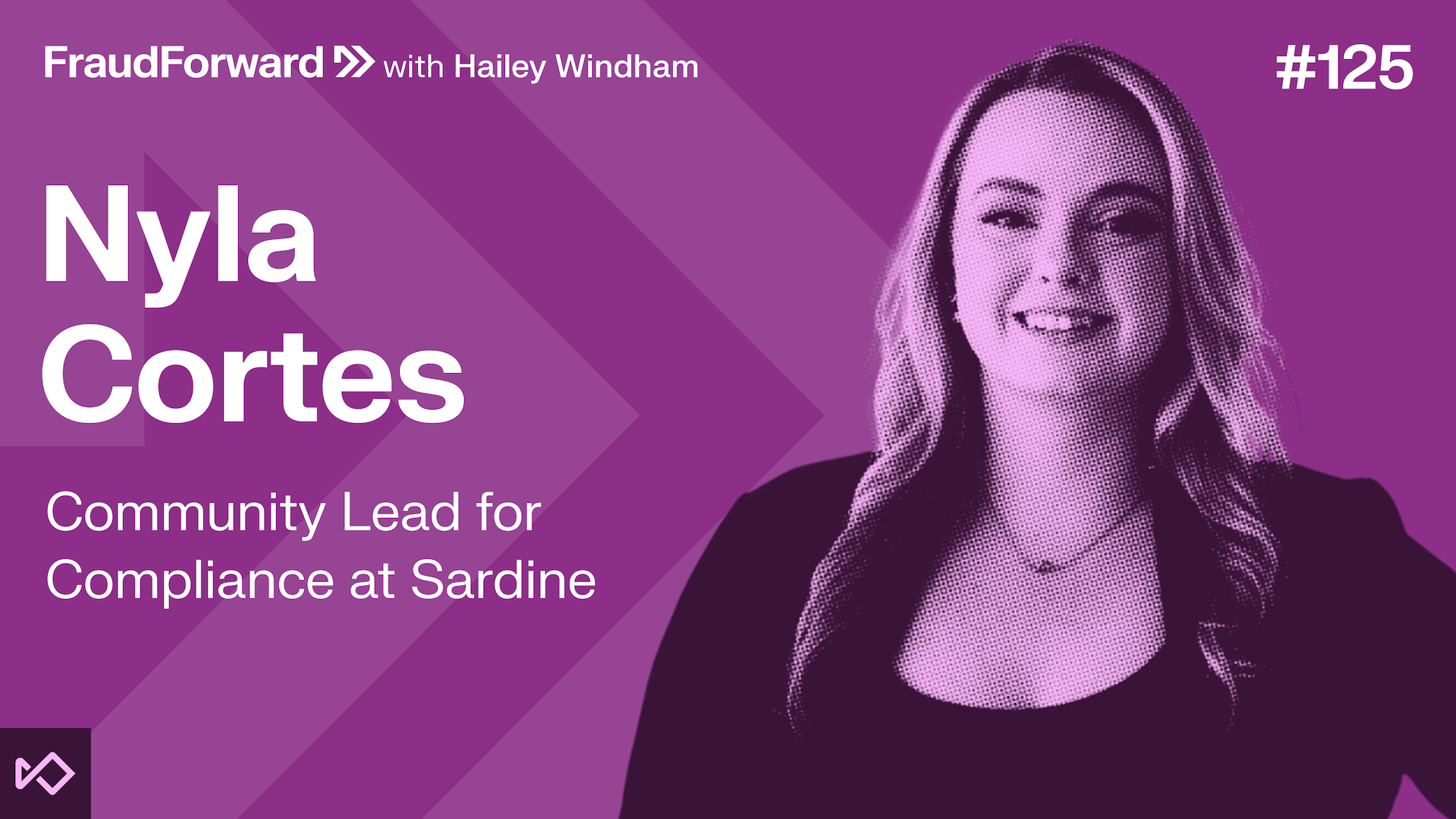
That's why documented procedures matter. That's for Nyla.
I've said before that a policy sitting in a binder
doesn't mean much if nobody knows how to use it.
You can have an incredible business continuity plan.
When was the last time your fraud team
actually participated in testing it?
Did the exercise include what happens to alerts?
Did it address delayed transactions?
Did it account for customers being targeted
by scams during the disruption?
Did it include what happens when systems come back online?
Because recovery isn't always as simple as flipping a switch.
You can restore the technology and still have a tremendous
amount of operational work ahead of you.
Just look at what happened with the FAA.
Flights resumed Friday evening.
That didn't mean the airlines were immediately back to normal.
The same principle applies to financial services.
So restoring a system is one thing.
Restoring normal operations, reconciling transactions,
validating controls, and rebuilding confidence
can be something entirely different.
So, in honor of International Fraud Awareness Week, I want
to leave you with a challenge, just like I always do.
Instead of focusing solely on what new fraud threats your
institution might face, spend some time thinking about the
systems you're depending on to fight those threats.
I've got five questions I want you to
take back to your organization.
Number one, do you know which fraud controls
depend on your core or payment processor?
Not just which systems are integrated.
I mean, what specifically happens to those controls
if the integration stops working? Do alerts stop?
Do transactions cue? Are decisions delayed?
Know the answer before you need it.
Number two, do you understand your critical vendor dependencies?
Having multiple technology partners doesn't necessarily
mean you have independent infrastructure.
Understand where those services overlap and whether your backup
plan actually provides the protection you expect.
Number three, does your business continuity plan account for fraud?
Not just cyber security, not just restoring technology, but fraud.
How are suspicious transactions identified during an outage?
How are employees handling unusual customer requests?
What additional verification might be needed?
Number four, what happens when everything comes back online?
Who reviews the activity that occurred during the disruption?
How are missed alerts identified? How are backlogs managed?
How do you prevent duplicate processing?
How do you know your fraud controls are working correctly again?
Number five, does your fraud team have a seat
at the operational resilience table?
If the answer is no, I would encourage
you to start that conversation.
You don't have to own the entire business continuity
program to contribute something valuable.
You just need to be a part of the discussion.
So, as we recognize International Fraud Awareness Week, I hope
we are thinking about fraud prevention a little more broadly.
Yes, we need to educate consumers.
Yes, we need to help people recognize scams.
Yes, we need better technology, stronger
controls, and more collaboration. All of those things. Yes. Yes.
Yet, fraud prevention also depends on having systems
and processes that can withstand disruption.
We can't protect customers and members effectively if we don't
understand what happens when the technology we depend on fails.
The FAA groundtop was a reminder of something
that applies to a lot more than aviation.
Modern experiences can depend on infrastructure that
the average person never sees, think about, or
even knows exist until something goes wrong.
Friday that meant airplanes sitting on runways.
In banking, a major disruption could mean interrupted payments,
unavailable services, overwhelmed frontline employees, and
fraud teams trying to operate with limited visibility.
Does that mean a nationwide banking ground stop is coming?
I don't know. I I certainly hope not.
Our financial system has safeguards, redundancy,
and operational resilience measures in place.
The question is whether those protections are keeping
pace with the way financial services are changing.
Because the speed of innovation isn't slowing down.
Speed of money for sure isn't slowing down.
Fraudsters certainly aren't slowing down.
We can't afford to treat resilience as an afterthought.
So, here's my challenge to every fraud fighter listening this week.
Ask one question your organization may not have considered.
Find out what happens when a critical system fails.
Ask whether your fraud controls would still work.
Ask who has the authority to pause activity.
Ask whether your team has participated
in a business continuity exercise.
Most importantly, make sure you're involved in the conversations
happening before an incident occurs.
Because protecting consumers isn't just about
identifying the next fraud attempt.
It's about making sure we can continue protecting
them when things don't go according to plan.
Innovation without resilience isn't progress.
It's risk we may not fully understand yet.
So, are banks next? Hopefully not.
However, I'd much rather we ask that question today
than have to answer it in the middle of a crisis.
That's all I've got for you this week, fraud fighters.
Happy International Fraud Awareness Week. It's our week to shine.
Keep fighting the good fight, keep asking the hard questions,
and don't ever underestimate the impact you can make.
Until next time, stay vigilant, stay informed,
and keep moving Fraud Forward.
Thanks for listening to Fraud Forward.
Remember, every conversation, every connection, and every insight
moves our industry one step closer to stronger fraud defenses.
If today's episode sparked an idea, share
it with your team or tag me on LinkedIn.
I love hearing how you're moving Fraud
Forward in your own organization.
Until next time, stay curious, stay resilient,
keep moving Fraud Forward.