
#12128 min
What’s up fraud fighters, and welcome to Fraud Forward!
Okay, I love this episode because it reminds me why fraud work can never be purely internal. Community fraud does not just show up in transactions, it shows up in relationships. It spreads through the same channels that build trust, neighbors, social groups, church circles, community boards, group chats, and that “my friend said…” pipeline that scammers absolutely love.
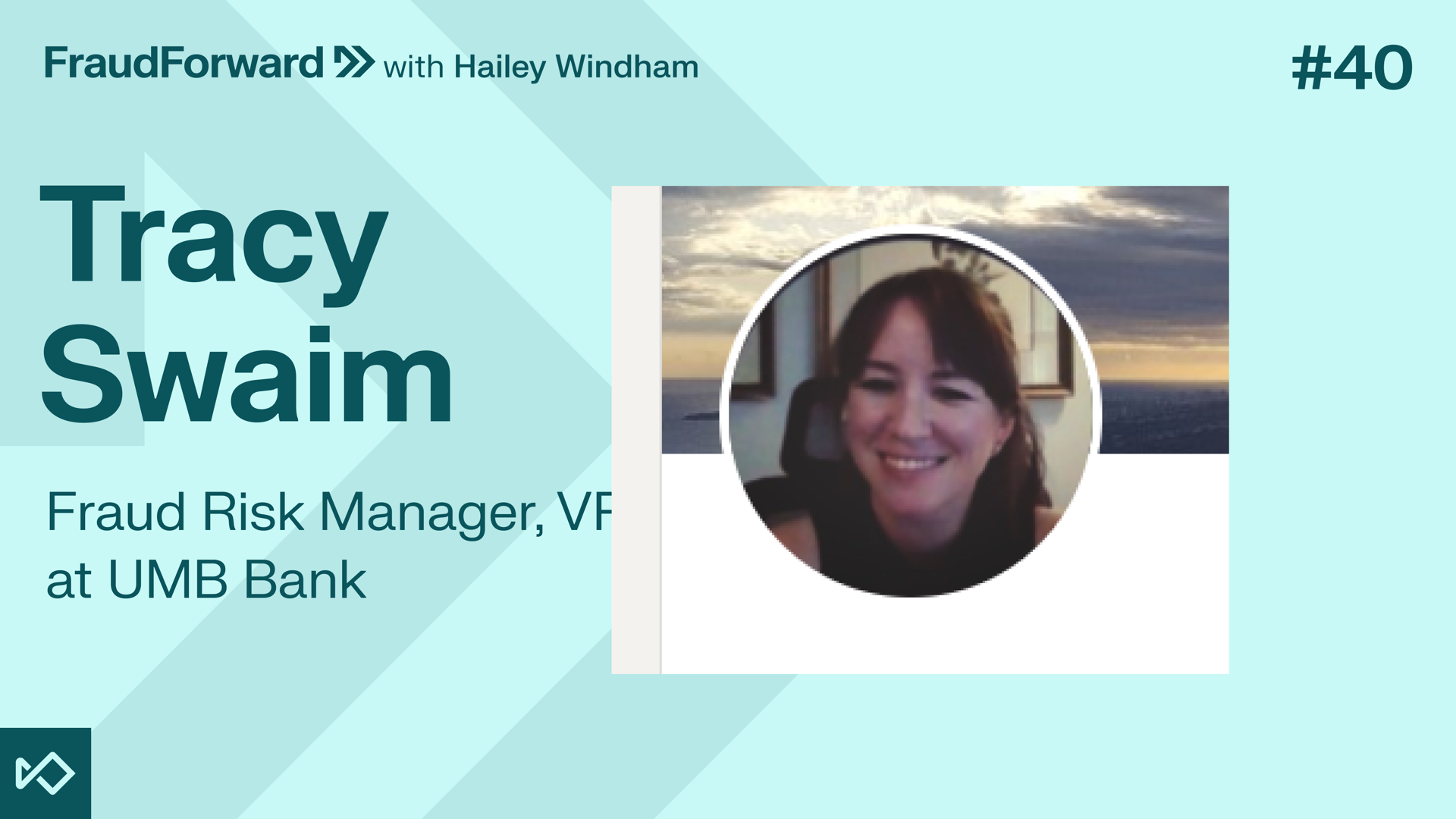
Today I am sitting down with Tracy Swaim, AARP Wyoming’s Fraud Fighter of the Year, and Tracy is one of those people who makes you want to do better immediately. She shares how volunteering shaped her move from the legal field into fraud investigations, and how her work with the AARP Fraud Watch Network changed the way she sees cases. Because dashboards do not show you the emotional manipulation in someone’s voice. Reports do not capture the moment a victim realizes they were played. Volunteering puts you close enough to hear the human truth, and that changes everything.
Let’s reset the room for a moment. When we talk community fraud prevention, we are talking about prevention upstream, before the loss, before the wire, before the shame spiral. That is where fraud education programs and public fraud education matter, not as a checkbox, as an actual protective layer.
One of my favorite parts of this conversation is how Tracy talks about fraud data visualization. She compares it to guiding someone through a house, and fraud fighters, that analogy is perfect. You can have the same data, the same fraud trend, the same scam typology, and if you present it wrong, people will miss the point. That is why fraud risk communication and fraud prevention messaging are skills, not afterthoughts.
We also talk about fraud storytelling impact, and I want to double click on this because it is so practical. Real stories cut through skepticism faster than charts. When you use lived examples in social engineering education and financial exploitation awareness, people recognize red flags sooner because they can picture the scenario. Storytelling is not fluff, it is memory design.
Tracy’s volunteer fraud prevention work also connects directly to fraud victim advocacy and a victim-centered fraud response mindset. When you spend time with victims, you stop seeing “typologies” and you start seeing patterns of behavior, pressure, isolation, and the specific language scammers use. That is how you get better at spotting behavioral fraud indicators, not just rule hits.
And fraud fighters, this episode is also about building bridges. Cross-community collaboration matters. Community outreach fraud efforts, fraud watch networks, AARP fraud resources, local institutions, advocates, all of that creates a stronger fabric of consumer fraud awareness and fraud reporting awareness. If we want earlier reporting, we have to make reporting feel safe and normal.
This conversation is my reminder to you, community fraud prevention is not “extra.” It is part of the work. Volunteering sharpens your perspective, strengthens your communication, and turns your fraud knowledge into real protection.
If you liked this episode, be sure to subscribe and review the podcast on iTunes, Spotify, YouTube, or wherever you listen to podcasts. It really helps with getting the word out.
Let me just assure you, community fraud thrives because it uses trust as the delivery mechanism.
Scammers embed themselves in social circles, mimic trusted contacts, or exploit shared affiliations. That is why community fraud prevention cannot live only inside bank systems. It has to live in neighborhoods and networks too.
What helps:
When you build awareness where trust is formed, you cut scams off earlier.
I love this point because it is so true. Volunteer fraud prevention changes how you interpret cases.
Fraud victim advocacy moves scams from abstract to real. You hear the story. You hear the pressure. You hear the shame. That lived experience strengthens:
Better case evaluation and investigative judgment
Volunteering bridges analysis and empathy, and that makes you sharper.
Fraud data visualization is only useful if people understand it.
Tracy’s analogy is spot on. The same information can land differently depending on presentation. That is why fraud risk communication matters. You have to tailor the message to the audience.
Community outreach fraud efforts work best when:
Fraud storytelling impact is significant because stories travel.
Real victim accounts cut through skepticism and help people recognize themselves in the scenario. That increases fraud reporting awareness and encourages earlier action.
Storytelling supports:
Community fraud prevention is not separate from institutional fraud work. It strengthens it. Volunteering turns knowledge into practical protection.
The mission stays the same:
The future of banking fraud prevention depends on community.
The future of credit union fraud prevention depends on collaboration.
The future of fraud industry evolution depends on shared intelligence and values alignment.
We are leveling up.
And we are doing it together.
Stay vigilant, stay informed, and keep moving fraud forward.