

#12128 min
What’s up fraud fighters, and welcome to Fraud Forward!
Fraud Forward is powered by Sardine.
Alright, let’s get into it, because credit union fraud gets harder to manage the second communication slows down and departments start operating like separate planets. And I want to say this plainly. Strong fraud programs are rarely built on technology alone. They are built on coordination, education, and shared accountability.
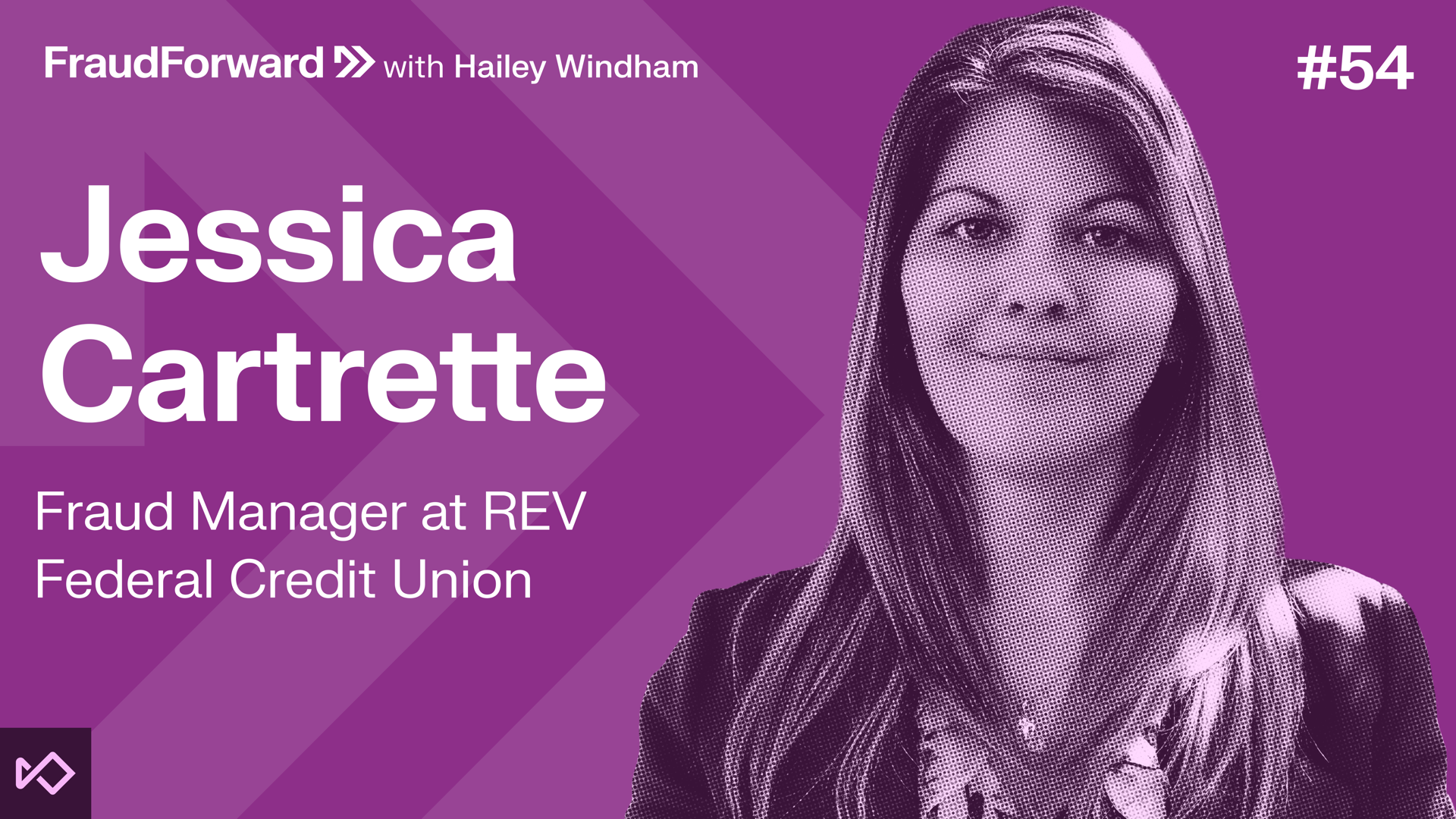
In this episode, I’m talking with Jessica Cartrette, Fraud Manager at Rev Federal Credit Union, about what it looks like to transform fraud operations into a real force multiplier through structured collaboration. Jessica’s path from retail pharmacy to teller to fraud leadership shaped a belief I agree with 100 percent, fraud prevention starts at the frontline, and it scales when you intentionally build cross departmental fraud coordination across the institution.
Because when marketing, IT, cybersecurity, and operations move in alignment, you do not just respond faster, you prevent more.
Let’s reset the room for a moment. Credit union fraud thrives in the gaps between teams.
And those gaps usually look like:
Jessica’s approach is a blueprint for strengthening credit union fraud strategy through structure. Not hype. Not fear. Real operational habits that reduce friction and speed up decisioning.
If you liked this episode, subscribe to Fraud Forward on Spotify, Apple Podcasts, YouTube, or your preferred platform for ongoing discussions on fraud and institutional risk.
Credit union fraud programs often stall when fraud is treated as a single-department responsibility.
Jessica’s approach shows that fraud culture development starts with breaking internal barriers and building real financial institution fraud teamwork across:
Cross departmental fraud coordination creates shared ownership of risk. And when everyone understands the escalation path, response timelines shorten and internal friction drops.
Fraud committee development plays a central role in fraud detection alignment, because it creates a consistent place for cross-team reality to meet.
What makes these committees work:
Interdepartmental fraud communication gets stronger when reporting is standardized and follow-up ownership is assigned. Otherwise, you get the classic problem, everyone assumed someone else had it.
Let me just assure you, frontline fraud education is not a training checkbox. It is the heart of prevention.
Teller and member-facing staff are often the first to see:
What helps operationally:
Internal fraud escalation improves when frontline teams understand both red flags and the path for escalation, without fear of internal resistance.
Credit union fraud prevention gets more resilient when collaboration extends beyond the institution.
Jessica highlights initiatives like:
And Rev’s Shielding Seniors initiative reinforces a core reality. Senior fraud protection depends on proactive education and community engagement, not just reactive case handling.
The broader financial institution fraud teamwork becomes, the harder it is for criminals to exploit isolated communities.
Leadership implications here are about sustainability.
Credit union fraud strategy cannot depend on a single champion, no matter how talented they are. It has to be embedded into governance through:
Institutions that align teams internally and engage externally build stronger detection frameworks and deepen member trust.
The mission stays the same:
The future of banking fraud prevention depends on community.
The future of credit union fraud prevention depends on collaboration.
The future of fraud industry evolution depends on shared intelligence and values alignment.
We are leveling up.
And we are doing it together.
Stay vigilant, stay informed, and keep moving fraud forward.