
#12128 min
What’s up fraud fighters, and welcome to Fraud Forward!
Fraud Forward is powered by Sardine.
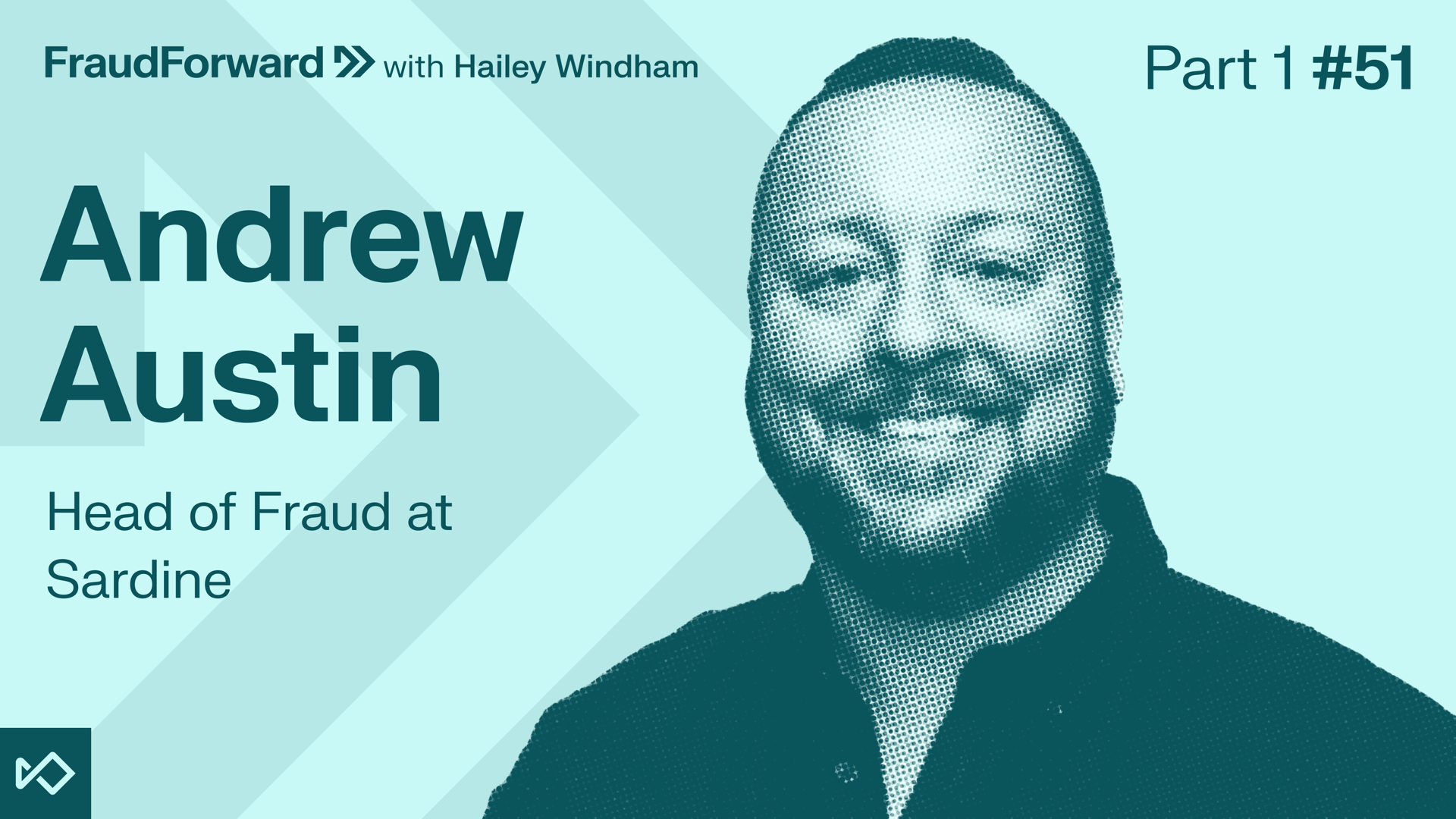
Alright, I need you to lean in for this one, because crypto scam prevention gets very real, very fast when you see exactly how these scams unfold end to end. In this episode, I’m talking with fraud expert Andrew Austin about a devastating case involving his 81-year-old father, and we are tracing the full social engineering scam lifecycle from the very first signal to the final cash-out.
And let me just assure you, this is not a story about someone being careless. This is elder financial exploitation, and it is powered by manipulation, urgency, and isolation. The case started with a compromised computer purchased through an online marketplace, then remote access scam tactics kicked in, and device compromise fraud escalated into a full blown operational failure across escalation, monitoring, and response.
Funds ultimately moved through crypto ATM fraud channels, and that is where the timing pressure hits hardest. When transaction monitoring gaps and fraud reporting failures stack up, meaningful intervention comes too late.
Let’s reset the room for a moment. Crypto scam prevention is not just about spotting a suspicious transaction. It is about whether your institution can connect the signals, enrich the alerts, and escalate in time, especially when the victim is being coached every step of the way.
Here is what this case makes painfully clear:
Crypto scam prevention improves when detection, escalation, and coordination function as one connected system, not separate teams and separate tools.
If you liked this episode, be sure to subscribe and review the podcast on iTunes, Spotify, YouTube, or wherever you listen to podcasts. It really helps with getting the word out.
Crypto scam prevention requires understanding how multiple small control breakdowns compound into material loss.
In this case, device compromise through a secondary marketplace introduced early risk indicators that were not correlated with later financial behavior. Remote access activity created behavioral anomalies that could have surfaced elevated institutional exposure earlier in the social engineering scam lifecycle if signals were enriched and connected.
And this is the part that should make every fraud leader pause. You might have the data, but if it is trapped in separate systems, you cannot act like you have the data.
Operationally, fraud prevention teams encounter fragmented signals every day:
Without alert enrichment and defined escalation pathways, frontline teams are forced to make judgment calls without full context. That is where fraud reporting failures start.
Crypto ATM fraud further compresses response timelines. Cash withdrawals linked to kiosk locations require predefined intervention triggers, clear governance oversight, and a playbook that does not rely on someone improvising under pressure.
Transaction monitoring gaps in this scenario included:
And here is the downstream impact. When reporting frameworks lack clarity, SAR narrative quality can suffer and law enforcement coordination gaps widen. Institutional exposure grows when cross-functional communication is not structured.
Elder financial exploitation introduces additional complexity because the scam is designed to isolate the victim and discourage outside input.
A victim centered fraud response has to balance decisive intervention with dignity. That means:
Victims do not need judgment, they need protection. That is the operational stance.
Leadership implications are clear.
Crypto scam prevention strengthens when detection systems integrate:
It also strengthens when typology alignment is consistent across teams and when reporting structures are defined, practiced, and measurable.
Cross-industry fraud communication and clearer reporting paths improve resilience. Institutions that align monitoring, escalation, and response as one coordinated system are better positioned to protect customers and reduce loss severity.
The mission stays the same:
The future of banking fraud prevention depends on community.
The future of credit union fraud prevention depends on collaboration.
The future of fraud industry evolution depends on shared intelligence and values alignment.
We are leveling up.
And we are doing it together.
Stay vigilant, stay informed, and keep moving fraud forward.