


#12128 min
What’s up fraud fighters, and welcome to Fraud Forward!
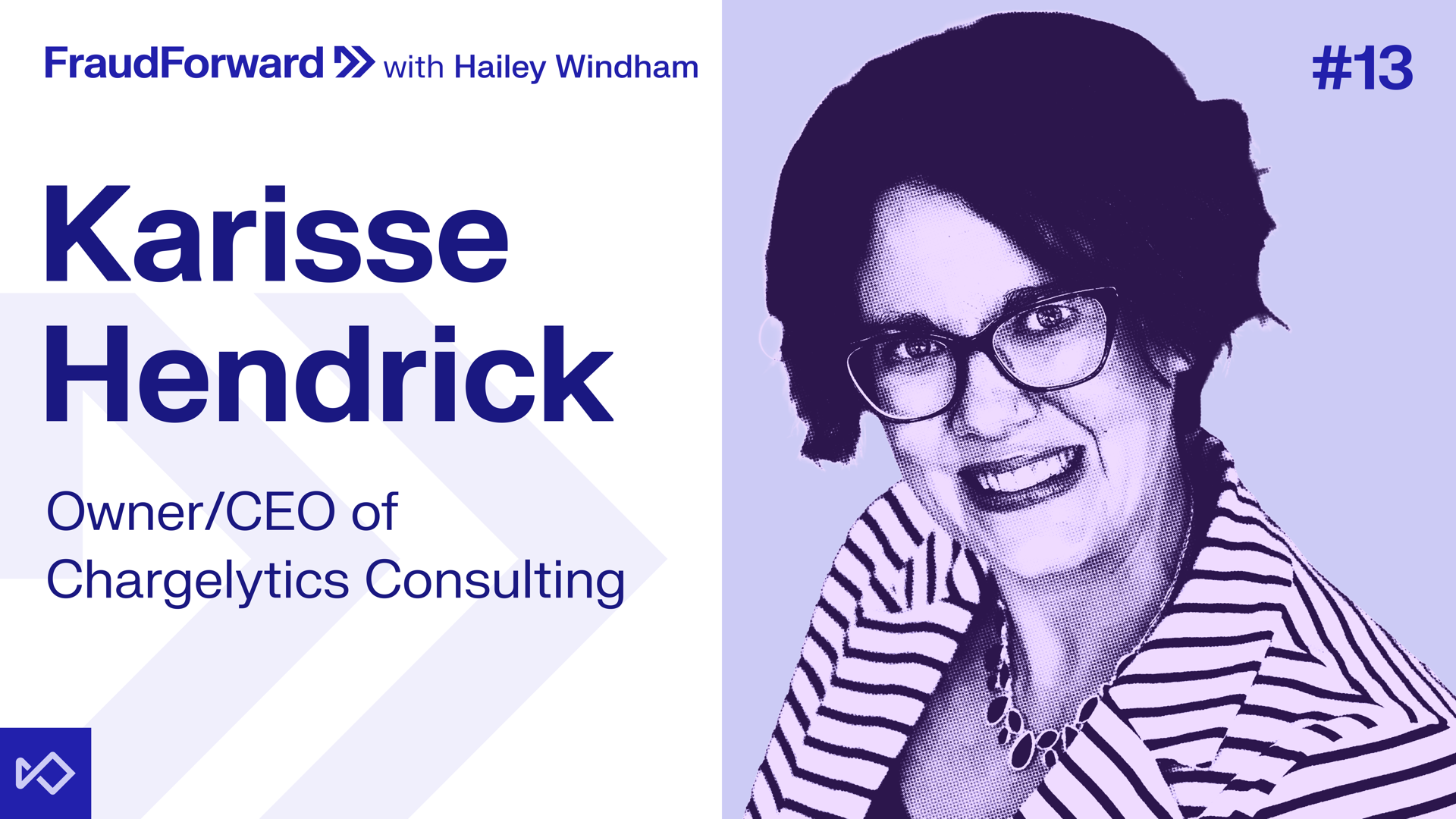
In this episode, I am sitting down with Karisse Hendrick to talk about something that is hitting all of us, whether you are on the fraud side, the cyber side, or you are the one getting pulled into the room when leadership asks, “Why are losses spiking again?” Because an e-commerce data breach does not stay contained anymore. It sends shockwaves across banks, fintechs, merchants, and consumers, and I need us to stop pretending it is just a retailer problem.
Let’s reset the room for a moment. The fraud outcomes we see downstream are not random. When a vendor supply chain breach happens, or a large-scale password compromise hits, it is like pouring gasoline on account takeover surge risk. And once that data hits dark web data sales channels, the clock starts. Not weeks later, not after a neat internal incident report, right now.
We talk through what this looks like operationally, from a 10 billion password leak story that makes your stomach drop, to real-world incidents like the Snowflake breach impact, telecom exposures like AT&T call log exposure, and financial institution headlines including the Evolve Bank data incident. I am not bringing these up to fear-monger. I am bringing them up because I want a real breach response strategy that matches the reality of how criminals operate.
I want to double click on the mechanics here. An e-commerce data breach fuels credential stuffing attacks, because criminals know people reuse credentials across payment apps, bank logins, and merchant accounts. That creates identity exposure risk analysis challenges, because your signals get noisy fast. And when your institution relies on interconnected vendors, fintech third-party risk and data aggregation platform risk become force multipliers. If you are not doing cyber risk recalibration in real time, you are already behind.
This episode is about what to do next. We break down fraud monitoring enhancements, third-party vendor oversight that goes beyond contracts, and why issuer merchant collaboration matters when fraud patterns start spiking across the ecosystem. Because fraud does not happen in silos, and neither should our response.
If you liked this episode, be sure to subscribe and review the podcast on iTunes, Spotify, YouTube, or wherever you listen to podcasts. It really helps with getting the word out.
Let me just assure you of something. An e-commerce data breach rarely remains isolated.
When a large-scale password compromise hits, or when a vendor supply chain breach exposes credentials at scale, it is not just one brand dealing with consequences. Banks, fintechs, and merchants all inherit risk. And the reason is simple, reuse.
Here is what happens next, fast:
This is why identity exposure risk analysis has to be proactive. Waiting for a clean internal alert is not the move. The best teams I see are building early awareness workflows so fraud monitoring enhancements can turn on before losses stack up.
Now let’s talk about the part that makes everyone uncomfortable, because it is not as clean as “just patch it.”
Fintech third-party risk and data aggregation platform risk expand every time we connect another service provider, another API, another tool that touches member data. And you do not need a catastrophic headline for this to be dangerous. One widely used platform exposure can create broad fallout, and that is why stories like the Snowflake breach impact matter. Same with telecom exposures that show up in places like AT&T call log exposure, because those data points can support social engineering and account compromise pathways.
Cyber risk recalibration is not a once-a-year exercise. It is a continuous posture shift. I want institutions to reassess:
A breach response strategy that is structured and rehearsed reduces chaos. It also keeps teams aligned when leadership pressure is high and the fraud activity is moving fast.
100 percent, this is the part that separates strong programs from reactive ones.
Issuer merchant collaboration becomes essential after a major e-commerce data breach because no one entity has the full picture. If we want to contain exposure, we have to share intelligence on:
And yes, dark web data sales amplify the risk because stolen information spreads beyond the initial incident. That is why cross-sector coordination matters for financial sector cyber resilience. We fight better when we fight together.
The big takeaway I want you to walk away with is this. Data breach response cannot be siloed. When we modernize monitoring, strengthen oversight, and reinforce cross-sector collaboration, we reduce downstream fraud risk and build stronger defenses for the future.
The mission stays the same:
The future of banking fraud prevention depends on community.
The future of credit union fraud prevention depends on collaboration.
The future of fraud industry evolution depends on shared intelligence and values alignment.
We are leveling up.
And we are doing it together.
Stay vigilant, stay informed, and keep moving fraud forward.